%201.avif)


.png)
.png)

What to Do When You Receive an IRS Notice?

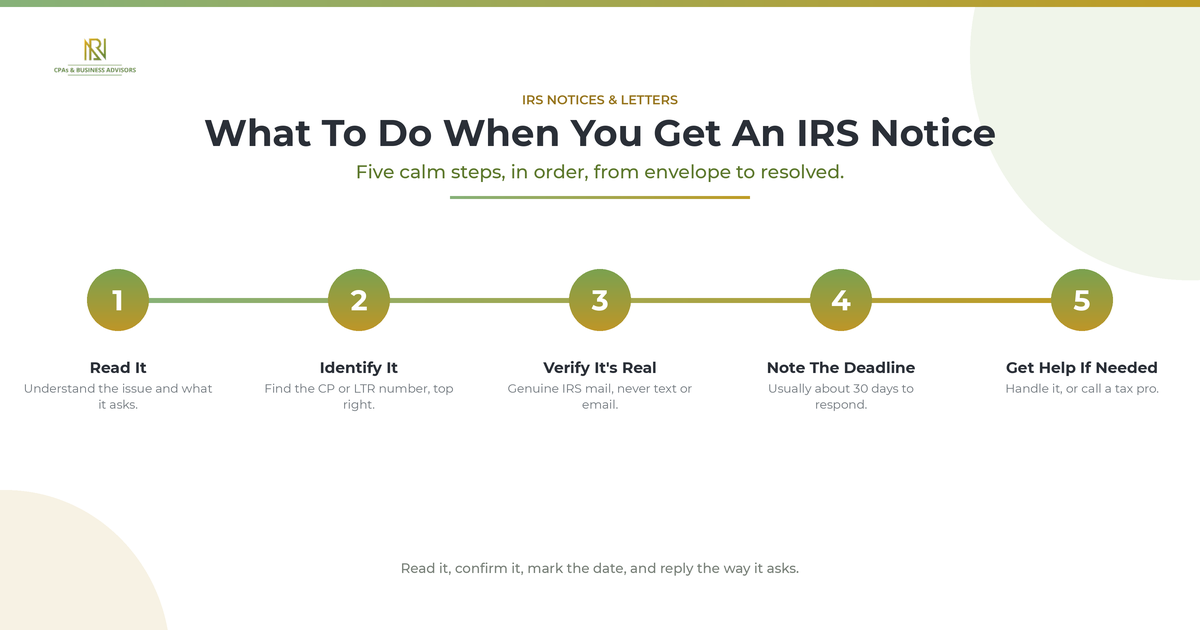
If you receive an IRS notice, don't panic. Read it carefully, find the notice number to see what it is about, check the deadline, and then either follow the instructions to respond or get a tax professional to help. Most IRS letters deal with one specific issue and are straightforward to handle once you know what they are asking for.
First, Don't Panic (And Don't Ignore It)
A letter from the IRS rarely means trouble, but you should never ignore it. According to the IRS, it sends notices for routine reasons, such as a balance due, a changed refund, or a simple question about your return, and most are resolved by reading the letter and taking the step it asks for. What you cannot do is set it aside. Acting promptly limits interest and penalties, and many notices carry a firm deadline. The calm, timely response is almost always the cheapest one.
Why Did The IRS Send You A Notice?
The IRS contacts you when something on your account or return needs attention. According to the IRS, the most common reasons are:
- You have a balance due.
- Your refund is larger or smaller than you expected.
- The IRS has a question about your return or needs to verify your identity.
- The IRS changed or corrected your return.
- Your return is delayed in processing.
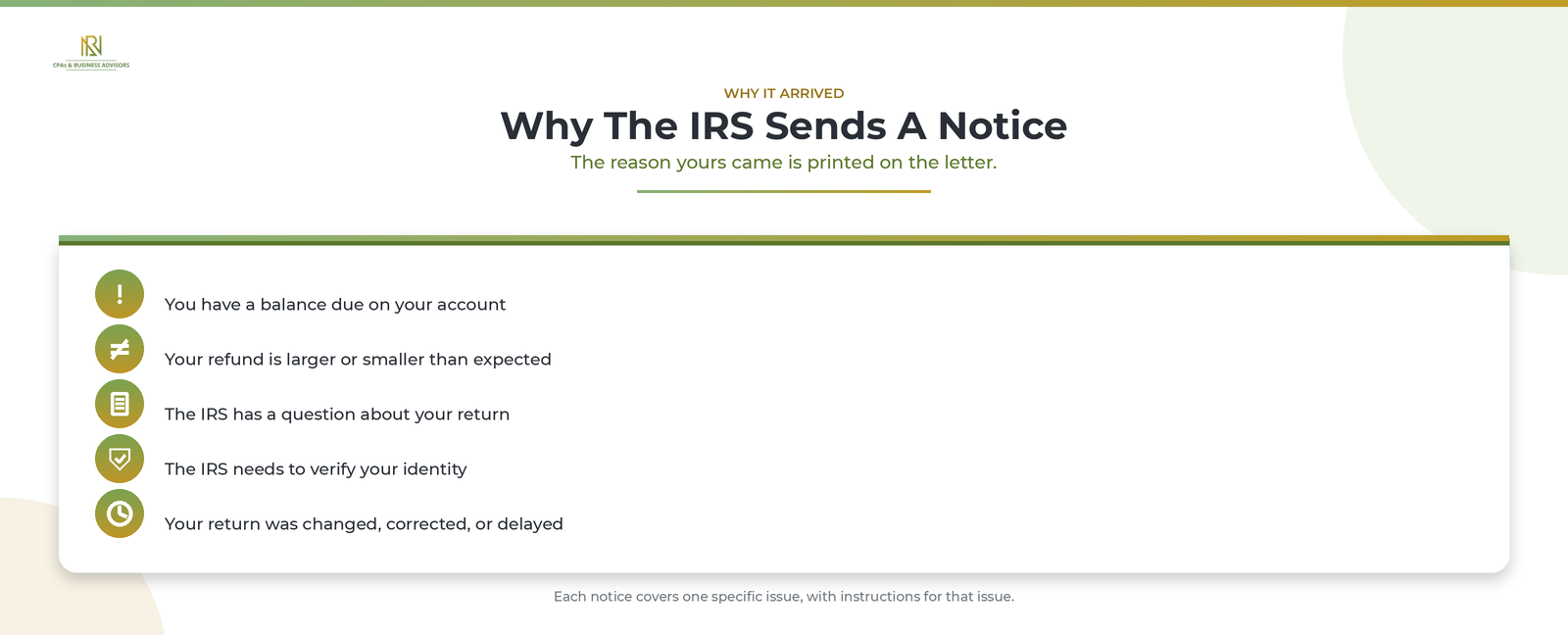
Each notice covers one specific issue and includes instructions for that issue, so the reason yours arrived is stated right on the letter.
What To Do When You Receive An IRS Notice
Work through the notice in order: read it, identify it, verify it, compare it to your return, note the deadline, respond, and keep a copy. According to the IRS, these steps handle the large majority of letters without a phone call or an office visit:
- Read the entire notice carefully to understand the issue and the action it asks for.
- Find the notice or letter number in the top right corner, such as CP14 or CP2000, and look it up on IRS.gov for a plain-English explanation.
- Verify the notice is genuine before you act or pay anything.
- Compare the notice against your tax return, and check which tax year it covers rather than assuming it is your most recent one.
- Note the response deadline and put it somewhere you will not miss it.
- Respond the way the notice tells you to, and only if it asks you to.
- Keep the notice and a copy of your response with your tax records.
The sections below cover the steps that trip people up most.
How To Tell If The Notice Is Real
A genuine IRS notice arrives by mail, never by text, email, or social media. According to the IRS, its first contact comes through the U.S. Postal Service, and it will never use social media or a text message to ask for personal or financial information. To confirm a letter is real, search the notice number on IRS.gov, where every notice is described. If the letter does not show up in that search or looks suspicious, call the IRS at 800-829-1040 and follow the representative's instructions rather than any contact details printed on a questionable letter.

If You Agree With The Notice
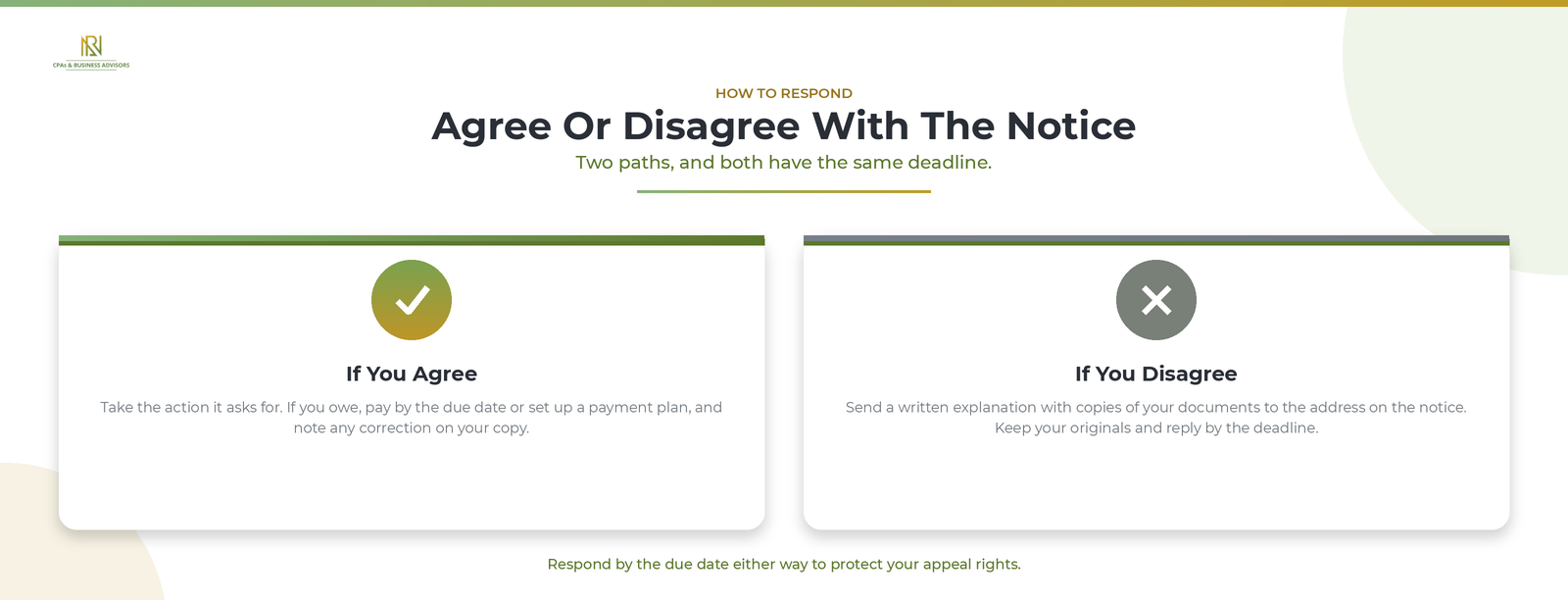
If the notice is correct, simply do what it asks. According to the IRS, that usually means taking the requested action and, if you owe, paying by the due date to reduce interest and penalties. If you cannot pay in full, you can arrange to pay the balance over time and still send what you can now, writing the notice's reference number on your payment so the IRS applies it correctly. If the notice corrected your return and you agree, note the change on your own copy and keep it.
If You Disagree With The Notice
If you don't agree, you must respond by the deadline with a written explanation and proof. According to the IRS, you follow the dispute instructions on the notice, send a letter explaining why you disagree, and include copies of any documents that support your position, mailed to the address on the notice. Send copies and keep your originals, and allow at least 30 days for the IRS to reply. Responding by the due date is also what protects your right to appeal later.
How Long Do You Have To Respond?
Most IRS notices give you about 30 days to respond, though the exact window is printed on the letter and varies by notice type. According to the IRS, you should act by the due date shown, because replying on time both limits added interest and penalties and guarantees your appeal rights. If you need more time, call the number in the top right corner of the notice before the deadline passes.
What Happens If You Ignore An IRS Notice?
Ignoring a notice doesn't make it go away; it makes the problem larger. According to the IRS, when you don't respond, interest and penalties keep building and the IRS moves ahead with whatever the letter proposed, which can mean assessing tax you might have disputed or starting collection on a balance. Some letters carry legal deadlines, and missing them costs you options, such as the chance to take a disputed amount to the U.S. Tax Court. Whatever the notice, the safe move is to respond within the window it gives you. If yours is a specific letter like a CP2000 underreported income notice or a CP14 balance due notice, follow the steps for that notice in particular.
Should You Handle It Yourself Or Get Help?
You can resolve most IRS notices on your own, especially simple ones where you agree and just need to pay or send a document. According to the IRS, the majority of correspondence can be handled without calling or visiting an office. Bring in a professional when the amount is large, when you disagree and need to build a documented case, or when the letter signals an examination. A CPA, enrolled agent, or tax attorney can deal with the IRS for you, and a firm offering IRS tax resolution services can manage the whole response. If cost is a concern, a Low Income Taxpayer Clinic may be able to represent you for free or a small fee.
Can You View IRS Notices Online?
Yes, you can see many IRS notices in your online account. According to the IRS, you can view digital copies of select notices and even go paperless for certain letters by signing in to your IRS Online Account. That is also a useful way to confirm a balance or check that a payment has been applied before you respond to a notice about it.
Frequently Asked Questions
How do I respond to an IRS notice? Follow the instructions printed on the notice, and reply only if it asks you to, using the response form or the address provided, within the deadline.
Why would the IRS send me a notice? Usually because you have a balance due, your refund changed, the IRS has a question about your return, or it corrected something on your account.
How long do I have to respond to an IRS notice? Typically about 30 days, but the exact deadline is on the letter and depends on the notice type.
What happens if I ignore an IRS notice? Interest and penalties grow, the IRS proceeds with its proposed change or collection, and you can lose the right to dispute the amount.
Do I need to call the IRS? Usually not. Reply only if the notice instructs you to, and if you must call, use the number in the top right corner with your return and the letter in hand.
An IRS notice is a request to handle one specific thing, not a reason to dread the mailbox. Read it, confirm what it is and that it is genuine, mark the deadline, and respond the way it asks, or hand it to a professional if it is complex. Taken in order and on time, almost every IRS letter is far easier to resolve than it first looks.

.avif)
.avif)


Tax and Financial Insights
by NR CPAs & Business Advisors