
%201.avif)


.webp)
.webp)

Tax Strategy, IRS Resolution, and CFO Guidance for Growing Businesses

Trusted by Clients Across
Multiple Industries
Multiple Industries

NR CPAs & Business Advisors helps entrepreneurs, startups, and high-growth companies reduce tax burden, resolve complex IRS issues, and make better financial decisions through expert CPA guidance and fractional CFO leadership.
%201%20(1).webp)
Licensed CPAs and Enrolled Agents recognized by leading professional accounting bodies





Who We Are
Learn about the experience, expertise, and approach that define how we work with our clients.

%201.webp)
NR CPAs & Business Advisors is a Miami-based CPA and advisory firm led by Nischay Rawal, CPA and Enrolled Agent. We partner with founders, startups, and established businesses that need reliable financial leadership beyond routine accounting.
Our work focuses on proactive tax planning, resolving complex IRS matters, strengthening financial reporting, and providing fractional CFO guidance that supports smarter business decisions. By combining technical tax expertise with practical business insight, we help clients reduce financial uncertainty, stay compliant, and move forward with clarity as their businesses grow.
Our Key Areas of
Financial & Tax Expertise
From tax strategy and compliance to financial leadership and advisory support, our services are designed to help businesses maintain stability, manage financial responsibilities effectively, and make informed long-term business decisions with confidence.

01
Tax Planning
Proactive tax strategies designed to reduce liabilities, improve compliance, and help businesses make financially sound decisions throughout the year.
Learn More.avif)
02
Virtual CFO
Ongoing financial leadership that provides cash flow visibility, financial strategy, and decision support without the cost of hiring a full-time CFO.
Learn More.avif)
03
IRS Tax Resolution
Professional representation to address IRS notices, audits, penalties, and disputes while protecting your interests and restoring financial stability.
Learn More
04
New Business Formation
Structured guidance for launching a new business including entity selection, registrations, and financial setup that supports long-term growth.
Learn More.avif)
05
Startup Advisory
Strategic financial guidance for early stage companies including budgeting, tax strategy, and operational planning to build a strong foundation.
Learn More.avif)
06
Financial Statement Prep
Accurate preparation of financial statements that provide clarity on performance, support compliance requirements, and assist informed business decisions.
Learn More.avif)
07
Business Consulting
Practical financial and operational insights that help businesses address challenges, improve efficiency, and strengthen long-term financial performance.
Learn More.avif)
08
Strategic Business Planning
Structured planning support that aligns financial goals, growth initiatives, and operational priorities to guide sustainable business expansion.
Learn More.avif)
09
Virtual Family Office
Integrated financial coordination for high net worth families including tax oversight, financial reporting, and long-term wealth planning support.
Learn More

Whether you need guidance on tax planning, IRS matters, or broader financial strategy, you can speak with our advisors to discuss your situation and explore the right path forward.
What Our Clients Say
Business owners and individuals rely on NR CPAs for dependable tax strategies, financial clarity, and long-term advisory support.


.avif)
Michael Rodriguez
Founder | Restaurant Industry
NR CPAs helped us completely rethink our tax planning approach. Their proactive strategies reduced our tax burden while keeping everything compliant. The clarity we now have around our financial decisions has made a significant difference for our business.

Sarah Patel
Managing Director | Technology Startup
Working with NR CPAs as our Virtual CFO has brought real structure to our finances. We now have better visibility into cash flow, budgeting, and long-term planning. Their financial leadership has been extremely valuable for our growth.
.avif)
Daniel Thompson
Owner | Retail Business
When we received an IRS notice, we were extremely concerned. The team at NR CPAs handled the situation professionally and resolved the issue much faster than we expected. Their experience truly helped us navigate a stressful situation.
.avif)
Jennifer Brown
Founder | Digital Marketing Agency
NR CPAs guided us through our new business formation and helped us choose the right structure from the beginning. Their advice made the process simple and helped us start on the right financial footing.
.avif)
Anthony Carter
Operations Director | Logistics Company
Their financial statement preparation has given us much clearer insight into our business performance. The reports are detailed, accurate, and extremely helpful when making operational and financial decisions.
.avif)
Rachel Kim
Co-Founder | E-commerce Business
The startup advisory support we received from NR CPAs helped us establish proper financial systems early. Their guidance around tax planning and budgeting helped us build a stronger foundation for our company.
.avif)
David Brooks
Chief Operating Officer | Manufacturing Industry
NR CPAs provided practical consulting that helped us improve financial efficiency across several areas of our business. Their advice was straightforward and focused on real operational improvements.
Meet The Experts Behind Your Financial Clarity
Meet the licensed advisors who simplify complex tax and financial decisions, helping business owners move forward with clarity and confidence.



Nischay Rawal, CPA, EA
Managing Partner
.avif)
Ana Arce
Intake Coordinator
.avif)
Erika Trinidad
Accountant
.avif)
Lorena Gomez
Client Experience Coordinator
.avif)
Elizabeth Alvarez
Accountant
.avif)
Lynne Balenton
Senior Accountant
.avif)
Cedie Trinidad
Accountant
.avif)
Dhannica Tulipan
Accountant
.avif)
Anjay Millar
Accountant
.avif)
Rodolfo
Operations Manager
.avif)
Elizabeth Alvarez
Accountant
Why Work With Us?
We combine deep tax expertise, financial strategy, and practical business insight to help you manage complexity, stay compliant, and make confident financial decisions.

Experienced CPA and Enrolled Agent Leadership
Guidance led by licensed professionals with deep expertise in tax strategy, compliance, and complex financial matters.
.avif)
Support for Growing Businesses and Startups
We understand the financial challenges of growth stage businesses and provide structured guidance to support expansion.
.avif)
Strategic Financial Advisory
Our team helps you evaluate financial decisions with greater clarity, supported by practical insights and long-term planning.
.avif)
Fractional CFO Support
Access experienced financial leadership without the commitment and cost of hiring a full time Chief Financial Officer.
.avif)
Proactive Tax Planning Approach
We focus on identifying tax opportunities throughout the year rather than reacting only during filing season.
.avif)
Clear and Reliable Financial Reporting
Accurate financial statements and reporting that help you better understand performance and make informed decisions.
.avif)
Professional IRS Representation
Experienced support in resolving IRS notices, disputes, and compliance matters while protecting your financial interests.
.avif)
Personalized Client Focus
Every client receives thoughtful attention and tailored financial solutions based on their specific needs and business goals.
Financial matters often involve important decisions. Working with experienced advisors can help you approach them with greater clarity and confidence in your choices.
Need Help Filing Your Taxes in Big Pine Key?
Discuss your situation with our advisors to get clear guidance on tax planning, IRS matters, and the financial decisions ahead.

Request Your Consultation
Fill out the form to discuss your tax concerns, financial questions, or advisory needs with our team. We will review your details and respond shortly.
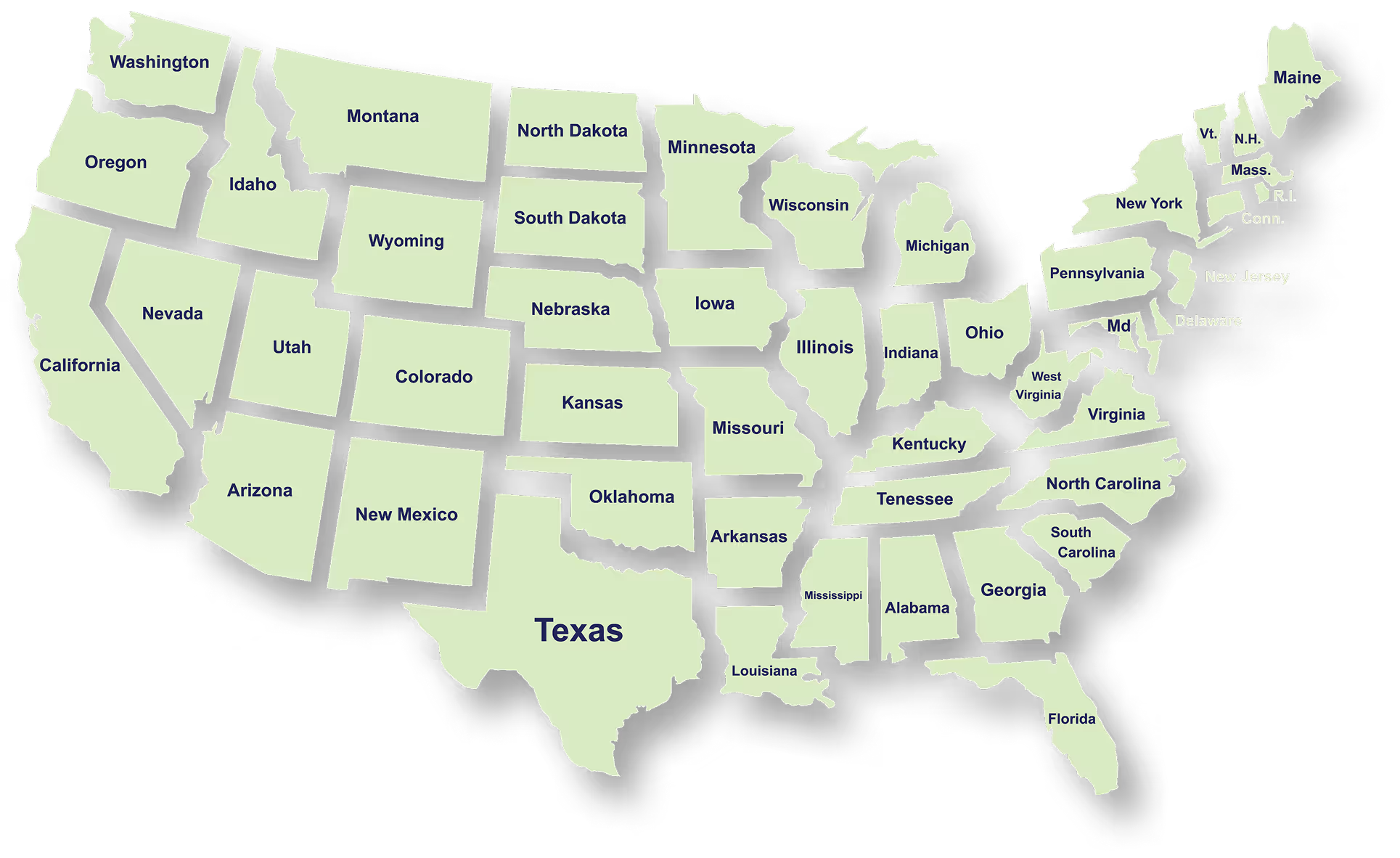
Tax Preparation Across the Florida Keys
We handle accounting, tax filing, and planning with defined timelines and accurate reporting for businesses and individuals across all states.
Tax and Financial Insights
by NR CPAs & Business Advisors
Explore practical articles that explain tax strategies, financial considerations, and important topics that may affect your business decisions.


Frequently Asked Questions
What services does NR CPAs & Business Advisors provide?

.avif)
What is tax planning and why is it important for businesses?
How can a Virtual CFO help my business?
When should a business consider IRS tax resolution services?
What financial statements does a business typically need?
How can startup advisory services help new businesses?
What is strategic business planning?
What is a Virtual Family Office and who can benefit from it?


