Does Toyota Sienna Qualify for Section 179?

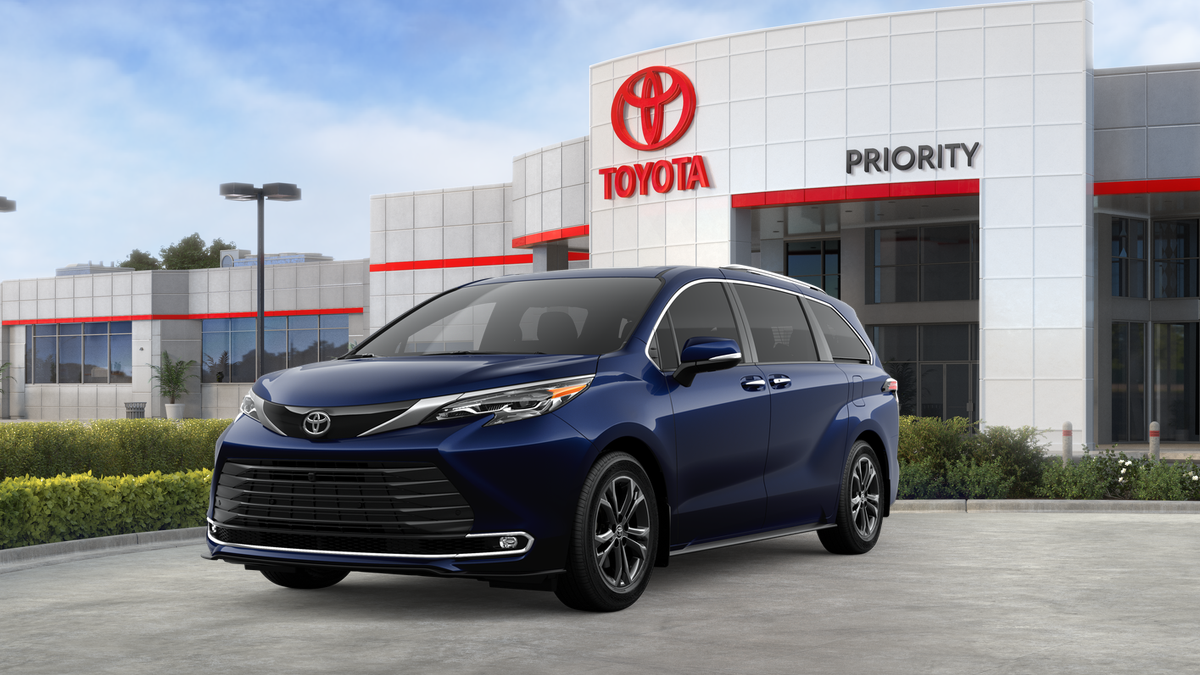
Yes, a Toyota Sienna qualifies for the Section 179 deduction, if the specific vehicle carries a gross vehicle weight rating (GVWR) above 6,000 pounds and is used more than 50% of the time for business. The Sienna is a passenger minivan, which places it inside the statutory sport utility vehicle category under IRC Section 179(b)(5). That classification caps the Section 179 deduction at $32,000 for 2026, per Revenue Procedure 2025-32. The remaining basis is then absorbed by 100% bonus depreciation, which the One Big Beautiful Bill Act made permanent for qualifying property acquired after January 19, 2025. A $52,000 Sienna used entirely for business produces a $52,000 first-year deduction through that combination, and a Sienna rated at or below 6,000 pounds produces a first-year deduction of $20,300.
The sections below cover the Sienna's actual weight rating and why the trim matters, why a minivan is treated as an SUV under the statute, exactly how much a business can write off in year one, when the deduction applies and what placed in service means, the business-use percentage and the records that support it, whether the vehicle must be titled in the business name, how used and leased Siennas are treated, which other Toyota models fall into which weight class, what qualifies for 100% bonus depreciation, and how long the vehicle must stay in business use before the deduction is safe from recapture.
Key Takeaways
- A Toyota Sienna qualifies for Section 179 when its GVWR exceeds 6,000 pounds and business use exceeds 50%. Recent all-wheel-drive trims carry a door-jamb rating near 6,170 pounds.
- GVWR is the manufacturer's maximum loaded weight, not curb weight. The 2026 Sienna curb weight runs 4,610 to 4,725 pounds, which is well under the threshold and is the wrong number to use.
- A minivan meets the statutory definition of a sport utility vehicle under IRC Section 179(b)(5)(B), which caps the Section 179 deduction at $32,000 for 2026.
- 100% bonus depreciation absorbs the basis remaining after Section 179, with no dollar cap and no business income limitation, which is what produces a full first-year write-off.
- A Sienna rated at or below 6,000 pounds is a passenger automobile subject to the Section 280F ceilings of $20,300 in year one with bonus depreciation, or $12,300 without, per Revenue Procedure 2026-15.
- The vehicle must be purchased and placed in service by December 31 of the tax year. Ordering, paying, and titling are not the same as placing in service.
- Business use of exactly 50% does not qualify. Use must exceed 50%, and the deduction is proportional to the business-use percentage.
- Vehicles are listed property under IRC Section 280F(d)(4), which means a contemporaneous mileage log is the substantiation standard rather than a year-end reconstruction.
- Business use falling to 50% or below during the five-year recovery period triggers recapture of the excess deduction as ordinary income.
Does the Toyota Sienna Qualify for Section 179?
The Toyota Sienna qualifies for Section 179 when four conditions are met at once: the GVWR exceeds 6,000 pounds, business use exceeds 50%, the vehicle is placed in service during the tax year, and the business has enough taxable income to absorb the election. Those conditions come from IRC Section 179(d)(1) and IRC Section 179(b)(3), and failing any one of them changes the answer.
The first condition does most of the work. Vehicles rated at or below 6,000 pounds GVWR are passenger automobiles subject to the Section 280F depreciation ceilings, which limit the first-year deduction to $20,300 regardless of what the vehicle cost. Vehicles rated above 6,000 pounds escape those ceilings entirely and move into the Section 179 weight tiers, where the deduction is measured against the purchase price rather than against a fixed statutory cap. A single pound of GVWR separates those two outcomes.
Business owners frequently assume the Sienna cannot qualify because it is a minivan rather than a work truck. The statute contains no such distinction. Section 179 reaches tangible personal property used in the active conduct of a trade or business, and a minivan used by a mobile service business, a caterer, a medical transport operation, or a contractor hauling crew and materials is exactly that. Confirming eligibility before the purchase rather than at filing is the part of tax planning that decides whether the deduction lands in the year it was expected.
Is the Toyota Sienna Over 6,000 Pounds?
Recent Toyota Sienna trims carry a gross vehicle weight rating of approximately 6,170 pounds, which clears the 6,000-pound threshold, though the rating varies by trim and drivetrain and the certification label on the specific vehicle is the only authoritative source. The label sits on the inside edge of the driver's side door, on the B-pillar, and it states the GVWR in pounds and kilograms. All-wheel-drive configurations carry the higher ratings. Front-wheel-drive and lower-content trims sit closer to the line.
The certification label matters because GVWR and curb weight are different measurements, and mixing them up produces the wrong answer every time. Curb weight is what the vehicle weighs empty with fluids and a full tank. GVWR is the manufacturer's maximum permissible loaded weight, including passengers, cargo, and accessories. The 2026 Sienna carries a curb weight of 4,610 to 4,725 pounds, according to Kelley Blue Book, which is roughly 1,400 pounds below its GVWR. A buyer who checks curb weight concludes the vehicle fails the test. A buyer who checks the placard on an all-wheel-drive trim concludes it passes.
Trim variation is the reason a blanket answer does not work for this model. The 2026 Sienna is offered across a range running from $41,915 to $59,305 in manufacturer pricing, per Kelley Blue Book, and that range spans several drivetrain and content configurations with different weight ratings. Reading the placard on the exact vehicle identification number being purchased, before signing, is the only reliable method. Once that number is confirmed above 6,000 pounds, the next question is which weight-class rule the vehicle falls under.
Is a Minivan Treated as an SUV Under Section 179?
A minivan is treated as a sport utility vehicle under Section 179, because IRC Section 179(b)(5)(B) defines the term to include any four-wheeled vehicle primarily designed to carry passengers over public streets with a GVWR between 6,001 and 14,000 pounds. The definition is written by function and weight rather than by body style or marketing category. A Sienna, a Tahoe, and a Sequoia land in the same statutory bucket.
Three exclusions carve vehicles out of that bucket, and a Sienna satisfies none of them. The statute excludes vehicles designed to seat more than nine passengers behind the driver's seat, which a seven-seat or eight-seat minivan does not reach. It excludes vehicles with a cargo area of at least six feet in interior length that is not readily accessible from the passenger compartment, which describes a long-bed pickup rather than a minivan with an open rear cabin. It excludes vehicles with an integral enclosure fully enclosing the driver compartment and load-carrying device, with no seating behind the driver, which describes a cargo van with the rear seats deleted. A standard passenger Sienna fails all three tests and stays inside the SUV category.
Falling inside that category carries one specific consequence: the $32,000 Section 179 cap for 2026 under Revenue Procedure 2025-32. This is where most published guidance on Toyota vehicles goes quiet, because model lists tend to name trucks and large SUVs and skip the minivan entirely. The cap is not a disqualification. It sets the ceiling on the Section 179 portion of the deduction, and a second provision handles everything above it.
How Much Can You Write Off on a Toyota Sienna?
A business can write off the full purchase price of a Toyota Sienna in the first year when the GVWR exceeds 6,000 pounds, by combining a $32,000 Section 179 election with 100% bonus depreciation on the remaining basis. IRS Publication 946 prescribes the ordering: Section 179 is elected first, bonus depreciation under IRC Section 168(k) applies to whatever basis survives that election, and regular MACRS depreciation handles any balance left after both. For a vehicle acquired after January 19, 2025, the bonus rate is 100% under Section 70401 of the One Big Beautiful Bill Act, which leaves nothing for MACRS to recover.
The gap between the two weight outcomes is where the real money sits. The table below runs a $52,000 Sienna at 100% business use through both scenarios, using the 2026 figures from Revenue Procedure 2025-32 and Revenue Procedure 2026-15.
ScenarioGVWR Above 6,000 lbsGVWR At or Below 6,000 lbsTax classificationSport utility vehicle, IRC 179(b)(5)Passenger automobile, IRC 280FPurchase price$52,000$52,000Section 179 deduction$32,000 (SUV cap)$12,300 (within 280F ceiling)Bonus depreciation$20,000 (100% of remaining basis)$8,000 add-on onlyYear 1 total deduction$52,000$20,300Basis remaining after Year 1$0$31,700Recovery of the balanceNone needed$19,800 (Yr 2), $11,900 (Yr 3), $7,160 per year after
That $31,700 difference on an identical vehicle explains why the certification label deserves a photograph before the paperwork is signed. The figures also scale down with business use rather than disappearing. A Sienna used 80% for business carries a depreciable basis of $41,600 on a $52,000 purchase, which supports a $32,000 Section 179 election plus $9,600 of bonus depreciation for a $41,600 first-year deduction. Business use of 60% produces a $31,200 basis, which the Section 179 cap absorbs entirely with nothing left for bonus.
Can You Write Off 100% of a Business Vehicle?
You can write off 100% of a business vehicle in the first year when the vehicle is rated above 6,000 pounds GVWR, is used entirely for business, and the business has enough taxable income to support the Section 179 portion. The 100% result is produced by two provisions working in sequence rather than by either one alone, and the second provision carries no cap at all.
Taxable income is the constraint that most often interrupts that result. Section 179 cannot exceed the taxpayer's aggregate taxable income from the active conduct of a trade or business, and it cannot create or increase a net operating loss under IRC Section 179(b)(3). Bonus depreciation carries no such limitation and can push a business into a loss that carries forward. A business with $18,000 of taxable income buying a $52,000 Sienna elects $18,000 of Section 179, carries the disallowed $14,000 forward indefinitely, and claims bonus depreciation on the $20,000 of basis remaining after the full $32,000 cap is applied. Working that allocation before year end is standard business consulting arithmetic, and it depends on a projected return rather than a finished one.
When Does the Section 179 Deduction Apply to a Vehicle?
The Section 179 deduction applies to a vehicle in the tax year the vehicle is placed in service, which means the vehicle must be purchased and put to business use on or before December 31 of that year. The deduction is then claimed on the federal return filed for that operational year, on Part I of Form 4562, and the election must appear on a timely filed return including extensions.
December 31 is a harder deadline than it appears, because the calendar date that matters is the date of business use rather than the date of the transaction. A Sienna ordered in November, paid for in December, and delivered in January belongs to the following tax year. A Sienna delivered on December 28 and driven on a business errand on December 29 belongs to the current one. Dealer inventory timing at year end is therefore a tax variable, not just a logistics question, and building the purchase into a year-end tax strategy rather than treating it as a December impulse is what keeps the deduction in the intended year.
What Does Placed in Service Mean for a Vehicle?
Placed in service means the vehicle is ready and available for its assigned business function, not that it was ordered, paid for, financed, titled, or insured. IRS Publication 946 sets that standard, and it turns on availability for use rather than on the completion of any single transaction step. A vehicle sitting on a dealer lot awaiting a delivery appointment is not placed in service. A vehicle in the owner's possession, registered, and available for business trips is placed in service even if no business trip has occurred yet.
Availability for use is also what starts the depreciation clock. The half-year convention under MACRS treats a vehicle placed in service at any point during the year as though it entered service at the midpoint, which is why a December 29 purchase produces the same first-year treatment as a February purchase. Once the vehicle is in service, the next variable is how much of its mileage the business can actually claim.
What Business-Use Percentage Does the Sienna Need?
The Sienna needs business use greater than 50% to qualify for Section 179 or bonus depreciation, and the deduction is then limited to the exact business-use percentage. Use of exactly 50% fails the test. Use of 50.1% passes it and supports a deduction on 50.1% of the purchase price. Business use is measured as business miles divided by total miles driven during the year.
A minivan carries more personal-use exposure than almost any other business vehicle, which raises the documentation stakes rather than the eligibility bar. We see this regularly with owner-operators in Miami who run one household vehicle and use it for both school runs and service calls. The vehicle can still support a deduction. The percentage simply has to be measured honestly and recorded as the miles are driven, because a Sienna claimed at 95% business use invites a question that a Sienna claimed at 68% does not.
Commuting miles are the most common source of overstatement. Travel between home and a regular workplace is personal mileage under Treasury Regulation Section 1.262-1(b)(5), regardless of whether the vehicle carries tools or the driver takes calls along the way. Travel between job sites, from a home office to a client, and to temporary work locations is business mileage. Sorting the two correctly at the time of each trip is what separates a defensible percentage from an estimate.
What Records Do You Need to Claim a Vehicle Deduction?
The records needed to claim a vehicle deduction are a contemporaneous mileage log plus the purchase and use documentation that supports it, because IRC Section 280F(d)(4) classifies vehicles as listed property and applies a stricter substantiation standard than ordinary business assets. Contemporaneous means written at or near the time of each trip. A spreadsheet assembled in March from memory and calendar entries does not meet the standard.
The log entries each need four elements, and the supporting file needs several more:
- Date of the trip. Recorded per trip rather than per week or per month.
- Destination. The actual address or identifiable location, not "client site."
- Business purpose. A short statement of why the trip was made and for whom.
- Miles driven. Odometer readings at the start and end, or the trip distance.
- Total annual mileage. Odometer readings on January 1 and December 31, which produce the denominator for the business-use percentage.
- Purchase documentation. The bill of sale, the financing or lease agreement, and the title.
- The certification label. A photograph of the door-jamb placard showing the GVWR, which is the evidence behind the weight classification.
- Placed-in-service evidence. The delivery receipt and the first documented business trip, which together fix the date.
Mileage-tracking applications that timestamp trips automatically satisfy the contemporaneous requirement more reliably than a paper notebook, and they export in a format that reconciles against the year-end financial statements without a rebuild. The records also answer the ownership question that follows, because the title and the log frequently point in different directions.
Does the Sienna Have to Be Titled in the Business Name?
The Sienna does not have to be titled in the business name in every case, because the requirement depends on the entity structure rather than on a universal rule. A sole proprietor filing Schedule C claims vehicle depreciation on a personally titled vehicle, and that treatment is standard. A single-member LLC treated as a disregarded entity follows the same path. Published guidance stating that the title must always carry the company name overstates the rule.
Corporations and partnerships are where titling becomes material. An S corporation or a C corporation that claims depreciation on a vehicle titled to a shareholder creates a mismatch between the owner of the asset and the claimant of the deduction. Two clean structures resolve it: title the vehicle to the entity and have the entity claim depreciation, or title it personally and have the entity reimburse the owner under an accountable plan, which produces a deductible expense to the entity and no taxable income to the owner. Choosing between them at the point of business formation avoids an unwinding later.
Insurance follows titling and is worth settling in the same conversation. A vehicle titled to an entity generally needs a commercial auto policy rather than a personal one, and a claim on the wrong policy can be denied. The cost difference belongs in the purchase analysis alongside the tax figures, since it recurs annually while the deduction lands once.
Does a Used or Leased Toyota Sienna Qualify?
A used Toyota Sienna qualifies for Section 179 and 100% bonus depreciation as long as the vehicle is new to your business, and a leased Sienna does not qualify because the lessee does not own the asset. The used-property rule requires only that the taxpayer has not previously used the vehicle in their own business and did not acquire it from a related party under IRC Section 179(d)(2). A three-year-old Sienna bought from an unrelated dealer receives the same treatment as a factory-ordered one.
Used inventory has become more attractive on price. Used car and truck prices fell 2% in the 12 months ending January 2026, according to the Bureau of Labor Statistics, which means the same deduction mechanics now apply to a lower basis. The deduction is a percentage of what was paid, so a lower purchase price produces a smaller deduction and a smaller cash outlay at the same time. The comparison worth running is after-tax cost rather than deduction size.
Leasing operates on a different mechanism entirely. A lessee deducts the lease payments as an ordinary business expense under IRC Section 162, prorated to the business-use percentage, and reports an income inclusion amount from the IRS lease inclusion tables that offsets part of that deduction for higher-value vehicles. No Section 179 election exists on a leased vehicle because there is no depreciable basis to elect against. A restaurant accounting client running catering deliveries who wants the large first-year deduction has to purchase rather than lease, while one who prioritizes predictable monthly cost usually prefers the lease.
Which Toyota Vehicles Qualify for Section 179?
Toyota vehicles qualifying for Section 179 fall into three tiers set by GVWR: passenger automobiles at or below 6,000 pounds, sport utility vehicles between 6,001 and 14,000 pounds capped at $32,000, and non-SUV heavy vehicles above 6,000 pounds with no model-specific cap. Ratings shift by trim, drivetrain, cab configuration, and bed length, so the table below states the typical tier for each model rather than a fixed number, and the certification label on the individual vehicle governs.
ModelTypical GVWR TierSection 179 TreatmentSiennaAbove 6,000 lbs on AWD trims; varies by configuration$32,000 SUV cap, then 100% bonusHighlanderNear the 6,000 lb line depending on trimVerify the placard; either tier is possibleGrand HighlanderAbove 6,000 lbs$32,000 SUV cap, then 100% bonus4RunnerAbove 6,000 lbs$32,000 SUV cap, then 100% bonusSequoiaAbove 6,000 lbs$32,000 SUV cap, then 100% bonusLand CruiserAbove 6,000 lbs$32,000 SUV cap, then 100% bonusTacomaAbove 6,000 lbs on most configurationsNo SUV cap with a bed of six feet or longer; otherwise $32,000TundraAbove 6,000 lbsNo SUV cap with a bed of six feet or longer; full price eligibleRAV4Below 6,000 lbsSection 280F passenger auto ceilings apply
The bed-length distinction on the two pickups is the most valuable line in that table. A Tundra with a bed of at least six feet in interior length escapes the SUV category entirely and supports a Section 179 deduction on the full purchase price, with no $32,000 ceiling. The same truck in a short-bed configuration stays inside the SUV category and takes the cap. A business choosing between a Sienna and a long-bed pickup for the same work is choosing between two different deduction structures, and the vehicle weight classes behind that choice are worth modeling before the order is placed rather than after.
What Vehicles Qualify for 100% Bonus Depreciation?
Vehicles qualifying for 100% bonus depreciation include any vehicle used more than 50% for business with a MACRS recovery period of 20 years or less, acquired after January 19, 2025 from an unrelated party. That definition covers passenger cars, minivans, SUVs, pickups, cargo vans, and specialty vehicles, new or used, as long as the vehicle is new to the taxpayer's business. Bonus depreciation applies automatically unless the taxpayer elects out, and the election out applies to an entire MACRS asset class for the year rather than to one vehicle.
Eligibility for bonus depreciation and the size of the resulting deduction are two different questions. A RAV4 qualifies for bonus depreciation, and the Section 280F ceilings still cap the total first-year deduction at $20,300. A Sienna above 6,000 pounds qualifies for bonus depreciation with no such ceiling, which is the entire reason the weight threshold attracts so much attention. Bonus depreciation is also the provision that can create a net operating loss, since it carries no business income limitation, which makes it the primary tool for a business with a large purchase and a thin income year. We model that interaction during Virtual CFO work whenever a client is weighing a fleet addition against projected income.
State conformity is the variable that quietly reduces the real benefit. California, New York, New Jersey, Massachusetts, Rhode Island, and New Hampshire do not conform to federal bonus depreciation, according to a Withum analysis of state responses to the One Big Beautiful Bill Act. A business filing in one of those states claims the federal deduction and then maintains a separate state depreciation schedule for the life of the vehicle. The same divergence appears on real estate assets and on equipment placed in rental property, which is why the state position belongs in the analysis alongside the federal one.
How Long Do You Have to Keep a Vehicle Under Section 179?
A vehicle claimed under Section 179 must remain in business use above 50% for its entire five-year MACRS recovery period, and dropping to 50% or below during that window triggers recapture of the excess deduction as ordinary income. IRC Section 179(d)(10) governs the recapture, and it applies whether the drop comes from selling the vehicle, converting it to personal use, or simply driving fewer business miles in a slower year.
Recapture is calculated rather than estimated, and the sequence runs as follows:
- Identify the first year business use falls to 50% or below. The recapture lands in that year, not in the year of the original election.
- Total the Section 179 deduction actually claimed on the vehicle in the year it was placed in service.
- Compute the depreciation that would have been allowed from the placed-in-service year through the recapture year using straight-line MACRS over the five-year recovery period with the half-year convention.
- Subtract the step 3 figure from the step 2 figure. The difference is the excess benefit being recaptured.
- Report the excess as ordinary income on Form 4797 in the recapture year, and add the same amount back to the vehicle's adjusted basis.
A Sienna expensed at $32,000 in year one and converted to family use in year three produces a recapture measured against roughly two years of straight-line depreciation, which leaves a substantial amount flowing back into ordinary income at the owner's marginal rate. Planning the holding period alongside the purchase, rather than treating the deduction as final once the return is filed, is the part of proactive tax planning that keeps a good first-year result from reversing in year three. Florida imposes no personal income tax, which spares an individual owner the state layer of that reversal, and a business filing in multiple states still tracks the recapture on every state return where the vehicle produced a deduction.
Frequently Asked Questions
Can You Take Section 179 on a Toyota Sienna Hybrid?
You can take Section 179 on a Toyota Sienna Hybrid under the same rules that apply to any other Sienna, since the current Sienna lineup is hybrid across the range. The hybrid powertrain does not change the GVWR test, the business-use test, or the $32,000 SUV cap. Clean vehicle tax credits operate under separate code sections and do not affect Section 179 eligibility in either direction.
Does a Toyota Highlander Qualify for Section 179?
A Toyota Highlander qualifies for Section 179 when the specific trim carries a GVWR above 6,000 pounds, and Highlander ratings sit close enough to that line that the certification label decides the answer. A Highlander above the threshold takes the $32,000 SUV cap plus 100% bonus depreciation on the remaining basis. A Highlander at or below it is a passenger automobile capped at $20,300 in the first year.
What Is the Difference Between GVWR and Curb Weight?
The difference between GVWR and curb weight is that GVWR is the manufacturer's maximum permissible loaded weight while curb weight is what the vehicle weighs empty. Section 179 and Section 280F both use GVWR. Curb weight has no role in the tax analysis, and substituting it produces a failing result on vehicles that actually qualify, since GVWR typically runs 1,200 to 1,500 pounds above curb weight on a minivan.
Can Two Business Owners Each Claim Section 179 on the Same Vehicle?
Two business owners cannot each claim Section 179 on the same vehicle, because the deduction belongs to the taxpayer who owns the asset and places it in service. In a partnership or S corporation, the entity makes the election and allocates the deduction to owners on Schedule K-1, where each owner then applies the annual limit again at the individual level under IRC Section 179(d)(8). One vehicle produces one deduction, divided rather than duplicated.
Does Section 179 Apply If You Use the Standard Mileage Rate?
Section 179 does not apply if you use the standard mileage rate, because the standard rate already includes a depreciation component. Choosing the standard mileage rate in the first year a vehicle is available for business preserves the option to switch to actual expenses later, though straight-line depreciation applies from that point forward. Claiming Section 179 or bonus depreciation in year one locks the vehicle into the actual expense method for its entire life.
Can Section 179 on a Vehicle Create a Business Loss?
Section 179 on a vehicle cannot create a business loss, since IRC Section 179(b)(3) caps the deduction at aggregate taxable income from active trades or businesses. The disallowed portion carries forward indefinitely and becomes available in the first year with sufficient income. Bonus depreciation carries no such limit and can create or deepen a net operating loss, which is why startup clients in a thin first year usually lead with bonus rather than Section 179.
The Bottom Line
A Toyota Sienna is a legitimate Section 179 vehicle, and the answer turns on two numbers rather than on the body style. The GVWR on the door-jamb placard decides whether the vehicle sits in the $32,000 SUV tier or the $20,300 passenger automobile tier, and the business-use percentage decides how much of the purchase price is depreciable in the first place. Above 6,000 pounds and at high business use, the Section 179 election plus 100% bonus depreciation produces a full first-year write-off. Below that line, the same vehicle produces a fraction of it.
The deduction is also a five-year commitment rather than a one-year event, since business use has to hold above 50% through the recovery period and the mileage log is what proves it did. Photograph the placard before signing, start the log on the first business trip, and confirm the entity and titling structure matches how the deduction will be claimed. If you are weighing a vehicle purchase against your projected income for the year and want the numbers run before you commit, the advisors at NR CPAs & Business Advisors are happy to look at it with you, and you can reach us at +1 954-231-6613.