Can You Take Section 179 and Bonus Depreciation on Vehicles?

Taxes
Read Time:
5 Minutes

Yes, you can take both Section 179 and bonus depreciation on the same business vehicle, and combining the two provisions often produces a full first-year write-off of the purchase price. Section 179 is elected first, bonus depreciation under Section 168(k) applies to the remaining depreciable basis, and the total deduction depends on the vehicle's gross vehicle weight rating (GVWR), the percentage of business use, and your taxable business income for the year. The One Big Beautiful Bill Act (OBBBA), signed into law on July 4, 2025, permanently restored 100% bonus depreciation for qualifying property acquired after January 19, 2025, which makes the combined strategy more powerful now than at any point since the original Tax Cuts and Jobs Act (TCJA) provisions began phasing down in 2023.

The sections below cover what each deduction does, how the two differ, why the IRS requires one before the other, how vehicle weight determines your maximum write-off, what the exact 2026 dollar limits are, when one provision works better than the other, the mistakes that trigger recapture, how entity type and state conformity affect the real tax savings, and what documentation the IRS expects you to have ready.

Key Takeaways

  • Section 179 and bonus depreciation can be claimed on the same business vehicle. The IRS requires Section 179 to be elected first, followed by bonus depreciation on the remaining basis, and then regular MACRS depreciation on any balance left.
  • The 2026 Section 179 deduction limit is $2,560,000 overall, with a $32,000 cap on heavy SUVs rated between 6,001 and 14,000 pounds GVWR, according to Rev. Proc. 2025-32.
  • Bonus depreciation stands at 100% permanently under the OBBBA for qualifying property acquired after January 19, 2025, with no annual dollar cap and no business income limitation.
  • Passenger vehicles under 6,000 pounds GVWR face Section 280F "luxury auto" depreciation limits of $20,300 in Year 1 with bonus depreciation, or $12,300 without, per Rev. Proc. 2026-15.
  • Heavy vehicles over 6,000 pounds GVWR that are not classified as passenger SUVs, such as long-bed pickups and cargo vans, face no Section 179 SUV cap and can often be fully deducted in Year 1.
  • Section 179 cannot create or increase a net operating loss; bonus depreciation can. That distinction drives the strategic choice between the two provisions for businesses with variable income.
  • Several major states, including California, New York, and New Jersey, do not conform to federal bonus depreciation, which means the federal deduction does not automatically carry to your state return.
  • Business use must exceed 50% for the vehicle to qualify for either provision. Dropping below 50% in any later year triggers depreciation recapture taxed as ordinary income.

What Is Section 179 and How Does It Apply to Business Vehicles?

Section 179 is a provision of the Internal Revenue Code that lets a business elect to deduct the full purchase price of qualifying property in the year the property is placed in service, rather than depreciating it over several years. Section 179 was first enacted in 1958, and its dollar limits have been raised repeatedly. The OBBBA raised the baseline from $1,000,000 to $2,500,000 effective for tax years beginning after December 31, 2024, according to OBBBA Section 70301. After the annual inflation adjustment under Rev. Proc. 2025-32, the 2026 Section 179 limit stands at $2,560,000.

The Section 179 deduction begins to phase out dollar for dollar once total qualifying property placed in service during the tax year exceeds $4,090,000 for 2026. The deduction disappears entirely at $6,650,000 of qualifying purchases. For most small and mid-sized businesses, that ceiling is well above their annual equipment and vehicle spending, which means the full deduction is available.

Vehicles qualify for Section 179 under the same rules as other tangible personal property, with one critical condition. The vehicle must be used more than 50% of the time for business purposes. A vehicle used exactly 50% does not qualify. A vehicle used 70% for business qualifies, but only 70% of the purchase price is eligible for the deduction. Business use is measured by miles driven for business divided by total miles driven, and the IRS expects that measurement to be documented in a contemporaneous mileage log rather than reconstructed at year end.

Both new and used vehicles qualify for Section 179. The vehicle does not need to be brand new from the factory. It only needs to be new to your business. A three-year-old pickup truck purchased from a dealership and placed into service for your company qualifies the same way a factory-ordered truck does, as long as you have not previously used that specific vehicle in your own business operations. We help clients run these calculations as part of our tax planning work, because the decision about whether to elect Section 179 and how much to elect depends on the full picture of income, entity type, and state filing position.

What Is Bonus Depreciation and How Does It Work for Vehicles?

Bonus depreciation is a separate provision under IRC Section 168(k) that allows a business to deduct a percentage of the cost of qualifying property in the first year the property is placed in service, on top of regular depreciation. Under the OBBBA, that percentage is permanently set at 100% for qualifying property acquired after January 19, 2025. The permanent restoration replaced a phaseout schedule that had reduced bonus depreciation from 100% in 2022 to 80% in 2023, 60% in 2024, and 40% for property acquired before January 20, 2025, according to the original TCJA Section 168(k) schedule.

Bonus depreciation carries no annual dollar cap. A business purchasing $5,000,000 in qualifying vehicles and equipment can claim 100% bonus depreciation on the entire amount, regardless of the spending level. Bonus depreciation also carries no business income limitation. A company that shows a loss for the year can still claim bonus depreciation, and the depreciation itself can create or deepen a net operating loss (NOL) that carries forward to offset income in future years. That characteristic distinguishes bonus depreciation from Section 179 in a way that matters significantly for businesses with uneven revenue.

Bonus depreciation applies by default. Unlike Section 179, which must be affirmatively elected on Form 4562, bonus depreciation is automatic for eligible property unless the taxpayer elects out. Electing out applies per asset class for the entire tax year, not per individual asset, so a business choosing to forgo bonus depreciation on one vehicle must forgo it on all vehicles in the same MACRS asset class placed in service that year.

The qualifying property rules for bonus depreciation mirror the requirements for vehicles. The vehicle must have a MACRS recovery period of 20 years or less, must be placed in service during the tax year, must be used in a trade or business, and must be acquired from an unrelated party. One additional restriction affects dealership-financed vehicles: property purchased using "floor financing," the type of revolving credit line used by most auto dealerships for inventory, does not qualify for bonus depreciation, according to IRS Publication 946.

What Is the Difference Between Section 179 and Bonus Depreciation?

The difference between Section 179 and bonus depreciation is that Section 179 is an elective deduction with an annual dollar cap and a business income limitation, while bonus depreciation is a default deduction with no dollar cap and no income limitation. Both provisions allow first-year write-offs for qualifying property, but they operate under different rules, and those differences determine which one produces the better result in a given tax year.

FeatureSection 179Bonus DepreciationAnnual dollar limit (2026)$2,560,000No limitBusiness income limitationYes, cannot exceed taxable business incomeNo, can create or increase a net operating lossElection methodElective; must be chosen on Form 4562Automatic; applies unless taxpayer elects outHeavy SUV cap (6,001-14,000 lbs)$32,000 for 2026No capUsed property eligible?Yes, if new to the businessYes, if new to the businessApplies to which entity types?All, but pass-through limitations applyAllState conformityMost states conformSeveral major states do not conformPhase-out based on total spendingYes, begins at $4,090,000 (2026)No phase-outMinimum business useMore than 50%More than 50%Current percentage (2026)Up to 100% of cost (within cap)100% of remaining basis after Section 179

The practical result of these differences is that the two provisions complement each other rather than compete. Section 179 absorbs the portion of the vehicle's cost up to the applicable cap, bonus depreciation absorbs the remaining basis, and regular MACRS depreciation handles whatever is left. For heavy vehicles, the combination often produces a full first-year deduction equal to 100% of the business-use portion of the purchase price.

Do You Have to Take Section 179 Before Bonus Depreciation?

Yes, the IRS requires you to claim the Section 179 deduction first, apply bonus depreciation to the remaining depreciable basis second, and then use regular MACRS depreciation on any balance that remains. That ordering is prescribed by IRS Publication 946 and is not optional. Reversing the order or skipping Section 179 to take bonus depreciation on the full cost is not how the provisions interact.

The ordering matters strategically because Section 179 is limited to taxable business income while bonus depreciation is not. A business with $80,000 in taxable income and a $90,000 vehicle purchase can elect Section 179 up to $80,000 (or the applicable vehicle cap, whichever is lower), then claim bonus depreciation on the remaining basis without regard to income. The bonus depreciation portion can push the business into a net operating loss that carries forward under IRC Section 172. Section 179 alone cannot produce that result.

For pass-through entities like S corporations and partnerships, the ordering creates an additional layer. The Section 179 deduction passes through to owners on Schedule K-1, but the deduction is limited at the individual owner level by that owner's taxable income from the entity. Bonus depreciation flows through separately and carries no individual income limitation. Structuring the election to maximize the amount that lands in bonus depreciation rather than Section 179 can produce a larger usable deduction at the individual level for owners whose share of entity income is low in the current year. This kind of depreciation allocation is a core part of the tax planning work we do with pass-through business owners every year.

How Do Vehicle Weight Classes Affect Your Deduction?

Vehicle weight classes determine which depreciation caps apply, and the difference between a vehicle under 6,000 pounds and a vehicle over 6,000 pounds can mean tens of thousands of dollars in additional first-year deductions. The IRS uses gross vehicle weight rating (GVWR), not curb weight, as the dividing line. GVWR is the manufacturer's maximum loaded weight for the vehicle, including passengers, fuel, and cargo. The rating is printed on the manufacturer's label, usually found on the inside edge of the driver's side door.

Three tiers govern the vehicle deduction landscape. Each tier carries a different set of caps, and the boundaries between them determine the economics of a vehicle purchase for business consulting clients, contractors, and any business owner who drives for work.

Can I Take Bonus Depreciation on a Vehicle Less Than 6000 Lbs?

Yes, you can take bonus depreciation on a vehicle less than 6,000 lbs, but the total first-year deduction is capped by the Section 280F luxury auto limits regardless of what you paid for the vehicle. For passenger automobiles placed in service in 2026, Rev. Proc. 2026-15 sets the first-year depreciation ceiling at $20,300 when bonus depreciation is claimed, or $12,300 when bonus depreciation is not claimed. A $50,000 sedan and a $30,000 sedan used 100% for business both produce the same $20,300 maximum first-year deduction. The remaining basis is recovered over the following years: $19,800 in Year 2, $11,900 in Year 3, and $7,160 per year thereafter until the vehicle is fully depreciated.

The $20,300 ceiling already includes an $8,000 bonus depreciation add-on under IRC Section 168(k)(2). Without claiming bonus depreciation, the Year 1 ceiling drops to $12,300. That $8,000 gap is meaningful for any business that owns a passenger car, which is why bonus depreciation is almost always worth claiming on lighter vehicles even when the overall cap limits the total deduction.

Can You Write Off 100% of a 6000 Lb Vehicle?

You can write off 100% of a vehicle rated above 6,000 lbs GVWR in the first year by combining Section 179 and bonus depreciation, but SUVs in the 6,001 to 14,000 lb range face a $32,000 Section 179 cap before bonus depreciation absorbs the rest. A $90,000 Chevrolet Tahoe with a GVWR of 7,300 lbs, used 100% for business, produces a $32,000 Section 179 deduction plus $58,000 in bonus depreciation on the remaining basis, totaling a $90,000 first-year write-off.

Vehicles that exceed 6,000 lbs but escape the SUV classification face no Section 179 cap at all. The IRS defines the capped "SUV" category narrowly. Vehicles with more than nine seats behind the driver's seat, vehicles with a cargo area at least six feet in interior length that is not readily accessible from the passenger compartment, and vehicles with no seating behind the driver and an enclosed driver compartment all fall outside the SUV definition. That means many full-size pickup trucks with long beds, cargo vans, and delivery vehicles qualify for the full Section 179 deduction without the $32,000 SUV ceiling.

What Vehicles Qualify for 100% Bonus Depreciation?

Vehicles that qualify for 100% bonus depreciation include any vehicle used more than 50% for business that has a MACRS recovery period of 20 years or less and is acquired after January 19, 2025. This covers passenger cars, SUVs, pickup trucks, vans, delivery vehicles, and specialty vehicles. The 100% rate applies to both new and used vehicles, as long as the vehicle is new to the taxpayer's business.

The practical distinction is not whether a vehicle qualifies for bonus depreciation but how much of the bonus depreciation actually shows up on the return. Light passenger vehicles under 6,000 lbs qualify for bonus depreciation, but the Section 280F luxury auto limits cap the total first-year deduction at $20,300 regardless. Heavy vehicles over 6,000 lbs qualify for bonus depreciation without the luxury auto cap, which is why the 6,000 lb threshold receives so much attention. According to the Bureau of Labor Statistics, used car and truck prices dropped 2% in the 12 months ending January 2026, making this a favorable window for businesses considering a heavy vehicle purchase for tax year 2026.

How Much Can You Deduct in the First Year for a Business Vehicle in 2026?

The first-year deduction for a business vehicle in 2026 ranges from $20,300 for a light passenger car to the full purchase price for a heavy non-SUV vehicle, depending on weight class, vehicle type, and business-use percentage. The table below consolidates the 2026 limits across all three weight tiers.

Vehicle CategoryGVWR2026 Section 179 LimitBonus DepreciationMax First-Year Deduction (100% business use)Passenger car / light truck / small SUVUnder 6,000 lbs$12,300 (within luxury auto cap)$8,000 add-on$20,300Heavy SUV (passenger-type)6,001 - 14,000 lbs$32,000 (SUV cap)100% of remaining basisFull purchase priceHeavy non-SUV (long-bed pickup, cargo van, 9+ passenger)Over 6,000 lbsFull Section 179 (no SUV cap)100% of remaining basisFull purchase priceVery heavy vehicle (box truck, dump truck, etc.)Over 14,000 lbsNo limit100%Full purchase price

Sources: Rev. Proc. 2025-32 (2026 Section 179 limits); Rev. Proc. 2026-15 (2026 luxury auto limits); IRC Section 179(b)(5)(A) (SUV cap); OBBBA Section 70401 (100% bonus depreciation).

For light vehicles not claiming bonus depreciation, the depreciation schedule extends across the recovery period in a prescribed sequence:

  1. Year 1: $12,300 (or $20,300 with bonus depreciation)
  2. Year 2: $19,800
  3. Year 3: $11,900
  4. Year 4 and each subsequent year: $7,160 until the vehicle is fully depreciated

These ceilings are proportionately reduced for business use below 100%. A vehicle used 75% for business faces ceilings at 75% of the amounts listed. Keeping accurate records of business-use percentage is not optional. The IRS treats vehicles as "listed property" under IRC Section 280F(d)(4), which means the substantiation requirements are stricter than for most other business assets. Maintaining financial statements and records that document mileage by trip, purpose, date, and destination is the single most important compliance step for any business vehicle deduction.

Is It Better to Take Section 179 or Bonus Depreciation?

Whether Section 179 or bonus depreciation produces the better result depends on your taxable business income, your entity structure, and whether your state conforms to federal bonus depreciation. The two provisions are not interchangeable, and the right strategy varies by taxpayer and by year.

Section 179 works best for businesses with stable, predictable income because the deduction cannot exceed taxable business income. A business earning $200,000 and purchasing a $200,000 heavy truck can elect Section 179 for the full amount and reduce taxable income to zero. Bonus depreciation works best when income is lower than the vehicle cost, because it can push the business into a net operating loss. That NOL carries forward indefinitely under current rules, offsetting up to 80% of taxable income in future years. The same accelerated depreciation logic applies to real property through cost segregation, where components of a building are reclassified into shorter recovery periods to accelerate deductions.

State conformity is the variable most taxpayers overlook. Most states conform to Section 179, which means the deduction carries through to your state return. Several major states, including California, New York, New Jersey, Massachusetts, Rhode Island, and New Hampshire, do not conform to federal bonus depreciation, according to a Withum analysis of state responses to the OBBBA. A business in one of those states claiming $60,000 in federal bonus depreciation sees no state-level tax savings from that portion of the deduction. Electing a larger Section 179 deduction and a smaller bonus depreciation amount can produce a better combined federal-and-state result for businesses in non-conforming states.

When Not to Use Section 179 Deduction?

Section 179 should not be used when your business has little or no taxable income for the year, because the deduction is limited to your aggregate taxable income from active trades or businesses. A business with $10,000 of taxable income and a $60,000 vehicle purchase can only elect $10,000 of Section 179. The unused Section 179 carries forward to the next year, but bonus depreciation would have allowed the full deduction to be taken immediately and the excess to create an NOL.

Section 179 is also less useful when you expect significantly higher income in future years and want to preserve depreciation deductions for those higher-bracket years. In that scenario, spreading depreciation through MACRS without electing Section 179 or bonus depreciation produces deductions in years where the tax rate is higher and the benefit per dollar of deduction is greater. Startup advisory clients in their first year of operations frequently face this calculation, because early losses are common and future income growth is expected.

Why Opt Out of Bonus Depreciation?

Opting out of bonus depreciation makes sense when a business is already in a net operating loss position, when it expects higher tax rates in future years, or when the accelerated deduction produces no current-year tax savings. Bonus depreciation applies by default, so the taxpayer must affirmatively elect out on a timely filed return. The election applies per MACRS asset class for the entire tax year, not per individual asset.

Businesses that anticipate income growth over the next several years may find that spreading depreciation across the five-year MACRS recovery period produces more cumulative tax savings than concentrating the entire deduction in Year 1. A $100,000 vehicle deducted entirely in a year when the business has no taxable income produces $0 in immediate tax savings, while $20,000 deducted in each of five profitable years produces real savings every year. The decision requires projecting income across the recovery period and weighing current deductions against future business profitability, which is work we do regularly as part of proactive tax strategy engagements.

What Are Common Section 179 Mistakes?

The most common Section 179 mistakes are failing to document business-use percentage, missing the placed-in-service deadline, ignoring state-level differences, and underestimating the recapture risk when business use changes. Each mistake carries a specific consequence, and each is preventable with planning.

  • No contemporaneous mileage log. The IRS requires a written record kept at or near the time of each trip, documenting date, destination, business purpose, and miles driven. A spreadsheet reconstructed in April from memory does not satisfy the contemporaneous requirement, and the IRS audits vehicle deductions disproportionately. According to IRS audit statistics, claiming 90% or higher business use on a single household vehicle is a known audit trigger.
  • Missing the "placed in service" date. A vehicle ordered in November but not delivered and available for use until January of the following year does not qualify for the current tax year. Placed in service means ready and available for its assigned business function, not ordered, not paid for, and not titled.
  • Assuming state conformity. Claiming a $60,000 federal bonus depreciation deduction and assuming the same deduction appears on your California or New York state return produces an understatement on the state return. California adds back federal bonus depreciation entirely and substitutes its own depreciation schedule.
  • Exceeding business income with Section 179. Section 179 cannot reduce taxable business income below zero. A business that elects Section 179 in excess of its income generates a disallowed portion that carries forward but does not produce a current-year loss.
  • Forgetting to file Form 4562. The Section 179 election is made on Part I of Form 4562, which must be filed with a timely return (including extensions). A return filed without Form 4562 is a return that did not elect Section 179.
  • Switching from standard mileage to actual expenses incorrectly. If you use the standard mileage rate in the first year a vehicle is available for business, you can switch to actual expenses later, but you must use straight-line depreciation going forward. If you start with actual expenses and claim Section 179 or bonus depreciation, you are locked into actual expenses for the life of that vehicle.

What Happens If Business Use Drops Below 50%?

If business use of a vehicle drops to 50% or below in any year during the MACRS recovery period, the excess depreciation previously claimed through Section 179 and bonus depreciation must be recaptured and reported as ordinary income. Recapture applies in the year the business-use percentage first falls to 50% or below, and the amount recaptured equals the difference between the accelerated depreciation actually claimed and the depreciation that would have been allowable under the straight-line method over the same period.

Recapture is reported on Form 4797 and taxed at ordinary income rates, not capital gains rates. For a vehicle that generated a $60,000 first-year deduction through Section 179 and bonus depreciation, and where straight-line depreciation would have produced only $12,000 in the same period, the recapture amount is $48,000. That $48,000 becomes taxable income in the year business use drops.

The recapture risk is particularly acute for vehicles that serve dual purposes. A truck used 70% for business in Year 1 that shifts to 45% business use in Year 3 triggers recapture, even though the owner did not sell or dispose of the vehicle. Monitoring business-use percentage annually and adjusting driving patterns before year end is the practical defense against an unexpected recapture event. Keeping a strategic business plan that includes vehicle utilization targets helps businesses maintain the required threshold.

Does Section 179 Apply to S Corps and Partnerships?

Yes, Section 179 applies to S corporations and partnerships, but the deduction passes through to the individual owners on Schedule K-1 and faces an additional limitation at the individual level. The entity itself elects Section 179 on its Form 4562, but the deduction is reported to shareholders on Schedule K-1 (Form 1120-S) in Box 17, Code K, for S corporations, and to partners on Schedule K-1 (Form 1065) in Box 20, Code L, for partnerships.

At the individual level, each owner can deduct only the lesser of their share of the Section 179 deduction or their taxable income from the entity's active trade or business. An S corporation shareholder whose share of the Section 179 deduction is $40,000 but whose share of entity income is only $25,000 can deduct $25,000 this year and carry the remaining $15,000 forward to the next year.

Bonus depreciation does not carry the same individual income limitation. The full bonus depreciation deduction passes through to owners without a business income cap, which is why the ordering strategy discussed earlier matters especially for pass-through entities. Maximizing the portion of the vehicle deduction that flows through as bonus depreciation rather than Section 179 can increase the usable first-year deduction for owners whose share of entity income is lower than the total deduction. Business owners weighing entity structure should discuss these pass-through mechanics during business formation planning, because the entity type chosen at inception determines how vehicle deductions flow for every year the entity operates.

Do States Follow Federal Bonus Depreciation?

Not all states follow federal bonus depreciation, and the states that diverge include some of the largest business markets in the country. California, New York, New Jersey, Massachusetts, Rhode Island, and New Hampshire do not conform to IRC Section 168(k) bonus depreciation, according to a Withum analysis of state responses to the OBBBA. Each of those states requires an addition to taxable income for the federal bonus depreciation claimed, and each provides its own depreciation schedule that spreads the deduction over a longer period.

The consequence for businesses in non-conforming states is a state tax bill that does not reflect the federal first-year deduction. A Miami-based business owner operating in Florida faces no state-level complication, because Florida has no state income tax. A business owner with operations in both Florida and California faces a split result: the federal deduction is clean, but the California return requires a bonus depreciation add-back and a substitute state depreciation calculation.

Section 179 conformity is broader. Most states that impose an income tax allow the Section 179 deduction at the federal amount or at a state-specific cap. This disparity between Section 179 conformity and bonus depreciation non-conformity creates a planning opportunity. Electing a larger Section 179 amount and relying less on bonus depreciation can produce better combined federal-and-state results for businesses filing in non-conforming states. A Virtual CFO engagement that includes multi-state tax modeling captures this kind of optimization, and we see it most often with businesses operating in two or more states simultaneously.

Frequently Asked Questions

Can You Take Section 179 on a Leased Vehicle?

You cannot take Section 179 on a leased vehicle, because Section 179 requires the taxpayer to be the owner of the property. A lessee does not own the vehicle and therefore does not have a depreciable basis to expense. However, lease payments themselves are deductible as a business expense under IRC Section 162, prorated by business-use percentage. For leased vehicles with a fair market value above a certain threshold, the IRS requires an "inclusion amount" that slightly reduces the deductible lease payment. The inclusion amounts for 2026 are published in Rev. Proc. 2026-15.

How Does Section 179 Work on a Used Vehicle?

Section 179 works on a used vehicle the same way it works on a new vehicle, as long as the vehicle is new to your business. A vehicle previously owned by another business or individual qualifies for the full Section 179 deduction when you purchase it, place it in service for more than 50% business use, and elect the deduction on Form 4562. The same luxury auto caps and SUV caps apply to used vehicles as to new ones. Used vehicles also qualify for 100% bonus depreciation under the OBBBA, provided the vehicle was acquired after January 19, 2025 and was not previously used in your own business.

Is 100% Bonus Depreciation Permanent Now?

Yes, 100% bonus depreciation is now permanent under OBBBA Section 70401 for qualifying property acquired after January 19, 2025. The OBBBA eliminated the phaseout schedule that would have reduced bonus depreciation to 20% in 2026 and 0% in 2027 under the original TCJA rules. The Senate version of the bill made the restoration permanent, replacing the House version that would have extended it only temporarily. Businesses can now plan multi-year vehicle acquisitions with confidence that the 100% rate will remain available.

What Assets Qualify for Section 179?

Assets that qualify for Section 179 include tangible personal property used in a trade or business, such as machinery, equipment, vehicles, office furniture, computers, and off-the-shelf software. The property must be purchased (not leased), must be placed in service during the tax year, and must be used more than 50% for business. Real property generally does not qualify, with the exception of qualified improvement property (QIP) for certain interior improvements to nonresidential buildings. The full list of qualifying property categories is detailed in IRS Publication 946.

What Qualifies for 100% Bonus Depreciation in 2026?

Property that qualifies for 100% bonus depreciation in 2026 includes new and used tangible personal property with a MACRS recovery period of 20 years or less, certain computer software, qualified film and television productions, and qualified improvement property. The property must be acquired after January 19, 2025, and placed in service during the 2026 tax year. Vehicles qualify under the same rules, subject to the luxury auto caps for vehicles under 6,000 lbs GVWR.

How Do You Take Advantage of Bonus Depreciation?

You take advantage of bonus depreciation by purchasing qualifying property, placing it in service during the tax year, and ensuring the property is properly reported on Form 4562 with your timely filed tax return. Bonus depreciation applies automatically; no special election is required. The key planning steps are verifying that the acquisition date falls after January 19, 2025, confirming business-use percentage exceeds 50%, maintaining documentation of the placed-in-service date, and coordinating with Section 179 to optimize the total first-year deduction. According to the IRS, the standard mileage rate for 2026 is $0.725 per mile, but choosing the standard mileage method in the first year forecloses the use of Section 179 and bonus depreciation for that vehicle.

What Can You Not Take Bonus Depreciation On?

You cannot take bonus depreciation on property with a MACRS recovery period longer than 20 years, property acquired from a related party, property acquired before January 20, 2025 (at the 100% rate), property used 50% or less for business, or property for which the taxpayer has elected out of bonus depreciation. Land, inventory, and buildings (other than qualified improvement property) do not qualify. Vehicles financed through floor plan financing at a dealership are also excluded from bonus depreciation eligibility.

Putting It All Together

Section 179 and bonus depreciation are two separate provisions that work together to produce substantial first-year tax savings on business vehicles. The IRS requires Section 179 to be elected first, followed by bonus depreciation on the remaining basis. Vehicle weight determines which caps apply, and the difference between a 5,800 lb sedan and a 6,200 lb SUV can mean the difference between a $20,300 deduction and a deduction equal to the full purchase price. The OBBBA permanently restored 100% bonus depreciation, eliminating years of uncertainty about the phaseout schedule and giving businesses a stable planning horizon for vehicle acquisitions.

The right combination of Section 179 and bonus depreciation depends on your income level, your entity structure, and whether your state conforms to federal depreciation rules. Getting those variables right before the purchase, rather than at filing time, is where the real savings are produced. If you have questions about how these provisions apply to your situation, our team at NR CPAs & Business Advisors works with business owners across Miami and across the country to structure vehicle purchases for maximum tax savings. You can reach us at +1 954-231-6613 or through our contact page to discuss your specific situation.

Tax and Financial Insights
by NR CPAs & Business Advisors

Explore practical articles that explain tax strategies, financial considerations, and important topics that may affect your business decisions.
Author:
Nischay Rawal
Published:
09/03/26

What Business Does Not Qualify for QBI Deduction?

C corporations, W-2 employees, businesses conducted entirely outside the United States, and specified service trades or businesses (SSTBs) above certain income thresholds do not qualify for the qualified business income (QBI) deduction under Section 199A of the Internal Revenue Code. The QBI deduction allows eligible pass-through business owners to deduct up to 20% of their qualified business income, but the exclusions are specific and each one operates through a different mechanism. A C corporation is excluded because it pays tax at the entity level. An employee is excluded because wage income is not business income. A foreign operation is excluded because the income is not effectively connected with U.S. business activity. An SSTB owner is excluded above the income threshold because Congress carved out professions where the principal asset is the reputation or skill of the owner.

The sections below cover what the QBI deduction is, why each of these four categories is excluded, what qualifies as a specified service trade or business, where the 2026 income thresholds sit after the One Big Beautiful Bill Act (OBBBA) made the deduction permanent, what limitations apply even to qualifying businesses, which types of income are carved out of QBI, how LLCs and S corporations fit into the picture, whether rental income qualifies, how to plan around the exclusions, and what the OBBBA changed for 2026 and beyond.

Key Takeaways

  • C corporations do not qualify for the QBI deduction. The deduction applies only to pass-through entities: sole proprietorships, partnerships, S corporations, and certain trusts and estates.
  • W-2 wage income is excluded from QBI regardless of the type of work performed. A person doing identical work as an employee and as a sole proprietor gets two different tax results.
  • Specified service trades or businesses (SSTBs), including health, law, accounting, consulting, financial services, and athletics, lose the QBI deduction entirely once taxable income exceeds $276,750 for single filers or $553,500 for joint filers in 2026.
  • According to IRS data reported by the Congressional Research Service, 25.7 million taxpayers claimed the Section 199A deduction in 2022, up from 18.7 million when the deduction first became available in 2018.
  • The OBBBA, signed July 4, 2025, made the QBI deduction permanent, expanded the phase-in ranges, and introduced a $400 minimum deduction for taxpayers with at least $1,000 of QBI and material participation.
  • For 2026, the full QBI deduction is available below $201,750 in taxable income for single filers and $403,500 for married couples filing jointly, per Rev. Proc. 2025-32.
  • Even qualifying businesses face limitations based on W-2 wages paid, the unadjusted basis of qualified property, and overall taxable income. The deduction cannot exceed 20% of taxable income minus net capital gains.
  • Rental income qualifies for QBI only when the rental activity rises to the level of a Section 162 trade or business or meets the IRS safe harbor requiring at least 250 hours of rental services per year.

What Is the QBI Deduction and Why Does It Matter?

The QBI deduction is a federal tax provision under IRC Section 199A that allows eligible pass-through business owners to deduct up to 20% of their qualified business income from their taxable income. Congress created the deduction through the Tax Cuts and Jobs Act (TCJA) of 2017 to narrow the gap between pass-through businesses, whose income is taxed at individual rates ranging from 10% to 37%, and C corporations, which pay a flat 21% federal rate. For a business owner in the 37% bracket, the QBI deduction effectively reduces the top rate on qualifying income to 29.6%, according to tax analysis published by Taxstra.

The deduction applies to income from sole proprietorships, partnerships, S corporations, and certain trusts and estates. It also covers 20% of qualified real estate investment trust (REIT) dividends and qualified publicly traded partnership (PTP) income under a separate component with different rules. The QBI deduction is claimed on the owner's individual tax return, Form 1040, using Form 8995 for straightforward situations or Form 8995-A when income exceeds the threshold and additional calculations are required.

According to IRS data reported by the Congressional Research Service, the number of Section 199A deduction claims rose from 18.7 million in 2018, the first year the deduction was available, to 25.7 million in 2022. Pass-through firms accounted for 96% of the 38 million business tax returns filed for the 2019 tax year, which means the QBI deduction touches the vast majority of American businesses. The deduction was originally set to expire after December 31, 2025, but the OBBBA removed that sunset date entirely, making the provision permanent for tax planning purposes going forward.

Does a C Corporation Qualify for the QBI Deduction?

No, a C corporation does not qualify for the QBI deduction. The exclusion is structural rather than income-based. A C corporation is a separate taxable entity that pays federal income tax at the corporate level under IRC Section 11. Corporate profits are taxed at the flat 21% rate, and when those profits are distributed to shareholders as dividends, the shareholders pay tax again at their individual rates. The QBI deduction was created specifically to address the rate disparity between this two-tier corporate structure and the single-tier pass-through structure, so including C corporations in the deduction would defeat its purpose.

The distinction matters for business owners choosing between entity structures. An LLC that has elected to be taxed as a C corporation is treated identically to a traditional C corporation for QBI purposes, which means the LLC's income does not qualify for the 20% deduction regardless of its legal form. The entity's tax classification, not its legal name, determines QBI eligibility. Business owners weighing entity structure decisions should evaluate how the QBI deduction interacts with self-employment tax, reasonable compensation rules, and state-level treatment before settling on a structure. We walk through those considerations during business formation engagements because the decision has tax consequences that last as long as the entity operates.

Do W-2 Employees Get the QBI Deduction?

No, W-2 employees do not get the QBI deduction because wage income earned as an employee is not qualified business income. The exclusion applies regardless of the type of work performed. A consultant working as a W-2 employee for a firm earns wages that are excluded from QBI. The same consultant performing identical work as an independent sole proprietor earns business income that qualifies for the 20% deduction, assuming all other requirements are met. The tax treatment depends on the employment relationship, not the nature of the services.

This distinction creates a measurable gap. A sole proprietor earning $150,000 in qualified business income and claiming the full QBI deduction reduces taxable income by $30,000. An employee earning $150,000 in wages performing the same work receives no QBI reduction. The gap widens as income rises, which is one reason the deduction has attracted attention as an incentive for self-employment and pass-through business formation. A 2022 study by Goodman, Lim, Sacerdote, and Whitten found limited evidence that the deduction significantly altered how taxpayers classified their income in its first year, but the structural incentive remains in the code and becomes more consequential now that the provision is permanent.

What Is a Specified Service Trade or Business?

A specified service trade or business (SSTB) is a trade or business involving the performance of services in certain professional fields identified by Congress, where the principal asset of the business is the reputation or skill of one or more of its employees or owners. SSTBs are not automatically excluded from the QBI deduction. Below the income threshold, SSTB owners claim the deduction exactly as other pass-through owners do. The exclusion phases in as income rises above the threshold and becomes complete once income exceeds the upper limit.

The SSTB categories are defined in IRC Section 199A(d)(2) and Treasury Regulation Section 1.199A-5. The complete list includes: health and medical services, law, accounting, actuarial science, performing arts, consulting, athletics, financial services, brokerage services, investing and investment management, trading or dealing in securities, commodities, or partnership interests, and any trade or business where the principal asset is the reputation or skill of one or more employees or owners. That last category, the reputation-or-skill provision, captures businesses whose income derives primarily from endorsements, licensing of an individual's image or likeness, or appearance fees.

Can You Give Me an Example of an SSTB?

An example of an SSTB is a law firm organized as a partnership, a medical practice operating as an S corporation, a CPA firm, a financial advisory practice, or a self-employed consultant. Each of these businesses generates income from professional services in a field specifically listed under IRC Section 199A(d)(2). A solo attorney earning $300,000 in partnership income and filing as a single taxpayer is well above the 2026 SSTB phase-out threshold of $276,750 and receives no QBI deduction. The same attorney earning $180,000 falls below the $201,750 threshold and claims the full 20% deduction.

The classification is not always obvious. A business that provides both consulting services and product sales may need to separate the consulting revenue, which falls under the SSTB definition, from the product revenue, which does not, if each line of business generates at least 5% of total gross receipts. Treasury Regulation Section 1.199A-5(c)(2) provides a de minimis rule: a trade or business with gross receipts of $25 million or less is not treated as an SSTB if the SSTB-related receipts represent no more than 10% of total gross receipts. For businesses with gross receipts above $25 million, that threshold drops to 5%.

What Kind of Businesses Qualify for SSTB?

Businesses that qualify as SSTBs include any business operating in health, law, accounting, actuarial science, performing arts, consulting, athletics, financial services, or brokerage. The IRS interprets these categories broadly. "Health" covers physicians, dentists, nurses, physical therapists, psychologists, and other licensed health care providers. "Consulting" covers businesses providing advice and counsel for a fee, but specifically excludes businesses that sell goods or provide training. "Financial services" covers wealth management, retirement planning, and advisory services, but does not include banking or lending businesses. "Athletics" covers athletes, coaches, and team managers whose income derives from athletic competition or performance.

Several professions that sound like they belong on the list are specifically excluded. Engineering and architecture are not SSTBs, even though they are licensed professions. Real estate brokerage is not an SSTB. Insurance brokerage that involves the sale of insurance products is not a financial services SSTB. These distinctions matter because misclassifying a non-SSTB as an SSTB costs the business owner a deduction they are entitled to, while misclassifying an SSTB as a non-SSTB creates an audit exposure. Getting the classification right is part of the annual proactive tax strategy work that protects the deduction.

What Is the QBI SSTB Threshold for 2026?

The QBI SSTB threshold for 2026 is $201,750 for single filers and $403,500 for married couples filing jointly, per Rev. Proc. 2025-32. Below those thresholds, SSTB owners claim the full QBI deduction without regard to the nature of their business. Above those thresholds, the SSTB exclusion begins to phase in. The deduction phases out completely at $276,750 for single filers and $553,500 for joint filers.

The OBBBA expanded the phase-in range from the original TCJA levels. Under the TCJA, the phase-in range was $50,000 for single filers and $100,000 for joint filers. The OBBBA widened those ranges to $75,000 and $150,000, respectively, effective for tax years beginning after December 31, 2025, according to OBBBA Section 199A amendments. The wider range means more SSTB owners whose income falls in the transitional zone will receive at least a partial deduction, rather than losing the deduction entirely as they would have under the original narrower range.

Filing Status2025 Lower Threshold2025 SSTB Full Exclusion2026 Lower Threshold2026 SSTB Full ExclusionSingle$197,300$247,300$201,750$276,750Married Filing Jointly$394,600$494,600$403,500$553,500Phase-In Range$50,000 / $100,000N/A$75,000 / $150,000N/A

At What Income Level Is QBI Phased Out?

The QBI deduction begins to phase out at $201,750 for single filers and $403,500 for joint filers in 2026, and the phase-out operates differently depending on whether the business is an SSTB or a non-SSTB. For SSTB owners, the deduction phases down to zero across the phase-in range. Once taxable income exceeds $276,750 (single) or $553,500 (MFJ), no QBI deduction is available for SSTB income regardless of wages paid or property owned.

For non-SSTB owners, the income threshold triggers a different set of limitations rather than a complete exclusion. Above the threshold, the deduction is limited to the greater of 50% of W-2 wages paid by the business or 25% of W-2 wages plus 2.5% of the unadjusted basis immediately after acquisition (UBIA) of qualified property held by the business. Non-SSTB owners never lose the deduction entirely based on income alone, but the wage and property limitations can reduce it significantly for service businesses that employ few workers and hold little depreciable property.

What Are the Limitations on the QBI Deduction?

The limitations on the QBI deduction include the SSTB exclusion, the W-2 wage and property test, the taxable income cap, and the overall 20% ceiling. These four limitations interact in a specific order, and each one can reduce or eliminate the deduction even for businesses that otherwise qualify.

  1. SSTB exclusion. Specified service trade or business income is fully excluded from QBI once the owner's taxable income exceeds the upper threshold. Below the lower threshold, the SSTB classification has no effect. Between the thresholds, a partial deduction is available based on the owner's applicable percentage.
  2. W-2 wage and qualified property test. Above the income threshold, the deduction for each qualified trade or business cannot exceed the greater of 50% of W-2 wages allocable to the business, or 25% of W-2 wages plus 2.5% of the UBIA of qualified depreciable property held by the business. This limitation means that businesses with high income but no employees and no depreciable assets face a severely reduced or zero deduction.
  3. Taxable income cap. The QBI deduction cannot exceed 20% of the taxpayer's taxable income minus net capital gains and qualified dividend income. A business owner with $100,000 of QBI but only $80,000 of taxable income after other deductions receives a QBI deduction of $16,000 (20% of $80,000), not $20,000 (20% of QBI).
  4. Section 199A cannot create a loss. Negative QBI from one business reduces the QBI from other businesses, and any net negative QBI carries forward to the next tax year as a loss from a qualified business. The deduction itself is limited to zero for any given year.

Each limitation operates independently, and the most restrictive one controls the final deduction. A Virtual CFO engagement that includes income modeling can project which limitation will bind in a given year and identify levers to pull before December 31, such as accelerating W-2 wage payments, making retirement contributions to reduce taxable income below the threshold, or purchasing depreciable property to increase the UBIA component.

What Income Is Excluded from QBI?

Income excluded from QBI includes capital gains and losses, investment interest, wage income, guaranteed payments to partners, reasonable compensation from an S corporation, income not effectively connected with U.S. business activity, commodities and foreign currency gains and losses, certain dividends, and annuities not connected to the business. Each of these items is specifically carved out of the QBI definition under IRC Section 199A(c)(3) and (c)(4), and including any of them in the QBI calculation produces an overstatement that creates filing risk.

The two exclusions that cause the most planning complications are reasonable compensation from an S corporation and guaranteed payments from a partnership. S corporation owners must pay themselves a reasonable salary for services performed, and that salary is excluded from QBI even though it originates from the same business that generates the qualifying income. Setting reasonable compensation too high reduces QBI and shrinks the deduction. Setting it too low triggers IRS scrutiny and potential reclassification of distributions as wages. The balance between these two risks is a judgment call that depends on the owner's role, the industry, and comparable compensation data. Guaranteed payments from partnerships operate similarly, reducing QBI for the partner who receives them. Restructuring guaranteed payments as allocated profit has been a common planning response, and IRS data confirms that some partnerships reduced guaranteed payments after the TCJA specifically to preserve QBI, according to the Goodman, Lim, Sacerdote, and Whitten study.

Investment income is the other common source of error. Capital gains, dividends, and interest income that are not allocable to the trade or business are excluded from QBI. Business owners who commingle personal investment accounts with business accounts sometimes include investment income in the QBI calculation inadvertently. Maintaining clean separation between business and personal financial statements is the single most effective way to prevent that error.

Are LLCs Eligible for QBI Deduction?

Yes, LLCs are eligible for the QBI deduction as long as the LLC is taxed as a sole proprietorship, a partnership, or an S corporation rather than as a C corporation. An LLC is a legal entity, not a tax classification. The IRS does not recognize "LLC" as a tax category. Instead, a single-member LLC defaults to sole proprietorship treatment, a multi-member LLC defaults to partnership treatment, and either can elect S corporation or C corporation treatment by filing the appropriate form.

The LLC's tax election determines QBI eligibility. An LLC taxed as a sole proprietorship reports income on Schedule C, and that income qualifies for the QBI deduction under the standard rules. An LLC taxed as a partnership reports income on Form 1065, and the partners' shares of QBI flow through on Schedule K-1. An LLC that has filed Form 8832 to elect C corporation treatment is taxed at the entity level and does not produce QBI for its owners. The election is the dividing line, not the LLC designation itself. Business owners exploring entity options should evaluate QBI impact alongside self-employment tax, payroll tax, and liability considerations. We cover that analysis during startup advisory work with new businesses choosing their initial structure.

Can an S Corp Owner Take the QBI Deduction?

Yes, an S corp owner can take the QBI deduction on the portion of business income that passes through to the owner's individual return as profit, but the reasonable compensation paid to the owner as wages is excluded from QBI. An S corporation owner who receives $200,000 in total economic benefit, split as $80,000 in wages and $120,000 in distributions, has $120,000 of potential QBI from the distribution portion plus any remaining business income allocable to them. The $80,000 in wages is excluded.

The split between wages and distributions is the primary planning lever for S corporation owners. The American Farm Bureau Federation reports that over 25.9 million businesses claimed a Section 199A deduction on their 2021 tax returns, and a substantial portion of those claims came from S corporations where the wage-versus-distribution split directly determined the deduction amount. We see this calculation routinely in our work with business profitability strategies, because the same dollar classified as wages versus distributions produces a measurably different tax result.

Author:
Nischay Rawal
Published:
09/03/26

Can You Take Section 179 and Bonus Depreciation on Vehicles?
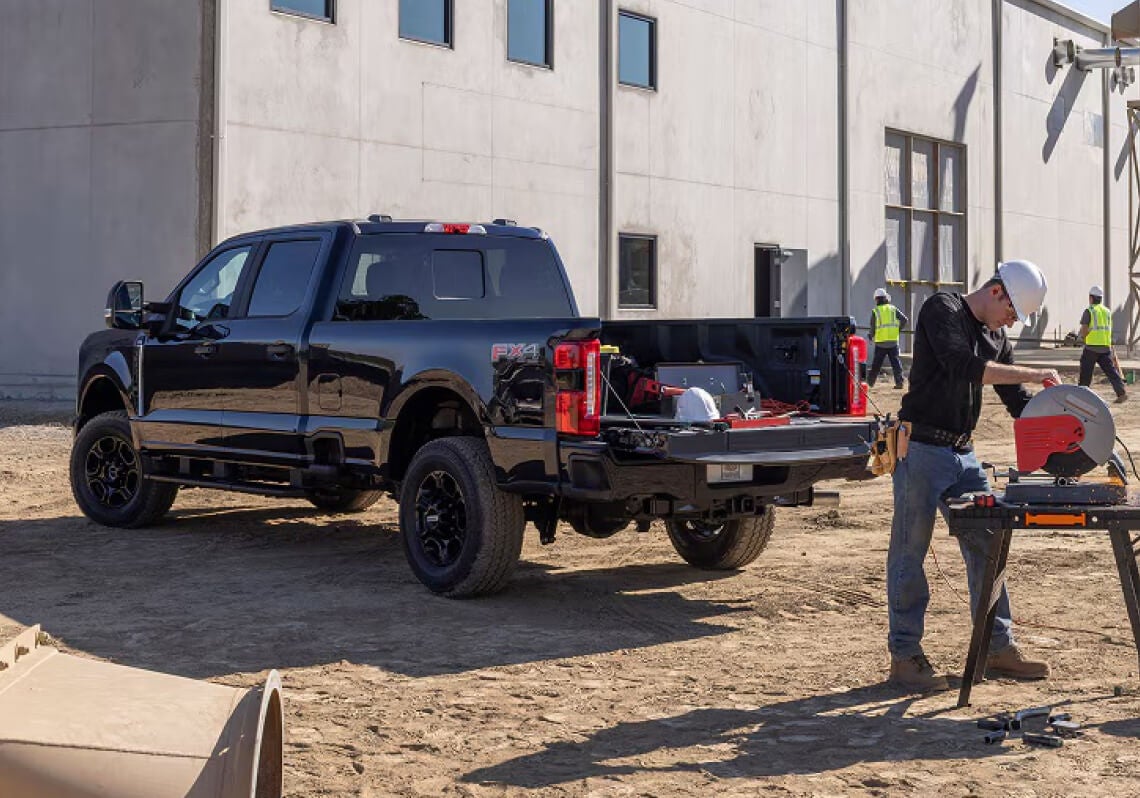
Yes, you can take both Section 179 and bonus depreciation on the same business vehicle, and combining the two provisions often produces a full first-year write-off of the purchase price. Section 179 is elected first, bonus depreciation under Section 168(k) applies to the remaining depreciable basis, and the total deduction depends on the vehicle's gross vehicle weight rating (GVWR), the percentage of business use, and your taxable business income for the year. The One Big Beautiful Bill Act (OBBBA), signed into law on July 4, 2025, permanently restored 100% bonus depreciation for qualifying property acquired after January 19, 2025, which makes the combined strategy more powerful now than at any point since the original Tax Cuts and Jobs Act (TCJA) provisions began phasing down in 2023.

The sections below cover what each deduction does, how the two differ, why the IRS requires one before the other, how vehicle weight determines your maximum write-off, what the exact 2026 dollar limits are, when one provision works better than the other, the mistakes that trigger recapture, how entity type and state conformity affect the real tax savings, and what documentation the IRS expects you to have ready.

Key Takeaways

  • Section 179 and bonus depreciation can be claimed on the same business vehicle. The IRS requires Section 179 to be elected first, followed by bonus depreciation on the remaining basis, and then regular MACRS depreciation on any balance left.
  • The 2026 Section 179 deduction limit is $2,560,000 overall, with a $32,000 cap on heavy SUVs rated between 6,001 and 14,000 pounds GVWR, according to Rev. Proc. 2025-32.
  • Bonus depreciation stands at 100% permanently under the OBBBA for qualifying property acquired after January 19, 2025, with no annual dollar cap and no business income limitation.
  • Passenger vehicles under 6,000 pounds GVWR face Section 280F "luxury auto" depreciation limits of $20,300 in Year 1 with bonus depreciation, or $12,300 without, per Rev. Proc. 2026-15.
  • Heavy vehicles over 6,000 pounds GVWR that are not classified as passenger SUVs, such as long-bed pickups and cargo vans, face no Section 179 SUV cap and can often be fully deducted in Year 1.
  • Section 179 cannot create or increase a net operating loss; bonus depreciation can. That distinction drives the strategic choice between the two provisions for businesses with variable income.
  • Several major states, including California, New York, and New Jersey, do not conform to federal bonus depreciation, which means the federal deduction does not automatically carry to your state return.
  • Business use must exceed 50% for the vehicle to qualify for either provision. Dropping below 50% in any later year triggers depreciation recapture taxed as ordinary income.

What Is Section 179 and How Does It Apply to Business Vehicles?

Section 179 is a provision of the Internal Revenue Code that lets a business elect to deduct the full purchase price of qualifying property in the year the property is placed in service, rather than depreciating it over several years. Section 179 was first enacted in 1958, and its dollar limits have been raised repeatedly. The OBBBA raised the baseline from $1,000,000 to $2,500,000 effective for tax years beginning after December 31, 2024, according to OBBBA Section 70301. After the annual inflation adjustment under Rev. Proc. 2025-32, the 2026 Section 179 limit stands at $2,560,000.

The Section 179 deduction begins to phase out dollar for dollar once total qualifying property placed in service during the tax year exceeds $4,090,000 for 2026. The deduction disappears entirely at $6,650,000 of qualifying purchases. For most small and mid-sized businesses, that ceiling is well above their annual equipment and vehicle spending, which means the full deduction is available.

Vehicles qualify for Section 179 under the same rules as other tangible personal property, with one critical condition. The vehicle must be used more than 50% of the time for business purposes. A vehicle used exactly 50% does not qualify. A vehicle used 70% for business qualifies, but only 70% of the purchase price is eligible for the deduction. Business use is measured by miles driven for business divided by total miles driven, and the IRS expects that measurement to be documented in a contemporaneous mileage log rather than reconstructed at year end.

Both new and used vehicles qualify for Section 179. The vehicle does not need to be brand new from the factory. It only needs to be new to your business. A three-year-old pickup truck purchased from a dealership and placed into service for your company qualifies the same way a factory-ordered truck does, as long as you have not previously used that specific vehicle in your own business operations. We help clients run these calculations as part of our tax planning work, because the decision about whether to elect Section 179 and how much to elect depends on the full picture of income, entity type, and state filing position.

What Is Bonus Depreciation and How Does It Work for Vehicles?

Bonus depreciation is a separate provision under IRC Section 168(k) that allows a business to deduct a percentage of the cost of qualifying property in the first year the property is placed in service, on top of regular depreciation. Under the OBBBA, that percentage is permanently set at 100% for qualifying property acquired after January 19, 2025. The permanent restoration replaced a phaseout schedule that had reduced bonus depreciation from 100% in 2022 to 80% in 2023, 60% in 2024, and 40% for property acquired before January 20, 2025, according to the original TCJA Section 168(k) schedule.

Bonus depreciation carries no annual dollar cap. A business purchasing $5,000,000 in qualifying vehicles and equipment can claim 100% bonus depreciation on the entire amount, regardless of the spending level. Bonus depreciation also carries no business income limitation. A company that shows a loss for the year can still claim bonus depreciation, and the depreciation itself can create or deepen a net operating loss (NOL) that carries forward to offset income in future years. That characteristic distinguishes bonus depreciation from Section 179 in a way that matters significantly for businesses with uneven revenue.

Bonus depreciation applies by default. Unlike Section 179, which must be affirmatively elected on Form 4562, bonus depreciation is automatic for eligible property unless the taxpayer elects out. Electing out applies per asset class for the entire tax year, not per individual asset, so a business choosing to forgo bonus depreciation on one vehicle must forgo it on all vehicles in the same MACRS asset class placed in service that year.

The qualifying property rules for bonus depreciation mirror the requirements for vehicles. The vehicle must have a MACRS recovery period of 20 years or less, must be placed in service during the tax year, must be used in a trade or business, and must be acquired from an unrelated party. One additional restriction affects dealership-financed vehicles: property purchased using "floor financing," the type of revolving credit line used by most auto dealerships for inventory, does not qualify for bonus depreciation, according to IRS Publication 946.

What Is the Difference Between Section 179 and Bonus Depreciation?

The difference between Section 179 and bonus depreciation is that Section 179 is an elective deduction with an annual dollar cap and a business income limitation, while bonus depreciation is a default deduction with no dollar cap and no income limitation. Both provisions allow first-year write-offs for qualifying property, but they operate under different rules, and those differences determine which one produces the better result in a given tax year.

FeatureSection 179Bonus DepreciationAnnual dollar limit (2026)$2,560,000No limitBusiness income limitationYes, cannot exceed taxable business incomeNo, can create or increase a net operating lossElection methodElective; must be chosen on Form 4562Automatic; applies unless taxpayer elects outHeavy SUV cap (6,001-14,000 lbs)$32,000 for 2026No capUsed property eligible?Yes, if new to the businessYes, if new to the businessApplies to which entity types?All, but pass-through limitations applyAllState conformityMost states conformSeveral major states do not conformPhase-out based on total spendingYes, begins at $4,090,000 (2026)No phase-outMinimum business useMore than 50%More than 50%Current percentage (2026)Up to 100% of cost (within cap)100% of remaining basis after Section 179

The practical result of these differences is that the two provisions complement each other rather than compete. Section 179 absorbs the portion of the vehicle's cost up to the applicable cap, bonus depreciation absorbs the remaining basis, and regular MACRS depreciation handles whatever is left. For heavy vehicles, the combination often produces a full first-year deduction equal to 100% of the business-use portion of the purchase price.

Do You Have to Take Section 179 Before Bonus Depreciation?

Yes, the IRS requires you to claim the Section 179 deduction first, apply bonus depreciation to the remaining depreciable basis second, and then use regular MACRS depreciation on any balance that remains. That ordering is prescribed by IRS Publication 946 and is not optional. Reversing the order or skipping Section 179 to take bonus depreciation on the full cost is not how the provisions interact.

The ordering matters strategically because Section 179 is limited to taxable business income while bonus depreciation is not. A business with $80,000 in taxable income and a $90,000 vehicle purchase can elect Section 179 up to $80,000 (or the applicable vehicle cap, whichever is lower), then claim bonus depreciation on the remaining basis without regard to income. The bonus depreciation portion can push the business into a net operating loss that carries forward under IRC Section 172. Section 179 alone cannot produce that result.

For pass-through entities like S corporations and partnerships, the ordering creates an additional layer. The Section 179 deduction passes through to owners on Schedule K-1, but the deduction is limited at the individual owner level by that owner's taxable income from the entity. Bonus depreciation flows through separately and carries no individual income limitation. Structuring the election to maximize the amount that lands in bonus depreciation rather than Section 179 can produce a larger usable deduction at the individual level for owners whose share of entity income is low in the current year. This kind of depreciation allocation is a core part of the tax planning work we do with pass-through business owners every year.

How Do Vehicle Weight Classes Affect Your Deduction?

Vehicle weight classes determine which depreciation caps apply, and the difference between a vehicle under 6,000 pounds and a vehicle over 6,000 pounds can mean tens of thousands of dollars in additional first-year deductions. The IRS uses gross vehicle weight rating (GVWR), not curb weight, as the dividing line. GVWR is the manufacturer's maximum loaded weight for the vehicle, including passengers, fuel, and cargo. The rating is printed on the manufacturer's label, usually found on the inside edge of the driver's side door.

Three tiers govern the vehicle deduction landscape. Each tier carries a different set of caps, and the boundaries between them determine the economics of a vehicle purchase for business consulting clients, contractors, and any business owner who drives for work.

Can I Take Bonus Depreciation on a Vehicle Less Than 6000 Lbs?

Yes, you can take bonus depreciation on a vehicle less than 6,000 lbs, but the total first-year deduction is capped by the Section 280F luxury auto limits regardless of what you paid for the vehicle. For passenger automobiles placed in service in 2026, Rev. Proc. 2026-15 sets the first-year depreciation ceiling at $20,300 when bonus depreciation is claimed, or $12,300 when bonus depreciation is not claimed. A $50,000 sedan and a $30,000 sedan used 100% for business both produce the same $20,300 maximum first-year deduction. The remaining basis is recovered over the following years: $19,800 in Year 2, $11,900 in Year 3, and $7,160 per year thereafter until the vehicle is fully depreciated.

The $20,300 ceiling already includes an $8,000 bonus depreciation add-on under IRC Section 168(k)(2). Without claiming bonus depreciation, the Year 1 ceiling drops to $12,300. That $8,000 gap is meaningful for any business that owns a passenger car, which is why bonus depreciation is almost always worth claiming on lighter vehicles even when the overall cap limits the total deduction.

Can You Write Off 100% of a 6000 Lb Vehicle?

You can write off 100% of a vehicle rated above 6,000 lbs GVWR in the first year by combining Section 179 and bonus depreciation, but SUVs in the 6,001 to 14,000 lb range face a $32,000 Section 179 cap before bonus depreciation absorbs the rest. A $90,000 Chevrolet Tahoe with a GVWR of 7,300 lbs, used 100% for business, produces a $32,000 Section 179 deduction plus $58,000 in bonus depreciation on the remaining basis, totaling a $90,000 first-year write-off.

Vehicles that exceed 6,000 lbs but escape the SUV classification face no Section 179 cap at all. The IRS defines the capped "SUV" category narrowly. Vehicles with more than nine seats behind the driver's seat, vehicles with a cargo area at least six feet in interior length that is not readily accessible from the passenger compartment, and vehicles with no seating behind the driver and an enclosed driver compartment all fall outside the SUV definition. That means many full-size pickup trucks with long beds, cargo vans, and delivery vehicles qualify for the full Section 179 deduction without the $32,000 SUV ceiling.

What Vehicles Qualify for 100% Bonus Depreciation?

Vehicles that qualify for 100% bonus depreciation include any vehicle used more than 50% for business that has a MACRS recovery period of 20 years or less and is acquired after January 19, 2025. This covers passenger cars, SUVs, pickup trucks, vans, delivery vehicles, and specialty vehicles. The 100% rate applies to both new and used vehicles, as long as the vehicle is new to the taxpayer's business.

The practical distinction is not whether a vehicle qualifies for bonus depreciation but how much of the bonus depreciation actually shows up on the return. Light passenger vehicles under 6,000 lbs qualify for bonus depreciation, but the Section 280F luxury auto limits cap the total first-year deduction at $20,300 regardless. Heavy vehicles over 6,000 lbs qualify for bonus depreciation without the luxury auto cap, which is why the 6,000 lb threshold receives so much attention. According to the Bureau of Labor Statistics, used car and truck prices dropped 2% in the 12 months ending January 2026, making this a favorable window for businesses considering a heavy vehicle purchase for tax year 2026.

How Much Can You Deduct in the First Year for a Business Vehicle in 2026?

The first-year deduction for a business vehicle in 2026 ranges from $20,300 for a light passenger car to the full purchase price for a heavy non-SUV vehicle, depending on weight class, vehicle type, and business-use percentage. The table below consolidates the 2026 limits across all three weight tiers.

Vehicle CategoryGVWR2026 Section 179 LimitBonus DepreciationMax First-Year Deduction (100% business use)Passenger car / light truck / small SUVUnder 6,000 lbs$12,300 (within luxury auto cap)$8,000 add-on$20,300Heavy SUV (passenger-type)6,001 - 14,000 lbs$32,000 (SUV cap)100% of remaining basisFull purchase priceHeavy non-SUV (long-bed pickup, cargo van, 9+ passenger)Over 6,000 lbsFull Section 179 (no SUV cap)100% of remaining basisFull purchase priceVery heavy vehicle (box truck, dump truck, etc.)Over 14,000 lbsNo limit100%Full purchase price

Sources: Rev. Proc. 2025-32 (2026 Section 179 limits); Rev. Proc. 2026-15 (2026 luxury auto limits); IRC Section 179(b)(5)(A) (SUV cap); OBBBA Section 70401 (100% bonus depreciation).

For light vehicles not claiming bonus depreciation, the depreciation schedule extends across the recovery period in a prescribed sequence:

  1. Year 1: $12,300 (or $20,300 with bonus depreciation)
  2. Year 2: $19,800
  3. Year 3: $11,900
  4. Year 4 and each subsequent year: $7,160 until the vehicle is fully depreciated

These ceilings are proportionately reduced for business use below 100%. A vehicle used 75% for business faces ceilings at 75% of the amounts listed. Keeping accurate records of business-use percentage is not optional. The IRS treats vehicles as "listed property" under IRC Section 280F(d)(4), which means the substantiation requirements are stricter than for most other business assets. Maintaining financial statements and records that document mileage by trip, purpose, date, and destination is the single most important compliance step for any business vehicle deduction.

Is It Better to Take Section 179 or Bonus Depreciation?

Whether Section 179 or bonus depreciation produces the better result depends on your taxable business income, your entity structure, and whether your state conforms to federal bonus depreciation. The two provisions are not interchangeable, and the right strategy varies by taxpayer and by year.

Section 179 works best for businesses with stable, predictable income because the deduction cannot exceed taxable business income. A business earning $200,000 and purchasing a $200,000 heavy truck can elect Section 179 for the full amount and reduce taxable income to zero. Bonus depreciation works best when income is lower than the vehicle cost, because it can push the business into a net operating loss. That NOL carries forward indefinitely under current rules, offsetting up to 80% of taxable income in future years. The same accelerated depreciation logic applies to real property through cost segregation, where components of a building are reclassified into shorter recovery periods to accelerate deductions.

State conformity is the variable most taxpayers overlook. Most states conform to Section 179, which means the deduction carries through to your state return. Several major states, including California, New York, New Jersey, Massachusetts, Rhode Island, and New Hampshire, do not conform to federal bonus depreciation, according to a Withum analysis of state responses to the OBBBA. A business in one of those states claiming $60,000 in federal bonus depreciation sees no state-level tax savings from that portion of the deduction. Electing a larger Section 179 deduction and a smaller bonus depreciation amount can produce a better combined federal-and-state result for businesses in non-conforming states.

When Not to Use Section 179 Deduction?

Section 179 should not be used when your business has little or no taxable income for the year, because the deduction is limited to your aggregate taxable income from active trades or businesses. A business with $10,000 of taxable income and a $60,000 vehicle purchase can only elect $10,000 of Section 179. The unused Section 179 carries forward to the next year, but bonus depreciation would have allowed the full deduction to be taken immediately and the excess to create an NOL.

Section 179 is also less useful when you expect significantly higher income in future years and want to preserve depreciation deductions for those higher-bracket years. In that scenario, spreading depreciation through MACRS without electing Section 179 or bonus depreciation produces deductions in years where the tax rate is higher and the benefit per dollar of deduction is greater. Startup advisory clients in their first year of operations frequently face this calculation, because early losses are common and future income growth is expected.

Why Opt Out of Bonus Depreciation?

Opting out of bonus depreciation makes sense when a business is already in a net operating loss position, when it expects higher tax rates in future years, or when the accelerated deduction produces no current-year tax savings. Bonus depreciation applies by default, so the taxpayer must affirmatively elect out on a timely filed return. The election applies per MACRS asset class for the entire tax year, not per individual asset.

Businesses that anticipate income growth over the next several years may find that spreading depreciation across the five-year MACRS recovery period produces more cumulative tax savings than concentrating the entire deduction in Year 1. A $100,000 vehicle deducted entirely in a year when the business has no taxable income produces $0 in immediate tax savings, while $20,000 deducted in each of five profitable years produces real savings every year. The decision requires projecting income across the recovery period and weighing current deductions against future business profitability, which is work we do regularly as part of proactive tax strategy engagements.

What Are Common Section 179 Mistakes?

The most common Section 179 mistakes are failing to document business-use percentage, missing the placed-in-service deadline, ignoring state-level differences, and underestimating the recapture risk when business use changes. Each mistake carries a specific consequence, and each is preventable with planning.

  • No contemporaneous mileage log. The IRS requires a written record kept at or near the time of each trip, documenting date, destination, business purpose, and miles driven. A spreadsheet reconstructed in April from memory does not satisfy the contemporaneous requirement, and the IRS audits vehicle deductions disproportionately. According to IRS audit statistics, claiming 90% or higher business use on a single household vehicle is a known audit trigger.
  • Missing the "placed in service" date. A vehicle ordered in November but not delivered and available for use until January of the following year does not qualify for the current tax year. Placed in service means ready and available for its assigned business function, not ordered, not paid for, and not titled.
  • Assuming state conformity. Claiming a $60,000 federal bonus depreciation deduction and assuming the same deduction appears on your California or New York state return produces an understatement on the state return. California adds back federal bonus depreciation entirely and substitutes its own depreciation schedule.
  • Exceeding business income with Section 179. Section 179 cannot reduce taxable business income below zero. A business that elects Section 179 in excess of its income generates a disallowed portion that carries forward but does not produce a current-year loss.
  • Forgetting to file Form 4562. The Section 179 election is made on Part I of Form 4562, which must be filed with a timely return (including extensions). A return filed without Form 4562 is a return that did not elect Section 179.
  • Switching from standard mileage to actual expenses incorrectly. If you use the standard mileage rate in the first year a vehicle is available for business, you can switch to actual expenses later, but you must use straight-line depreciation going forward. If you start with actual expenses and claim Section 179 or bonus depreciation, you are locked into actual expenses for the life of that vehicle.

Want tax & accounting tips & insights?Sign up for our newsletter.

Thank you! Your submission has been received!
Oops! Something went wrong while submitting the form.