Learning Center for Tax and Financial Insights

Stay updated with clear, actionable articles on tax rules, deadlines, deductions, and financial decisions that impact individuals and businesses.

No items found.

SBA Questioning PPP Borrowers with Loans Over $2 Million

Article Highlights: PPP Loans Affected Borrowers Loan Application Certifications SBA Compliance Questionnaires SBA Information Review When Congress initially authorized the Paycheck Protection Program, its intent was to provide loans that would be partially or completely forgiven if used for the intended purposes of helping businesses affected by COVID-19 stay afloat and to help those businesses maintain payroll. As part of the Small Business Administration’s (SBA’s) loan application, Form 2483 or lender’s equivalent form, borrowers had to certify under penalty of imprisonment and monetary penalties to the following: Current economic uncertainty makes this loan request necessary to support the ongoing operations of the Applicant. The funds will be used to retain workers and maintain payroll or make mortgage interest payments, lease payments, and utility payments, as specified under the Paycheck Protection Program Rule; I understand that if the funds are knowingly used for unauthorized purposes, the federal government may hold me legally liable, such as for charges of fraud. Needless to say, the contemplation of free money had businesses scrambling to take out PPP loans, whether they were impacted by economic effects of COVID-19 or not. The secretary of the treasury had initially indicated the need for all PPP loans to be audited, but later specified only those of $2 million or more would be subject to audit. After a long wait, and as long anticipated, the SBA has initiated a compliance program to evaluate the good-faith certifications that borrowers made on their PPP Borrower Applications stating that economic uncertainty made the loan requests necessary. Accordingly, each borrower that, together with its affiliates, received PPP loans with an original principal amount of $2 million or greater will be required to participate in this compliance program, and will soon be receiving one of the following multi-page forms from their lender:

Explore More
No items found.

Renting Your Home or Vacation Home for Short Periods

Article Highlights: Airbnb, VRBO, and HomeAway Rented for Fewer than 15 Days During the Year The 7-day and 30-day Rules Exceptions to the 30-Day Rule Schedule C Reporting Many taxpayers rent out their first or second homes without considering tax consequences. Some of these rules can be beneficial, while others can be very detrimental. If you rent your home to others, then you should be aware of some special tax rules that probably apply to you. Even if you rent out your property using rental agents or online rental services that match property owners with prospective renters (such as Airbnb, VRBO or HomeAway), it is still your responsibility to properly report the rental income and expenses on your tax return. Special (and sometimes complex) taxation rules can make the rents that you charge tax-free. However, other situations may force your rental income and expenses to be treated as a business reported on Schedule C, as opposed to a rental activity reported on Schedule E. The following is a synopsis of the rules governing short-term rentals. Rented for Fewer than 15 Days During the Year – When a property is rented for fewer than 15 days during the tax year, the rental income is not reportable, and the expenses associated with that rental are not deductible. Interest and property taxes are not prorated, and the full amounts of the qualified mortgage interest and property taxes are reported as itemized deductions (as usual) on the taxpayer’s Schedule A. The 7-Day and 30-Day Rules – Rentals are generally passive activities, which means that losses from these activities are generally only deductible up to the amount of gains from other passive activities. However, an activity is not treated as a rental if either of these statements applies: A. The average customer use of the property is for 7 days or fewer—or for 30 days or fewer if the owner (or someone on the owner’s behalf) provides significant personal services. B. The owner (or someone on the owner’s behalf) provides extraordinary personal services without regard to the property’s average period of customer use. If the activity is not treated as a rental, then it will be treated as a trade or business, and the income and expenses, including prorated mortgage interest and real property taxes, will be reported on Schedule C. IRS Publication 527 states: “If you provide substantial services that are primarily for your tenant’s convenience, such as regular cleaning, changing linen, or maid service, you report your rental income and expenses on Schedule C.” Substantial services do not include the furnishing of heat and light, the cleaning of public areas, the collecting of trash, or other such general amenities.

Explore More
No items found.

Is That Inheritance Taxable?

Article Highlights: Estate Tax Estate Tax Exemption Fair Market Value at Date of Death Step up in Basis Community Property Deferred Untaxed Income Are inheritances taxable? This is a frequently misunderstood taxation issue, and the answer can be complicated. When someone passes away, all of their assets (their estate) will be subject to estate taxation, and whatever is left after paying the estate tax passes to the decedent’s beneficiaries. Sound bleak? Don’t worry, very few decedents’ estates ever pay any estate tax, primarily because the tax code exempts a liberal amount of the estate’s value from taxation; thus, only very large estates are subject to estate tax. In fact, with the passage of the Tax Cuts & Jobs Act (tax reform), the estate tax exemption has been increased to $11,580,000* for 2020 and will be inflation-adjusted in future years. That generally means that estates valued at $11,580,000* or less will not pay any federal estate taxes, and those in excess of the exemption amount only pay estate tax on the excess amount. Of interest, there are less than 10,000 deaths each year for which the decedent’s estate exceeds the exemption amount, so for most estates, there will be no estate tax and the beneficiaries will generally inherit the entire estate. * Note that, as with anything tax-related, the exemption is not always a fixed amount. It must be reduced by prior gifts in excess of the annual gift exemption, and it can be increased for a surviving spouse by the decedent’s unused exemption amount. Of course, once a beneficiary (also referred to as an heir) receives the inherited asset, any income generated by that property—be it interest from cash, rent from real estate, dividends from stocks, etc.—will be taxable to the beneficiary, just as if the property had always been the beneficiary’s. Because the value of an estate is based upon the fair market value (FMV) of the assets owned by the decedent on the date of their death (or in some cases, an alternative valuation date six months after the decedent’s date of death, which is rarely used), the beneficiaries will generally receive the inherited assets with a basis equal to the same FMV determined for the estate. What this means to a beneficiary is that if they sell an inherited asset, they will measure their gain or loss from the inherited basis (FMV at date of death). Example #1: Joe inherits shares of XYZ Corporation from his father. Because XYZ Corporation is a publically traded stock, the FMV can be determined by what it is trading for on the stock market. Thus, if the inherited basis was $40 per share and the shares are later sold for $50 a share, Joe will have a taxable gain of $10 ($50 - $40) per share. In addition, the gain will be a long-term capital gain, since all inherited assets are treated as being held long-term by the beneficiary. On the flip side, if the shares are sold for $35 a share, Joe would have a tax loss of $5 per share. Example #2: Joe inherits his father’s home. Like other inherited property, Joe’s basis is the FMV of the home on the date of his father’s death. However, unlike the stock, the FMV of which could be determined from the trading value, the home needs to be appraised to determine its FMV. It is highly recommended that a certified appraiser perform the appraisal and that it be done reasonably close in time to the decedent’s date of death. This is frequently overlooked and can cause problems if the IRS challenges the amount used for the basis.

Explore More
No items found.

Don't Miss the Opportunity for a Spousal IRA

Article Highlights: Spousal IRA Compensation Requirements Maximum Contribution Traditional or Roth IRA? One frequently overlooked tax benefit is the spousal IRA. Generally, IRA contributions are only allowed for taxpayers who have compensation (the term “compensation” includes wages, tips, bonuses, professional fees, commissions, taxable alimony received, and net income from self-employment). Spousal IRAs are the exception to that rule and allow a non-working or low-earning spouse to contribute to his or her own IRA, otherwise known as a spousal IRA, as long as the spouse has adequate compensation. The maximum amount that a non-working or low-earning spouse can contribute is the same as the limit for a working spouse, which is $6,000 for 2020. If the non-working spouse’s age is 50 or older, that spouse can also make “catch-up” contributions (limited to $1,000), raising the overall contribution limit to $7,000. These limits apply provided that the couple together has compensation equal to or greater than their combined IRA contributions. Example: Tony is employed and his W-2 for 2020 is $100,000. His wife, Rosa, age 45, has a small income from a part-time job totaling $900. Since her own compensation is less than the contribution limit for the year, she can base her contribution on their combined compensation of $100,900. Thus, Rosa can contribute up to $6,000 to an IRA for 2020. The contributions for both spouses can be made either to a traditional or Roth IRA, or split between them as long as the combined contributions don’t exceed the annual contribution limit.

Explore More
No items found.

Video: SBA Questioning PPP Borrowers with Loans Over $2 Million

The U.S. Small Business Administration (SBA) has initiated a compliance program to evaluate PPP borrowers whose loans are $2 million or more. Watch this video for more info on how your business can be better prepared. .embed-container { position: relative; padding-bottom: 56.25%; height: 0; overflow: hidden; max-width: 100%; } .embed-container iframe, .embed-container object, .embed-container embed { position: absolute; top: 0; left: 0; width: 100%; height: 100%; }

Explore More
Personal Finance

Year-End Financial Checklist: 4 Money Moves You Should Prioritize Now

If you can’t wait for 2020 to be over, you’re certainly not alone. But don’t let the myriad terrible things about the year distract you from taking care of important end-of-year financial moves. We’ve all been guilty of falling short on the plans and promises we made for what we’d accomplish while locked down, but the good news is that when it comes to your financial checklist, there’s still time left to make sure that your money is working its hardest for you. Not sure where to start? Here are four of the most important things you can do to make sure you’re in the strongest possible financial position as you head into 2021. 1. Have extra cash on hand? Use it to your benefit! The economic news has reported that those who have been able to continue working in 2020 have actually increased their savings this year. There are lots of reasons for this: We’re not spending money on commuting, on lunches out, on dry cleaning and work clothing, or on vacations. If you’ve found yourself with an excess of cash, now’s the time to make it work for you by doing any or all of the following: Make sure that your emergency cash account is fully funded. Max out your retirement account. Whether you have a 401(k), a 403 (b) or an IRA, if you haven’t reached the 2020 limits then put some of your extra cash in there. There’s an especially big incentive for those who turned fifty this year — you can exceed the limit by $6,500 as a way to catch-up on contributions. Take advantage of your brokerage account to invest your excess money. If you want to convert a Roth IRA, use the cash to cover the tax. If you’re a homeowner, check to see whether you’ll benefit by refinancing your mortgage. If you carry high-cost debt or student loans, pay them down (or off) If you are self-employed or earn 1099-NEC income, you can put your extra cash into a SEP IRA or Solo 401(k) to lower your tax liability while simultaneously saving. 2. Take advantage of the open enrollment period to review your current selections As 2021 approaches, employees find themselves in the period known as open enrollment, when they can make changes to their benefit elections and their health insurance coverage. As tempting as it is to simply leave things as they are, there’s a good chance that you can make adjustments that will put you in a better economic position. If you’re paying for coverage that you’re not using or not taking advantage of options that provide you with tax advantages, set aside some time to review while you still have a chance. Here are the things to pay closest attention to: Life Insurance Coverage – Many companies provide life insurance to their workers up to a certain amount of coverage for free, while others offer it as a box to check as though the rates being offered are competitive. The truth is that you may be paying too much, and it’s a good idea to check. It’s easy to get a quote on a private policy from the countless insurance companies that offer online quotes. Determine what coverage you need and for how long and then price it out. If you find a better deal, then drop the one from your employer, but not until after you’re sure that your new policy is in effect. Pre-tax benefits — Many companies offer pre-tax benefits like transportation vouchers or parking that were great while you were commuting, but not necessary for those who anticipate working from home for the long term. If you’re paying for any of those options, it’s probably a good idea to discontinue that benefit. Health insurance — It is never a good idea to just let your health insurance benefits stand without looking at how you are using them and whether that is likely to change. If you are in good health and not really using the coverage you might want to switch to a plan that offers greater savings, or if you’ve used it more frequently then you thought you would it might be time to switch out of the plan that you last chose to one with a lower deductible. Flexible spending accounts – These are valuable benefits because of the savings you can realize through pre-tax contributions, but only if you are making good use of it. You also want to check before the end of the year to see whether your plan allows any money left in your flexible spending account to be rolled over. If it can’t be, then you need to figure out how to spend it before the year is over, or else you’re just throwing money away. Check your retirement plan contribution levels while there is still time. Though the contribution limits for 2021 haven’t changed, the amount that you feel comfortable contributing may have.

Explore More
No results found.
Thank you! Your submission has been received!
Oops! Something went wrong while submitting the form.

Want tax & accounting tips & insights?Sign up for our newsletter.

Thank you! Your submission has been received!
Oops! Something went wrong while submitting the form.

Why Work With Us?

We combine deep tax expertise, financial strategy, and practical business insight to help you manage complexity, stay compliant, and make confident financial decisions.
A dollar sign, representing financial advice or discussion at NR CPAs & Business Advisors.

Experienced CPA and Enrolled Agent Leadership

Guidance led by licensed professionals with deep expertise in tax strategy, compliance, and complex financial matters.
White bar chart with an upward arrow on green circular background representing growth or progress at NR CPAs &. Business Advisors

Support for Growing Businesses and Startups

We understand the financial challenges of growth stage businesses and provide structured guidance to support expansion.
A white hand holding a dollar symbol and ascending bar chart on a green circular background representing financial growth or investment at NR CPAs & Business Advisors..

Strategic Financial Advisory

Our team helps you evaluate financial decisions with greater clarity, supported by practical insights and long term planning.

Fractional CFO Support

Access experienced financial leadership without the commitment and cost of hiring a full time Chief Financial Officer.

Proactive Tax Planning Approach

We focus on identifying tax opportunities throughout the year rather than reacting only during filing season.

Clear and Reliable Financial Reporting

Accurate financial statements and reporting that help you better understand performance and make informed decisions.
White IRS building icon with pillars and a dollar sign above on a green circular background.

Professional IRS Representation

Experienced support in resolving IRS notices, disputes, and compliance matters while protecting your financial interests.

Personalized Client Focus

Every client receives thoughtful attention and tailored financial solutions based on their specific needs and business goals.
Financial matters often involve important decisions. Working with experienced advisors can help you approach them with greater clarity and confidence in your choices.

Need Help With Your Tax or Financial Decisions?

Discuss your situation with our advisors to get clear guidance on tax planning, IRS matters, and the financial decisions ahead.
Business consulting at NR CPAs & Business Advisors.

Request Your Consultation

Fill out the form to discuss your tax concerns, financial questions, or advisory needs with our team. We will review your details and respond shortly.

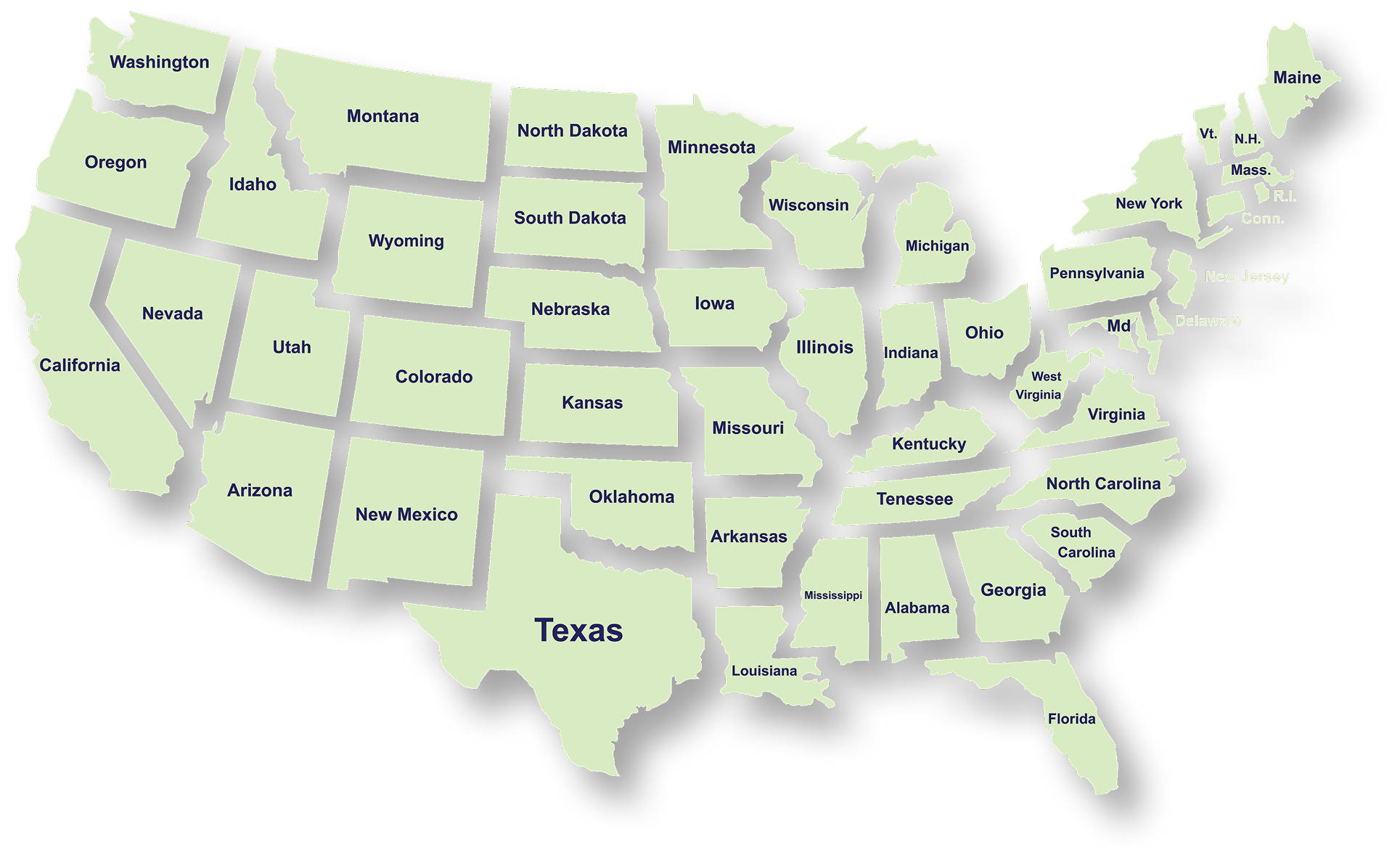
Serving Businesses & Individuals Across USA

We handle accounting, tax filing, and planning with defined timelines and accurate reporting for businesses and individuals across all states.

Frequently Asked Questions

What services does NR CPAs & Business Advisors provide?
What is tax planning and why is it important for businesses?
How can a Virtual CFO help my business?
When should a business consider IRS tax resolution services?
What financial statements does a business typically need?
How can startup advisory services help new businesses?
What is strategic business planning?
What is a Virtual Family Office and who can benefit from it?