Learning Center for Tax and Financial Insights

Stay updated with clear, actionable articles on tax rules, deadlines, deductions, and financial decisions that impact individuals and businesses.

No items found.

Video: Game Shows & Taxes

We all have our favorite game shows such as Wheel of Fortune, The Price is Right, and Let’s Make A Deal, and we love to have the contestants win big. Unfortunately, those winnings are taxable on the contestant’s state and federal tax returns. See what can happen by watching this video. .embed-container { position: relative; padding-bottom: 56.25%; height: 0; overflow: hidden; max-width: 100%; } .embed-container iframe, .embed-container object, .embed-container embed { position: absolute; top: 0; left: 0; width: 100%; height: 100%; }

Explore More
No items found.

2020 TAX DEDUCTION FINDER & PROBLEM SOLVER

To get ready for your tax appointment, we use tax organizers to help us identify missing tax deductions and get you more organized before your appointment. We update the tax organizer annually to make sure you are compliant with the latest tax law changes. The 2020 individual tax organizer is provided in three configurations to assist you in collecting relevant tax information needed to properly prepare your tax return. Access any of the three versions by double-clicking on the underlined title links below. The organizers can be downloaded to your computer where you can fill and save the information until you have completed collecting all of your information. After you have completed it, please forward the organizer (printed or digitally) to our office for immediate service. If you have an office appointment, you can print it out and bring it with you to the meeting. A word of caution: you can fill the organizers online and print them out. However, if you close the file, your data will not be saved unless the form is saved to your computer. Once the completed organizer has been received, you will be contacted by phone, fax or e-mail with any questions, comments, or suggestions. If you e-mail our office advising us that you have sent your tax materials, we will notify you of their receipt. 2020 Basic Organizer

Explore More
No items found.

Don't Fall Behind in Saving for Retirement

Article Highlights: Predicting Social Security Income Planning for the Future Employer Retirement Plans Tax Incentive Retirement Savings Plans Some folks have been tapping or suspending their retirement savings to make ends meet during this COVID-19 pandemic, and although understandable, it is important that they continue making contributions to their savings as quickly as financially possible. Still other people have simply been ignoring the need to save for their retirement, which can have an unpleasant result when it comes time to retire. That tends to be the case with younger individuals who perceive retirement to be far in the future and therefore believe they have plenty of time to save for it. Some will postpone the issue until late in life and then must scramble during their last few working years to fund their retirement. Other people ignore the issue altogether, thinking their Social Security income (assuming they qualify for it) will take care of their retirement needs. By current government standards, a single individual with $12,490 or a married couple with $16,910 of annual household income is at the 100% poverty level. If you compare those levels with potential Social Security benefits, you may find that expecting to retire on just Social Security income may result in a bleak retirement. You can predict your future Social Security income by visiting the Social Security Administration’s Retirement Estimator. With the Retirement Estimator, you can plug in some basic information to get an instant, personalized estimate of your future benefits. Different life choices can alter the course of your future, so try out different scenarios – such as higher and lower future earnings amounts and various retirement dates – to get a good idea of how these scenarios can change your future benefit amounts. Once you’ve done this, consider what your retirement would be like with only Social Security income. If you are fortunate enough to have an employer-, union-, or government-funded retirement plan, determine how much you can expect to receive when you retire. Add that amount to any Social Security benefits you are entitled to and then consider what retirement would be like with that combined income. If this result portends an austere retirement, know that you will be better off the sooner you start saving for retirement. With today’s low interest rates and up-and-down stock market, it is much more difficult to grow a retirement plan with earnings than it was 10 or 20 years ago. With current interest rates not even, or just barely, covering inflation rates, there is little or no effective growth. That means one must set aside more of one’s current earnings to prepare for a comfortable retirement. Because the government wants you to save and prepare for your own retirement, tax laws offer a variety of tax incentives for retirement savings plans, both for wage earners and for self-employed individuals and their employees. These plans include the following: Traditional IRA – This plan allows up to $6,000 (or $7,000 for individuals aged 50 and over) of tax-deductible contributions each year. In the past, you could no longer make contributions after reaching age 70½. However, beginning in 2020 and for future years, contributions can be made at any age as long as you have work earnings for the year that the contribution applies. The amount that can be deducted phases out for higher-income taxpayers who also have retirement plans through their employers. Roth IRA – This plan also allows up to $6,000 (or $7,000 for individuals aged 50 and over) of nondeductible contributions each year. The amount that can be contributed phases out for higher-income taxpayers; unlike the Traditional IRA, these amounts phase out even for those who do not have an employer-related retirement plan. Note the difference: the phaseout applies to the deductible amount for Traditional IRAs, whereas the contribution amount phases out for Roth IRAs. Spousal IRAs – Spouses with no compensation for the year may contribute to their own IRA based upon their spouse’s compensation. If the unemployed spouse chooses a traditional IRA and the working spouse participates in an employer’s plan, the contribution’s deductibility phases out when adjusted gross income is between $196,000 and $206,000; if a Roth IRA is chosen, the contribution limit also phases out between $196,000 and $206,000, even if the working spouse isn’t covered by an employer’s plan Employer 401(k) Plans – An employer’s 401(k) plan generally enables employees to contribute up to $19,500 per year, before taxes. In addition, taxpayers who are age 50 and over can contribute an extra $6,500 annually, for a total of $26,000. Many employers also match a percentage of the employee’s contribution, and this can amount to a significant sum for those who stay in the plan for many years. Health Savings Accounts – Although established to help individuals with high-deductible health insurance plans pay their medical expenses, these accounts can also be used as supplemental retirement plans if an individual has already maxed out his or her contributions to other types of plans. Annual contributions for these plans can be as much as $3,550 for individuals and $7,100 for families. Tax Sheltered Annuities – These retirement accounts are for employees of public schools and certain tax-exempt organizations; they enable employees to make annual tax-deferred contributions of up to $19,500 (or $26,000 for those aged 50 and over). Self-Employed Retirement Plans – These plans, also referred to as Keogh plans, allow self-employed individuals to contribute 25% of their net business profits to their retirement plans. The contributions are pre-tax (which means that they reduce the individual’s taxable net profits), so the actual amount that can be contributed is 20% of the net profits. Simplified Employee Pension Plan (SEP) – These are plans that are relatively easy for a self-employed individual to set up and can be established in the following year up to the due date of the tax return, including the extended due date if an extension is filed. They are quite commonly used by self-employed individuals without employees and may also be used by self-employed individuals who are willing to make contributions on behalf of their employees. The contribution limit for the self-employed individual is the lesser of 25% of their compensation (which equates to 20% of the net profits from self-employment, after deducting the SEP contribution) or $57,000 for 2020. Contributions made on behalf of employees are deductible as a business expense, while the contributions for the self-employed individual are deducted as an above-the-line deduction on the individual’s income tax return.

Explore More
No items found.

Preparing for 2021: Tax Planning Strategies for Small Business Owners

If you are a small business owner, every penny of your income counts. This means that you not only want to optimize your revenue, but also minimize your expenses and your tax liability. Unfortunately, far too many entrepreneurs are not well-versed on the tricks and tools available to them and end up paying far more than they need to. You don’t need an accounting degree to take advantage of tax-cutting tips. Here are a few of our favorites. THINK ABOUT CHANGING TO A DIFFERENT TYPE OF TAX STRUCTURE When you started your business, one of the first decisions you needed to make was whether you wanted to operate as a sole proprietor, partnership, LLC, S corporation or C corporation. But as more time goes by, the initial reasons for structuring your business the way that you did may no longer be applicable, or in your best interest from a tax perspective. There is no requirement that you stick with the business structure you initially chose. Ever since the Tax Cuts and Jobs Act of 2017 (TCJA) changed the highest corporate income tax rate from 35% to 21%, sole proprietorships, LLCs, partnerships and S corporations can realize significant tax savings by electing to be taxed as a C corporation. This simple change can make sense if the owner of these pass-through businesses is taxed at a high tax bracket. If so, all you need to do is fill out and file Form 8832. Before doing so, make sure that the tax savings you can realize are a reasonable tradeoff for the other reasons that you may have originally selected the structure you are currently in. PASS THROUGH BUSINESSES CAN GET A 20% TAX BREAK One of the most impactful changes that the TCJA made for pass-through businesses whose income is passed through for taxation as their owners’ personal income is a valuable tax break known as the qualified business income (QBI) deduction. For those that are eligible, this deduction is worth a maximum 20% tax break on the income they receive from the business – but determining whether or not you are eligible can be a challenge. There are several restrictions on taking advantage of the deduction, particularly with reference to specified service trade or businesses (SSTBs) whose owners either earn too much income or rely specifically on their employees’ or owners’ reputation or skill. Though architecture and engineering firms escape this limitation, other business models – including medical practices, law firms, professional athletes and performing artists, financial advisors, investment managers, consulting firms and accountants – fall into the category that lose out on the deduction if their income is too high. In 2019 single business owners of SSTBs began phasing out at $160,700 and are excluded once their income exceeds $210,700, while those who are married filing a joint return phase out at $321,400 and are excluded at $421,400. To calculate the deduction, use Part II of Form 8995-A. Businesses that are not SSTBs are eligible to take the deduction even when they pass the upper limits of the thresholds, but only for either half of the business owners’ share of the W-2 wages paid by the business or a quarter of those wages plus 2.5% of their share of qualified property. These limitations and specifications for what type of business is and is not eligible are head-spinning, and though it is tempting to simply take the deduction, it’s a good idea to confirm whether you qualify and how to claim it with our office before moving forward. KNOW HOW YOU’RE GOING TO PAY YOUR TAXES It is incredibly rewarding to live the dream of owning your own small business, but the hard work required to generate revenue makes paying taxes extra painful. This is especially true because of the “pay as you go” tax system that the United States uses, which asks business owners to make quarterly estimated payments. While employees pay their taxes ahead via payroll deductions withheld by their employers, there is no such automatic system set up for small business owners, and that leaves many with the temptation of delaying making payments in order to maintain liquidity. Unfortunately, failing to pay taxes quarterly can put you in the uncomfortable position of still having to pay at one point, with the additional burden of penalties and interest as a result of your delay. Though setting aside the money to pay taxes requires discipline, doing so will save you from the penalties charged by the IRS, which are calculated based on the amount you should have paid each quarter multiplied by both your shortfall and the effective interest rate during the specific quarter (established as 3 percent over the federal short-term rate – C corporations pay a different rate). Even if you don’t calculate your quarterly estimated rates correctly, the safe harbor rule allows small businesses to pay the lower amount of either 90% of the tax due on your current year return or 100% of the tax shown on your last filed tax return. For those whose AGI was over $150,000 in the previous tax year, the safe harbor percentage is 110% of the previous year’s taxes. While it is always a good idea to increase the amount you send in if you are having a higher-income year, by doing a simple calculation of your safe harbor number and dividing it by four, you have a reasonable quarterly payment that you can safely send in on the due dates (April 15th, June 15th, September 15th and January 15th of the following year). By setting aside the appropriate percentage that you will owe from each payment you receive, you can easily set aside the money you will need to pay and entirely avoid concerns about penalties or interest. Payment is most easily submitted using the online link for IRS Direct Pay, though many people opt for sending in the paper vouchers for IRS Form 1040-ES, along with a check. There is also an EFTPS system available for C Corporations’ use. CHOOSE YOUR ACCOUNTING METHOD CAREFULLY Each small business owner calculates their income and revenue differently, with many using a method of accounting that is based on when money is received rather than when an order is placed and counts expenses when they are paid rather than the item or service ordered. This is known as the cash method of accounting. Whatever method of accounting you use, smart business owners can strategically adjust their approach, reporting their annual income based on cash receipts in order to reduce their end-of-year revenues, especially if there is reason to believe that next year’s income will be lower or, for some other reason, they anticipate being in a lower tax bracket. An example of how this approach would be helpful can be seen in the case of a business that expects to add new employees in the new year. Between that expense and other improvements planned, it makes sense to anticipate that net income will be down and the tax bracket for the business will be lower, so any work done or orders placed towards the end of the current tax year should be accounted for when payments arrive so that the income can be taxed at a lower rate. The contrast to this is if you are anticipating your business revenue increasing and being forced into a higher tax bracket in the new year: in that case it makes sense to try to collect monies for work done in the current year early, so that you can take advantage of your current, lower tax rate. The same can be done for business expenses such as office supplies and equipment, which can be deferred and accelerated in the same way so that you can take advantage of tax deductions in the way that is most advantageous. ESTABLISH AND MAKE DEPOSITS INTO A 401K OR SEP One of the smartest ways to lower your taxable income is to contribute to a retirement account. Not only does doing so lower your business’ tax liability, but also ensures a more secure future. As a small business owner, either a 401(K) plan or a Simplified Employee Pension (SEP) plan will do the trick while benefiting both you and those who work for you in the future. While a 401(k) that is established prior to year-end will let you deduct any contributions you make (with contributions limited to the lower of $57,000 or the employee’s total compensation), business owners who fail to set up this type of plan by December 31st can still turn to the SEP as an alternative. Though SEP contributions are restricted to 25% of the business owner’s net profit less the SEP contribution itself (technically 20%), a SEP can be established, and contributions made up until the extended due date of your return. If you obtain an extension for filing your tax return, you have until the end of that extension period to deposit the contribution, regardless of when you actually file the return. IF YOU TOOK OUT A PPP LOAN, PLAN ON IT BEING FORGIVEN Many small businesses took advantage of the PPP loans that were offered by the government in the face of the COVID-19 crisis. While these loans were attractive because they are forgivable and gave businesses a chance to survive the dire circumstances, in April of 2020 the IRS issued Notice 2020-32, which indicated that despite the fact that the forgivable loans can be excluded from gross income, the expenses associated with the moneys received cannot be deducted. This effectively erases the tax benefit initially offered because losing the employee and expense deduction increases the business’ income and profitability. There is some chance that this issue will be resolved by Congress, as it clearly contradicts the original intent of the tax benefit that accompanied the PPP funds, but that action has not yet been taken. It’s a good idea to talk to our office about this as soon as possible, as having to pay taxes on expenses incurred may be particularly challenging in the face of the difficulties the pandemic has imposed. Being financially prepared to pay more taxes than you originally intended may be a bitter pill to swallow but will still be better than having to pay penalties and interest if you fail to pay what the government says that you owe. Though all of these strategies can be helpful, they may not all be appropriate for your situation. Keep them in mind as you go into the end of the year and be prepared to ask questions to determine which apply to you when you speak with our office. Contact us to discuss tax planning for your business today.

Explore More
No items found.

5 Resolutions QuickBooks Online Users Should Make for 2021

A painful year is drawing to a close. We’ll still be dealing with COVID-19 and a struggling economy in early 2021, but there’s hope on the horizon. There’s a lot you can’t control about the difficulties facing our country, but you can take control of your corner of it, especially in terms of how you manage your finances. If you’re already using QuickBooks Online, you know how it’s solved the paperwork confusion of the past. But are you taking advantage of all of its capabilities? As you turn your digital calendar to January, consider expanding your use of the website to set yourself up for success in the new year. Here are five features to explore if you haven’t already. Practice Proactive Reconciliation: QuickBooks Online’s Banking screen display registers for the bank and credit card transactions that have been posted by your banks. Do you review these frequently? It’s easy, and it’s important. It will save time when you do your monthly reconciliations with your bank statements. Hover over Transactions in the toolbar and select Banking. You can see some of your transaction management options in the image below. Once QuickBooks Online has downloaded a transaction from your bank, you have multiple options for dealing with it and clearing it. When your statement comes and you’re ready to reconcile, you can use QuickBooks Online’s tools that take you step by step through the process. Hover over Accounting in the toolbar and select Reconcile. Let us know if you need help with reconciliation or with managing downloaded transactions. Start Accepting Online Payments: This is probably the #1 way to encourage customers to pay you faster. When you set up a merchant account through QuickBooks Payments, you’re be able to accept credit cards, debit cards, and ACH bank transfers. Your invoices will include a Pay Now button and will contain the information your customers need to pay electronically. Their funds will go into your bank account. There are other ways they can pay you directly. You can take their card numbers over the phone. You can also get a free card reader from Intuit and swipe their cards on your mobile device. And you can set up recurring payments that will occur automatically. There are no base fees – you just pay per transaction.

Explore More
No items found.

What Happens if I Receive an IRS CP2000 Notice?

There are few things that can send a chill down your spine more than mail from the IRS. Just seeing the agency’s name on an envelope’s return address creates anxiety. If you find yourself in that position and open the mail to find a CP2000 notice inside, you don’t need to panic — but you do need to know what to do. What Is a CP2000 Notice? The Internal Revenue Service sends out CP2000 notices to taxpayers whose submitted tax returns do not reflect what’s been submitted by employers and others that provide the agency with information on the income you’ve received over the course of the tax year. Though these forms are not notifications that you’re subject to an audit, they do carry the full weight of an IRS inquiry, and as such you are required to respond fully and promptly by the indicated deadline. The CP2000 is not just a notice that something doesn’t look right. Also known as an underreporter inquiry, it is notification that the income information the agency has received about you via forms like your W-2 and any 1099s does not match the information you’ve provided on your tax return. It can also point to issues the agency has regarding credits or deductions that you’ve taken. In addition to detailing those discrepancies, it will also suggest the amount of tax that you owe based on the new information and the amount of penalty that the agency has calculated would be appropriate based on the information they have. A CP2000 notification is not the final word on monies owed or penalties. These notifications are computer-generated, and the system is not considered infallible. Taxpayers can file appeals arguing against both the determination and the penalties, and these appeals frequently address the situation completely or significantly reduce the amount owed. But they do need to be answered. What should you do if you receive a CP2000 Notice? The first thing to do is to take a deep breath. A CP2000 notice is no reason for panic, but it is definitely a reason to reach out to our tax office. That’s because there is a specific process that needs to be followed, and it must be completed within the time frame that the IRS dictates. At its core the process involves investigation and response, but the steps are more complicated than that. If you’re a current client, contact our office so we can help you with these steps. If you aren’t a client yet, it’s highly recommended that you contact us and don’t try to undergo this complex process alone: Determine whether you do, in fact, owe the taxes that the IRS has indicated that you owe. To do that you’ll need to retrieve all of the documents and statements that you’ve received under your Social Security Number for the year to make sure that you included everything on your tax return. If you find that you failed to include all income, you’ll need to recalculate your taxes, determining whether the missed information impacts deductions or credits that you’re owed or that you took. This calculation can then be compared to the number that the IRS provided for both the taxes you owe and the penalty that has been suggested. If you believe that the IRS calculation is correct, respond using the form provided, including any monies owed. If the amount exceeds your ability to pay at the moment, the IRS provides the ability to ask for an installment agreement. If you believe that the IRS calculation is wrong or only partially correct, you will need to provide documentation of why and submit that information to the agency. If some of their information is correct and your tax return needs to be modified, include the corrected return. Note that there is a difference between a corrected return – which is what you should use – and an amended return. Once the IRS reviews your corrections, they will either accept them and make the correction on your behalf or reject your response. If you agree that errors existed and want to discuss the penalties proposed by the IRS, the underreporter notice response can be used for these purposes. Await a response from the IRS. If you have not heard back in eight weeks, you can either call to determine the outcome of your case or check online to see whether a resolution has been noted. If the agency denies your response you are able to file an appeal.

Explore More
No results found.
Thank you! Your submission has been received!
Oops! Something went wrong while submitting the form.

Want tax & accounting tips & insights?Sign up for our newsletter.

Thank you! Your submission has been received!
Oops! Something went wrong while submitting the form.

Why Work With Us?

We combine deep tax expertise, financial strategy, and practical business insight to help you manage complexity, stay compliant, and make confident financial decisions.
A dollar sign, representing financial advice or discussion at NR CPAs & Business Advisors.

Experienced CPA and Enrolled Agent Leadership

Guidance led by licensed professionals with deep expertise in tax strategy, compliance, and complex financial matters.
White bar chart with an upward arrow on green circular background representing growth or progress at NR CPAs &. Business Advisors

Support for Growing Businesses and Startups

We understand the financial challenges of growth stage businesses and provide structured guidance to support expansion.
A white hand holding a dollar symbol and ascending bar chart on a green circular background representing financial growth or investment at NR CPAs & Business Advisors..

Strategic Financial Advisory

Our team helps you evaluate financial decisions with greater clarity, supported by practical insights and long term planning.

Fractional CFO Support

Access experienced financial leadership without the commitment and cost of hiring a full time Chief Financial Officer.

Proactive Tax Planning Approach

We focus on identifying tax opportunities throughout the year rather than reacting only during filing season.

Clear and Reliable Financial Reporting

Accurate financial statements and reporting that help you better understand performance and make informed decisions.
White IRS building icon with pillars and a dollar sign above on a green circular background.

Professional IRS Representation

Experienced support in resolving IRS notices, disputes, and compliance matters while protecting your financial interests.

Personalized Client Focus

Every client receives thoughtful attention and tailored financial solutions based on their specific needs and business goals.
Financial matters often involve important decisions. Working with experienced advisors can help you approach them with greater clarity and confidence in your choices.

Need Help With Your Tax or Financial Decisions?

Discuss your situation with our advisors to get clear guidance on tax planning, IRS matters, and the financial decisions ahead.
Business consulting at NR CPAs & Business Advisors.

Request Your Consultation

Fill out the form to discuss your tax concerns, financial questions, or advisory needs with our team. We will review your details and respond shortly.

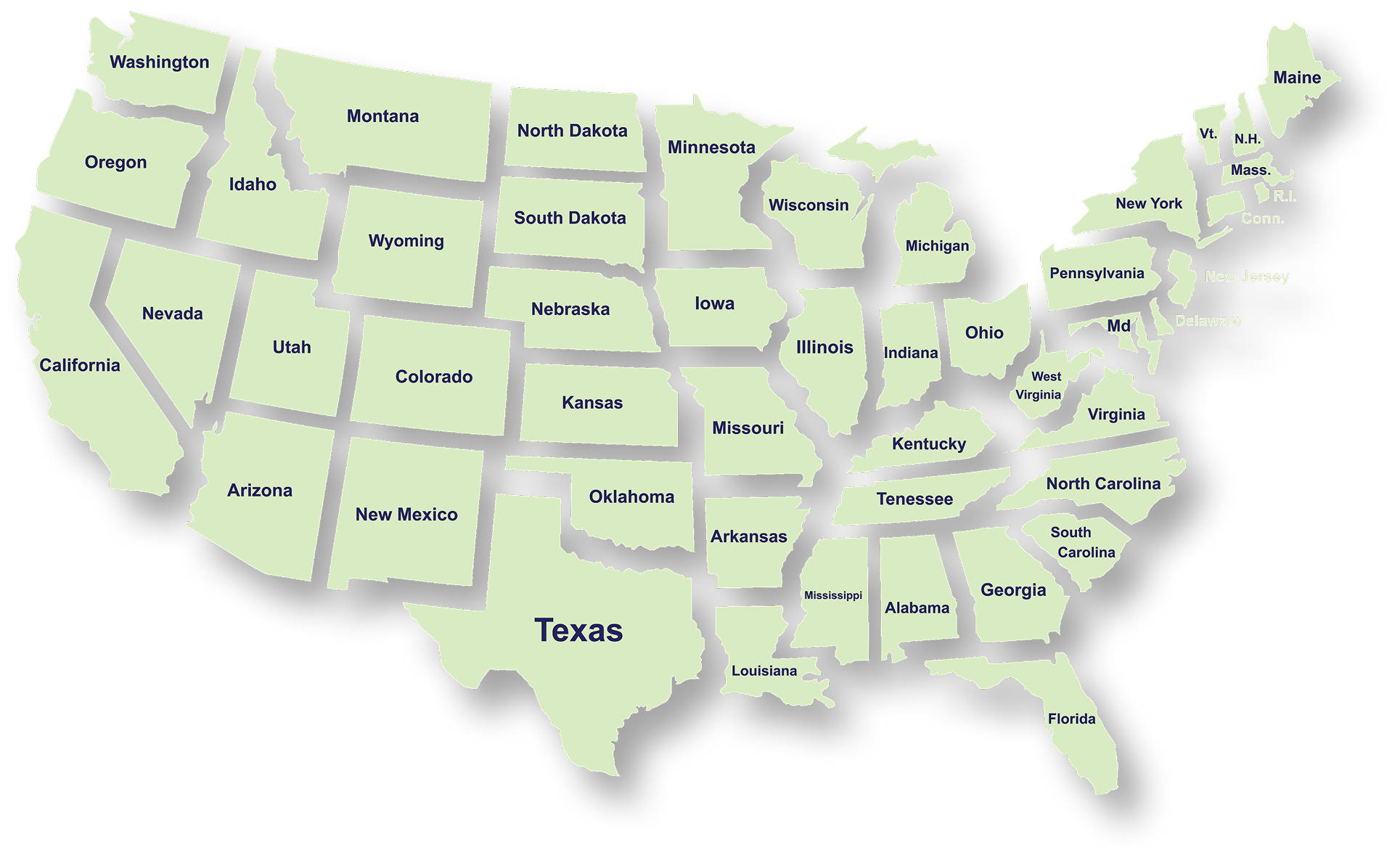
Serving Businesses & Individuals Across USA

We handle accounting, tax filing, and planning with defined timelines and accurate reporting for businesses and individuals across all states.

Frequently Asked Questions

What services does NR CPAs & Business Advisors provide?
What is tax planning and why is it important for businesses?
How can a Virtual CFO help my business?
When should a business consider IRS tax resolution services?
What financial statements does a business typically need?
How can startup advisory services help new businesses?
What is strategic business planning?
What is a Virtual Family Office and who can benefit from it?