Learning Center for Tax and Financial Insights

Stay updated with clear, actionable articles on tax rules, deadlines, deductions, and financial decisions that impact individuals and businesses.

No items found.

Video: Don't Miss out on Year-end Tax Planning Opportunities

To say COVID-19 has made 2020 a disastrous year for just about everyone would be an understatement. However, 2020 gives rise to more than the usual tax planning opportunities. Watch this video to learn about these possibilities. .embed-container { position: relative; padding-bottom: 56.25%; height: 0; overflow: hidden; max-width: 100%; } .embed-container iframe, .embed-container object, .embed-container embed { position: absolute; top: 0; left: 0; width: 100%; height: 100%; }

Explore More
No items found.

Beware of New Text Scam Related to Stimulus Payments

Article Highlights: New Clever Scammer Scheme Uses Economic Impact Payments as Bait The Text Message How to Report a Scam How to Correctly Provide Information to Claim a Payment The IRS has warned taxpayers of a clever scheme by internet scammers to dupe tax-payers into revealing their bank account information under the guise of receiving the $1,200 Economic Impact Payment (EIP) that Congress authorized last Spring. Criminals are relentlessly using COVID-19 and Economic Impact Payments as cover to try to trick taxpayers out of their money or identities. This new scam is a twist on those the IRS has been seeing much of this year, and the IRS urges people to remain alert to these types of scams. The current scam is a text message that reads: “You have received a direct deposit of $1,200 from COVID-19 TREAS FUND. Further action is required to accept this payment into your account. Continue here to accept this payment ...” The text includes a link to a fake phishing web address. This fake phishing URL, which appears to come from a state agency or relief organization, takes recipients to a fraudulent website that impersonates the IRS.gov Get My Payment website. Individuals who visit the fraudulent website and then enter their personal and financial account information will have their information collected by these scammers. The IRS is asking people that receive this text scam not to go to the fake website, not to enter their financial information and to take a screen shot of the text message that they received and then include the screenshot in an email to

Explore More
No items found.

Video: Don't Miss the Opportunity for a Spousal IRA

An individual must have compensation in order to contribute to an IRA. However, a non-working or low-earning spouse is allowed to contribute to his or her own IRA based upon the compensation of the working spouse. Watch this video to learn more. .embed-container { position: relative; padding-bottom: 56.25%; height: 0; overflow: hidden; max-width: 100%; } .embed-container iframe, .embed-container object, .embed-container embed { position: absolute; top: 0; left: 0; width: 100%; height: 100%; }

Explore More
No items found.

New Business? Tax Issues to Consider

Article Highlights: Business Entity Selection Start-Up Cost Elections Organizational Expenses Equipment Depreciation & Expensing Opportunities Vehicle Luxury Auto Rules Leasehold Improvement Expense Options In spite of COVID-19 restrictions many entrepreneurs are considering possible new or additional business opportunities. So, if you are planning a new business start-up and are incurring some expenses, you probably anticipate deducting those expenses in the first year of the business’s operation. Unfortunately, it is a little more complicated than that. Expenses a business incurs in the beginning can include equipment purchases, vehicle purchases and use, leasehold improvements, organizational costs and start-up expenses, and each receives a different tax treatment. Even before you begin incurring expenses for equipment, leases and the like, you must decide what type of business entity you are going to establish. The type of business entity you choose will determine which tax form has to be filed. The most common types of business entities are the sole proprietorship, partnership, corporation, and S corporation, some of which may also be structured as a limited liability company. The choice of entity will affect the tax outcome of your business for years to come. How the business you operate is structured will determine what taxes must be paid and how you pay them. The four general types of business taxes are the income tax, self-employment tax, employment taxes, and sales or excise tax. An employer identification number (EIN) is used to identify a business entity. Most businesses need an EIN, and your business will definitely need one if you hire employees, regardless of the type of business entity selected. Each taxpayer must also use a consistent accounting method, which is a set of rules for determining when to report income and expenses. The most commonly used accounting methods are the cash method and accrual method. Under the cash method, income is generally reported in the tax year it is received, and expenses are deducted in the tax year they are paid. Under an accrual method, income is generally reported in the tax year it was earned, even if payments for the goods or services of the business are not yet received, and expenses are deducted in the tax year they are incurred, even though they are not yet paid. Once you have decided upon a business entity and you are ready to begin acquiring the assets needed to conduct the business, you can begin planning your purchases and other expenses to fit your particular circumstances and business entity. Here is a rundown on how these expenses can be deducted. Start-up Expenses – For new businesses, you can deduct up to $5,000 of the start-up expenses in the first year of the business’s operation. This is in lieu of amortizing and deducting the expenses over 180 months (15 years). Generally, start-up expenses include all expenses incurred to investigate the formation or acquisition of a business or to engage in a for-profit activity in anticipation of that activity becoming an active business. To be eligible for the election, an expense must also be one that would be deductible if it were incurred after the business actually began. An example of a start-up expense is the cost of analyzing the potential market for a new product. As with most tax benefits, there is always a catch. Congress put a cap on the amount of start-up expenses that can be claimed as a deduction under this special election. Here’s how to determine the deduction: If the expenses are $50,000 or less, you can elect to deduct up to $5,000 in the first year, plus you can amortize the balance over 180 months. If the expenses are more than $50,000, then the $5,000 first-year write-off is reduced dollar-for-dollar for every dollar in start-up expenses that exceeds $50,000. For example, if start-up costs were $54,000, the first-year write-off would be limited to $1,000 ($5,000 – ($54,000 – $50,000)). The election to deduct start-up costs is made by claiming the deduction on the return for the year in which the active trade or business begins, and the return must be filed by the extended due date. A qualifying start-up cost is one that would be deductible if it were paid or incurred to operate an existing active business in the same field as the new business and the cost is paid or incurred before the day the active trade or business begins. Not includible are taxes, interest, and research and experimental costs. Examples of qualified start-up costs include: o Surveys/analyses of potential markets, labor supply, products, transportation facilities, etc.; o Wages paid to employees and their instructors while they are being trained; o Advertisements related to opening the business; o Fees and salaries paid to consultants or others for professional services; and o Travel and other related costs to secure prospective customers, distributors, and suppliers. For the purchase of an active trade or business, only investigative costs incurred while conducting a general search for or preliminary investigation of the business (i.e., costs that help the taxpayer decide whether to purchase a new business and which one to purchase) are qualified start-up costs. Costs incurred attempting to buy a specific business are capital expenses that aren’t treated as start-up costs. Organizational Expenses – If the new business involves a partnership or corporation, the business can elect to deduct up to $5,000 of organizational expenses in the first year of a business. This is in addition to the election for start-up expenses. Like start-up expenses, the $5,000 amount is reduced by the amount of the start-up costs in excess of $50,000. If the election is made, the start-up costs over and above the first-year deductible amount are amortized over 15 years. If the election is not made, the start-up costs must be capitalized. Organizational expenses include outlays for legal services, incorporation fees, temporary directors' fees and organizational meeting costs, etc.

Explore More
No items found.

December 2020 Individual Due Dates

December 1 - Time for Year-End Tax Planning December is the month to take final actions that can affect your tax result for 2020. Taxpayers with substantial increases or decreases in income, changes in marital status or dependent status, and those who sold property during 2020 should call for a tax planning consultation appointment.December 10 - Report Tips to Employer If you are an employee who works for tips and received more than $20 in tips during November, you are required to report them to your employer on IRS Form 4070 no later than December 10. Your employer is required to withhold FICA taxes and income tax withholding for these tips from your regular wages. If your regular wages are insufficient to cover the FICA and tax withholding, the employer will report the amount of the uncollected withholding in box 12 of your W-2 for the year. You will be required to pay the uncollected withholding when your return for the year is filed.

Explore More
No items found.

December 2020 Business Due Dates

December 1 - EmployersDuring December, ask employees whose withholding allowances will be different in 2021 to fill out a new Form W4 or Form W4(SP).December 15 - Social Security, Medicare and Withheld Income Tax If the monthly deposit rule applies, deposit the tax for payments in November.December 15 - Nonpayroll Withholding If the monthly deposit rule applies, deposit the tax for payments in November.December 15 - Corporations The fourth installment of estimated tax for 2020 calendar year corporations is due. December 31 - Last Day to Set Up a Keogh Account for 2020

Explore More
No results found.
Thank you! Your submission has been received!
Oops! Something went wrong while submitting the form.

Want tax & accounting tips & insights?Sign up for our newsletter.

Thank you! Your submission has been received!
Oops! Something went wrong while submitting the form.

Why Work With Us?

We combine deep tax expertise, financial strategy, and practical business insight to help you manage complexity, stay compliant, and make confident financial decisions.
A dollar sign, representing financial advice or discussion at NR CPAs & Business Advisors.

Experienced CPA and Enrolled Agent Leadership

Guidance led by licensed professionals with deep expertise in tax strategy, compliance, and complex financial matters.
White bar chart with an upward arrow on green circular background representing growth or progress at NR CPAs &. Business Advisors

Support for Growing Businesses and Startups

We understand the financial challenges of growth stage businesses and provide structured guidance to support expansion.
A white hand holding a dollar symbol and ascending bar chart on a green circular background representing financial growth or investment at NR CPAs & Business Advisors..

Strategic Financial Advisory

Our team helps you evaluate financial decisions with greater clarity, supported by practical insights and long term planning.

Fractional CFO Support

Access experienced financial leadership without the commitment and cost of hiring a full time Chief Financial Officer.

Proactive Tax Planning Approach

We focus on identifying tax opportunities throughout the year rather than reacting only during filing season.

Clear and Reliable Financial Reporting

Accurate financial statements and reporting that help you better understand performance and make informed decisions.
White IRS building icon with pillars and a dollar sign above on a green circular background.

Professional IRS Representation

Experienced support in resolving IRS notices, disputes, and compliance matters while protecting your financial interests.

Personalized Client Focus

Every client receives thoughtful attention and tailored financial solutions based on their specific needs and business goals.
Financial matters often involve important decisions. Working with experienced advisors can help you approach them with greater clarity and confidence in your choices.

Need Help With Your Tax or Financial Decisions?

Discuss your situation with our advisors to get clear guidance on tax planning, IRS matters, and the financial decisions ahead.
Business consulting at NR CPAs & Business Advisors.

Request Your Consultation

Fill out the form to discuss your tax concerns, financial questions, or advisory needs with our team. We will review your details and respond shortly.

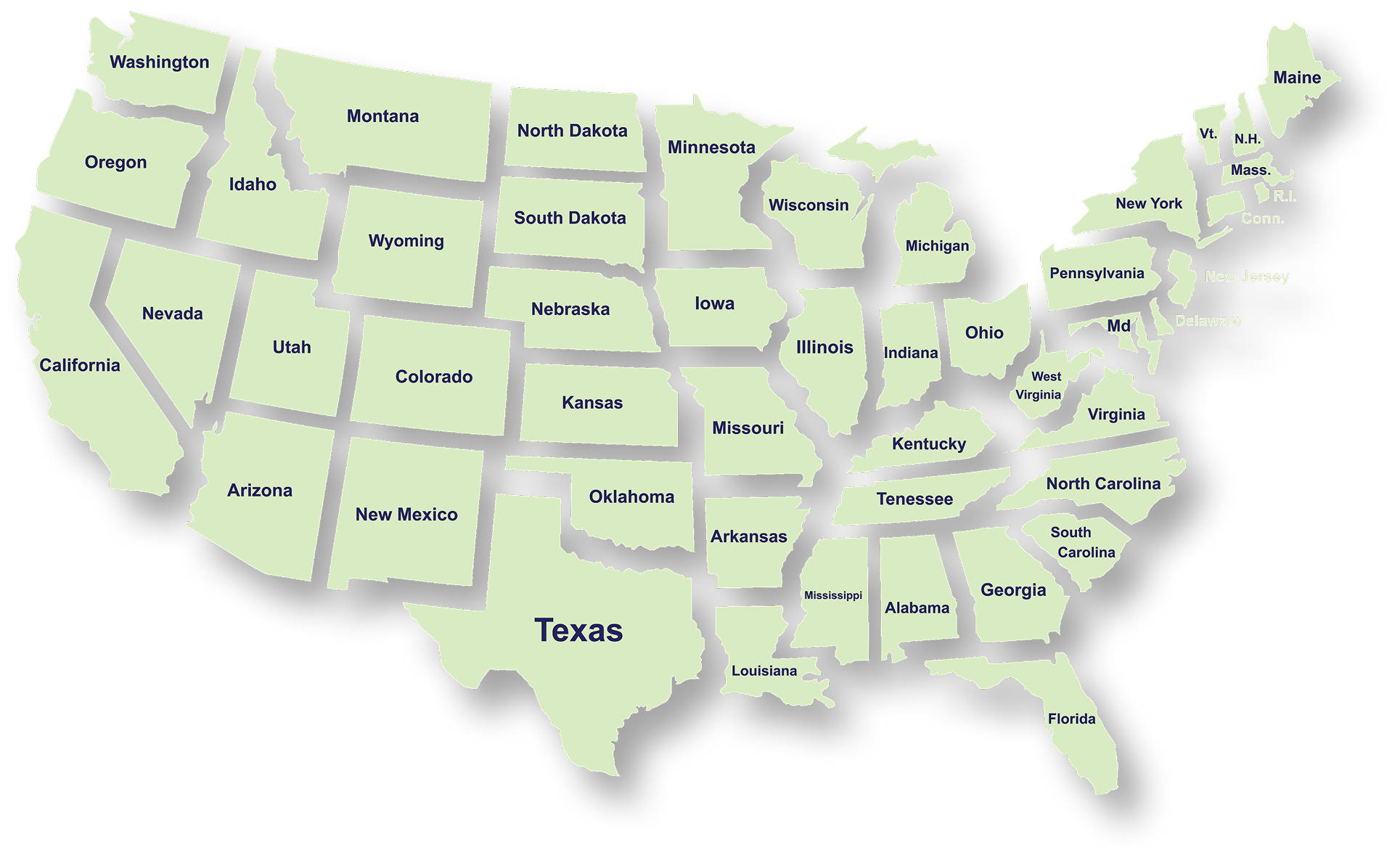
Serving Businesses & Individuals Across USA

We handle accounting, tax filing, and planning with defined timelines and accurate reporting for businesses and individuals across all states.

Frequently Asked Questions

What services does NR CPAs & Business Advisors provide?
What is tax planning and why is it important for businesses?
How can a Virtual CFO help my business?
When should a business consider IRS tax resolution services?
What financial statements does a business typically need?
How can startup advisory services help new businesses?
What is strategic business planning?
What is a Virtual Family Office and who can benefit from it?