Learning Center for Tax and Financial Insights

Stay updated with clear, actionable articles on tax rules, deadlines, deductions, and financial decisions that impact individuals and businesses.

No items found.

The SBA Issues a Simplified PPP Loan-Forgiveness Application

Article Highlights: Paycheck Protection Program Loans Forgiveness Application The Small Business Administration (SBA) The Paycheck Protection Program Flexibility Act SBA Forgiveness Form 3508 SBA Forgiveness Form 3508EZ SBA Forgiveness Form 3508S If you are the owner of a small business that obtained a Paycheck Protection Program (PPP) loan, you are most likely aware that the loan can be partially or totally forgiven if you used the loan proceeds for the required purposes. Loan forgiveness is not automatic and must be applied for. The borrower must submit a request to the lender or, if different, the lender that is servicing the loan, which then must make a decision upon the amount of forgiveness within 60 days. The request must include documents to verify the number of full-time-equivalent (FTE) employees and pay rates, as well as the payments on eligible mortgage, lease, and utility obligations. The borrower must certify that the documents are true and that the borrower used the forgiveness amount to keep employees and make eligible mortgage interest, rent, and utility payments. The whole process of obtaining a PPP loan and applying for forgiveness has been complicated from the start, with guidance from the Small Business Administration (SBA) and the IRS coming in dribs and drabs; for a while, it seemed that the rules were modified every week. The original forgiveness application provided by the SBA was horrendously complicated, and one almost needed an accounting degree to figure it out. It required the applicant to complete numerous complicated side computations and did not provide any corresponding worksheets. To clarify the process, Congress stepped in and passed the Paycheck Protection Program Flexibility Act. As part of that legislation, the SBA was required to simplify the forgiveness application. In response, the SBA did somewhat simplify SBA Form 3508, the original forgiveness application, and came up with an easier version: SBA Form 3508EZ. The 3508EZ is for use by: Self-employed borrowers with no employees Generally, borrowers with employees that, during the covered period, o Did not reduce the annual salary or hourly wages of any employee by more than 25%;o Did not reduce the number of employees or the average paid hours of employees; and o Was unable to operate during the covered period at the same level of business activity as it did before February 15, 2020, due to compliance with requirements established or guidance issued by the Secretary of Health and Human Services, the director of the Centers for Disease Control and Prevention, or the Occupational Safety and Health Administration.

Explore More
No items found.

Is a Living Trust Appropriate for You?

Article Highlights: What Is a Living Trust? Is a Living Trust Appropriate? Establishing a Living Trust Pros of a Revocable Trust Cons of a Revocable Trust You have probably heard others discussing living trusts but may not understand the reasons for them or whether you should have one. Living trusts are an estate-planning tool, and there is not a one-type-fits-all living trust. Each one is customized to suit the special circumstances of the individual for whom it was created. The vast majority of the population can get by without using a living trust, and a simple will is perfect for most people, unless their estate is large or there are some special circumstances to deal with. There actually are two types of these trusts: revocable and irrevocable. As the names imply, an irrevocable trust generally cannot be undone once made, while the provisions of a revocable trust can be changed or rescinded as long as the grantor (the individual who established the trust) is still living. A living trust becomes irrevocable when the grantor passes. Because an irrevocable trust would only be established under very special circumstances, they aren’t discussed in this article. While you can designate your beneficiaries in either a will or a living trust, there are some things that only one document or the other can do. So, even if you create a living trust, you may still need a will. Because these are legal documents, it is probably best to have the assistance of an attorney in preparing them, although do-it-yourself software does exist. Yes, you’ll have to pay legal fees to have the work done by a lawyer, but the cost of a professional’s expertise oftentimes will pay for itself by having all the I’s dotted and T’s crossed. Unfortunately, these legal fees aren’t tax-deductible. When a living trust is established, generally, all of an individual’s assets are assigned to the trust, including the home, rentals, stock accounts, bank accounts, etc. However, while living, the grantor still gets the use and benefit of these assets, just as if the living trust had not been established, and income and capital gains derived from assets in the trust are reported on the individual’s 1040 and state (if applicable) tax returns. As part of the process of setting up the living trust, the assets placed into the trust will need to be retitled into the trust’s name. Generally, the benefits of a living trust outweigh the negative implications. Here is a condensed rundown of the pros and cons of a living trust: Some of the Pros of a Revocable Trust: Avoid Probate – Probate is the legal process through which the court ensures that, when an individual dies, their debts are paid and their assets are distributed according to the individual’s will, if there is one, or in accordance with state law if there’s no will or trust. Upon the grantor’s death, all of the assets held in the revocable trust bypass probate, meaning they pass to the grantor’s beneficiaries without having to go through the often time-consuming and expensive probate court process. Probate can take a long time, and the proceedings are a public process.

Explore More
No items found.

Solar Tax Credit is Sunsetting Soon

Article Highlights: Solar Credit Phasing Out Qualifying Property When is the Credit Available? Who Gets the Credit Multiple Installations Battery Installation Costs Basis Adjustment Association or Cooperative Costs Mixed-Use Property Newly Constructed Homes Utility Subsidy Solar Installations are Not for Everyone A federal tax credit for the purchase and installation costs of a residential solar system is fading away. After being 30% of the cost for several years through 2019, the credit amount drops to 26% in 2020 and then 22% in 2021, the final year of the credit. The credit is non-refundable, meaning it can only reduce an individual’s tax liability to zero. However, the portion of credit that is not allowed because of this limitation may be carried to the next tax year and added to the credit allowable for that year. The tax code infers that any credit carryover can be added to the credit allowed in the subsequent year. However, what is unclear is whether any carryover will be allowed to 2022 once the credit expires at the end of 2021. In addition to the credit reducing the regular tax, it also reduces the alternative minimum tax should a taxpayer be subject to it. Qualifying Property – Only the following solar power systems are eligible for the credit: Qualified solar electric property - property that uses solar energy to generate electricity for use in a home that is the taxpayer’s main or second residence. Qualifying solar water heating property – qualifies if used in a dwelling located in the U.S. that is used by the taxpayer as a main or second residence where at least half of the energy used to heat water is derived from the sun. Heating water for swimming pools or hot tubs does not qualify for the credit. The solar equipment must be certified for performance by the Solar Rating Certification Corporation or a comparable entity endorsed by the state government where the property is installed. When Is the Credit Available? - The credit may be claimed on the tax return of the year during which the installation is completed, so if a taxpayer has purchased and paid for a system and it is completed in 2020, the credit will be 26% of the cost. But if the project isn’t completed until 2021, the credit will only be 22%. This becomes an even a bigger issue for systems being installed during 2021 that aren’t completed before 2022, when the credit rate will be zero. If you plan to purchase a solar system in 2021, the purchase should be made early enough in the year to ensure the installation is completed before 2022. Who Gets the Credit – It may come as a surprise, but the taxpayer need not own the residence where the solar property is installed to qualify for the credit, as the taxpayer need only be a “resident” of the home. The tax code does not specify that an individual has to own the home, only that it is the taxpayer’s residence. For example: A son lives with his mother, who owns the home. The son pays to have the solar system installed; the son is the one who qualifies for the credit. Multiple Installations – The credit is available for multiple installations. For instance, after the initial installation, if a taxpayer adds additional panels to increase capacity, these would be treated as original installations and qualify for credit at the credit rate applicable for the year the additional installation is completed, provided that the installation is done before 2022. On the other hand, if a taxpayer had to replace damaged panels or perform other maintenance on the system, these items would not be an original system and their costs would not qualify for the credit. Battery – A battery qualifies for the credit if it’s charged only by solar energy and not off the grid. This has become popular in areas where there are frequent power outages. However, this may be more of a convenience than a necessity, so carefully consider the cost. A software-management tool—whether part of the original installation or added later (before 2022)—also qualifies for the credit in cases in which the software is necessary to monitor the charging and discharging of solar energy from a battery attached to solar panels.

Explore More
No items found.

Gambling and Tax Gotchas

Article Highlights: Winnings Losses Social Security Income Health Care Insurance Premium Subsidies Medicare B & D Premiums Online Gambling Accounts Gambling is a recreational activity for many taxpayers, and as one might expect, the government takes a cut if you win and won’t allow you to claim a loss in excess of your winnings. In fact, there are far more tax issues related to gambling than you might expect, and they may impact your taxes in more ways than you might believe. Here is a rundown on the many issues, the so-called “gotchas,” that can affect you. Reporting Winnings – Taxpayers must report the full amount of their gambling winnings for the year as income on their 1040 returns. Gambling income includes, but is not limited to, winnings from lotteries, raffles, lotto tickets and scratchers, horse and dog races, and casinos, as well as the fair market value of prizes such as cars, houses, trips, or other non-cash prizes. The full amount of the winnings must be reported, not the net after subtracting losses. The exception to the last statement is that the cost of the winning ticket or winning spin on a slot machine is deductible from the gross winnings. For example, if you put $1 into a slot machine and won $500, you would include $499 as the amount of your gross winnings, even if you’d previously spent $50 feeding the machine. Frequently, taxpayers with winnings only expect to report those winnings included on Form W-2G. However, while that form is only issued for “Certain Gambling Winnings,” the tax code requires all winnings to be reported. All winnings from gambling activities must be included when computing the deductible gambling losses, which is generally always an issue in a gambling loss audit. GOTCHA #1 – Since you can’t net your winnings and losses, the full amount of your winnings ends up in your adjusted gross income (AGI). The AGI is used to limit other tax benefits, as discussed later. So, the higher the AGI, the more your other tax benefits may be limited. Reporting Losses – A taxpayer may deduct gambling losses suffered in the tax year as a miscellaneous itemized deduction (not subject to the 2% of AGI limitation), but only to the extent of that year's gambling gains. GOTCHA #2 – If you don’t itemize your deductions, you can’t deduct your losses. Thus, individuals taking the standard deduction will end up paying taxes on all of their winnings, even if they had a net loss. Social Security Income – For taxpayers receiving Social Security benefits, whether those benefits are taxable depends upon the taxpayer’s income (AGI) for the year. The taxation threshold for Social Security benefits is $32,000 for married taxpayers filing jointly, $0 for married taxpayers filing separately, and $25,000 for all other filing statuses. If the sum of AGI (before including any SS income), interest income from municipal bonds, and one-half the amount of SS benefits received for the year exceeds the threshold amount, then 50–85% of the SS benefit is taxable. GOTCHA #3 – If your gambling winnings push your AGI for the year over the threshold amount, your gambling winnings—even if you had a net loss—can cause up to 85% of your Social Security benefits to become taxable.

Explore More
Personal Finance

Tax Law Changes Allow Year-End Charitable Planning Opportunities

As the end of the tax year approaches, it is worth spending a few minutes reviewing some of the changes that have been made in the tax laws surrounding donations to charities. In some cases, this guide will serve as a refresher regarding revisions made over the last few years, while in other cases there have been COVID-related changes that you may not be aware of. Changes from The CARES Act The most recent change – and one you might have missed – was incorporated within 2020’s CARES Act, which Congress passed to provide relief to those impacted by the global pandemic. In addition to providing paycheck protection for workers and support for small businesses as they struggled to survive the economic impact of coronavirus, the CARES Act also boosted the limit on cash donations from 60% to 100% in some situations. This increase is only valid for tax year 2020 and is limited to cash contributions given to charities that are not donor-advised funds or supporting organizations, but if you have the available cash, it is a one-time change to realize a significant benefit. Congress also is allowing limited 2020 cash donations for non-itemizers. On the receiving end, qualifying trust-form charities that accept S-corporation stock may also want to encourage their donors to take advantage of this temporary allowance, as the tax liability that accompanies their sale can be balanced by an associated grant, which can be deducted by the donor. If you’re over 70.5 and you like to make charitable contributions directly from an IRA, you are able to donate up to a maximum of $100,000 per year via a Qualified IRA Charitable Contribution (QCD). This contribution will count towards your required minimum distribution, and because the distribution goes directly to the charity it does so without increasing your income while still allowing the donor to take advantage of the increased standard deduction. Changes from The Tax Cuts and Jobs Act And speaking of the increased standard deduction, when the 2017 Tax Cuts and Jobs Act (TCJA) boosted the standard deduction to $12,400 (for 2020) for individual taxpayers and twice that for married couples filing jointly, it quickly cut the number of people taking itemized deductions, effectively removing an incentive for charitable giving. With only 13.7 percent of taxpayers estimated to have itemized their 2019 taxes, many charities and tax professionals alike are encouraging taxpayers to bunch their donations into a single year every-other year, thus allowing them to continue giving to the charities that they believe in while still taking an itemized deduction. While the TCJA’s boost in standard deduction decreased the percentage of people itemizing, at the same time it boosted the deductibility of cash contributions being made from 50% to 60% of the donor’s adjusted gross income, making it more attractive for individual donors to give cash gifts. For charities in trust, the act cut their unrelated business tax liability, allowing them to take a 60% deduction for cash contributions as well. This effectively offsets the amount they owe from donations of assets received in the form of debt-encumbered real estate, LLCs and partnerships, and S-corps. Another change that the TCJA made to charitable giving involved an increase in the estate tax exclusion’s threshold to $11.58 million (the 2020 inflation adjusted amount) for a single taxpayer and double that for a married couple filing jointly. This will significantly reduce the number of estates that have to pay taxes and makes life insurance policies – meant to provide tax-free cash to heirs – a moot point. One solution to this problem is to designate qualified retirement plans, commercial annuities, IRAs and other tax-challenged assets as donations for charities and shifting asset allocation in a way that is more tax-advantaged. Changes from The SECURE Act Finally, in late 2019 Congress passed the SECURE ACT, which made a couple of notable changes, including pushing the age at which retirement plan participants need to take required minimum distributions (RMDs) from 70½ to 72, and taking away the ability for account holders to designate non-spousal beneficiaries who could hold onto them over the course of their entire lifetimes, taking distributions at will. Under the SECURE Act those distributions need to be completed within ten years’ time, making it a potentially better option to making the beneficiary a lifetime-income charitable vehicle in the form of either a remainder trust or a gift annuity funded with the account proceeds. By indicating a beneficiary who will receive income over the course of their lifetime, you get the advantage of accomplishing the initial intent of giving to the beneficiary, and then upon the beneficiary’s death, whatever is left in either an IRA or a life insurance policy structured in this way gets distributed to the original benefactor’s designated charity. Charitable contributions are an important part of our societal responsibility and our individual legacy, and when structured properly they can also offer tax advantages and other benefits. For more information on how you can leverage the new tax laws to benefit causes you care about as well as your own personal finances, contact us.

Explore More
No items found.

IRS Releases Inflation Adjustments for 2021

Article Highlights: Standard Deduction Transportation Fringe Benefits Retirement Plans Contribution Limits SIMPLE Retirement Accounts IRA Contribution Limits Health Flexible Spending Accounts Education Credits Estate Tax Exclusion Annual Gift Exclusion Sec 179 Expensing Deduction Foreign Earned Income Exclusion Alternative Minimum Tax Adoption Credit Tax Rate Schedules To cope with inflation, the tax code requires the IRS to adjust the tax rates, standard deductions, and a variety of other tax related numbers each year. Due to the relatively low rate of inflation from 2020 to 2021 (at least according to the calculation method prescribed by law for this purpose), several categories had no or only a slight change. The following is a summary of the most commonly encountered items for 2021. Standard Deductions – The standard deduction consists of a filing status-based basic amount and additional amounts for elderly and blind filers (and their spouses). The additional amounts do not apply to dependents. The 2020 and 2021 amounts are compared below. Filing Status 2020 2021 Married Filing Joint & Surviving Spouse $24,800 $25,100 Head of Household $18,650 $18,800 Single & Married Filing Separate $12,400 $12,550 Added Amounts for Elderly and Blind 2020 2021 Married Filing Joint & Surviving Spouse $1,300 $1,350 Others $1,650 $1,700 Qualified Transportation Fringe Benefits - Qualified transportation fringe benefits for transit passes, commuter transportation and qualified parking provided by an employer are excluded from an employee’s income up to the amount of the inflation adjusted dollar limitation, which remains unchanged and will be $270 per month for 2021. Retirement Plans Contribution Limits - The limit on contributions by employees who participate in Sec. 401(k), Sec. 403(b), most Sec. 457 plans, and the federal government’s Thrift Savings Plan remains unchanged and is $19,500 for 2021. The catch-up contribution limit for employees age 50 and over also remains unchanged at $6,500. SIMPLE Retirement Accounts - The contribution limit for SIMPLE retirement accounts remains unchanged and is $13,500 for 2021. IRA Contribution Limits - For IRAs, the limit on annual contributions remains unchanged at $6,000 for 2021 and the additional catch-up contribution limit for individuals age 50 and over is $1,000. This limit applies to the combination of traditional and Roth IRAs. However, there are additional limitations that apply to both traditional and Roth IRAs. Traditional IRA – Typically contributions to a traditional IRA are tax deductible unless the taxpayer is also an active participant in an employer plan in which case the deductibility of the contribution is phased out for higher income taxpayers. The phaseout thresholds have increased somewhat for 2021. Filing Status 2020 2021 Single and Head of Householh $65,000 $66,000 Married Filing Joint and Surviving Spouse $104,000 $105,000 Married Filing Separate $0 $0 Roth IRA Contributions – Roth IRA contributions are phased out for higher income taxpayers whether or not they actively participate in an employer’s plan. The AGI thresholds limiting Roth IRA contributions have been increased slightly for 2021. Filing Status 2020 2021 Married Filing Joint $196,000 $198,000 Married Filing Separate (living with spouse) $0 $0 All Others $124,000 $125,000 Health Flexible Spending Accounts – These plans are established by employers to reimburse employees for health care expenses and are usually funded by employees through salary reduction agreements. Qualifying contributions to and withdrawals from FSAs are tax-exempt. For 2021, employee salary reductions for contributions are limited to $2,750, unchanged from 2020. However, the funds must be used during the year or they are lost, except for a small carryover amount which has increased from $500 in 2020 to $550 in 2021. Education Credits – Both the American Opportunity Tax Credit (AOTC) and the Lifetime Learning Credit (LLC) are phased out for higher income taxpayers. However, only the phaseout for the LLC is inflation adjusted. For 2021 the LLC phaseout threshold for joint filers is $119,000, up from $118,000 for 2020. For other taxpayers the 2021 phaseout starts at $59,000, but a married individual filing a separate return can’t claim this credit. Estate Tax Exclusion – The amount of the estate tax exclusion for a decedent passing away in 2021 has increased to $11.7 million, up from $11.58 million in 2020. Annual Gift Exclusion – This amount is unchanged, so the first $15,000 of gifts (other than gifts of future interests in property) to any person in 2021 is exempt from the gift tax. 2021 is the fourth consecutive year that this exclusion has been $15,000. Sec 179 Expensing Deduction – The Internal Revenue Code allows a business taxpayer to expense, limited to taxable income from all of the taxpayer’s active trades or businesses, rather than depreciate, certain property used in business. For 2021 the maximum is $1.05 million ($525,000 for married taxpayers filing separate) up from $1.04 million in 2020. The phaseout threshold based on the cost of Sec 179 property also increased, to $2.62 million, up from $2.59 million.

Explore More
No results found.
Thank you! Your submission has been received!
Oops! Something went wrong while submitting the form.

Want tax & accounting tips & insights?Sign up for our newsletter.

Thank you! Your submission has been received!
Oops! Something went wrong while submitting the form.

Why Work With Us?

We combine deep tax expertise, financial strategy, and practical business insight to help you manage complexity, stay compliant, and make confident financial decisions.
A dollar sign, representing financial advice or discussion at NR CPAs & Business Advisors.

Experienced CPA and Enrolled Agent Leadership

Guidance led by licensed professionals with deep expertise in tax strategy, compliance, and complex financial matters.
White bar chart with an upward arrow on green circular background representing growth or progress at NR CPAs &. Business Advisors

Support for Growing Businesses and Startups

We understand the financial challenges of growth stage businesses and provide structured guidance to support expansion.
A white hand holding a dollar symbol and ascending bar chart on a green circular background representing financial growth or investment at NR CPAs & Business Advisors..

Strategic Financial Advisory

Our team helps you evaluate financial decisions with greater clarity, supported by practical insights and long term planning.

Fractional CFO Support

Access experienced financial leadership without the commitment and cost of hiring a full time Chief Financial Officer.

Proactive Tax Planning Approach

We focus on identifying tax opportunities throughout the year rather than reacting only during filing season.

Clear and Reliable Financial Reporting

Accurate financial statements and reporting that help you better understand performance and make informed decisions.
White IRS building icon with pillars and a dollar sign above on a green circular background.

Professional IRS Representation

Experienced support in resolving IRS notices, disputes, and compliance matters while protecting your financial interests.

Personalized Client Focus

Every client receives thoughtful attention and tailored financial solutions based on their specific needs and business goals.
Financial matters often involve important decisions. Working with experienced advisors can help you approach them with greater clarity and confidence in your choices.

Need Help With Your Tax or Financial Decisions?

Discuss your situation with our advisors to get clear guidance on tax planning, IRS matters, and the financial decisions ahead.
Business consulting at NR CPAs & Business Advisors.

Request Your Consultation

Fill out the form to discuss your tax concerns, financial questions, or advisory needs with our team. We will review your details and respond shortly.

Serving Businesses & Individuals Across USA

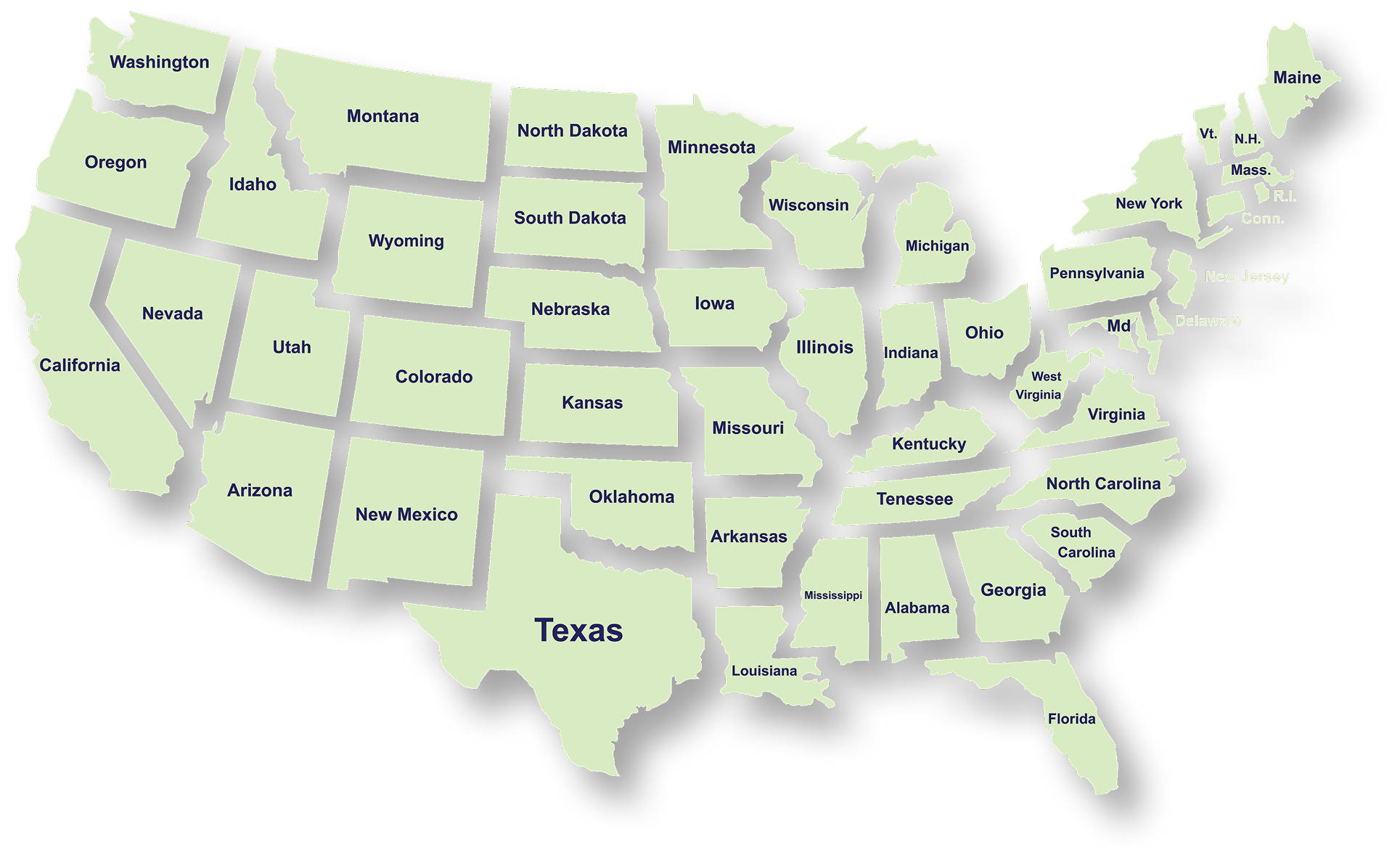
We handle accounting, tax filing, and planning with defined timelines and accurate reporting for businesses and individuals across all states.

Frequently Asked Questions

What services does NR CPAs & Business Advisors provide?
What is tax planning and why is it important for businesses?
How can a Virtual CFO help my business?
When should a business consider IRS tax resolution services?
What financial statements does a business typically need?
How can startup advisory services help new businesses?
What is strategic business planning?
What is a Virtual Family Office and who can benefit from it?