Learning Center for Tax and Financial Insights

Stay updated with clear, actionable articles on tax rules, deadlines, deductions, and financial decisions that impact individuals and businesses.

No items found.

Main Street' Loan Program to Support Small to Medium-Sized Businesses

On April 9, 2020, the Federal Reserve announced it would be taking additional steps to support the US economy by providing up to $2.3 trillion in loans, including through the creation of a Main Street Lending Program. This program will support main street businesses by providing financing to lenders that make direct loans to these small to medium-sized companies. As part of the response to the COVID-19 emergency, this lending facility is meant to support those SMBs who were in good financial standing prior to the pandemic, and who might not have access to broader capital markets or who don’t qualify for the SBA’s Paycheck Protection Program (PPP). Treasury Secretary Steven Mnuchin says that 40,000 mid-sized companies who employ approximately 35 million Americans stand to benefit from the Main Street Lending Program. According to Vice Chairman Randal Quarles, the Fed’s chief banking supervisor, “officials continue to work out operational details” and the facility should be available soon.“We are putting together the mechanisms for that credit to be distributed through the banks,” Quarles said. “That’s probably two to three weeks away.” Eligibility Eligible borrowers are businesses with up to 10,000 employees or up to $2.5 billion in 2019 annual revenues. The business must be created or organized in the U.S. or under the laws of the U.S. with significant operations in and a majority of its employees based in the U.S. The announcement did not provide guidance on how businesses must count their employees or whether affiliation rules may apply to the eligibility requirements listed above. Loan Amounts To qualify, loans must have originated on or after April 8, 2020. Loans will be available at a minimum of $1 million up to a certain maximum amount, which is the lesser of: 25 million, or an amount that, when added to the applicant’s existing outstanding and committed but undrawn debt, does not exceed four times 2019 EBITDA. For upsizing existing loans (those which originated before April 8, 2020), the maximum total amount is equal to the lesser of: $150 million; 30 percent of the applicant’s existing outstanding and committed but undrawn bank debt; and an amount that, when added to the applicant’s existing outstanding and committed but undrawn debt, does not exceed six times 2019 EBITDA.

Explore More
No items found.

IRS Extends Over 300 Tax Filing, Payment and Admin Deadlines

According to Treasury Secretary Steven Mnuchin, “Treasury and the IRS are extending tax deadlines for fiscal year businesses, tax-exempt organizations and more than 270 other tax-related deadlines” in an effort to relieve taxpayers during the challenging times of COVID-19. Last month, the IRS announced that taxpayers generally have until July 15, 2020, to file and pay federal income taxes originally due on April 15 without interest or penalties for late-filing or late-payment. Today’s notice expands this relief, and the extensions “generally now apply to all taxpayers that have a filing or payment deadline falling on or after April 1, 2020, and before July 15, 2020.” “Individuals, trusts, estates, corporations and other non-corporate tax filers qualify for the extra time. This means that anyone, including Americans who live and work abroad, can now wait until July 15 to file their 2019 federal income tax return and pay any tax due,” according to the news release. Some additional details: Relief for tax-exempt organizations and fiscal year businesses Tax returns and payments for tax-exempt organizations and fiscal year businesses due between April and June are postponed until July 15, 2020. Estate taxes Tax return and payment deadlines for estate taxes and associated gift taxes, typically due within nine months from the date of death, are postponed to July 15, 2020. Administrative deadlines For all taxpayers, Treasury and the IRS are extending an additional 270 administrative deadlines to July 15, 2020. For the full notice, click here and please contact this office with any questions.

Explore More
No items found.

Full Breakdown: IRS Filing, Payment, and Action Deadlines

Article Highlights: Filing Due Date Postponement Payment Due Date Postponement Extensions Late Filing and Late Payment Penalties Required Minimum Distributions 2019 IRA Contributions Distributions of Excess Retirement Plan Contributions 2019 HSA & Archer MSA Contributions Elections Cancelling Direct Withdrawals Estimated Tax Payments Underpayment Penalties Payroll Reporting On April 9, 2020, the IRS issued Notice 2020-23 which has expanded the postponement of filing and payment obligations the postponement of filing and payment obligations to include those due on or after April 1, 2020 and before July 15, 2020. This notice expands on Notices 2020-18 and 2020-20. Filing Due Date Postponement All returns and payments due during the period April 1 through July 15, 2020 are now postponed and due on July 15, 2020. This includes: Individual 1040 series tax returns 2016 1040 Series returns – the statute for refunds has been extended Corporation Returns (1120 series, including 1120-S) Association returns (Forms1120-C and 1120-H) Partnership Returns (Form 1065) Estate and trust income tax returns (1041 series) Estimated Tax Payments (1040-ES, 1041-ES, 1120-W) Estate and generation-skipping transfer tax returns (706 series) Gift and generation-skipping transfer tax returns (709 series) Exempt Organization returns (990-T) Excise Tax Payment Filings (990-PF and 4720) Net investment income tax (8960) Tax on Base Erosion Payments of Taxpayers with Substantial Gross Receipts (8991) REMIC (1065) Info Regarding Beneficiaries Acquiring Property from a Decedent (8971) Estate tax payments (principal or interest) due as a result of extensions of time to pay estate taxes under Sections 6161, 6163, or 6166, and annual certification requirements under Sec 6166 The due date for these returns is automatically postponed to July 15, 2020, and there is no need to file an extension. Interest and penalties will be disregarded for the postponement period. CAUTION: This postponement does not include FBAR filings. However, FBARs have an automatic extension to October 15 which effectively makes October 15, 2020 the FBAR due date. Payment Due Date Postponement Any payments that would have been due April 1, 2020 and before July 15, 2020 for the returns listed above are also postponed to July 15, 2020. This includes self-employment tax. There is no limit on the amount of the payment that can be postponed. Previous guidance in Notice 2020-17 included limits. But Notice 2020-18 supersedes that notice and there are no limits. A Section 965 installment payment due on April 15, 2020 is also postponed to July 15, 2020 where it is associated with a 2019 tax return that is postponed to July 15, 2020. (Reference IRS COVID-19 Webpage Q&A #8) The payment postponement also applies to any retirement plan or IRA early withdrawal penalties incurred in 2019. (Reference IRS COVID-19 Webpage Q&A #18) Additional Guidance Extensions Affected taxpayers do not have to file Forms 4868, 8892 or 7004 to extend to the July 15 due date. If more time is required after that, the 4868, 8892 or 7004 extensions can be used to extend the due date until October 15, 2020. The request must be filed by July 15, 2020. To avoid interest and penalties when filing after July 15, 2020, the anticipated tax due must be paid with the extension request. (Reference IRS COVID-19 Webpage Q&A #12)

Explore More
No items found.

Video: A Paycheck Protection Loan Might be a Good COVID-19 Emergency Funding Option

If you have 500 or fewer employees, you may qualify for an SBA Paycheck Protection Loan. The loan amount available is 2.5 times the average payroll prior to the epidemic plus other debt approved for refinancing. Please contact this office for further details or assistance with a loan application. .embed-container { position: relative; padding-bottom: 56.25%; height: 0; overflow: hidden; max-width: 100%; } .embed-container iframe, .embed-container object, .embed-container embed { position: absolute; top: 0; left: 0; width: 100%; height: 100%; }

Explore More
No items found.

The IRS Provides Online Tools for Recovery Rebates

Article Highlights: Non-Filer Information for Recovery Rebates “Get My Payment” Words of Caution Who Should Use the Non-filer Tool? Reduced Payments The IRS has a free, and easy-to-use online tool that enables those who don’t normally file a tax return (non-filers), or have too little income to file, to register for Economic Impact Payments (aka recovery rebates or stimulus payments) so they can receive their payments faster. The online site also allows those who have changed addresses since they last filed a tax return to provide the IRS with their current address. On the same online site, taxpayers will be able to check on the status of their rebate and whether it was issued by check or direct deposit using the “Get My Payment” tool. You can also provide the IRS with your direct deposit information. A Few Words of Caution: Scammers will doubtlessly come up with an IRS look-alike website in an attempt to steal taxpayers’ direct deposit info, which can also be used for direct withdrawals. When visiting the IRS’s website, always make sure you are on IRS.gov before entering any personal or financial information. And don’t fall for solicitations from scammers who want to charge you a fee to help you apply for the rebate payment; the IRS does not require any fees, and in most cases, an individual’s Economic Impact Payment will come automatically from the IRS. Who Should Use the Non-filer Tool? You should only use the tool if you did not file a tax return for 2018 or 2019 or didn’t receive Social Security retirement, SSI disability benefits, or Railroad Retirement benefits.

Explore More
No items found.

Don't Fall Prey to This New Scam Targeting CFOs and Bookkeepers

If you had to make a list of some of the most pressing issues facing business owners in the modern era, cybersecurity would undoubtedly be near the top. But the major thing that many people don't realize until it's far too late is that the common image you think of when you hear the term "hacker" — that is, someone with years of extensive computer experience trying a myriad of different techniques to gain access to your systems and IT infrastructure without your knowledge — is rarely indicative of the actual cybercrimes taking place around the world on a daily basis. One of the most common types of scams these days is also, sadly, among the most effective. In fact, it doesn't technically involve any "hacking" at all — it merely puts the principles of social engineering to work in a way that you and your people must be aware of moving forward. The State of CEO Fraud: Breaking Things Down Take the case of Barbara Corcoran, for example — an entrepreneur and television personality that you may recognize best from the hit series Shark Tank. Recently, she was cheated out of nearly $400,000 in a phishing scam after scammers gave directions to her bookkeeper to forward funds directly to a company that claimed to be one she was doing business with. The issue was that Corcoran's bookkeeper assumed the received email was legitimate, as it was virtually identical to one used by Corcoran's personal assistant with the exception of a single character that was easy to miss. What makes this incident particularly fascinating is that Corcoran said she believes the scammers in question had actually tried a similar trick about six months prior and, and when it didn't work, they "came back for a second shot." Corcoran said that from her own perspective, the scam was "so simple and so well-executed" — to the point where she describes it as something of a "hit and run" situation. Everything from the first contact all the way up to the transferring of the funds was executed with just five emails. Corcoran gave a statement saying that she "felt sick to her stomach" once she realized what was going on, particularly because she assumed that she was never going to see a dime of that money ever again. Now, this particular story does have a happy ending because Corcoran later confirmed to the people at USA Today that she did get her money back after her own bank put pressure on the German bank that was acting as an intermediary in the transaction. The German bank froze the money transfer, giving Corcoran and her team time to prove that fraud had taken place. But it's also important to remember that this is the type of luxury an average small business may not have. Indeed, it's easier than ever these days for even an accomplished and experienced CEO to fall victim to this level of fraud. The modern-day cyberattack isn't perpetrated by a hacker army sitting in a room somewhere surrounded by computers, just waiting to capitalize on any opportunity to gain access to your network. Most of the time, they don't even need access at all — they just need to take advantage of someone who isn't paying quite as much attention as they should be. For another common attack scenario, consider the example of a CFO who receives an email request from the CEO of a company with directions to wire $150,000 into a specific bank account to help secure a new contract. If that CFO isn't looking at things as carefully as they should be, it would be easy to miss the fact that the CEO's email was spoofed. The FBI calls this type of scam "Business Email Compromise," and according to their own internal studies, it's now one that generates about $26 billion for hackers every single year. Not only that, but there was a 100% increase in global losses between May of 2018 and July of 2019. To make matters worse, this type of scam has been reported in not only all 50 states, but in 150 countries around the world, too. Combating CEO Fraud: Tips and Best Practices One of the most important things to take away from all of this is that in the vast majority of all situations, it wasn't lax cybersecurity that allowed these types of attacks to take place. It had nothing to do with antivirus software that was out-of-date or reactive network scanning technology. Nearly every one of these incidents that you read about were made possible for the same simple reason: Poor processes. Therefore, the solution to these issues is equally straightforward: Improve your processes, and you’ll improve your cybersecurity as well. The targets of these attacks tend to be employees that report directly to company leadership - meaning CFOs, bookkeepers and other people playing critical roles in the operation of a business on a daily basis. There tends to be an interesting power dynamic at play here, where the employees don't actually take the necessary steps to verify such a request because they don't want to be seen as "questioning authority." Which, of course, is possibly the number one factor that you need to correct sooner rather than later. The FBI has provided several different tips that people can use to prevent this type of financial fraud, including but not limited to things like:

Explore More
No results found.
Thank you! Your submission has been received!
Oops! Something went wrong while submitting the form.

Want tax & accounting tips & insights?Sign up for our newsletter.

Thank you! Your submission has been received!
Oops! Something went wrong while submitting the form.

Why Work With Us?

We combine deep tax expertise, financial strategy, and practical business insight to help you manage complexity, stay compliant, and make confident financial decisions.
A dollar sign, representing financial advice or discussion at NR CPAs & Business Advisors.

Experienced CPA and Enrolled Agent Leadership

Guidance led by licensed professionals with deep expertise in tax strategy, compliance, and complex financial matters.
White bar chart with an upward arrow on green circular background representing growth or progress at NR CPAs &. Business Advisors

Support for Growing Businesses and Startups

We understand the financial challenges of growth stage businesses and provide structured guidance to support expansion.
A white hand holding a dollar symbol and ascending bar chart on a green circular background representing financial growth or investment at NR CPAs & Business Advisors..

Strategic Financial Advisory

Our team helps you evaluate financial decisions with greater clarity, supported by practical insights and long term planning.

Fractional CFO Support

Access experienced financial leadership without the commitment and cost of hiring a full time Chief Financial Officer.

Proactive Tax Planning Approach

We focus on identifying tax opportunities throughout the year rather than reacting only during filing season.

Clear and Reliable Financial Reporting

Accurate financial statements and reporting that help you better understand performance and make informed decisions.
White IRS building icon with pillars and a dollar sign above on a green circular background.

Professional IRS Representation

Experienced support in resolving IRS notices, disputes, and compliance matters while protecting your financial interests.

Personalized Client Focus

Every client receives thoughtful attention and tailored financial solutions based on their specific needs and business goals.
Financial matters often involve important decisions. Working with experienced advisors can help you approach them with greater clarity and confidence in your choices.

Need Help With Your Tax or Financial Decisions?

Discuss your situation with our advisors to get clear guidance on tax planning, IRS matters, and the financial decisions ahead.
Business consulting at NR CPAs & Business Advisors.

Request Your Consultation

Fill out the form to discuss your tax concerns, financial questions, or advisory needs with our team. We will review your details and respond shortly.

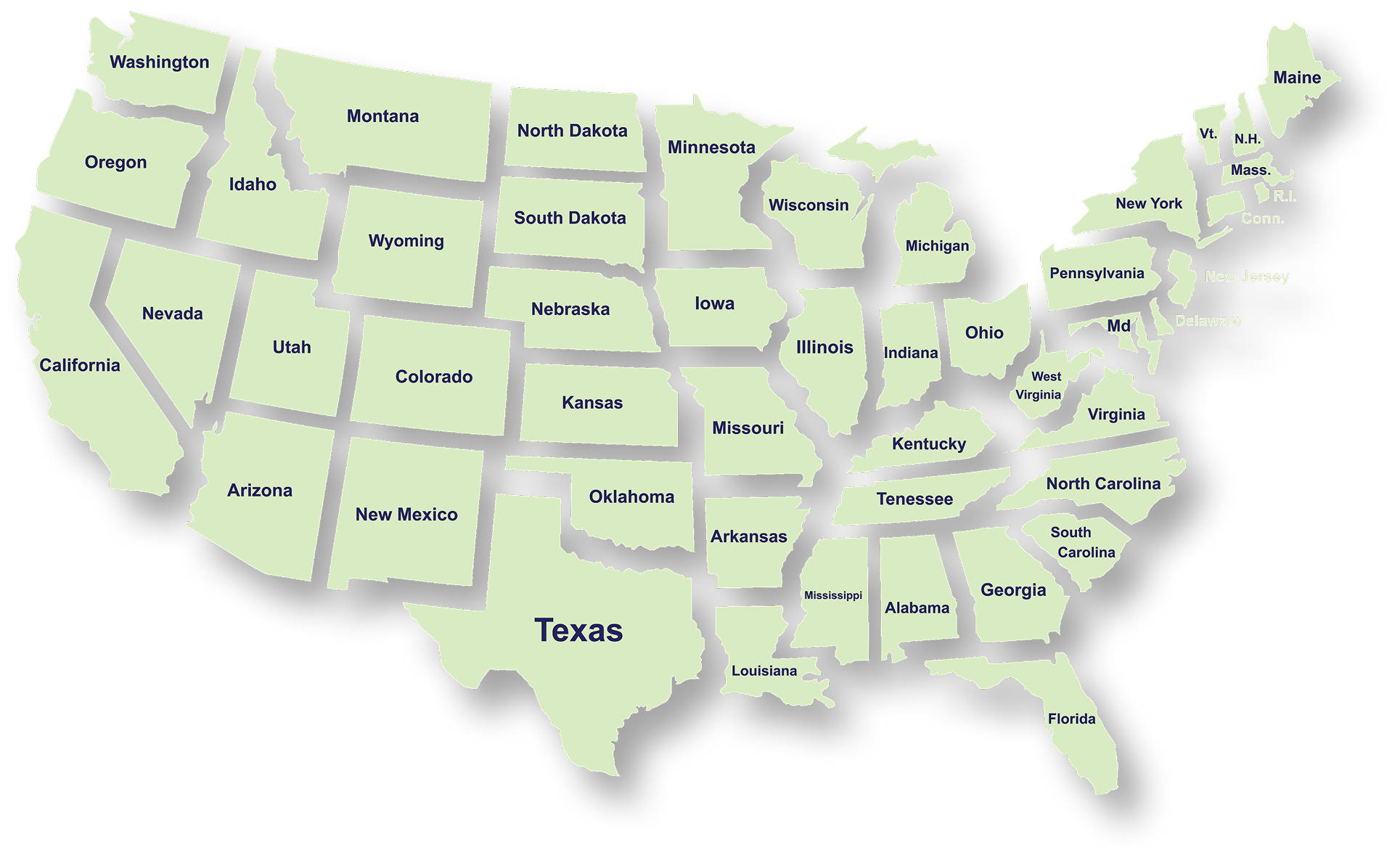
Serving Businesses & Individuals Across USA

We handle accounting, tax filing, and planning with defined timelines and accurate reporting for businesses and individuals across all states.

Frequently Asked Questions

What services does NR CPAs & Business Advisors provide?
What is tax planning and why is it important for businesses?
How can a Virtual CFO help my business?
When should a business consider IRS tax resolution services?
What financial statements does a business typically need?
How can startup advisory services help new businesses?
What is strategic business planning?
What is a Virtual Family Office and who can benefit from it?