Learning Center for Tax and Financial Insights

Stay updated with clear, actionable articles on tax rules, deadlines, deductions, and financial decisions that impact individuals and businesses.

No items found.

How Some High-Income Taxpayers Can Maximize the New 20% Pass-through Business Deduction

Article Highlights: 20% Sec. 199A Pass-through Deduction Specified Service Business Limitations Taxable Income Limitations Wage Limitations Benefits of Being Organized as an S Corporation Taxpayers with higher 1040 taxable incomes who are self-employed but are not “specified service businesses” may find it beneficial to structure new businesses, or restructure an existing business, as an S corporation to avoid taxable income limitations that apply to the new 20% Sec. 199A pass-through deduction. To make up for the tax reform’s reduction of the C corporation tax rate to 21%, from which other forms of business activities do not benefit, Congress created a new deduction and code section: 199A. The 199A deduction is for taxpayers with other business activities – such as sole proprietorships, rentals, partnerships and S corporations – since, unlike C corporations, which are directly taxed on their profits, the income from the other business activities flows through to the owner’s tax return and is taxed at the individual level, i.e., at the individual’s tax rate, which can be as high as 37%. This new Sec. 199A deduction is 20% of the pass-through income from these business activities. But not every owner of these flow-through businesses will benefit from this deduction because, as in all things tax, there are limitations. Whether or not a taxpayer will benefit from the deduction will depend in great part upon the taxpayer’s 1040 taxable income figured without the Sec. 199A deduction. Married taxpayers with a taxable income below $315,000 (or below $157,500, for others) will benefit from the full 20% deduction. However, limitations begin to apply when a taxpayer’s 1040 taxable income exceeds those amounts. The most restrictive limitation is the one placed on “specified service businesses.” Once married taxpayers filing jointly have a 1040 taxable income exceeding $415,000 (or above $207,500, for others), they receive no Sec 199A deduction benefit from any pass-through income derived from a specified service business. Specified service businesses include trades or businesses involving the performance of services in the fields of health, law, accounting, actuarial science, performing arts, consulting, athletics, financial services, or brokerage services or any trade or business in which the principal asset of the trade or business is the reputation or skill of one or more of its employees or owners. Note that an engineering or architecture business is not a specified service business for this deduction. On the other hand, a taxpayer can still benefit from pass-through income from other business activities, even when the taxpayer’s 1040 taxable income exceeds the $415,000/$207,500 limits, provided the business activity pays wages and/or has qualified business property, the combination of which make up what is referred to as the wage limitation. Without getting too complicated, the Sec. 199A deduction is the lesser of 20% of one’s pass-through income or the wage limitation. If the wage limit is zero, then the Sec. 199A deduction would also be zero for these high-income taxpayers. The wage limitation itself is the greater of 50% of the wages paid by the business activity or 25% of the wages paid plus 2.5% of the cost of qualified business property. Perhaps this is best explained by example.

Explore More
No items found.

A Mid-Year Tax Checkup May Be Appropriate

Article Highlights: Concerns About Proper Withholding Late IRS W-4 and Withholding Tables New W-4 Complications Self-employed Estimated Payments Events That Can Impact Taxes Taxes are similar to vehicles, in that they sometimes need a check-up to make sure they are performing as expected. That is especially true for 2018, with all of the changes brought about by tax reform. One area of major concern is the amount of taxes individuals are withholding from their wages. Tax reform was passed late in 2017, and there was a considerable amount of confusion among employers related to the amount of taxes to withhold in 2018. It took the IRS a couple of months to come out with a revised Form W-4 (Employee's Withholding Allowance Certificate) and withholding tables, and even then, there were concerns about whether the revised and more complicated W-4s were being filled out correctly by employees and whether the revised W-4s were actually being submitted to employers at all. The IRS has even been issuing notices cautioning taxpayers to be sure they are withholding enough. While most people will see an overall tax reduction as a result of the tax reforms, the amount of their refund or tax due hinges on the amount of pre-payments, which include withholding and estimated tax payments. All this confusion related to withholding can lead to unpleasant surprises at tax time. If you count on a refund each year, it might be appropriate to have this office run a mid-year tax projection to ensure that the projected refund will be as expected. This is also true for retirees receiving pensions and Social Security benefits and for self-employed taxpayers who are making pre-payments via estimated taxes. You obviously do not want to pay too much and generally don’t want to end up with a huge tax liability. A mid-year check-up will allow adjustments to the 3rd- and 4th-quarter estimated tax payments so that the end result will be as desired.

Explore More
No items found.

Big Changes for Vehicle Tax Deductions

Article Highlights: Standard Mileage Rates Actual Expense Method Vehicle Depreciation Vehicle Interest Expenses Sale or Trade-in of a Business Vehicle Employees In the past, the business use of a vehicle was determined either by using the standard mileage rate for business or using actual expenses plus vehicle depreciation limited by the luxury auto caps. That continues to be the case, except the luxury auto depreciation limit has been substantially increased. In addition, there are other changes as detailed below. Standard Mileage Rates – The standard mileage rates for the business use of a car (or a van, pickup, or panel truck) are: STANDARD MILEAGE RATES FOR BUSINESS 2017 2018 53.5 Cents Per Mile 54.5 Cents Per Mile However, the standard mileage rates cannot be used if you have used the actual expense method (using Sec. 179, bonus depreciation and/or MACRS depreciation) in previous years. This rule is applied on a vehicle-by-vehicle basis. In addition, the business standard mileage rate cannot be used for any vehicle used for hire or for more than four vehicles simultaneously. Actual Expense Method - Taxpayers always have the option of calculating the actual costs of using their vehicle for business rather than using the standard mileage rates. In addition to the potential for higher fuel prices, the extension and expansion of the bonus depreciation, as well as increased depreciation limitations for passenger autos in the Tax Cuts and Jobs Act, may make using the actual expense method worthwhile during the first year a vehicle is placed in business service. Actual expenses include: Gasoline Oil Lubrication Repairs Vehicle registration fees Insurance Depreciation (or lease payments). However, these expenses must be allocated between deductible business use and nondeductible personal use, making it necessary to keep records of business miles and total miles in order to document the allocation between business and personal use. Vehicle Depreciation - The so-called “luxury auto” rules limit the annual deduction for depreciation. Tax reform substantially increased these limits providing much larger first and second-year deductions for more expensive vehicles. The table below displays the limits that apply to vehicles placed in service in 2017 and 2018 and shows the substantial increase for 2018. These rates are inflation adjusted in subsequent years. Tax reform also included 100% bonus depreciation, which, at the election of the taxpayer, can be added to the first-year luxury auto rates (see the amounts for “First Year with Bonus” in the table below). However, instead of an $8,000 increase, if the vehicle was purchased before September 28, 2017, but not put into service until 2018 or 2019, the increase to the first year depreciation cap is only $6,400 or $4,800, respectively, rather than $8,000.

Explore More
No items found.

Has Tax Reform Taken Away Your Home Mortgage Interest Deduction?

Article Highlights: Background New Limit Equity Debt Interest Interest Tracing Refinancing The Tax Cuts and Jobs Act of 2017, more commonly referred to as tax reform, substantially altered the itemized deduction for home mortgage interest and affects just about everyone who has been deducting their home mortgage interest as an itemized deduction on their tax returns. Background: To fully understand the impact of the law changes, we need to compare the prior tax law to the new tax reform. Under prior law, a taxpayer could deduct the interest he or she paid on up to $1 million of acquisition debt and $100,000 of equity debt secured by the taxpayer’s primary home and/or designated second home. Qualified home acquisition debt is debt incurred to purchase, construct, or substantially improve a taxpayer’s primary home or second home and is secured by the home. The interest paid on up to $1 million of acquisition debt has been deductible as part of itemized deductions on Schedule A. Home equity debt is debt that is not acquisition debt and is secured by the taxpayer’s primary home or second home, but only the interest paid on up to $100,000 of equity debt had been deductible as home mortgage interest. Often, home equity debt is used to purchase a new car, finance a vacation, or pay off credit card debt or other personal loans – all situations in which the interest on a consumer loan obtained for these purposes wouldn’t have been deductible. The old law continues to apply to home acquisition debts by grandfathering the home acquisition debts incurred before December 16, 2017, to the limits that applied prior to the changes made by tax reform. As explained later in this article, equity debt interest didn’t survive in the tax reform’s legal changes. New Acquisition Debt Limits: Under the new law, which took effect for home acquisition loans obtained after December 15, 2017, the acquisition debt limit has been reduced to $750,000. Thus, if a taxpayer is buying a home for the first time, the deductible amount of acquisition debt interest will now be limited to the interest paid on up to $750,000 of the debt. If the home acquisition debt exceeds the $750,000 limit, a prorated amount of the interest is still deductible. If a taxpayer already has a home with grandfathered acquisition debt and wishes to finance a substantial improvement on the home or acquire a second home, the new acquisition debt, for which the interest would be deductible, would be limited to $750,000 less the grandfathered acquisition debt existing at the time of the new loan. This may be a tough pill to swallow for many future homebuyers, since the cost of housing is on the rise while Congress has seen fit to reduce the cap on acquisition debt, on which interest is deductible.

Explore More
No items found.

Did You Pay Too Much Tax in Prior Years?

Article Highlights Overlooking Tax Benefits Last Three Years Can Be Amended Sampling of Commonly Overlooked Benefits Professional Review Have you been preparing your own returns? If not, did you have someone prepare it who didn’t take the time to query you about possible tax deductions, credits or filing status options? If you answered either question yes, you could have missed out on a number of tax benefits that could have saved you big bucks in taxes. If something was overlooked, there is still time to get a refund for 2015, 2016 or 2017 (or even 2014, for some state returns). So if you know you missed something, or even if you just want a professional to look over your past returns to see if something was overlooked, give this office a call. Here is a list of some (but not all) frequently overlooked tax benefits that may apply to you. Some of these were extended to 2017 in a special bill passed by Congress in the middle of February 2018, so if you filed your 2017 return before that date or used a preparer who does not keep up with changes, there’s a chance one or more items may apply to you. Please note that the items listed below apply to years 2015 through 2017. Above-the-line Tuition Deduction – Allows a deduction of up to $4,000 for higher education tuition without itemizing deductions. American Opportunity Credit – Provides a tax credit of up to $2,500 for the first four years of your or your qualified child’s higher education tuition and qualified expenses, even if paid by someone other than you. Lifetime Learning Credit – Offers a credit of up to $2,000 for tuition and qualified higher education expenses for family members. Student Loan Interest – A deduction of up to $2,500 for student loan interest paid, which is deductible without itemizing deductions. Mortgage Insurance Premiums – Premiums on contracts issued after 2006 can generally be deducted as home mortgage interest when itemizing deductions. Home Energy Efficient Improvement – A tax credit of up to $500 for making certain home energy improvements. Electric Vehicle Credit – A credit of up to $7,500 for purchase of plug-in electric vehicles, if the manufacturer has not exceeded the 250,000-unit sales limit for qualifying for the credit. Excess FICA – If an individual had more than one employer during the year and the FICA withholding for the year exceeded the overall FICA withholding cap, the excess is refundable on the 1040. Consumer Interest – Generally, consumer interest is not deductible. But if a loan is used to purchase a vehicle or other property used both for business and personally, the portion of the interest allocable to business is deductible as business interest (does not apply to employee business expenses). Surviving Spouse Filing Status – For the two years after the death of a spouse, a surviving spouse with a dependent child can continue to benefit from the married filing joint tax rates. Head of Household Filing Status – A married individual, separated and living apart from their spouse for the last 6 months of the year, can use the more beneficial head of household filing status, which is normally only available for unmarried individuals. Saver’s Credit – For lower-income taxpayers making retirement plan or IRA contributions, the saver’s credit provides a credit of 10, 20 or even 50 percent of the taxpayer’s contribution to a retirement plan. The overall cap on this credit is $1,000. Medicare Premiums – Frequently overlooked either as a medical itemized deduction or for the self-employed medical insurance deduction are the Medicare premiums withheld from Social Security benefits. Penalty Abatement – Professional tax preparers use a number of tax provisions to have various tax penalties abated, including the late filing penalty, ACA penalty for not having health insurance, penalty for not withdrawing the required minimum amount from a pension plan or a traditional IRA, early retirement plan or IRA withdrawal penalty, negligence penalty and more. Overlooked Points – Points paid for the purchase of a home are generally deductible as part of the itemized deduction for mortgage interest. State Tax Refunds – The amount shown on Form 1099-G, the state tax refund a taxpayer received from their prior year’s return, may not be federally taxable or may be only partly taxable. Examples include when a taxpayer claimed the standard deduction on their prior year’s federal return or if their prior year’s federal tax included the alternative minimum tax.

Explore More
No items found.

A Breakdown of the Proposed IRS 1040

Article Highlights: The New Draft 1040 Form Comparing the Old and New 1040 Forms The Same Two-Page Length Six Additional Schedules Other Income Adjustments to Income Additional Taxes Nonrefundable Credits Other Taxes Other Payments and Refundable Credits Foreign Addresses and Third-Party Designees New Pass-Through Deduction Remember the IRS’s promise about being able to file your income tax return using a postcard? The reality of the new 1040 form is a far cry from a postcard. Although the administration insists that it has simplified the process of preparing your tax return, a few minutes of comparing the old 1040 to the new draft version shows that the redesign did little more than change it from the previous two-page form to two half-size pages – with six schedules provided separately. All but four of the 79 lines from the old version remain on the new one; they’re just divided up differently. Unless all of your income comes from wages, interest, dividends, pensions and Social Security, you will now have more schedules to fill out than you did before, and you still have a lot of work ahead of you. How much new work does the revised version represent? Here’s a quick rundown of the six new schedules: Schedule 1 – Taxpayers with self-employment income will need to fill out Schedule 1 and Schedule C. Those who have income from capital-gains transactions will have to complete Schedules 1 and D, those with rental income will fill out Schedules 1 and E, and those with farm income will complete Schedules 1 and F. (As in the past, the income and expense on Schedules C, D, E and F will come from other forms, schedules and worksheets, so the new form presents no simplification there.) Schedule 1 will also be the place to report taxable alimony, unemployment, K-1, and other income, as well as the 11 possible adjustments to income, including health account contributions, IRA and retirement contributions, educator expenses, and student-loan interest. Schedule 2 – Taxpayers who are parents and who choose to be taxed on their children’s investment income will use Schedule 2 and Form 8814. This schedule is also used alongside Form 6251 for those who are subject to the alternative minimum tax. Lower-income taxpayers who have received more of the premium tax credit than they should have received will also use Schedule 2 and Form 8962 for repayment, as required under the Affordable Care Act (ACA). Schedule 3 – Taxpayers who are eligible for nonrefundable credits will use Schedule 3 (along with other forms, depending upon where their credits are from). The taxpayers will use Form 1116 if these credits are connected to a foreign tax credit, Form 8863 if they are from education credits, and Form 2441 for childcare credits. Schedule 3 is also the place to enter certain recently introduced portions of the child tax credit (and other dependent-based credits) and any residential energy credits. Those who are eligible for a general business tax credit will combine Schedule 3 with Form 8801. Schedule 4 – Those who are responsible for additional taxes in addition to those due for income need to use Schedule 4. What are these additional taxes? They include the tax on early withdrawals from pension plans (which should be entered on Form 5329), the taxes due from self-employed individuals in lieu of payroll taxes, which aren’t deducted for those individuals (using Schedule SE), and household employment taxes using Schedule H. Other fees recorded on Schedule 4 include the penalty for not purchasing insurance according to the rules of the ACA, the net investment income tax of 3.8% for high-income taxpayers (using Form 8960), and the additional Medicare taxes for high-income taxpayers (using Form 8959). Schedule 5 – Do you prepay your taxes and then claim a credit for having done so? If so, you’ll need to fill out Schedule 5, regardless of whether you’re claiming this credit on Form 1040-ES. This includes any 2017 refunds that you credit to the current year’s taxes, payment that you made when requesting an extension to file, and the net ACA premium tax credit for health insurance purchased through a government marketplace (using Form 8962). The supposed idea behind the revised 1040 is simplification, but process for the new Schedule 5 seems much more complex than the old one, as this schedule cannot be used for the refundable portion of the child tax credit, the earned income tax credit, or the refundable portion of the American Opportunity tax credit. Those credits, after completing the required backup forms, are entered on the 1040 itself and then combined with the payments and credits from Schedule 5. Schedule 6 – Taxpayers who have foreign addresses were once able to enter those addresses directly at the top of the 1040 form, but, under the new design, that information is reserved for Schedule 6. The same form will be used to enter the contact information of any third party whom the IRS should reach out to if they have questions about certain items on the taxpayer’s return (without the need of providing power of attorney). Making matters more complex is the fact that, even though the new 1040’s first page also has a spot for paid preparers to provide their contact information, this area does not provide a space for the preparer’s PIN or phone number.

Explore More
No results found.
Thank you! Your submission has been received!
Oops! Something went wrong while submitting the form.

Want tax & accounting tips & insights?Sign up for our newsletter.

Thank you! Your submission has been received!
Oops! Something went wrong while submitting the form.

Why Work With Us?

We combine deep tax expertise, financial strategy, and practical business insight to help you manage complexity, stay compliant, and make confident financial decisions.
A dollar sign, representing financial advice or discussion at NR CPAs & Business Advisors.

Experienced CPA and Enrolled Agent Leadership

Guidance led by licensed professionals with deep expertise in tax strategy, compliance, and complex financial matters.
White bar chart with an upward arrow on green circular background representing growth or progress at NR CPAs &. Business Advisors

Support for Growing Businesses and Startups

We understand the financial challenges of growth stage businesses and provide structured guidance to support expansion.
A white hand holding a dollar symbol and ascending bar chart on a green circular background representing financial growth or investment at NR CPAs & Business Advisors..

Strategic Financial Advisory

Our team helps you evaluate financial decisions with greater clarity, supported by practical insights and long term planning.

Fractional CFO Support

Access experienced financial leadership without the commitment and cost of hiring a full time Chief Financial Officer.

Proactive Tax Planning Approach

We focus on identifying tax opportunities throughout the year rather than reacting only during filing season.

Clear and Reliable Financial Reporting

Accurate financial statements and reporting that help you better understand performance and make informed decisions.
White IRS building icon with pillars and a dollar sign above on a green circular background.

Professional IRS Representation

Experienced support in resolving IRS notices, disputes, and compliance matters while protecting your financial interests.

Personalized Client Focus

Every client receives thoughtful attention and tailored financial solutions based on their specific needs and business goals.
Financial matters often involve important decisions. Working with experienced advisors can help you approach them with greater clarity and confidence in your choices.

Need Help With Your Tax or Financial Decisions?

Discuss your situation with our advisors to get clear guidance on tax planning, IRS matters, and the financial decisions ahead.
Business consulting at NR CPAs & Business Advisors.

Request Your Consultation

Fill out the form to discuss your tax concerns, financial questions, or advisory needs with our team. We will review your details and respond shortly.

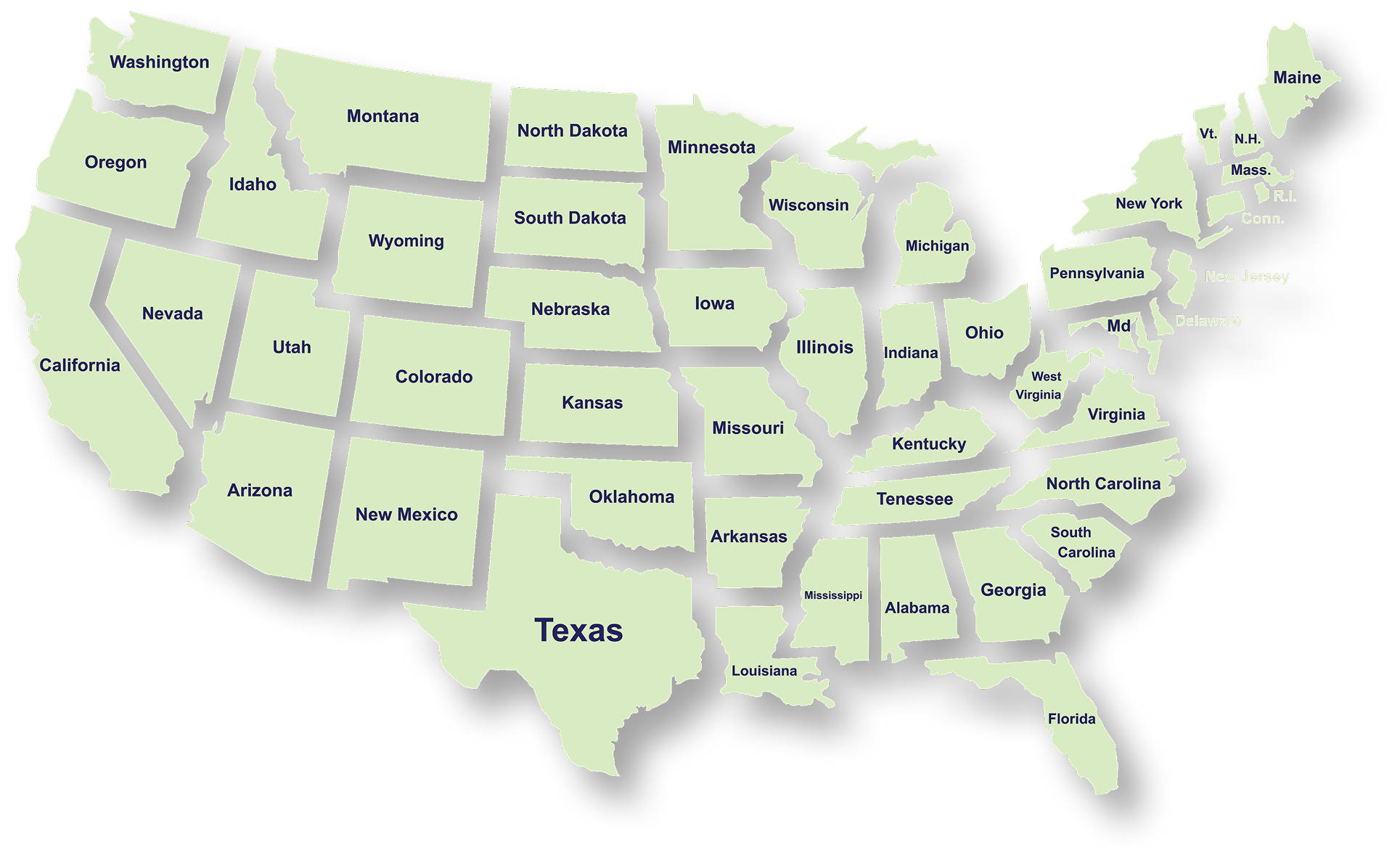
Serving Businesses & Individuals Across USA

We handle accounting, tax filing, and planning with defined timelines and accurate reporting for businesses and individuals across all states.

Frequently Asked Questions

What services does NR CPAs & Business Advisors provide?
What is tax planning and why is it important for businesses?
How can a Virtual CFO help my business?
When should a business consider IRS tax resolution services?
What financial statements does a business typically need?
How can startup advisory services help new businesses?
What is strategic business planning?
What is a Virtual Family Office and who can benefit from it?