Learning Center for Tax and Financial Insights

Stay updated with clear, actionable articles on tax rules, deadlines, deductions, and financial decisions that impact individuals and businesses.

No items found.

133,000 Injured Veterans Entitled to Tax Refunds

Article Highlights: Combat-Injured Veterans Tax Fairness Act Disability Severance Payments Department of Defense Notice Standard Claim Amount Filing a Claim Lack of Documentation As a result of the 2016 Combat-Injured Veterans Tax Fairness Act, more than 133,000 injured veterans may qualify for a federal tax refund. The minimum refund is estimated at $1,750, meaning the government will be paying out an estimated minimum of $228 million. These tax refunds are owed to any veterans who received one-time (lump-sum) disability severance payments after January 17, 1991, and who included those payments as income on their tax returns. According to the IRS, most veterans who received such disability severance payments after ending their military service will receive letters from the Department of Defense to explain the process for claiming their refunds. If the normal statute for claiming a refund has expired, the veterans have one year from the date when they received the Department of Defense letter to file a 1040-X and claim their refunds. They have two options to determine the amount of their refunds: Amend the original return and use actual numbers from the original return. Claim a standard refund amount based on the calendar year of the severance payment. The standard should be entered on lines 15 and 22 of the 1040-X, and “Disability Severance Payment” should be entered on line 15. The standard amounts are as follows: o $1,750 for tax years 1991–2005 o $2,400 for tax years 2006–2010 o $3,200 for tax years 2011–2016

Explore More
No items found.

E-filing Your Tax Returns

Basics of E-FilingWhen e-filing (electronic filing) was first introduced, only the less complicated tax returns qualified. This led to the general public’s perception that e-filing was for short forms with refunds. Since then, e-filing has matured to the point that even the most complicated returns can be electronically filed. It also offers the following advantages to taxpayers: A refund can be received much faster. The risk of a check being lost or stolen is minimized. The IRS (and state, if applicable) no longer needs to keypunch your tax return data, avoiding input errors and some costs at the government return processing centers. Proof of filing is provided. There is no longer the expense of mailing returns. If money is owed, a taxpayer can still file early and delay payment until the last minute. A complete paper copy of your tax return is still provided. In short, e-filing simply replaces the paper-filed return with a return that is electronically filed. There is no sacrifice on your part in quality or service provided by this firm. Authorizing TransmittalBefore your return(s) can be electronically transmitted, you must first provide our firm with written authorization. You will need to sign one of two authorization forms, which will be provided to you after your return has been completed and reviewed and is ready to be filed. Form 8879 – Except in unusual circumstances, Form 8879 will be used. It is used when all forms and schedules on your tax return are acceptable for electronic transmission and provides for an electronic signature (as explained below). To use Form 8879, the taxpayer must be at least 16 years of age. Form 8453 – Occasionally, your return will include a form or schedule that is not acceptable for electronic filing and that particular form must be paper filed. This is usually encountered when one or more of the forms being transmitted requires an original manual signature. When this is the case, Form 8453 is used to provide the authorization. Once the acceptable forms of your return have been electronically filed, the forms that must be paper filed are mailed by your tax professional to the IRS with Form 8453 within three business days of receiving IRS acknowledgment that the return has been accepted. Your Electronic Signature Paper-filed tax returns must be signed by the taxpayer or both taxpayers in the case of a joint return. When all forms and schedules of your return are electronically transmitted (see Form 8879 above), a physical signature is not possible. Instead, your Personal Identification Number (PIN) is used as your electronic signature. You and your spouse, if filing a joint return, establish your individual PIN at the time you sign the authorization for your return to be electronically transmitted. The PIN can be any randomly selected five-digit number so long as it does not begin with a zero and is only used to tie your physical signature on the authorization to the transmitted return. There is no need on your part to record or remember the number and you can use a different number each time you file. Options for Receiving Refunds If you are entitled to a refund and do not have other outstanding liabilities for prior year taxes, past due child support or student loan payments, you have the following options for payment of your refund amount: Direct Deposit – The refund is generally deposited into your specified savings or checking account within 21days after the return has been electronically received, and the time is often less than 21 days. Taxpayers who use direct deposit for their federal refunds are able to divide their refunds and make deposits into a maximum of three different financial accounts. Issued a Check – If a direct deposit account is not specified, then the refund amount will be paid by a check. This is generally issued within 21days after e-filing is completed, compared to the 6 to 8 weeks it usually takes to issue a refund when a paper return is filed. Applied to Subsequent Year – Any portion of your refund can be applied to next year’s estimated taxes and the balance paid to you by check or direct deposit. Options for Paying a Balance DueIf a balance is due on your return, the return can be electronically filed and the balance due on your tax liability can be paid using the following options: Check Payment – A payment voucher will be provided with which you can make a payment at any time up to the unextended due date of the return (generally April 15) without incurring late payment penalties. Direct Debit (Electronic Withdrawal) – You can pay by direct debit at the time the return is filed or specify any date up to and including the last day for filing returns (generally April 15) for an electronic withdrawal from your bank account. Example: Your return could be e-filed in March and you can specify that the debit be made on April 10 (or any other day on or before the return due date). You do not have to remember to do anything at a later time. CAUTION! Taxpayers should first check with their financial institutions to verify that such payments can be made. In addition to your tax return balance due, direct debit can be used to make extension payments and certain estimated payments. Electronic Federal Tax Payment System (EFTPS) – If enrolled in this system, you can pay your federal taxes on the Internet or by phone 24/7. If you make more than one tax payment per year, such as estimated taxes or payments on an installment plan, you may find this system especially convenient. Enrollment can be initiated via the Internet at EFTPS.gov, but because initial enrollment confirmations are sent by mail, you’ll need to plan ahead to get set up in the system if you want to use it to make a payment on April 15. Direct Pay – If you haven’t used the direct debit feature when you e-filed, you can use the IRS’ Direct Pay service to pay your tax bill or make an estimated tax payment directly from your checking or savings account at no cost to you. You do not have to sign up in advance, but you can’t pre-schedule multiple payments as you can with EFTPS. Go to the IRS web site to use this feature: http://www.irs.gov/Payments/Direct-Pay Lack of Funds – Even if you do not have the funds available to pay what you owe, you must still file your return on time to avoid certain late filing penalties. Should this be your situation, we can file an application for an installment payment plan. Selecting a Bank AccountAre you hesitant about utilizing the automatic deposit, Direct Pay or direct debit option because you are concerned about providing the IRS with your account numbers? Keep in mind, the IRS already has most of that information except for non-interest bearing accounts, provided to them from the banks via the annual filing of 1099s. Generally, deposits and debits can be made to National and State Banks, Savings and Loan Associations, Mutual Savings Banks, and Credit Unions within the United States. Account types include savings, checking, share draft, money market accounts, etc. Refunds may not be direct deposited to credit card accounts.

Explore More
No items found.

Is Your Paycheck Payroll Withholding Right?

According to the IRS, 30 million Americans are not withholding enough taxes to cover the taxes due. Are you one of them?

Explore More
No items found.

IRS Regulations Clarify Business Pass-Through Deduction

Article Highlights: Trade or Business Definition Qualified Business Income Limitation Thresholds Specified Service Trade or Business Reputation or Skill Wage Limitation Proper Wage Allocation Qualified Property Depreciable Period Bonus Depreciation and Sec 179 Negative QBI and Carryovers Multiple Activities REITS and Publicly Traded Partnerships Anti-Cracking Provisions Some of the major provisions of last year’s tax reform legislation were the many benefits provided for businesses, including cutting the C corporation tax rate to 21%. Not to leave out other forms of business, the bill also included what was termed the 20% pass-through deduction that applies to sole proprietorships, partnerships, s-corporations and the like. The short-hand title for this tax benefit is the Sec 199A deduction, and it is one of the more complicated pieces of tax legislation ever conceived by Congress. So complicated in fact that the legislation left a lot of unanswered questions, and for the most part the tax preparation community has sat back and waited for the IRS to release regulations, hoping they would explain the many grey areas of this new deduction. The Treasury Department and the IRS finally released the 184 page proposed regulations on August 8, 2018, explaining how they interpret and propose to apply the provisions and limitations included in the legislation. The regulations are “proposed” and the IRS is asking for feedback from stakeholders. So these are not the “final” regulations and have left some unanswered questions. One of the more important issues related of the legislation is the definition of a “trade or business” since that describes the kind of activity that can create income for purposes of the new 199A deduction. The tax code does not provide a definitive “bright line” definition of a trade or business and the new regulations simply adopted an existing subjective definition, that relies on the outcomes of past court cases and interpretive rules the IRS has issued under code section 162 which is the most familiar provision using the term “trade or business”. This leaves some room for interpretation; most notably whether or not rental real estate income qualifies for the Sec. 199A deduction. Our tentative research finds that except for totally passive rental real estate activities such as triple net leases, a rental real estate activity is a trade or business for purpose of section 199A. The Sec 199A deduction does apply to virtually all pass-through income, referred to as qualified business income (QBI), from all trades or businesses if the taxpayer receiving the income has a taxable income less than the threshold for the 32% tax bracket. For married couples filing a joint return the threshold is $315,000 and for all other filing statuses, the threshold is $157,500. So, if you are receiving QBI in the form of the net profit from a sole proprietorship, K-1 income from a partnership or S corporation, and hopefully the net profit from a rental, your Sec 199A deduction will be 20% of that QBI, figured separately for each business activity. The deduction is taken below the line, which means it does not change your adjusted gross income (AGI), which limits other tax benefits, and it does not reduce your self-employment tax. It is deducted in a manner similar to your itemized or standard deductions on your 1040 tax return. However, once your taxable income goes above those thresholds the computation of the deduction becomes more complicated and for those in a specified service trade or business (SSTB) it is the beginning of the end for the deduction. In the case of a SSTB, the deduction begins to phase out if your taxable income is between $315,000 and $415,000 for married couples filing jointly and between $157,500 and $207,500 for other filing statuses. Thus once your taxable exceeds the $415,000 and $207,500 levels there is no 199A deduction from a SSTB. Reputation or Skill - Although the original legislation provided a list of the type of businesses that were SSTBs there still remained a lot of uncertainty about some business types, especially regarding one very subjective definition of a SSTB which specified that where the principal asset of such trade or business is the reputation or skill of 1 or more of its employees or owners the business activity was an SSTB. Did this mean, for example, that a self-employed plumber who provided his skill for the business wouldn’t be eligible for the 199A deduction? In a taxpayer-friendly interpretation, the regulations clarify that the plumber and others like him would qualify by defining “reputation and skill” to mean: (1) Receiving income for endorsing products or services, including an individual’s distributive share of income or distributions from a relevant pass-through entity (RPE) for which the individual provides endorsement services; (2) Licensing or receiving income for the use of an individual’s image, likeness, name, signature, voice, trademark, or any other symbols associated with the individual’s identity, including an individual’s distributive share of income or distributions from an RPE to which an individual contributes the rights to use the individual’s image; or (3) Receiving appearance fees or income (including fees or income to reality performers performing as themselves on television, social media, or other forums, radio, television, and other media hosts, and video game players). The regulation also expanded on the list of business activities that are classified as SSTBs and provided several pages of detail that cannot be included here. The following is a general list of those businesses. Health (services by physicians, nurses, dentists, veterinarians, and other similar health care providers. But that does not apply to the businesses of spas and health clubs); Law; Accounting; Actuarial science; Performing arts (but does not apply to the services of others in the industry such as promoters and broadcasters); Consulting; Athletics; Financial services; Brokerage services (investing, investment management, trading, or dealing in securities, partnership interests, or commodities); Wage Limitation - The 199A deduction for business activities other than SSTBs is quite a bit different in that the deduction is available to higher income taxpayers but adds some limitations that complicate the calculations. For these, like an SSTB as discussed earlier, the deduction is 20% of QBI if your taxable income is below the thresholds. But once the threshold is exceeded the wage limitation begins to phase in and once your taxable income exceeds $415,000 for a married couple filing jointly or $207,500 for other filing statuses, the 199A deduction is the lesser of 20% of QBI or the “wage limit” amount. The wage limit amount is the greater of: a. 50% of the W-2 wages paid by the business activity or b. 25% of the W-2 wages plus 2.5% of the unadjusted basis of the qualified property of the business activity. So, if a business activity pays no W-2 wages during the year and has no qualified property, and the taxpayer’s taxable income exceeds the top of the threshold range, the 199A deduction would be zero. W-2 Wages – You would think determining the wages for the purposes of computing the Sec 199A wage limit would be a simple matter of just adding up the wages; unfortunately, it is not. The proposed regulations specify that wages for this purpose will only include wages paid during the calendar year. So wages earned in one year but paid in the next year would be used in the year paid. The wages include wages paid to employees, and if an S corporation, to the officers of the S corporation. Compensation paid to statutory employees (Form W-2 box 13 is checked), is not includible in the calculation of W-2 wages. However wages paid by another employer, such as a staffing agency, are included, but both businesses can’t claim the same wages. The proposed regulations provide 3 methods of determining the total W-2 wage amount. It would seem that what the regulations describe as the “Modified Box 1 Method” will be the one most frequently used by small and midsized employers. That method totals the W-2 box 1 wages, subtracts amounts that are not subject to income tax withholding, and adds the excludable pension contributions included in box 12 codes D, E, F, G, and S. Where the taxpayer is a shareholder in an S corporation or partnership the taxpayer will only use his or her prorated share of the wages from the business.

Explore More
No items found.

Opening a Small Business is a Huge Risk

Avoid these issues and your odds for business success are much greater.

Explore More
No items found.

September 2018 Individual Due Dates

September 1 - 2018 Fall and 2019Tax Planning Contact this office to schedule a consultation appointment. September 10 - Report Tips to Employer If you are an employee who works for tips and received more than $20 in tips during August, you are required to report them to your employer on IRS Form 4070 no later than September 10. Your employer is required to withhold FICA taxes and income tax withholding for these tips from your regular wages. If your regular wages are insufficient to cover the FICA and tax withholding, the employer will report the amount of the uncollected withholding in box 12 of your W-2 for the year. You will be required to pay the uncollected withholding when your return for the year is filed.September 17 - Estimated Tax Payment Due The third installment of 2018 individual estimated taxes is due. Our tax system is a “pay-as-you-go” system. To facilitate that concept, the government has provided several means of assisting taxpayers in meeting the “pay-as-you-go” requirement. These include: Payroll withholding for employees; Pension withholding for retirees; and Estimated tax payments for self-employed individuals and those with other sources of income not covered by withholding. When a taxpayer fails to prepay a safe harbor (minimum) amount, they can be subject to the underpayment penalty. This penalty is equal to the federal short-term rate plus 3 percentage points, and the penalty is computed on a quarter-by-quarter basis. Federal tax law does provide ways to avoid the underpayment penalty. If the underpayment is less than $1,000 (the de minimis amount), no penalty is assessed. In addition, the law provides "safe harbor" prepayments. There are two safe harbors: The first safe harbor is based on the tax owed in the current year. If your payments equal or exceed 90% of what is owed in the current year, you can escape a penalty. The second safe harbor is based on the tax owed in the immediately preceding tax year. This safe harbor is generally 100% of the prior year’s tax liability. However, for taxpayers whose AGI exceeds $150,000 ($75,000 for married taxpayers filing separately), the prior year’s safe harbor is 110%.

Explore More
No results found.
Thank you! Your submission has been received!
Oops! Something went wrong while submitting the form.

Want tax & accounting tips & insights?Sign up for our newsletter.

Thank you! Your submission has been received!
Oops! Something went wrong while submitting the form.

Why Work With Us?

We combine deep tax expertise, financial strategy, and practical business insight to help you manage complexity, stay compliant, and make confident financial decisions.
A dollar sign, representing financial advice or discussion at NR CPAs & Business Advisors.

Experienced CPA and Enrolled Agent Leadership

Guidance led by licensed professionals with deep expertise in tax strategy, compliance, and complex financial matters.
White bar chart with an upward arrow on green circular background representing growth or progress at NR CPAs &. Business Advisors

Support for Growing Businesses and Startups

We understand the financial challenges of growth stage businesses and provide structured guidance to support expansion.
A white hand holding a dollar symbol and ascending bar chart on a green circular background representing financial growth or investment at NR CPAs & Business Advisors..

Strategic Financial Advisory

Our team helps you evaluate financial decisions with greater clarity, supported by practical insights and long term planning.

Fractional CFO Support

Access experienced financial leadership without the commitment and cost of hiring a full time Chief Financial Officer.

Proactive Tax Planning Approach

We focus on identifying tax opportunities throughout the year rather than reacting only during filing season.

Clear and Reliable Financial Reporting

Accurate financial statements and reporting that help you better understand performance and make informed decisions.
White IRS building icon with pillars and a dollar sign above on a green circular background.

Professional IRS Representation

Experienced support in resolving IRS notices, disputes, and compliance matters while protecting your financial interests.

Personalized Client Focus

Every client receives thoughtful attention and tailored financial solutions based on their specific needs and business goals.
Financial matters often involve important decisions. Working with experienced advisors can help you approach them with greater clarity and confidence in your choices.

Need Help With Your Tax or Financial Decisions?

Discuss your situation with our advisors to get clear guidance on tax planning, IRS matters, and the financial decisions ahead.
Business consulting at NR CPAs & Business Advisors.

Request Your Consultation

Fill out the form to discuss your tax concerns, financial questions, or advisory needs with our team. We will review your details and respond shortly.

Serving Businesses & Individuals Across USA

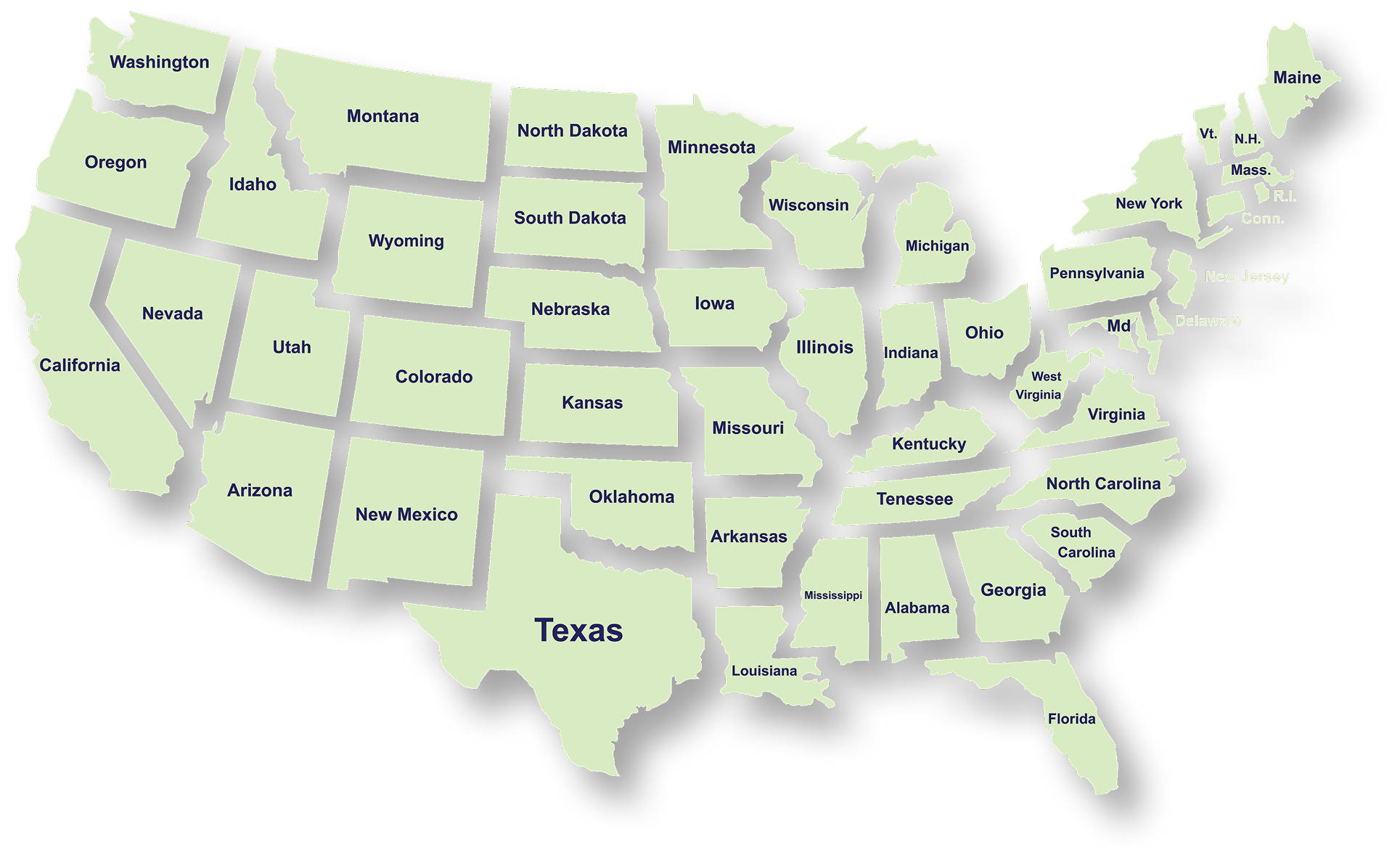
We handle accounting, tax filing, and planning with defined timelines and accurate reporting for businesses and individuals across all states.

Frequently Asked Questions

What services does NR CPAs & Business Advisors provide?
What is tax planning and why is it important for businesses?
How can a Virtual CFO help my business?
When should a business consider IRS tax resolution services?
What financial statements does a business typically need?
How can startup advisory services help new businesses?
What is strategic business planning?
What is a Virtual Family Office and who can benefit from it?