Learning Center for Tax and Financial Insights

Stay updated with clear, actionable articles on tax rules, deadlines, deductions, and financial decisions that impact individuals and businesses.

No items found.

Intimidated by Accounting? Five Simple Steps Are All You Need

When you decided to start your own company, you likely focused on the products or services you were selling, along with your amazing customer service and marketing skills. While running your own small business offers plenty of upsides, it also means you’re responsible for every aspect of operations, including the parts you think are beyond your capabilities – or just plain boring. Accounting tasks often fall into both of these categories, but that doesn’t keep attending to them from being absolutely necessary. The good news is that you don’t need an accounting degree – or even to be good at math - to do what needs to be done. The five tips that follow are simple to do. Incorporating them into your everyday tasks and mindset will not only cover the basics – but will also give you a much clearer sense of your business’s financial health.Avoid mixing business expenses with personal expenses. It may feel simpler to reach for the same credit card or use the same bank account to pay for everything, but from a business accounting perspective it’s a recipe for disaster. Whether you are a sole proprietor or are an LLC (where separating these expenses out is a requirement), you’ll find that if you pay for your business expenses separately it will make it much easier to optimize your taxes and to make smarter decisions based on a good understanding of your revenues and cash flow.Use cloud-based accounting software. Where it was common for small businesses to invest in off-the-shelf accounting software, cloud-based software has made it much easier to access your information from anywhere. It also offers the advantage of continuous software updates that are responsive to both improved performance and legislative changes, as well as superior security.Log expenses and payments every single day. Procrastination is something we’re all guilty of, especially when it comes to tasks we’d rather not do, but keeping current on logging expenses and revenue is crucial. Make it part of your daily activities, like making yourself a cup of coffee or brushing your teeth. Otherwise, you’re going to have a big pile of records that either has to be entered into your books or get forgotten about completely. The good news is that there are plenty of apps that make the task easier.Put a quarterly (or monthly) check-up on your calendar. Every quarter you need to take a close look at how your business is doing, so put it on your calendar as if it is an important appointment. If you’ve kept your records up to date, this will provide you with the opportunity to get a helpful overview of how your business is doing and what trends you can track and respond to.If you can’t handle your accounting tasks, get help. We offer bookkeeping and accounting services to help you stay on track. Though you may be able to manage on your own for a while, business growth may necessitate hiring help. Whether that is a part-time or full-time employee or an outside service like ours is up to you. Just make sure that you recognize when you’re in over your head or out of the time you need to do it yourself.

Explore More
No items found.

Understanding Tax Lingo

Article Highlights Filing status. Adjusted gross income (AGI). Taxable income. Marginal tax rate. Alternative minimum tax (AMT). Tax Credits. Underpayment of estimated tax penalty. When discussing taxes, reading tax related articles or instructions one needs to understand the basic lingo and acronyms used by tax professionals and authors to be able to grasp what they are saying. It can be difficult to understand tax strategies if you are not familiar with the basic terminologies used in taxation. The following provides you with the basic details associated with the most frequently encountered tax terms. Inflation Adjustments – The standard deductions, tax rates, amounts that can be contributed to retirement plans, virtually all amounts claimed as deductions and credits are annually adjusted for cost-of-living changes from the prior year or other base year as required by the tax code. Thus, when determining an amount, care should be taken to determine the year-specific amount. The numbers used in this article are for the year 2021. Filing Status - Generally, if you are married at the end of the tax year, you have three possible filing status options: married filing jointly, married filing separately, or, if you qualify, head of household. If you were unmarried at the end of the year, you would file as single, unless you qualify for the more beneficial head of household status. A special status applies for some widows and widowers. Head of household is the most complicated filing status to qualify for and is frequently overlooked as well as incorrectly claimed. Generally, the taxpayer must be unmarried AND: o pay more than one half of the cost of maintaining his or her home, a household that was the principal place of abode for more than one half of the year of a qualifying child or certain dependent relatives, or o pay more than half the cost of maintaining a separate household that was the main home for a dependent parent for the entire year. A married taxpayer may be considered unmarried for the purpose of qualifying for head of household status if the spouses were separated for at least the last six months of the year, provided the taxpayer wanting to qualify for the head of household status maintained a home for a dependent child for over half the year. Surviving spouse (also referred to as qualifying widow or widower) is a rarely used status for a taxpayer whose spouse died in one of the prior two years and who has a dependent child at home. The main benefit of this status is that the widow(er) can use the more favorable married joint tax rates rather than the head of household or single rates. In the year the spouse passed away, the surviving spouse may file jointly with the deceased spouse if not remarried by the end of the year. In rare circumstances, for the year of a spouse’s death, the executor of the decedent’s estate may determine that it is better to use the married separate status on the decedent’s final return, which would then also require the surviving spouse to use the married separate status for that year. If a taxpayer is married to a non-resident alien, the taxpayer has two options: file as married separate reporting only their income, deductions and credits or elect to file a joint return with the spouse including the world-wide income of both of them on a joint return. Adjusted Gross Income (AGI) - AGI is the acronym for adjusted gross income. AGI is generally the sum of a taxpayer’s income less specific subtractions called adjustments (but before certain below-the-line deductions and the standard or itemized deductions). The most common adjustments are penalties paid for early withdrawal from a savings account, and deductions for contributing to a traditional IRA or self-employment retirement plan. Many tax benefits and allowances, such as credits, certain adjustments, and some deductions are limited by the amount of a taxpayer’s AGI. Modified AGI (MAGI) - Modified AGI is AGI (described above) adjusted (generally up) by tax-exempt and tax-excludable income. MAGI is a significant term when income thresholds apply to limit various deductions, adjustments, and credits. The definition of MAGI will vary depending on the item that is being limited. Taxable Income - Taxable income is AGI less deductions (either standard or itemized). Your taxable income is what your regular tax is based upon using a tax rate schedule specific to your filing status. The IRS publishes tax tables that are based on the tax rate schedules and that simplify the tax calculation, but the tables can only be used to look up the tax on taxable income up to $99,999. The tables for 2021 have not been released yet, but those for 2020 can be found in the 1040 instructions beginning on page 66. Marginal Tax Rate (Tax Bracket) - Not all of your income is taxed at the same rate. The amount equal to your standard or itemized deductions is not taxed at all. The next increment is taxed at 10%, then 12%, 22%, etc., until you reach the maximum tax rate, which is currently 37%. When you hear people discussing tax brackets, they are referring to the marginal tax rate. Knowing your marginal rate is important because any increase or decrease in your taxable income will affect your tax at the marginal rate. For example, suppose your marginal rate is 24% and you are able to reduce your income $1,000 by contributing to a deductible retirement plan. You would save $240 in federal tax ($1,000 x 24%). Your marginal tax bracket depends upon your filing status and taxable income. You can find your marginal tax rate for 2021 by using the table below. TABLE #1 - Married Individuals Filing Joint Returns and Surviving Spouses If Taxable Income Is: Tax Is: Not Over $19,900 10% of T.I. Over $19,900 but not over $81,050 $1,990 Plus 12% of excess over $19,990 Over $81,050 but not over 172,750 $9,328 Plus 22% of excess over $81,050 Over $172,750 but not over $329,850 $29,502 Plus 24% of excess over $172,750 Over $329,850 but not over $418,850 $67,206 Plus 32% of excess over $329,850 Over $418,850 but not over $628,300 $95,686 Plus 35% of excess over $418,850 Over $628,300 $168,993.50 Plus 37% of excess over $628,300 TABLE #2 – Heads of Household If Taxable Income Is: Tax Is: Not Over $14,200 Over $14,200 but not over $54,200 $1,420 Plus 12% of excess over $14,200 Over $54,200 but not over $86,350 $6,220 Plus 22% of excess over $54,200 Over $86,350 but not over $164,900 $13,293 Plus 24% of excess over $86,350 Over $164,900 but not over $209,400 $32,145 Plus 32% of excess over $164,900 Over $209,400 but not over $523,600 $46,385 Plus 35% of excess over $209,400 Over $523,600 $156,355.00 Plus 37% of excess over $523,600 TABLE #3 – Single If Taxable Income Is: Tax Is: Not Over $9,950 Over $9,950 but not over $40,525 $995 Plus 12% of excess over $9,950 Over $40,525 but not over $86,375 $4,664 Plus 22% of excess over $40,525 Over $86,375 but not over $164,925 $14,751 Plus 24% of excess over $86,375 Over $164,925 but not over $209,425 $33,603 Plus 32% of excess over 164,925 Over $209,425 but not over $523,600 $47,843 Plus 35% of excess over $209,425 Over $523,600 $157,804.25 Plus 37% of excess over $523,600 TABLE #4 – Married Individual Filing Separate If Taxable Income Is: Tax Is: Not Over $9,950 Over $9,950 but not over $40,525 $995 Plus 12% of excess over $9,950 Over $40,525 but not over $86,375 $4,664 Plus 22% of excess over $40,525 Over $86,37 but not over $164,925 $14,751 Plus 24% of excess over 86,375 Over $164,925 but not over $209,425 $33,603 Plus 32% of excess over 164,925 Over $209,425 but not over $314,150 $47,843 Plus 35% of excess over $209,425 Over $314,150 $84,496.75 Plus 37% of excess over $314,150

Explore More
No items found.

10 Tax-Saving Strategies to Consider Before Year-End

Article Highlights:Taking Stock of Tax StrategiesEducation Tax CreditsConverting a Traditional IRA to a Roth IRAMinimum Required Distributions Charitable ContributionsQualified Charitable DistributionsHealth Savings AccountsPrepaying State TaxesPaying Medical/Dental BillsGiftingAvoiding Underpayment PenaltiesIt seems hard to believe, but the holiday season is almost upon us, and that means that the 2021 tax preparation season will soon follow. With the end of the tax year just around the corner, tax-savvy individuals need to take some time from their busy schedules to review the tax benefit steps they’ve already taken and see what else they need to do. Now is the time to ensure that you’ve taken advantage of all of the tax-saving strategies available to you.There are a number of smart tax-advantaged moves available. Though you may not be eligible to utilize all of them, it’s a good idea to take a break from holiday shopping to make sure you’ve done all that you can to minimize your tax burden and get all of the write-offs and deductions possible. Here are ten of the most popular, most effective strategies available, including some important reminders that may save you from having to pay penalties:Make the Most of Education Tax Credits: Both the Lifetime Learning education credit and the American Opportunity Tax Credit allow qualified taxpayers to prepay 2022 tuition bills for an academic period that begins by the end of March 2022, including the tuition payments when figuring the 2021 credit. That means that if you are eligible to take the credit and you have not yet reached the 2021 maximum for qualified tuition and related expenses paid, you can bump up your credits by paying for early 2022 tuition before ringing in the New Year. This may not apply to you if you’ve been paying tuition expenses for the entire 2021 tax year, but if your student just started school this fall, it will probably provide you with some additional help.Convert a Traditional IRA to a Roth IRA: When a traditional IRA is converted to a Roth IRA, generally the amount converted is taxable in the conversion year. Taxpayers whose incomes have been very low in 2021 may be able to move the assets currently in their traditional IRA into a Roth IRA at a much lower tax rate than if they waited to make the conversion in a higher-income year.Avoid Required Minimum Distribution (RMD) Penalties: Once U.S. taxpayers reach the age of 72, they are required to take what is known as a “required minimum distribution” from their qualified retirement plan or IRA every year. If this is the first year that this rule applies to you and you haven’t withdrawn the required amount yet, there’s no need to panic – you don’t have to do so until sometime during the first quarter of next year. Of course, if you wait until 2022 to take your 2021 distribution, you’re going to end up having to take two distributions in one year – one for 2021 and one for 2022. For those who have fallen into this category before 2021, you only have until December 31st to take the required distribution if you want to avoid penalties. Charitable Deductions: Many people who itemize take advantage of the ability to take a deduction for their donations to their favorite charity or house of worship. Did you know that you can choose to pay all or part of your 2022 planned giving in 2021 in order to increase the amount you deduct in 2021? Though this may not be appealing to those who itemize every year, if you alternate between taking the standard deduction one year and itemizing the next, this can give you a big boost. For 2021 only, even if you use the standard deduction and don’t itemize your deductions, you will be eligible to claim a tax deduction of up to $300 ($600 if you file jointly with your spouse) for cash contributions you make to qualified charities during 2021. Cash includes payments by check and credit card. Donations to donor advised funds and private foundations aren’t eligible for this non-itemizer deduction.Charitable contributions are deductible in the year in which you make them. If you charge a donation to a credit card before the end of the year, it will count for 2021. This is true even if you don’t pay the credit card bill until 2022. In addition, a check will count for 2021 as long as you mail it in 2021.Qualified Charitable Distributions: Those who are age 70½ or older are allowed to transfer funds (up to $100,000) from their IRA to qualified charities without the transferred funds being taxable, provided the transfer is made directly by the IRA trustee to a qualified charitable organization other than a private foundation or a donor-advised fund. If you are required to make an IRA distribution (i.e., you are age 72 or older), you may have the distribution sent directly to a qualified charity, and this amount will count toward your RMD for the year.

Explore More
No items found.

Video Tip: Taxes and Cryptocurrency Transactions

Are you familiar with the tax treatment for cryptocurrency investments and transactions? Being knowledgeable can help you avoid tax blunders and problems with the IRS. Watch this video for a quick overview of the relationship between taxes and cryptocurrency.

Explore More
No items found.

Corporations: Do You Really Want To Pay Those Dividends?

If you invest in stocks, you probably look forward to receiving dividend checks (or notices that your dividends have been reinvested) from the companies you own shares in. It’s an added perk of ownership that increases your return on investment. But not everybody is a fan of these additional payments, and plenty of corporations purposely pass over providing them. The reason for this is clear – rather than face double taxation, they’d prefer to keep their profits in-house to fund operations and growth.Not everybody realizes that when companies pay out dividends on their excess cash, it leads to profits being taxed twice. The first tax event occurs at the corporate level when the company declares its year-end earnings. Taxation then happens again, but this time at the individual level when the shareholder reports the dividend that they received on their personal income tax return. That means that as a stockholder, you actually end up paying taxes on corporate profits twice, though only once out of your own pocket. Double taxation diminishes the impact of corporate profits, and that’s why many corporations choose instead to keep their money in-house, reinvesting in themselves in hopes of continuing to grow and improve revenue and their stock’s value for investors. An example of this approach is Tesla, who at this date, does not pay dividends. To understand exactly what’s going on with dividend double taxation, you first need to know that a dividend is what is known as a PAT, or a profit after tax. When a company’s operations are successful enough for them to earn a profit it must pay taxes on them, just as individuals do on their income. It is only after those taxes have been paid to the government that corporate executives make a decision as to what to do with the remaining profits. Dividends are the result of the decision to distribute the after-tax profits to stockholders. Dividends may feel like a bonus of being a shareholder — and they are. But because they get reported as income when you file your individual tax return, they also represent the government taking a second bite out of the same apple, and many people find this objectionable — especially because the larger the amount of dividends that are paid out, the more double taxes the government is collecting, and those are funds that could have been put back into making the company even more successful.

Explore More
No items found.

Congress Terminates the Employee Retention Credit Early

President Biden signed the Infrastructure Investment and Jobs Act (IIJA) into law on November 15, 2021. One of the provisions of that legislation retroactively terminated the employee retention credit (ERC) early. The credit was previously available to eligible employers for wages paid through the end of 2021. Under this change the credit terminates after the third quarter. Although the Senate passed the IIJA well before the 4th quarter of 2021 began, issues in the House caused that chamber’s vote in favor of the Act to be delayed until late in the evening of November 5, 2021, over a month after the 4th quarter began, which has created a problem for employers who, based on prior law, were claiming the ERC for the 4th quarter and were reducing their payroll deposits based upon the ERC.Under the IIJA, employers are not qualified for the credit for wages paid after September 30, and thus employers should have been making their normal payroll deposits during fourth quarter. IIJA includes no provision to deal with employers who were planning to use the ERC to offset payroll taxes. For now, it’s not clear if employers who would have qualified due to the drop in gross receipts tests or full/partial suspension of operations test and reduced their payroll tax deposits prior to passage of the Act will face late deposit penalties for the payroll taxes they failed to deposit.If neither Congress nor the IRS provides relief, employers will not only have to deposit payroll taxes for the 4th quarter they thought were covered by the ERC, they may also be subject to penalties up to 10%.

Explore More
No results found.
Thank you! Your submission has been received!
Oops! Something went wrong while submitting the form.

Want tax & accounting tips & insights?Sign up for our newsletter.

Thank you! Your submission has been received!
Oops! Something went wrong while submitting the form.

Why Work With Us?

We combine deep tax expertise, financial strategy, and practical business insight to help you manage complexity, stay compliant, and make confident financial decisions.
A dollar sign, representing financial advice or discussion at NR CPAs & Business Advisors.

Experienced CPA and Enrolled Agent Leadership

Guidance led by licensed professionals with deep expertise in tax strategy, compliance, and complex financial matters.
White bar chart with an upward arrow on green circular background representing growth or progress at NR CPAs &. Business Advisors

Support for Growing Businesses and Startups

We understand the financial challenges of growth stage businesses and provide structured guidance to support expansion.
A white hand holding a dollar symbol and ascending bar chart on a green circular background representing financial growth or investment at NR CPAs & Business Advisors..

Strategic Financial Advisory

Our team helps you evaluate financial decisions with greater clarity, supported by practical insights and long term planning.

Fractional CFO Support

Access experienced financial leadership without the commitment and cost of hiring a full time Chief Financial Officer.

Proactive Tax Planning Approach

We focus on identifying tax opportunities throughout the year rather than reacting only during filing season.

Clear and Reliable Financial Reporting

Accurate financial statements and reporting that help you better understand performance and make informed decisions.
White IRS building icon with pillars and a dollar sign above on a green circular background.

Professional IRS Representation

Experienced support in resolving IRS notices, disputes, and compliance matters while protecting your financial interests.

Personalized Client Focus

Every client receives thoughtful attention and tailored financial solutions based on their specific needs and business goals.
Financial matters often involve important decisions. Working with experienced advisors can help you approach them with greater clarity and confidence in your choices.

Need Help With Your Tax or Financial Decisions?

Discuss your situation with our advisors to get clear guidance on tax planning, IRS matters, and the financial decisions ahead.
Business consulting at NR CPAs & Business Advisors.

Request Your Consultation

Fill out the form to discuss your tax concerns, financial questions, or advisory needs with our team. We will review your details and respond shortly.

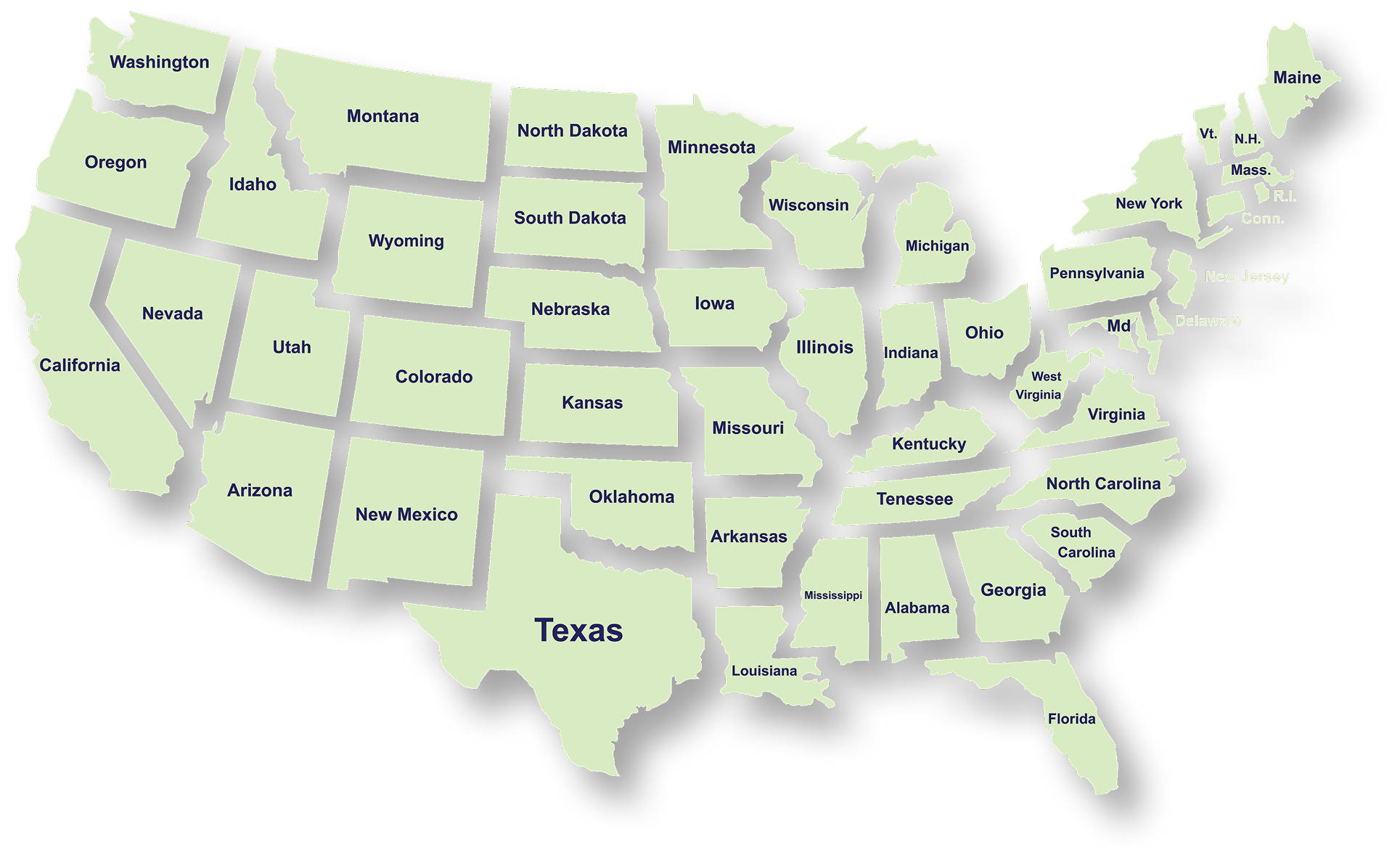
Serving Businesses & Individuals Across USA

We handle accounting, tax filing, and planning with defined timelines and accurate reporting for businesses and individuals across all states.

Frequently Asked Questions

What services does NR CPAs & Business Advisors provide?
What is tax planning and why is it important for businesses?
How can a Virtual CFO help my business?
When should a business consider IRS tax resolution services?
What financial statements does a business typically need?
How can startup advisory services help new businesses?
What is strategic business planning?
What is a Virtual Family Office and who can benefit from it?