Learning Center for Tax and Financial Insights

Stay updated with clear, actionable articles on tax rules, deadlines, deductions, and financial decisions that impact individuals and businesses.

No items found.

Tax Tips for Holiday Charity Donations

Article Highlights:Long-Form Itemization RequiredBelow-the-Line Cash Contributions for 2021Qualified Charities OnlyCash DonationsNon-cash DonationsLeave DonationsOther Qualifying DonationsAGI LimitationsYear-End DonationsDuring the holidays, many charities solicit gifts of money or property. This article includes tips for documenting your charitable gifts so that you can claim a deduction on your tax return.Cash Donations – To claim a charitable deduction, you normally must itemize your deductions. However, for 2021, non-itemizers filing a joint return can deduct up to $600 of cash contributions below-the-line. The limit is $300 for other filing statuses. Donations to donor-advised funds and private foundations aren’t eligible for this below-the-line deduction. Below-the-line means that the deduction is claimed after determining your adjusted gross income (AGI) and as part of the calculation of taxable income.Example: Mr. Claus, age 45, is unmarried and files using the single filing status. He has W-2 wages of $50,000 and contributed $1,000 to his traditional IRA during 2021. He is not itemizing his deductions, and his 2021 standard deduction is $12,550. Mr. Claus made a donation of $200 by check to the Humane Society on October 1, 2021. This was the only charitable contribution he made during the year. His AGI will be $49,000 ($50,000 – $1,000). His taxable income, which is the amount on which his tax is computed, will be $36,250 ($49,000 − $200 − $12,550).There are documentation requirements when claiming a charitable contribution deduction, and of course, only contributions to qualified charities are deductible. Of course, we all know that the Red Cross, Salvation Army, and Cancer Society are legitimate, qualified charities, but what about small or local charities? Use the IRS Select Check tool to make sure a charity is qualified. However, you can always deduct gifts to churches, synagogues, temples, mosques, and government agencies – even if the Select Check tool does not list them in its database.The documentation requirements differ for cash versus non-cash contributions. A donor may not claim a deduction for a cash, check, or other monetary gift unless the donor maintains a record of the contribution in the form of either a bank record (such as a cancelled check) or a written communication from the charity (such as a receipt or a letter) showing the charity’s name, the date of the contribution, and the contribution amount. In addition, if the contribution is $250 or more, the donor must also get an acknowledgment from the charity for each deductible donation.If contributions are made via payroll deductions, then a pay stub, a Form W-2, or other verifying document should be maintained as verification of the gift. It must show the total amount withheld for charity. In addition, be sure to retain the pledge card showing the charity’s name.Non-cash Contributions – Non-cash contributions are also deductible but only if you are itemizing your deductions (i.e., using Form 1040 Schedule A). Generally, contributions of this type must be in good condition, and they can include food, art, jewelry, clothing, furniture, furnishings, electronics, appliances, and linens. Items of minimal value (such as underwear and socks) generally are not deductible. The deductible amount is the fair-market value of the items at the time of the donation, and as with cash donations, if the value is $250 or more, you need to save an acknowledgment from the charity for each deductible donation. Be aware: the door hangers left by many charities after they pick up a donation do not meet the acknowledgment criteria; in one court case, taxpayers were denied their charitable deduction because their acknowledgment consisted only of door hangers. When a non-cash contribution is worth $500 or more, the IRS requires Form 8283 to be included with the return, and when the donation is $5,000 or more, a certified appraisal of the item(s) donated is generally required.

Explore More
No items found.

Compass Real Estate: A Bold Industry Leader Every Step of the Way

If you've never heard the name Robert Reffkin before, you'd be forgiven — but you're almost certainly familiar with his work.Reffkin was raised the child of a single mother, herself an Israeli immigrant. It was from her that he learned the beginnings of what would eventually become his now-famous entrepreneurial spirit. At one point during his youth, Robert wanted to launch a DJ business. Everyone around him was understandably skeptical, but his mother was endlessly encouraging. That business became successful when he was still in high school, so much so that it helped him accomplish one of his big dreams: attending Columbia University in New York City.The issue was that at the time, Robert wasn't necessarily the best student in his class. He had a C average — not bad, but not a guarantee that he'd get to go to the school he'd recently fallen in love with. Still, he poured himself into his SAT prep and eventually accomplished that goal of his — the first of many significant ones that he would tackle throughout his life.Robert Reffkin and Compass Real Estate: The Story So FarAfter graduation, Reffkin quickly became the youngest business analyst ever employed by McKinsey & Company. He spent two years in that position before returning to school in a quest for his BMA, at which point he would make his triumphant return to Wall Street as an associate at Lazard.This portion of his career took him through many notable organizations, with Goldman Sachs being among them. At one point he was the chief of staff for the then-president and COO of the company, but he knew that life had more in store for him than this. It was already the type of career that most would be endlessly jealous of at such a young age, but Reffkin knew it wasn't through. In 2012, he left Goldman Sachs to form a new company of his own.On the one hand, starting a real estate firm like Compass Real Estate in 2012 of all times doesn't necessarily seem like the most obvious career choice. But at the same time, Reffkin always possessed something that others didn't: an ability to see not just where an industry was, but where it might be headed.He admittedly didn't know much about the industry, but everything going on in the world at the time told him it needed to be disrupted. In partnership with tech entrepreneur Ori Allon, he set his sights on accomplishing precisely that.

Explore More
No items found.

Video: 2021 Year-End Tax Planning Tips

The end of 2021 is coming. Let's do a quick recap of tax opportunities you may be missing out on. See our year-end review video for a detailed checklist.

Explore More
No items found.

President Biden’s Build Back Better Act Passed by The House; Fate Now in the Senate’s Hands

Article Highlights:Build Back Better ActSenate is NextHighlights of Certain Provisions Included in the House VersionNoticeably Absent from the Original BillOn November 19, 2021, the House of Representatives passed their proposed version of President Biden’s Build Back Better Act, which was substantially pared down from the original version. The Senate will now take up the legislation, and without question there will be changes. Then the Senate-altered version will have to go back to the House and a compromised version negotiated before a final bill can go to the President’s Desk for his signature. Reliable sources indicate a final bill will not be available until towards the end of the year. Here are some of the tax provisions included in the House version, but there’s no guarantee any of them will make it through to the final legislation. Adding surtaxes on high-income taxpayers: o 5% tax on individuals with modified adjusted gross incomes more than $10 million and more than $200,000 for estates and trusts. o An additional 3% tax on income in excess of $25 million ($500,000 for estates and trusts).Applying the Net Investment Tax to business income for married taxpayers filing jointly with a MAGI more than $500,000 ($400,000 for single and $250,000 for married filing separate taxpayers).Extending the increased Child Tax Credit and advance credit payments for one additional year, 2022. Thus for 2022 the credit would be $3,000 per qualifying child, up from $2,000 in 2020. The credit for a child under age 6 would be $3,600. Under prior law as enacted in the TCJA the state and local tax (SALT) deduction was limited to $10,000. The SALT limitation would be increased to $80,000, effective for 2021.Extending and enhancing green energy credits, including home energy savings, solar credit, and electric vehicle credits.

Explore More
No items found.

How Adopting Technology Helped Restaurants Survive and Thrive During the Pandemic

Restaurants and other hospitality businesses were among the hardest hit during the pandemic, and even as infection and hospitalization rates wane, many consumers are hesitant about returning to their pre-pandemic activities. Despite these challenges, businesses have managed to survive and thrive with the help of innovative technologies like Toast, a restaurant-only software solution that addresses point of sale, restaurant operations, kitchen dashboards, online ordering and delivery, and marketing. Though created years before COVID-19 as a means for improving operations, the product has helped restaurants large and small to adapt, minimize contact, improve overall service, and boost profitability.Born in 2012 in the bars, restaurants, and cafes of Boston, Toast started as an app that eliminated the need to wait for a check. It allowed customers to start a tab and link it directly to their credit card. From there it grew into a comprehensive system that provided Android tablets that servers could carry with them and use to enter orders as well as process payments. The idea was that mobile technology would avoid the need for expensive in-house hardware and software systems. It would cut training time for staff, thus saving valuable money for owners. It also saved servers steps, thus allowing them to assume responsibility for more tables and grow their earnings while providing clients with better service. Finding a way to avoid running back and forth between the table and a terminal to place orders or process payments was a win for everybody. But that was just the beginning.Because Toast relies on open-source Android technology, the system continued expanding. By the end of 2015 its functions included payroll, inventory management, and multi-location menu controls. it was being used by thousands of restaurants across the country. Then the pandemic struck, and though its founders feared that their single-minded focus on the restaurant industry might mean the end of their successful venture, when restaurants reopened their doors they realized that their product’s flexibility meant they could add new functions in response to the virus. They developed contactless ordering and mobile payments, curbside notifications for takeout, and flat-fee deliveries that limited contact between servers and diners.

Explore More
No items found.

Are You Using QuickBooks’ Custom Fields? Should You Be?

QuickBooks was designed to be used by numerous types of small businesses. Custom fields help you tailor it to meet your own needs.One of the reasons that QuickBooks is so popular is that it can be used by a wide variety of business types, from pet stores to landscaping companies to coffee shops. Many companies are satisfied with the software as is and don’t need to make any modifications.But have you ever needed to include more information in your customer records? Do your transaction forms need an additional field or two? QuickBooks makes this possible by supporting custom fields that you can define for yourself. It’s not difficult to do, and it can help you, for example:Generate more focused reports.Make customer and vendor records more detailed.Create records for similar-but-different inventory items.Here’s how it works.Changing QuickBooks FormsYou may already know that you can change the structure and content of some QuickBooks forms, including invoices, estimates, sales receipts, statements, and purchase orders. To see what’s possible, open the Lists menu and select Templates. Right-click on the screen and select New. Choose the form you want to create and click OK. You can make changes in the window that opens and click Additional Customization to make more modifications. You have tremendous control over the content and structure of your forms in QuickBooks.Creating Custom Fields for RecordsQuickBooks does not include custom field creation in the Basic Customization and Additional Customization windows, although your new fields will appear in the Additional Customization window. Rather, you go to the Customer Center, Vendor Center, or Employee Center, depending on what kind of records you want to change. You can add up to 15 custom fields for those three types of records (no more than seven per type).Open the Customers menu and select Customer Center. Make sure the Customers & Jobs tab is highlighted. Double-click on any record to open its Edit Customer window and then click on Additional Info. In the lower right corner, click Define Fields. The window that opens displays four columns. In the first, Label, you’ll enter the names of your new custom fields. Click in any or all of the next three columns to indicate which records should contain them: customer, vendor, or employee. You can create up to 15 custom fields in QuickBooks Pro and Premier, but you’re limited to seven per record type.

Explore More
No results found.
Thank you! Your submission has been received!
Oops! Something went wrong while submitting the form.

Want tax & accounting tips & insights?Sign up for our newsletter.

Thank you! Your submission has been received!
Oops! Something went wrong while submitting the form.

Why Work With Us?

We combine deep tax expertise, financial strategy, and practical business insight to help you manage complexity, stay compliant, and make confident financial decisions.
A dollar sign, representing financial advice or discussion at NR CPAs & Business Advisors.

Experienced CPA and Enrolled Agent Leadership

Guidance led by licensed professionals with deep expertise in tax strategy, compliance, and complex financial matters.
White bar chart with an upward arrow on green circular background representing growth or progress at NR CPAs &. Business Advisors

Support for Growing Businesses and Startups

We understand the financial challenges of growth stage businesses and provide structured guidance to support expansion.
A white hand holding a dollar symbol and ascending bar chart on a green circular background representing financial growth or investment at NR CPAs & Business Advisors..

Strategic Financial Advisory

Our team helps you evaluate financial decisions with greater clarity, supported by practical insights and long term planning.

Fractional CFO Support

Access experienced financial leadership without the commitment and cost of hiring a full time Chief Financial Officer.

Proactive Tax Planning Approach

We focus on identifying tax opportunities throughout the year rather than reacting only during filing season.

Clear and Reliable Financial Reporting

Accurate financial statements and reporting that help you better understand performance and make informed decisions.
White IRS building icon with pillars and a dollar sign above on a green circular background.

Professional IRS Representation

Experienced support in resolving IRS notices, disputes, and compliance matters while protecting your financial interests.

Personalized Client Focus

Every client receives thoughtful attention and tailored financial solutions based on their specific needs and business goals.
Financial matters often involve important decisions. Working with experienced advisors can help you approach them with greater clarity and confidence in your choices.

Need Help With Your Tax or Financial Decisions?

Discuss your situation with our advisors to get clear guidance on tax planning, IRS matters, and the financial decisions ahead.
Business consulting at NR CPAs & Business Advisors.

Request Your Consultation

Fill out the form to discuss your tax concerns, financial questions, or advisory needs with our team. We will review your details and respond shortly.

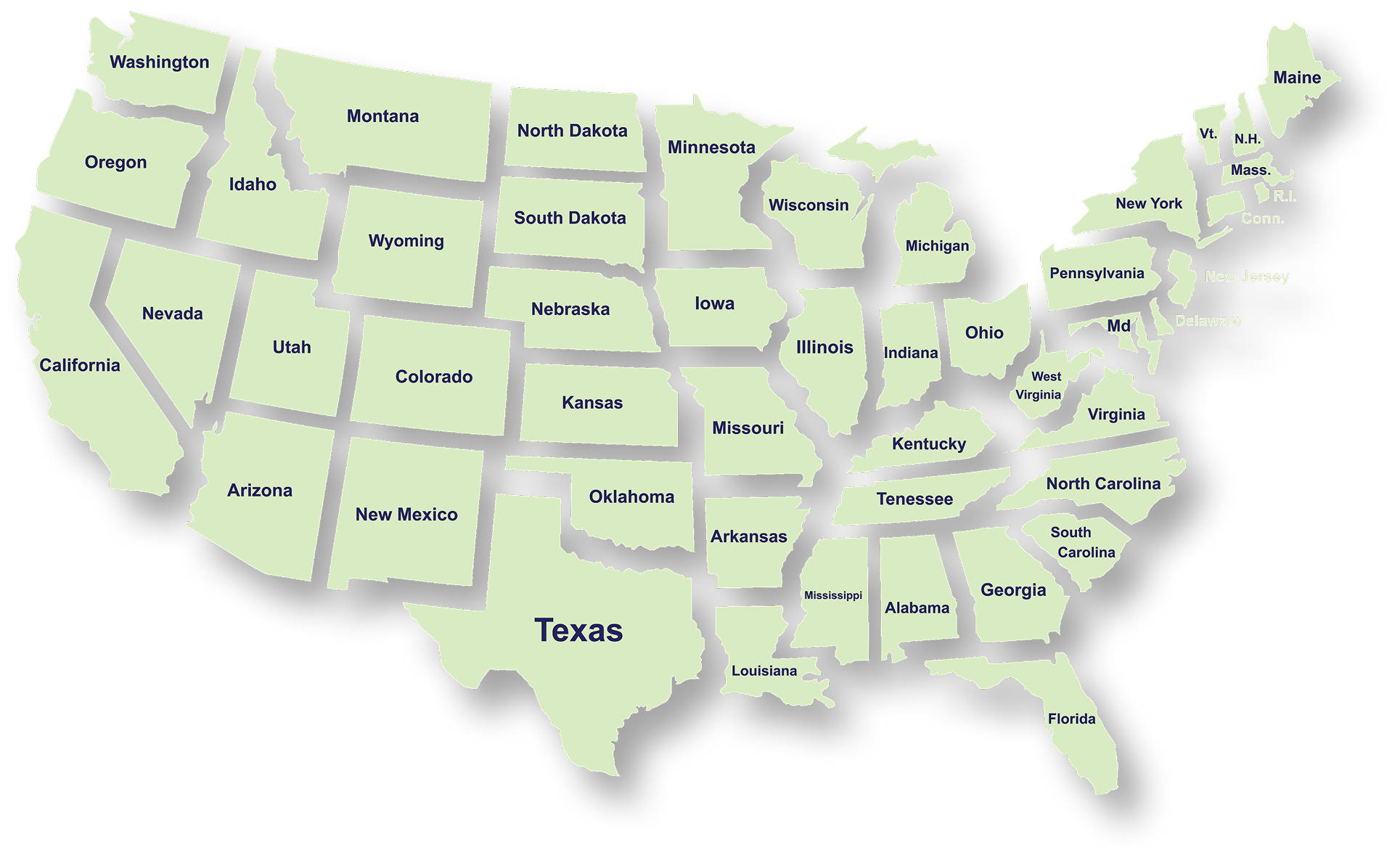
Serving Businesses & Individuals Across USA

We handle accounting, tax filing, and planning with defined timelines and accurate reporting for businesses and individuals across all states.

Frequently Asked Questions

What services does NR CPAs & Business Advisors provide?
What is tax planning and why is it important for businesses?
How can a Virtual CFO help my business?
When should a business consider IRS tax resolution services?
What financial statements does a business typically need?
How can startup advisory services help new businesses?
What is strategic business planning?
What is a Virtual Family Office and who can benefit from it?