Learning Center for Tax and Financial Insights

Stay updated with clear, actionable articles on tax rules, deadlines, deductions, and financial decisions that impact individuals and businesses.

No items found.

Video tip: Closing Your Business? Let's Tie Up Some Loose Ends on the Tax Side

Taxes are a crucial part of closing a business. From federal and state taxes to employees' payroll, there are a myriad of tax-related issues to consider. This video will help you check off the list of tax loose ends as you close your doors.

Explore More
No items found.

Are You a Candidate for Bunching?

Article Highlights: Standard DeductionsItemized DeductionsBunching StrategyMedical ExpensesTaxesCharitable ContributionsThe changes in the 2017 Tax Cuts and Jobs Act (TCJA) included nearly doubling the standard deduction and placing limitations on or suspending certain itemized deductions, effective for tax years 2018 through 2025. The new standard deduction amounts for 2018 were$12,000 for single individuals and married people filing separately (MFS),$18,000 for heads of household, and$24,000 for married taxpayers filing jointly (MFJ). These amounts have been adjusted for inflation since then; for 2021, they are$12,550 for single and MFS,$18,800 for heads of household, and$25,100 for MFJ.If your deductions exceed the standard deduction amount for your filing status, you are allowed to itemize the following deductions:Medical expenses, to the extent they exceed 7.5% of your adjusted gross income (AGI);Taxes paid that year (for state or local income or sales tax as well as real property or personal property taxes), limited to $10,000;Home mortgage interest;Investment interest;Charitable contributions;Gambling losses, to the extent of your gambling winnings; andCertain infrequently encountered miscellaneous “tier-1” deductions. Bunching is an effective tax strategy to keep in mind as the end of the year approaches. If your itemized deductions typically are roughly equal to the standard deduction amount, you may be a good candidate for using the bunching strategy. In this technique, you take the standard deduction in one year and then itemize in the next. This is accomplished by planning the payment of your deductible expenses so that you maximize them in the years when you itemize deductions. Commonly bunched deductible expenses include medical expenses, taxes, and charitable contributions. If you think this strategy may benefit you for 2021, you may need to take action before the year is over.To clearly illustrate how bunching works, here are a few examples of deductible payments that generally provide enough flexibility to make this approach worthwhile:Medical Expenses – Say that you contract with a dentist for your child’s braces. This dentist offers you the options of an up-front lump-sum payment or a payment plan. If you make the lump-sum payment, the entire cost will be credited in the year when you paid it, thereby dramatically increasing your medical expenses for that year. If you do not have the cash available for the up-front payment, then you can pay by credit card, which is treated as a lump-sum payment for tax purposes. If you do so, note that the interest on that payment is not deductible; you need to determine whether incurring the interest is worth the increased tax deduction. Another important issue related to medical deductions is that only the amount of medical expenses exceeding 7.5% of your AGI is actually deductible. If you have abnormally high income in the current year, you may wish to put off your medical expense payments until the following year (e.g., if 7.5% of the following year’s income will be less than 7.5% of this year’s income). Taxes – Property taxes are generally billed annually at midyear; most locales allow these tax bills to be paid in semiannual or quarterly installments. Thus, you have the option of paying them all at once or in installments. This provides the opportunity to bunch the tax payments by paying only one semiannual installment (or two quarterly installments) in one year and pushing off the other semiannual (or two quarterly) installments until the next year. Doing so will allow you to deduct 1½ years of taxes in one year and half a year of taxes in the next. However, be cautious if you are thinking about making late property tax payments as a means of bunching. Late payment penalties are likely to wipe out any potential tax savings.If you reside in a state with a state income tax, any such tax that is paid or withheld during the year is deductible on federal taxes. For instance, if you are making quarterly estimated state tax payments, the fourth quarter estimated payment is generally due on January of the subsequent year. This allows you to either make that payment by December 31 (thus enabling you to deduct the payment on the current year’s return) or pay it in January before the due date (thus enabling you to use it as a deduction on next year’s return). Here is a word of caution about itemized tax deductions: Under the TCJA, a maximum of $10,000 in itemized tax deductions is allowed, so no benefit will be gained by prepaying taxes when the tax total you’ve paid is already $10,000 or more. In addition, taxes are not deductible at all under the alternative minimum tax, so individuals under that tax scheme generally derive no benefits from itemized deductions.Charitable Contributions – Charitable contributions are a nice fit for bunching because they are entirely at the taxpayer’s discretion. For example, if you normally tithe to your church, you can make your normal contributions throughout the year but then prepay the entire subsequent year’s tithe in a lump sum in December of the current year. If you do this for all contributions that you generally make to qualified organizations, you can double up on your contributions for one year and have no charitable deductions for the next year. Normally, charities are very active in their solicitations during the holiday season, which lets you make forward-looking contributions at the end of the current year, or you can simply wait a short time and make them after the end of the year. Charitable deductions do have a limit, but it is high for most types of contributions: 60% of AGI, or 30% of AGI for contributions of capital gain property deducted at fair market value. There are other seldom-encountered limitations as well. For 2021, itemizers can elect to suspend the 60%-of-AGI limitation for most cash contributions, including those paid by check and credit card. If the election is made, the taxpayer’s other contributions are figured first up to the 60, 50, 30, or 20% of AGI limitation; then, cash contributions are allowed above those limits up to 100% of AGI. A 5-year carryover applies to any excess over 100% of AGI. If no election is made, regular AGI limits will apply.If you are claiming the standard deduction instead of itemizing in 2021, note that you will be allowed a deduction of up to $300 ($600 on a joint return) for cash contributions you made to qualified charities. (Donor-advised funds and private foundations aren’t eligible for this non-itemizer deduction.)

Explore More
No items found.

Avoiding IRS Underpayment Penalties

Article Highlights:Pay-as-You-Earn System Safe Harbor PaymentsSituations Triggering UnderpaymentsTrue Safe HarborsCongress considers our tax system a “pay-as-you-earn” system. To facilitate that concept, the government has provided several means of assisting taxpayers in meeting the “pay-as-you-earn” requirement. These include: Payroll withholding for employees; Pension withholding for retirees; and Estimated tax payments for self-employed individuals and those with other sources of income not covered by withholding.When a taxpayer fails to prepay a safe harbor (minimum) amount, they can be subject to the underpayment penalty. This nondeductible interest penalty is higher than what might be earned from a bank. The penalty is applied quarterly, so making a fourth-quarter estimated payment only reduces the fourth-quarter penalty. However, withholding is treated as paid ratably throughout the year, so increasing withholding at the end of the year can reduce the penalties for the earlier quarters. This can be accomplished with cooperative employers or by taking an unqualified distribution from a pension plan, which will be subject to 20% withholding, and then returning the gross amount of the distribution to the plan within the 60-day statutory rollover limit (but check with this office before using the latter strategy). Federal law and most states have so-called safe harbor rules, meaning if you comply with the rules, you won’t be penalized. There are two Federal safe harbor amounts that apply when the payments are made evenly throughout the year.1. The first safe harbor is based on the tax owed in the current year. If your payments equal or exceed 90% of your current year’s tax liability, you can escape a penalty. 2. The second safe harbor—and the one taxpayers rely on most often—is based on your tax in the immediately preceding tax year. If your current year’s payments equal or exceed 100% of the amount of your prior year’s tax, you can escape a penalty, regardless of the amount of tax you may owe when you file your current year’s return. If your prior year’s adjusted gross income was more than $150,000 ($75,000 if you file married separate status), then your payments for the current year must be 110% of the prior year’s tax to meet the safe harbor amount.

Explore More
No items found.

Video tips: Who can get a Home Office Deduction?

With more and more opportunities to work from home nowadays, a home office deduction seems like such a tempting tax benefit. But who can be qualified for this deduction and how is it calculated? Watch this video to learn more.

Explore More
No items found.

The Smart Money Moves That Gig Workers Need

“Gig work” is the new “bankers’ hours.” Anyone who isn’t doing it wishes that they were, and those who are lucky enough to be freelancing know just how good it really is. But being a successful freelancer means more than making your own hours and having as much work as you want to do. It also means you have to be smart about your money. It’s all too easy to spend your earnings as soon as they come in, but because you don’t have a regular income or have your taxes automatically withheld, you need to be responsible and methodical in your approach to your income. Otherwise, you’re going to take a big hit when it comes to tax time and find yourself without savings if and when you eventually need them. Below you’ll find some of the smart money management moves that can make freelancing truly rewarding.Prepare for a rollercoaster ride. One of the first things that every freelancer learns is that there are days where you just can’t keep up with all the business coming your way, and other days when you wonder whether you’ll ever work again. The rollercoaster is part of the experience, and you have to deal with it on an emotional level as well as a financial one. Saving money every time that you earn it is essential because you are not getting a regular paycheck, but you are getting regular bills that need to be paid. If you understand what your regular expenses are and make sure that you’ve covered them now and for the future, you’ll be a lot less stressed on those days and weeks when business doesn’t appear.Save your taxes with each payment you receive. If you ever worked as a W-2 employee, you know that a big chunk of your paycheck was taken out each week by your employer. As miserable as it felt when you received your first paycheck and realized exactly how much goes to Uncle Sam, it was also very nice that your taxes had already been paid when April 15th rolled around – and even nicer when you got a refund. As a freelancer, you are responsible for paying your own taxes, and the least painful way to do it is to figure out the percentage that you’re responsible for and then automatically take that percentage of every payment you receive and deposit it into a separate, dedicated tax account. Doing so means that when you have to pay your quarterly income taxes, you already have the money set aside, and it is just one thing for you to check off of your to-do list.Make quarterly estimated income tax payments. It may be tempting to put off paying your taxes until April 15th each year, but doing so subjects you to interest and penalties. If you are a gig worker, you are considered self-employed, and that means that you are expected to pay your federal and state income taxes on an estimated quarterly basis. Live within your means. No matter whether you’re a W-2 employee or a freelancer, creating a realistic budget and sticking to it is one of the smartest things you can do from a money management perspective. If you know the minimum amount of money that you need for basic expenses and you know how much money you’re earning, it is much easier to make sure that you are allocating your funds wisely – including putting a certain amount away for savings and taxes. Don’t stop looking for business. Even when you feel like you can barely keep up with your work, it’s a good idea to keep your eyes and ears open and talk up your business to those in your network. As much as you may love the clients or work that are keeping you busy now, they could disappear tomorrow and you don’t want to have to start over from scratch. Always have something in the pipeline.

Explore More
No items found.

Watch Out for Tax Penalties

Article Highlights: Underpayment of Estimated Tax and Withholding Penalty Required Minimum Distribution Penalty Late Filing Penalty Late Payment Penalty Negligence Penalty Fraud Penalty Dishonored Check Penalty Missing ID Number Penalty Early Withdrawal Penalty Failure to Report Tips Penalty Foreign Reporting Excessive Claim Penalty Frivolous Return Penalty Failure to File Information Returns Penalty Most taxpayers don’t intentionally incur tax penalties, but many who are penalized are simply not aware of the penalties or the possible impact on their wallets. As tax season approaches, let’s look at some of the more commonly encountered penalties and how they may be avoided. Underpayment of Estimated Taxes and Withholding Penalty – The United States income tax system is a pay-as-you-earn tax system, which means that taxpayers are required to pay their tax liability as they receive income during the year through withholding or by making estimated tax payments. If a taxpayer owes more than $1,000 when filing their return for the year, the IRS will assess the underpayment of estimated tax penalty, which is currently 3% of the underpayment. There are “safe harbor” payments that can protect you from this penalty, which include payments in the following amounts: 90% of the current year’s tax liability or 100% (110% for high-income taxpayers) of the prior year’s tax liability. Farmers and fishermen need only prepay 66-2/3% of the current liability or 100% of the prior year’s liability. Because of the COVID-19 pandemic, 2020 has been a horrific year for many individuals and businesses; their income has been severely reduced, if not eliminated, because of government-mandated shutdowns and social distancing. This large drop in income can have a huge impact on the necessity of estimated tax payments. Normally, estimated tax payments are made in four installments that are due by April 15, June 15, September 15 and January 15 of the subsequent year. For 2020, the April 15 and June 15 estimated payments were suspended until July 15. The 100% and 110% of the prior year’s tax liability are most likely not viable safe harbor amounts for 2020 estimated tax, and most taxpayers will have to rely on 90% of the current year’s tax liability. Please contact this office to see if you need to make payments and, if so, how much. Required Minimum Distribution (RMD) Penalty - To prevent an individual from investing in tax-deferred retirement plans, including traditional IRAs, but never withdrawing funds from the plans (which would mean the government wouldn’t ever collect taxes on the distribution), retirees must take an RMD each year after reaching the mandatory RMD age. The mandatory distribution age has recently changed from 70½ for years before 2020 to 72 in 2020 and later years. Failing to take the correct minimum distribution (also known as excess accumulation) results in a penalty of 50% of the difference of what should have been withdrawn and what was actually withdrawn. However, the IRS is very liberal in general and will abate the penalty in most situations. However, this penalty is not an issue in 2020, as RMD to be made during 2020 has been suspended as part of COVID-19 tax relief. Late Filing Penalty – If a return is filed after the due date, including extensions, a late filing penalty of 4.5% per month (maximum 22.5%) applies. The normal due date for returns is April 15 of the subsequent year. Because of COVID-19, the due date for 2019 returns was extended to July 15, 2020, and the penalty for filing a late 2019 1040 return does not begin until after July 15, 2020. If you have not filed your 2019 return and did not file an extension by July 15, 2020, you are encouraged to do so as soon as possible to minimize penalties. If a return is over 60 days late, the minimum penalty for failure to file is the lesser of $435 or 100% of the tax shown on the return. While the obvious way to avoid a late filing penalty is to file in a timely fashion, the IRS will consider abating the penalty if it can be proven that there was reasonable cause and no willful neglect. Late Paying Penalty – When the tax owed on a return is paid after the unextended due date of the tax return (July 15 for 2019 returns filed in 2020), the taxpayer is subject to a penalty of 1/2% per month (maximum 25%) on the unpaid balance. Taxpayers are frequently caught by this penalty when they need an extension to file their tax return; many fail to realize that the extension does not include an extension to pay. The only way to avoid or minimize this penalty is to have no or little balance due on the return when it is finally filed. The extension form includes a provision to pay the projected balance owed when filing the extension. Negligence – When underpayment is due to negligence on the part of the taxpayer or there are errors in tax valuations, a penalty of 20% of the tax underpayment is charged. This penalty is frequently encountered when the IRS adjusts a filed return due to unreported income or overstated deductions. Fraud – This penalty is 75% of the tax unpaid due to fraud. Dishonored Check

Explore More
No results found.
Thank you! Your submission has been received!
Oops! Something went wrong while submitting the form.

Want tax & accounting tips & insights?Sign up for our newsletter.

Thank you! Your submission has been received!
Oops! Something went wrong while submitting the form.

Why Work With Us?

We combine deep tax expertise, financial strategy, and practical business insight to help you manage complexity, stay compliant, and make confident financial decisions.
A dollar sign, representing financial advice or discussion at NR CPAs & Business Advisors.

Experienced CPA and Enrolled Agent Leadership

Guidance led by licensed professionals with deep expertise in tax strategy, compliance, and complex financial matters.
White bar chart with an upward arrow on green circular background representing growth or progress at NR CPAs &. Business Advisors

Support for Growing Businesses and Startups

We understand the financial challenges of growth stage businesses and provide structured guidance to support expansion.
A white hand holding a dollar symbol and ascending bar chart on a green circular background representing financial growth or investment at NR CPAs & Business Advisors..

Strategic Financial Advisory

Our team helps you evaluate financial decisions with greater clarity, supported by practical insights and long term planning.

Fractional CFO Support

Access experienced financial leadership without the commitment and cost of hiring a full time Chief Financial Officer.

Proactive Tax Planning Approach

We focus on identifying tax opportunities throughout the year rather than reacting only during filing season.

Clear and Reliable Financial Reporting

Accurate financial statements and reporting that help you better understand performance and make informed decisions.
White IRS building icon with pillars and a dollar sign above on a green circular background.

Professional IRS Representation

Experienced support in resolving IRS notices, disputes, and compliance matters while protecting your financial interests.

Personalized Client Focus

Every client receives thoughtful attention and tailored financial solutions based on their specific needs and business goals.
Financial matters often involve important decisions. Working with experienced advisors can help you approach them with greater clarity and confidence in your choices.

Need Help With Your Tax or Financial Decisions?

Discuss your situation with our advisors to get clear guidance on tax planning, IRS matters, and the financial decisions ahead.
Business consulting at NR CPAs & Business Advisors.

Request Your Consultation

Fill out the form to discuss your tax concerns, financial questions, or advisory needs with our team. We will review your details and respond shortly.

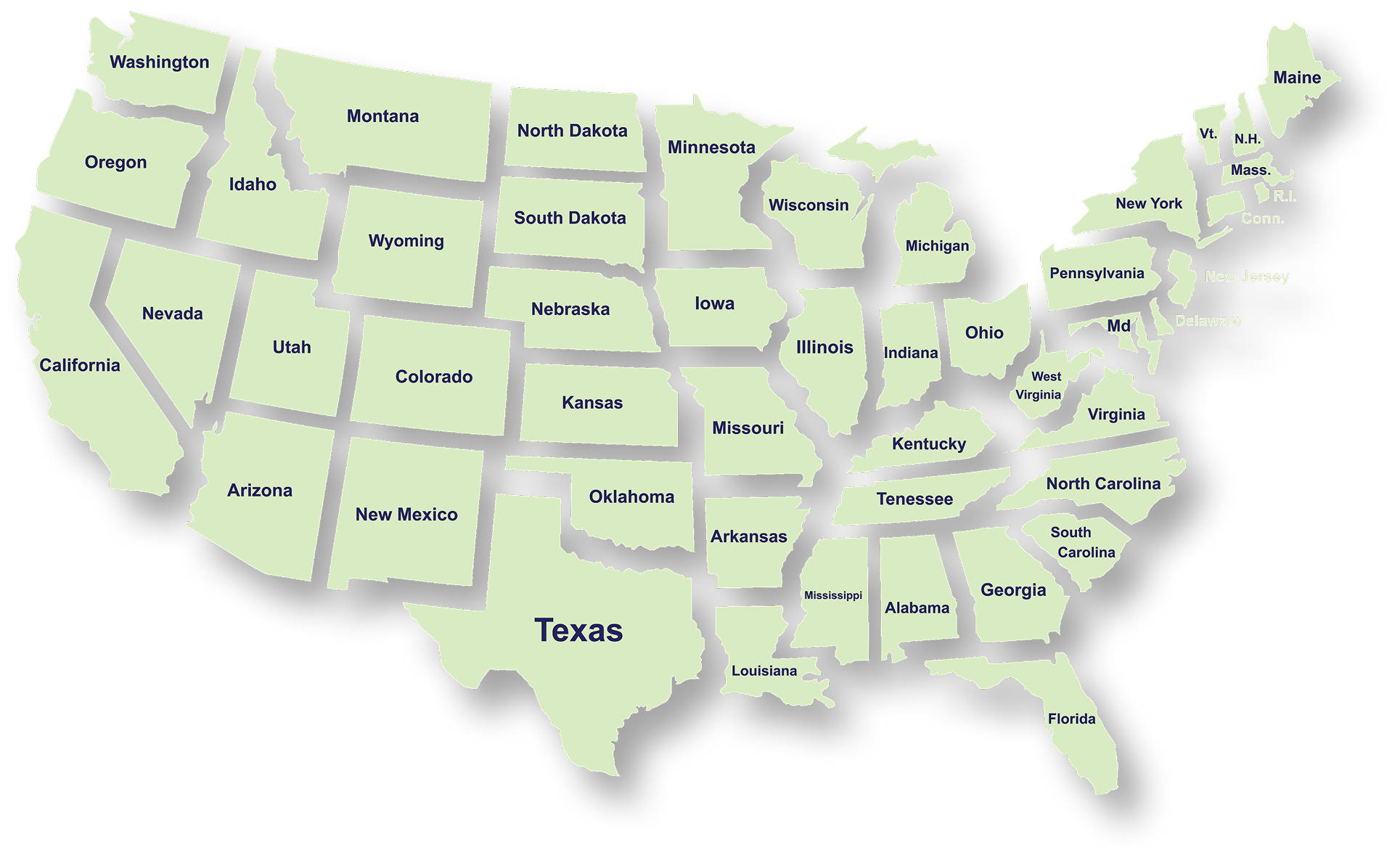
Serving Businesses & Individuals Across USA

We handle accounting, tax filing, and planning with defined timelines and accurate reporting for businesses and individuals across all states.

Frequently Asked Questions

What services does NR CPAs & Business Advisors provide?
What is tax planning and why is it important for businesses?
How can a Virtual CFO help my business?
When should a business consider IRS tax resolution services?
What financial statements does a business typically need?
How can startup advisory services help new businesses?
What is strategic business planning?
What is a Virtual Family Office and who can benefit from it?