Learning Center for Tax and Financial Insights

Stay updated with clear, actionable articles on tax rules, deadlines, deductions, and financial decisions that impact individuals and businesses.

No items found.

Consumers Lost Over $500 Million Due to Covid-related Fraud

It will be many years before we have a full understanding of what COVID-19 cost us as a society. But as that information is incrementally collected and released, we’re starting to see the picture take shape. One of the most recent reports on the subject was issued by the Federal Trade Commission, which has estimated that consumers victimized by Covid-related fraud lost over $500 million. The numbers are devastating, especially because there is a strong sense that the self-reported losses pale in comparison to those that went unreported. The FTC acknowledges that the more-than 558,000 complaints it has received since the start of 2020 barely scratch the surface of how many consumers have been ripped off by online shopping scams, fraudulent travel websites and other schemes. Far more consumers have likely shrugged off the losses rather than go to the trouble of registering a complaint. But based on the complaints that were lodged (60% of which were specifically associated with fraud), the average theft per person amounted to about $370. It is heartbreaking to realize that fraud continues and thrives in the midst of a global pandemic, and yet this frequently happens in the midst of a tragedy. As citizens have struggled to avoid sickness and deal with isolation and job loss, unethical opportunists have set up fake online shopping and sites and found ways to rob individuals of their government stimulus checks. Even more have tried to take advantage of consumer demand: according to a Consumer Federation report, price-gouging of toilet paper, hand sanitizer, and face masks —items that were in short supply and desperately needed — was the most frequently-lodged complaint to state and local consumer agencies. Others reported issues with lack of refunds related to event cancellations, school and childcare closures. Illegal evictions were also common. Of the 53,000 scams reported to the FTC, the lion’s share was about online shopping fraud, with approximately 16% indicating that as they spent more time indoors and online, they were tricked by “opportunistic websites” that advertised the availability of in-demand items, then never delivered. Consumers filed complaints about sites selling clothing, electronics, hand sanitizer, and pets, but the biggest losses were to sites that refused to issue refunds canceled vacations and travel. Ironically, the Better Business Bureau is reporting that now that travel has resumed, new scams have arisen offering fake airline tickets and other travel accommodations.

Explore More
No items found.

September 2021 Business Due Dates

September 15 - S Corporations File a 2020 calendar year income tax return (Form 1120-S) and pay any tax due. This due date applies only if you requested an automatic 6-month extension. Provide each shareholder with a copy of their Schedule K-1 (Form 1120-S) or a substitute Schedule K-1. September 15 - Corporations Deposit the third installment of estimated income tax for 2021 for calendar year September 15 - Social Security, Medicare and Withheld Income Tax If the monthly deposit rule applies, deposit the tax for payments in August. September 15 - Nonpayroll Withholding

Explore More
No items found.

When Is Your Business No Longer a Startup?

There’s a specific sensibility and respect that gets attached to businesses that are referred to as “startups.” There’s a general feeling of risk taking and future-facing enterprise that owners enjoy. But the actual definition of what a startup is can be murky, and even if your business meets the definition in the eyes of the investing community, at what point do you graduate from startup to established business? Startups are pretty loosely defined. They are generally acknowledged to be a subset of small businesses (a category established by the U.S. Small Business Administration for the purpose of qualifying for federal contracts) and earn their name based on either how long they have been in business or in the way that they have approached the industry that they are in. Let’s take a closer look at each. How long they have been in business There are plenty of entrepreneurs who proudly refer to themselves as startups simply based on the fact that their businesses are new and have only been operating for a couple of years. Though this belies the notion that a startup is a disruptor that is doing something new and risky, any new business owner can tell you that whether they’re selling a novel service or an iconic product, they’re taking a real chance by going out on their own. This idea is supported by the Congressional Research Service’s findings about the risk involved in starting a new business. A recent report indicated that “business startups create many new jobs, but have a more limited effect on net job creation over time because fewer than half of all startups remain in business after five years.” Considering a new venture as a startup is a legitimate position to take, but it begs the question of at what point they consider themselves well-established enough to no longer be called a new business, a startup, or anything else indicating their sense of courage combined with concern. How they approach an industry The more traditional characteristics associated with the term “startup” have to do with the way that a business is approaching the industry that they are in. They are either selling an existing product or service in an entirely new way or introducing a brand-new service or product that will be a game-changer for consumers, as well as for their competition. These businesses are taking a different type of chance, as they are betting that their product will take off and offer rich rewards. Businesses that fall into this category are often tech companies but not always. According to Eric Ries, the creator of the Lean Startup methodology, “A startup is a human institution designed to create a new product or service under conditions of extreme uncertainty. To open up a new business that is an exact clone of an existing business, all the way down to the business model, pricing, target customer, and specific product may, under many circumstances, be an attractive economic investment. But it is not a startup, because its success depends only on decent execution—so much so that this success can be modeled with high accuracy.” Does the terminology really matter? Whether your use of the word “startup” refers to your business’ tenure or its goal of turning an industry on its head, in both cases the term indicates that it has a lot of runway ahead. How to Finance a Startup One of the most essential pieces of a new business’ survival is how and where it will get its financing from and calling yourself a startup can impact your options. Traditional lenders like credit unions or banks are notoriously risk-averse, and businesses with two years or less of operational history are unlikely to qualify for funding. If this describes your business you are more likely to find yourself eligible for a personal loan based on your credit score, or a loan or microloan from an online lender based on documented revenues. By contrast, call yourself a startup and you’re likely to draw the attention of venture capitalists, private investors, angel funding or even crowdfunding from people who are eager to take a chance on a promising new idea. These alternative sources of funding are willing to take a risk, and much more interested in your vision and your market research then on your credit history or on actual sales. Are You Well Established Enough? Whether you’ve called yourself a startup because of the newness of your business or of your product, at some point you need to acknowledge that the name no longer fits. Here are a couple of milestones that indicate that you’ve bypassed that stage of your company’s history and have achieved a significant level of success:

Explore More
Newsworthy

Here’s What Happened in the World of Small Business in August 2021

Here are five things that happened this past month that affect your small business. 1) The Senate passed a $1.2T infrastructure package. At the beginning of August, the Senate passed a bipartisan infrastructure package, “the largest upgrade to the country’s roads, bridges, pipes, ports and broadband in decades.” There are a few steps left before this bill becomes law, but it is expected to make its way through the House of Representatives and be signed by President Biden. (Source: The Washington Post) Why this is important for your business: Many aspects of the bill present revitalization prospects for small businesses, including the money set aside for broadband and power infrastructure. 2) We are better understanding how many workers retired early during the pandemic.“Roughly 2 million more people than expected have joined the ranks of the retired during the pandemic,” according to a new analysis. Some of these workers chose to retire early, while others “were forced into retirement after losing their jobs or quitting out of fears of exposure to COVID-19.” (Source: NPR) Why this is important for your business: The economy is changing, and business owners should be aware of how their hiring pool may shift in coming years. With 10,000 baby boomers retiring every day, millennials and Gen Z are set to become an even larger proportion of the workforce. 3) The government opened a Paycheck Protection Program (PPP) loan forgiveness portal. To help expedite the process of getting PPP loans forgiven, a new portal was opened “through which small businesses that borrowed up to $150,000 can apply to have their loans eliminated.” About 92% of PPP loans fall under this cap. However, some lenders – including some larger banks – are choosing not to use the portal and to stick with their own processes instead. (Source: The New York Times) Why this is important for your business: If you received a PPP loan that has not yet been forgiven, this portal could help you eliminate that debt faster – but only if your lender is allowing it. 4) A judge ruled that California’s gig worker initiative (Proposition 22) is unconstitutional. A California judge has ruled that Proposition 22 – a 2020 ballot measure exempting ride-share and food delivery drivers (think Uber, Doordash, and Instacart) from a state labor law – is unconstitutional “as it infringes on the legislature's power to set workplace standards.” (Source: Reuters) Why this is important for your business: This is another piece of news on the nationwide battle over the gig economy and worker classification. Continue to pay attention to developments on this issue, as it will likely affect businesses far into the future. 5) Consumer sentiment hit a pandemic-era low as fears over the delta variant rise. The consumer sentiment index fell to 70.2 in the preliminary August reading from the University of Michigan. “That is down more than 13% from July’s result of 81.2 and below the April 2020 mark of 71.8 that was lowest of the pandemic era.” It was also the lowest reading for that measure since 2011. This comes as the delta variant of Covid-19 spreads rapidly across the US, leading to some states reinstating health restrictions. (Source: CNBC) Why this is important for your business: Lower consumer sentiment could be an indicator of diminished economic performance, and some consumers may choose to spend less money if they fear a downturn.

Explore More
No items found.

With the Potential Higher Capital Gains Rate Looming Interest in Opportunity Zone Funds Renews

Article Highlights: Potential Tax Changes Capital Gains Rates Qualified Opportunity Fund Deferred Capital Gains Tax Benefits Investment Care The U.S. Treasury recently released the Biden administration’s 2022 Fiscal Year Budget, that includes a general explanation of the administration's 2022 revenue proposals. The publication is commonly referred to as the “Green Book” and outlines the Biden administration’s tax proposals. Keep in mind these are proposals and will have to be passed by Congress.One of the proposals included in the Green Book is to increase the long-term capital gain rates which currently, as illustrated in the table below, range from zero to 20%. Long term means the investment was held for a minimum of a year and a day. CG TAX RATES BY AGI RANGE FOR 2021 Filing Status Zero Rate 15% Rate 20% Rate Single 0 - $40,400 $40,401 – $445,850 $445,851 and above Head of Household 0 - $54,100 $54,101 – $473,750 $473,751 and above Married Filing Joint 0 - $80,800 $80,801 – $501,600 $501,601 and above Married Filing Separate 0 - $40,400 $40,401 – $250,800 $250,801 and above The proposals would increase the tax rate for long-term capital gains to 39.6% (the proposed increase to the top individual rate is also included as one of the Green Book proposals) to the extent the taxpayer’s AGI (adjusted gross income) exceeds $1 million. That will result in a tax as high of 43.4% when including the 3.8% net investment income tax imposed on investment income of middle- to higher-income taxpayers. The proposal even suggests a retroactive rate change to be effective for gains and income recognized after April 28, 2021. Example: Under the proposal, a taxpayer with $900,000 of wage income and $200,000 of long-term capital gain income would have $100,000 of capital gain income taxed at the current preferential tax rates shown in the table and $100,000 (which exceeds the $1 million threshold for the higher rates) taxed at ordinary income tax rates. Qualified Opportunity Fund (QOF) - A tax tool at the disposal of taxpayers are investments in Qualified Opportunity Funds that can defer any long-term capital gain for several years. Here is how it works: Taxpayers who have a capital gain from selling or exchanging any non-QOF property to an unrelated party may elect to defer that gain if it is reinvested in a QOF within 180 days of the sale or exchange. A taxpayer can reinvest less than the full amount of the gain in a QOF, and the remainder is taxable in the sale year, as usual. A real benefit is only the gain need be reinvested in a QOF, not the entire proceeds from the sale. This is in sharp contrast to a 1031 real estate exchange where the entire proceeds must be reinvested to defer the gain. The gain amount is deferred until the date when the QOF investment is sold or December 31, 2026, whichever is earlier. At that time, the taxpayer includes the lesser of the following amounts as taxable income:

Explore More
No items found.

Small Businesses: Here's How the U.S. Supreme Court Wayfair Decision Affects You

If you are a small business owner, chances are good you’re paying more attention to your accounts receivables and deliverables than to a three-year-old Supreme Court decision. But knowing what happened in the Wayfair decision on June 21st of 2018 is important if you do a significant amount of business in states other than where you have a physical presence. The Wayfair decision reversed the earlier “Quill” decision made back in 1992, and in doing so it forever changed the tax liabilities of businesses. The Quill case established that businesses were not required to collect or remit sales or sellers use taxes for states in which they lacked a substantial physical presence. But the “burdensome” administrative processes that were eliminated with that decision became the law of the land with the Wayfair decision, which established economic nexus for the state of South Dakota as either 200 transactions shipped to state residents or companies per year, or $100,000. Once that threshold is reached, states can require out-of-state companies to collect and remit sales and use taxes from their customers. Compliance with these requirements is no small thing, and the earlier court decision was correct in referring to it as “burdensome.” But failing to comply has very real consequences in the form of back taxes and penalties. The solution is automation, almost by necessity: Without that kind of help, organizations would need at least one employee dedicated to nothing but managing and tracking sales volumes for each state as well as the various local and state regulations. To get an idea of exactly how complex the tax could be, consider this: There are approximately 10,000 different tax jurisdictions in the United States, and identifying all of them goes beyond anything as simple as zip code, county, or city borders. Though it would be nice to think that everybody adhered to standard taxability rules as is the case for SST member states, the fact is that each jurisdiction can have its own rules regarding what does and does not get taxed. Not only does this apply to product categories like clothing, food, or luxury items, but also to services such as shipping and handling or product usage. Each rule needs to be identified and adhered to, or risk fines and penalties. In addition to learning the rules and tax thresholds for nexus for each state, compliance requires adhering to the process that each state imposes. These are usually coordinated via state tax portals, meaning that sellers will need to have this information easily at hand – for as many as 50 states. And sellers will be responsible for tracking when tax requirements change, for every jurisdiction. Though some states offer resale exemption certificates, following the processes required to administer those certificates has turned out to be a bridge too far for many companies. Much of this is due to the fact that – as is true with other aspects of compliance – the certificates and rules for certificate renewals have to be collected and learned for each state and is an additional burden. But failure to properly fill the certificates out can lead to them being taxed on that revenue, and lead to penalties and interest being imposed if those taxes are not properly collected. Though following the rules represents an enormous headache and the need to invest time and money, doing so is preferable to being audited and penalized. By creating a strategy for dealing with these rules, you can not only eliminate your risk of non-compliance but also have a plan in place in case you do receive an audit letter. We strongly encourage you to contact us as soon as you receive an audit letter and do so before providing any response or submitting any information to a regional tax agency. We will be able to provide you with the information you need about how to best manage the situation.

Explore More
No results found.
Thank you! Your submission has been received!
Oops! Something went wrong while submitting the form.

Want tax & accounting tips & insights?Sign up for our newsletter.

Thank you! Your submission has been received!
Oops! Something went wrong while submitting the form.

Why Work With Us?

We combine deep tax expertise, financial strategy, and practical business insight to help you manage complexity, stay compliant, and make confident financial decisions.
A dollar sign, representing financial advice or discussion at NR CPAs & Business Advisors.

Experienced CPA and Enrolled Agent Leadership

Guidance led by licensed professionals with deep expertise in tax strategy, compliance, and complex financial matters.
White bar chart with an upward arrow on green circular background representing growth or progress at NR CPAs &. Business Advisors

Support for Growing Businesses and Startups

We understand the financial challenges of growth stage businesses and provide structured guidance to support expansion.
A white hand holding a dollar symbol and ascending bar chart on a green circular background representing financial growth or investment at NR CPAs & Business Advisors..

Strategic Financial Advisory

Our team helps you evaluate financial decisions with greater clarity, supported by practical insights and long term planning.

Fractional CFO Support

Access experienced financial leadership without the commitment and cost of hiring a full time Chief Financial Officer.

Proactive Tax Planning Approach

We focus on identifying tax opportunities throughout the year rather than reacting only during filing season.

Clear and Reliable Financial Reporting

Accurate financial statements and reporting that help you better understand performance and make informed decisions.
White IRS building icon with pillars and a dollar sign above on a green circular background.

Professional IRS Representation

Experienced support in resolving IRS notices, disputes, and compliance matters while protecting your financial interests.

Personalized Client Focus

Every client receives thoughtful attention and tailored financial solutions based on their specific needs and business goals.
Financial matters often involve important decisions. Working with experienced advisors can help you approach them with greater clarity and confidence in your choices.

Need Help With Your Tax or Financial Decisions?

Discuss your situation with our advisors to get clear guidance on tax planning, IRS matters, and the financial decisions ahead.
Business consulting at NR CPAs & Business Advisors.

Request Your Consultation

Fill out the form to discuss your tax concerns, financial questions, or advisory needs with our team. We will review your details and respond shortly.

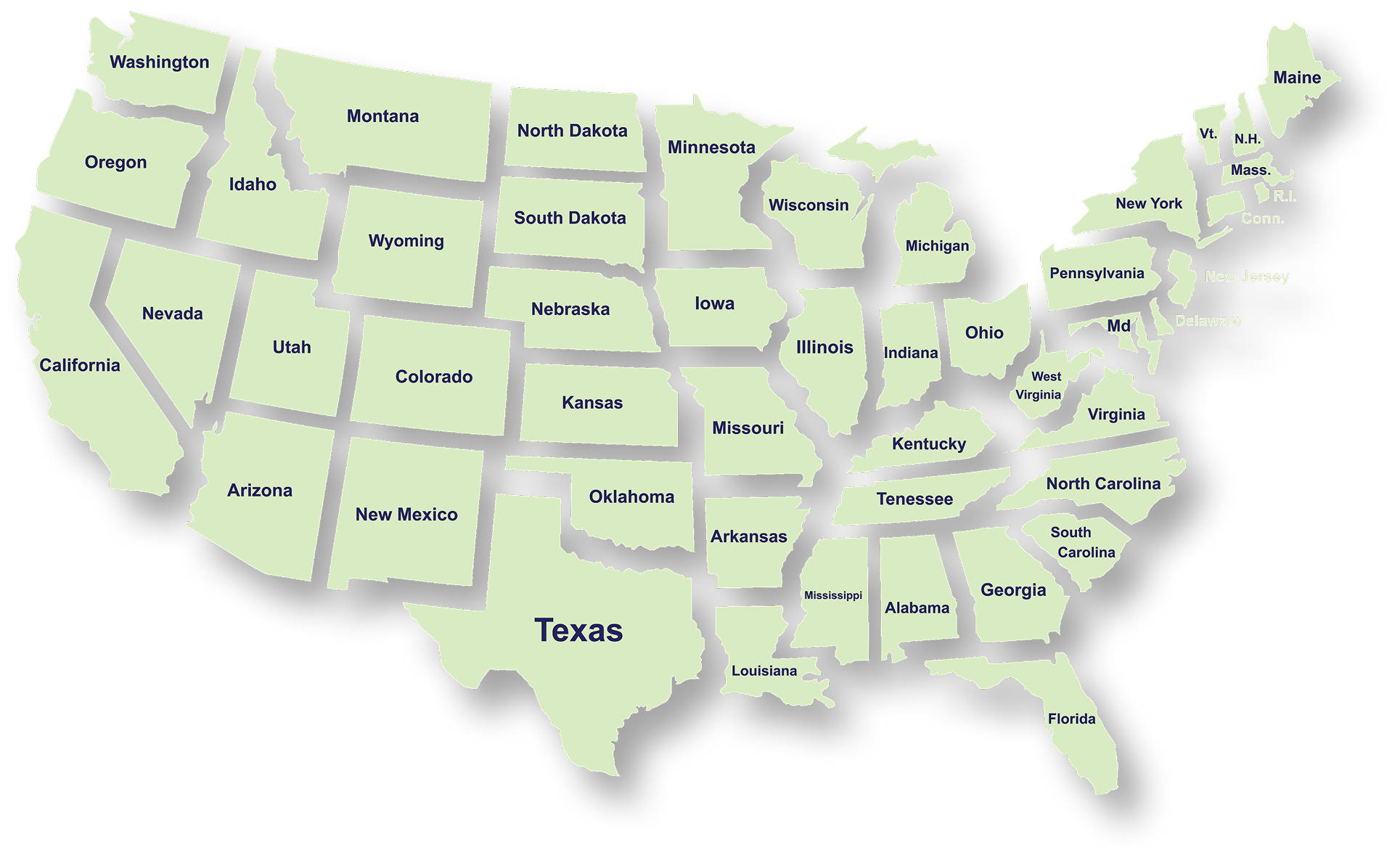
Serving Businesses & Individuals Across USA

We handle accounting, tax filing, and planning with defined timelines and accurate reporting for businesses and individuals across all states.

Frequently Asked Questions

What services does NR CPAs & Business Advisors provide?
What is tax planning and why is it important for businesses?
How can a Virtual CFO help my business?
When should a business consider IRS tax resolution services?
What financial statements does a business typically need?
How can startup advisory services help new businesses?
What is strategic business planning?
What is a Virtual Family Office and who can benefit from it?