Learning Center for Tax and Financial Insights

Stay updated with clear, actionable articles on tax rules, deadlines, deductions, and financial decisions that impact individuals and businesses.

No items found.

IRS to Automatically Adjust Prior Filed 2020 Returns with Unemployment Income

Article Highlights Prior Filed Returns with Unemployment Income American Rescue Plan’s $10,200 Exclusion IRS Automatic Adjustment Refund Application When an Amended Return Might Be Required The IRS announced on March 31, that it will take steps to automatically refund money this spring and summer to people who filed their tax return reporting unemployment compensation before the recent law change made by the American Rescue Plan Act. The American Rescue Plan Act, signed on March 11, allows each taxpayer who earned less than $150,000 in modified adjusted gross income to exclude up to $10,200 of unemployment compensation from taxation. Since it applies to each taxpayer, married couples where both spouses received unemployment benefits may be able to exclude up to $20,400 if married filing status. The legislation excludes only 2020 unemployment benefits from taxes. Because the change occurred after some people filed their taxes, the IRS will take steps in the spring and summer to make the appropriate change to the returns of these individuals, which may result in a refund. The first refunds are expected to be made in May and will continue into the summer. For those taxpayers who already have filed and figured their tax based on the full amount of unemployment compensation, the IRS will determine the correct taxable amount of unemployment compensation and tax. Any resulting overpayment of tax will be either refunded or applied to other outstanding taxes owed.

Explore More
No items found.

Don't Miss Out on Tax Credits

Article Highlights: Non-refundable vs. Refundable Credit Childcare Credit Earned Income Tax Credit Child & Dependent Tax Credit Saver’s Credit Vehicle Tax Credits Adoption Credit Residential Energy-Efficient Property Credit Tax credits are a tax benefit that offsets your actual tax liability, as opposed to a tax deduction, which reduces your income. Congress provides tax credits to individual taxpayers for a number of reasons, including as a form of assistance for lower-income taxpayers, to stimulate employment, and to stimulate certain investments, among other things. Tax credits come in two types: non-refundable and refundable. A non-refundable credit can only reduce your tax liability to zero; any excess is either carried forward or is simply lost. In the case of a refundable credit, if there is excess after reducing your tax liability to zero, the excess is refundable. The following is a summary of some of the tax credits available to individual taxpayers: Childcare Credit – Parents who work or are looking for work often must arrange for care of their children during working hours or while searching for work. If this describes your situation and your children requiring care are under 13 years of age, you may qualify for a childcare tax credit. For 2020, The credit ranges from 20% to 35% of non-reimbursed expenses, based upon your income, with the higher percentages applying to lower-income taxpayers and the lower percentages applying to higher-income taxpayers. Applicable Percentage of AGI for the Childcare Credit AGI Over But Not Over Applicable Percent AGI Over But Not Over Applicable Percent 0 15,000 35 29,000 31,000 27 15,000 17,000 34 31,000 33,000 26 17,000 19,000 33 33,000 35,000 25 19,000 21,000 32 35,000 37,000 24 21,000 23,000 31 37,000 39,000 23 23,000 25,000 30 39,000 41,000 22 25,000 27,000 29 41,000 43,000 21 27,000 29,000 28 43,000 No Limit 20 The maximum expense amount allowed is $3,000 for one child and $6,000 for two or more, and the credit is non-refundable, which means it can only reduce your tax to zero, and the excess is lost. As an example, say your adjusted gross income (AGI) is between $33,000 and $35,000. Your credit percentage would be 25%. If you paid childcare expenses of $4,000 for two children under the age of 13, your tax credit would be $1,000 ($4,000 x 25%). If your tax for the year was $5,000, the credit would reduce that tax to $4,000. On the other hand, if your tax for the year was $800, the credit would reduce your tax to zero, and the $200 excess credit would be lost. This credit also applies when a taxpayer or spouse is disabled or a full-time student, in which case special “earned income” allowances are provided for months when the taxpayer or spouse is disabled or a full-time student. Please call this office for additional details if this situation applies in your case. Credit Increased for 2021 – The American Rescue Plan Act increases the credit percentage to 50%, based on expenses of up to $8,000 for one child under the age of 13 and $16,000 for two or more. The credit begins to phaseout for taxpayers with AGIs of $125,000. Unlike other years, credit is refundable. Earned Income Tax Credit (EITC) – Congress established the EITC as an income supplement for working individuals in lower-paying employment. If you qualify, it could be worth as much as $6,660 in 2020. It is a refundable credit. The EITC is based on the amount of your earned income (income from work for wages and/or self-employment) and whether there are qualifying children in your household. COVID-19 tax relief legislation passed late in 2020 allows you to elect to use your 2019 earned income to figure your 2020 EITC if your 2019 earned income is more than your 2020 earned income. Qualifying children are those who live with you for over half the year, are related, and are under the age of 19 or a full-time student under the age of 24. The credit increases as your earned income increases. The table below shows the earned income at which the maximum credit is achieved for 2020 and 2021. Qualifying Children Earned Income Maximum Credit Earned Income Maximum Credit Year 2020 2021 None $7,030 $538 $9,820 $1,502 1 $10,540 $3,584 $10,640 $3,618 2 $14,800 $5,920 $14,950 $5,980 3 or more $14,800 $6,660 $14,950 $6,728 The credit amount phases out after reaching the maximum based on filing status and number of qualifying children. The phase-out ranges for 2020 and 2021 are shown in the table below. Qualifying Children Filing Status Phase-out Range Phase-out Range Year - 2020 2021 None Married Filing Joint $14,680–21,710 $17,550–27,370 - Others $8,790–15,820 $11,610–21,430 1 Married Filing Joint $25,220–47,646 $25,470–48,108 - Others $19,330–41,756 $19,520–42,158 2 Married Filing Joint $25,220–53,330 $25,470–53,865 - Others $19,330–47,444 $19,520–47,915 3 or more Married Filing Joint $25,220–56,844 $25,470–57,414 - Others $19,330–50,954 $19,520–51,464 In addition, there are some qualification requirements: you, your spouse (if married and filing jointly), and each qualifying child must have a valid Social Security number, and you cannot use the filing status married filing separately. You cannot be a qualifying child of another person, your investment income for 2020 cannot exceed $3,650 ($10,000 in 2021) and you cannot exclude earned income from working abroad. If you do not have a qualifying child, you must be at least age 25 but under 65 at the end of the year. However special rules apply for 2021. Even though this credit can be worth thousands of dollars to a low-income family, the IRS estimates as many as 25 percent of people who qualify for the credit do not claim it, simply because they don’t understand the criteria. If you qualified for but failed to claim the credit on your return for 2017 (if filed by April 15, 2021), 2018, 2019, and/or 2020, you may still claim it for those years by filing an amended return or an original return, if you have not previously filed. Please call for assistance. Members of the military can elect to include their nontaxable combat pay in their earned income for the earned income credit. If that election is made, the military member must include in their earned income all nontaxable combat pay they received for the year.

Explore More
No items found.

You Can Expense Business IT Purchases

Article Highlights: Depreciation Material & Supply Expensing De Minimis Safe Harbor Expensing Routine Maintenance Bonus Depreciation Section 179 Expensing Thanks to some very liberal tax laws written to encourage investment in personal tangible equipment, including information technology (IT) equipment, many businesses will be able to expense (write off as a tax deduction) all such assets purchased and placed in service before the end of the tax year. For businesses using the accrual method of accounting, the purchase must have been completed and the equipment placed in service before the company’s year-end. There are a number of ways to deduct IT costs, and the best method should be based upon the need for a current-year deduction, while also considering that the deductions may be more beneficial in a future year. So careful planning is required. Depreciate – The most conservative method of writing off the investment would be to depreciate the various pieces of equipment over the recovery period (useful life), designated by the IRS as being either 5 or 7 years, depending on the individual items. Generally, computers, copiers, and certain technological and research equipment are depreciated over 5 years, while office fixtures, furniture, and equipment are depreciated over 7 years. Material & Supply Expensing – Capitalization and repair regulations may come into play with what is called material or supply expensing. If an item costs $200 or less or has a useful life of less than one year, it is expensed rather than depreciated. De Minimis Safe Harbor Expensing – Another part of the capitalization and repair regulations allows businesses to expense up to $2,500 of equipment ($5,000 if the business has an applicable financial statement). The limits are applied per item or per invoice, which provides a significant amount of latitude in expensing. Routine Maintenance – The expenditure can be expensed if the purchase is used to keep a unit of property in operating condition and the business expects to perform the maintenance twice during the property’s class life (different than depreciable life). The class life for information systems and computers is 6 years. Bonus Depreciation – Bonus deprecation allows a business to deduct 100% of the cost of new tangible property with a recovery period of 20 years or less if it is placed in service during 2020. 100% bonus depreciation will begin to phase out after 2022. Section 179 Expensing – Sec. 179 of the Internal Revenue Code allows full expensing of IT equipment purchases. Commonly referred to as the Sec. 179 deduction, for 2021, it allows companies to expense up to $1,050,000 ($525,000 for a married taxpayer filing separate) up from $1,040,000 (and $520,000) for purchases in 2020 of personal tangible equipment, including IT equipment. The stated amounts are for federal purposes (state limits may be different). There is an aggregate investment limit of $2,620,000 (up from 2,590,000 in 2020), which means if the company makes investments into property eligible for Sec. 179 expensing in excess of $2,620,000 in 2021 ($2,590,000 for 2020 purchases), the amount allowed to be expensed under Sec 179 is reduced by one dollar for each dollar the investment limit is exceeded. These amounts are inflation-adjusted annually. There are negative factors to using Sec. 179 expensing. If the item is disposed of before the end of its recovery period, the expense deduction is recaptured, to the extent that it exceeds the otherwise allowable depreciation deduction for the period. The recaptured amount is added to the business’s income for the disposition year. For very large companies, the use of Sec. 179 is restricted because of the annual limit. Blended Methods – It is possible to use a combination of depreciation, bonus depreciation, and Sec. 179 expensing to achieve just about any result for small businesses.

Explore More
No items found.

How to Protect Your Data in QuickBooks

After the unprecedented year we’ve just experienced, the last thing you need is to have your accounting data compromised or stolen. It would be impossible to reconstruct your QuickBooks file from scratch, and you can’t afford to have a hacker steal any of your funds. There are numerous steps you can take to protect yourself from threats, both internal and external. QuickBooks itself offers some safeguards. Strong company policies can also help safeguard against data theft or destruction. And some of your security guidelines should just come from using common sense. Here’s a look at what you can do. Keep Your Systems Safe There are countless ways you can protect your data by maintaining the integrity of the computer that’s running QuickBooks. Some involve the same steps you would take to safeguard all of the applications and information you have stored there. You should have reputable antivirus/anti-malware software installed. Use strong passwords. Keep up with system updates. You can set up automatic updates in QuickBooks to download and install new functionality and bug fixes. Updates and Backup QuickBooks’ own updates are critical, too. You can start these manually, but we recommend setting up automatic updates. Open the Help menu and click on Update QuickBooks Desktop. Click the Options tab to access this tool. Frequent, safely-stored backups are another essential element of overall data security. If your system is compromised by an intruder, you’ll need to be able to restore your most recent QuickBooks file when it’s safe again. Go to File | Back Up Company to set up either a local or an online backup. Use one of these tools at the end of any day you’ve entered anything on QuickBooks. We can help you with backup if you’re not absolutely sure how to do it. Networks and Smartphones If you have multiple PCs that run on a network, it’s important to maintain that system’s health, too, since an intrusion at one workstation can affect everyone. You can do this by: Discouraging employees from browsing the web excessively and downloading unnecessary software. Encouraging responsible handling of emails (no clicking on unknown attachments, no personal email on work computers, etc.) Installing network monitoring software or hiring a managed IT service that only charges when you need them. Do your employees have company-issued smartphones? Make sure their security systems are sound. Set policies to protect them. For example, tell employees they should never use them on a public Wi-Fi network or install personal apps on them.

Explore More
No items found.

The US Loses Out On $1 Trillion a Year Due to Tax Cheats, IRS Estimates

As part of its oversight role, Congress is constantly assessing the economic health of the United States, so hearing from Internal Revenue Service Commissioner Chuck Rettig that the country may be losing up to $1 trillion a year in evaded taxes is an obvious cause for concern. This estimate is several times the 3-year-cumulative amount of $441 billion that the agency had previously asserted. In his meeting with the Senate Finance Committee, Rettig said “I think it would not be outlandish to believe that the actual tax gap could approach and possibly exceed $1 trillion per year.” He listed several tax evasion techniques that the agency had not included or even been aware of. Among them were new technologies such as the use of cryptocurrency, as well as more familiar issues such as illegal income, underreporting from pass-through businesses, and offshore tax evasion. Lawmakers hearing of the disparity between what is collected and what should be collected are vowing to take action. According to Senate Finance Chairman Ron Wyden (Oregon – D) the IRS commissioner’s news should serve as a “wake-up call” to the remarkable revenue losses the government is suffering. He anticipates that his colleagues will take action to facilitate more aggressive tax enforcement, indicating that conversations he has already had with Senator Mike Crapo of Idaho, his committee’s top Republican, indicate bipartisan support. Other senators who have voiced concern include Massachusetts Democratic Senator Elizabeth Warren, who is planning a bill to provide mandatory, steady funding for auditors for the IRS budget; and Ohio Republican Senator Rob Portman, whose focus is on tax-dodging cryptocurrency enthusiasts. Presidential Action In addition to congressional action, President Joe Biden has included an extra $900 million in his budget proposal to provide for expanded audits and has included corporate tax enforcement in his $2.25 trillion infrastructure plan. He is also promoting additional individual tax proposals. Responding to questions about what his agency needs to improve enforcement, Commissioner Rettig pointed to 17,000 enforcement-related positions lost over the last ten years and indicated that with $1 billion more in funding, the agency could engage in a multi-year process to update outdated computer systems to flag fraud and tax evasion and hire an additional 4,875 front-line audit personnel. “We want to get there, but we do need your help,” he said. Pointing to the fact that roughly 99% of taxes subject to automatic withholding and reporting are paid while only 45% of those not subject to this oversight are paid, he said that shoring up regulations overseeing tax-return preparers and tax-reporting requirements would close the gap and serve to minimize fraud. High-Income Individuals and Corporations Hide the Most According to a recent study, the richest 1% of the American population fail to report or pay taxes on one out of every five dollars that they earn. This evasion is made possible by the fact that income from partnerships, limited liability corporations and other pass-through entities is not automatically withheld in the same way that is done for wage earners. The study’s authors, which include two IRS officials, concluded that eliminating that method of shielding income, as well as offshore structures, would increase the amount of money collected by the IRS by approximately $175 billion each year.

Explore More
No items found.

The Tax-Filing Deadline Is Around the Corner

Article Highlights: Extensions Balance-Due Payments Contributions to Roth or Traditional IRAs Individual Refund Claims for the 2017 Tax Year Missing Information As a reminder to those who have not yet filed their 2020 tax returns, May 17, is the due date to either file a return (and pay the taxes owed) or file for an automatic extension (and pay an estimate of the taxes owed). Normally April 15 is the due date, but this year the IRS extended it until May 17. Normally the extension period is 6 months, but because the original due date was already pushed back a month, the extension for those who haven’t already filed for one will be for 5 months (to October 15). Caution should be exercised when preparing the extension application, which is IRS Form 4868. Even though this form is described as “automatic,” the extension is automatically granted only if it includes a reasonable estimate of the 2020 tax liability and only if that anticipated liability is paid along with the extension voucher. It is not uncommon for taxpayers to enter zero as the estimated tax liability without figuring the actual estimated amount. These taxpayers risk the IRS classifying their forms as having been improperly completed, which in turn makes the extensions invalid. If you need an extension, please contact this office so that we can prepare a valid extension for you. The extension must be filed in a timely manner; at this office, we can file your extension electronically before the due date. If you are mailing an extension, be advised that the envelope with the extension form must be postmarked on or before the May 17 due date. However, there are inherent risks associated with dropping an extension form in a mailbox; for instance, the envelope might not be postmarked in a timely fashion. Thus, those who have estimated tax due should mail their extension forms using registered or certified mail so as not to risk late-filing penalties. In addition, the May 17 deadline also applies to the following: Balance-Due Payments for the 2020 Tax Year – Be aware that Form 4868 is an extension to file, NOT an extension to pay. The IRS will assess late-payment penalties (with interest) on any balance due, even when the extension has been granted. Taxpayers who anticipate having a balance due need to estimate this amount and include payment for that balance, either along with the extension request (as indicated above) or electronically (through the IRS website). Contributions to a Roth or Traditional IRA for the 2020 Tax Year – May 17, 2021 is the last day for 2020 contributions to either a Roth or a traditional IRA. Form 4868 does not provide an extension for making IRA contributions. Individual Estimated Tax Payments for the First Quarter of 2021 – The first installment of the 2021 estimated tax payment was due on April 15, 2021, and although the IRS extended the due date for filing the 1040 series returns until May 17, 2021, they did not extend the due date for 2021 estimated tax payments. If you make estimated tax payments and did not file the first installment on or before April 15, 2021, then that payment is late, and you should file it as soon as possible to mitigate any penalties. Individual Refund Claims for the 2017 Tax Year – The regular three-year statute of limitations expires for the 2017 tax return on May 17 of this year. Thus, no refund will be granted for a 2017 return (original or amended) that is filed after May 17. Taxpayers could risk missing out on the refundable Earned Income Tax Credit, the refundable American Opportunity Tax Credit for college tuition, and the refundable child credit for the 2017 tax year if they do not file before the statute of limitations ends. Caution: The statute does not apply to balances due for unfiled 2017 returns.

Explore More
No results found.
Thank you! Your submission has been received!
Oops! Something went wrong while submitting the form.

Want tax & accounting tips & insights?Sign up for our newsletter.

Thank you! Your submission has been received!
Oops! Something went wrong while submitting the form.

Why Work With Us?

We combine deep tax expertise, financial strategy, and practical business insight to help you manage complexity, stay compliant, and make confident financial decisions.
A dollar sign, representing financial advice or discussion at NR CPAs & Business Advisors.

Experienced CPA and Enrolled Agent Leadership

Guidance led by licensed professionals with deep expertise in tax strategy, compliance, and complex financial matters.
White bar chart with an upward arrow on green circular background representing growth or progress at NR CPAs &. Business Advisors

Support for Growing Businesses and Startups

We understand the financial challenges of growth stage businesses and provide structured guidance to support expansion.
A white hand holding a dollar symbol and ascending bar chart on a green circular background representing financial growth or investment at NR CPAs & Business Advisors..

Strategic Financial Advisory

Our team helps you evaluate financial decisions with greater clarity, supported by practical insights and long term planning.

Fractional CFO Support

Access experienced financial leadership without the commitment and cost of hiring a full time Chief Financial Officer.

Proactive Tax Planning Approach

We focus on identifying tax opportunities throughout the year rather than reacting only during filing season.

Clear and Reliable Financial Reporting

Accurate financial statements and reporting that help you better understand performance and make informed decisions.
White IRS building icon with pillars and a dollar sign above on a green circular background.

Professional IRS Representation

Experienced support in resolving IRS notices, disputes, and compliance matters while protecting your financial interests.

Personalized Client Focus

Every client receives thoughtful attention and tailored financial solutions based on their specific needs and business goals.
Financial matters often involve important decisions. Working with experienced advisors can help you approach them with greater clarity and confidence in your choices.

Need Help With Your Tax or Financial Decisions?

Discuss your situation with our advisors to get clear guidance on tax planning, IRS matters, and the financial decisions ahead.
Business consulting at NR CPAs & Business Advisors.

Request Your Consultation

Fill out the form to discuss your tax concerns, financial questions, or advisory needs with our team. We will review your details and respond shortly.

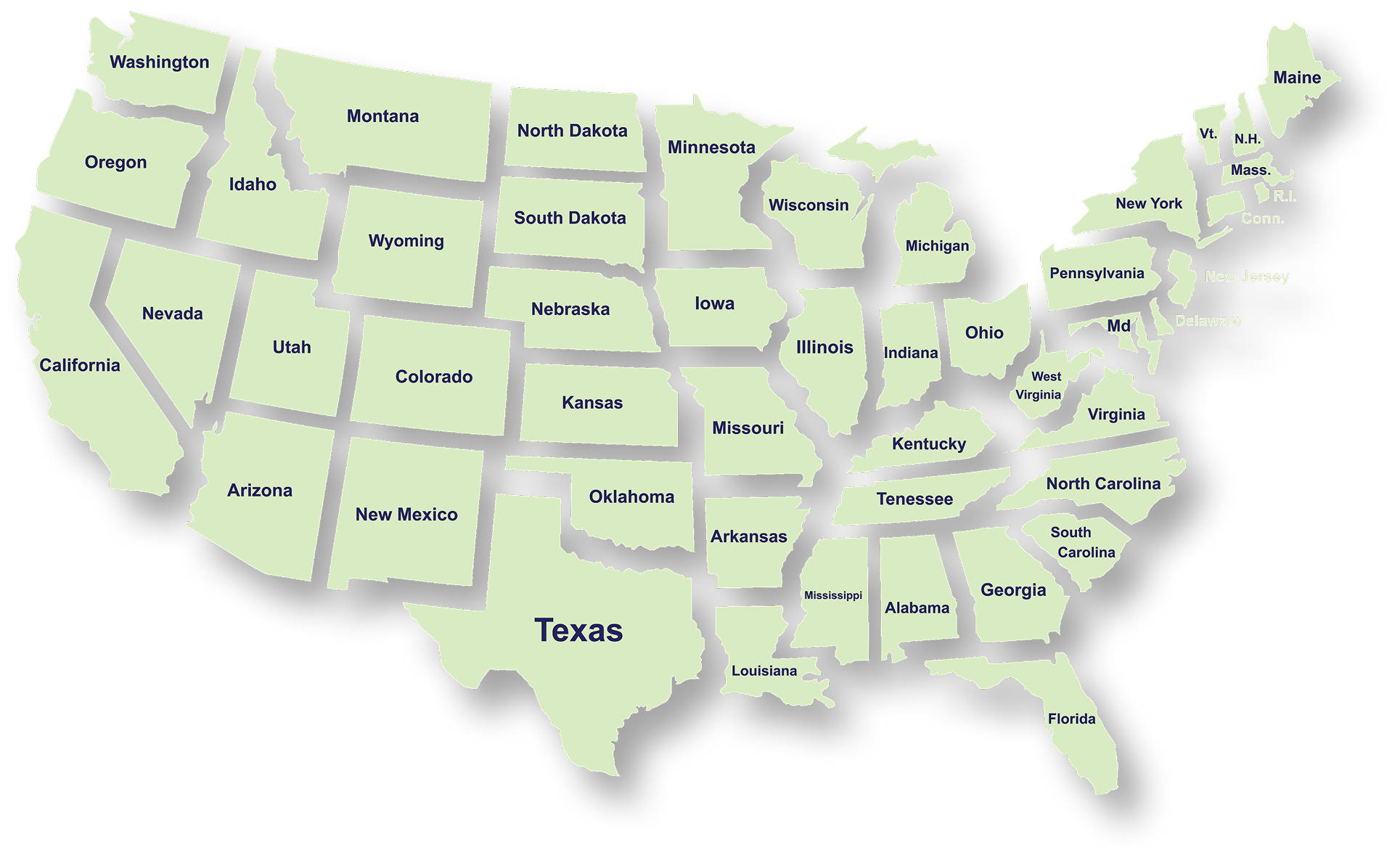
Serving Businesses & Individuals Across USA

We handle accounting, tax filing, and planning with defined timelines and accurate reporting for businesses and individuals across all states.

Frequently Asked Questions

What services does NR CPAs & Business Advisors provide?
What is tax planning and why is it important for businesses?
How can a Virtual CFO help my business?
When should a business consider IRS tax resolution services?
What financial statements does a business typically need?
How can startup advisory services help new businesses?
What is strategic business planning?
What is a Virtual Family Office and who can benefit from it?