Learning Center for Tax and Financial Insights

Stay updated with clear, actionable articles on tax rules, deadlines, deductions, and financial decisions that impact individuals and businesses.

No items found.

May 2021 Business Due Dates

May 10 - Social Security, Medicare and Withheld Income Tax File Form 941 for the first quarter of 2021. This due date applies only if you deposited the tax for the quarter in full and on time. May 17 - Employer’s Monthly Deposit Due If you are an employer and the monthly deposit rules apply, May 17 is the due date for you to make your deposit of Social Security, Medicare and withheld income tax for April 2021. This is also the due date for the non-payroll withholding deposit for April 2021 if the monthly deposit rule applies.

Explore More
Business Life Events

Qualified Small Business (QSB) Stock Gain Exclusion: Who Can Take Advantage and How to Do It

Originally, selling stocks identified as having Qualified Small Business status was viewed as offering marginal benefit. But the last several years have seen incremental changes to how gains from the sales of these stocks have been treated. As of the most recent shift, which created a 100% exclusion with certain limitations, these stocks now offer significant opportunities for those who invest in startups and other small businesses. The sale of Qualified Small Business (QSB) stock held for more than five years is addressed under Section 1202. It excludes gains from sales, but only under highly specific criteria and limitations. Tracking the exclusion’s history, stockholders were originally limited to excluding 50% of their gains from the sale of QSB stocks. That number was increased to 75% for shares acquired after February 17, 2009 and before September 28, 2010. Even then, the exclusion was viewed with little enthusiasm, as the gains not excluded were taxed at rates that were much higher than capital gains rates. All that changed when the exclusion was increased again to 100% for shares acquired after September 27, 2010. There are important limitations to these exclusions: Most notably, for each taxable year, sellers are only permitted to exclude the greater of 10 times the aggregate adjusted bases of the QSB stock or $10 million dollars. Still, even with these limitations, the 100% exclusion has created a virtual tax-exempt gain that has inspired renewed interest in putting money into small businesses and startups. It has provided opportunities for pass-through entities like partnerships to buy and sell QSB stock at the ultimate investor level offered to noncorporate shareholders like trusts, estates and individuals, and this means that their total gain exclusion goes beyond the standard limitations. This means that each partner in a 10-partner group in which each owns 10% of the partnership’s QSB stock with $0 basis for $100 million can exclude their own share of the gain: the total qualifies because it is broken down to the ultimate investor view. Where this is a relatively simple calculation, for others the requirements of section 1202 are likely to create far greater barriers. Understanding the requirements and considerations involving a QSB Section 1202 contains many rules for being classified as a QSB, and though this article cannot cover all of them, it will point out important elements that businesses or investors thinking about their own qualifications should consider. Its most elemental criterion is that the business be a domestic C corporation whose aggregate gross assets have never exceeded $50 million through the time that the stock for which the gain exclusion is being sought was issued. Other requirements include: Gross asset test Not only is there a requirement that the domestic C corporation not have had aggregate gross assets exceeding $50 million at any point between August 10, 1993 and the time that the stock seeking the QSB exemption was issued, but that limitation holds true for the time period immediately after the stock is issued as well. This is not based on fair market value – instead, gross assets are calculated based on the tax basis of the company’s assets. Still, fair market value is used to assess circumstances involving assets other than cash or when an existing business incorporated into the small business. It’s also important to understand that if a business is a member of parent-subsidiary controlled group, all corporations are treated as a single unit when calculating total gross assets. Original issuance requirement In order to qualify for the exemption, the QSB stock shareholder must have first acquired it as an original owner, purchasing it for cash, by providing property, or providing services and obtaining it directly from either the corporation or its underwriter as a qualified shareholder. Buying the stock from another shareholder will not meet the original issuance requirement, and therefore will not qualify the holder of stock for the QSB stock gains exemption, though there are ways to get around this requirement. For example, investors could acquire a target business for the specific purpose of creating a new C corporation, and that would meet Section 1202’s criteria. Similarly, some tax-free incorporations or reorganizations that involve the exchange of QSB stock for stock of another organization may be eligible for exclusion of gains at a later point when the stock is sold. For those who acquire QSB stock as a gift or by having inherited it, the original issuance requirement will not prevent the realization of the exemption benefit and the same is true of distributions to a noncorporate partner by a partnership as long as the noncorporate partner held its partnership interest when the partnership first acquired the QSB stock. This is a complex issue and many situations – including acquiring the stock as the satisfaction of debt for equity, through cashless warrant exercises, or through convertible debt conversions – should be addressed with our office. Active business requirement The issuing corporation is required to be using at least 80% of its assets to operate one or more qualified trades or businesses (QTOB). This is gauged by value, and if more than half of a subsidiary corporation’s stock is owned by the corporation, then that ratable share must be included in the determination of the assets’ value and the percentage of assets being used for business operations. The rules state that certain fields do not qualify as a QTOB, though whether a business falls into these categories or not may be open to interpretation and can introduce a significant amount of confusion. The fields listed as not qualifying include those involved in law, health, brokerage services, accounting, engineering, financial services, actuarial science, architecture, performing arts, consulting, or athletics.

Explore More
No items found.

Refund Statute Expiring: Don't Miss Out!

Article Highlights: The refund statute expires on May 17, 2021 for unfiled 2017 returns. Unfiled returns will lose out on refundable credits. Refunds may be offset by unpaid child support, past due student loans, and back taxes. If you have not yet filed your 2017 tax return and have a refund coming, time to claim that refund is running out! The IRS estimates that more than 1.35 million taxpayers have not filed their 2017 tax returns with approximately $1.3 billion of unclaimed refunds available for those taxpayers. If you fall in this category, you need to act quickly because the return must be filed by May 17, 2021 to claim a refund for 2017. Otherwise, the money becomes the property of the U.S. Treasury. People stand to lose more than a refund of taxes withheld or paid during 2017 by failing to file a return. For example, many low- and moderate-income workers who haven’t filed for 2017 may qualify to claim the Earned Income Tax Credit (EITC). The EITC is a refundable credit that provides financial assistance to individuals and families with incomes below certain thresholds. In addition, taxpayers may also qualify for the refundable child and education credits.

Explore More
No items found.

Video tip: A Reminder of the Expiring 2017 Refund Statute

If you haven't done so, the deadline to file a tax return and claim your refund for 2017 is coming soon. On the other hand, if you owe and have not filed, you are still liable for the amount due. Don't miss out on any possible tax credits and watch out for potential tax penalties. .embed-container { position: relative; padding-bottom: 56.25%; height: 0; overflow: hidden; max-width: 100%; } .embed-container iframe, .embed-container object, .embed-container embed { position: absolute; top: 0; left: 0; width: 100%; height: 100%; }

Explore More
Newsworthy

Here’s What Happened in the World of Small Business in April 2021

Here are five things that happened this past month that affect your small business. 1) President Biden announced tax credits for COVID-19 vaccination paid time off. The President announced on April 21st “tax credits for certain businesses that pay employees who take time off to get COVID-19 shots, a new effort to involve corporate America in his vaccination campaign.” The tax credits will be applicable for businesses with fewer than 500 employees. (Source: Reuters) Why this is important for your business: Providing your employees with paid time off to get their vaccine will now be covered by the government, so you can encourage vaccinations if you choose without taking on the cost of offering additional PTO. 2) Workers at an Amazon warehouse in Alabama voted not to unionize, but the company is being accused of violating laws. The union vote we discussed last month has been completed, and workers at the Amazon fulfillment center in Bessemer, Alabama voted not to unionize. This was seen as a win for Amazon; however, the union that led the drive “has filed challenges over the vote, saying the company violated legal restrictions throughout the election.” (Source: The Wall Street Journal) Why this is important for your business: This union push caught the attention of workers, unions, businesses, and government officials, and the story isn’t over yet. Additionally, other groups across the US have already started announcing their goals to unionize, inspired by the push in Bessemer. No matter your views on organized labor, keep paying attention to this story. 3) Businesses across the world are bracing (and hoping) for an impending post-pandemic “spending boom.” Could we be in the beginning stages of a global spending spree? “Consumers around the world have amassed an extra $5.4 trillion in savings since the coronavirus pandemic began, setting the stage for a spending boom that could power a strong uplift in economic growth this year.” (Source: CNN Business) Why this is important for your business: Revenue, revenue, revenue. 4) Small businesses can get another $500k from the Small Business Administration (SBA). Beginning April 6th, the SBA expanded its Economic Injury and Disaster Loan (EIDL) program. “Small businesses who originally took out an EIDL loan for up to $150,000 for six months can extend that loan for up to 24 months and receive additional funds for a total of $500,000 in relief.” Additionally, the deferment period for both Paycheck Protection Program (PPP) and EIDL loans was extended through 2022. (Source: Yahoo! Finance) Why this is important for your business: If your small business is still struggling financially and you need additional funding, the EIDL expansion could help. 5) The conversation around corporate taxation (and large firms who pay $0 in taxes) is growing louder. A report from the nonpartisan Institute on Taxation and Economic Policy found that “55 of the largest firms in the country used a complex roadmap of tax breaks and loopholes to bring their tax bill down to zero, despite turning millions, or even billions in profit.” (Source: Fast Company) Why this is important for your business: This finding has added fuel to the conversation around corporate taxation – or a lack thereof – in the US. Keep an eye on the public discourse and any moves made by politicians to speak on this topic in the coming months.

Explore More
No items found.

SBA Raises Loan Limit For COVID-19 EIDL Loans to $500,000

As U.S. businesses continue to recover from COVID-19’s economic devastation, the U.S. Small Business Administration (SBA) is expanding loan opportunities. The agency announced that beginning the week of April 6th, nonprofits and small businesses will be able to borrow up to $500,000 for up to 24 months. This expansion of the COVID-19 Economic Injury Disaster Loan (EIDL) program more than triples the existing limit of six months and a maximum loan amount of $150,000. In a news release announcing the change, SBA Administrator Isabella Casillas Guzman said, “More than 3.7 million businesses employing more than 20 million people have found financial relief through SBA’s Economic Injury Disaster Loans, which provide low-interest emergency working capital to help save their businesses. However, the pandemic has lasted longer than expected, and they need larger loans.” Businesses that had already applied for a COVID-19 EIDL loan need not worry about reapplying, as all applications in process will automatically be considered for the increased amounts. Similarly, instructions will be published to allow those who have already been approved for a loan to apply for the expanded amounts. A loan increase can be requested via SBA.gov, and an email will go out to all previously approved borrowers containing the same information. The COVID-19 EIDL program has been extremely successful, with over $200 billion in loans already approved by the SBA. Small businesses, including independent contractors and sole proprietors, have been provided 30-year maturity loans at a 3.75% interest rate, while not-for-profits will pay 2.75% in interest. In more good news for borrowers, on March 12th the SBA announced that borrowers for all disaster loans, including the COVID-19 EIDL loans, would be provided extended deferment periods. Interest will still accrue on all outstanding loan balances, so though payments are not required until 2022, borrowers do have an incentive to begin paying their balance off sooner. If you have any questions about the EIDL loan limit expansion and how it could affect your business, please contact our office.

Explore More
No results found.
Thank you! Your submission has been received!
Oops! Something went wrong while submitting the form.

Want tax & accounting tips & insights?Sign up for our newsletter.

Thank you! Your submission has been received!
Oops! Something went wrong while submitting the form.

Why Work With Us?

We combine deep tax expertise, financial strategy, and practical business insight to help you manage complexity, stay compliant, and make confident financial decisions.
A dollar sign, representing financial advice or discussion at NR CPAs & Business Advisors.

Experienced CPA and Enrolled Agent Leadership

Guidance led by licensed professionals with deep expertise in tax strategy, compliance, and complex financial matters.
White bar chart with an upward arrow on green circular background representing growth or progress at NR CPAs &. Business Advisors

Support for Growing Businesses and Startups

We understand the financial challenges of growth stage businesses and provide structured guidance to support expansion.
A white hand holding a dollar symbol and ascending bar chart on a green circular background representing financial growth or investment at NR CPAs & Business Advisors..

Strategic Financial Advisory

Our team helps you evaluate financial decisions with greater clarity, supported by practical insights and long term planning.

Fractional CFO Support

Access experienced financial leadership without the commitment and cost of hiring a full time Chief Financial Officer.

Proactive Tax Planning Approach

We focus on identifying tax opportunities throughout the year rather than reacting only during filing season.

Clear and Reliable Financial Reporting

Accurate financial statements and reporting that help you better understand performance and make informed decisions.
White IRS building icon with pillars and a dollar sign above on a green circular background.

Professional IRS Representation

Experienced support in resolving IRS notices, disputes, and compliance matters while protecting your financial interests.

Personalized Client Focus

Every client receives thoughtful attention and tailored financial solutions based on their specific needs and business goals.
Financial matters often involve important decisions. Working with experienced advisors can help you approach them with greater clarity and confidence in your choices.

Need Help With Your Tax or Financial Decisions?

Discuss your situation with our advisors to get clear guidance on tax planning, IRS matters, and the financial decisions ahead.
Business consulting at NR CPAs & Business Advisors.

Request Your Consultation

Fill out the form to discuss your tax concerns, financial questions, or advisory needs with our team. We will review your details and respond shortly.

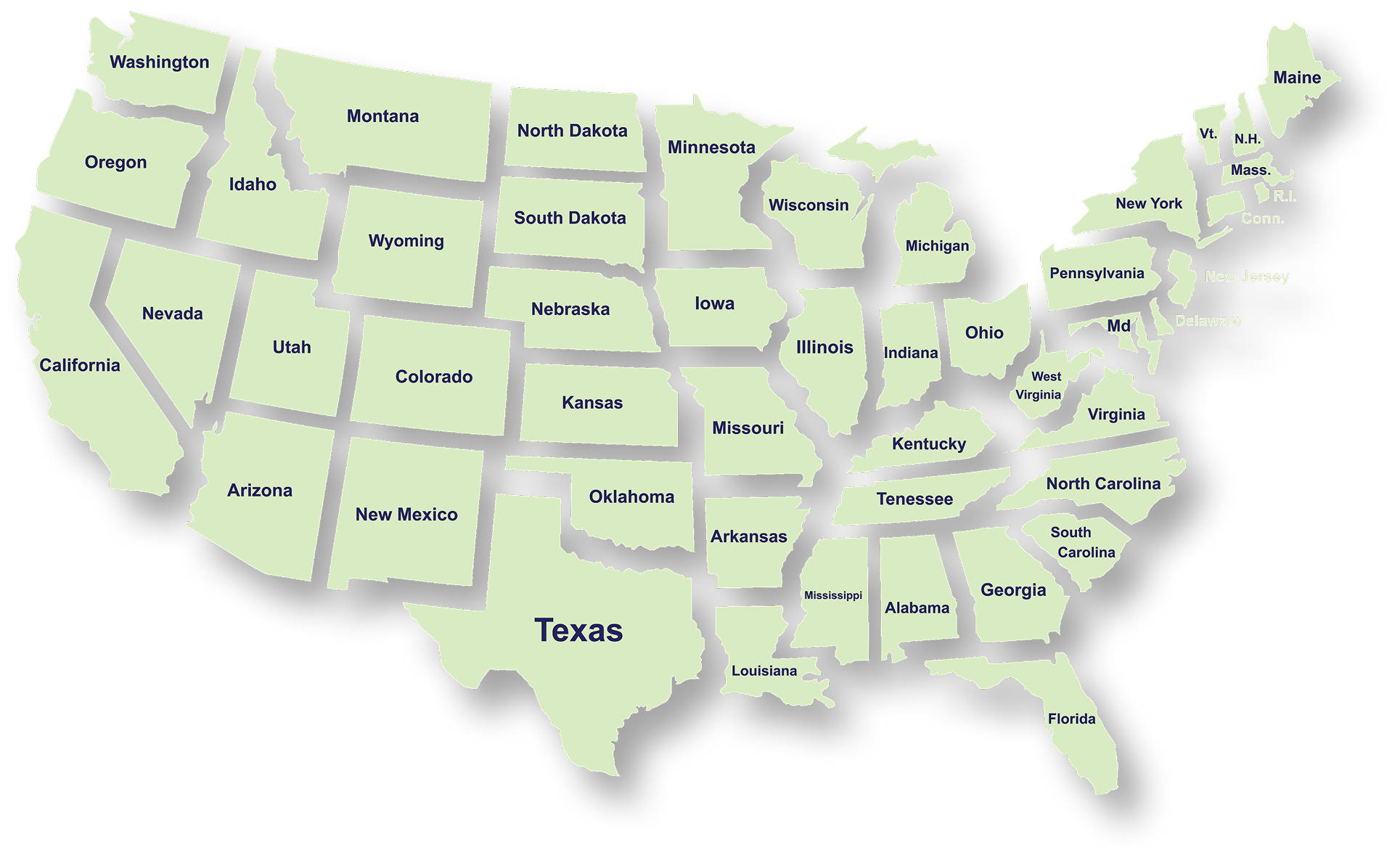
Serving Businesses & Individuals Across USA

We handle accounting, tax filing, and planning with defined timelines and accurate reporting for businesses and individuals across all states.

Frequently Asked Questions

What services does NR CPAs & Business Advisors provide?
What is tax planning and why is it important for businesses?
How can a Virtual CFO help my business?
When should a business consider IRS tax resolution services?
What financial statements does a business typically need?
How can startup advisory services help new businesses?
What is strategic business planning?
What is a Virtual Family Office and who can benefit from it?