Learning Center for Tax and Financial Insights

Stay updated with clear, actionable articles on tax rules, deadlines, deductions, and financial decisions that impact individuals and businesses.

No items found.

Don't Overlook Foreign Account Reporting Requirements

Article Summary: Foreign Account Reporting Requirement Financial Crimes Enforcement Network Penalties for Failure to File Type of Accounts Affected Form 8938 Filing Requirements Some of the largest penalties for failing to file a report with the Government are associated with reporting dealings with foreign financial institutions. U.S. citizens and residents with a financial interest in or signature or other authority over any foreign financial account need to report that relationship by filing FinCEN Form 114 if the aggregate value of the accounts exceeds $10,000 at any time during the year. Although the official designation of the report is FinCEN 114, it is commonly referred to as the FBAR (foreign bank account report). The due date for 2020’s report is April 15, 2021, with an automatic 6-month extension to October 15, 2021. Failure to file can result in draconian penalties. Non-willful failure to file or timely file an FBAR is subject to a maximum penalty of $10,000, while willfully failing to file or timely file the report can result in a maximum $10,000 penalty for each foreign account that’s not reported. Form 114 is filed electronically with the Treasury Department’s Financial Crimes Enforcement Network (FinCEN) BSA E-Filing System and not as part of the individual’s income tax filing with the IRS. Keep in mind that “financial account” includes securities, brokerage, savings, checking, deposit, time deposit, or other accounts at a financial institution. Commodity futures and options accounts, mutual funds, and even non-monetary assets such as gold are also included. It becomes a “foreign financial account” if the financial institution is located in a foreign country. If you own shares of a foreign stock or a mutual fund that invests in foreign stocks, and the stock or fund is held in an account at a financial institution or brokerage located in the U.S., this is not considered a foreign financial account, and the FBAR rules don’t apply to it. An account maintained with the branch of a foreign bank physically located in the U.S. also is not a foreign financial account. You may have an FBAR requirement and not even realize it. For instance, perhaps you have relatives residing in a foreign county and they have put you on their bank accounts in case something happens to them. If the combined value of those accounts exceeds $10,000 at any time during the year, you will need to file the FBAR. Or if you are gambling on the Internet, that online casino may be located in a foreign country, and if your account exceeds the $10,000 limit at any time during the year, you will have an FBAR reporting requirement. You may also have an additional requirement to file IRS Form 8938, which is similar to the FBAR requirement but applies to a wider range of foreign assets with a higher dollar threshold. If you are married and you and your spouse file a joint return, you must file Form 8938 if the value of certain foreign financial assets exceeds $100,000 at the end of the year or $150,000 at any time during the year. If you live abroad, the thresholds are $400,000 and $600,000, respectively. For other filing statuses, the thresholds are half of those amounts. The penalty for failing to file the 8938 is $10,000 per year, and if the failure continues for more than 90 days after you receive an IRS notice of failure to file, the penalty can go as high as $50,000. Unlike the FBAR, which is a separate stand-alone filing, the 8938 is included with an individual’s annual tax return (1040, 1040-SR or 1040-NR). The following chart illustrates commonly encountered foreign reporting requirements. COMMONLY ENCOUNTERED FOREIGN REPORTING REQUIREMENTS - FORM 8938 FinCEN FORM 114 (FBAR) Financial (deposit and custodial) accounts held at foreign financial institutions Yes Yes Financial account held at a foreign branch of a U.S. financial institution No Yes Financial account held at a U.S. branch of a foreign financial institution No No Foreign financial account for which you have signature authority No, unless you otherwise have an interest in the account as described above Yes, subject to exceptions Foreign stock or securities held in a financial account at a foreign financial institution The account itself is subject to reporting, but the contents of the account do not have to be separately reported The account itself is subject to reporting, but the contents of the account do not have to be separately reported Foreign stock or securities not held in a financial account Yes No Foreign partnership interests Yes No Indirect interests in foreign financial assets through an entity No Yes, if sufficient ownership or beneficial interest (i.e., a greater than 50 percent interest) in the entity. See instructions for further detail. Foreign mutual funds Yes Yes Domestic mutual fund investing in foreign stocks and securities No No Foreign accounts and foreign non-account investment assets held by foreign or domestic grantor trust for which you are the grantor Yes, as to both foreign accounts and foreign non-account investment assets Yes, as to foreign accounts Foreign-issued life insurance or annuity contract with a cash-value Yes Yes Foreign hedge funds and foreign private equity funds Yes No Foreign real estate held directly No No Foreign real estate held through a foreign entity No, but the foreign entity itself is a specified foreign financial asset and its maximum value includes the value of the real estate No Foreign currency held directly No No Precious Metals held directly No No Personal property, held directly, such as art, antiques, jewelry, cars and other collectibles No No ‘Social Security’- type program benefits provided by a foreign government No No

Explore More
Personal Finance

Archegos Margin Call: What Happened and Why Wall Street is Shocked

In what is being called “one of the single greatest losses of personal wealth in history,” Archegos Capital Management – owned by Bill Hwang – placed a high-flying bet on derivatives in ViacomCBS Inc, Discovery Inc., and GSX Techedu, and lost. Not only did the company lose an estimated $100 billion in value when their prices unexpectedly fell, but their margin call triggered a downturn in stock values that reverberated through other holding companies. Archegos (pronounced “Ar-chee-gos”) is the latest iteration of Tiger Asia, a company that Hwang started in 2001. The name change followed a $44 million settlement of civil allegations which the Wall Street Journal reported at the time. U.S. regulators had accused the company of insider trading of Chinese bank stocks, and after the company pled guilty they changed their structure to a family office and renamed the company. Industry insiders believe that Hwang – who was one of the eponymous “Tiger cubs” mentored by Tiger Management’s Julian Robertson – had been managing approximately $10 billion within his fund, which is far less than the equity exposure brought on by the margin call. To understand exactly what happened, you need to know what a margin call is. Investopedia describes it this way: “A margin call occurs when the value of an investor's margin account falls below the broker's required amount. An investor's margin account contains securities bought with borrowed money (typically a combination of the investor's own money and money borrowed from the investor's broker). A margin call refers specifically to a broker's demand that an investor deposit additional money or securities into the account so that it is brought up to the minimum value, known as the maintenance margin.” In this case, when Discovery and ViacomCBS stocks experienced their most dramatic tumble in their histories, Archegos’ creditors had to execute complex derivatives trades to offset the decline in value of their margin accounts. The impact was fast and far-reaching. Credit Suisse Group AG and Nomura Holdings Inc. both indicated that market turbulence had led to significant disruptions and losses, though they did not mention Archegos by name, and the Wall Street Journal reported that Mitsubishi UFJ Financial Group Inc. might lose $300 million, also without directly referencing Hwang’s company. Block trades, which are massive stock positions, had to be liquidated. The Wall Street Journal reported that the losses were equivalent to $30 billion in value, but others estimated that Hwang’s exposures may have been more than three times that amount. Michael Novogratz, an ex-hedge fund manager now at Galaxy Digital, told Bloomberg News, “I’ve never seen anything like this —how quiet it was, how concentrated, and how fast it disappeared,” he said. “This has to be one of the single greatest losses of personal wealth in history.” A company spokeswoman issued a statement saying, “This is a challenging time for the family office of Archegos Capital Management, our partners and employees. All plans are being discussed as Mr. Hwang and the team determines the best path forward.” Hwang himself did not return calls for comment. Following the activity, markets including the S&P 500 index, the Nasdaq Composite Index and the Dow Jones Industrial Average all ended Tuesday, March 30th lower, though the stocks at the heart of the episode closed significantly up.

Explore More
Business Success Stories

Entrepreneur Success Stories: Zapier

Success leaves clues. Zapier is a software company founded in 2011 by Wade Foster, Bryan Helmig, and Mike Knoop. Zapier provides a service which helps end users automate the integration of online applications that they use. Let’s take a look at a behind the scenes software integration company that has taken the industry by storm. HOW ZAPIER GOT THEIR START Before becoming a company valued at over $5 billion, Wade Foster (CEO) and Bryan Helming (CTO) were members of a jazz quartet, playing gigs together in their hometown of Columbia, Missouri. In addition to their love for music, they discovered that they both also had a passion for creating web applications and began working on projects together. In September 2011, they came up with an idea that would change the course of their lives. They decided to start a company that helped end users to integrate two different software applications. To help get their idea off the ground, they enlisted a third co-founder, Mike Knoop (CPO) and went to work. They created the first iteration of their software application (known then as API Mixer) and entered a local start up competition. Their idea won, and they knew they were on to something. They continued to develop their idea and submitted it to Y Combinator, where they were initially rejected. Foster, Helmig, and Knoop refused to take no for an answer and continued to submit their application to Y Combinator, until they were finally accepted in 2012. At that time, the project included integrations with 34 applications. Today, that number is over 3,000 integrations, and they have more than 300 application partners. During their early stage, they were able to secure $1.3 million in Series A funding from investors and within two years, they reached profitability. This was the only venture capital funding that they’ve accepted thus far, though they have received numerous offers along their journey. Zapier has gone on to be awarded the #1 company in the early-stage category as evaluated by top venture funds in the industry. KEYS TO SUCCESS Going from zero to a $5 billion company within a decade is no easy feat. Zapier’s success can be attributed to many of the decisions that the founders have made along the way. Building Relationships with the Zapier User Base Zapier believed that building relationships were crucial to helping them to build and grow their user base. Foster, Helmig, and Knoop started out by visiting online forums of larger software applications such as Dropbox and Basecamp and seeking users who were frustrated with their inability to use the functionality of one application along with another, often times having to repeat the same tasks across applications. The Zapier team would reach out to these users and offer to help them resolve their issue. In the early stages of the company, this how they generated their first customers. Customer service continues to be a foundational part of who Zapier is as a company. Customer-Centric Values As an employee of Zapier, each team member will participate in the customer support function. Whether an employee is in HR or IT, the founders believe that hearing first-hand about how customers are experiencing the product and understanding their frustrations will help to create a better products and experience. Teamwork is Key Zapier has been a remote company since its founding. With team members across the company and the globe, it is important for them to be able to communicate with one another to ensure each team member is on the same page. They do this by sharing information across multiple channels and multiple times to ensure that important ideas are communicated. Transparency is one of their keys to success. Tell the Customer’s Story As the function of the Zapier software is to connect other software applications, the company will not be front-of-mind if working properly. As a result, Zapier has had to be very deliberate in how they reach out to current and potential customers. One part of their marketing efforts through their blog is to share the success stories of their clients. Zapier interviews customers, identify pain points that have been resolved through the application and uses this as a guide to assist other customers who might be experiencing the same issue. This attention to detail in addressing customer concerns and success has helped the company grow from its first customers back in 2012 to their current user base of over 600,000 users. Zapier’s success reveals how dedicated client focus can have a huge impact on the bottom line. If you have any questions about turning your business into a success story or you would like to learn more about our services, please feel free to contact us for more information.

Explore More
No items found.

Video tip: Made a Mistake in Your Tax Return?

Did you just find out that you made a mistake in your tax return? Do not panic. Watch this video for essential points you should know and how to fix your mistake. .embed-container { position: relative; padding-bottom: 56.25%; height: 0; overflow: hidden; max-width: 100%; } .embed-container iframe, .embed-container object, .embed-container embed { position: absolute; top: 0; left: 0; width: 100%; height: 100%; }

Explore More
Tips For Verticals & Niches

Running a Trading Business – and What it Means for Your Taxes

The average American taxpayer is not aware that people who officially qualify as running a trading business receive special tax treatment. Their income comes from the profit they make by trading options, equities and other asset classes, and is viewed as “investment” income. Investment income is taxed differently than salary and wages, which are considered “earned” income. There are significant differences between the way that investment income and earned income are taxed and how the two can be combined. Let’s take a closer look at what being considered a trader entails, and what its impact could be. The Requirements for Being Considered a “Trader” The Internal Revenue Service defines a “trader” as a person in the business of buying and selling securities for their own account. The criteria for this classification include: Seeking profit from the daily movements of the market and from changes in securities prices rather than from interest, dividends or the appreciation of capital The level of activity of trading must be considered substantial The activity must be conducted regularly and continually There are also specific criteria for qualifying as a “trading business.” They are: Adhering to typical holding periods for buying and selling securities How often you trade during the year and what the dollar amount of those trades are How much the business’ trading is done for the purpose of livelihood income How much time is spent on trading Even if you consider yourself or call yourself a trader, a day trader, or a trading business, the IRS will analyze the levels for each and determine whether they are high enough for you to get the tax benefits that go with the title. Those whose volume does not reach the IRS’ qualifying levels will be considered an investor. What are the advantages of qualifying as a trader? Consider a scenario in which an individual earns a wage of $100,000 and an additional $30,000 by trading stocks. As an investor, the $30,000 will be taxed at either the short-term or long-term capital gains rate depending upon how long you held the position. Likewise, if you lost that same amount from your investments, you would be unable to reduce your earned income by that amount: you would be limited to no more than $3,000 in losses against earned income and still be taxed on $97,000 of taxable income. As a qualified trader, however, you are entitled to approach the taxes on gains and losses differently, using an accounting method called “mark-to-market” that determines values using prevailing market price. The $30,000 in losses on your trades would be subtracted from your $100,000 in wages, reducing your taxable income to $70,000. It seems pretty obvious, therefore, that anybody who can qualify as a trader should do so, but it is not that simple. You can’t look at your successes or failures as a trader and then decide at tax filing time what you want to do: It is a status that you need to elect in the previous year. Determining that you qualify for this status can lead to filing other advantages. For example, filing Form 6781, Gains and Losses from Section 1256 Contracts and Straddles, is specifically for those whose trades include products like foreign exchanges, index options, traded futures and other marked-to-market products. These provide you with a special 60/40 tax treatment under which as long as you’ve been holding your position for a specific period of time — even as short as three days — you’ll be able to have them taxed as though 60% are long-term capital gains and 40% are short-term capital gains. A $1,000 net gain on an index option would only see 40%, or $400, taxed at the higher short-term capital gain rate that is the same or ordinary income, while $600 (or 60%) would be taxed at the lower long-term capital gains rate.

Explore More
No items found.

May 2021 Individual Due Dates

May 10 - Report Tips to Employer If you are an employee who works for tips and received more than $20 in tips during April, you are required to report them to your employer on IRS Form 4070 no later than May 1110. Your employer is required to withhold FICA taxes and income tax withholding for these tips from your regular wages. If your regular wages are insufficient to cover the FICA and tax withholding, the employer will report the amount of the uncollected withholding in box 12 of your W-2 for the year. You will be required to pay the uncollected withholding when your return for the year is filed.May 17 - Individual Tax Returns Due File a 2020 income tax return (Form 1040 or 1040-SR) and pay any tax due. If you want an automatic extension of time to file the return, please call this office. Note:

Explore More
No results found.
Thank you! Your submission has been received!
Oops! Something went wrong while submitting the form.

Want tax & accounting tips & insights?Sign up for our newsletter.

Thank you! Your submission has been received!
Oops! Something went wrong while submitting the form.

Why Work With Us?

We combine deep tax expertise, financial strategy, and practical business insight to help you manage complexity, stay compliant, and make confident financial decisions.
A dollar sign, representing financial advice or discussion at NR CPAs & Business Advisors.

Experienced CPA and Enrolled Agent Leadership

Guidance led by licensed professionals with deep expertise in tax strategy, compliance, and complex financial matters.
White bar chart with an upward arrow on green circular background representing growth or progress at NR CPAs &. Business Advisors

Support for Growing Businesses and Startups

We understand the financial challenges of growth stage businesses and provide structured guidance to support expansion.
A white hand holding a dollar symbol and ascending bar chart on a green circular background representing financial growth or investment at NR CPAs & Business Advisors..

Strategic Financial Advisory

Our team helps you evaluate financial decisions with greater clarity, supported by practical insights and long term planning.

Fractional CFO Support

Access experienced financial leadership without the commitment and cost of hiring a full time Chief Financial Officer.

Proactive Tax Planning Approach

We focus on identifying tax opportunities throughout the year rather than reacting only during filing season.

Clear and Reliable Financial Reporting

Accurate financial statements and reporting that help you better understand performance and make informed decisions.
White IRS building icon with pillars and a dollar sign above on a green circular background.

Professional IRS Representation

Experienced support in resolving IRS notices, disputes, and compliance matters while protecting your financial interests.

Personalized Client Focus

Every client receives thoughtful attention and tailored financial solutions based on their specific needs and business goals.
Financial matters often involve important decisions. Working with experienced advisors can help you approach them with greater clarity and confidence in your choices.

Need Help With Your Tax or Financial Decisions?

Discuss your situation with our advisors to get clear guidance on tax planning, IRS matters, and the financial decisions ahead.
Business consulting at NR CPAs & Business Advisors.

Request Your Consultation

Fill out the form to discuss your tax concerns, financial questions, or advisory needs with our team. We will review your details and respond shortly.

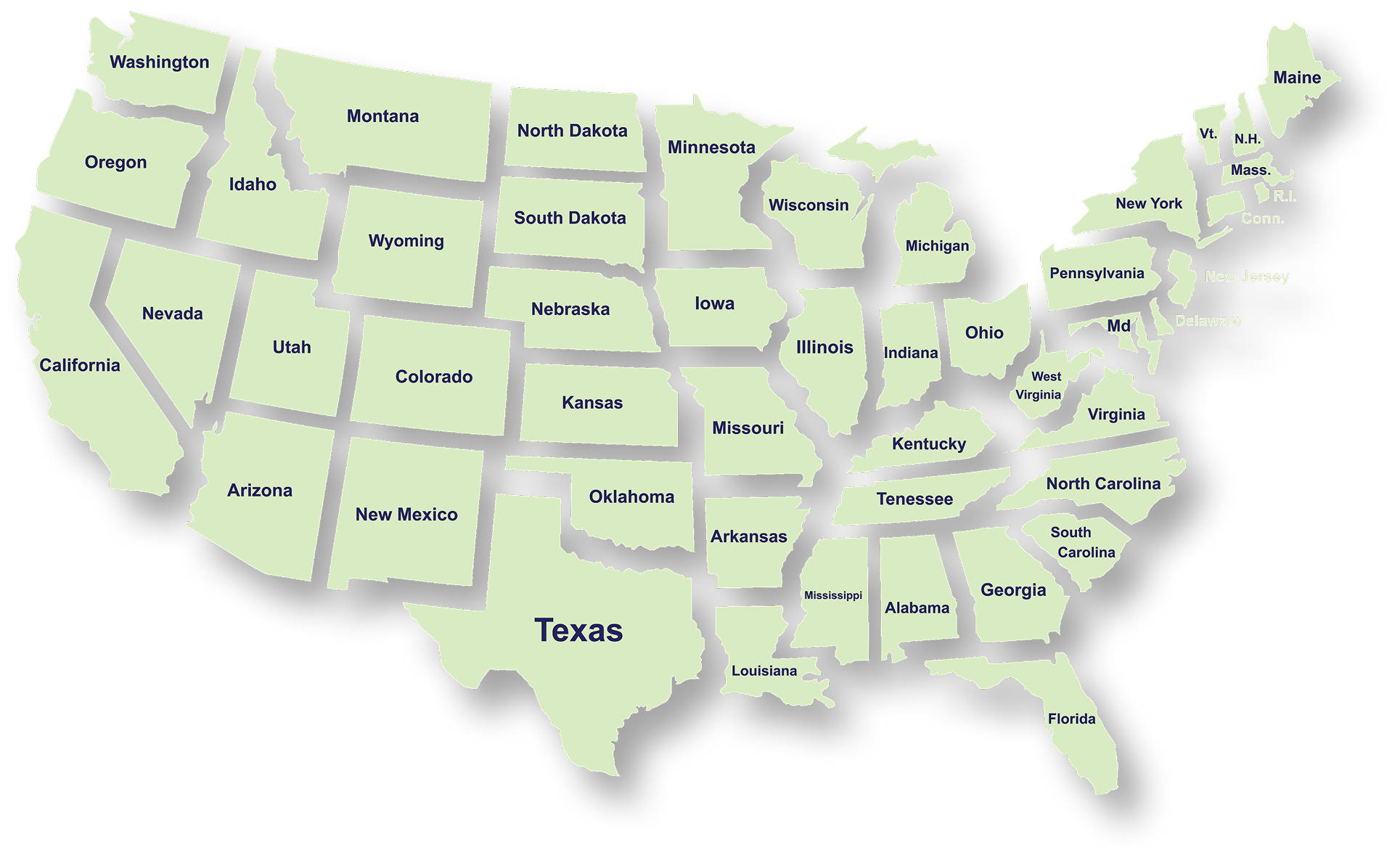
Serving Businesses & Individuals Across USA

We handle accounting, tax filing, and planning with defined timelines and accurate reporting for businesses and individuals across all states.

Frequently Asked Questions

What services does NR CPAs & Business Advisors provide?
What is tax planning and why is it important for businesses?
How can a Virtual CFO help my business?
When should a business consider IRS tax resolution services?
What financial statements does a business typically need?
How can startup advisory services help new businesses?
What is strategic business planning?
What is a Virtual Family Office and who can benefit from it?