Learning Center for Tax and Financial Insights

Stay updated with clear, actionable articles on tax rules, deadlines, deductions, and financial decisions that impact individuals and businesses.

No items found.

Unemployment Fraudsters May Create a Tax Nightmare for Unsuspecting Taxpayers

As if this past year with all of its pandemic perils has not been stressful enough, the Office of the Inspector General for the Department of Labor has just added to our anxieties by announcing that at least at least $36 billion and possibly as much as $63 billion has been lost to improper unemployment payments having been made. In many cases the improper payments are a result of fraudsters who spent the earliest months of the pandemic filing unemployment claims using stolen personal data. What this means is that millions of unsuspecting Americans are about to receive federal forms reporting unemployment benefits that they never received. Not only does this leave them potentially vulnerable to identify theft issues, but in the short term it also means that the federal government is expecting them to pay income taxes for money somebody else received. We’ve all been told to watch out for identity theft, but this newest method feels particularly cruel in the face of all of the other struggles brought by the pandemic. The scammers have taken advantage of the CARES Act’s high unemployment payouts, which included an extra $600 per week to offset the pandemic’s worst effects on the economy. In an effort to get the relief out quickly, the Pandemic Unemployment Assistance program required little-to-no documentation, and this attracted quick attention from those eager to take unethical advantage. For those whose identify was stolen, what this means is that they may receive a form known as the 1099-G from the federal government, which treats unemployment benefits as taxable income. If You Receive a 1099-G There is a solution if you are sent a 1099-G for unemployment benefits that you did not receive, and though it represents a bit of work from the victim, the IRS has indicated that it is aware of the problem and working as hard as it can to help those who have been wronged. They say that recipients of an inappropriate, incorrect 1099-G need to contact their state’s unemployment agency and ask them to send a corrected, revised form that will reflect the correct amount provided to them. Though this may be difficult if you live in a state where the unemployment agency’s response rate has been slowed by the pandemic and increased need for assistance, some states have established hotlines dedicated to addressing this specific issue and have increased the number of support staff available to help. Much of this increase in attention is the result of guidance that the IRS issued to states at the end of 2020, notifying them of the identity fraud issue. If you aren’t able to get a revised form by the tax filing deadline, the IRS indicates that you should simply file a return that accurately reflects the amount that you received. Be sure to discuss with our office how we can best document your issue. No Other Steps Required It’s completely natural to feel a bit panicked if you receive one of these forms erroneously, and to worry about the impact of having been the victim of identity theft, but the IRS has indicated that there is no need to file an Identity Theft Affidavit. The agency says that those affidavits are specifically for taxpayers whose e-filed tax return is rejected as a result of a duplication of the use of their Social Security number for a tax filing. Still, if you are concerned and want to take additional steps to protect your identity then you can ask for an Identity Protection PIN when you file your income taxes. Having this unique number will help keep anybody else from being able to use your Social Security number to file a fraudulent tax return. Beyond that measure specific to the IRS, the Georgia Department of Labor has suggested the following steps you can take to protect yourself against the impact of identity theft.

Explore More
No items found.

Tax Deductions Without Itemizing

Article Highlights: Charitable Contributions Educator Expenses Performing Artist Expenses State and Local Government Officials’ Expenses Health Savings Account Contributions Moving Expenses for Members of the Armed Forces Student Loan Interest Deduction Tuition and Fees Deduction Deduction for Early Withdrawal of Savings Deductible Part of Self-employment Tax Self-employed Health Insurance Deduction Alimony Deduction (pre-2019 divorce agreements) Business Pass-through Deduction Retirement Plan Deductions Most taxpayers think they have to itemize their deductions to claim them on their tax return. However, that is not entirely true. There are certain deductions that can be claimed while still using the standard deduction. Here is a list of those deductions: Charitable Contributions For 2020, non-itemizers can deduct up to $300 of cash contributions above-the-line. The $300 limits apply both to single and married taxpayers. Donations to donor-advised funds and private foundations aren’t eligible for the above-the-line deduction (2020 and 2021). The term “above-the-line” is a shorthand way of saying that the deduction reduces gross income when figuring adjusted gross income (AGI). Eligibility for many credits, some other deductions and sometimes the phaseout of the amount of the credit or deduction are based on AGI or modified AGI. For 2021, non-itemizers filing a joint return can deduct up to $600 of cash contributions, while taxpayers using the other filing statuses continue to be limited to $300. Unlike the 2020 version of this deduction, which is an above-the-line deduction, the 2021 deduction is claimed after the AGI is determined. Educator Expenses – A qualified educator can annually deduct above-the-line to a maximum of $250 of qualified unreimbursed classroom expenses. These expenses include: Books, Supplies (other than nonathletic supplies for courses of instruction in health or physical education), Computer equipment (including related software and services) and other equipment, Supplementary materials used by the eligible educator in the classroom, Professional development courses that are beneficial to the students for whom the educator provides instruction, and Personal protection equipment (PPE), disinfectant and other supplies used for the prevention of the spread of coronavirus after March 12, 2020. A qualified educator is generally a kindergarten through grade 12 teacher, instructor, counselor, principal or aide and works in a school at least 900 hours during the school year. Performing Artist Expenses - Some performing artists are allowed to deduct their employment-related expenses as an adjustment to gross income. For taxpayers to qualify for this special rule, all of the following criteria must be met: (1) They must have had two or more employers in the performing arts field during the tax year (don’t count nominal employers who pay less than $200), (2) Their business expenses must be more than 10% of their gross income earned as a performing artist, and (3) Their AGI before deducting the performance-related expenses can’t be more than $16,000. Married performers must file joint returns unless they lived apart all year. The two-employer requirement and 10%-of-gross-income requirement are applied to each spouse separately. However, the $16,000-AGI requirement applies to married performers’ joint income. State and Local Government Officials’ Expenses – Employee business expenses for a state or local government official are deductible above-the-line if the official is compensated in whole or in part on a fee basis. This provision is intended for officials who provide certain services to the government and who hire employees and incur expenses in connection with their official duties. Health Savings Account Contributions – Contributions to Health Savings Accounts (HSA) are also an above-the-line deduction. HSAs can only be established by eligible individuals who are covered by high-deductible health plans and generally not covered under any other health plan. There are statutory limits to the amounts that can be contributed to an HSA. Subject to statutory limits, eligible individuals may make contributions to HSAs, and employers as well as other persons (e.g., family members) may contribute on behalf of eligible individuals. An account holder gets a deduction for contributions to their HSA even if someone else (e.g., a family member) makes the contributions. However, since an employer’s contributions to an employee’s HSA are excludable from the employee’s income, the employee can’t also claim a deduction for those contributions.

Explore More
No items found.

The Number of Americans Who Didn't Pay Their Mortgage Hit 5% in December 2020

Obviously, the still-ongoing COVID-19 pandemic has been a major challenge for all of us since it kicked into high gear in March of 2020. In the months since, millions of people have found themselves out of a job and the ones that remained were suddenly faced with working remotely for the foreseeable future. Even though a vaccine is in the process of being rolled out and a proverbial light at the end of the tunnel seems to finally be in sight, there's no denying that the impact of the pandemic will continue to be felt for quite some time. Case in point: according to one recent study conducted by the Mortgage Brokers Association's Research Institute for Housing America, about five million Americans were unable to make their rent or mortgage payments on December of 2020. To put this into context, that number translates to more than 5% of all renters and mortgage holders in the country. COVID-19 and a Potential Mortgage Crisis: What You Need to Know In addition to the significant numbers outlined above, the same study indicated that about 2.3 million additional renters and 1.2 million mortgage holders themselves believed that they were at risk of eviction or foreclosure. Many were worried that they would be forced to move out of their current homes at some point within the next 30 days, pointing towards heightened anxiety that is only adding fuel to an already difficult situation for so many. But while these numbers may seem shocking to many, it's important to understand that they do actually represent an improvement from the way things were in the spring and especially during the summer months. In September, for example, about six million households missed mortgage or rent payments - representing about 8.4% of renters and 7% of mortgage holders. The number of people who feel they're at risk of being evicted has also gone down, though the level is still high. During August, between 6 and 8% of renters said that they felt they were at risk of being evicted or that they would be forced to move within 30 days. Fascinatingly, about 5% of renters who didn't actually miss any payments at all also felt that burden. However, it's difficult to say that nobody saw this coming. During the initial months of the pandemic when the vast majority of jobs were shut down, the economic damage was already being predicted to be catastrophic. All told, about 9.3 million jobs were lost during the course of 2020 - accompanied by the biggest rise in the poverty rate since the 1960s. Overall, there were a number of fascinating lessons to be learned from the study. First off, it seems as though the owners of rental property are feeling the biggest effect from people who can't pay rent. It was estimated that they lost a combined $7.2 billion in the fourth quarter of 2020 alone, due in large part to missed rent payments. While it's true that this was a decline from the previous quarter, it's still a massive number that could paint a harrowing picture of the weeks and months ahead. For the record, losses from rental property grew to a combined $9.1 billion in the third quarter. Likewise, it seems that the COVID-19 stimulus programs instituted last year are a big part of the reason why this problem isn't somehow worse. Experts agree that direct stimulus checks, enhanced unemployment benefits and the various rental assistance and mortgage forbearance efforts have allowed people to remain in their homes for as long as possible. Obviously, the federal eviction moratorium helped a great deal, too. The number of people receiving unemployment insurance benefits has also trended downward very slowly. Among renters receiving UI benefits, the number grew from 3% at the beginning of April to a steady 7% by the end of September. In December, that number dropped to 6%. It has remained at about 3% among mortgage holders since the beginning of April. All told, there are a number of important takeaways from this report - including the larger idea that things are, slowly but surely, declining from their mid-pandemic highs in a lot of key areas. Hopefully, the distribution of multiple effective vaccines will both slow the COVID-19 pandemic itself and continue to help ease a lot of the economic burden that people are feeling. Additionally, the White House announced on February 15th a program to extend mortgage relief and a moratorium on home foreclosures through June.

Explore More
No items found.

Solar Tax Credit Extended for Two Years

Article Highlights: Credit Amounts Deceptive Advertising Refundability Worth the Cost? Qualifying Property When Is the Credit Available? Who Gets the Credit Multiple Installations Battery Installation Costs Basis Adjustment Association or Cooperative Costs Mixed-Use Property Newly Constructed Homes Utility Subsidy A federal tax credit for the purchase and installation costs of a residential solar system has been extended through 2023. The credit for 2021 and 2022 is 26% of the cost of the solar installation but drops to 22% for 2023, the final year of the credit (unless extended again by Congress). The credit is nonrefundable, meaning it can only reduce your tax liability to zero. However, the portion of credit that is not allowed because of this limitation may be carried to the next tax year and added to the credit allowable for that year. The tax code infers that any credit carryover can be added to the credit allowed in the subsequent year. However, what is unclear is whether any carryover will be allowed in 2024 once the credit expires at the end of 2023. In addition to the credit reducing the regular tax, it also reduces the alternative minimum tax, should you be subject to it. When you see those TV ads for home solar power, you may get the impression that Uncle Sam is going to pick up 26% of the cost, and you only have to come up with the other 74%. That is not necessarily the whole picture. It is true that the federal government has a 26% tax credit for the cost of a qualified solar installation (some states also have solar credits or other incentives). However, the federal credit is non-refundable and can only be used to offset your current tax liability; any excess carries over to future years, as long as the credit still applies in future years. Currently, the credit is allowed through 2023. This means that you may not get all the credit in the first year, as you might have been led to believe or assumed based upon the TV ads or a salesperson’s pitch. For example, suppose in 2021, your solar installation costs $25,000. That would qualify you for a solar tax credit of $6,500. But suppose the income tax on your tax return is only $4,000. Then, the credit would reduce your tax liability to zero, and the other $2,500 ($6,500–$4,000) of the credit is carried over to 2022’s tax return, where the credit will be limited to that year’s tax amount. If your tax is again less than the amount of the credit, the excess credit carries to the following year, and so on, until the credit is used up or expires. Compare the cost of the system (and the interest you will be paying, if you are financing it) to conventional electricity costs. How many years will it take to recover your cost? Do you plan to live in your home beyond that time? Is a solar system really worth the cost? Electricity costs can vary significantly according to locale. Even if not financially beneficial, there are situations in which the cost may not be the deciding factor. Some areas experience frequent power outages; you may simply want to go green or go off the grid where electric service is not reliable. If you plan to go ahead with a solar installation, here are some of the issues you need to be aware of. Qualifying Property – Only the following solar power systems are eligible for the credit: Qualified solar electric property – property that uses solar energy to generate electricity for use in a main or second residence. Qualifying solar water heating property – qualifies if used in a dwelling located in the U.S. used as a main or second residence where at least half of the energy used to heat water is derived from the sun. Heating water for swimming pools or hot tubs does not qualify for the credit. The solar equipment must be certified for performance by the Solar Rating Certification Corporation or a comparable entity endorsed by the state government where the property is installed. When is the Credit Available? – The credit may be claimed on the tax return of the year during which the installation is completed. So, for example, if you purchase and pay for a system completed in 2022, the credit will be 26% of the cost. But if the project isn’t completed until 2023, the credit will only be 22%. This becomes an even a bigger issue for systems installed during 2023 that aren’t completed before 2024, when the credit rate will be zero. If you plan to purchase a solar system in 2023, the purchase should be made early enough in the year to ensure the installation is completed before 2024.

Explore More
No items found.

Employee Retention Credit Extended

Article Highlights: The Extension About the Credit Advance Payment Employer Qualifications Qualified Wages Impact on Other Tax Provisions Claiming the Credit In order to help trades and businesses to retain employees and keep them employed during the COVID-19 crisis, the Coronavirus Aid, Relief, and Economic Security (CARES) Act created the Employee Retention Credit for 2020. As part of the Consolidated Appropriations Act, 2021 (CCA), the credit has been extended through June 2021. The credit is actually a government-sponsored program to keep workers employed and is funded by providing qualifying employers with a refundable credit against certain employment taxes equal to 70% (up from 50% prior to 2021) of the qualified wages that an eligible employer pays to employees after March 12, 2020, and before July 1, 2021. (Before the extension, the credit ended on December 31, 2020.) If the employer's employment tax deposits are insufficient to cover the credit, the employer may get an advance payment from the IRS by filing Form 7200, Advance of Employer Credits Due to COVID-19. For each employee, up to $10,000 in wages (including certain health-plan costs) per quarter (versus $10,000 per year in 2020) can be counted to determine the amount of the 70% credit. Employers, including tax-exempt organizations, are eligible for the 2021 credit if they operate a trade or business between January 1, 2021, and June 30, 2021, and experience either: the full or partial suspension of the operation of their trade or business during any calendar quarter because of governmental orders limiting commerce, travel, or group meetings due to COVID-19; or a significant decline in gross receipts. A significant decline in gross receipts for 2021 occurs when an employer’s gross receipts for a calendar quarter are less than 80% of its gross receipts for the same calendar quarter in 2019 (in other words, when gross receipts for the 2021 quarter are reduced by more than 20% of the corresponding 2019 quarter’s gross receipts). If the business didn’t exist at the beginning of the same calendar quarter in calendar year 2019, substitute “2019” for “2020.” Employers, by election, can apply the gross-receipts test by using the immediately preceding calendar quarter. For example, instead of comparing the gross receipts of the first quarter of 2021 with those of the first quarter of 2019, an employer can elect to compare the gross receipts of the fourth quarter of 2020 to the gross receipts from the fourth quarter of 2019. The credit applies to qualified wages (including certain group health-plan expenses) paid during this period or any calendar quarter when operations were suspended. Eligible health-plan expenses are the amounts paid by the employer to provide and maintain group health-plan coverage, to the extent that the amounts are nontaxable to the employees.

Explore More
No items found.

Interaction between PPP Loans and the Employee Retention Credit

Article Highlights: Consolidated Appropriations Act, 2021 Interaction between PPP loans and the ERC PPP Loan Forgiveness Denied Amending Forms 941 Qualified but Never Claimed the ERC The Consolidated Appropriations Act, 2021 (CCA), which was passed by Congress and signed by the president late last December, included a very tax-beneficial provision that liberalized the interaction between PPP loans and the Employee Retention Credit (ERC). Prior to its passage, if an employer obtained a Paycheck Protection Program (PPP) loan, the employer was ineligible to claim the ERC. However, under the legislation, an employer that is eligible for the ERC can claim the ERC even if the employer has received a PPP loan, under the following circumstances. An eligible employer can claim the ERC on any qualified wages that are not counted as payroll costs in obtaining PPP loan forgiveness. Any wages that could count toward eligibility for the ERC or for PPP loan forgiveness can be applied to either of these two programs but not both. This gives rise to some beneficial tax opportunities. PPP Loan Forgiveness Denied – If an employer received a PPP loan and included wages they paid in the second and/or third quarter of 2020 as payroll costs in support of an application to obtain forgiveness of the loan (rather than claiming the ERC for those wages) and if the request for forgiveness was denied, then the employer can claim the ERC related to those qualified wages retroactively by amending their Forms 941 for 2020. This is done by using Form 941-X, Adjusted Employer’s Quarterly Federal Tax Return or Claim for Refund. Business Qualified but Never Claimed the ERC – If a taxpayer did not obtain a PPP loan, qualified for the ERC in 2020, and did not previously take the payroll credit, they can still do so by filing Form 941-X. Form 7200, which is used to request advance payment of the credit, cannot be used in this situation because it must be filed before the original 941 forms are.

Explore More
No results found.
Thank you! Your submission has been received!
Oops! Something went wrong while submitting the form.

Want tax & accounting tips & insights?Sign up for our newsletter.

Thank you! Your submission has been received!
Oops! Something went wrong while submitting the form.

Why Work With Us?

We combine deep tax expertise, financial strategy, and practical business insight to help you manage complexity, stay compliant, and make confident financial decisions.
A dollar sign, representing financial advice or discussion at NR CPAs & Business Advisors.

Experienced CPA and Enrolled Agent Leadership

Guidance led by licensed professionals with deep expertise in tax strategy, compliance, and complex financial matters.
White bar chart with an upward arrow on green circular background representing growth or progress at NR CPAs &. Business Advisors

Support for Growing Businesses and Startups

We understand the financial challenges of growth stage businesses and provide structured guidance to support expansion.
A white hand holding a dollar symbol and ascending bar chart on a green circular background representing financial growth or investment at NR CPAs & Business Advisors..

Strategic Financial Advisory

Our team helps you evaluate financial decisions with greater clarity, supported by practical insights and long term planning.

Fractional CFO Support

Access experienced financial leadership without the commitment and cost of hiring a full time Chief Financial Officer.

Proactive Tax Planning Approach

We focus on identifying tax opportunities throughout the year rather than reacting only during filing season.

Clear and Reliable Financial Reporting

Accurate financial statements and reporting that help you better understand performance and make informed decisions.
White IRS building icon with pillars and a dollar sign above on a green circular background.

Professional IRS Representation

Experienced support in resolving IRS notices, disputes, and compliance matters while protecting your financial interests.

Personalized Client Focus

Every client receives thoughtful attention and tailored financial solutions based on their specific needs and business goals.
Financial matters often involve important decisions. Working with experienced advisors can help you approach them with greater clarity and confidence in your choices.

Need Help With Your Tax or Financial Decisions?

Discuss your situation with our advisors to get clear guidance on tax planning, IRS matters, and the financial decisions ahead.
Business consulting at NR CPAs & Business Advisors.

Request Your Consultation

Fill out the form to discuss your tax concerns, financial questions, or advisory needs with our team. We will review your details and respond shortly.

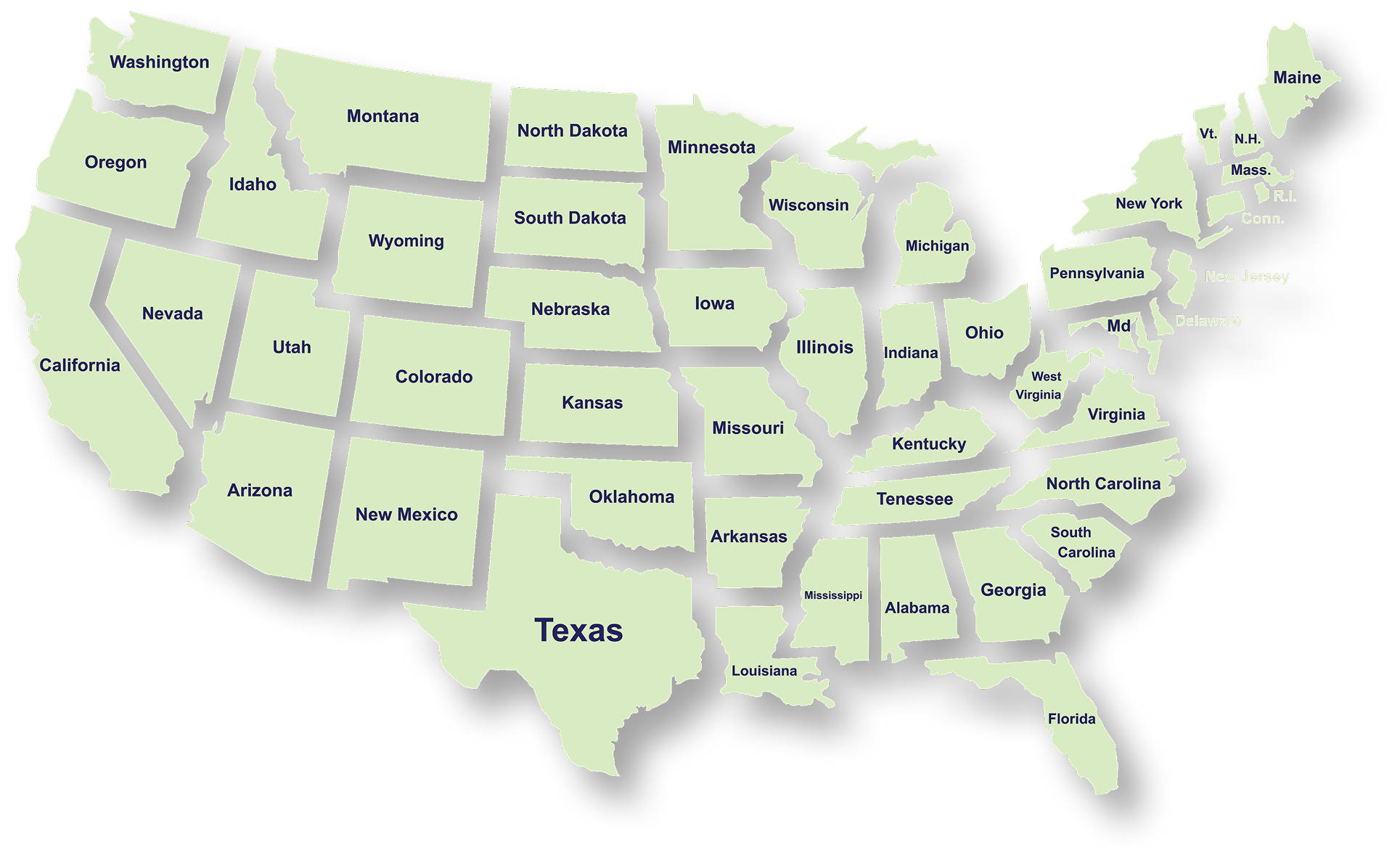
Serving Businesses & Individuals Across USA

We handle accounting, tax filing, and planning with defined timelines and accurate reporting for businesses and individuals across all states.

Frequently Asked Questions

What services does NR CPAs & Business Advisors provide?
What is tax planning and why is it important for businesses?
How can a Virtual CFO help my business?
When should a business consider IRS tax resolution services?
What financial statements does a business typically need?
How can startup advisory services help new businesses?
What is strategic business planning?
What is a Virtual Family Office and who can benefit from it?