Learning Center for Tax and Financial Insights

Stay updated with clear, actionable articles on tax rules, deadlines, deductions, and financial decisions that impact individuals and businesses.

No items found.

March 2021 Individual Due Dates

March 10 - Report Tips to Employer If you are an employee who works for tips and received more than $20 in tips during February, you are required to report them to your employer on IRS Form 4070 no later than March 10. Your employer is required to withhold FICA taxes and income tax withholding for these tips from your regular wages. If your regular wages are insufficient to cover the FICA and tax withholding, the employer will report the amount of the uncollected withholding in box 12 of your W-2 for the year. You will be required to pay the uncollected withholding when your return for the year is filed. March 15 - Time to Call For Your Tax Appointment It is only one month until the April due date for your individual income tax returns. If you have not made an appointment to have your taxes prepared, we encourage you to do so before it becomes too late.

Explore More
No items found.

March 2021 Business Due Dates

March 1 - Payers of Gambling Winnings File Form 1096, Annual Summary and Transmittal of U.S. Information Returns, along with Copy A of all the Forms W-2G you issued for 2020. If you file Forms W-2G electronically, your due date for filing them with the IRS will be extended to March 31. The due date for giving the recipient these forms was February 1. March 1 - Information Returns Filing Due File government copies of information returns (Form 1099) and transmittal Forms 1096 for certain payments you made during 2020, other than the 1099-NECs that were due February 1. There are different 1099 forms for different types of payments. March 1 - Farmers and FishermenFile your 2020 income tax return (Form 1040 or 1040-SR) and pay any tax due. However, you have until April 15 to file if you paid your 2020 estimated tax by January 15, 2021.March 1 - Applicable Large Employer (ALE) - Form 1095-C If you’re an Applicable Large Employer, file 1094-C, Transmittal of Employer-Provided Health Insurance Offer and Coverage Information Returns, and 1095-C with the IRS. For all other providers of minimum essential coverage, file paper Forms 1094-B, Transmittal of Health Coverage Information Returns, and 1095-B with the IRS. If you’re filing any of these forms with the IRS electronically, your due date for filing them will be extended to March 31. See the Instructions for Forms 1094-B and 1095-B and the Instructions for Forms 1094-C and 1095-C for more information about the information reporting requirements. March 1 - Large Food and Beverage Establishment Employers File Form 8027, Employer’s Annual Information Return of Tip Income and Allocated Tips. Use Form 8027-T, Transmittal of Employer’s Annual Information Return of Tip Income and Allocated Tips, to summarize and transmit Forms 8027 if you have more than one establishment. If you file Forms 8027 electronically, your due date for filing them with the IRS will be extended to March 31. March 2 - Applicable Large Employers (ALE) & Self-Insuring Employers Provide employees with annual information statement of health insurance coverage, Form 1095-C, Employer-Provided Health Insurance Offer and Coverage. This date reflects an extension from the statutory due date of January 31 provided by the IRS (Notice 2020-76). This extended due date also applies to insurers who are required to provide Form 1095-B, Health Coverage, to individuals. The government’s copies of these forms were due March 1 (or March 31 if filed electronically).

Explore More
No items found.

Video: Interaction between PPP Loans and the Employee Retention Credit

The Consolidated Appropriations Act, 2021, which was passed late last December, included a very tax-beneficial provision that liberalized the interaction between PPP loans and the Employee Retention Credit. .embed-container { position: relative; padding-bottom: 56.25%; height: 0; overflow: hidden; max-width: 100%; } .embed-container iframe, .embed-container object, .embed-container embed { position: absolute; top: 0; left: 0; width: 100%; height: 100%; }

Explore More
No items found.

Video: Required Minimum IRA Distribution Resumption for 2021

Congress put a halt on the RMD for the traditional IRA in 2020 in response to the Pandemic. However, the RMD will be resumed in 2021 and subsequent years. .embed-container { position: relative; padding-bottom: 56.25%; height: 0; overflow: hidden; max-width: 100%; } .embed-container iframe, .embed-container object, .embed-container embed { position: absolute; top: 0; left: 0; width: 100%; height: 100%; }

Explore More
No items found.

Keep Up With Payables: Paying Bills in QuickBooks

This month, we’ll discuss paying your bills in QuickBooks. Click Pay Bills on the home page or open the Vendors menu and select Pay Bills. The screen that opens displays bills that you’ve entered that need to be paid. You can choose to list those due on or before a date you specify or all bills. QuickBooks provides templates that you can use when you’re entering bills. You have to complete these forms before you can apply payment. By default, all vendors are represented in the table. If you want to only see bills from one specific vendor, click the down arrow in the Filter By field and select he correct one. You can also sort the list by any of a number of criteria, including Due Date, Vendor, and Amount To Pay by clicking the down arrow in the Sort By field. Once the table is displaying your bills the way you want, it’s time to select the ones you want to pay. You can either click in the box in front of each to make a checkmark or click on Select All Bills below the table. When you select one, the Amount To Pay field will change to reflect the Amount Due. If you can’t afford the whole payment, replace the 0.00 in the Amount To Pay field with your actual planned payment. You can select individual bills to pay in QuickBooks or click on Select All Bills below the table. QuickBooks provides additional information in the table of bills to be paid beyond Date Due, Vendor, and Amount To Pay. You’ll see a column for a reference number, but there are other columns that can display vendor-issued discounts and credits that could be applied to individual bills. Vendors sometimes offer discounts for early payment, for example, and credits can be issued to settle things like returns or overpayment. Warning: If you’ve never worked with discounts and credits, we can help you learn about them, create them, and apply them. It’s complicated. When you’re satisfied with the information in the table, look below it. Highlight a bill by clicking on it to see what your options are there. You can click

Explore More
No items found.

What Is a Joint Venture?

When multiple business entities make a decision to start a new business together as a cooperative arrangement, they form what is known as a joint venture. In creating a joint venture, each of the involved entities agrees to what assets they will contribute, how they are going to distribute income and share expenses, and how the new entity will move forward. Before deciding to get involved in a joint venture, business owners need to carefully assess how they plan to proceed. It is essential that every detail of the new organization’s operations be thought out and addressed ahead of time, from its management and tax liabilities to how profits and losses will be distributed. Forming a Joint Venture Even though a joint venture represents a cooperative between two or more business entities, each of those original entities retails its original legal status, whether as companies or corporations or as an individual or group of individuals. Not all joint ventures involve the actual formation of a new business entity, but if a new entity is created it will be required to pay its own taxes. The tax liability will be based on the form of business that is adopted: if an unincorporated joint venture, the tax on profits will belong to the entities who originally joined the agreement, while as a corporation it will have its own tax responsibility. A joint venture can exist solely as an agreement between the original cooperating entities. Whatever form a joint venture takes, it is best arranged via a detailed, comprehensive contract that specifies what assets each of the participating entities will contribute, how the new entity will be managed, who will be in control of important decisions and how the distribution of profits and losses will be accomplished. Why Form a Joint Venture? There are numerous advantages to forming a joint venture, including combining distinct talent and background from two separate entities to create a novel product or service, or taking advantage of one entity’s strength in marketing with another’s innovation. A good example of a successful joint venture can be found in BMW Brilliance Automotive, Ltd, which was formed between BMW Group and Brilliance China Automotive Holdings. The two created a new entity to sell BMW vehicles in China, leveraging Brilliance China’s geographic presence to sell BMW’s products. Among the reasons for forming a joint venture are: Leveraging the combined resources of multiple entities in order to strengthen the organization’s strength and viability. Leveraging the expertise of one or more of the original entities in order to create a better product or improve its delivery or marketing. To achieve economies of scale Though many joint ventures are formed with an eye to the future, some are created to accomplish short-term goals and then quickly disbanded upon those goals being achieved.

Explore More
No results found.
Thank you! Your submission has been received!
Oops! Something went wrong while submitting the form.

Want tax & accounting tips & insights?Sign up for our newsletter.

Thank you! Your submission has been received!
Oops! Something went wrong while submitting the form.

Why Work With Us?

We combine deep tax expertise, financial strategy, and practical business insight to help you manage complexity, stay compliant, and make confident financial decisions.
A dollar sign, representing financial advice or discussion at NR CPAs & Business Advisors.

Experienced CPA and Enrolled Agent Leadership

Guidance led by licensed professionals with deep expertise in tax strategy, compliance, and complex financial matters.
White bar chart with an upward arrow on green circular background representing growth or progress at NR CPAs &. Business Advisors

Support for Growing Businesses and Startups

We understand the financial challenges of growth stage businesses and provide structured guidance to support expansion.
A white hand holding a dollar symbol and ascending bar chart on a green circular background representing financial growth or investment at NR CPAs & Business Advisors..

Strategic Financial Advisory

Our team helps you evaluate financial decisions with greater clarity, supported by practical insights and long term planning.

Fractional CFO Support

Access experienced financial leadership without the commitment and cost of hiring a full time Chief Financial Officer.

Proactive Tax Planning Approach

We focus on identifying tax opportunities throughout the year rather than reacting only during filing season.

Clear and Reliable Financial Reporting

Accurate financial statements and reporting that help you better understand performance and make informed decisions.
White IRS building icon with pillars and a dollar sign above on a green circular background.

Professional IRS Representation

Experienced support in resolving IRS notices, disputes, and compliance matters while protecting your financial interests.

Personalized Client Focus

Every client receives thoughtful attention and tailored financial solutions based on their specific needs and business goals.
Financial matters often involve important decisions. Working with experienced advisors can help you approach them with greater clarity and confidence in your choices.

Need Help With Your Tax or Financial Decisions?

Discuss your situation with our advisors to get clear guidance on tax planning, IRS matters, and the financial decisions ahead.
Business consulting at NR CPAs & Business Advisors.

Request Your Consultation

Fill out the form to discuss your tax concerns, financial questions, or advisory needs with our team. We will review your details and respond shortly.

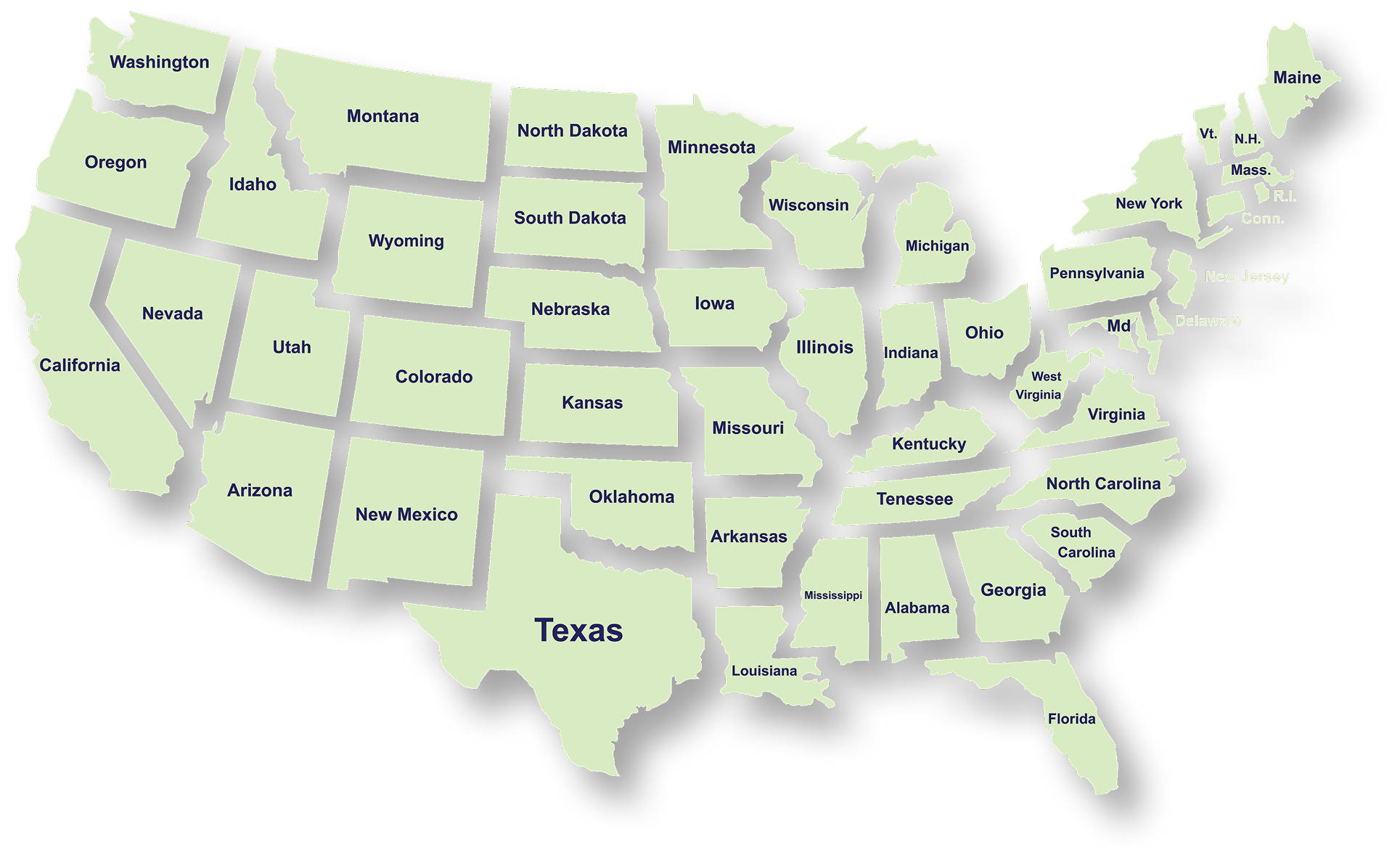
Serving Businesses & Individuals Across USA

We handle accounting, tax filing, and planning with defined timelines and accurate reporting for businesses and individuals across all states.

Frequently Asked Questions

What services does NR CPAs & Business Advisors provide?
What is tax planning and why is it important for businesses?
How can a Virtual CFO help my business?
When should a business consider IRS tax resolution services?
What financial statements does a business typically need?
How can startup advisory services help new businesses?
What is strategic business planning?
What is a Virtual Family Office and who can benefit from it?