Learning Center for Tax and Financial Insights

Stay updated with clear, actionable articles on tax rules, deadlines, deductions, and financial decisions that impact individuals and businesses.

No items found.

IRS Offers New Identity Protection for Taxpayers

Article Highlights: IP PIN Identity Verification Opt-in Program Application Process In the past, the IRS has assigned verification numbers to victims of identity theft to file their tax returns, if requested by the victimized individual. These numbers are referred to as identity protection (IP) PINs. The IP PIN is a six-digit code known only to the taxpayer and the IRS. It helps prevent identity thieves from filing fraudulent tax returns using a taxpayer’s personally identifiable information. The IP PIN serves as the key to an individual’s tax account. Electronically filed returns that do not contain the correct IP PIN will be rejected, and paper returns will go through additional scrutiny for fraud. The IRS launched the IP PIN program nearly a decade ago to protect confirmed identity theft victims from ongoing tax-related fraud. In recent years, the IRS has expanded the program to specific states where taxpayers can opt into the IP PIN program. Now, the voluntary program is going nationwide. Key things you should know about the IP PIN opt-in program: The program is voluntary. You must pass a rigorous identity verification process before IRS will issue you an IP PIN. Spouses and dependents are eligible for an IP PIN if they can verify their identities. An IP PIN is valid for a calendar year, and a new IP PIN must be obtained each year. The online tool to apply for IP PINs is offline between November and mid-January each year. Correct IP PINs must be entered on electronic and paper tax returns to avoid rejections and delays. Never share your IP PIN with anyone but your trusted tax professional. The IRS will never call, text or email requesting your IP PIN. Beware of scams to steal your IP PIN. There currently is no opt-out option, but the IRS is working on one for 2022. If you want an IP PIN for 2021, go to IRS.gov/IPPIN and use the Get an IP PIN tool. This online process will require that you verify your identity using the Secure Access authentication process if you do not already have an IRS account. See

Explore More
No items found.

How Biden's Rescue Plan Might Impact Your Taxes

Article Highlights: Economic Impact Payments Unemployment Compensation Minimum Wage Education Assistance Families First Coronavirus Response Act Child Care Tax Credit Child Tax Credit Earned Income Tax Credit Healthcare Coverage Evictions & Foreclosures Homelessness President Biden released his “American Rescue Plan” on January 14. It is a wish list of proposals he wants Congress to enact to address the COVID-19 pandemic and associated economic crisis. While some of the proposals are intended to be in effect for just one year, it isn’t too great a stretch of the imagination that these could later be extended or made permanent, as many of them have been on the Democrats’ agenda for some time. The anticipated cost of the American Rescue Plan, if all of the proposals are agreed to by Congress, is $1.9 trillion. None of Biden’s proposals are revenue raisers, and according to a January 15, 2021 Wall Street Journal report, he intends to use government borrowing to pay for his plan. Following are some of the tax-related proposals. Stimulus (Economic Impact) Payments: Biden’s plan requests that Congress provide an additional stimulus payment of $1,400 to qualified lower income households. Combined with the $600 that Congress authorized in December legislation, this will bring the latest total direct assistance to $2,000 per person. The prior stimulus distributions included stipends for dependent children under the age of 17, whereas the proposed payments will be provided for all dependents regardless of age. So far, the payments have counted as advances toward a 2020 Recovery Rebate Credit. This is so even for the second round of payments that didn’t reach recipients until early January 2021. Individuals will need to reconcile the payments they received and the credits they are entitled to on their 2020 returns. Whether the proposed additional payments will be considered part of the 2020 credit (which could delay some 2020 return filings) or as an advance toward a new 2021 credit will need to be clarified in the legislation. Unemployment Compensation: This part of the plan requests that Congress provide a $400-per-week unemployment insurance supplement through September 2021, and extend the unemployment benefits to self-employed workers such as ride-share drivers and many grocery delivery workers, who do not typically qualify for regular unemployment compensation. Presumably, the $400-per-week enhancement would be in lieu of the $300-per-week benefit passed in the Consolidated Appropriations Act in December 2020. In any event, the unemployment benefits are taxable income for federal purposes; most states also tax this income, but a few do not. Raise the minimum wage to $15 per hour. Education Assistance: The CARES Act, passed in late March 2020, included a Higher Education Emergency Relief Fund that provides funding to institutions to provide emergency financial aid grants to students whose lives have been disrupted by the COVID-19 pandemic. Emergency financial aid grants to students are nontaxable and can be used for expenses related to the disruption of campus operations due to coronavirus (including eligible expenses under a student’s cost of attendance, such as food, housing, course materials, technology, health care, and child care). Biden’s proposal would increase funding for the Higher Education Emergency Relief Fund, including providing college and university students with up to an additional $1,700 in financial assistance from their institutions. Families First Coronavirus Response Act: This part of the American Rescue Plan requests that Congress fund an extension of sick leave through September 30, 2021, which would provide over 14 weeks (up from 12) of paid sick and family and medical leave to help parents with additional caregiving responsibilities when a child or loved one’s school or care center is closed; for people who have or are caring for people with COVID-19 symptoms, or who are quarantining due to exposure; and for people needing to take time to get the vaccine. The maximum payment would be increased from $1,000 per week to $1,400 per week.

Explore More
No items found.

Congress Has Authorized a Second Round of PPP Loans

Article Highlights: Paycheck Protection Program Eligible Entities Loan Terms Loan Forgiveness Forgiveness Reduction Simplified Loan Forgiveness Deductibility of Expenses Funds Availability Congress passed, and President Trump signed, the Consolidated Appropriations Act, 2021. Included in its approximately 5,600 pages is a second draw of forgivable Paycheck Protection Program (PPP) loans. The first round allowed loans to businesses with 500 or fewer employees and to certain businesses with multiple locations, for which each location could not have more than 500 employees. Unfortunately, this opened the door to some large businesses gobbling up the allocated funding and shutting out the smaller businesses that the loans were intended to help until additional funding was authorized. Unlike the prior loan program, this round will truly be limited to small businesses that incurred revenue losses. Eligibility is limited to businesses with 300 or fewer employees per physical location; that had previously received a PPP loan; and that can demonstrate that they sustained at least a 25% reduction in gross receipts in the first, second, or third quarter of 2020 relative to the same 2019 quarter. Businesses submitting an application on or after Jan. 1, 2021, are eligible to utilize the gross receipts from the fourth quarter of 2020. Eligible Entities – The eligible entities include for-profit businesses, certain non-profit organizations, housing cooperatives, veterans’ organizations, tribal businesses, self-employed individuals, sole proprietors, independent contractors, and small agricultural co-operatives. Churches and religious organizations are eligible for loans if they otherwise meet the requirements, and the legislation prevents future administrations from making them ineligible. Loan Terms – The legislation establishes a maximum loan size of 2.5 times the average monthly payroll costs in the one year prior to the loan, or the calendar year, up to $2 million. There is an exception for borrowers in the hospitality or food services industries, who may receive PPP Second Draw Loans of up to 3.5 times average monthly payroll costs. Only a single PPP Second Draw Loan is permitted to an eligible entity. Loan Forgiveness – Like the first PPP loan, full loan forgiveness is available if the borrower spends at least 60% of the second draw on payroll costs (this time including additional group insurance payments, including vision, dental, disability and life insurance), with allowable nonpayroll costs of 40%. The allowable non-payroll expense category – which was originally limited to rent, mortgage interest, and utilities – has been expanded to include the following: Operational costs – Payment for any business software or cloud-computing service that facilitates business operations; product or service delivery; the processing, payment, or tracking of payroll expenses, human resources, sales, and billing functions; or accounting or tracking of supplies, inventory, records, and expenses. Property damage costs – Include costs related to property damage and vandalism or looting due to public disturbances that occurred during 2020 that were not covered by insurance or other compensation. Supplier costs – Costs from existing contracts that are essential to the recipient’s operations, including the cost of perishable goods at any time. Protective materials and facility modifications – An operating or a capital expenditure made to facilitate the adaptation of an entity’s business activities to comply with requirements established or guidance issued by federal, state, and local governments during the period beginning on March 1, 2020, and ending on the date when the national emergency related to COVID-19 declared by the president expires.

Explore More
No items found.

Charitable Contributions Deduction Liberalized for 2021

Article Highlights: Charitable Contributions for Non-Itemizers Penalties for Contribution Overstatement Cash Contributions for Itemizers Substantiation Requirements As a means to stimulate charitable contributions during the COVID crisis, Congress made two notable changes for 2020—one allowing taxpayers that don’t itemize their deductions an above-the-line deduction for cash contributions of up to $300 and another for those itemizing their deductions to increase the maximum deduction for cash contributions to 100% of their adjusted gross income (AGI). The recent COVID-related tax relief act, passed late in December, extends and enhances those liberalized charitable contribution deduction provisions. Here is a rundown on these charitable contribution tax benefits for 2021: Charitable Contributions for Non-Itemizers – The Taxpayer Certainty and Disaster Tax Relief Act allows those who don’t itemize their deductions a deduction of up to $300 for cash contributions made during 2021. Married couples filing jointly are allowed a deduction of up to $600 for the cash contributions they make during 2021. This is an increase from 2020, when the contribution was limited to $300 regardless of filing status. However, contributions by non-itemizers to new or existing donor-advised funds or private foundations don’t qualify for either year. For 2021, the $300 or $600 amount is an add-on to a non-itemizer’s standard deduction. Claiming the deduction as part of the standard deduction for 2021 may not be quite as beneficial tax-wise for some taxpayers as was the deduction for 2020. This is because on 2020 returns the cash contributions, up to $300, are deducted in computing adjusted gross income, while on 2021 returns, the deduction will be taken after the AGI is figured. This distinction matters because many credits and other tax benefits are limited by the AGI amount. Apparently, Congress anticipates that non-itemizers will abuse this new deduction by taking the deduction without actually making a contribution. In a preemptive attempt to head off such behavior, Congress also increased the accuracy-related tax penalty from 20% to 50% on an underpayment of tax resulting when a non-itemizing taxpayer improperly claims the charitable contribution deduction. Cash Contributions for Itemizers – Under the CARES Act that was enacted in March 2020, the 60% deduction limit on cash contributions to most charities was suspended for 2020, thus allowing larger cash contributions during the COVID crisis—potentially up to 100% of the AGI. Under the Taxpayer Certainty and Disaster Tax Relief Act of 2020, the suspension of the 60% limit has been extended to 2021.

Explore More
No items found.

Increased Business Meal Deductions for 2021 and 2022

Article Highlights: Business Meals Under TCJA 100% Deduction for 2021 and 2022 Qualifications If you recall, the Tax Cuts and Jobs Act (TCJA), effective beginning in 2018, eliminated the business-related deduction for entertainment, amusement or recreation expenses. However, it did retain a deduction for business meals when the expense is ordinary and necessary for carrying on the trade or business and is not lavish or extravagant, along with some other requirements noted below. Under TCJA, the business-meal deduction continues to be 50% of the actual expense. Also remember that business meals must be documented, including the amount, business purpose, date, time, place and names of the guests as well as their business relationship with you. Great News – For 2021 and 2022 only, the Taxpayer Certainty and Disaster Tax Relief Act of 2020 allows businesses to deduct 100% of business meal expenses under the following circumstances: The food or beverages must be provided by a restaurant. The use of the word “by” (rather than “in”) a restaurant makes it clear that the new rule isn’t limited to meals eaten on the restaurant’s premises. Takeout and delivered meals provided by a restaurant are also fully deductible. The expense is an ordinary and necessary expense paid or incurred during the taxable year in carrying on any trade or business.* The expense is not lavish or extravagant under the circumstances.* The taxpayer or their employee is present at the furnishing of the food or beverages.* The food and beverages are provided to a current or potential business customer, client, consultant or similar business contact.*

Explore More
No items found.

2021 Standard Mileage Rates Announced

Article Highlights: Standard Mileage Rates for 2021 Business, Charitable, Medical and Moving Rates Important Considerations for 2021 Switching between the Actual Expense and Standard Mileage Rate Methods Employer Reimbursements Employee Deductions Suspended Special Allowances for SUVs The Internal Revenue Service (IRS), each year, computes standard mileage rates for the use of a vehicle for business, medical and moving purposes based on a number of factors, to determine the standard mileage rates for the following year. As it does annually around the end of the year, the IRS has announced the 2021 optional standard mileage rates. Thus, beginning on Jan. 1, 2021, the standard mileage rates for the use of a car (or a van, pickup or panel truck) are: 56 cents per mile for business miles driven (including a 26-cent-per-mile allocation for depreciation). This is down from 57.5 cents in 2020; 16 cents per mile driven for medical or moving* purposes. This is down from 17 cents in 2020; and 14 cents per mile driven in service of charitable organizations. * For years 2018 through 2025, the deduction for moving is only allowed for members of the armed forces on active duty who move pursuant to a military order. The business standard mileage rate is based on an annual study of the fixed and variable costs of operating an automobile. The rate for medical and moving purposes is based on the variable costs determined by the same study. The rate for using an automobile while performing services for a charitable organization is statutorily set (it can only be changed by Congressional action) and has been 14 cents per mile for 23 years). Important Consideration: The 2021 rates take into account 2020 fuel costs. Based on the potential for substantially higher gas prices in 2021, it may be appropriate to consider switching to the actual expense method for 2021 or at least to keep track of the actual expenses, including fuel costs, repairs and maintenance, so that the option is available for 2021. Taxpayers always have the choice of calculating the actual costs of using their vehicle for business rather than using the standard mileage rate. In addition to the potential for higher fuel prices, the 100% bonus depreciation deduction and increased depreciation limitations for passenger autos provided by the 2017 Tax Cuts and Jobs Act may make using the actual expense method worthwhile during the first year when a vehicle is placed into business service. However, the business standard mileage rate cannot be used if you used the actual method (using Section 179, bonus depreciation and/or MACRS depreciation) in previous years. This rule is applied on a vehicle-by-vehicle basis. In addition, the business standard mileage rate cannot be used for any vehicle used for hire or for more than four vehicles simultaneously.

Explore More
No results found.
Thank you! Your submission has been received!
Oops! Something went wrong while submitting the form.

Want tax & accounting tips & insights?Sign up for our newsletter.

Thank you! Your submission has been received!
Oops! Something went wrong while submitting the form.

Why Work With Us?

We combine deep tax expertise, financial strategy, and practical business insight to help you manage complexity, stay compliant, and make confident financial decisions.
A dollar sign, representing financial advice or discussion at NR CPAs & Business Advisors.

Experienced CPA and Enrolled Agent Leadership

Guidance led by licensed professionals with deep expertise in tax strategy, compliance, and complex financial matters.
White bar chart with an upward arrow on green circular background representing growth or progress at NR CPAs &. Business Advisors

Support for Growing Businesses and Startups

We understand the financial challenges of growth stage businesses and provide structured guidance to support expansion.
A white hand holding a dollar symbol and ascending bar chart on a green circular background representing financial growth or investment at NR CPAs & Business Advisors..

Strategic Financial Advisory

Our team helps you evaluate financial decisions with greater clarity, supported by practical insights and long term planning.

Fractional CFO Support

Access experienced financial leadership without the commitment and cost of hiring a full time Chief Financial Officer.

Proactive Tax Planning Approach

We focus on identifying tax opportunities throughout the year rather than reacting only during filing season.

Clear and Reliable Financial Reporting

Accurate financial statements and reporting that help you better understand performance and make informed decisions.
White IRS building icon with pillars and a dollar sign above on a green circular background.

Professional IRS Representation

Experienced support in resolving IRS notices, disputes, and compliance matters while protecting your financial interests.

Personalized Client Focus

Every client receives thoughtful attention and tailored financial solutions based on their specific needs and business goals.
Financial matters often involve important decisions. Working with experienced advisors can help you approach them with greater clarity and confidence in your choices.

Need Help With Your Tax or Financial Decisions?

Discuss your situation with our advisors to get clear guidance on tax planning, IRS matters, and the financial decisions ahead.
Business consulting at NR CPAs & Business Advisors.

Request Your Consultation

Fill out the form to discuss your tax concerns, financial questions, or advisory needs with our team. We will review your details and respond shortly.

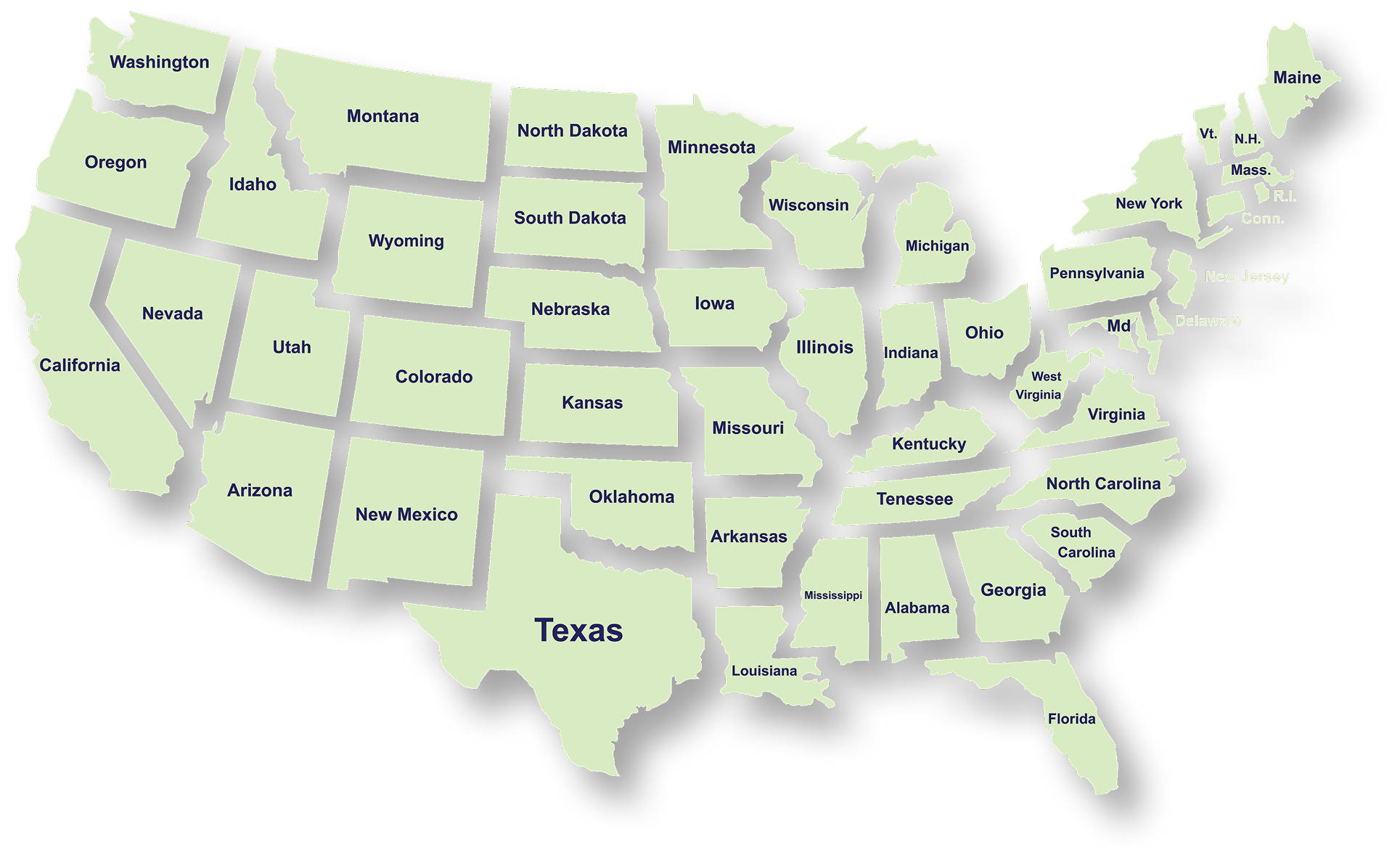
Serving Businesses & Individuals Across USA

We handle accounting, tax filing, and planning with defined timelines and accurate reporting for businesses and individuals across all states.

Frequently Asked Questions

What services does NR CPAs & Business Advisors provide?
What is tax planning and why is it important for businesses?
How can a Virtual CFO help my business?
When should a business consider IRS tax resolution services?
What financial statements does a business typically need?
How can startup advisory services help new businesses?
What is strategic business planning?
What is a Virtual Family Office and who can benefit from it?