Learning Center for Tax and Financial Insights

Stay updated with clear, actionable articles on tax rules, deadlines, deductions, and financial decisions that impact individuals and businesses.

No items found.

February 2021 Individual Due Dates

February 1 - Tax AppointmentIf you don’t already have an appointment scheduled with this office, you should call to make an appointment that is convenient for you. February 1 - File 2020 Individual Return to Avoid Penalty for Not Making 4th Quarter Estimated PaymentIf you file your prior year’s individual income tax return and pay any tax due by this date, you need not make the 4th Quarter Estimated Tax Payment that was otherwise due in January.February 1 - Individuals Who Must Make Estimated Tax Payments If you didn't pay your last installment of estimated tax by January 15, you may choose (but aren't required) to file your income tax return (Form 1040 or Form 1040-SR) for 2020 by February 1. Filing your return and paying any tax due by February 1 prevents any penalty for late payment of the last installment. If you can't file and pay your tax by February 1, file and pay your tax by April 15.

Explore More
No items found.

February 2021 Business Due Dates

February 1 - 1099-NECs Due to Service Providers & the IRSIf you are a business or rental property owner and paid $600 or more to individuals (other than employees) as nonemployee compensation during 2020, you are required to provide Form 1099-NEC to those workers by February 1. “Nonemployee compensation” can mean payments for services performed for your business or rental by an individual who is not your employee, commissions, professional fees and materials, prizes and awards for services provided, fish purchases for cash, and payments for an oil and gas working interest. In order to avoid a penalty, copies of the 1099-NECs also need to be sent to the IRS by February 1, 2021. The 1099-NECs must be submitted on optically scannable (OCR) forms. This firm prepares 1099s in OCR format for submission to the IRS with the 1096 submittal form. This service provides both recipient and file copies for your records. A business or individual who is required to file 250 or more information returns (i.e., 1099s among others) must file those forms electronically. Please call this office for preparation assistance. February 1 - Form 1098 and Other 1099s Due to RecipientsForm 1098 (Mortgage Interest Statement) and Forms 1099, including 1099-NEC (see above) are due to recipients by February 1. The IRS’ copy, other than for 1099-NECs, is not due until March 1, 2021, or March 31, 2021 if electronically filed. These 1099s may be reporting the following types of income: Dividends and other corporate distributions Interest Rent Royalties Payments of Indian gaming profits to tribal members Profit-sharing distributions Retirement plan distributions Original issue discount Prizes and awards Medical and health care payments Debt cancellation (treated as payment to debtor) February 1 - Employers - W-2s Due to All Employees & the GovernmentEMPLOYEE’S COPY: All employers need to give copies of the W-2 form for 2020 to their employees. If an employee agreed to receive their W-2 form electronically, post it on a website and notify the employee of the posting. GOVERNMENT’S COPY: W-2 Copy A and Transmittal Form W-3, whether filed electronically or by paper, are due January 31 to the Social Security Administration.February 1 - File Form 940 - Federal Unemployment TaxFile Form 940 (or 940-EZ) for 2020. If your undeposited tax is $500 or less, you can either pay it with your return or deposit it. If it is more than $500, you must deposit it. However, if you deposited the tax for the year in full and on time, you have until February 10 to file the return.February 1 - File Form 941 and Deposit Any Undeposited TaxFile Form 941 for the fourth quarter of 2020. Deposit any undeposited Social Security, Medicare and withheld income tax. (If your tax liability is less than $2,500, you can pay it in full with a timely filed return.) If you deposited the tax for the quarter in full and on time, you have until February 10 to file the return. February 1 - File Form 943All farm employers should file Form 943 to report Social Security, Medicare taxes and withheld income tax for 2020. Deposit any undeposited tax. (If your tax liability is less than $2,500, you can pay it in full with a timely filed return.) If you deposited the tax for the year in full and on time, you have until February 10 to file the return.

Explore More
No items found.

Video: COVID Tax Relief Act Updates

December’s COVID Tax Relief Act provided more than extended unemployment relief and stimulus payments. See a summary of the benefits and if any of them applies to you. .embed-container { position: relative; padding-bottom: 56.25%; height: 0; overflow: hidden; max-width: 100%; } .embed-container iframe, .embed-container object, .embed-container embed { position: absolute; top: 0; left: 0; width: 100%; height: 100%; }

Explore More
No items found.

Should You Charge Late Fees? QuickBooks Can Help

Have your customers been submitting payments later than usual these last several months? It wouldn’t be surprising. Many businesses are struggling to pay bills these days. Still, you need to get paid – and on time. Tardy receivables have a negative impact on your own cash flow. We’ve discussed ways to encourage prompt payment in past columns. For example, you can start accepting credit/debit cards and direct bank transfers, make sure invoices go out immediately after a sale, or offer a premium like a small one-time discount for paying on time 12 months in a row to name a few. You can also assess finance charges on remittances that come in after the due date. QuickBooks provides the tools to allow this. Setting It Up Before you start charging extra for late payments, you’ll need to do some setup work in QuickBooks. Open the Edit menu and select Preferences, then Finance Charge. Click the Company Preferences tab. You’ll see a window like this: You can set your own preferences for assessing finance charges in QuickBooks. You’ll have to answer these questions and enter your responses in the window: What will your Annual Interest Rate (%) be? What will you set as a Minimum Finance Charge? Will you allow a Grace Period? This is the number of days given to your customers to make their payments after the due date before finance charges kick in. This is typically from 15-21 days. Where should captured finance charges go? In this example, the Finance Charge Account has been assigned to Other Income. Do you want to Assess finance charges on overdue finance charges? Some jurisdictions don’t allow you to charge interest on overdue interest charges. If you want to do this, check on your local lending laws - specifically state usury laws which may limit the amounts that can be charged. When will you start to Calculate charges? In this example, the due date is selected. So, QuickBooks will start to add finance charges 21 days after the stated due date. If you choose invoice/billed date, you’ll want to make your grace period longer. This can be rather a confusing concept. Contact us if you want a deeper explanation. Assessing Finance Charges

Explore More
No items found.

Beware: These Tax Return Red Flags Could Catch the Eye of the IRS

Tax time can be one of the most hated times of the year. Just preparing the forms is enough to be an irritant, and if you owe the government money there’s a good chance that you’re downright annoyed. But neither of those things compare to the feeling that accompanies an envelope bearing an IRS return address, alerting you to the fact that your taxes are about to be audited. The truth is that audits are relatively rare in the United States. As much as people fear them, the IRS reports that between 2010 and 2018 only 0.6% of individual tax returns resulted in an audit. That may make you feel better, but statistically speaking that still means that more than 250,000 taxpayers had to go through the process. In many cases the audit process could have been avoided had the taxpayers simply known what we’re about to spell out for you – that there are specific triggers that send up IRS red flags and frequently lead to an audit process. The red flags include: Disparities Between Information on Tax Forms and Reported Income Whether you’re a W-2 employee or self-employed, the IRS will compare the income information that you report on your tax forms with the W-2 and 1099 forms that are sent by those individuals and entities that have paid you. If the two don’t match, the IRS is going to want to know why. Disparities Between Business Income and Business Expenses Just as the IRS will respond when your tax form income and reported income don’t match, the same is true for businesses that report business expenses that don’t make sense. In some cases, they are looking for people who are trying to take business expense deductions for what is really a hobby rather than a business. Many times these disparities are the result of actual expenses incurred for which income went unreported. Though there is always the chance that the odd numbers are an accident, such as the result of duplication of employee and business expenses, that oversight can lead to the discomfort of an audit, so take the time to double and triple check before filing your tax forms. Outsized Charitable Contributions Our tax system awards charitable contributions with tax deductions, and though that has proven to be a powerful incentive for some, it has also served as a temptation. To counter this, the IRS has created an automated computer program that analyzes nearly every return to identify figures that seem outsized as compared to an individual’s income, as well as other factors that are commonly abused. The system assesses each return based on numerous factors and assigns a DIF, or Discriminate Function, score. If your return exceeds the IRS DIF score threshold, there’s a good chance you’re headed for an audit. Disparities Between Lifestyle Expenses and Reported Income As with other mismatches found on tax returns, the IRS is particularly sensitive to returns in which taxpayers take deductions for expenses reflective of a high income living and yet report income that is much more modest. Paying personal property taxes, real estate taxes and taking mortgage interest deductions for million-dollar lifestyles will raise a red flag if the income you’re reporting is not enough to support it. When You Happen to Hit Right on the Income to Expense Ratio You Need to Qualify for the Earned Income Credit To claim the Earned Income Credit — which can be as high as $6,660 for tax year 2020 — taxpayers’ income has to be below a certain level, and if you’re a business owner whose return includes a Schedule C to prove all offsetting expenses, there is a particular ratio that you need to achieve in order to qualify. In most cases a business will either be somewhere below the ratio or above the ratio: They’ll either qualify for a larger earned income credit or they won’t. If the number hits exactly at the level needed to qualify for the larger credit, the IRS is more likely to ask for a closer look to see if numbers on either side of the equation have been manipulated. Disproportionate Itemized Deductions If you qualify to itemize, then you’re entitled to take deductions for qualifying expenses. But in cases where itemized deductions seem disproportionately high, the IRS is likely to ask some questions. If the expenses are legitimate and you’re able to present documentation, you’ll be fine, but make sure that you hold onto all receipts, as there’s a good chance that you’ll be called in for an audit. One important thing to remember: You may have been able to deduct unreimbursed employee business expenses in the past, but that stopped being true for federal income taxes after tax year 2017. Some states, including California, still permit those deductions on state taxes, so make sure that you maintain receipts for those returns as well. Lapses in Reporting Cryptocurrency Transactions Bitcoin and other virtual currency transactions have led to plenty of tax return headaches, as in the last several years approximately 10,000 taxpayers have failed to report gains or losses on this innovative currency. To address the issue, the IRS has taken to sending taxpayers letters providing a chance to take part in a voluntary disclosure program. The agency is clearly on the watch for and acting upon this particular red flag. In addition, the IRS has added a question to the 1040: “Did you receive, sell, send, exchange, or otherwise acquire any financial interest in any virtual currency?” Of course, if you answer no and later it is determined you did, then you have committed perjury since you sign your return under penalty of perjury. Rental Property Expenses that Appear to be Inflated One of the most common reasons for tax returns to be flagged is rental expenses that appear to be inflated. Taxpayers who prepare their own returns and who report deductions for rental income on their Schedule E need to ensure that they fully understand that some deductions are allowed and some need to be capitalized over time, as not knowing which is which could lead to a return being flagged. There are also special and rather complicated rules associated with renting a vacation home, room rentals and short-term rentals. Two People Claiming the Same Dependent It is not at all uncommon for families that split custody of a dependent as a result of separation or divorce to alternate the years in which they claim a dependent, but if mistakes – or fraud - are detected and both are claiming the same individual, that will be sure to trigger an audit. Proving custody will require documentation, including school records and birth certificates. Not Understanding Which Filing Status to Use Though the head of household filing status is extremely useful, it can also be confusing and lead to mistakes when filling out status, and especially regarding how dependents are treated. Though the Tax Cuts and Jobs Act of 2017 was supposed to simplify the tax form process, in this particular area it made things even more complicated by introducing a new $500 credit for ‘qualifying relatives’, which is defined by certain tests that may make people not related to the taxpayer eligible as a dependent while not making the taxpayer eligible for the head of household filing status. Failure to Report Overseas Accounts Whether it generates taxable income or not, if you are a U.S. citizen or U.S. resident with interest in, authority over, or signature authority on foreign financial accounts that exceed $10,000 at any time during the calendar year, you are required to report them to the U.S. Treasury Department under the Bank Secrecy Act. The appropriate form to be filed is the Report of Foreign Bank and Financial Accounts, or FBAR. Failing to disclose these accounts can have significant repercussions and are likely to be discovered as a result of disclosure requirements placed on foreign financial institutions. In Case of Audit The goal of providing this information is to fend off the possibility of red flags ever being raised on your tax filing. However, if one of those envelopes with the IRS return address appears in your mailbox, contact us immediately.

Explore More
No items found.

4 Questions Business Owners Should Consider During the 2020 Tax Season

As if 2020 wasn’t challenging enough, this season’s tax-filing is going to be even more complicated than usual. Though the CARES Act and the Paycheck Protection Program were put into place to help small businesses, the old adage about “no such thing as a free lunch” is proving true once again as business owners sit down to gather their documents and realize just how big an impact the changes will make on what they can and can’t deduct, on payroll tax, and many other elements of their filing. We encourage you to speak with our office as soon as possible so that you can get some insights into the specific effect on you and your business. Start by asking these questions and go from there. 1. I took a Paycheck Protection Program loan. How will it impact my taxes? The PPP loans were attractive because they were forgivable if used for the intended purposes. Normally, under tax law, when debt is forgiven it becomes taxable income. However, by law the PPP loan forgiveness is also tax exempt, which means it is not taxable income. The IRS had taken the position that the business expenses paid for with the forgiven loan proceeds would not be deductible expenses for tax purposes. The passage of the COVID-Related Tax Relief Act in December 2020 has overridden the IRS’s interpretation in Rev Ruling 2020-27. Thus, the expenses are fully deductible even though the loan is forgiven. CAUTION: This may not be true for state tax purposes. 2. I deferred my payroll taxes. When are they due? As part of the CARES Act, employers struggling with making payroll were offered a life raft in the form of a deferral of the employer’s portion of their employees’ Social Security payroll taxes. The deferral applied to the 6.2% Social Security tax on wages paid for the period from March 27, 2020 to the end of the year. If you are one of the many businesses that chose to take advantage of the deferral, you will need to pay the first half of what’s owed by December 31, 2021 with the balance due one year later on December 31, 2022.

Explore More
No results found.
Thank you! Your submission has been received!
Oops! Something went wrong while submitting the form.

Want tax & accounting tips & insights?Sign up for our newsletter.

Thank you! Your submission has been received!
Oops! Something went wrong while submitting the form.

Why Work With Us?

We combine deep tax expertise, financial strategy, and practical business insight to help you manage complexity, stay compliant, and make confident financial decisions.
A dollar sign, representing financial advice or discussion at NR CPAs & Business Advisors.

Experienced CPA and Enrolled Agent Leadership

Guidance led by licensed professionals with deep expertise in tax strategy, compliance, and complex financial matters.
White bar chart with an upward arrow on green circular background representing growth or progress at NR CPAs &. Business Advisors

Support for Growing Businesses and Startups

We understand the financial challenges of growth stage businesses and provide structured guidance to support expansion.
A white hand holding a dollar symbol and ascending bar chart on a green circular background representing financial growth or investment at NR CPAs & Business Advisors..

Strategic Financial Advisory

Our team helps you evaluate financial decisions with greater clarity, supported by practical insights and long term planning.

Fractional CFO Support

Access experienced financial leadership without the commitment and cost of hiring a full time Chief Financial Officer.

Proactive Tax Planning Approach

We focus on identifying tax opportunities throughout the year rather than reacting only during filing season.

Clear and Reliable Financial Reporting

Accurate financial statements and reporting that help you better understand performance and make informed decisions.
White IRS building icon with pillars and a dollar sign above on a green circular background.

Professional IRS Representation

Experienced support in resolving IRS notices, disputes, and compliance matters while protecting your financial interests.

Personalized Client Focus

Every client receives thoughtful attention and tailored financial solutions based on their specific needs and business goals.
Financial matters often involve important decisions. Working with experienced advisors can help you approach them with greater clarity and confidence in your choices.

Need Help With Your Tax or Financial Decisions?

Discuss your situation with our advisors to get clear guidance on tax planning, IRS matters, and the financial decisions ahead.
Business consulting at NR CPAs & Business Advisors.

Request Your Consultation

Fill out the form to discuss your tax concerns, financial questions, or advisory needs with our team. We will review your details and respond shortly.

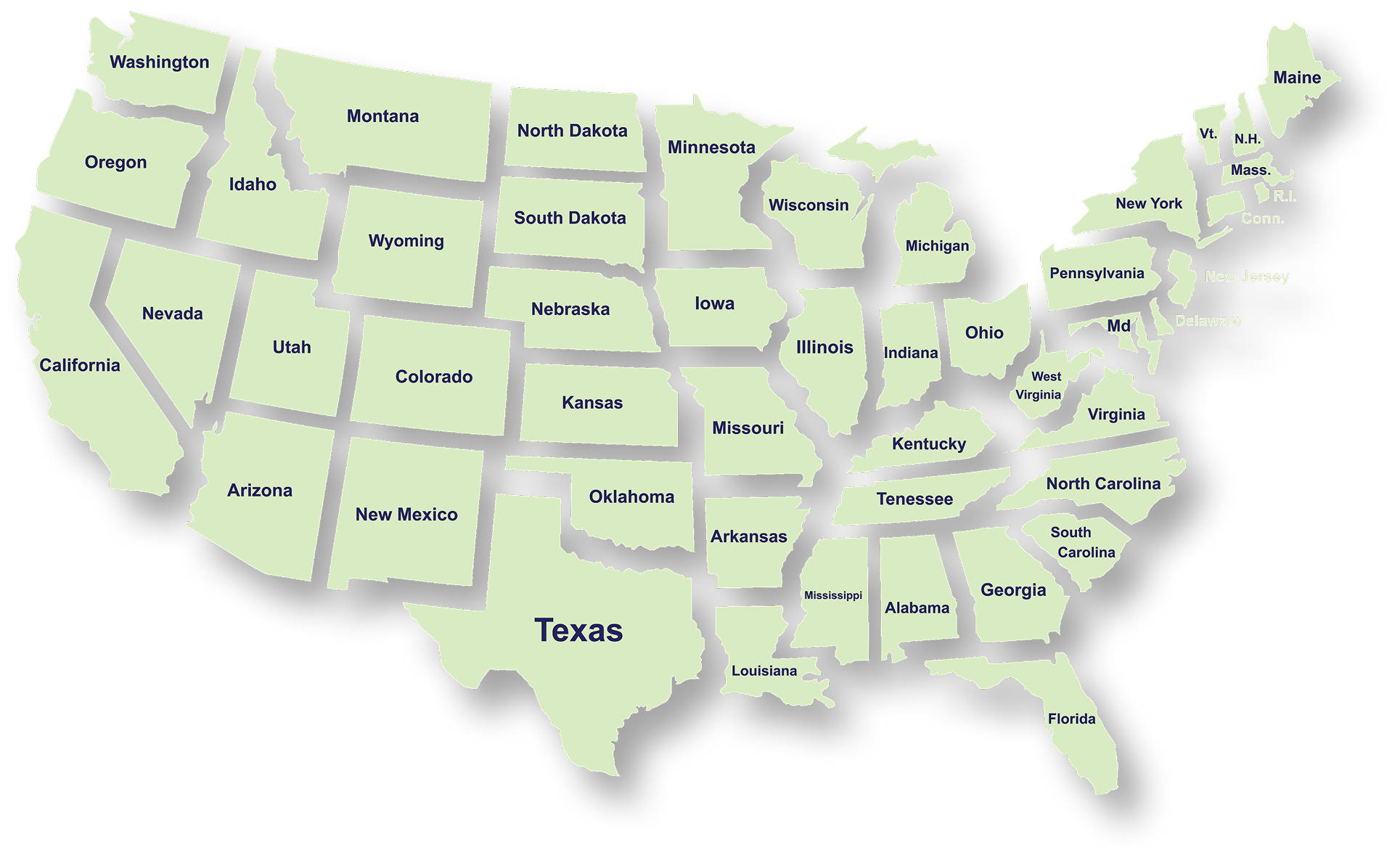
Serving Businesses & Individuals Across USA

We handle accounting, tax filing, and planning with defined timelines and accurate reporting for businesses and individuals across all states.

Frequently Asked Questions

What services does NR CPAs & Business Advisors provide?
What is tax planning and why is it important for businesses?
How can a Virtual CFO help my business?
When should a business consider IRS tax resolution services?
What financial statements does a business typically need?
How can startup advisory services help new businesses?
What is strategic business planning?
What is a Virtual Family Office and who can benefit from it?