Learning Center for Tax and Financial Insights

Stay updated with clear, actionable articles on tax rules, deadlines, deductions, and financial decisions that impact individuals and businesses.

No items found.

Thinking of Dumping Old Tax Records?

Article Highlights: General statute is 3 years Some states are longer Fraud, failure to file and other issues can extend the statute Records to dump Record to Keep Longer Tired of having all those old tax records taking up drawer or closet space and collecting dust. Want to dump as much as you can? People often ask how long records must be kept and the amount of time IRS has to audit a return after it is filed. How long to keep the records depends on the circumstances! In most cases, the federal statute of limitations can be used to help you determine how long to keep records. With certain exceptions, the statute for assessing additional tax is 3 years from the return due date or the date the return was filed, whichever is later. However, the statute of limitations for many states is one year longer than the federal limitation. The reason for this is that the IRS provides state taxing authorities with federal audit results. The extra time on the state statute gives states adequate time to assess tax based on any federal tax adjustments. In addition to lengthened state statutes clouding the recordkeeping issue, the federal 3-year rule has a number of exceptions: The assessment period is extended to 6 years instead of 3 years if a taxpayer omits from gross income an amount that is more than 25 percent of the income reported on a tax return. The IRS can assess additional tax with no time limit if a taxpayer: (a) doesn’t file a return; (b) files a false or fraudulent return in order to evade tax; or (c) deliberately tries to evade tax in any other manner. The IRS gets an unlimited time to assess additional tax when a taxpayer files an unsigned return. If no exception applies to you, for federal purposes, you can probably discard most of your tax records that are more than 3 years old; add a year or so to that if you live in a state with a longer statute. Examples: Susan filed her 2016 tax return before the due date of April 17, 2017 (the 15th fell on weekend). She will be able to safely dispose of most of her records after April 17, 2020. On the other hand, Don filed his 2016 return on June 1, 2017. He needs to keep his records at least until June 1, 2020. In both cases, the taxpayers may opt to keep their records a year or two longer if their states have a statute of limitations longer than 3 years. Important note: Even if you discard backup records, never throw away your file copy of any tax return (including W-2s). Often the return itself provides data that can be used in future tax return calculations or to prove amounts related to property transactions, social security benefits, etc. You should also keep certain records for longer than 3 years. These records include: Stock acquisition data. If you own stock in a corporation, keep the purchase records for at least 4 years after the year you sell the stock. This data will be needed in order to prove the amount of profit (or loss) you had on the sale. Stock and mutual fund statements where you reinvest dividends. Many taxpayers use the dividends they receive from a stock or mutual fund to buy more shares of the same stock or fund. The reinvested amounts add to basis in the property and reduce gain when it is finally sold. Keep statements at least 4 years after final sale. Tangible property purchase and improvement records. Keep records of home, investment, rental property, or business property acquisitions AND related capital improvements for at least 4 years after the underlying property is sold.

Explore More
No items found.

IRS Extends the Opportunity to Defer Capital Gains

Article Highlights: Tax Benefits Investment Period Qualified Opportunity Zone Funds Qualified Opportunity Zones Deferral Period 10 Year Election As part of tax reform put into place a couple of years ago, individuals are able to defer both short- and long-term capital gains into what are referred to as Qualified Opportunity Zone Funds (QOFs). What is nice about this is that only the actual amount of gain needs to be invested into a QOF to avoid taxes on the gain for the sale year. The gains invested in a QOF are deferred until you cash out of the QOF investment or December 31, 2026, whichever occurs first. This includes the gain from the sale of all capital assets, such as stocks or bonds, property, rentals, land, and even partnership interests. Example: You sell 1,000 shares of stock that cost you $20 a share (a total cost of $20,000). You were very fortunate, and the stock had appreciated to $100 a share when you sold them, for a total sales price of $100,000 and a capital gain of $80,000. If you invest the $80,000 gain in a QOF within the required 180 days, the gain on the sale and the tax on the gain are postponed. Example: Another example would be if you had inherited vacant land several years ago, and the fair market value of the land at the time you inherited it was $50,000. This year, a grocery chain wants to build a grocery store on the land and purchases it from you for $300,000. As a result of the sale, you have a gain of $250,000 ($300,000 - $50,000). If you invest that $250,000 gain in a QOF within the required 180-day period, you can defer the gain and the tax on the sale. Investment Period Extended – Normally, to defer the taxable gain into a QOF, the profit must be reinvested into a QOF within 180 days of the sale date. Because of the business disruption caused by the COVID-19 pandemic, the IRS has provided relief for the 180-day investment period requirement. That relief gives those whose 180-day reinvestment period would have ended on or after April 1, 2020 and before December 31, 2020 until December 31, 2020 to invest that gain into a QOF. Qualified Opportunity Funds – A QOF is an investment vehicle organized as a corporation or partnership for the purpose of investing in qualified opportunity zone property acquired after December 31, 2017. The fund must hold at least 90% of its assets in a qualified opportunity zone property. Visit the IRS’s Opportunity Zones Frequently Asked Questions for more details related to QOFs.

Explore More
No items found.

Are You Paying Too Much Interest on Your Home Mortgage?

Article Highlights: Lower Mortgage Interest Rates Refinancing Limits on Loan Terms Limit on Home Mortgage Debt Refinance Calculator Interest rates are currently at an all-time low, and it may be time for you to consider refinancing your existing home mortgage to take advantage of these lower rates. Doing so may substantially reduce your monthly mortgage payments. As you know if you have been watching the ads, some lenders are offering rates as low as 2.75%. If you are thinking about refinancing your current home loan, consider the tax ramifications before making your decision, as the 2018 tax reform made some changes that may impact it. Home mortgage debt can consist of acquisition debt and equity debt. Acquisition debt is the debt you incur to purchase your home or make substantial improvements to the home. Equity debt is debt secured by the home that you use for other purposes not related to acquiring your home. Prior to 2018, homeowners could deduct the interest paid (up to $100,000 of equity debt) as an itemized deduction. However, with the passage of tax reform, the interest on home equity debt is no longer deductible. So, if you are considering refinancing for more than the current balance of your acquisition debt and won’t be spending the extra amount to make substantial improvements to your home, keep in mind that the interest you’ll pay on the refinanced debt may only be deductible on the portion of the loan that represents acquisition debt. There are other tax pitfalls as well. Prior to tax reform, acquisition debt could be refinanced for a longer term and the interest would continue to be tax deductible for the term of the refinanced loan. Under tax reform, that is no longer the case. Example: Your original acquisition debt loan was for 30 years. After 20 years, you refinance the original loan into a 15-year loan. Because the refinanced debt extends the overall combined term of the acquisition debt by 5 years, the interest on the debt is only deductible for the subsequent 10 years. In addition, if any of the refinanced debt was equity debt, the refinanced debt must be allocated between acquisition debt and equity debt, with only the interest on the acquisition portion being tax deductible. Of course, to the extent the additional refinanced debt was used to make a substantial home improvement, such as adding solar power, remodeling the kitchen, or adding a room, that portion of the refinanced debt will be acquisition debt and the interest will be deductible, except as noted next. One more potential tax trap related to refinancing is that tax reform reduced the maximum amount of acquisition debt from which the interest was deductible from $1 million on a taxpayer’s first and second homes to $750,000. The $1 million debt cap was grandfathered for acquisition debt loans in effect prior to tax reform, and those can still be refinanced for their current balance without being subject to the $750,000 limit. However, if a grandfathered loan is refinanced for more than the current balance of the loan, the new $750,000 acquisition debt limit could come into play.

Explore More
No items found.

Video: Watch Out for Tax Penalties

Most taxpayers don’t intentionally incur tax penalties, but many who are penalized are simply not aware of the penalties or the possible impact on their wallets. Watch this video to look at some of the more commonly encountered penalties and how they may be avoided. .embed-container { position: relative; padding-bottom: 56.25%; height: 0; overflow: hidden; max-width: 100%; } .embed-container iframe, .embed-container object, .embed-container embed { position: absolute; top: 0; left: 0; width: 100%; height: 100%; }

Explore More
No items found.

Is the Temporary Deferral of Employee Payroll Tax Worth It?

Article Highlights Withholding of Social Security Tax Deferred IRS Guidance Employer Responsibility Unresolved Issues President Trump issued a Presidential Memorandum on August 8, 2020, that directs the Treasury Secretary to use his authority to defer the withholding, deposit and payment of employees’ portions of Social Security taxes from September 1 through December 31, 2020. The goal is to put more money in the pockets of workers during the COVID-19 pandemic emergency. The deferral applies to the 6.2% tax on wages or compensation paid for a bi-weekly pay period of less than $4,000 or the equivalent threshold amount for other pay periods. In other words, employees with annual wages up to $104,000 are generally eligible for the deferral. Just a few days before the start of the deferral period, the IRS has issued guidance explaining that the due date for withholding and paying Social Security taxes has been postponed; they are now due between January 1, 2021 and April 30, 2021. This means that Social Security taxes not withheld in the last 4 months of 2020 are to be ratably withheld from employees’ wages during the first 4 months of 2021, along with the required withholding on the 2021 wages. So, deferred withholding will increase employees’ take-home pay in September through December of this year, but their winter and early spring 2021 paychecks will be smaller because the Social Security tax withholding will be twice the usual amount. For example: An employee (who lives in a state without income tax) is paid weekly; his wages in 2020 are $1,000 per week. Normally, $62.00 in Social Security (6.2%), $14.50 in Medicare (1.45%) and $120 in federal income taxes are withheld from his wages by the employer, who adds $76.50 (the employer’s matching amount for Social Security and Medicare tax) before paying the withheld amount to the government. Thus, the employee’s take-home pay is $803.50. Under the deferral arrangement, nothing would be withheld for the Social Security tax, so the employee’s take-home pay for the week would go up by $62.00 to $865.50. The amount transmitted to the government would be $62.00 less per week. Fast forward to 2021: The employee’s wages are still $1,000, and for as many pay periods in 2020 as the deferral occurred, the Social Security tax withholding in 2021 will be $124, made up of the deferred 2020 withholding and the 2021 withholding. For these pay periods, the take-home pay will be $741.50.

Explore More
No items found.

If You Are Facing Foreclosure, Here Are Tax Issues You Will Confront

Article Highlights: Mortgage Forbearance Fannie Mae and Freddie Mac Penalty Free Pension Plan Withdrawals Cancellation of Debt Income As part of the CARES Act, Congress provided temporary relief for homeowners with federally backed mortgages who were financially impacted by COVID-19. For those unable to keep up with their home mortgage payments, the relief provides mortgage forbearance and a moratorium against foreclosures through August 31, 2020. As related to mortgages, the term “forbearance” means an agreement between a lender and borrower to delay foreclosure while giving the borrower time to catch up on overdue mortgage payments. As this pandemic continues to wreak havoc on people’s finances, the Federal Housing Finance Agency said that Fannie Mae and Freddie Mac will extend foreclosure moratoriums to December 31, 2020 and perhaps longer. If, because of the pandemic, you cannot make your payments and have not already done so, you should contact your lender to request forbearance for your loan payments. Your lender may allow temporarily lower mortgage payments or pause payments altogether, helping you deal with the current financial hardship. Along with your financial hardship, you probably should consider the potential tax and financial ramifications. Whether the forbearance reduces or pauses your payments, during that time, your home mortgage interest—the largest tax deduction for most—will be reduced. However, that may not make any difference if your income has been substantially reduced. Although most financial gurus advise not tapping your retirement funds for non-retirement purposes, the CARES Act did eliminate the penalties on up to $100,000 of withdrawals from IRAs and qualified plans, and allows the tax on the withdrawals to be spread over a 3-year period. In addition, the funds can be recontributed within the 3-year period. These funds could be used to make mortgage payments; but of course, you may not want to do that if the home will ultimately go into foreclosure. To be eligible for the special provisions of these distributions, you, your spouse or dependent must have been diagnosed with the virus SARS-CoV-2 or with coronavirus disease 2019 (COVID-19) by a test approved by the Centers for Disease Control and Prevention or have experienced adverse financial consequences as a result of the coronavirus, including:

Explore More
No results found.
Thank you! Your submission has been received!
Oops! Something went wrong while submitting the form.

Want tax & accounting tips & insights?Sign up for our newsletter.

Thank you! Your submission has been received!
Oops! Something went wrong while submitting the form.

Why Work With Us?

We combine deep tax expertise, financial strategy, and practical business insight to help you manage complexity, stay compliant, and make confident financial decisions.
A dollar sign, representing financial advice or discussion at NR CPAs & Business Advisors.

Experienced CPA and Enrolled Agent Leadership

Guidance led by licensed professionals with deep expertise in tax strategy, compliance, and complex financial matters.
White bar chart with an upward arrow on green circular background representing growth or progress at NR CPAs &. Business Advisors

Support for Growing Businesses and Startups

We understand the financial challenges of growth stage businesses and provide structured guidance to support expansion.
A white hand holding a dollar symbol and ascending bar chart on a green circular background representing financial growth or investment at NR CPAs & Business Advisors..

Strategic Financial Advisory

Our team helps you evaluate financial decisions with greater clarity, supported by practical insights and long term planning.

Fractional CFO Support

Access experienced financial leadership without the commitment and cost of hiring a full time Chief Financial Officer.

Proactive Tax Planning Approach

We focus on identifying tax opportunities throughout the year rather than reacting only during filing season.

Clear and Reliable Financial Reporting

Accurate financial statements and reporting that help you better understand performance and make informed decisions.
White IRS building icon with pillars and a dollar sign above on a green circular background.

Professional IRS Representation

Experienced support in resolving IRS notices, disputes, and compliance matters while protecting your financial interests.

Personalized Client Focus

Every client receives thoughtful attention and tailored financial solutions based on their specific needs and business goals.
Financial matters often involve important decisions. Working with experienced advisors can help you approach them with greater clarity and confidence in your choices.

Need Help With Your Tax or Financial Decisions?

Discuss your situation with our advisors to get clear guidance on tax planning, IRS matters, and the financial decisions ahead.
Business consulting at NR CPAs & Business Advisors.

Request Your Consultation

Fill out the form to discuss your tax concerns, financial questions, or advisory needs with our team. We will review your details and respond shortly.

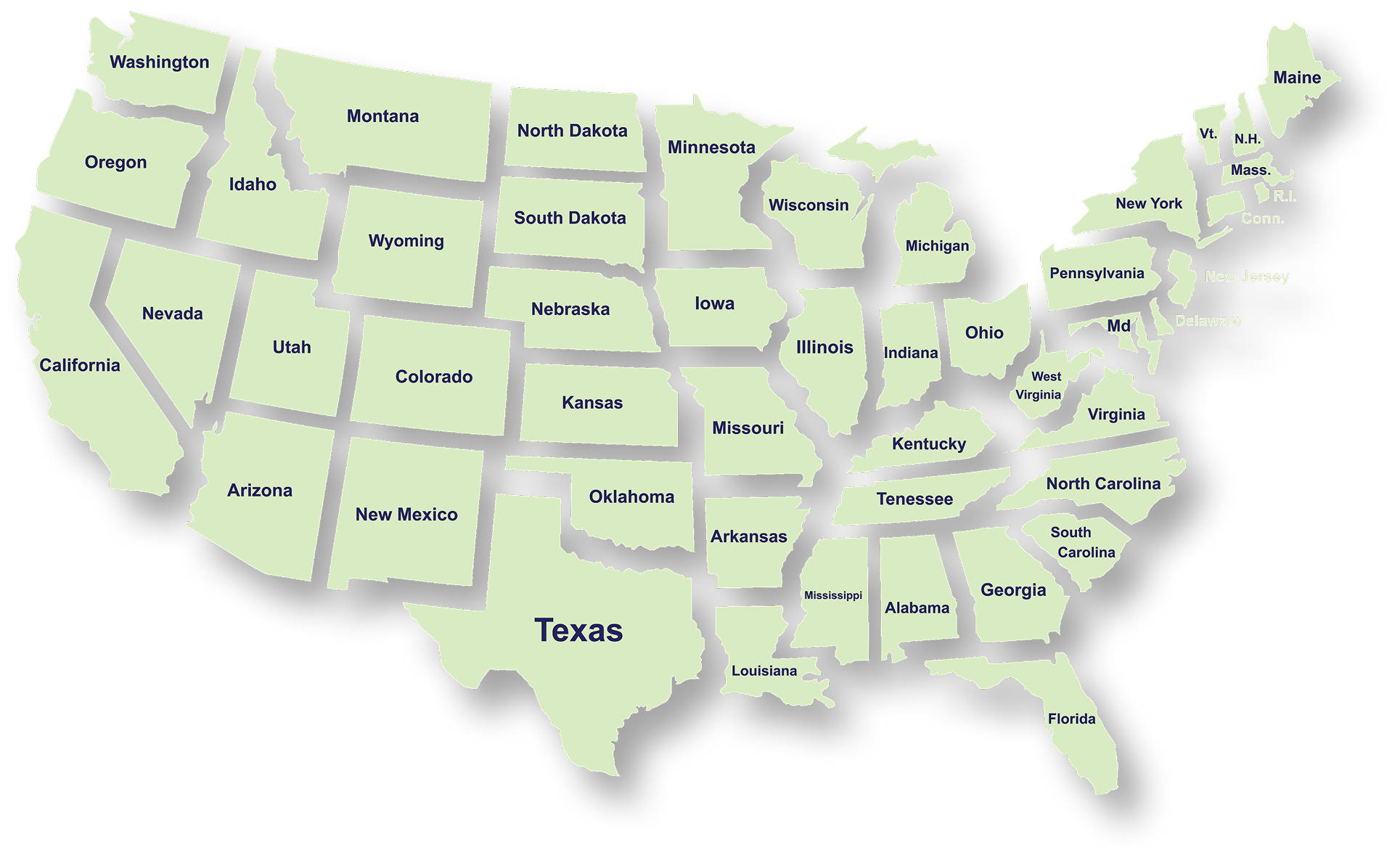
Serving Businesses & Individuals Across USA

We handle accounting, tax filing, and planning with defined timelines and accurate reporting for businesses and individuals across all states.

Frequently Asked Questions

What services does NR CPAs & Business Advisors provide?
What is tax planning and why is it important for businesses?
How can a Virtual CFO help my business?
When should a business consider IRS tax resolution services?
What financial statements does a business typically need?
How can startup advisory services help new businesses?
What is strategic business planning?
What is a Virtual Family Office and who can benefit from it?