Learning Center for Tax and Financial Insights

Stay updated with clear, actionable articles on tax rules, deadlines, deductions, and financial decisions that impact individuals and businesses.

No items found.

Individuals Have a New Opportunity to Receive $500 Economic Impact Payments for Their Children

Article Highlights: $500 Per Child Stimulus Payment Non-Filer Tool Those Who Have Already Used the Non-Filer Tool Those Who Haven’t Used Non-Filer Tool How Payment Will be Made Get My Payment Tool Non-Filers The Internal Revenue Service has announced it will reopen the registration period for federal beneficiaries with children who didn't receive a $500 per child Economic Impact (stimulus) Payment earlier this year. When to Apply - The IRS urges certain federal benefit recipients to use the IRS.gov Non-Filers tool between August 15 and September 30 to enter information on their qualifying children to receive the supplemental $500 payments. Who Should Register - Those eligible to provide this information include people with qualifying children who receive Social Security retirement, survivor or disability benefits; Supplemental Security Income (SSI); Railroad Retirement benefits; and Veterans Affairs Compensation and Pension (C&P) benefits and did not file a tax return for 2018 or 2019. The IRS anticipates the catch-up payments, equal to $500 per eligible child, will be issued by mid-October. Already Used the Non-Filer Tool? - For those Social Security, SSI, Department of Veterans Affairs and Railroad Retirement Board beneficiaries who have already used the Non-Filers tool to provide information on their children, and who haven’t yet received the $500-per-child payment, no further action is needed. The IRS will automatically make a payment in October. Haven’t Used the Non-Filer Tool? - For those who received Social Security, SSI, RRB or VA benefits and have not used the Non-Filers tool to provide information on their child or children, they should register online by Sept. 30 using the Non-Filers: Enter Payment Info Here tool, available exclusively on IRS.gov. However, anyone who filed or plans to file either a 2018 or 2019 tax return should file the tax return and not use this tool.

Explore More
No items found.

Wealth Transition and Succession Planning: Best Practices for Businesses During COVID-19

Regardless of the type of business you're running, it's safe to say that you've likely already been impacted by the ongoing COVID-19 pandemic that is making its way across the globe. With no complete end to the situation in sight, many have begun to try to settle into whatever this "new normal" actually is. They're resuming their regular activities (at least as much as possible) and are once again attempting to continue to follow the path that they set for themselves and their organizations at the beginning of the year. This, of course, presents its own fair share of challenges. Once you get your doors opened back up again, you may start to think about other important events down the line: valuations and appraisals, risk assessments, and succession planning. Thanks in no small part due to COVID-19, many private enterprises and even family-owned businesses have been forced to dramatically rethink their points of view on these and other important wealth transition and succession planning topics. Not only that, but when you consider that roughly $68 trillion is set to be passed down from Baby Boomers to their beneficiaries over the next ten years - an unprecedented transfer of wealth - it's clear that these are issues that must be assessed sooner rather than later. Business Valuations in a COVID World One of the more unfortunate impacts that COVID-19 has had in the last few months involves a decrease in small business values across the board. The fact that both actual and expected revenues and earnings have likely decreased for many organizations, coupled with an increase in interest-bearing debt and liquidity issues in the market at large, all have a lot to do with this issue. At the same time, it is entirely possible to mitigate risk to that end by keeping a few key things in mind. First and foremost, focus your attention on cash flows, the cost of capital, and growth as much as possible. One of the most critical considerations for a proper business valuation in these times involves figuring out what, exactly, a recovery from COVID-19 will look like for your organization. Obviously, certain industries have bounced back faster than others. Likewise, there are certain things that we just cannot know right now – like when a vaccine will be available and what effect that will have on the world. But you can focus on a few key areas – like whether you will experience a full recovery or only a partial recovery, and how long that impact will last – to make better determinations about projected cash flow and other growth-related factors. On the plus side, all of this represents a unique opportunity for many people to take advantage of low small business valuations to minimize things like estate and gift taxes. Lower business valuations allow business owners like yourself to transfer a greater portion of your business assets and reduce your taxable estate. So, from that perspective, you'll be able to gift assets against your lifetime exemption that would have previously been considered a taxable event had COVID-19 not occurred at all. Mitigating Risk and Protecting Your Legacy In general, you need to remember what the major goals of wealth transition and succession planning actually are: you're attempting to preserve as much of your wealth AND your business as possible. It's about making a plan that you can follow over time, yes - but it's also about being flexible enough to evolve that plan as conditions can (and likely will) change. Case in point: COVID-19's impact on the supply chain. Even if your small business isn't being directly impacted right now to the same degree as others, the same might not be true of your supply chain partners or even your largest customers. These could absolutely have a considerable impact on your own operations, and if your organization is particularly vulnerable to these types of issues, you need to start thinking about ways to mitigate them as soon as you can. Likewise, you may be one of the lucky few businesses that wasn't actually negatively impacted by COVID-19 at all. Some industries are absolutely thriving right now – with manufacturers of personal safety gear and even a lot of food and beverage manufacturers being among them. If all of this describes your situation, it's likely that you've seen a short-term increase in sales and, in all likelihood, profitability. How will this impact the future of your organization? Is this what the "new normal" looks like for you, or will you eventually return to pre-COVID levels in terms of sales and profitability? Do you have a way to determine this right now, or is time going to have to tell the story? These are all critical questions that you need to try to answer to make the best possible decisions in terms of succession planning. In the end, understand that wealth transition and succession planning were always complicated processes, and COVID-19 has not done anyone any favors. No matter what, you need to recognize that this is an inherently specific process: so much is impacted by your own unique circumstances and the facts surrounding your organization. Likewise, your end goals will play an important role in the decisions you make, along with how they may have changed in the last few months. However, if you're able to keep these core best practices in mind and look at things through this new pandemic lens, you'll be able to create the right plan for your objectives with as few of the potential downsides as possible.

Explore More
No items found.

What Are the Tax Plans of the Major Parties' Presidential Candidates?

Article Highlights: Tax Issues Current Law Trump Proposals Biden Proposals As the November elections approach, you might want to know what the two front-running presidential candidates’ tax plans for the future are. The following is an overview of their positions, at least what is known now. However, the political and economic landscapes can change, and there is no assurance these plans won’t be revised or that they will have eventual Congressional backing. However, the information may be helpful as you look toward future tax planning. (Click the image to increase size)

Explore More
No items found.

What You Need to Know About Health Savings Accounts

Article Highlights: Medical Savings Account Retirement Account High-Deductible Plan Eligible Individuals Monetary Qualification for an HSA Qualification Chart Maximum Contributions Establishing an HSA Qualified Medical Expenses The Health Savings Account (HSA) is one of the most misunderstood and underused benefits in the Internal Revenue Code. Congress created HSAs as a way for individuals with high-deductible health plans (HDHPs) to save for medical expenses that are not covered by insurance due to the high-deductible provisions of their insurance coverage. HSA as a Retirement Vehicle – Although the tax code refers to these plans as “health” savings accounts, an HSA can act as more than just a vehicle to pay medical expenses; it can also serve as a retirement account. For some taxpayers who have maxed out their retirement plan options, an HSA provides another resource for retirement savings—one that isn’t limited by income restrictions in the way that IRA contributions are. Since there is no requirement that the funds be used to pay medical expenses, a taxpayer can pay medical expenses with other funds, allowing the HSA to grow (through account earnings and further tax-deductible contributions) until retirement. In addition, should the need arise, the taxpayer can still take tax-free distributions from the HSA to pay medical expenses. Unlike traditional IRAs, no minimum distributions are required from HSAs at any specific age. Withdrawals from an HSA that aren’t used for medical expenses are taxable and subject to a 20% penalty, with one exception: an individual age 65 or older will pay income tax on non-medical related distributions from their HSA but won’t owe a penalty for using the funds for other than medical expenses. Example: Henry, age 70, has an HSA account from which he withdraws $10,000 during the year. He also has unreimbursed medical expenses of $4,000. Of his $10,000 withdrawal, $6,000 ($10,000 – $4,000) is added to Henry’s income for the year, and the other $4,000 is both tax- and penalty-free. If Henry had been 64 years old or younger, he’d be taxed on the $6,000 and pay a penalty of $1,200 (20% of $6,000). Eligible Individual – To be eligible for an HSA in a given month, an individual: must be covered under an HDHP on the first day of the month; must NOT also be covered by any other health plan (although there are some exceptions); must NOT be entitled to Medicare benefits (i.e., generally must be younger than age 65); and must NOT be claimed as a dependent on someone else’s return. Any eligible individual—whether employed, unemployed or self-employed—can contribute to an HSA. Unlike with an IRA, there is no requirement that the individual have compensation, and there are no phase-out rules for high-income taxpayers. If an HSA is established by an employer, then the employee and/or the employer can contribute. Not just family members but any other person can make contributions to HSAs on behalf of eligible individuals. Both employer contributions and employee contributions made via the employer’s cafeteria plan are excluded from the employee’s gross income. Employees who make HSA contributions outside of their employers’ arrangements are eligible to take above-the-line deductions—that is, they don’t need to itemize deductions—for those contributions. The Monetary Qualifications for an HDHP: Minimum Annual Deductible Maximum Annual Out-Of-Pocket Expenses Coverage 2020 2021 2020 2021 Self-Only $1,400 $1,400 $6,900 $7,000 Family $2,800 $2,800 $13,800 $14,000

Explore More
No items found.

IRS Cancels Stimulus Checks Issued to Decedents

Article Highlights: Stimulus Payments to Deceased Individuals Stop Payments Being Made on Checks Already Issued IRS Authority to Deny Stimulus Payments to Deceased Individuals History of Stimulus Payments IRS Q&A Dealing with Deceased Individuals and the Return of the Payments According to the recently updated IRS FAQ page, the Treasury Dept. has cancelled outstanding Economic Impact Payment checks issued to recipients who may not be eligible, including those who may be deceased. Some sources indicate the Bureau of Fiscal Services, the agency issuing the stimulus checks, has stopped payment on uncashed checks and is even having those that have already been deposited into existing bank accounts reversed. Is this an overreach by the Treasury Department? The CARES Act, passed by Congress in March and the legislation that authorized the stimulus payments, says anyone alive in 2019 is entitled to a payment. Here is a little background on this issue. In late April in an interview with the Wall Street Journal, Treasury Secretary Mnuchin was quoted as saying that stimulus payments to deceased individuals should be returned. However, he provided no statutory authority requiring such payments to be returned. Nina Olson, the former longtime IRS Taxpayer Advocate and founder of the Center for Taxpayer Rights, has asked, “what is the legal reasoning for this?” In various publications she noted, as mentioned earlier, that the CARES Act doesn't say deceased people can’t receive stimulus checks and added that the hard stance may have come from the White House. There was a similar situation in 2008 during the world wide Great Recession when real estate values tanked. At that time Congress also authorized stimulus payments and payments were also issued to deceased individuals. Back then, there was no requirement for those payments to be repaid. Some of the later checks sent out this year were in an IRS envelope that stated that forgery of endorsements is a federal crime, etc., and had a check box “If recipient is deceased, check here and drop in mailbox.” According to the Treasury Inspector General for Tax Administration, as of May 21, 2020, IRS had issued more than 157 million Economic Impact Payments totaling more than $264 billion. Of those, less than 1.2 million payments (less than 1 percent) were issued to deceased individuals. As time has passed, the IRS has gotten more aggressive with their position that payments to deceased individual be returned, even though they have not quoted any statutory authority. The IRS Q&A has been updated to include the following:

Explore More
No items found.

Watch Out for Tax Penalties

Article Highlights: Underpayment of Estimated Tax and Withholding Penalty Required Minimum Distribution Penalty Late Filing Penalty Late Payment Penalty Negligence Penalty Fraud Penalty Dishonored Check Penalty Missing ID Number Penalty Early Withdrawal Penalty Failure to Report Tips Penalty Foreign Reporting Excessive Claim Penalty Frivolous Return Penalty Failure to File Information Returns Penalty Most taxpayers don’t intentionally incur tax penalties, but many who are penalized are simply not aware of the penalties or the possible impact on their wallets. As tax season approaches, let’s look at some of the more commonly encountered penalties and how they may be avoided. Underpayment of Estimated Taxes and Withholding Penalty – The United States income tax system is a pay-as-you-earn tax system, which means that taxpayers are required to pay their tax liability as they receive income during the year through withholding or by making estimated tax payments. If a taxpayer owes more than $1,000 when filing their return for the year, the IRS will assess the underpayment of estimated tax penalty, which is currently 3% of the underpayment. There are “safe harbor” payments that can protect you from this penalty, which include payments in the following amounts: 90% of the current year’s tax liability or 100% (110% for high-income taxpayers) of the prior year’s tax liability. Farmers and fishermen need only prepay 66-2/3% of the current liability or 100% of the prior year’s liability. Because of the COVID-19 pandemic, 2020 has been a horrific year for many individuals and businesses; their income has been severely reduced, if not eliminated, because of government-mandated shutdowns and social distancing. This large drop in income can have a huge impact on the necessity of estimated tax payments. Normally, estimated tax payments are made in four installments that are due by April 15, June 15, September 15 and January 15 of the subsequent year. For 2020, the April 15 and June 15 estimated payments were suspended until July 15. The 100% and 110% of the prior year’s tax liability are most likely not viable safe harbor amounts for 2020 estimated tax, and most taxpayers will have to rely on 90% of the current year’s tax liability. Please contact this office to see if you need to make payments and, if so, how much. Required Minimum Distribution (RMD) Penalty - To prevent an individual from investing in tax-deferred retirement plans, including traditional IRAs, but never withdrawing funds from the plans (which would mean the government wouldn’t ever collect taxes on the distribution), retirees must take an RMD each year after reaching the mandatory RMD age. The mandatory distribution age has recently changed from 70½ for years before 2020 to 72 in 2020 and later years. Failing to take the correct minimum distribution (also known as excess accumulation) results in a penalty of 50% of the difference of what should have been withdrawn and what was actually withdrawn. However, the IRS is very liberal in general and will abate the penalty in most situations. However, this penalty is not an issue in 2020, as RMD to be made during 2020 has been suspended as part of COVID-19 tax relief. Late Filing Penalty – If a return is filed after the due date, including extensions, a late filing penalty of 4.5% per month (maximum 22.5%) applies. The normal due date for returns is April 15 of the subsequent year. Because of COVID-19, the due date for 2019 returns was extended to July 15, 2020, and the penalty for filing a late 2019 1040 return does not begin until after July 15, 2020. If you have not filed your 2019 return and did not file an extension by July 15, 2020, you are encouraged to do so as soon as possible to minimize penalties. If a return is over 60 days late, the minimum penalty for failure to file is the lesser of $435 or 100% of the tax shown on the return. While the obvious way to avoid a late filing penalty is to file in a timely fashion, the IRS will consider abating the penalty if it can be proven that there was reasonable cause and no willful neglect. Late Paying Penalty – When the tax owed on a return is paid after the unextended due date of the tax return (July 15 for 2019 returns filed in 2020), the taxpayer is subject to a penalty of 1/2% per month (maximum 25%) on the unpaid balance. Taxpayers are frequently caught by this penalty when they need an extension to file their tax return; many fail to realize that the extension does not include an extension to pay. The only way to avoid or minimize this penalty is to have no or little balance due on the return when it is finally filed. The extension form includes a provision to pay the projected balance owed when filing the extension. Negligence – When underpayment is due to negligence on the part of the taxpayer or there are errors in tax valuations, a penalty of 20% of the tax underpayment is charged. This penalty is frequently encountered when the IRS adjusts a filed return due to unreported income or overstated deductions. Fraud – This penalty is 75% of the tax unpaid due to fraud. Dishonored Check

Explore More
No results found.
Thank you! Your submission has been received!
Oops! Something went wrong while submitting the form.

Want tax & accounting tips & insights?Sign up for our newsletter.

Thank you! Your submission has been received!
Oops! Something went wrong while submitting the form.

Why Work With Us?

We combine deep tax expertise, financial strategy, and practical business insight to help you manage complexity, stay compliant, and make confident financial decisions.
A dollar sign, representing financial advice or discussion at NR CPAs & Business Advisors.

Experienced CPA and Enrolled Agent Leadership

Guidance led by licensed professionals with deep expertise in tax strategy, compliance, and complex financial matters.
White bar chart with an upward arrow on green circular background representing growth or progress at NR CPAs &. Business Advisors

Support for Growing Businesses and Startups

We understand the financial challenges of growth stage businesses and provide structured guidance to support expansion.
A white hand holding a dollar symbol and ascending bar chart on a green circular background representing financial growth or investment at NR CPAs & Business Advisors..

Strategic Financial Advisory

Our team helps you evaluate financial decisions with greater clarity, supported by practical insights and long term planning.

Fractional CFO Support

Access experienced financial leadership without the commitment and cost of hiring a full time Chief Financial Officer.

Proactive Tax Planning Approach

We focus on identifying tax opportunities throughout the year rather than reacting only during filing season.

Clear and Reliable Financial Reporting

Accurate financial statements and reporting that help you better understand performance and make informed decisions.
White IRS building icon with pillars and a dollar sign above on a green circular background.

Professional IRS Representation

Experienced support in resolving IRS notices, disputes, and compliance matters while protecting your financial interests.

Personalized Client Focus

Every client receives thoughtful attention and tailored financial solutions based on their specific needs and business goals.
Financial matters often involve important decisions. Working with experienced advisors can help you approach them with greater clarity and confidence in your choices.

Need Help With Your Tax or Financial Decisions?

Discuss your situation with our advisors to get clear guidance on tax planning, IRS matters, and the financial decisions ahead.
Business consulting at NR CPAs & Business Advisors.

Request Your Consultation

Fill out the form to discuss your tax concerns, financial questions, or advisory needs with our team. We will review your details and respond shortly.

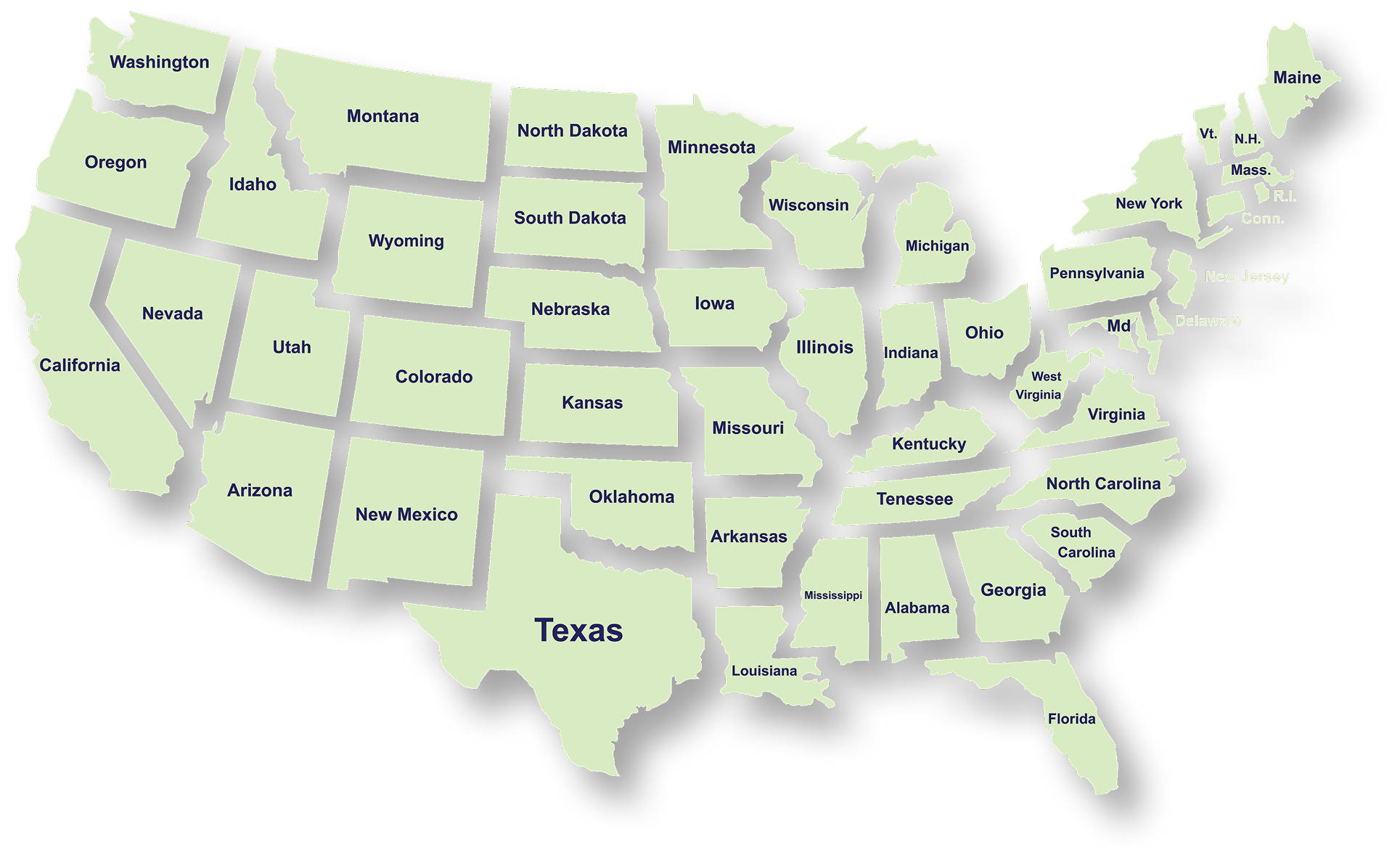
Serving Businesses & Individuals Across USA

We handle accounting, tax filing, and planning with defined timelines and accurate reporting for businesses and individuals across all states.

Frequently Asked Questions

What services does NR CPAs & Business Advisors provide?
What is tax planning and why is it important for businesses?
How can a Virtual CFO help my business?
When should a business consider IRS tax resolution services?
What financial statements does a business typically need?
How can startup advisory services help new businesses?
What is strategic business planning?
What is a Virtual Family Office and who can benefit from it?