Learning Center for Tax and Financial Insights

Stay updated with clear, actionable articles on tax rules, deadlines, deductions, and financial decisions that impact individuals and businesses.

No items found.

Loan Application Period for the Paycheck Protection Program Extended

Article Highlights: Loan Application Period Extended Paycheck Protection Program Qualifying Expenses Loan Forgiveness If you missed the opportunity to apply for a Paycheck Protection Program (PPP) loan before the program expired at the end of June, Congress extended the application period for a PPP loan through August 8, 2020. Although time is short, you still have time to apply.If you are unfamiliar with this program, Congress created the PPP as part of the Coronavirus Aid, Relief, and Economic Security Act (CARES Act) and authorized the use of the SBA’s small business lending program to provide forgivable loans of up to $10 million per qualifying business. The loans are to support small businesses in dealing with the economic hardships created by the coronavirus pandemic and primarily to assist them with continuing to pay employee salaries. Small businesses are those with 500 or fewer employees, including those filing Schedule Cs (self-employed, sole proprietorships, or independent contractors), as well as non-profits and veterans’ organizations.

Explore More
No items found.

If You are Receiving Medicaid Waiver Payments, You Should Read This

Article Highlights: What are Medicaid Waiver Payments? IRS Ruled Them to be Non-Taxable Taxpayer-Favorable Tax Court Case Tax Credits Amended Returns Medicaid waiver payments are a type of payment from a state to an individual to take care of another individual who would otherwise be institutionalized, saving the government the cost of the more expensive institutional care. Back in 2014, the IRS ruled that Medicaid waiver wages would be mandatorily excludable from gross income (not taxed) if the caregiver provided care in the caregiver’s home. This exclusion from taxable income applied regardless of whether the caregiver and the care recipient were related. Prior to this ruling, payments were taxable and treated as W-2 wages. As such, they were categorized as earned income, which qualified many lower-income individuals for the earned income tax credit (EITC) and, in some cases, for the additional child tax credit (ACTC). However, this change was a double-edged sword, providing tax-free income for some taxpayers but eliminating others’ ability to qualify for the EITC and ACTC, since the IRS had specified that the payments had to be excluded from gross income, thus eliminating the earned income needed to qualify for the credits.

Explore More
No items found.

IRS Provides Additional 2020 RMD Rollover Relief

Article Highlights: CARES Act Waiver of RMDs 60-Day Rollover Period Extension Further Rollover Relief RMDs in General Effect of Withholding on RMD Rollover One IRA Rollover per 12 Months Rule The CARES Act waived required minimum distributions (RMDs) from IRAs and employer plans such as 401(k)s for 2020. However, the CARES Act was not passed until March 27, 2020 and after many individuals had already taken their RMD for 2020. Some of these retirees would not have taken the distributions if they would have known about the waiver. That issue was originally alleviated when the federal government declared a coronavirus-related disaster that then enabled the IRS to extend numerous deadlines and due dates, including the rollover period for traditional IRAs and qualified employer plans such as 401(k)s. Accordingly, the IRS said that any 60-day rollover period that ended on or after April 1, 2020, and before July 15, 2020, was extended through July 15, 2020. This meant that distributions taken in January of 2020 weren’t covered by this extended rollover period. Normally, RMDs are not allowed to be rolled over, but because the CARES Act waives the requirement to take a 2020 distribution, these distributions are not treated as RMDs for 2020, but are considered distributions that are eligible to be rolled over. The IRS in Notice 2020-51 has now provided additional relief, including for those who took their RMD in January, by extending the normal 60-day rollover requirement and allowing individuals who took an RMD in 2020 to roll the RMD back into their IRA or retirement plan by no later than August 31, 2020. This means that if you took a distribution in 2020, you can roll it back (redeposit it) into the IRA or retirement plan and avoid being taxed on it in 2020, if you do so by August 31, 2020.

Explore More
No items found.

Don't Throw Away That Notice 1444

Article Highlights: Notice 1444 You May Qualify for Additional Credit on the 2020 Return Tax Records The IRS is mailing all recipients of Economic Impact Payments a Notice 1444 that provides information about the amount of their payment, how the payment was made and how to report any payment that wasn’t received. If you’ve already received your economic impact payment, you’ve probably already received this document too. This notice was issued from The White House and looks more like a letter than a traditional IRS notice, but the notice number is in the upper right of the heading, just below the date. For security reasons, the IRS mails this notice to each recipient’s last known address within 15 days after the payment goes out. Don’t discard this notice, as you may need it when your 2020 tax return is prepared. The economic impact payment is actually an advance payment of a refundable tax credit based upon your 2020 tax return. In order to get the money into people’s hands during the time of the greatest need, these payments generally were made based upon each individual’s 2019 return, or in some cases their 2018 return.

Explore More
No items found.

VIDEO: IRS Extended the Deadline to Return Your 2020 RMD

You have until 8/31/2020 to take advantage of the suspension of Required Minimum Distributions (RMDs) from retirement accounts. Learn more in this video. .embed-container { position: relative; padding-bottom: 56.25%; height: 0; overflow: hidden; max-width: 100%; } .embed-container iframe, .embed-container object, .embed-container embed { position: absolute; top: 0; left: 0; width: 100%; height: 100%; }

Explore More
No items found.

What President Trump's Executive Order Means for You

We are still waiting for the dust to settle on what President Trump’s executive orders mean for taxpayers and business owners. There is a lot of talk about legal challenges and how Congress may react. But here is a summary of what we know now. Temporary Payroll Tax Relief - The President has directed the Treasury Department to grant all employers the ability to defer payment of the employee portion of payroll taxes from September 1 to the end of 2020. This is limited to employees earning less than $100,000 per year. While this seems like a tax cut, since paychecks will be larger, this is actually only a deferral of taxes since they will still be owed at a later date. Unemployment Benefits - The $600 Federal unemployment benefit expired at the end of July. Congress has been debating different levels to extend this benefit. The President has allocated $400 a week of Federal funds for Americans currently out of work. The funds will be available through December 6 or until the Disaster Relief Fund is reduced by $25 billion. But, States are required to make up $100 of the $400 in extended benefits. Eviction and Foreclosure Hardships - President Trump has directed his administration to prevent residential evictions and foreclosures resulting from financial hardships caused by the COVID-19 pandemic. Specifically, the executive orders state that the administration will take all legal measures needed to prevent this activity. Health and Human Services (HHS) and CDC will consider measures to temporarily prohibit residential evictions for failure to pay rent due to COVID-19 hardships in order to prevent the further spread of the virus. Housing and Urban Development (HUD) will prioritize federal funds that can be used to provide financial assistance to struggling renters and homeowners. HUD will also work with its grantees to ensure that renters and homeowners are not forced out of their homes during the COVID pandemic.

Explore More
No results found.
Thank you! Your submission has been received!
Oops! Something went wrong while submitting the form.

Want tax & accounting tips & insights?Sign up for our newsletter.

Thank you! Your submission has been received!
Oops! Something went wrong while submitting the form.

Why Work With Us?

We combine deep tax expertise, financial strategy, and practical business insight to help you manage complexity, stay compliant, and make confident financial decisions.
A dollar sign, representing financial advice or discussion at NR CPAs & Business Advisors.

Experienced CPA and Enrolled Agent Leadership

Guidance led by licensed professionals with deep expertise in tax strategy, compliance, and complex financial matters.
White bar chart with an upward arrow on green circular background representing growth or progress at NR CPAs &. Business Advisors

Support for Growing Businesses and Startups

We understand the financial challenges of growth stage businesses and provide structured guidance to support expansion.
A white hand holding a dollar symbol and ascending bar chart on a green circular background representing financial growth or investment at NR CPAs & Business Advisors..

Strategic Financial Advisory

Our team helps you evaluate financial decisions with greater clarity, supported by practical insights and long term planning.

Fractional CFO Support

Access experienced financial leadership without the commitment and cost of hiring a full time Chief Financial Officer.

Proactive Tax Planning Approach

We focus on identifying tax opportunities throughout the year rather than reacting only during filing season.

Clear and Reliable Financial Reporting

Accurate financial statements and reporting that help you better understand performance and make informed decisions.
White IRS building icon with pillars and a dollar sign above on a green circular background.

Professional IRS Representation

Experienced support in resolving IRS notices, disputes, and compliance matters while protecting your financial interests.

Personalized Client Focus

Every client receives thoughtful attention and tailored financial solutions based on their specific needs and business goals.
Financial matters often involve important decisions. Working with experienced advisors can help you approach them with greater clarity and confidence in your choices.

Need Help With Your Tax or Financial Decisions?

Discuss your situation with our advisors to get clear guidance on tax planning, IRS matters, and the financial decisions ahead.
Business consulting at NR CPAs & Business Advisors.

Request Your Consultation

Fill out the form to discuss your tax concerns, financial questions, or advisory needs with our team. We will review your details and respond shortly.

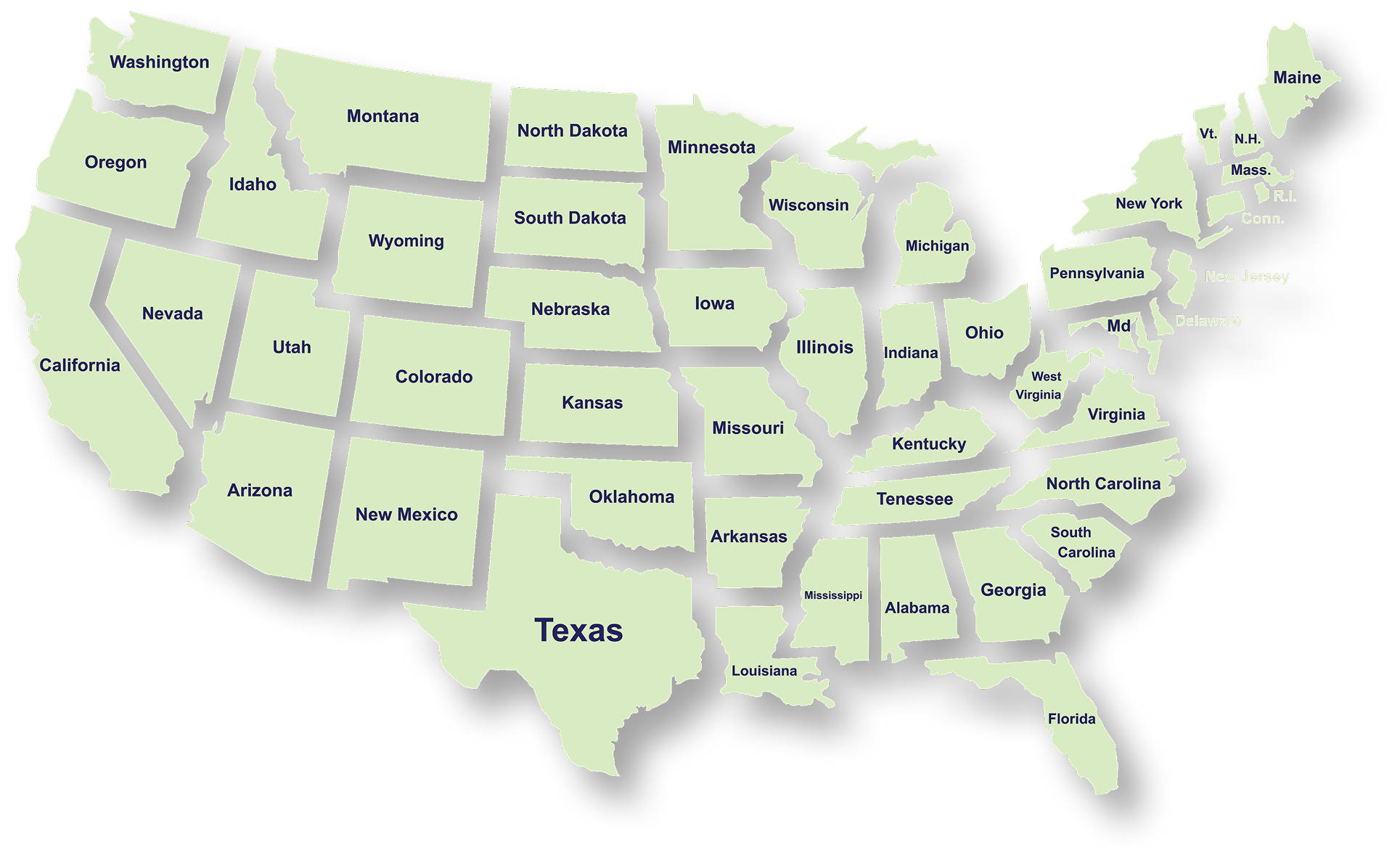
Serving Businesses & Individuals Across USA

We handle accounting, tax filing, and planning with defined timelines and accurate reporting for businesses and individuals across all states.

Frequently Asked Questions

What services does NR CPAs & Business Advisors provide?
What is tax planning and why is it important for businesses?
How can a Virtual CFO help my business?
When should a business consider IRS tax resolution services?
What financial statements does a business typically need?
How can startup advisory services help new businesses?
What is strategic business planning?
What is a Virtual Family Office and who can benefit from it?