Learning Center for Tax and Financial Insights

Stay updated with clear, actionable articles on tax rules, deadlines, deductions, and financial decisions that impact individuals and businesses.

No items found.

VIDEO: Shortchanging the IRS Can Lead to an Unpleasant Surprise

The consequence of cheating on your tax return can be much bigger than you thought, including substantial monetary penalties and the possibility of jail time for blatant cases. Watch the video to avoid making mistakes that can lead you to an IRS Audit. .embed-container { position: relative; padding-bottom: 56.25%; height: 0; overflow: hidden; max-width: 100%; } .embed-container iframe, .embed-container object, .embed-container embed { position: absolute; top: 0; left: 0; width: 100%; height: 100%; }

Explore More
No items found.

VIDEO: How to Make your PPP Loan Forgivable

Did you receive a Paycheck Protection Program (PPP) loan? If so, funds spent on qualified expenses don't have to be paid back. Learn more about what is considered "forgivable" in this video. .embed-container { position: relative; padding-bottom: 56.25%; height: 0; overflow: hidden; max-width: 100%; } .embed-container iframe, .embed-container object, .embed-container embed { position: absolute; top: 0; left: 0; width: 100%; height: 100%; }

Explore More
No items found.

How to Protect Yourself Against Coronavirus-Related Fraud

The global coronavirus pandemic has changed every single facet of our world – from the way we work to how we live our day-to-day lives – and we have been forced to quickly adjust to a new normal. Unfortunately, there are those out there who seek to take advantage of this turbulent time. The Internal Revenue Service and other government agencies have noted a rise in scams and other fraudulent activities surrounding the COVID-19 crisis. There are individuals and groups both in the United States and in countries across the world who are attempting to take advantage of unwitting taxpayers and business owners. Let's take a look at what you should look out for as you navigate the current environment. Economic Impact Payments While many Americans may have already received their economic impact payment (sometimes called stimulus checks), there are still some citizens awaiting their payments. Individuals should stay alert for phone calls, emails, or other methods of communication from those seeking their personal information related to the economic impact payments. Targeting Tax Refunds Taxpayers have experienced numerous scams and illegal actions which target intercepting a tax refund owed to a taxpayer, or in some cases, fraudulently creating tax returns with a taxpayers’ personal information. The scams are numerous and come in a variety of forms. One scheme involves filing a fraudulent tax return on behalf of an unsuspecting taxpayer. When the refund is deposited into the taxpayer’s bank account, the fraudster contacts the taxpayer impersonating an IRS representative. The fake IRS representative advises the taxpayer that the refund has been deposited in error and encourages them to purchase gift cards in order to restore the balance to the IRS. When the actual IRS representatives eventually discover the scam, the taxpayer is responsible for repaying the funds a second time. A second scam involves the scammer creating fraudulent tax returns using a taxpayer’s personal information. In this case, the fraudster uses their own deposit information as a way to intercept the refund. If you are expecting a tax refund or receive a deposit from the IRS that you do not recognize, you should reach out directly to the IRS to confirm your status or to receive instructions on next steps. Fake Charities and Investment Opportunities The IRS has advised that there are people setting up charities purported to be for the benefit of those impacted by the COVID-19 virus. In addition, there are individuals who are maintaining that they represent companies who are working on a vaccine to combat the virus. They offer to allow you to invest in their companies and receive a significant return on your investment once the vaccine is ready. What Should You Do? If you think that you may have been the victim of a COVID-19 related scam, you are encouraged to file a report with the appropriate government authorities. The National Center of Disaster Fraud has a complaint form on its website where you can voice your concerns. If you prefer to speak with someone, you can call their hotline number at 866-720-5721. The Treasury Inspector General for Tax Administration is available to receive complaints related to theft of your economic impact payment. Finally, if you are the subject of a phishing scam, where fraudsters are seeking to gain your personal information, you should alert the Internal Revenue Service at their phishing@irs.gov email address. It is important to stay vigilant against those seeking to steal your hard-earned money or personal information during this troubling time. If you have any questions about COVID-19 related fraudulent schemes, or you would like more information, please feel free to reach out to us to schedule an appointment.

Explore More
No items found.

Charity Volunteer Tax Breaks

Article Highlights: Away-from-home travel Lodging and meals Entertaining for charity Automobile travel Uniforms Substantiation requirements If you volunteered your time for a charity or governmental entity during the COVID-19 pandemic, you probably qualify for some tax breaks. These rules actually apply to all charity volunteers not just COVID-19 volunteers. Although no tax deduction is allowed for the value of services performed for a qualified charity or federal, state or local governmental agency, some deductions are permitted for out-of-pocket costs incurred while performing the services. The following are some examples: Away-from-home travel expenses while performing services for a charity, including out-of-pocket round-trip travel costs, taxi fares, and other costs of transportation between the airport or station and hotel, plus 100% of lodging and meals. These expenses are only deductible if there is no significant element of personal pleasure associated with the travel or if your services for a charity do not involve lobbying activities. The cost of entertaining others on behalf of a charity, such as wining and dining a potential large contributor (but the costs of your own entertainment and meals are not deductible). If you use your car or other vehicle while performing services for a charitable organization, you may deduct your actual unreimbursed expenses that are directly attributable to the services, such as gas and oil costs, or you may deduct a flat 14 cents per mile for the charitable use of your car. You may also deduct parking fees and tolls. You can deduct the cost of the uniform you wear when doing volunteer work for the charity, as long as the uniform has no general utility. The cost of cleaning the uniform can also be deducted. There are some misconceptions as to what constitutes a charitable deduction, and the following are frequently encountered issues: No deduction is allowed for the depreciation of a capital asset as a charitable deduction. This includes vehicles and computers. Example: Kathy volunteers as a member of the sheriff’s mounted search and rescue team. As part of volunteering, Kathy is required to provide a horse. Kathy is not allowed to deduct the cost of purchasing her horse or to depreciate the value of her horse. She can, however, deduct uniforms, travel, and other out-of-pocket expenses associated with the volunteer work. However, a taxpayer may deduct the cost of maintaining a personally owned asset to the extent that its use is related to providing services for a charity. Thus, for example, a taxpayer is allowed to deduct the fuel, maintenance, and repair costs (but not depreciation or the fair rental value) of piloting his or her plane in connection with volunteer activities for the Civil Air Patrol. Similarly, a taxpayer—such as Kathy in our example, who participated in a mounted posse that is a civilian reserve unit of the county sheriff’s office—could deduct the cost of maintaining a horse (shoeing and stabling). A taxpayer who buys an asset and uses it while performing volunteer services for a charity can’t deduct its cost if he or she retains ownership of it. That’s true even if the asset is used exclusively for charitable purposes. So, for example, this rule would knock out a deduction for COVID-19 personal protective equipment such as face coverings and gloves that an individual purchased and used while volunteering at a food bank if the volunteer retains these items after performing the volunteer work. But if that individual purchased and donated PPE to the county for use by medical personnel at a coronavirus testing site, the cost of the items would be allowed.

Explore More
No items found.

How to Create Product Records in QuickBooks Online

If you sell one-of-a-kind products and can see all of them at a glance, tracking your inventory isn’t such a big issue. But not many people run businesses like that. Even if you do, you’d want to keep track of what you have and what you’ve sold for accounting purposes. Most businesses sell multiple types of products and stock numerous units of them. These companies need to be able to easily add them to invoices and sales receipts. They need to know what’s selling and what’s not, and they need to know when it’s time to reorder. QuickBooks Online’s recording and tracking tools meet all of these requirements by allowing you to create records for services. Here’s how it works. Getting Ready Before you can start working with QuickBooks Online’s product records, you should make sure that the site is set up for this purpose. Click the gear icon in the upper right, then Your Company | Account and settings. Click the Sales tab to get to the Products and services section, as pictured below. QuickBooks Online’s Account and Settings has a section devoted to Products and services. Click on Products and services to open your options here. To turn any entry from On to Off, or vice versa, click in the box at the beginning of the line to check or uncheck it. To see an explanation of each, click on the small circled question mark. When you’re done here, click Save. Then click the X in the upper right to close this window. Creating Records To start entering product and service data in records, click the gear icon in the upper right, then select Products and services. Since you haven’t entered anything yet, the table will be blank. Eventually, it will contain data for each record you’ve created. You’ll also notice two colored circles at the top of the screen, one marked Low Stock and the other, Out of Stock. When there is a number next to either of them, you’ll be able to click on either circle to see a list of what’s low or what’s out. Click New in the upper right. A vertical panel will slide out asking what kind of record you want to create. You can choose from:

Explore More
No items found.

Wealthy Taxpayers May Want to Strategize for Potential Tax Increases

Article Highlights: Skyrocketing Government Spending Federal and State Deficits Tax Increases in Our Future Tax Strategies The outcome of the November elections could have a significant impact on taxes for the wealthy. The COVID-19 pandemic has wreaked havoc on the economy, as the government’s tax revenues have declined while government spending has soared. Although the President has not revealed his tax policies for the future, Joe Biden, his presumptive opponent in November, has, and that is why the wealthy are strategizing for potential increases. Regardless of who wins the November election, with rising deficits at the state and federal levels, government spending skyrocketing, and revenue dropping due to the COVID-19 pandemic, it is sure that taxes will go up in coming years, and the likely focus for generating this additional tax revenue is the wealthy. Biden has already said that the wealthy will be targeted and has proposed the following changes: Return the statutory tax rates to what they were before the 2017 tax reform enacted in the Tax Cuts and Jobs Act (TCJA), which means for higher-income taxpayers, the top tax rate will increase from 37 to 39.6 percent. Tax long-term capital gains and qualified dividends as ordinary income for taxpayers making over $1 million. End the step-up in basis for inherited assets, which will result in increased taxes on beneficiaries when those assets are sold. Phase out the Sec 199A pass-through deduction for households with taxable income in excess of $400,000. Reinstate an overall limit (often referred to as the Pease limit) on itemized deductions. When itemized deductions are subject to the Pease limit, the itemized deductions begin to phase out when a taxpayer’s adjusted gross income (AGI) exceeds a threshold amount. In 2017, the last year the Pease limit was in effect, the phase-out threshold was $261,500 for single filers and $313,800 for married taxpayers filing jointly. Limit the tax benefit of itemized deductions to 28%. Resume the 12.4% Social Security payroll tax once earnings reach $400,000. Currently, for 2020, this tax only applies to the first $137,700 of compensation. Employees pay half and their employers pay half; self-employed individuals also pay into this program. The amount subject to this tax is inflation-adjusted each year. If Biden’s plan were currently in effect, this payroll tax would apply for the first $137,700 of earnings and resume when a worker’s earnings reach $400,000, creating a gap between $137,700 and $400,000 in which this tax wouldn’t apply.

Explore More
No results found.
Thank you! Your submission has been received!
Oops! Something went wrong while submitting the form.

Want tax & accounting tips & insights?Sign up for our newsletter.

Thank you! Your submission has been received!
Oops! Something went wrong while submitting the form.

Why Work With Us?

We combine deep tax expertise, financial strategy, and practical business insight to help you manage complexity, stay compliant, and make confident financial decisions.
A dollar sign, representing financial advice or discussion at NR CPAs & Business Advisors.

Experienced CPA and Enrolled Agent Leadership

Guidance led by licensed professionals with deep expertise in tax strategy, compliance, and complex financial matters.
White bar chart with an upward arrow on green circular background representing growth or progress at NR CPAs &. Business Advisors

Support for Growing Businesses and Startups

We understand the financial challenges of growth stage businesses and provide structured guidance to support expansion.
A white hand holding a dollar symbol and ascending bar chart on a green circular background representing financial growth or investment at NR CPAs & Business Advisors..

Strategic Financial Advisory

Our team helps you evaluate financial decisions with greater clarity, supported by practical insights and long term planning.

Fractional CFO Support

Access experienced financial leadership without the commitment and cost of hiring a full time Chief Financial Officer.

Proactive Tax Planning Approach

We focus on identifying tax opportunities throughout the year rather than reacting only during filing season.

Clear and Reliable Financial Reporting

Accurate financial statements and reporting that help you better understand performance and make informed decisions.
White IRS building icon with pillars and a dollar sign above on a green circular background.

Professional IRS Representation

Experienced support in resolving IRS notices, disputes, and compliance matters while protecting your financial interests.

Personalized Client Focus

Every client receives thoughtful attention and tailored financial solutions based on their specific needs and business goals.
Financial matters often involve important decisions. Working with experienced advisors can help you approach them with greater clarity and confidence in your choices.

Need Help With Your Tax or Financial Decisions?

Discuss your situation with our advisors to get clear guidance on tax planning, IRS matters, and the financial decisions ahead.
Business consulting at NR CPAs & Business Advisors.

Request Your Consultation

Fill out the form to discuss your tax concerns, financial questions, or advisory needs with our team. We will review your details and respond shortly.

Serving Businesses & Individuals Across USA

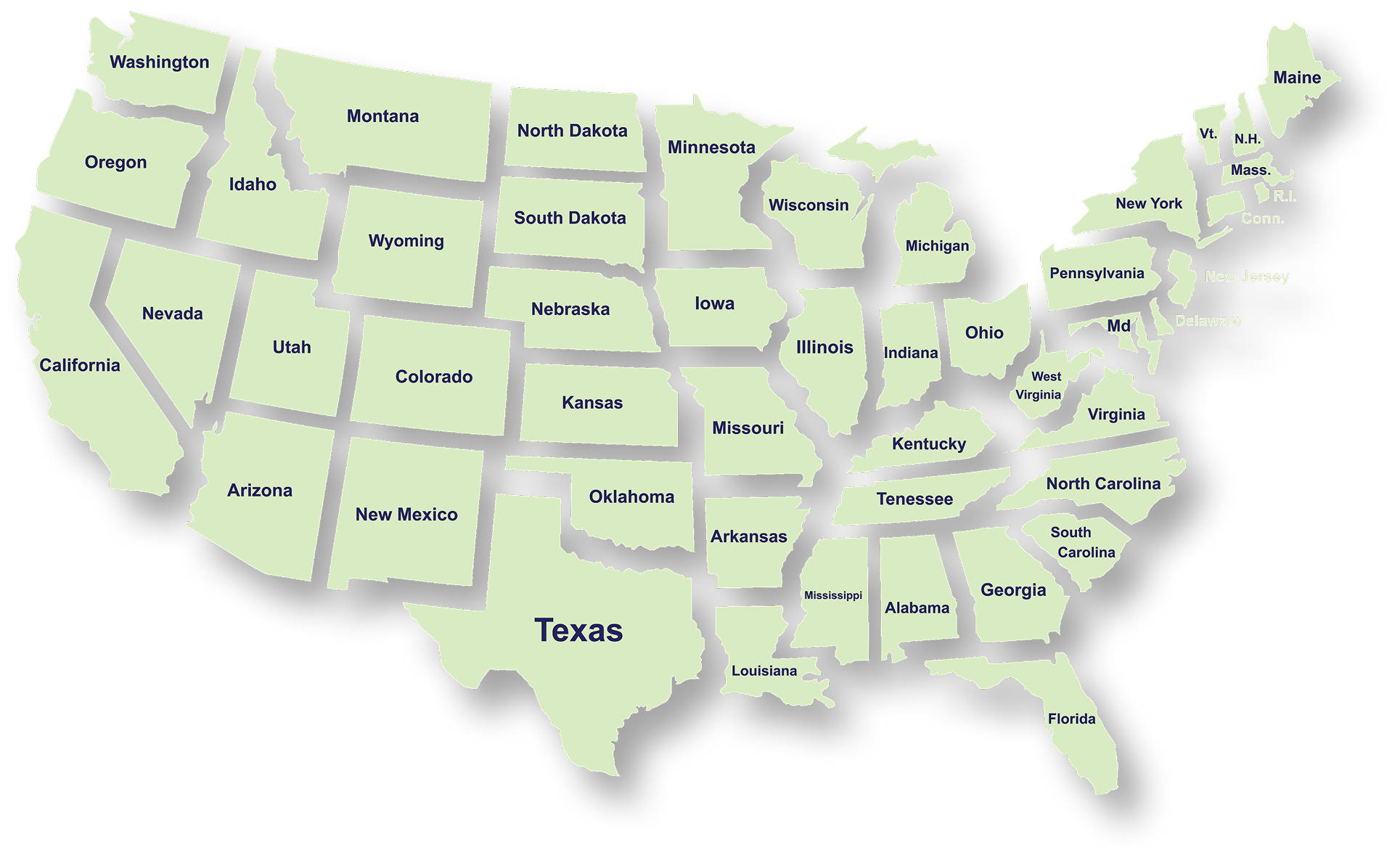
We handle accounting, tax filing, and planning with defined timelines and accurate reporting for businesses and individuals across all states.

Frequently Asked Questions

What services does NR CPAs & Business Advisors provide?
What is tax planning and why is it important for businesses?
How can a Virtual CFO help my business?
When should a business consider IRS tax resolution services?
What financial statements does a business typically need?
How can startup advisory services help new businesses?
What is strategic business planning?
What is a Virtual Family Office and who can benefit from it?