Learning Center for Tax and Financial Insights

Stay updated with clear, actionable articles on tax rules, deadlines, deductions, and financial decisions that impact individuals and businesses.

No items found.

You May Need a Protective Claim Before July 15

Article Highlights: Pending Supreme Court Case Past ACA Taxes May be Invalidated Who May be Impacted by the Court Ruling 2016 Tax Statute of Limitations Protective Claim for 2016 Refund Taxpayers who in the last few years have paid the extra 0.9% Medicare tax on wages or self-employment income, or the 3.8% tax on net investment income, both taxes that were created as part of the 2010 Patient Protection and Affordable Care Act (ACA; often called Obamacare), may be able to claim a refund of these taxes. However, it will be up to the Supreme Court as to whether anyone will qualify for a refund. Currently before the Court is a case challenging the legality of the ACA. Here’s what the case is about. The ACA included a requirement for individuals to have health insurance coverage starting in 2014 and imposed a penalty if they didn’t. As part of the Tax Cuts and Jobs Act (TCJA) of 2017, Congress set the penalty rate at 0% starting in 2018, effectively repealing this part of the ACA. However, other parts of the health care law were left intact, including the additional Medicare tax and the net investment income tax. The additional Medicare tax of 0.9% is paid by workers when their wages (or a self-employed individual’s income) exceed $250,000 for married taxpayers filing jointly, $125,000 for married taxpayers filing separately, and $200,000 for all others. The net investment income tax is 3.8% of the lesser of (1) an individual’s net investment income or (2) the excess of the individual’s modified adjusted gross income (MAGI) over $250,000 for a joint return, $125,000 for married taxpayers filing separately, and $200,000 for most other returns. The issue in the current court case of whether eliminating the individual mandate makes all or part of the ACA unconstitutional has been making its way through the courts, and the case (California v Texas) is now at the Supreme Court, which isn’t likely to rule on the case until late this year or possibly not until 2021. If the Court does find that the ACA is unconstitutional, taxpayers may be entitled to refunds for the taxes imposed by the ACA. If so, refunds would only be able to be claimed for years when the statute of limitations is still open. Usually, a claim for refund must be made within three years of the due date of the return, so that date would be July 15, 2020 for 2016 returns (since the regular April due date has been extended because of the COVID-19 pandemic). However, you can lock in your right to a possible refund for 2016 by filing what’s called a protective claim by July 15, 2020. If you filed your 2016 return after April 15, 2017 because you were on extension, the deadline is three years from the date it was filed. Usually, a claim for refund of an individual’s income tax is made on IRS Form 1040-X, but a protective claim can be done less formally by writing to the IRS. So, if you wish to make a protective claim for 2016, you can use the format below – be sure that both you and your spouse have signed if you filed a married joint return. Also, be sure to get a proof of mailing since it is so close to the deadline, and keep the proof of mailing and a copy of the letter with your tax records.

Explore More
No items found.

What Led to Congress Extending the Paycheck Protection Program?

The economic uncertainty created in the outset of the Coronavirus pandemic was unprecedented, to say the least. This is a big part of the reason why, soon after the spread began, Congress took steps that were equally drastic - they passed the Paycheck Protection Program, otherwise known as the PPP, in an attempt to help as many small businesses as possible stay afloat. The PPP was first included in the $2 trillion Coronavirus relief package, the CARES Act, that was itself passed by Congress in March. According to one recent report, more than 4.8 million small businesses have already received in excess of $520 billion from the program up to this point. At its core, the PPP is exactly what it sounds like: a specific type of loan program designed to provide a direct and tangible incentive for small businesses to keep as many workers on their payroll as possible, even during a period when many of them may not be allowed to open to the general public due to lock downs. As of July 2020, two full rounds of the Paycheck Protection Program have been passed. The first, initial wave was depleted extremely quickly – thus leading to a second wave that still has approximately $130 billion in unspent funds remaining at the time of this extension passing. But with so much money still left to be distributed, one has to wonder – why did Congress have to extend the PPP in the first place? What circumstances led to that event, and where does the program stand today? PPP and the Shape of Things to Come The current five-week extension of the Paycheck Protection Program was approved by both chambers of Congress at the end of June 2020. With it, the application window for the program reopened and would remain accessible to SMBs until August 8. As was true with the first round, the loans are intended to help cover payroll and other select costs. Under the terms and conditions of the loan, recipients can see their loan balances forgiven so long as the funds were used for "eligible expenses," and so long as other criteria was met. The total amount of the loan forgiveness may be reduced, however, based on the percentage of eligible costs attributed to non-payroll-related matters. A decrease in the number of employees a business was keeping on, decreases in salaries and wages, or other factors could also reduce loan forgiveness amounts. But again - what you're dealing with is a situation where the first round of loans was depleted incredibly quickly, while the second still has a significant sum of money for eligible applicants just waiting to be taken advantage of. Why, then, is there such a significant discrepancy in activity? Part of the reason why the second wave of the Paycheck Protection Program seemed to have lower demand than the first is because by the time of its passing, it became clear that applying for loan forgiveness wouldn't be quite as simple as a lot of small business owners had hoped. The Small Business Administration and the Treasury Department were both late in releasing specific guidance and rules about the actual loan forgiveness process - leading to business owners who were counting on that money being forgiven that may not be so lucky any longer. Therefore, it's been reported that a lot of small businesses are either considering returning the money or holding out on the program entirely because they're not actually sure whether or not they're going to be required to repay that debt. Also complicating things is the idea of loan duplicates - meaning loans that were essentially identical that were handed out to the same business or entity. The Small Business Administration was supposed to have a system in place to accurately determine whether or not an applicant had already received a loan and if they had, their second loan would be denied. The issue is that because of the chaos created in those early days of the program, many borrowers submitted multiple applications through different lenders. Sometimes, different identification information was even used - thus making it difficult to track these potentially duplicate loans. All told, it's been said that the agency may have inadvertently approved more than 1,000 duplicate Paycheck Protection Program loans equaling as much as $100 million – a situation that will also need to be addressed to restore people's faith in the program moving forward. For many small businesses out there, the Paycheck Protection Program literally couldn't have come along at a better moment. With so many organizations legally unable to open to the public – thus severely limiting the amount of potential revenue they could bring in – they needed something, ANYTHING, to get by. By all accounts, the PPP has done that for many people. But with rules and regulations governing forgiveness that seem to be constantly in flux, coupled with the uncertainty of when the pandemic is going to end in the first place, something of a malaise has set in regarding this second and most recent extension. Small businesses make up the backbone of the United States economy. Make absolutely no mistake about it: they need all the help they can get right now. It's becoming clearer and clearer, however, that the Paycheck Protection Program as it exists today may not be enough to do it. This, coupled with serious questions as to who is getting the majority of these funds, means that this is one situation people are going to be paying close attention to moving forward.

Explore More
No items found.

Big Tax Breaks for Hiring Your Children in the Family Business

Article Highlights: Child Under the Age of 19 or a Student Under the Age of 24 Kiddie Tax Tax on a Child’s Earned Income Deduction for the Business Employment Taxes IRAs and Retirement Plans With jobs at a premium during the COVID-19 pandemic, you might consider hiring your children to help out in your business. Financially, it makes more sense to keep the family employed rather than hiring strangers, provided, of course, that the family member is suitable for the job. Note, however, that wages paid to children and other relatives aren’t eligible for the Employee Retention Credit created by Congress in 2020 as part of the COVID-19 emergency relief measures for employers. Rather than helping to support your children with your after-tax dollars, you can instead hire them in your business and pay them with tax-deductible dollars. Of course, the employment must be legitimate and the pay commensurate with the hours and the job worked. The following are typical situations encountered when hiring family members. Employing a Child – A reasonable salary paid to a child reduces the self-employment income and tax of the parents (business owners) by shifting income to the child. When a child under the age of 19 or a student under the age of 24 is claimed as a dependent of the parents, the child is generally subject to the kiddie tax rules if their investment income is upward of $2,200. Under these rules, the child’s investment income is taxed at the same rate as the parent’s top marginal rate using a lower $1,100 standard deduction. However, earned income (income from working) is taxed at the child’s marginal rate, and the earned income is reduced by the lesser of the earned income plus $350 or the regular standard deduction for the year, which is $12,400 for 2020. Assuming that a child has no other income, the child could be paid $12,400 and incur no income tax. If the child is paid more, the next $9,875 he or she earns is taxed at 10%. Example: Let’s say you are in the 24% tax bracket and own an unincorporated business. You hire your child (who has no investment income) and pay the child $16,000 for the year. You reduce your income by $16,000, which saves you $3,840 of income tax (24% of $16,000), and your child has a taxable income of $3,600, $16,000 less $12,400 standard deduction, on which the tax is $360 (10% of $3,600). If the business is unincorporated and the wages are paid to a child under age 18, he or she will not be subject to FICA – Social Security and Hospital Insurance (HI, aka Medicare) – taxes since employment for FICA tax purposes doesn’t include services performed by a child under the age of 18 while employed in an unincorporated business owned by the parent. Thus, the child will not be required to pay the employee’s share of the FICA taxes, and the business won’t have to pay its half of these payroll taxes either. In addition, by paying the child and thus reducing the business’s net income, the parent’s self-employment tax payable on net self-employment income is also reduced.

Explore More
No items found.

August 2020 Individual Due Dates

August 10 - Report Tips to Employer If you are an employee who works for tips and received more than $20 in tips during July, you are required to report them to your employer on IRS Form 4070 no later than August 10. Your employer is required to withhold FICA taxes and income tax withholding for these tips from your regular wages. If your regular wages are insufficient to cover the FICA and tax withholding, the employer will report the amount of the uncollected withholding in box 12 of your W-2 for the year. You will be required to pay the uncollected withholding when your return for the year is filed.

Explore More
Personal Finance

We're Officially in a Recession, So Make These 5 Money Moves Now

It has been more than ten years since the United States’ economy has gone through a recession, and when the National Bureau of Economic Research announced in June that we have officially entered another, it hit many Americans like a body blow. The dark financial times we experienced between December of 2007 and June of 2009 may seem like a picnic in the days ahead: the dramatic job losses related to COVID-19 do not bode well for a quick recovery, so it’s important that you take steps now to protect your finances and make sure that you are prepared. Below are the steps you should be taking immediately, in case things get worse. 1. Evaluate what you’re spending and see what you can eliminate or cut. There’s no doubt that the economy has been booming, and if you’ve been letting yourself indulge in a pre-made meal service; subscriptions to a variety of premium channels, apps and other paid media; personal trainer and gym memberships; or simply buying a lot more shoes; now is the time to buckle down and change your habits. The things that you’ve felt free to spend on have been nice, but they are “wants” rather than “needs.” Make a list of what you’re spending on and see what you can eliminate or cut back on, because if your available cash is cut, you will need it for essentials. 2. Take the money you’ve saved from step one and put it in your emergency fund. If you’re the type of person who reads and follows financial advice, then you already know that you should have between three- and six-months’ equivalent of your monthly expenses set aside in your savings account in case of an emergency. In the midst of a recession you want to boost that fund’s holding so that you’re prepared for a possible job loss. If your company closes or you’re laid off, a recession is a hard time to find replacement income. Think of it in the same way that a bear tucks in and eats more when a bad winter is approaching. If you’re forced to hibernate, you want to make sure that you have enough to live on. 3. Eliminate any debt you’re carrying, and especially high interest debt. When the financial picture is looking rosy, it’s easy to commit to long-term debt, and to ignore the fact that you’re paying too much in interest. But once lean times arrive, those extra expenses eat away at money you could be spending on essentials. Take a look at your outstanding debt and figure out which ones are costing you the most. Knock them out first, making sure that you are paying more than the minimum monthly payment on each of your payments. It may feel impossible, but if you commit to methodically knocking them off your list, you’ll eventually accomplish your goal. 4. Apply for a Home Equity Line of Credit (HELOC). You might not feel like you need extra cash in hand – and may feel uncomfortable tapping into the equity you have in your home – but taking out a home equity line of credit allows you the security of knowing that the money is available in case you need it. The beauty of a HELOC is that there is no requirement that you actually touch the money. You just know that it’s there in case things get tough. Though it may be tempting to put off applying for a home equity line of credit until you actually need it, getting approved for a loan may get harder as the economy worsens, and especially if you lose your job. Apply for it and get approved now so that you’re already set up in case the worst happens. 5. Identify an additional source of income. That may sound more easily said than done, but the truth is that there has never been an easier time to make money on the side. The internet has a plethora of platforms that allow you to bring in cash, including: sites where you can sell used goods and clothing you no longer want; sites where you can sell crafts that you have made; and sites where you can market your professional skills on a freelance basis. It may feel unnecessary now, and even something that you don’t feel like or have time to do, but whether you use the money you make to pay down debt, build up your emergency fund, or find the income you rely upon eliminated, you will be glad that you established yourself early. It’s too late to worry about what will happen if we have a recession. It’s here now and is likely to be with us for a while. Taking the steps outlined above can help you get through it with minimal discomfort and without putting yourself into a financial hole.

Explore More
No items found.

August 2020 Business Due Dates

August 10 - Social Security, Medicare and Withheld Income Tax File Form 941 for the second quarter of 2020. This due date applies only if you deposited the tax for the quarter in full and on time. August 17 - Social Security, Medicare and Withheld Income Tax

Explore More
No results found.
Thank you! Your submission has been received!
Oops! Something went wrong while submitting the form.

Want tax & accounting tips & insights?Sign up for our newsletter.

Thank you! Your submission has been received!
Oops! Something went wrong while submitting the form.

Why Work With Us?

We combine deep tax expertise, financial strategy, and practical business insight to help you manage complexity, stay compliant, and make confident financial decisions.
A dollar sign, representing financial advice or discussion at NR CPAs & Business Advisors.

Experienced CPA and Enrolled Agent Leadership

Guidance led by licensed professionals with deep expertise in tax strategy, compliance, and complex financial matters.
White bar chart with an upward arrow on green circular background representing growth or progress at NR CPAs &. Business Advisors

Support for Growing Businesses and Startups

We understand the financial challenges of growth stage businesses and provide structured guidance to support expansion.
A white hand holding a dollar symbol and ascending bar chart on a green circular background representing financial growth or investment at NR CPAs & Business Advisors..

Strategic Financial Advisory

Our team helps you evaluate financial decisions with greater clarity, supported by practical insights and long term planning.

Fractional CFO Support

Access experienced financial leadership without the commitment and cost of hiring a full time Chief Financial Officer.

Proactive Tax Planning Approach

We focus on identifying tax opportunities throughout the year rather than reacting only during filing season.

Clear and Reliable Financial Reporting

Accurate financial statements and reporting that help you better understand performance and make informed decisions.
White IRS building icon with pillars and a dollar sign above on a green circular background.

Professional IRS Representation

Experienced support in resolving IRS notices, disputes, and compliance matters while protecting your financial interests.

Personalized Client Focus

Every client receives thoughtful attention and tailored financial solutions based on their specific needs and business goals.
Financial matters often involve important decisions. Working with experienced advisors can help you approach them with greater clarity and confidence in your choices.

Need Help With Your Tax or Financial Decisions?

Discuss your situation with our advisors to get clear guidance on tax planning, IRS matters, and the financial decisions ahead.
Business consulting at NR CPAs & Business Advisors.

Request Your Consultation

Fill out the form to discuss your tax concerns, financial questions, or advisory needs with our team. We will review your details and respond shortly.

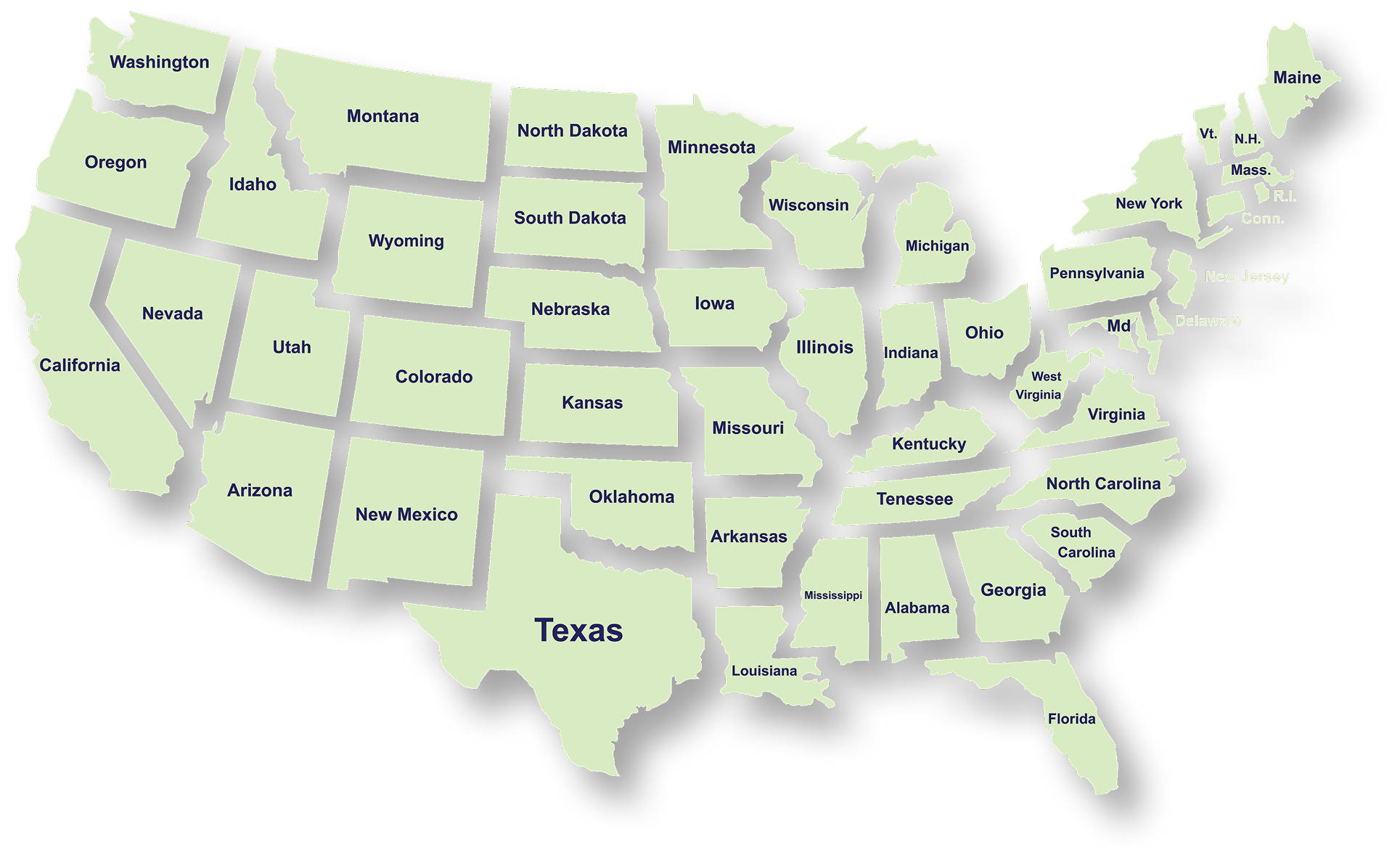
Serving Businesses & Individuals Across USA

We handle accounting, tax filing, and planning with defined timelines and accurate reporting for businesses and individuals across all states.

Frequently Asked Questions

What services does NR CPAs & Business Advisors provide?
What is tax planning and why is it important for businesses?
How can a Virtual CFO help my business?
When should a business consider IRS tax resolution services?
What financial statements does a business typically need?
How can startup advisory services help new businesses?
What is strategic business planning?
What is a Virtual Family Office and who can benefit from it?