Learning Center for Tax and Financial Insights

Stay updated with clear, actionable articles on tax rules, deadlines, deductions, and financial decisions that impact individuals and businesses.

No items found.

Thinking of Moving for Tax Savings? Here is the Conversation You Need to Have First

In our Coral Gables office, we’ve noticed a significant uptick in clients exploring the idea of tax-motivated relocation. The allure of a lower tax bill and a fresh start in a friendlier state is powerful. On the surface, the logic seems undeniable: pack your bags, update your address, and watch your tax liability shrink.

However, as we often tell our clients at NR CPAs & Business Advisors, the reality of tax migration is rarely that linear. Before you list your home or order moving boxes, there are two vital conversations you must have: one with your family and one with your tax advisor. Moving for taxes isn’t just a change of scenery; it is a complex long-term financial strategy where the smallest details determine your success.

The Domicile Dilemma: It’s More Than Just 183 Days

A common misconception we encounter is the belief that residency is a simple math problem. Many assume that if they spend six months and one day in a new state, they are effectively "safe" from their former state's tax reach. In practice, some jurisdictions are incredibly aggressive when it comes to retaining high-net-worth residents on their tax rolls.

Cityscape representing tax jurisdictions

States look at your domicile—the place you intend to be your permanent home. If you maintain a secondary residence, keep a local business interest, or spend significant time in your former state, you may find yourself facing a residency audit. This isn't about legal wrongdoing; it's about the technical nuances of tax exposure that don't always align with where you sleep most nights. This makes relocation a planning decision, not just a moving decision.

Evaluating the Total Tax Burden

Another frequent surprise for taxpayers is that a lower income tax rate doesn't always equal a lower overall cost of living. When a state reduces its reliance on income tax, it often compensates through other avenues. You must consider:

  • Property Taxes: Some tax-friendly states have significantly higher real estate levies.
  • Sales and Local Taxes: Consumption taxes and local fees can add up quickly.
  • Insurance and Healthcare: Costs for essential services can vary wildly by region.

For those on fixed incomes or with specific wealth structures, these secondary costs can sometimes outweigh the primary income tax savings. You might "win" on your state return but "lose" in your monthly cash flow.

Advisor discussing financial strategy

The Human Element of Financial Migration

Beyond the spreadsheets, this is a lifestyle decision. Relocation impacts your access to family support systems, your established healthcare providers, and your overall comfort. We believe the financial side of your move should support the life you want to live, rather than forcing you into lifestyle tradeoffs you didn't anticipate. At NR CPAs & Business Advisors, led by Nischay Rawal, we combine the depth of a large firm with the agility of a boutique practice to ensure your move makes sense both personally and professionally.

Strategic Planning Beats Regret

There is no universal checklist for tax relocation because every situation involves unique income sources and documentation needs. A proactive conversation with your tax advisor can help you build a game plan that provides clarity upfront, saving you from expensive surprises later. If you are considering a move and want to ensure it truly benefits your bottom line, schedule a consultation with our team today.

Beyond the initial consultation, we dive deep into the 'factors of intent' that tax authorities scrutinize during an audit. This often includes a rigorous review of your 'statutory residency' status. Even if you aren't domiciled in a high-tax state, maintaining a 'permanent place of abode' there while spending more than 183 days within its borders can trigger a full tax liability. This is a common trap for those who keep a vacation home or a secondary property in their former city. To defend against this, we advise clients to maintain meticulous records, including travel logs, flight receipts, and even credit card statements, to provide clear evidence of their physical location throughout the fiscal year.

Successful partnership and tax planning

Furthermore, the 'Teddy Bear Test'—a colloquial term frequently used by tax professionals—refers to a state's investigation into where your most cherished personal items are located. If your family heirlooms, pets, and sentimental belongings remain in your original home, a state may argue that your domicile—and therefore your tax liability—never truly changed. Our approach at NR CPAs & Business Advisors involves a holistic review of these social and emotional ties. We help you transition your primary care physicians, local community memberships, and voter registration to your new home, ensuring that your legal domicile is indisputable and robustly documented.

Finally, business owners must account for 'source income' and 'nexus' rules. Moving your personal residence doesn't automatically shield your business income from your former state if the business continues to operate there or derives significant revenue from local clients. Our fractional CFO and business consulting services are designed to help you restructure these interests, potentially utilizing apportionment strategies to minimize your multi-state exposure. By addressing these technicalities before you finalize your move, you can ensure that your relocation achieves the financial freedom you envision without the stress of an unexpected tax bill.

Explore More
No items found.

Received a 1099-K? A Guide to Navigating the New Reporting Landscape

The financial environment in South Florida and across the country has transformed dramatically, fueled by a booming gig economy and the move toward digital commerce. With more individuals in Coral Gables launching side hustles or transitioning to online sales, the IRS has sharpened its focus on income transparency. Form 1099-K is at the center of this effort, serving as a critical piece of the tax puzzle for anyone receiving payments via credit cards or third-party apps.

The Evolution of Form 1099-K

Form 1099-K wasn't created overnight; it was introduced under the Housing Assistance Tax Act of 2008. The federal government’s primary goal was to bridge the ‘tax gap’—the difference between what taxpayers owe and what they actually pay. Before this mandate, income generated through payment card processors and third-party networks like PayPal or Venmo often went unrecorded, creating a gray area in tax reporting. By requiring these platforms to report gross transactions directly to the IRS, the government established a mechanism to verify that digital earnings are accurately reflected on tax returns.

Why This Form Exists

  • Verification of Income: The IRS uses the data from Form 1099-K to cross-check the numbers you report. This is particularly vital for the cashless economy where paper trails can sometimes be elusive.
  • Digital Accountability: As our economy shifts toward digital-first transactions, there is a growing need for systems that track these exchanges clearly. Form 1099-K ensures that card-based and digital payments are not overlooked during filing season.
  • Promoting Compliance: When taxpayers know the IRS receives a copy of their transaction totals, it serves as a natural prompt for more diligent self-reporting.
Form 1099-K documentation

The Crucial Distinction: Gross vs. Net Income

It is vital to understand that Form 1099-K reports the gross amount of all reportable transactions. This means the total, unadjusted dollar amount you received before any deductions. It does not account for refunds, chargebacks, or processing fees. For business owners in Coral Gables, this distinction is critical. If you simply report the number on the 1099-K as your taxable income without reconciling it against your expenses and adjustments, you risk significantly overpaying your taxes.

The "Cash Income" Red Flag

The IRS remains highly vigilant regarding the potential underreporting of cash income. Form 1099-K provides a benchmark for your business activity. For instance, if a local restaurant or retail boutique reports 1099-K income that nearly matches their total reported revenue, it signals a potential red flag. The IRS knows that in these industries, a certain percentage of transactions are typically cash. If the digital reporting accounts for 100% of your reported income, it may trigger an inquiry into whether cash earnings were omitted. At NR CPAs & Business Advisors, we help our clients reconcile these figures to ensure their reporting aligns with industry standards and reality.

Application Across Different Scenarios

1. Selling Personal Items: Many individuals sell personal belongings online through platforms like eBay or Facebook Marketplace. Generally, if you sell an item for less than you paid for it, it isn’t taxable. However, if you sell at a profit, that gain must be reported. Receiving a 1099-K for personal sales requires meticulous documentation of your original purchase price to prove to the IRS whether a transaction was a loss or a taxable gain.

2. The Gig Economy and Side Hustles: From freelance consultants to ride-share drivers, gig workers are frequently paid through third-party networks. While you will likely receive a 1099-K, your tax responsibility doesn't end with that number. You must report all income and then leverage legitimate business deductions—such as home office costs, mileage, and equipment—to lower your taxable burden. Think of tax season as the ‘Super Bowl for your books’; preparation is everything.

Tax compliance and reporting

3. Standard Business Operations: For established businesses, 1099-K amounts should already be captured in your internal bookkeeping. However, a formal reconciliation process is necessary to ensure your records match what the processor reported. Discrepancies can lead to unwanted IRS scrutiny and potential audits, which we often describe as ‘financial dental cleanings’—much better when handled proactively.

Legislative Updates: The OBBBA of 2025

The reporting thresholds for Form 1099-K have been a moving target recently. Before the passage of the One Big Beautiful Bill (OBBBA) in July 2025, there was a plan to lower the threshold to just $600. However, the OBBBA retroactively repealed those lower limits. For Third-Party Settlement Organizations (TPSOs) like payment apps and marketplaces, the reporting threshold has returned to the previous standard: payments must be reported only if the total exceeds $20,000 across more than 200 transactions in a calendar year. This change applies to tax years starting in 2022 and nullifies the previously proposed lower thresholds for 2024 and 2025. Note, however, that credit card issuers must still report all transactions regardless of the dollar amount.

Strategies for Compliance and Peace of Mind

  • Reconcile Early: Don't wait until April to look at your 1099-K. Compare these figures with your internal records as soon as they arrive in January to catch errors before they are filed.
  • Maintain Precise Records: Detailed documentation is your best defense. Keep receipts for all business expenses and records of the original cost of items sold. Digital accounting solutions can help streamline this throughout the year.
  • Avoid Double Counting: Ensure that income reported on a 1099-K isn't also being manually entered as separate cash revenue in your books, leading to double-reporting of the same dollar.
Financial peace of mind

Seeking Professional Guidance

As the tax landscape continues to evolve, navigating Form 1099-K requires more than just basic data entry. Led by Nischay Rawal, a licensed CPA and Enrolled Agent, NR CPAs & Business Advisors provides the depth of a large firm with the personalized touch of a boutique Coral Gables practice. Whether you are managing a complex business or navigating a new side hustle, our team acts as both an advisor and a partner to ensure your compliance and optimize your tax planning strategy.

If you have received a 1099-K and aren't sure how it impacts your specific situation, contact our office today to schedule a consultation and ensure your reporting is accurate and advantageous.

The Technical nuances of 1099-K Reconciliation on Schedule C

For many Coral Gables residents who operate as sole proprietors or independent contractors, the most daunting task is translating the gross figures from Form 1099-K onto their Schedule C. Because the IRS receives the same gross total reported on the form, it is imperative that your bookkeeping is granular enough to justify the difference between that number and your net profit. This involves creating a detailed ledger where every digital payment is linked to a specific invoice. You must also account for the phantom income that often appears on these forms—specifically, the processing fees that companies like Stripe, Square, or PayPal deduct before the money ever hits your bank account. These fees are a legitimate business expense, but they must be reported as a deduction rather than simply being subtracted from the gross income figure on your return. Failing to report the full gross amount and then deducting the fees separately can lead to a mismatch in the IRS automated system, potentially triggering an inquiry or a CP2000 notice.

The 1099-K vs. 1099-NEC Conflict: Avoiding Double-Counting

One of the most frequent errors we see in our practice is the double-reporting of income when a contractor receives both a Form 1099-K from a payment processor and a Form 1099-NEC from a client. Consider a freelance marketing consultant in Coral Gables who completes a project for $5,000 and is paid via credit card. That $5,000 will be included in the consultant’s year-end 1099-K from their merchant service. However, if that client also issues a 1099-NEC to the consultant for the same $5,000 payment, the IRS may believe the consultant earned $10,000. To prevent this, it is essential to keep a 1099-K Reconciliation file. This document should clearly list which 1099-NEC amounts are also included in your 1099-K totals. When filing, you must ensure that your total reported gross receipts accurately reflect your actual earnings, often requiring a specific adjustment on your tax return to explain why the totals on your various 1099 forms might seem inflated when summed together.

The Hidden Risks of Using Personal Accounts for Business

A common pitfall for new entrepreneurs and gig workers is the commingling of personal and business funds on platforms like Venmo or Cash App. While the OBBBA legislation has restored the higher $20,000 threshold for third-party networks, the risk of misclassification remains high. If you use a personal account to accept payments for services, the payment processor may struggle to distinguish between a business transaction and a personal reimbursement from a friend. If the processor flags your account as a business profile, every transaction—including gifts or shared dinner tabs—could be bundled into a 1099-K. This creates a significant administrative burden for the taxpayer, who must then prove to the IRS that certain deposits were non-taxable. We strongly advise our Coral Gables clients to maintain strictly separate accounts for business and personal use to ensure a clean audit trail and to avoid the complexities of documenting hundreds of non-business transactions during tax season.

What to Do if You Receive an Incorrect Form 1099-K

Errors on Form 1099-K are more common than many realize, ranging from an incorrect Taxpayer Identification Number (TIN) to duplicated transaction totals. If you receive a form that contains errors, the first step is to contact the payment processor immediately to request a corrected version. Under the OBBBA guidelines, processors are under increased pressure to ensure accuracy, but the burden of proof remains with the taxpayer. If the processor refuses to issue a correction, you should not simply ignore the form. Instead, you must report the income as stated on the form but then include an offsetting adjustment on your return with a clear explanation. This approach alerts the IRS that you are aware of the discrepancy and provides the necessary context to prevent an automated audit. Keeping detailed bank statements and correspondence with the processor is vital in these instances, as they serve as your primary defense should the IRS question the adjustment. Proactive management of these forms ensures that your tax filings remain accurate and that you are only paying the tax you truly owe.

Explore More
No items found.

The Most Dangerous Number in Your Financials (And It’s Not What You Think)

Ask a business owner how things are going, and you’ll usually hear the same answer first:

“Revenue’s up.”

That sounds like good news. And sometimes it is.

But there’s a number hiding underneath revenue that tells a very different story. One that quietly determines whether a business is actually healthy or just busy.

That number is gross margin.

And for many small and mid-sized businesses, it’s the most misunderstood — and most dangerous — number on the financials.

Why Revenue Gets All the Attention

Revenue is loud.
It’s easy to track.
It feels like progress.

More clients. Bigger contracts. Higher top-line numbers.

But revenue doesn’t tell you what it costs to generate that income. And it doesn’t tell you whether the work you’re doing is actually worth it.

That’s where gross margin comes in.

At a high level, gross margin is the percentage of revenue left after accounting for the direct costs required to deliver your product or service. It’s what remains before overhead, taxes, and everything else come into play.

And it tells the truth in a way revenue never can.

Gross Margin: The Number That Tells the Truth About Your Business

Here’s the problem: most business owners only look at gross margin in the aggregate — if they look at it at all.

And overall gross margin can lie.

When margins are blended across the entire business, profitable work often masks unprofitable work.

You might have:

  • One service that performs exceptionally well
  • Another that barely breaks even
  • A client that consumes far more time and resources than they pay for

Blended together, everything looks fine.

Until it doesn’t.

Until cash feels tight.
Until growth feels heavier instead of easier.
Until you’re working harder without seeing the payoff you expected.

That’s usually when business owners say, “We’re making more money, but it doesn’t feel like it.”

That’s not a revenue problem.
That’s a margin problem.

Why Margin Mistakes Get More Dangerous as You Grow

Low-margin work doesn’t just reduce profit. As your business grows, it creates pressure in places you don’t expect.

It absorbs your best people.
It limits your ability to invest.
It makes hiring riskier.
It increases burnout at the exact moment you should be building momentum.

What makes this especially dangerous is that growth can hide the issue for a while. More revenue covers more inefficiency. Until one day it doesn’t.

This is why businesses that look successful on paper sometimes struggle to scale, hit cash flow walls, or feel stuck despite “doing everything right.”

This Is a CFO Advisory Conversation — Not a DIY Exercise

Understanding gross margin in a meaningful way isn’t about pulling a report or running a formula.

It’s about asking better questions.

Questions like:

  • Which services actually drive profit?
  • Which clients quietly erode margins?
  • What work looks good on the surface but costs more than it returns?
  • What would change if certain work stopped entirely?

These aren’t spreadsheet questions. They’re strategic ones.

And they’re exactly the kind of conversations CFOs have regularly, because margin clarity drives smarter decisions around pricing, staffing, capacity, and growth.

The Goal Isn’t Perfection. It’s Visibility.

This isn’t about squeezing every dollar or cutting corners.

It’s about knowing:

  • What work is worth doing
  • What work needs to change
  • What work might need to go

When you understand your gross margins clearly — by service, by client, or by growth stage — decisions get easier. Pricing becomes more confident. Growth feels intentional instead of reactive.

And suddenly, revenue starts behaving the way you expected it to all along.

A Final Thought

Revenue may be the headline number.

But gross margin is the number that determines whether your business actually works.

If you’ve ever wondered why growth feels harder than it should, or why cash flow doesn’t match your effort, this is a conversation worth having.

If you want help understanding what your margins are really telling you — and how they impact pricing, capacity, and long-term stability — don’t go it alone.

This is where CFO-level advisory guidance turns numbers into clarity, and clarity into better decisions.

Because the most dangerous number in your financials isn’t the one you’re watching.
It’s the one you’re not.

Explore More
No items found.

Using a Ghost Preparer? Who Are You Going to Call When the IRS Comes Knocking?

As people begin to have their 2025 tax returns prepared, this is a reminder to avoid unethical “ghost” tax return preparers.

A ghost preparer is someone who charges for but doesn't sign tax returns they prepare. Unscrupulous ghost preparers often print the return and have the taxpayer sign and mail it to the IRS. For e-filed returns, the ghost preparer will prepare the forms but refuse to digitally sign as the paid preparer.

By law, anyone who is paid to prepare or assists in preparing federal tax returns must have a valid Preparer Tax Identification Number (PTIN). Paid preparers must sign and include their PTIN on the return. If a preparer does not sign a return that should be a big red flag that the preparer may be looking to make a quick profit by promising a big refund or charging fees based on the size of the refund. Ghost tax return preparers usually require payment in cash to avoid paying taxes on the income and from being traced.

How do ghost preparers attract clients? They often fabricate tax deductions and tax creditsto generate unusually large refunds, and then their clients spread the word, attracting others. Here are some of the fabricated tax benefits they use to inflate refunds.

  • They invent business income or adjust expenses to maximize the lucrative earned income tax credit (EITC).
  • Claim fake charitable deductions to boost the size of the refund.
  • Claim off-road fuel credits.
  • To hide their fraudulent behavior, they’ll:

    o   File a tax return without letting the taxpayer review it.

    o   File a tax return without getting the taxpayer’s signature or consent.
  • Invent income to qualify their clients for tax credits.
  • Claim fraudulent home energy credits.
  • Claim fraudulent education credits.
  • Claim fake deductions to boost the size of the refund.
  • Direct refunds into their bank account, not the taxpayer's account.

The list goes on, and then the preparer vanishes, leaving you holding the bag when the IRS comes knocking. Who are you going to call then? OK, the IRS won’t literally come knocking on your door, but you can count on receiving a return correction notice and bill from them. Paying back ill-gotten refunds, interest and penalties can empty your pockets for years to come.

In addition, ghost preparers generally don’t take continuing education, are not up to date on current tax law changes, and are not aware of lawful tax-saving strategies. Also, unlike most professional tax preparers, they do not carry errors and omissions insurance.

The One Big Beautiful Bill Act (OBBBA) made an abundant number of changes for 2025 providing substantial new tax benefits that taxpayers will not want to miss out on. Not the year to be using a ghost preparer, a novice or someone who has not kept up with the law changes. You don’t want to miss out on the following changes for 2025:

  • Increased Standard Deductions
  • Senior Deduction
  • No Tax on Tips (actually a limited deduction for tips received, but may be advertised in such a way to make taxpayers think all tips are nontaxable)
  • No Tax on Qualified Overtime (there’s a maximum amount of overtime pay that is deductible, not all overtime compensation – watch out for misleading ads)
  • Vehicle Loan Interest Deduction (has many requirements and limitations so don’t believe an ad that purports to allow all taxpayers this deduction)
  • Refundable Adoption Credit
  • Increased Child Tax Credit
  • Increased SALT Deduction Limit
  • Minimum Qualified Business Income (QBI) Deduction
  • Expensing Qualified Production Property
  • Increased Section 179 Expensing
  • Return of Bonus Depreciation
  • Super Retirement Catch Up Contributions
  • Prepping For Trump Accounts
  • And more…

No matter who prepares your return, you should review it carefully and ask questions about anything that's not clear before signing it. You should verify the routing and bank account number on the completed tax return for any direct deposit refund. Taxpayers should watch out for ghost preparers putting their own bank account information on the returns. Also watch for Form 8888 that directs the IRS to split the refund into multiple bank accounts. These unprincipled folks frequently tell their clients the refund is an amount less than the actual amount and have the difference deposited into their bank account without raising any suspicion.  

Don’t fall victim to a ghost preparer. Trained and trustworthy preparers who sign off on returns are cognizant of the high standards of conduct they are held to and the penalties for a violation of those standards. Ghost preparers don’t know, or don’t care, about such standards, and their unscrupulous actions subject their victims to an array of problems.

Taxpayers can report preparer misconduct to the IRS by using IRS Form 14157, Complaint: Tax Return Preparer. If a taxpayer suspects a preparer filed or changed their tax return without their consent, they should file Form 14157-A, Tax Return Preparer Fraud or Misconduct Affidavit.

For more information or help cleaning up IRS trouble created by a ghost preparer, please contact this office.

Explore More
No items found.

The Financial Reality of Olympic Glory: Taxing Medals and Prize Money

With the 2026 Winter Olympics in Milano-Cortina on the horizon, American fans are beginning to turn their attention toward the snowy peaks of Italy. We watch for the gravity-defying stunts and the photo-finish victories that define national pride. However, for the elite athletes donning the Stars and Stripes, the podium represents more than just a lifetime of training—it triggers a complex set of financial and tax considerations that few spectators ever see.

A recurring question arises every two years: Are those hard-earned Olympic medals and the accompanying prize money actually taxable? As a firm that specializes in tax preparation and planning for high-performing individuals and businesses, NR CPAs & Business Advisors finds this intersection of sport and tax law to be a perfect case study in how federal and state regulations evolve over time.

The Sunset of the “Victory Tax”

For decades, the IRS treated Olympic medals and cash bonuses like any other form of earned income. This led to the widely criticized “victory tax,” where athletes were required to report the fair market value of their medals and any cash rewards as taxable income. For many amateur athletes who live on modest stipends, this created a significant financial burden just as they reached the pinnacle of their careers.

This landscape shifted significantly in 2016 with the passage of the United States Appreciation for Olympians and Paralympians Act. This legislation provided much-needed relief, but it is not a blanket exemption for everyone.

Federal Tax Exclusion Thresholds

Under the current framework, the federal government offers a reprieve for the majority of Team USA. Here is the breakdown of the exclusion:

  • Qualified Athletes: Most U.S. Olympians do not pay federal income tax on cash prize money from the U.S. Olympic and Paralympic Committee (USOPC) or the fair market value of the medals themselves.
  • The Income Cap: This exclusion is specifically targeted at those who need it most. It only applies if the athlete’s Adjusted Gross Income (AGI) is $1 million or less.
  • Filing Status Nuances: For those who are married filing separately, that threshold is reduced to $500,000.

By implementing these caps, Congress ensured that the tax break protects the livelihood of amateur athletes while excluding high-earning professionals who compete for the love of the game rather than financial survival.

Who Still Cuts a Check to the IRS?

While the 2016 Act was a victory for many, elite professional athletes are still very much on the hook. NBA superstars, NHL veterans, and top-tier golfers whose annual earnings easily exceed the $1 million mark must still report their Olympic winnings as taxable income at the federal level.

Small business owner reviewing finances

For these professionals, winning gold is a matter of prestige, but the IRS views the associated cash bonuses and the metal value of the award as part of their broader professional compensation. It is a reminder that in the eyes of the tax code, income classification is paramount.

The Business of Being an Athlete: Schedule C and Deductions

Even for those exempt from taxes on their medals, the financial life of an Olympian is rarely simple. Most Olympic-related income—outside of the USOPC bonuses—remains fully taxable. This includes endorsement deals, sponsorship payments, appearance fees, and even social media revenue generated from their Olympic platform.

For tax purposes, many athletes operate as self-employed contractors. This means they are responsible for filing a Schedule C to report their business income and expenses. The silver lining here is the ability to deduct “ordinary and necessary” expenses. Similar to how we advise our business consulting clients in Coral Gables, athletes can often deduct:

  • Coaching and specialized training facility fees
  • High-performance equipment and maintenance
  • Extensive travel, lodging, and competition-related meals
  • Management and agency commissions
  • Physical therapy and recovery-related medical expenses

What Is a Medal Actually Worth?

The “gold” in an Olympic gold medal is somewhat of a misnomer. For the Milano-Cortina 2026 games, the intrinsic metal value is determined by fluctuating market prices. Based on projections for late 2025, the breakdown looks approximately like this:

  • Gold Medal: Approximately $1,612 (Composed mostly of silver with a 6-gram gold plating).
  • Silver Medal: Approximately $823 (Roughly 500 grams of pure silver).
  • Bronze Medal: Approximately $67 (A copper-based alloy).

While the raw materials may not seem like a fortune, the collector value is another story. Medals with significant provenance—those won by legends of the sport—can command hundreds of thousands of dollars at auction. If an athlete chooses to sell their medal, the capital gains implications become a new chapter in their tax story.

Operation Gold and Future Security

The USOPC provides direct financial support through a program known as Operation Gold. For the 2026 cycle, the standard payouts remain significant: $37,500 for Gold, $22,500 for Silver, and $15,000 for Bronze. For the vast majority of athletes under the income threshold, these amounts remain tax-free at the federal level.

Family planning for the future

Looking ahead to 2026, a new initiative called the Stevens Financial Security Awards will launch. This program is a major step toward long-term stability for athletes. It offers every U.S. Olympian and Paralympian earning under $1 million a benefit package worth $200,000 per Games, including a $100,000 grant and a $100,000 death benefit. This structure highlights the shift toward treating Olympic participation as a long-term professional endeavor requiring specialized financial planning.

State and International Complications

The federal exemption is a major relief, but state taxes remain a wild card. States like California do not always conform to federal exclusions, meaning an athlete could owe state-level income tax even if they owe nothing to the IRS. Conversely, for athletes based in Florida, the lack of a state income tax provides a significant advantage for managing their winnings and endorsement income.

International laws add another layer. For the 2026 games, Italy has introduced athlete-friendly provisions in its 2025 Budget Law, generally exempting non-resident athletes from Italian taxation on Olympic income earned during the event. However, those who might be considered Italian tax residents could find themselves in a complex gray area requiring expert navigation of tax treaties to avoid double taxation.

Expert Guidance for High-Performance Lifestyles

The tax treatment of Olympic medals serves as a vivid reminder that the tax code is never static. Whether you are an elite athlete, a small business owner, or an individual managing significant assets, the rules regarding income sourcing and residency are vital. At NR CPAs & Business Advisors, led by Nischay Rawal, CPA and Enrolled Agent, we provide the agility and depth needed to navigate these complexities.

If you are looking for a partner to help manage your tax planning and financial strategy with the precision of an Olympic athlete, our team is here to assist. Contact NR CPAs & Business Advisors today to schedule a consultation and ensure your financial house is in order.

To truly understand the implications of the 2016 United States Appreciation for Olympians and Paralympians Act, one must look at the historical precedent that governed amateur athletics for nearly a century. Before this legislative shift, the Internal Revenue Service maintained a rigid stance: any prize of value, whether a physical trophy or a cash windfall, was considered gross income under Section 61 of the Internal Revenue Code. For an athlete who spent four years in near-poverty to train for a single race, being handed a tax bill for a gold medal worth nearly two thousand dollars—plus a $37,500 bonus—was often a crushing blow. Thisfinancial burden was often compounded by the IRS's traditional view of professional vs. amateur status. For decades, the tax code did not distinguish between a gold medal and a prize won on a game show or a lottery ticket. Every gram of silver and gold was valued at the London Bullion Market Association prices on the day of the ceremony, and every dollar of bonus money was added to the athlete’s total income. This lack of distinction ignored the unique reality of the Olympic cycle, where an individual might spend tens of thousands of dollars a year on coaching, equipment, and travel, often earning very little in return until that one moment on the podium. The 2016 United States Appreciation for Olympians and Paralympians Act was not just a symbolic gesture; it was a corrective measure intended to align the tax code with the reality of modern amateur sports.

A Deeper Dive into IRC Section 74

Under Section 74 of the Internal Revenue Code, the general rule is that prizes and awards are included in gross income. There are very narrow exceptions for awards transferred to charities or for certain employee achievement awards, but for a long time, the Olympics did not fit into these buckets. The 2016 legislation created a specific carve-out, now codified as Section 74(d). It is this specific subsection that provides the exclusion for Olympic and Paralympic medals and prizes. However, as business advisors, we often remind clients that tax law is rarely as simple as a yes-or-no answer. The

Explore More
No items found.

Navigating Trump Accounts: New Tax-Advantaged Savings for Families

Understanding the One Big Beautiful Bill Act (OBBBA)

The tax landscape is evolving with the introduction of the Working Families Tax Cuts Act, colloquially known as the "One Big Beautiful Bill Act" (OBBBA). For families here in Coral Gables and beyond, this legislation introduces a distinct vehicle for generational wealth building: Trump Accounts.

US Capitol building representing new tax legislation

These new accounts are designed specifically for children under the age of 18, creating a tax-advantaged pathway to set aside funds for their future. At NR CPAs & Business Advisors, we are closely analyzing how these accounts can fit into a comprehensive family tax strategy.

If you are looking to optimize your financial planning under these new regulations, our team led by Nischay Rawal is ready to guide you.

Ready to plan for your family's future? Contact us today to discuss how the OBBBA impacts your specific situation.

Explore More
No results found.
Thank you! Your submission has been received!
Oops! Something went wrong while submitting the form.

Want tax & accounting tips & insights?Sign up for our newsletter.

Thank you! Your submission has been received!
Oops! Something went wrong while submitting the form.

Why Work With Us?

We combine deep tax expertise, financial strategy, and practical business insight to help you manage complexity, stay compliant, and make confident financial decisions.
A dollar sign, representing financial advice or discussion at NR CPAs & Business Advisors.

Experienced CPA and Enrolled Agent Leadership

Guidance led by licensed professionals with deep expertise in tax strategy, compliance, and complex financial matters.
White bar chart with an upward arrow on green circular background representing growth or progress at NR CPAs &. Business Advisors

Support for Growing Businesses and Startups

We understand the financial challenges of growth stage businesses and provide structured guidance to support expansion.
A white hand holding a dollar symbol and ascending bar chart on a green circular background representing financial growth or investment at NR CPAs & Business Advisors..

Strategic Financial Advisory

Our team helps you evaluate financial decisions with greater clarity, supported by practical insights and long term planning.

Fractional CFO Support

Access experienced financial leadership without the commitment and cost of hiring a full time Chief Financial Officer.

Proactive Tax Planning Approach

We focus on identifying tax opportunities throughout the year rather than reacting only during filing season.

Clear and Reliable Financial Reporting

Accurate financial statements and reporting that help you better understand performance and make informed decisions.
White IRS building icon with pillars and a dollar sign above on a green circular background.

Professional IRS Representation

Experienced support in resolving IRS notices, disputes, and compliance matters while protecting your financial interests.

Personalized Client Focus

Every client receives thoughtful attention and tailored financial solutions based on their specific needs and business goals.
Financial matters often involve important decisions. Working with experienced advisors can help you approach them with greater clarity and confidence in your choices.

Need Help With Your Tax or Financial Decisions?

Discuss your situation with our advisors to get clear guidance on tax planning, IRS matters, and the financial decisions ahead.
Business consulting at NR CPAs & Business Advisors.

Request Your Consultation

Fill out the form to discuss your tax concerns, financial questions, or advisory needs with our team. We will review your details and respond shortly.

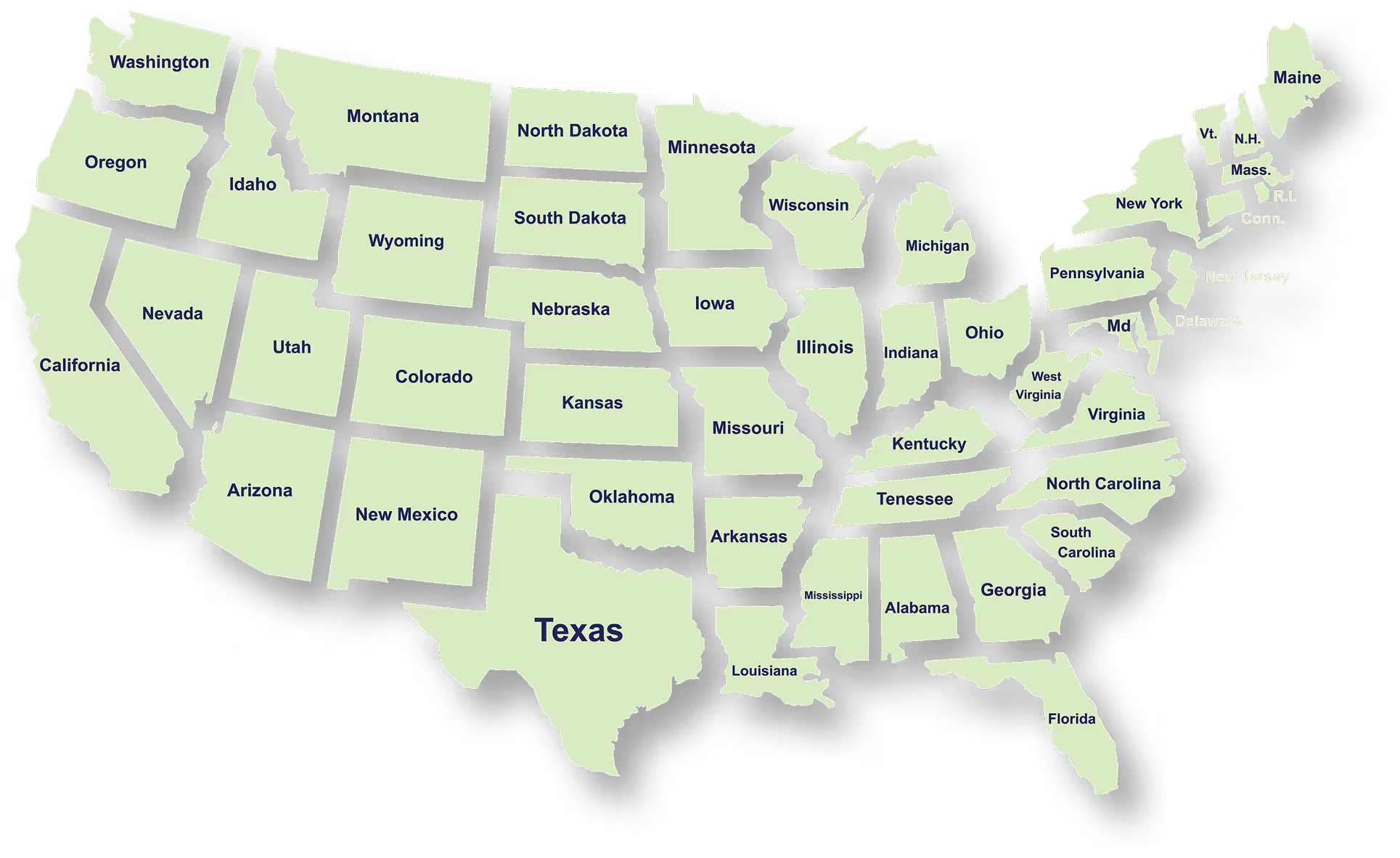
Serving Businesses & Individuals Across USA

We handle accounting, tax filing, and planning with defined timelines and accurate reporting for businesses and individuals across all states.

Frequently Asked Questions

What services does NR CPAs & Business Advisors provide?
What is tax planning and why is it important for businesses?
How can a Virtual CFO help my business?
When should a business consider IRS tax resolution services?
What financial statements does a business typically need?
How can startup advisory services help new businesses?
What is strategic business planning?
What is a Virtual Family Office and who can benefit from it?