Learning Center for Tax and Financial Insights

Stay updated with clear, actionable articles on tax rules, deadlines, deductions, and financial decisions that impact individuals and businesses.

No items found.

IRS Guidance: PPP Loan Expenses Not Tax-Deductible

On April 30th, the IRS released guidance announcing that expenses related to Paycheck Protection Program (PPP) forgivable loans will not be tax-deductible. The PPP was originally created as part of the CARES Act, a $2.2 trillion coronavirus relief bill. The program provides low-interest loans to small businesses that will be forgivable as long as the funds go are used for “essential” expenses like maintaining payroll. The initial appropriation of $349 billion ran out quickly, and a second-round was passed as part of the PPP & HCE Act, providing $310 billion in additional funds. Usually, wages would be deductible expenses for employers, and forgiven debt would count as taxable income. Under the coronavirus relief packages, however, PPP loan forgiveness will not count as taxable income. That being said, the IRS guidance states that expenses that result in forgiveness of a PPP loan are not tax-deductible in order to prevent a "double tax benefit." If they decide to take action on this topic, Congress could override the IRS’s guidance by passing a law that would explicitly allow the deductions. We will continue to keep you updated on the latest IRS guidance and other PPP news and legislation. Please contact us if you have any questions.

Explore More
No items found.

Not All PPP "Forgivable" Loans Will be Forgiving

In the face of the global pandemic and the subsequent economic crisis it has spurred, the federal government has taken several steps to protect small business owners. One of the most notable of these steps is the offering of Paycheck Protection Program (PPP) loans, which are being trumpeted as forgivable loans. Though the loans are indeed forgivable, the requirements for forgiveness are not as broad as many borrowers originally thought. Requirements for PPP Loan Forgiveness At first glance, the qualifications for a loan to be forgivable are fairly simple. A minimum of 75% of whatever amount is borrowed must be used to cover payroll, though up to the remaining 25% of the loan can then be used on other specific expenses incurred or viewed as a liability prior to the crisis unfolding. Those other qualified expenses included mortgage interest, utilities and rent. Though the details above are correct, what was not immediately understood by those seeking the loans was that there is an additional requirement that may be present more of a challenge. In order for the loan to be fully forgivable the business must end the pandemic period with the same number of employees as they began with — even if they are using 75% of the loan to pay workers, if a business doesn’t end the pandemic with the same number of employees as they had before the crisis hit then the forgivable portion of their loan will be modified. To understand the effect that this additional restriction has on a small business and its PPP loan, consider a company that had employed 20 workers before the virus first struck the United States. The business takes out a loan and uses 75% of it for payroll expenses, but at the end of the pandemic they have only retained or rehired 12 of their employees. This would result in only 60% of the expenses being eligible to be forgivable. If, on the other hand, the business had either kept their staff to 20 employees or rehired staff to bring them back up to 20 after the crisis had passed, then their loan could be fully forgiven. Though it is understandable that a program that is specifically identified as a Paycheck Protection Program would have this type of requirement, that doesn’t make the issue any less tenable for companies whose businesses have been hard hit by the virus. If there are no customers or no demand, then retaining or rehiring employees makes little sense. Calculating Your Forgiveness Equation If you have taken out a PPP loan or are considering doing so and want more information on the considerations involved in the forgiveness equation, the most important information for you to be aware of is the time period that the government will use to assess the number of employees you had pre-pandemic. There will be two time periods used: either January 1, 2020 to February 29, 2020 or February 15, 2019 to June 30, 2019. Smart employers who have had to cut back on their number of employees will take the time to analyze their employment records to determine when they had a smaller number of full-time equivalent employees. For an even more detailed example of how the PPP loan forgiveness program will be calculated, let’s look at the calculations involved in a $100,000 loan taken out by a company that had 20 full-time equivalent employees prior to the crisis. When the company’s 8-week loan period comes to an end, they are no longer able to support ten employees and have cut back to 12. Using this example, let's go through both the 75% Payroll Cost Rule and the Full-time Equivalent Employee Rule to see what amounts a small business borrower would be eligible to have forgiven. If the company spent a total of $60,000 on payroll and another $12,000 on rent and utilities, that would bring their total amount spent up to $72,000. The first step in determining qualifying expenses is to calculate what percentage of the total qualifying amount went to payroll. In this case $60,000 represents 83% of the $72,000 in expenses that qualify, so it exceeds the 75% threshold and fully qualifies for forgiveness. However, under the adjacent full-time equivalent employee rule that is part of the program, the government will also compare how many full-time equivalent employees the business had before the pandemic to the number on staff after. If their pre-pandemic staffing level was 20 full-time equivalent employees but after the 8-week period they only had retained 12 full-time employees, then the amount eligible to be forgiven will be reduced by the same ratio as that of their reduction in full-time equivalent staffing. The total loan spend of $72,000 will be multiplied by 60%, leaving them with only $43,200 qualifying as forgivable. Carrying the calculation to its logical conclusion, the original $100,000 PPP loan that paid out $72,000 in qualifying expenses (including 83% of qualifying expenses being dedicated to payroll) will only be able to have $43,200 forgiven because they only retained or rehired 60% of their pre-pandemic staffing level. The balance of their loan - $56,800 - will need to be repaid within two years at an interest rate of 1%. The same calculation is done if the same number of employees are retained or rehired, but their compensation is reduced by more than 25%. It is important to remember when doing these calculations that in the event that the business’ non-payroll expenses go beyond the allowable 25%, that also reduces the forgiveness of the borrowed money. The amount that can be forgiven will be reduced until the ratio reaches the required levels and non-qualifying expenses represent no more than 25% of the total. Understanding the Pros and Cons of PPP Loans Though small business owners had looked to the PPP program as something of a lifeline, they also need to remember that this particular program was specifically meant to incentivize them to retain their employees – that is why it was called the Paycheck Protection Program. It can be disappointing or even upsetting to be penalized for not being able to bring back all of your employees, especially when there are some employees who would rather not come back because the unemployment compensation that they are receiving may be greater than the amount that they were originally being paid. Of course, there is also the matter of whether there is work for those employees. Does it make sense to bring back workers and pay them when there is no work to justify doing so? According to Regional SBA Administrator Robert Scott, the Small Business Association is hamstringed by the language included in the CARES Act and must comply by the rules that Congress has imposed. There is a potential lifeline for businesses that were forced to cut their employment levels during the worst weeks of the pandemic: if the economy reopens and they are able to bring back their original pre-pandemic contingency of workers by June 30, 2020, the forgiveness reduction will be eliminated. Whether that is doable or not is another question, and one that the SBA and Treasury are likely to review as the situation progresses. If you have any questions, please contact this office. We are here to help you make a plan for achieving forgiveness of your PPP loan.

Explore More
No items found.

Video: The Latest on Missing IRS Rebate Checks

If you had filed either your 2019 or 2018 return before the direct deposits were issued, you should already have the money in the bank, UNLESS: Watch the video for details. .embed-container { position: relative; padding-bottom: 56.25%; height: 0; overflow: hidden; max-width: 100%; } .embed-container iframe, .embed-container object, .embed-container embed { position: absolute; top: 0; left: 0; width: 100%; height: 100%; }

Explore More
No items found.

June 2020 Business Due Dates

June 15 - Employer’s Monthly Deposit Due If you are an employer and the monthly deposit rules apply, June 15 is the due date for you to make your deposit of Social Security, Medicare and withheld income tax for May 2020. This is also the due date for the non-payroll withholding deposit for May 2020 if the monthly deposit rule applies. However, you may be able to retain a portion of the deposit to fund the mandatory paid sick leave and family leave under the Families First Coronavirus Response Act or defer portions to 2021 and 2022 under the CARES Act.

Explore More
No items found.

June 2020 Individual Due Dates

June 1 - NOTE - This normally is the date for IRA Trustees to issue Form 5498. However, on May 28, 2020 just 4 days before the due date, the IRS issued Notice 2020-35 postponing the due date for the Form 5498 series until August 31, 2020. June 10 - Report Tips to Employer If you are an employee who works for tips and received more than $20 in tips during May, you are required to report them to your employer on IRS Form 4070 no later than June 10. Your employer is required to withhold FICA taxes and income tax withholding for these tips from your regular wages. If your regular wages are insufficient to cover the FICA and tax withholding, the employer will report the amount of the uncollected withholding in box 12 of your W-2 for the year. You will be required to pay the uncollected withholding when your return for the year is filed.

Explore More
No items found.

New $3 Trillion Coronavirus Relief Bill Proposed by House Democrats

As the coronavirus continues to lay waste to the American economy, legislators are hoping to provide additional relief and to shore up the country’s healthcare system. To that end, Democrats in the House of Representatives have proposed a new relief bill encompassed in an 1,800-page document. The entire body voted on this bill on May 15th. Though many members of the House of Representatives are not in Washington, D.C., House Speaker Nancy Pelosi has introduced a proxy process to allow remote voting. In the face of pushback from Republican colleagues, the speaker referred to the bill as a “momentous opportunity” for Congress and noted that “not acting is the most expensive course.” Though the proposed bill is voluminous, its key points include: Providing state and local governments with almost $1 trillion in relief Providing another direct payment to American taxpayers in the form of $1,200 per person and up to $6,000 per household Allocating hazard pay of approximately $200 billion for those essential workers who are facing personal health risks while responding to the crisis Allocating $75 billion to fund COVID-19 testing and contact tracing, which will facilitate businesses reopening safely and confidently Moving the expiration of the $600 per week federal unemployment insurance benefit from its current expiration at the end of July to January Providing rent, mortgage and utility assistance of $175 billion Creating an extended enrollment period and subsidies for the Affordable Care Act to provide for those who have lost health coverage provided or sponsored by their employers Allocating additional funding for the Supplemental Nutrition Assistance Program (SNAP) and increasing the current maximum benefit by 15% Multiple actions designed to strengthen employee retention and keep small businesses afloat, including tax credits and $10 billion in emergency disaster assistance grants Funding to facilitate voting by mail and to secure safe elections in the face of the challenges created by the pandemic Additional funding to bolster the U.S. Postal Service

Explore More
No results found.
Thank you! Your submission has been received!
Oops! Something went wrong while submitting the form.

Want tax & accounting tips & insights?Sign up for our newsletter.

Thank you! Your submission has been received!
Oops! Something went wrong while submitting the form.

Why Work With Us?

We combine deep tax expertise, financial strategy, and practical business insight to help you manage complexity, stay compliant, and make confident financial decisions.
A dollar sign, representing financial advice or discussion at NR CPAs & Business Advisors.

Experienced CPA and Enrolled Agent Leadership

Guidance led by licensed professionals with deep expertise in tax strategy, compliance, and complex financial matters.
White bar chart with an upward arrow on green circular background representing growth or progress at NR CPAs &. Business Advisors

Support for Growing Businesses and Startups

We understand the financial challenges of growth stage businesses and provide structured guidance to support expansion.
A white hand holding a dollar symbol and ascending bar chart on a green circular background representing financial growth or investment at NR CPAs & Business Advisors..

Strategic Financial Advisory

Our team helps you evaluate financial decisions with greater clarity, supported by practical insights and long term planning.

Fractional CFO Support

Access experienced financial leadership without the commitment and cost of hiring a full time Chief Financial Officer.

Proactive Tax Planning Approach

We focus on identifying tax opportunities throughout the year rather than reacting only during filing season.

Clear and Reliable Financial Reporting

Accurate financial statements and reporting that help you better understand performance and make informed decisions.
White IRS building icon with pillars and a dollar sign above on a green circular background.

Professional IRS Representation

Experienced support in resolving IRS notices, disputes, and compliance matters while protecting your financial interests.

Personalized Client Focus

Every client receives thoughtful attention and tailored financial solutions based on their specific needs and business goals.
Financial matters often involve important decisions. Working with experienced advisors can help you approach them with greater clarity and confidence in your choices.

Need Help With Your Tax or Financial Decisions?

Discuss your situation with our advisors to get clear guidance on tax planning, IRS matters, and the financial decisions ahead.
Business consulting at NR CPAs & Business Advisors.

Request Your Consultation

Fill out the form to discuss your tax concerns, financial questions, or advisory needs with our team. We will review your details and respond shortly.

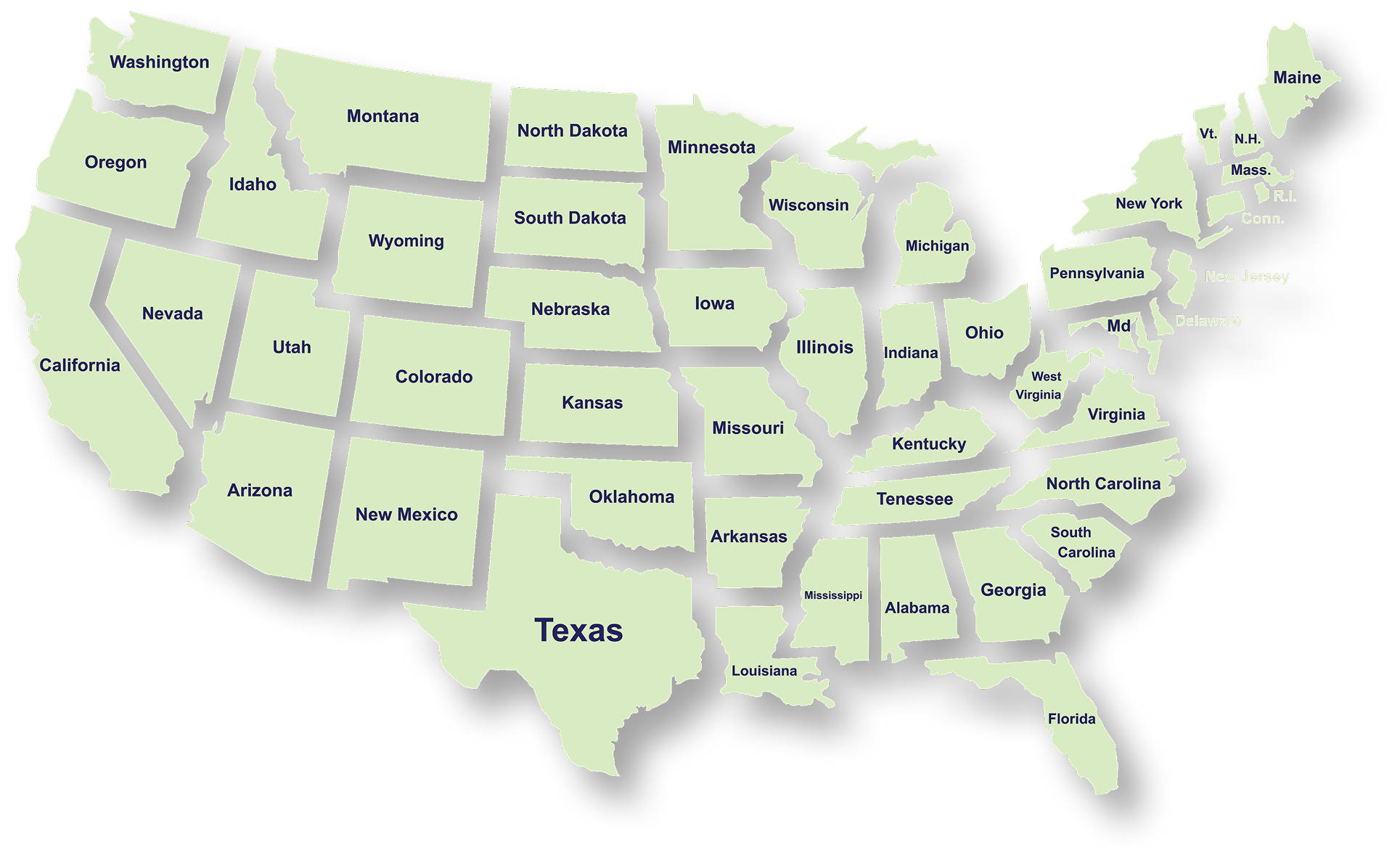
Serving Businesses & Individuals Across USA

We handle accounting, tax filing, and planning with defined timelines and accurate reporting for businesses and individuals across all states.

Frequently Asked Questions

What services does NR CPAs & Business Advisors provide?
What is tax planning and why is it important for businesses?
How can a Virtual CFO help my business?
When should a business consider IRS tax resolution services?
What financial statements does a business typically need?
How can startup advisory services help new businesses?
What is strategic business planning?
What is a Virtual Family Office and who can benefit from it?