Learning Center for Tax and Financial Insights

Stay updated with clear, actionable articles on tax rules, deadlines, deductions, and financial decisions that impact individuals and businesses.

No items found.

Big Tax Break for Adoptive Parents

Article Highlights: Qualifying Adoptions Credit Amount Credit Carryover Qualifying Expenses High-Income Credit Phase-out Employer Adoption Assistance Program Failed Adoptions Foreign Adoptions If you are an adoptive parent or are planning to adopt a child, you may qualify for a substantial income tax credit. The amount of the credit is based on the expenses incurred that are directly related to the adoption of a child under the age of 18 or a person who is physically or mentally incapable of self-care. This is a 1:1 credit, meaning $1 of credit for each dollar of qualified expenses up to a specified maximum for the year, which is $14,300 for 2020 (up from $14,080 in 2019). The credit is nonrefundable, which means it can only reduce tax liability to zero (as opposed to potentially resulting in a cash refund). But the good news is that any unused credit can be used for up to the next five years to reduce future tax liability. Qualified expenses generally include adoption fees, court costs, attorney fees and travel expenses that are reasonable, necessary and directly related to the adoption of the child. These expenses qualify for both domestic and foreign adoptions. When adopting a child with special needs, the full credit is allowed whether or not any qualified expenses were incurred. A child with special needs is, among other requirements, a child who the state has determined (a) cannot or should not be returned to his or her parents’ home, and (b) a child who won’t be adopted unless assistance is provided to the adoptive parents.

Explore More
No items found.

Take Advantage of These Tax Changes to Amend the Previous Year's Tax Return

Did you know that Congress made a number of changes retroactive to the 2018 tax year that can result in a tax refund for you? Watch to learn more. .embed-container { position: relative; padding-bottom: 56.25%; height: 0; overflow: hidden; max-width: 100%; } .embed-container iframe, .embed-container object, .embed-container embed { position: absolute; top: 0; left: 0; width: 100%; height: 100%; }

Explore More
No items found.

Tracking Mileage in QuickBooks Online

If you’re having to drive for work during the pandemic, let QuickBooks Online make sure you’re recording all of your deductible mileage. Many states are starting to open for business again. If yours is one of them and this is affecting you, we hope you’re taking steps to stay healthy. We also hope that you’ve been keeping up with your changing finances by using QuickBooks Online. As many will resume back to the day to day of business, if any part of your work involves driving business miles that can be deducted on your income taxes, you’ll want to know about a relatively new QuickBooks Online feature: mileage tracking. You can NOW record trips either manually or automatically, and the site will calculate your deductions. Here’s how it works. Tracking Trips Manually Before you get started, you’ll want to create a record for the vehicle you’ll be using. Click Mileage in the navigation toolbar. Hover over the green Add trip button in the middle right of the screen, then click View Vehicles. Then click Add vehicle and complete the fields on the screen that opens. Click Save. Back on the main screen, click directly on Add trip. The New trip panel will slide out from the right. Enter the Date, then the number of miles driven (Distance). If you’d like, you can enter the Starting point and Ending point for your records. Click either the Business or Personal icon and enter a Description. Select the correct Vehicle if you use more than one and click Save. Your trip will now appear on the main screen with your tax deduction already calculated, as pictured below. Click the More button at the end of the row (not shown here), and you’ll be able to Edit your trips and Duplicate them. Once you’ve created a record for a trip in QuickBooks Online, it will be added to the list on the main Mileage screen. Auto-Track Your Miles There’s another way to track your trips, one that doesn’t involve writing down your odometer readings or mileage. The QuickBooks Online mobile app will automatically track your miles as you drive. To set this up, open the app and click on the three horizontal lines in the lower right to open the app’s navigation shortcuts. Then click the Mileage icon.

Explore More
No items found.

Tax Effects of a Business Making a Charitable Contribution

Article Highlights: Charitable Contributions Business-Related Charitable Contributions Charitable Pass-Through Deductions 20% Business Pass-Through Deduction Charitable contributions are generally allowed as part of an individual’s itemized deductions on his or her income tax return, while a business expense deduction generally isn't allowable for a contribution made to a charitable organization. However, the IRS recently issued proposed regulations saying that if a taxpayer’s trade or business makes a contribution to a charitable organization with a reasonable expectation of financial return commensurate with the payment amount, the contribution could constitute an allowable deduction for trade or business expenses, rather than a charitable contribution deduction. Example: Joe, who is a sole proprietor and a dealer in musical instruments, contributes $500 to a nearby church with the understanding that, as a result of the contribution, he will have an advertisement in the church’s concert program. The advertisement includes his business URL from which he sells musical instruments. Joe reasonably believes the advertisement will attract customers; therefore, Joe can treat the $500 payment as an ordinary and necessary business expense. If no business benefit is derived or if the contribution is excessive for the amount of business benefit, then the payment will be treated as a charitable contribution by the business owner and deducted on the owner’s individual 1040 return, provided the owner is itemizing deductions. If the business is a partnership or an S corporation, a partner’s or a shareholder’s prorated share of the contribution will be passed through to the individual partner or shareholder on Schedule K-1, which also reports his or her share of income, deductions and credits from the business entity.

Explore More
No items found.

Tips to Keep Your Business Afloat During COVID-19

COVID-19 has had an unprecedented impact on all aspects of American businesses, but perhaps none have been as severely affected as small business owners. Surviving this disaster will require more than just time: you will need to take a pragmatic view of what has happened and what steps you are willing and able to take in order to bounce back. Here are our suggestions: 1. Spending Take a hard look at what you’re spending now and what you were spending before to determine what can be eliminated. Efficient spending is going to make a real difference in your business’ ability to survive this crisis. That means you need to look at what you’re spending now, while you’re cutting expenses to the bone, as well as what you were spending before. If you can break your expenditures down into what is necessary versus what can be eliminated, you’ll be able to cut out a lot of the fat and give yourself a cash flow advantage. Perhaps you’ll find that you no longer need the same amount of physical space if you are comfortable with having workers telecommuting. That single example can lead to savings in electricity and other services that can boost your ability to cut expenses. Your goal is to run as lean an operation as possible, but to do so without having your cuts impact your ability to provide the service that your clients expect and want. 2. Agility Examine how the shifts that the pandemic has forced can be incorporated into your business in a more sustained way. Plenty of companies have shown tremendous flexibility and nimbleness in the way that they deliver their products or services, or even in the products themselves. Every business’ success is based on what the market needs, so business owners who can assess how the pandemic’s unique dynamics can be used to their advantage, or how they can adjust to them, will be the ones that are most successful and most likely to survive. 3. Competitive Inspiration If you’re stuck for what to do to transform your business, there is absolutely nothing wrong with looking to your competition for inspiration. Perhaps they’ve moved their in-store shopping experience to one that is entirely available online, or they’re providing a new way to use an old product. Maybe they aren’t able to open but are remaining engaged with customers via webinars, podcasts, live sessions on Facebook or Instagram. Whatever is working for one company, whether in your industry or not, can serve as inspiration for you. 4. Reflecting How are you spending your time through the pandemic? Are you just worrying about how your business has suffered, or are there things that you’ve wanted to do for quite some time but have put off until you had a moment to spare? Perhaps most importantly, it’s a good time to reflect on whether you’re actually enjoying yourself as much as you thought you would when you first started your own business, and whether the whole endeavor is actually worth it. Are you making the money you thought you would? Are you enjoying it as much as you thought you would? Has it provided the quality of life that you anticipated? Or would you be better off doing something else? It makes perfect sense to take this forced time off to reassess and either confirm or deny whether you should keep moving forward or turn to something else. 5. Planning Take a longer view of your business than what is demanded by the immediate moment. There are some businesses that will be able to return to normal, but that is not true of all of them, and taking a clear-eyed look at how consumers are going to look at spending money with your type of business in the future is time well spent. If your business is essentially dependent upon having lots of people gathered in a small space, then you have to think beyond getting back to work and, instead, spend time thinking about the changes you’re going to have to make to allow yourself to stay in business. You may fail to do this, but you’re likely to find that your competition hasn’t, and that will not only put them one step ahead of you but may leave you selling in a way that your customers are no longer willing to engage with. 6. Learning If your business operations have slowed or come to a stop as a result of the pandemic, one of the smartest things you can do is to use the time to expand your own knowledge and education. There are seemingly limitless courses that you can take online – both free and fee-based – as well as books you can read to make sure that you have sharpened your abilities and expanded your knowledge of your business and industry. The social distancing that has been required by both the government and the medical authorities gives you the opportunity to boost your abilities and expertise, whether by reading about your own industry or by taking cues from successful people in other industries. You can find inspiration from innovators and great thinkers both current and classical. There is a lot more to be gained from the down time offered by the pandemic than thinking about your inventory and your clients. Use the time to improve yourself and it will provide a broad advantage within this business and those you may be involved with in the future. 7. Taking Care Perhaps most important of all, stay healthy and stay positive. If you have extra time that you would have been spending on your business, take the time to make sure that you are taking care of yourself, the people you love, and the people in your community. We are living through history, and at some point in the future you are going to look back and assess how you spent your time in lockdown. Whether it’s in reference to your business or your personal life, work towards a resilient response that you can be proud of, and that hopefully will advance your business beyond this temporary setback. If you have additional questions about how to keep your business going during COVID-19, feel free to contact our office.

Explore More
No items found.

Your PPP Loan Forgiveness Will Probably be Less Than Anticipated

Article Highlights: Paycheck Protection Program Loan Terms Loan Amount Loan Forgiveness Reduction in Pay Decrease in Employees Qualified Expenses Limitation Documenting Forgiveness Now that you have gotten a Paycheck Protection Program loan (PPP), it is time to start planning how to spend the loan proceeds so some portion of the loan will be forgiven. As the loan title implies, the purpose of the loans is to enable employers to keep their employees on staff and maintain their normal rates of pay during the 8-week period immediately following the funding of the loan. The term of a PPP loan is 2 years at an interest rate of 1%, and any portion of the loan not forgiven must be repaid at the end of the 2-year period. If you recall, when applying for the loan, you were required to provide documentation to verify your average monthly payroll for the 12-month period preceding your application. However, for calculation purposes, each employee’s payroll for a year had to be limited to a maximum of $100,000. If your company was not in business and paying employees by February 15, 2019, it was considered a “new” business and the average monthly payroll was based upon the average payroll for January and February 2020. Other special testing periods are used for seasonal businesses. Since self-employed individuals are not included on payroll, the amount a self-employed individual includes in the average monthly payroll computation is 1/12 of the business’s net profits (subject to the same $100,000 limit that is applied to an employee’s annual compensation). Regardless of how your business’s average payroll was determined, the PPP loan amount is based on 2.5 times the average monthly payroll as determined by one of these methods. Example: Assume your business was not new or seasonal and the loan was applied for on May 1, 2020. You would have added up your company’s payroll for the prior 12 months, May 2019 through April 2020 (subject to the $100,000 limit per employee), and then divided the sum by 12. Assuming the result totaled $80,000, you would have qualified for a PPPL of $200,000 (2.5 x $80,000) at 1% interest, all due and payable in 2 years. These loans are partially forgivable if they are used for the intended purpose of keeping your employees employed during the 8 weeks following the funding of the loan. It is important to be aware of how forgiveness is determined so you can maximize loan forgiveness for your particular circumstances. It may seem simple on first glance, but this is before taking into consideration all of the minutiae built into the loan forgiveness computation that will reduce the forgiveness. Reduction of Pay – You must determine any reduction in pay that is in excess of 25% on an employee-by-employee basis. These reductions in excess of the 25% will reduce the forgiveness amount dollar for dollar. There is no reduction in pay for an employee whose reduction is restored by June 30, 2020. Decrease in Employees – Where the average number of employees has been reduced during the 8-week period as compared to a prior testing period, the forgiveness is proportionally reduced. For example, if there were an average of 10 employees during the testing period and an average of 9 during the 8-week period, then the forgiveness will be reduced by 10%. You will be able to choose either January 15 to June 30, 2019 or January 1 to February 29, 2020 as your testing period. Limitation of Expenses Other than Payroll – Although the loan proceeds are primarily intended for maintaining payroll, other qualified uses include rent, lease, business interest and utility payments in force before February 15, 2020. However, these expenses are limited to 25% of the forgiven debt.

Explore More
No results found.
Thank you! Your submission has been received!
Oops! Something went wrong while submitting the form.

Want tax & accounting tips & insights?Sign up for our newsletter.

Thank you! Your submission has been received!
Oops! Something went wrong while submitting the form.

Why Work With Us?

We combine deep tax expertise, financial strategy, and practical business insight to help you manage complexity, stay compliant, and make confident financial decisions.
A dollar sign, representing financial advice or discussion at NR CPAs & Business Advisors.

Experienced CPA and Enrolled Agent Leadership

Guidance led by licensed professionals with deep expertise in tax strategy, compliance, and complex financial matters.
White bar chart with an upward arrow on green circular background representing growth or progress at NR CPAs &. Business Advisors

Support for Growing Businesses and Startups

We understand the financial challenges of growth stage businesses and provide structured guidance to support expansion.
A white hand holding a dollar symbol and ascending bar chart on a green circular background representing financial growth or investment at NR CPAs & Business Advisors..

Strategic Financial Advisory

Our team helps you evaluate financial decisions with greater clarity, supported by practical insights and long term planning.

Fractional CFO Support

Access experienced financial leadership without the commitment and cost of hiring a full time Chief Financial Officer.

Proactive Tax Planning Approach

We focus on identifying tax opportunities throughout the year rather than reacting only during filing season.

Clear and Reliable Financial Reporting

Accurate financial statements and reporting that help you better understand performance and make informed decisions.
White IRS building icon with pillars and a dollar sign above on a green circular background.

Professional IRS Representation

Experienced support in resolving IRS notices, disputes, and compliance matters while protecting your financial interests.

Personalized Client Focus

Every client receives thoughtful attention and tailored financial solutions based on their specific needs and business goals.
Financial matters often involve important decisions. Working with experienced advisors can help you approach them with greater clarity and confidence in your choices.

Need Help With Your Tax or Financial Decisions?

Discuss your situation with our advisors to get clear guidance on tax planning, IRS matters, and the financial decisions ahead.
Business consulting at NR CPAs & Business Advisors.

Request Your Consultation

Fill out the form to discuss your tax concerns, financial questions, or advisory needs with our team. We will review your details and respond shortly.

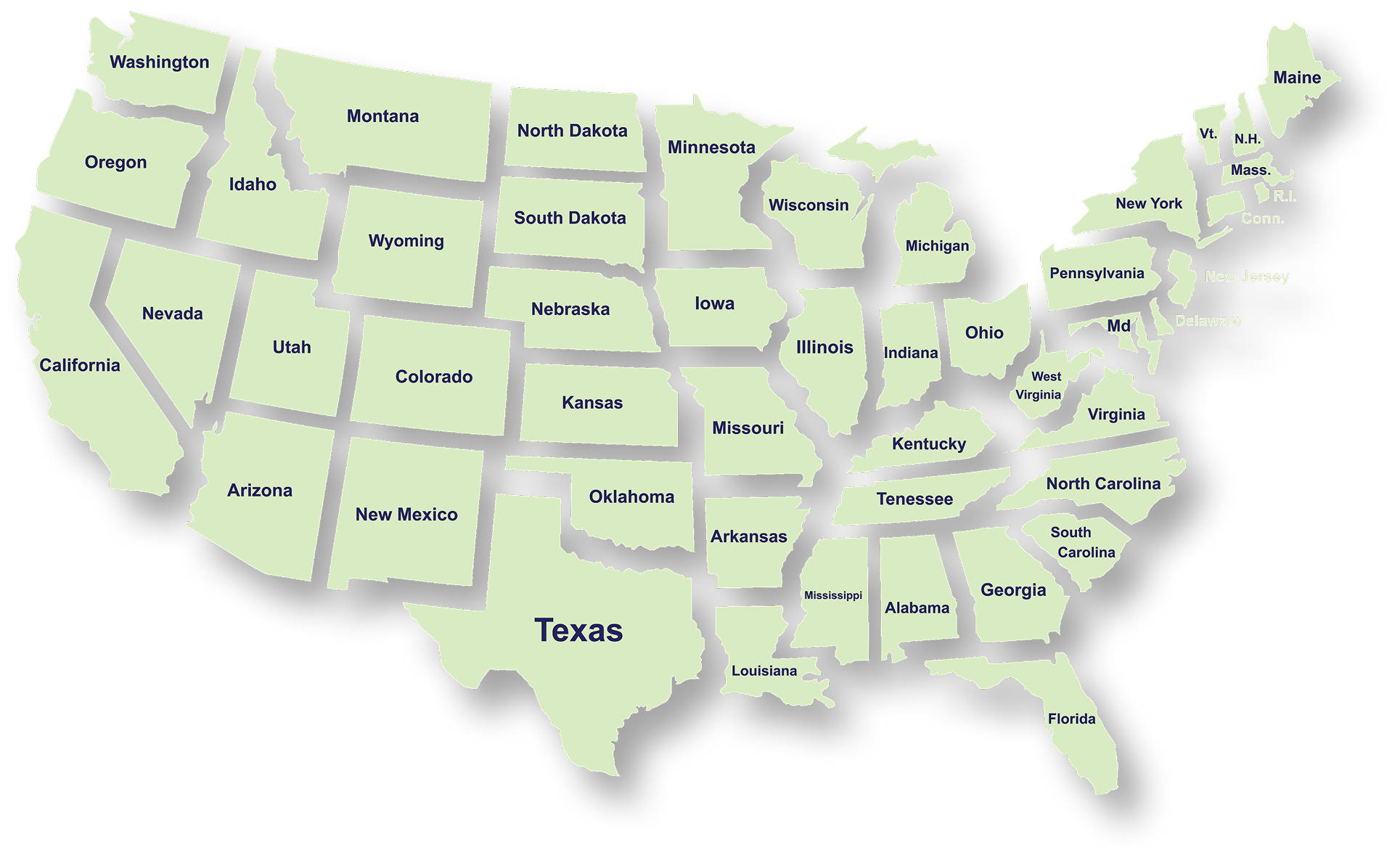
Serving Businesses & Individuals Across USA

We handle accounting, tax filing, and planning with defined timelines and accurate reporting for businesses and individuals across all states.

Frequently Asked Questions

What services does NR CPAs & Business Advisors provide?
What is tax planning and why is it important for businesses?
How can a Virtual CFO help my business?
When should a business consider IRS tax resolution services?
What financial statements does a business typically need?
How can startup advisory services help new businesses?
What is strategic business planning?
What is a Virtual Family Office and who can benefit from it?