Learning Center for Tax and Financial Insights

Stay updated with clear, actionable articles on tax rules, deadlines, deductions, and financial decisions that impact individuals and businesses.

No items found.

Businesses Score Big Tax Benefits with the CARES Act

Article Highlights: Retroactive Net Operating Loss Carrybacks Retroactive 100% Bonus Deprecation for Leasehold, Restaurant and Retail Improvements Limitation on Losses Relaxed Limitation on Deductible Business Interest Relaxed As part of the stimulus package to help offset the financial damage inflicted on businesses as a result of the COVID-19 crisis, Congress restored the ability of businesses that suffer a loss to carry those losses back and recover taxes paid in prior years. The limitation on business interest deductions has also been relaxed, as has the business loss limitation for larger businesses. The legislative package also made a long-awaited beneficial retroactive correction to treatment of qualified improvement property. These changes allow affected taxpayers to recover taxes paid in earlier years, thus providing badly needed cash during these trying times. Net Operating Loss (NOL) - An NOL occurs when a business or individual with a business activity has more allowable tax deductions than it has taxable income, resulting in negative income or a net operating loss. Prior to the tax reform that mostly became effective with 2018 returns (the Tax Cuts and Jobs Act – TCJA), NOLs generally could be carried back to the second prior year; that year’s income was reduced to zero, and as a result, the income tax for that year was also reduced to zero, which allowed the taxpayer to claim a refund of the tax originally paid. If all the loss was not used, the remainder of the loss was carried to the next succeeding year and forward until used up, but for only 20 years after the year of the original loss. The TCJA revised the law to eliminate the carryback of NOLs arising after 2017 and said that generally, NOLs were to be carried forward only, and removed the 20-year carryforward limitation but allowed an NOL to offset no more than 80% of the carryforward year’s taxable income. Now, the recently enacted Coronavirus Aid, Relief, and Economic Security Act, shortened to the CARES Act, has restored NOL carrybacks for losses incurred in years 2018, 2019 and 2020 and extended the carryback period. For these years, NOLs can be carried back five years, and the loss is not subject to the 80% limitation. Since the carryback provisions are retroactive to 2018, a taxpayer who incurred an NOL in 2018 should carry the loss back to 2013 by amending the 2013 return to recover tax paid in that year, then carry any excess loss forward to 2014. If there’s still loss remaining after amending the 2014 return, carry the remaining loss forward to 2015 and amend the 2015 return, and so on. If a loss was incurred in 2019, then the 2019 NOL gets carried back to 2014. If a 2018 loss was already carried forward to the 2019 return and the 2019 return has already been filed, it would need to be amended to carry the loss back to and amend the 2013 return. When the loss year is 2019, the carryback and amending process starts with the 2014 return. This whole process can become a bit complicated depending on the prior years’ situations but needs to be done in preparation for any losses incurred in 2020 as a result of business restrictions or shutdown as a result of the crisis. Qualified Improvement Property – The term “qualified improvement property” refers to leasehold, restaurant and retail improvements. An unintended provision of the 2018 tax reform established the recovery (depreciation) period for qualified improvement property to be 39 years, which made it ineligible for the 100% bonus depreciation deduction that only applies to business property with a recovery period of 20 years or less. The CARES Act makes a technical correction to the original 2018 tax reform legislation by designating qualified improvement property as 15-year recovery property, thus qualifying for 100% bonus depreciation or, if preferred, a 15-year depreciable life. This can be a big benefit for businesses that have been adversely impacted by the crisis, especially restaurants and retail stores that have lost so much business due to the epidemic’s economic fallout and are struggling to survive. A taxpayer who made improvements to their eligible business property in 2018 can take advantage of this change by amending their 2018 return. This correction applies to all future years, so if the business made eligible improvements in 2019 and the 2019 return has already been filed, it can also be amended. Limitation on Losses – The 2018 tax reform imposed business loss limitations on taxpayers except corporations. The CARES Act has made the loss limitation inoperable for businesses (including farming) through December 2020. Thus, this change is retroactive to 2018 and allows taxpayers who were affected by the limitation to amend their 2018 returns. This also applies to 2019 and 2020, so if the 2019 return has already been filed, it can also be amended. Limitation on Deductible Business Interest – Also as part of the 2018 tax reform, large businesses with incomes of $25 million ($26 million in 2019) or more were only allowed a business interest deduction of up to 30% of their adjusted taxable income. That limit has been changed to 50% for 2019 and 2020. Because income is expected to be lower in 2020, a special provision allows the 2019 adjusted taxable income to be used in figuring the 2020 interest deduction limit.

Explore More
No items found.

Employers Can Defer Payroll Taxes

Article Highlights: Applicable Payroll Taxes Deferral Period Payback Times Self-Employed Individuals SBA Loan Forgiveness One of the benefits included in the COVID-19 epidemic stimulus package is the ability for an employer to defer payment of the employer’s share of certain federal payroll taxes. The deferral applies to the employer’s 6.2% share of the Social Security (OASDI) payroll tax. The deferral does not apply to the employer’s 1.45% share of the hospital tax. The deferral is optional, applies to employers of any size and applies to wages paid between March 27, 2020 and December 31, 2020. The deferred payments will be due 50% before December 31, 2021 and the balance before the end of 2022.

Explore More
No items found.

Tax Credit Pays for Keeping Employees on Payroll

Article Highlights: Refundable Employer Retention Credit Employer Qualifications Categories Conflict with Paycheck Protection Loans Credit Amount Qualifying Wages Payroll Reimbursement Advance Credit Payment Planning Considerations To help businesses retain employees and keep them employed during the COVID-19 crisis, Congress has provided a refundable employer retention credit available to all qualifying employers regardless of size, including tax-exempt organizations. To qualify for the credit, employers must fall into one of two categories: Business Operations Curtailed: Eligible employers were carrying out a trade or business during 2020, and the operation of that business is fully or partially suspended due to orders from an appropriate governmental authority limiting commerce, travel, or group meetings due to the COVID-19 outbreak. Gross Receipts Declined 50%: Eligible employers have gross receipts that are less than 50% of their gross receipts for the same quarter in 2019; employers remain eligible until their gross receipts exceed 80% of their gross receipts for the same 2019 calendar quarter. However, an employer who secures an SBA Paycheck Protection Loan created by the CARES Act is ineligible for the employer retention credit, as a Paycheck Protection Loan can be forgiven for wages paid during an 8-week period, thereby leading to double dipping on CARES Act benefits if the business tried to use both benefits. The employer retention credit is a refundable payroll tax credit for 50% of qualified wages up to a maximum wage of $10,000 per employee. Wages taken into account are those paid starting March 13, 2020 through December 31, 2020 and include a portion of the cost of health care provided by the employer. No credit is available with respect to an employee in any period for which the employer is allowed a Work Opportunity Credit

Explore More
No items found.

When Will I Get My Stimulus Check?

Article Highlights: Direct Deposit Stimulus Payments Reasons You May Not Be Receiving a Stimulus Payment Stimulus Payment Phase-Out Payment Schedule by Check Non-Filers The IRS has already sent out 80 million stimulus payments to taxpayers that included their direct deposit information on their most recently filed 2019 or 2018 return. So, if you had filed either your 2019 or 2018 return before the direct deposits were issued, you should already have the money in the bank, UNLESS: You changed bank accounts since you filed your return, which means you will be receiving your stimulus payment by check later. You owe back child support in which case the payment will go to satisfy your back-child support. Your payment was reduced or eliminated because of your higher income. The credit is phased out by 5% of the taxpayer’s adjusted gross income (AGI) that exceeds the filing status threshold. The following table illustrates the phaseouts by filing status and AGI. RECOVERY REBATE CREDIT AGI PHASEOUTS Threshold Complete Phase Out Unmarried Taxpayers (as well as Married Filing Separately) $75,000 $99,000 Head of Household $112,500 $136,500 Married Taxpayer Filing Joint $150,000 $198,000 Stimulus Payments by Check - If you are receiving payment by check, the checks are being issued to the lowest income individuals first where the need is the greatest followed by others with increasing incomes. Here is the release schedule for the payments by check. SCHEDULED STIMULUS PAYMENTS VIA CHECK Adjusted Gross Income Issue Issue Date Less than $10,000 April 24 $10,001 to $20,000 May 1 $20,001 to $30,000 May 8 $30,001 to $40,000 May 15 $40,001 to $50,000 May 22 $50,001 to $60,000 May 29 $60,001 to $70,000 June 5 $70,001 to $80,000 June 12 $80,001 to $90,000 June 19 $90,001 to $100,000 June 26 $100,001 to $110,000 July 3 $110,001 to $120,000 July 10 $120,001 to $130,000 July 17 $130,001 to $140,000 July 24 $140,001 to $150,000 July 31 $150,001 to $160,000 August 7 $160,001 to $170,000 August 14 $170,001 to $180,000 August 21 $180,001 to $190,000 August 28 $190,001 to $198,000 September 11

Explore More
No items found.

Paycheck Protection Program and Health Care Enhancement Act: What's In It?

President Trump has signed the Paycheck Protection Program and Health Care Enhancement Act (PPP & HCE Act), a $484 billion package which was passed by both the Senate and the House the week of April 20, 2020.PPP & The CARES Act Following the passage of the $2.2 trillion CARES Act stimulus package at the end of March, one of the most talked about provisions was the Paycheck Protection Program (PPP). The CARES Act had earmarked $349 billion for PPP, which was designed to help small businesses cover their payroll, benefits, utilities, and rent and mortgage payments. However, it came as no surprise that these loans – forgivable if certain requirements were met – ran out extremely quickly, as small businesses flocked to banks to apply for relief. On paper, $349 billion sounded like a lot of money – but it was “destined to be oversubscribed from the start.” The public demand for more funding allocated to the PPP was a major factor in driving the creation of the latest bill. What’s in the PPP & HCE Act? $310 billion for the SBA’s Paycheck Protection Program $60 billion for the SBA’s economic injury disaster loans and grants, including: ○ $50 billion for economic injury disaster loans - each loan can be up to $2 million with interest rates not to exceed 4% and long-term repayment periods of up to 30 years; ○ and $10 billion for grants of up to $10,000 that do not have to be repaid. Additional funds are provided for the SBA to administer these programs. $100 billion in emergency supplemental appropriations, $75 billion of which is designated for hospitals and health care providers and $25 billion of which is designated to ramp up COVID-19 testing.

Explore More
No items found.

Video - What the Employee Retention Credit Means to You

Congress has authorized an employee retention credit. Employers eligible for this credit are generally those whose trade or business was curtailed as a result of the COVID-19 outbreak. Employers whose gross receipts have declined by 50% or more compared to the prior year as a result of the outbreak also qualify. .embed-container { position: relative; padding-bottom: 56.25%; height: 0; overflow: hidden; max-width: 100%; } .embed-container iframe, .embed-container object, .embed-container embed { position: absolute; top: 0; left: 0; width: 100%; height: 100%; }

Explore More
No results found.
Thank you! Your submission has been received!
Oops! Something went wrong while submitting the form.

Want tax & accounting tips & insights?Sign up for our newsletter.

Thank you! Your submission has been received!
Oops! Something went wrong while submitting the form.

Why Work With Us?

We combine deep tax expertise, financial strategy, and practical business insight to help you manage complexity, stay compliant, and make confident financial decisions.
A dollar sign, representing financial advice or discussion at NR CPAs & Business Advisors.

Experienced CPA and Enrolled Agent Leadership

Guidance led by licensed professionals with deep expertise in tax strategy, compliance, and complex financial matters.
White bar chart with an upward arrow on green circular background representing growth or progress at NR CPAs &. Business Advisors

Support for Growing Businesses and Startups

We understand the financial challenges of growth stage businesses and provide structured guidance to support expansion.
A white hand holding a dollar symbol and ascending bar chart on a green circular background representing financial growth or investment at NR CPAs & Business Advisors..

Strategic Financial Advisory

Our team helps you evaluate financial decisions with greater clarity, supported by practical insights and long term planning.

Fractional CFO Support

Access experienced financial leadership without the commitment and cost of hiring a full time Chief Financial Officer.

Proactive Tax Planning Approach

We focus on identifying tax opportunities throughout the year rather than reacting only during filing season.

Clear and Reliable Financial Reporting

Accurate financial statements and reporting that help you better understand performance and make informed decisions.
White IRS building icon with pillars and a dollar sign above on a green circular background.

Professional IRS Representation

Experienced support in resolving IRS notices, disputes, and compliance matters while protecting your financial interests.

Personalized Client Focus

Every client receives thoughtful attention and tailored financial solutions based on their specific needs and business goals.
Financial matters often involve important decisions. Working with experienced advisors can help you approach them with greater clarity and confidence in your choices.

Need Help With Your Tax or Financial Decisions?

Discuss your situation with our advisors to get clear guidance on tax planning, IRS matters, and the financial decisions ahead.
Business consulting at NR CPAs & Business Advisors.

Request Your Consultation

Fill out the form to discuss your tax concerns, financial questions, or advisory needs with our team. We will review your details and respond shortly.

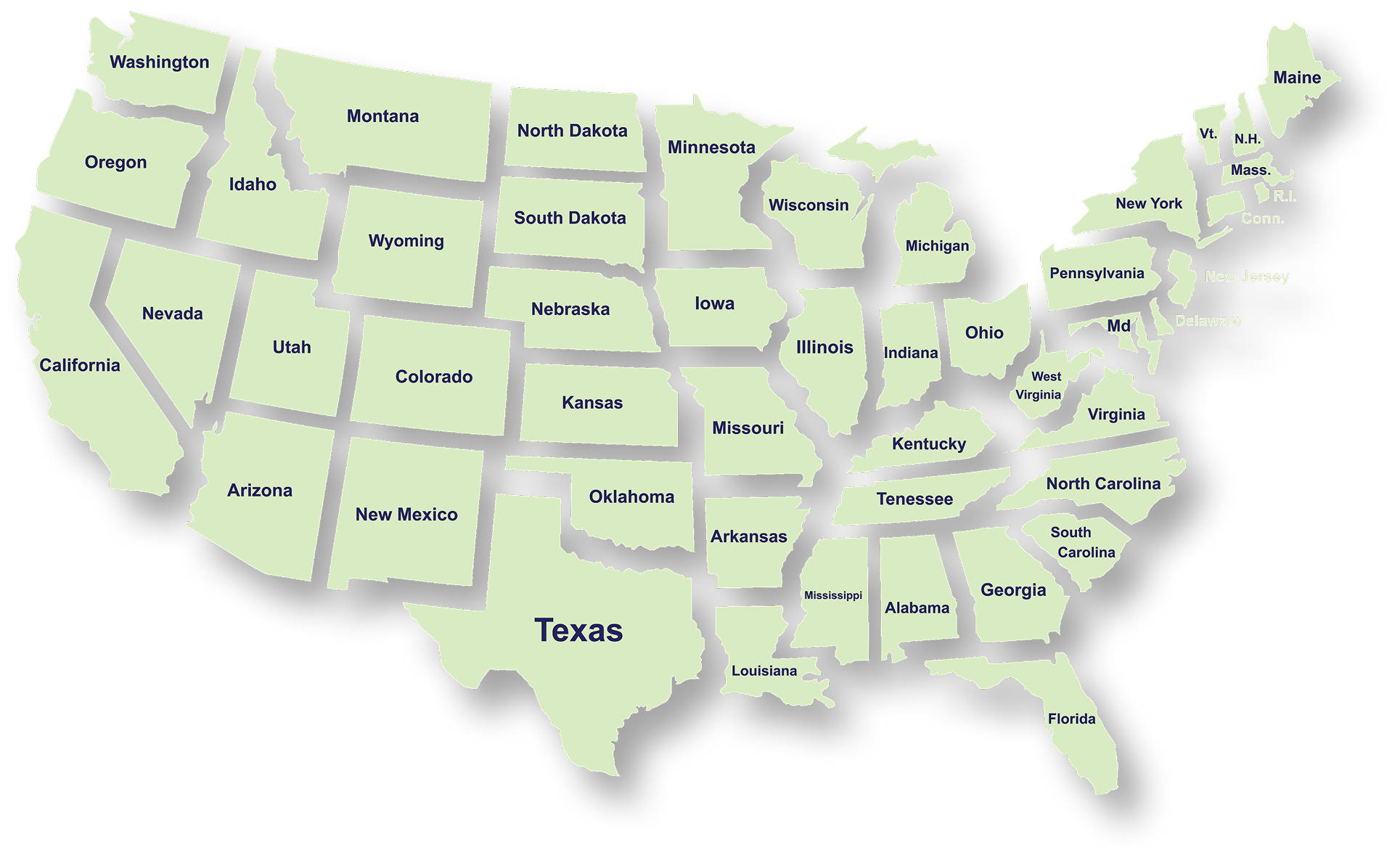
Serving Businesses & Individuals Across USA

We handle accounting, tax filing, and planning with defined timelines and accurate reporting for businesses and individuals across all states.

Frequently Asked Questions

What services does NR CPAs & Business Advisors provide?
What is tax planning and why is it important for businesses?
How can a Virtual CFO help my business?
When should a business consider IRS tax resolution services?
What financial statements does a business typically need?
How can startup advisory services help new businesses?
What is strategic business planning?
What is a Virtual Family Office and who can benefit from it?