Learning Center for Tax and Financial Insights

Stay updated with clear, actionable articles on tax rules, deadlines, deductions, and financial decisions that impact individuals and businesses.

No items found.

How to Create and Use Vendor Records in QuickBooks Online

Your company counts on its supply chains to keep operations running smoothly. When it falters, you can have trouble creating and shipping products. Problems may even crop up that have a negative effect on your internal business needs. We don’t have to tell you that COVID-19 has interrupted supply chains. The pandemic has been catastrophic for many small businesses because of this, and because income has been suddenly and sharply reduced. Some financial help is available, and we hope you’re able to take advantage of it during these extraordinarily difficult times. It’s perhaps more important than ever to carefully track your income and expenses, and we hope you’re using QuickBooks to do so. Among the software’s financial management tools is the ability to maintain thorough records of those vendors that make up your supply chain. Let’s take a look at how this works. Creating Vendor Records We’ll go through the steps for creating vendor records, though you may have at least started on these already. Hover your mouse over Expenses in the toolbar and select Vendors. If you’ve already added some, you’ll see them in a list. To create a new one, click New Vendor in the upper right. Most of the form is easy to complete; it’s primarily contact information. There are a few fields, though, that need special attention. These are: Cost rate/hr and Billing rate/hr. These help you track time costs for your projects. Don’t enter anything here if you pay vendors via bills or expenses. Terms. Due on receipt? 15 days? 30 days? Account no. and Business ID No. You should have these on file. Track payments for 1099. Put a check in this box for any 1099 contractors. When you’re done, click Save. This vendor will now appear in your list. Taking Action You can take a number of actions from QuickBooks’ Vendors screen. You can do a lot of your work directly from QuickBooks’ Vendors page. This screen displays a list of all of your vendors, along with columns for their Phone

Explore More
No items found.

Unemployed by COVID-19? Special Benefits May Apply to You

Article Highlights: Pandemic Unemployment Assistance Benefit Extensions Self-employed Coverage Taxability Withholding – Estimated Payments The CARES Act includes Pandemic Unemployment Assistance (PUA) provisions that extend and supplement state-provided unemployment insurance and are intended to lessen the financial burdens on individuals who have lost their jobs because of the COVID-19 emergency by allowing states to extend unemployment benefits up to 13 weeks and waiving the normal one-week waiting period. The provisions also extend the benefits to individuals who are self-employed, seeking part-time employment, or otherwise ineligible for regular unemployment compensation. To qualify for PUA benefits, you must not be eligible for regular (unrelated to the COVID-19 crisis) unemployment benefits and should be unemployed, partially unemployed, or unable or unavailable to work because of certain health or economic consequences of the COVID-19 pandemic. The PUA program provides up to 39 weeks of benefits, which are available retroactively starting with weeks of unemployment beginning on or after January 27, 2020, and ending on or before December 31, 2020. The amount of benefits paid out will vary by state and are calculated based on the weekly benefit amounts (WBAs) provided under a state’s unemployment insurance laws. Under the CARES Act, the WBA may be supplemented by the additional $600 in unemployment assistance provided per week under the Cares Act. The unemployment benefits are administered by the individual states, and benefits must be applied for through each individual state.

Explore More
No items found.

Coronavirus-Related Tax Relief for U.S. Families and Individuals

As Americans and global citizens, we are living in unprecedented times with the onset of coronavirus (COVID-19) around the world. As we work together to move through these difficult times together, the IRS has provided some tax relief provisions for affected taxpayers. Let's take a look at what's being offered. Extended Due Date to File and Pay Taxes The regular due date for filing your Federal tax return is April 15th of any given tax year. Taxpayers, however, are generally allowed to file an extension of time to file their returns to October 15th of the same year. However, this is not typically considered an extension of time to pay any taxes owed. The IRS has extended the tax deadline for this tax season (tax year 2019) to July 15, 2020. It is important to note that this is an extension to both file and pay any taxes owed. This includes both taxes owed for the 2019 tax filing year and 2020 Federal tax estimated payments. Economic Impact Payments for Individuals and Families Congress recently passed legislation that allows for direct payments to U.S. individuals and their families. Most payments will be based on 2019 tax information, or the 2018 tax return if 2019 has not yet been filed. For those who are not required to file a tax return or for which the IRS does not have bank account information, the IRS has a portal where bank account information can be provided. (Note: Non-filers can enter their information in the “Non-Filers: Enter Payment Info” form, available here.) Those who receive Social Security retirement, disability (SSDI), survivors’ benefits, Railroad Retirement or veteran’s benefits are not required to provide this information as it is already on file. Payments will be made for direct deposit for those with information on file and via check for anyone without readily available banking information.The amount of payment received depends on filing status and adjusted gross income. Single taxpayers or those who are married and file separate returns with gross incomes of less than $75,000 receive $1,200. This amount is reduced by $5 for every $100 which income exceeds $75,000, phasing out completely at $99,000. Married taxpayers with gross incomes of less than $150,000 receive $2,400. This amount is reduced by $5 for every $100 which income exceeds $150,000, phasing out completely at $198,000. Head of household taxpayers with gross income of less than $112,5000 receive $1,200. This amount is reduced by $5 for every $100 which income exceeds $112,500, phasing out completely at $136,500. Those with children under the age of 17 will receive an additional payment of $500 per child. Please note that for individuals who receive social security, disability or retirement benefits with children under 17, the online portal should be utilized to make the IRS aware of each dependent. The payments are scheduled to begin in the middle of April 2020. Recipients should receive a letter from the IRS regarding their economic impact payment within 15 days of payment being made.

Explore More
No items found.

Did You Take Your 2020 RMD Too Soon?

Article Highlights: 2020 RMD Waiver What Are RMDs? Distributions Subject to the Waiver RMD Rollover Who Qualifies for a Rollover? As part of the CARES Act, the requirement for older taxpayers to take required minimum distributions (RMDs) from their retirement plans has been waived for 2020. This is primarily due to the drop in value for most investments as a result of the economic effects of COVID-19. RMDs are required distributions from qualified retirement plans and are commonly associated with traditional IRAs, but they also apply to 401(k)s and SEP IRAs. The tax code does not allow taxpayers to indefinitely keep funds in their qualified retirement plans. Eventually, these assets must be distributed, and taxes must be paid on those distributions. If a retirement plan owner takes no distributions, or if the distributions are not large enough, then he or she may have to pay a 50% penalty on the amount that is not distributed. RMDs historically have needed to begin in the year when the retirement plan owner became age 70½, but a late 2019 tax law change (the SECURE Act) upped the starting age to 72 for years after 2019. The first year’s distribution can be delayed to no later than April 1 of the subsequent year. However, delaying the first distribution means taking two distributions in the subsequent year. The CARES Act RMD waiver applies to: The 2020 RMD for taxpayers who turned 70½ before 2020. The 2019 RMD for taxpayers who turned 70½ in 2019 and chose to defer their first distribution to 2020. The 2020 RMD for taxpayers who turned 72 in 2020. The RMDs for beneficiaries. RMD Rollover: The 2020 waiver for RMDs was not announced until the CARES Act was passed on March 27, 2020. Normally, an RMD cannot be rolled over, but the CARES Act essentially changed 2020 RMDs into eligible rollover distributions, which can be rolled over within 60 days of being received. Some individuals subject to the RMD requirements had already taken their RMD before the CARES Act was enacted and did not have the opportunity to roll the RMD back into their retirement account if the 60-day rollover period had already expired.

Explore More
No items found.

Rebates Are Finally Flowing - Did You Get Yours; Was It Correct?

Article Highlights: Economic Impact Payments What Rebates Are Based Upon Non-Filers Get My Payment Auto-Deposit and Addresses Family Makeup & Income IRS Q&A The IRS has finally started making those much anticipated Economic Impact Payments, aka “Recovery Rebates.” However, not everyone who was expecting one has received theirs, and some may not be the amount expected. The Treasury first looked for a filed 2019 return when they began making the payments. If a 2019 return was not filed in time to catch the payment dates, they used the family makeup and income from the 2018 return if one was filed. If neither was filed, then they paid rebates to recipients of Social Security, SSI disability, survivors, Railroad Retirement and veterans’ benefits. Someone who does not fit into one of those categories is generally deemed to be a non-filer and will not receive a rebate until they either file a return or use the Non-Filer Tool on the IRS website. You can check on the status of your rebate using the “Get My Payment” feature at the same IRS webpage as the non-filer tool. That same page also provides the ability for some taxpayers to enter their direct deposit information If the IRS doesn’t have your direct deposit information in their records, you can use Get My Payment to submit that information after properly verifying your identity and if the payment hasn’t already been scheduled for processing. To protect against potential fraud, Get My Payment won’t allow direct deposit bank information already on file with the IRS to be changed. However, direct deposit information can be updated for people whose direct deposit information on the last return filed was incorrect and resulted in a paper check being issued for their refund. Unfortunately, address changes cannot be made through Get My Payment.

Explore More
No items found.

Congress Makes Charitable Giving Easier During the COVID-19 Crisis

Article Highlights: CARES Act Relaxed Restrictions Contribution AGI Limits Charitable Contribution Deduction for Non-itemizers IRA to Charity Transfers Substantiation Requirements Scammers To encourage charitable contributions to deserving qualified charities during these trying times, Congress has relaxed some of its restrictions related to how much a taxpayer can deduct as a charitable contribution in any given year. Under normal circumstances, cash contributions are limited to 60% of a taxpayer’s adjusted gross income (AGI). However, as has happened in the aftermath of prior disasters such as 2017 hurricanes Harvey, Irma and Maria, the CARES Act has increased the AGI limit to 100% for 2020. Any amount in excess of 100% can be carried over and deducted on subsequent years’ returns until the excess is used up or until five years have passed, whichever happens first. The CARES Act also created an above-the-line charitable contribution for taxpayers who don’t itemize their deductions. This will allow for a charitable deduction for cash contributions to qualified charities of up to $300 made in 2020. While generally, the increased charitable contribution limitations related to natural disasters have applied only to contributions to relief efforts specific to the disaster, the only requirement for the CARES Act provisions is that the donations be in cash. Although not a special provision, if you are age 70.5 or older, you can make charitable contributions by transferring funds from your IRA account to a charity, which are referred to as qualified charitable distributions (QCDs). The only hitch here is that the funds must be transferred directly from the IRA to the charity, meaning your IRA trustee will have to make the distribution to the charity. No minimum amount needs to be transferred, but the maximum of all such transfers for the year is $100,000 per year per taxpayer. This strategy allows you to make a charitable contribution without itemizing deductions; since these distributions are tax-free, you can’t also claim a deduction for them. Because QCDs are nontaxable, your AGI will be lower, and you can benefit from tax provisions that are pegged to AGI, such as the amount of Social Security income that’s taxable and the cost of Medicare B insurance premiums for higher-income taxpayers. If you decide to make a QCD, check with your IRA custodian on the IRA’s rules for how to request the QCD, and be sure to give the IRA custodian ample time to complete the process if you are making the request toward the end of the year. Always get a written acknowledgment from the charity for tax-reporting purposes. For these special 2020 provisions and a QCD, the contributions cannot be made to a private foundation or a donor-advised fund. Don’t forget that cash contributions include those paid by cash, check, electronic fund transfer, or credit card. Taxpayers cannot deduct a cash contribution, regardless of the amount, unless they can document the contribution in one of the following ways:

Explore More
No results found.
Thank you! Your submission has been received!
Oops! Something went wrong while submitting the form.

Want tax & accounting tips & insights?Sign up for our newsletter.

Thank you! Your submission has been received!
Oops! Something went wrong while submitting the form.

Why Work With Us?

We combine deep tax expertise, financial strategy, and practical business insight to help you manage complexity, stay compliant, and make confident financial decisions.
A dollar sign, representing financial advice or discussion at NR CPAs & Business Advisors.

Experienced CPA and Enrolled Agent Leadership

Guidance led by licensed professionals with deep expertise in tax strategy, compliance, and complex financial matters.
White bar chart with an upward arrow on green circular background representing growth or progress at NR CPAs &. Business Advisors

Support for Growing Businesses and Startups

We understand the financial challenges of growth stage businesses and provide structured guidance to support expansion.
A white hand holding a dollar symbol and ascending bar chart on a green circular background representing financial growth or investment at NR CPAs & Business Advisors..

Strategic Financial Advisory

Our team helps you evaluate financial decisions with greater clarity, supported by practical insights and long term planning.

Fractional CFO Support

Access experienced financial leadership without the commitment and cost of hiring a full time Chief Financial Officer.

Proactive Tax Planning Approach

We focus on identifying tax opportunities throughout the year rather than reacting only during filing season.

Clear and Reliable Financial Reporting

Accurate financial statements and reporting that help you better understand performance and make informed decisions.
White IRS building icon with pillars and a dollar sign above on a green circular background.

Professional IRS Representation

Experienced support in resolving IRS notices, disputes, and compliance matters while protecting your financial interests.

Personalized Client Focus

Every client receives thoughtful attention and tailored financial solutions based on their specific needs and business goals.
Financial matters often involve important decisions. Working with experienced advisors can help you approach them with greater clarity and confidence in your choices.

Need Help With Your Tax or Financial Decisions?

Discuss your situation with our advisors to get clear guidance on tax planning, IRS matters, and the financial decisions ahead.
Business consulting at NR CPAs & Business Advisors.

Request Your Consultation

Fill out the form to discuss your tax concerns, financial questions, or advisory needs with our team. We will review your details and respond shortly.

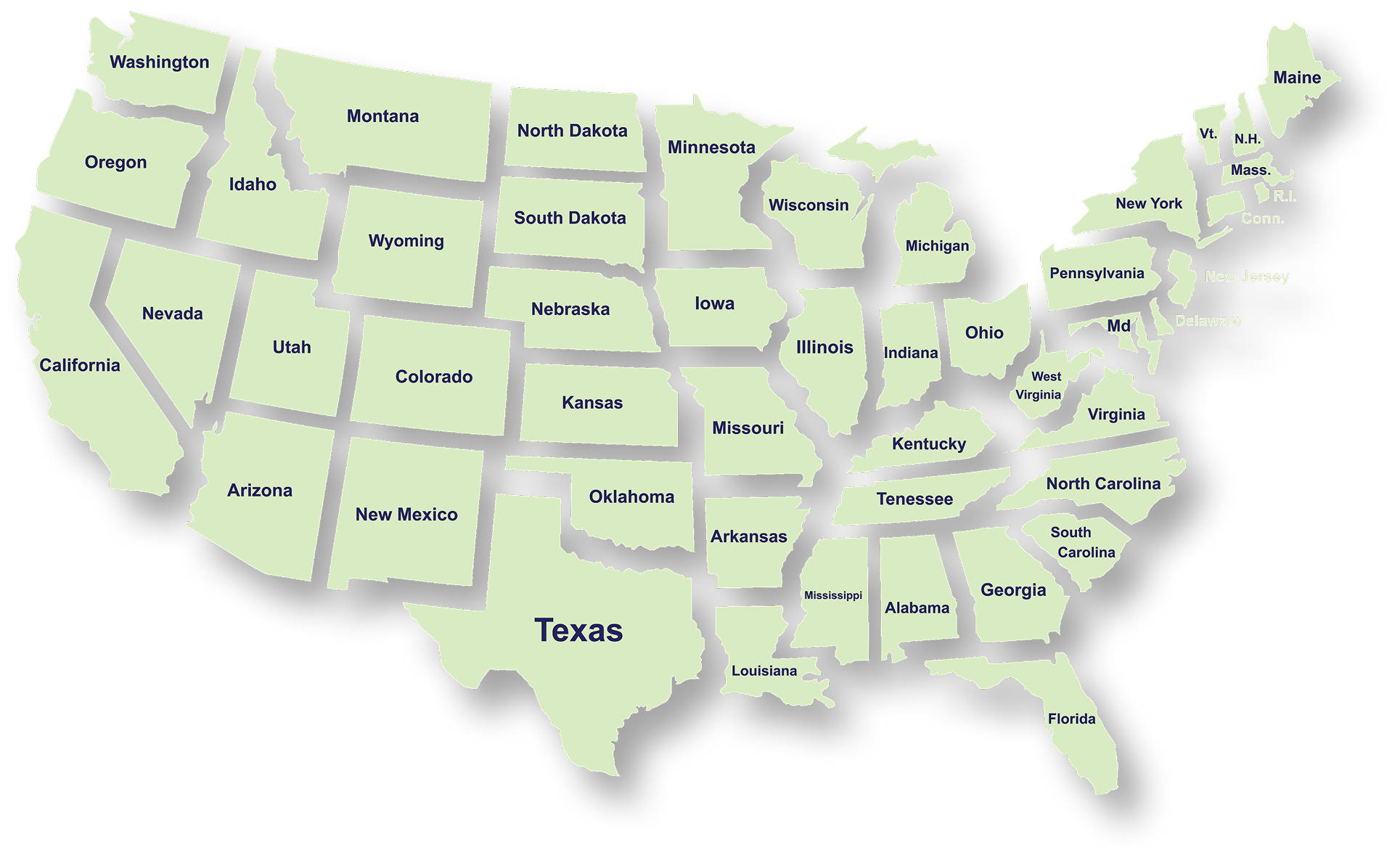
Serving Businesses & Individuals Across USA

We handle accounting, tax filing, and planning with defined timelines and accurate reporting for businesses and individuals across all states.

Frequently Asked Questions

What services does NR CPAs & Business Advisors provide?
What is tax planning and why is it important for businesses?
How can a Virtual CFO help my business?
When should a business consider IRS tax resolution services?
What financial statements does a business typically need?
How can startup advisory services help new businesses?
What is strategic business planning?
What is a Virtual Family Office and who can benefit from it?