Learning Center for Tax and Financial Insights

Stay updated with clear, actionable articles on tax rules, deadlines, deductions, and financial decisions that impact individuals and businesses.

No items found.

April 2020 Business Due Dates

April 15 - The Normal April 15 Tax Filing Due Date has been Extended to July 15, 2020 due to the COVID-19 Outbreak This includes the following: Individual 2019 tax returns, 1040 and 1040-SR, and associated tax payments April installment of 2020 estimated tax payments Household Employer Schedule H Calendar year 2019 C corporation income tax returns, and associated tax payments Calendar year 2020 C corporation estimated tax payments 2019 Fiduciary Returns IRA contributions for 2019 would normally be due April 15, 2020. However, the due date has been extended July 15, 2020. This also applies to HSA and Archer MSA contributions. At this time, it is not. April 15 - Social Security, Medicare and Withheld Income Tax

Explore More
No items found.

How to Use Rules in QuickBooks Online Transactions

Last month, we talked about the types of best practices that can lead to more effective use of QuickBooks Online and, ultimately, more thorough knowledge of your finances. The first one was this: Go through your new transactions every day. Categorizing and otherwise expanding on the data brought in by your financial institutions really pays off when it comes to customer billing, reports, and taxes. Granted, this habit will add time to your daily accounting chores. But there’s a tool on the site that can greatly accelerate this process: Rules. This feature must be used with care to avoid mischaracterizing or, worse, losing track of critical transactions. Here’s how it works. Creating Rules There are two ways to create Rules. The easiest is to start with an existing transaction. Hover over Banking in the left vertical pane and select Banking to open your transaction list. Be sure that you’re looking at transactions that are still For review, as these are the only ones that can be assigned to Rules. Click on a transaction to open its expanded view. At the bottom of the small window that just opened, click on Create rule from this transaction. A screen like this will open: QuickBooks Online’s Rules feature allows you to automatically document transactions that meet certain conditions. Let’s say you own a lawn and garden maintenance company. You always order supplies from the same vendor, so there are numerous transactions every month. You want QuickBooks Online to automatically categorize and clear transactions under $250; above that, and you’d want to see them individually. You’d start by naming the rule, designating it as Money out or Money in, and choosing an account (or leaving this option set at All bank accounts). Next, tell QuickBooks Online whether the conditions you’re about to establish should apply to all or any. That is, if you’re setting multiple conditions, is it all right if just one meets the criteria, or must they all? Below that, you’d specify the actual conditions that must be present for QuickBooks Online to handle similar transactions in the same way. In our example pictured above: The transaction [Description] [is exactly] Lawn and Garden Supply LLC, and, The [Amount] [is less than] $250.

Explore More
No items found.

Can't Pay Your Taxes? Payment Due Date Extended Because of COVID-19

Article Highlights: Automatic 2019 filing and payment extensions If you can’t pay Loans Credit card payments IRS installment agreement Retirement funds Although most American taxpayers receive a refund each year when they file their income tax returns, there are those who for one reason or another end up owing. However, lots end up owing on April 15th and many don’t have the means to pay what they owe. In an unprecedented move to dampen the economic hardship of the COVID-19 virus, the IRS has given taxpayers until July 15th to file their 2019 returns and pay their 2019 tax liability and without having to file a request for extension of time. The due date has also been put off to July 15 for some 2020 estimated tax payments. No penalties or interest will apply during the extended filing period. Generally, tax due occurs when a wage earner has under-withheld on his or her payroll or a self-employed individual failed to make adequate estimated tax payments during the year. This can be a huge problem for those who are unable to pay their liability. If you are currently unable to pay the tax you owe, this extension of the payment due date gives you additional time to make arrangements. It is generally in your best interest to make other arrangements to obtain the funds for paying your taxes rather than be subjected to the government’s penalties and interest for payments made after July 15, 2020. Here are a few options to consider. Family Loan – Obtaining a loan from a relative or friend may be the best bet because this type of loan is generally the least costly in terms of interest. Credit Card – Another option is to pay by credit card with one of the service providers that work with the IRS. However, since the IRS will not pay a credit card discount fee (the fee charged by the credit card company), you will have to pay the taxes due and pay the higher credit card interest rates. Short-Term Payment Plan – If you are able to fully pay the tax owed within 120 days, you can apply for a short-term payment plan online at the IRS web site. You won’t be charged a set-up fee, but will still have to pay penalties and interest until the balance owed is fully paid. Installment Agreement – If you owe the IRS $50,000 or less, you may qualify for a streamlined installment agreement where you can make monthly payments for up to six years. You will still be subject to the late payment penalty, but it will be reduced by half. Interest will also be charged at the current rate. There is a user fee to set up the payment plan. However, the IRS generally waives the fee for low-income taxpayers who agree to make electronic debit payments. In making the agreement, a taxpayer agrees to keep all future years’ tax obligations current. If the taxpayer does not make payments on time or has an outstanding past due amount in a future year, they will be in default of their agreement and the IRS has the option of taking enforcement actions to collect the entire amount owed. Taxpayers seeking installment agreements exceeding $50,000 will need to validate their financial condition and need for an installment agreement by providing the IRS with a Collection Information Statement (financial statements). Taxpayers may also pay down their balance due to $50,000 or less to take advantage of the streamlined option. Tap a Retirement Account – This is possibly the worst option for obtaining funds to pay your taxes because you are jeopardizing your retirement and the distributions are generally taxable at your highest bracket, which adds more taxes to your existing problem. In addition, if you are under age 59½, the withdrawal is also subject to a 10% early withdrawal penalty that compounds the problem even further.

Explore More
No items found.

What the April 15 Tax Filing Deadline Extension Means to You

Article Highlights: Filing Due Date Postponement Payment Due Date Postponement Extensions Late Filing and Late Payment Penalties Other Filings 2019 IRA Contributions Cancelling Direct Withdrawals The IRS has postponed the due date for filing Federal income tax returns and tax payments due on April 15, 2020 until July 15, 2020. Below are the specifics of those postponements. Filing Due Date Postponement: The due date for filing 2019 federal income tax returns due April 15, 2020 is postponed to July 15, 2020. This applies to any 2019 federal income tax returns due April 15, 2020. Thus, it applies to: o 2019 individual 1040 and 1040-SR tax returns o 2019 trust and estate 1041 returns o 2019 calendar year corporation returns o 2019 association returns (Forms 1120-C and 1120-H) CAUTION: This postponement does not include the 1120-S returns which were due on March 16. Nor does it include Foreign Bank Account (FBAR) filings. However, FBARs have an automatic extension to October 15 which effectively makes October 15, 2020 the FBAR due date, so there is no need to worry about those at this time. Payment Due Date Postponement: Any payments that would have been due on April 15, 2020 for the returns listed above are also postponed to July 15, 2020. This includes self-employment tax. Also postponed is the payment of the first 2020 estimated tax installment (Forms 1040-ES, 1041-ES, 1120-W). However, at this time the June 15 estimated tax payment has not been delayed, so for now the June 15th estimated installment needs to be paid on time. There is no limit on the amount of the payment that can be postponed. Previous guidance from the IRS included deferral limits. However, current IRS guidance supersedes that and now there are no limits. Extensions – There is no need to file Forms 4868 or 7004 to request an extension since the postponement is automatic. It is presumed, unless further guidance is provided, that if an additional extension to October 15 is desired, it would require filing an extension before July 15.

Explore More
No items found.

The SBA Is Providing Small Business Disaster Loans for Relief During the Coronavirus Outbreak

The U.S. Small Business Administration (SBA) has never faced a challenge like the COVID-19 outbreak, but they’re stepping up to help small business owners who are suffering financially during these uncertain times. The SBA’s mission is "to maintain and strengthen the nation's economy by enabling the establishment and viability of small businesses and by assisting in the economic recovery of communities after disasters." While most disaster loans the SBA has made in its history went to individuals for homes damaged by natural disasters (weather incidents), the coronavirus pandemic certainly qualifies as a disaster as well. Here’s the official guidance on the program: “The U.S. Small Business Administration is offering designated states and territories low-interest federal disaster loans for working capital to small businesses suffering substantial economic injury as a result of the Coronavirus (COVID-19). Upon a request received from a state’s or territory’s Governor, SBA will issue under its own authority, as provided by the Coronavirus Preparedness and Response Supplemental Appropriations Act that was recently signed by the President, an Economic Injury Disaster Loan declaration.” Any Economic Injury Disaster Loan assistance declaration issued by the SBA will make loans “available statewide to small businesses and private, non-profit organizations to help alleviate economic injury caused by the Coronavirus (COVID-19).” The loans offer up to $2 million in assistance and can help small businesses to overcome the temporary revenue losses they may be experiencing.

Explore More
No items found.

Families First Coronavirus Response Act: What Employers Need to Know

The rapid spread of the COVID-19 virus has begun to initiate an economic downturn and spurred a series of rapid responses on the part of the government. There have been so many proposals and versions floated regarding employee policies during the public health emergency that employers are understandably confused. Though there was an initial belief that the crisis would require businesses to make permanent reductions in their work force in order to survive, the final version of the Act may make these types of drastic actions unnecessary. President Trump signed the new law on March 19th, and it will take effect on April 2nd. The economic stimulus measures and allowances that it makes will extend through December 31st, 2020. The Act is comprehensive and makes significant changes to previously existing rules regarding both the Family Medical Leave Act (FMLA) and Emergency Paid Sick Leave, as well as in other areas. The focus of the changes contained in the new law is on companies with fewer than 500 employees. There is already discussion of exemptions for smaller businesses employing fewer than 50 people whose viability may be threatened by these measures. Also, the measures covered in the Act are not pertinent to companies that employ 500 or more employees. Action will likely follow with regard to companies of this size. Emergency Paid Sick Leave Act If your company employs fewer than 500 employees, the revised Emergency Paid Sick Leave Act makes them eligible for paid sick leave regardless of how long they have been employed by you. If an employee of a company that employs fewer than 500 employees is unable to work in person or to telecommute for any of the following reasons, they qualify for paid sick leave: If they are subject to federal, state, or local isolation or quarantine order related to COVID-19 If a health care provider advises them that they should self-quarantine as a result of concerns related to COVID-19 (self-quarantining without advice does not qualify). If the employee Is seeking medical diagnosis as a result of having symptoms of COVID-19. If the employee Is caring for somebody (not necessarily a family member) who is subject to a federal, state, or local isolation or quarantine due to COVID-19; or who has been advised to self-quarantine by a health care provider as a result of COVID-19. If the employee’s child’s school or care facility has been closed or is unavailable as a result of COVID-19 and the employee needs to care for the child. The Act also includes a provision that an employee qualifies if the employee Is experiencing any other substantially similar condition specified by the Secretary of Health and Human Services in consultation with the Secretary of the Treasury and the Secretary of Labor. Defining the Paid Sick Team Benefit The exact definition of what paid sick time comprises is based upon the number of hours that an individual employee works. For those who are full-time employees, paid sick leave is calculated to be 80 hours. Those who work part-time will be entitled to the same number of hours of paid sick leave that they would normally work during a two-week period. The Act provides a calculation method for those who work significantly different numbers of hours each week. Referencing the numbered reasons listed above, employees who need paid sick leave based on 1, 2 and 3 will be paid their sick leave benefit at the same rate that they are normally paid up to a maximum of $511 per day and a total of $5,110. Those who need paid sick leave based on the above-referenced reasons numbered 4 and 5 will be paid their sick leave hours at a rate equal to two-thirds of their normal pay, with a maximum of $200 per day and a total of $2,000. The Act makes the emergency paid sick time available as of April 2nd, and specifically prohibits employers from requiring employees to use other accrued paid leave before using the emergency leave. Any existing paid sick leave or paid time off is separate and apart from the leave provided by the Act and remains with the employee. Additionally, though employers may require reasonable notice of using the emergency paid sick leave, this notice is not required until after the first workday (or part thereof) that is used. The employer is not permitted to make employees provide advance notice before the first day that they take paid sick leave under the emergency measures. These new measures will be explained in a uniform notice that the Secretary of Labor is required to create and provide no later than March 25th. Employers are required to post this notice in a way that all employees are able to see it. The paid sick leave covered by this Act does not carry over into 2021. Similarly, once the qualifying need has passed and the employee returns to work, the paid sick time benefit ceases. Further clarification to help employers calculate leave benefits is forthcoming, as there is a requirement for guidelines to be available from the Secretary of labor no later than April 2nd. What is already known is that employers will be able to apply for reimbursement of these emergency paid sick leave wages through Social Security tax credits. Emergency Expansion of Family Medical Leave Act COVID-19 has created countless disruptions in American life, and one of the most significant has been the closure of schools and care facilities for children. Employees who have young children who need supervision and care have been torn between their parental responsibilities and the need to support their families. In response, the Families First Coronavirus Response Act includes the Emergency Family and Medical Leave Expansion Act (FMLA Expansion Act). It will enable eligible employees to access a federal source of paid leave. In its original form, the Family and Medical Leave Act’s reach has been limited to those who work for employers who employ 50 or more people, and amongst that population it is only accessible to those who have been with their employer for at least a year and have worked at least 1,250 hours in the previous 12 months. For those individuals, the Act provided unpaid leave under highly specific circumstances, including their own diagnosis with a serious health condition, to care for a newborn infant or adopted or foster child, or to care for a family member with a serious health condition. The new Emergency Act expands those rules, changing the employer threshold to all that employ fewer than 500 employees and expanding who is covered to include all workers who have worked for these employers for a minimum of thirty days. As is true of the paid sick leave act, the Secretary of Labor will be able to take action to exempt organizations with fewer than 50 employees if their business’ viability is threatened by making this leave available. Additionally, certain health care providers and emergency responders may also be exempted.

Explore More
No results found.
Thank you! Your submission has been received!
Oops! Something went wrong while submitting the form.

Want tax & accounting tips & insights?Sign up for our newsletter.

Thank you! Your submission has been received!
Oops! Something went wrong while submitting the form.

Why Work With Us?

We combine deep tax expertise, financial strategy, and practical business insight to help you manage complexity, stay compliant, and make confident financial decisions.
A dollar sign, representing financial advice or discussion at NR CPAs & Business Advisors.

Experienced CPA and Enrolled Agent Leadership

Guidance led by licensed professionals with deep expertise in tax strategy, compliance, and complex financial matters.
White bar chart with an upward arrow on green circular background representing growth or progress at NR CPAs &. Business Advisors

Support for Growing Businesses and Startups

We understand the financial challenges of growth stage businesses and provide structured guidance to support expansion.
A white hand holding a dollar symbol and ascending bar chart on a green circular background representing financial growth or investment at NR CPAs & Business Advisors..

Strategic Financial Advisory

Our team helps you evaluate financial decisions with greater clarity, supported by practical insights and long term planning.

Fractional CFO Support

Access experienced financial leadership without the commitment and cost of hiring a full time Chief Financial Officer.

Proactive Tax Planning Approach

We focus on identifying tax opportunities throughout the year rather than reacting only during filing season.

Clear and Reliable Financial Reporting

Accurate financial statements and reporting that help you better understand performance and make informed decisions.
White IRS building icon with pillars and a dollar sign above on a green circular background.

Professional IRS Representation

Experienced support in resolving IRS notices, disputes, and compliance matters while protecting your financial interests.

Personalized Client Focus

Every client receives thoughtful attention and tailored financial solutions based on their specific needs and business goals.
Financial matters often involve important decisions. Working with experienced advisors can help you approach them with greater clarity and confidence in your choices.

Need Help With Your Tax or Financial Decisions?

Discuss your situation with our advisors to get clear guidance on tax planning, IRS matters, and the financial decisions ahead.
Business consulting at NR CPAs & Business Advisors.

Request Your Consultation

Fill out the form to discuss your tax concerns, financial questions, or advisory needs with our team. We will review your details and respond shortly.

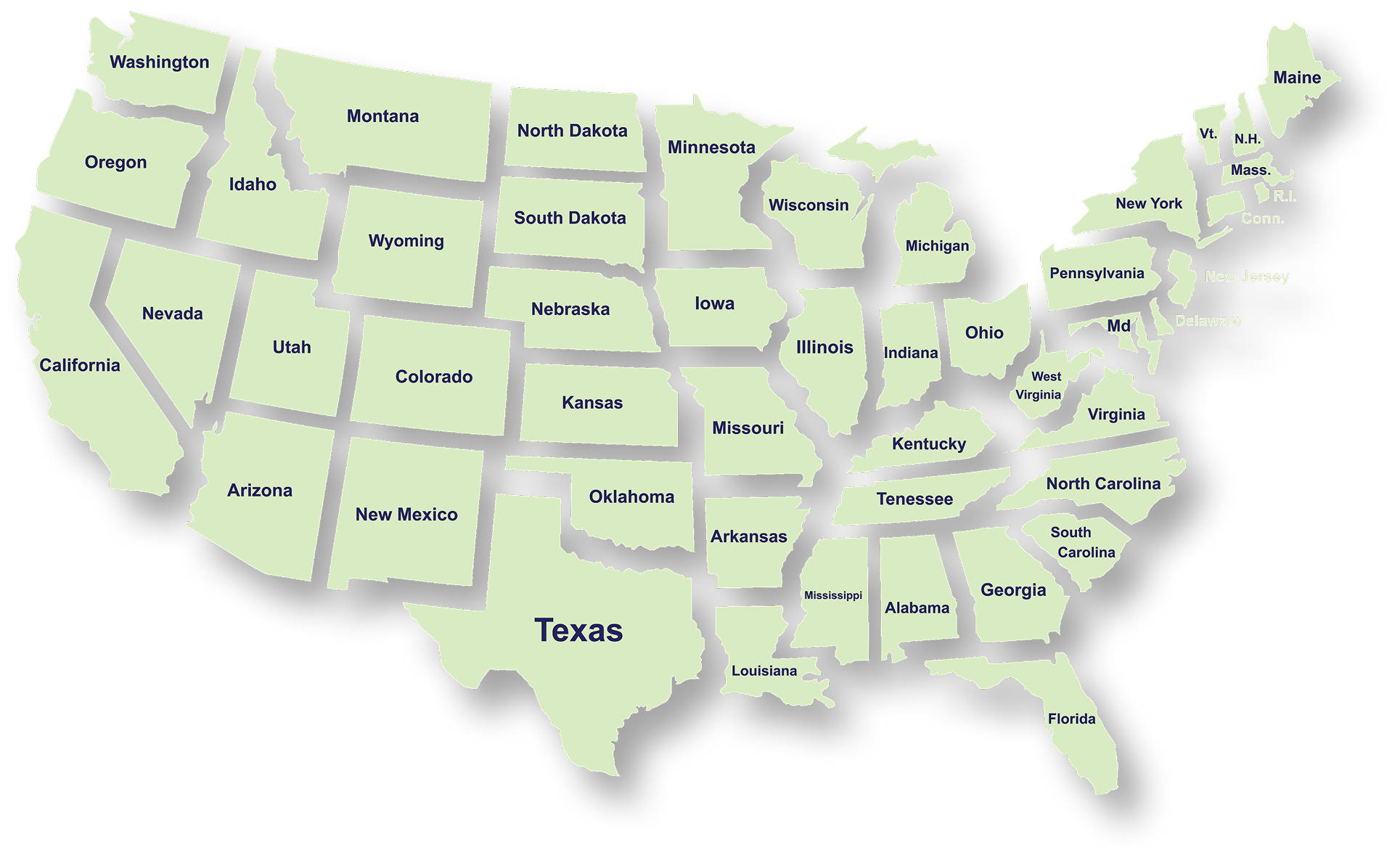
Serving Businesses & Individuals Across USA

We handle accounting, tax filing, and planning with defined timelines and accurate reporting for businesses and individuals across all states.

Frequently Asked Questions

What services does NR CPAs & Business Advisors provide?
What is tax planning and why is it important for businesses?
How can a Virtual CFO help my business?
When should a business consider IRS tax resolution services?
What financial statements does a business typically need?
How can startup advisory services help new businesses?
What is strategic business planning?
What is a Virtual Family Office and who can benefit from it?