Learning Center for Tax and Financial Insights

Stay updated with clear, actionable articles on tax rules, deadlines, deductions, and financial decisions that impact individuals and businesses.

No items found.

Coronavirus and Taxes: Frequently Asked Questions (FAQ)

The COVID-19 outbreak is affecting every facet of our lives – including our taxes. Check here for all your FAQs to see how you may be impacted. Q: Has the government extended the filing deadline? A: Yes, the federal government has extended the April 15 filing deadline for 2019 tax returns to July 15, 2020. Please check with your tax preparer about whether or not your state extended the deadline. Q: Has the government postponed the deadline to pay my taxes? A: Yes, as a result of extending the filing due and as a result of a previous postponement, the time for taxpayers to pay their 2019 taxes is extended until July 15, 2020. Please check with your tax preparer regarding any postponement available for your state tax. Q: Is April 15 still the last day I can make an IRA contribution for 2019? A: No, the last date to make an IRA contribution is the same as the tax return filing due date so you now have until July 15, 2020 to make the contribution. Q: Are Corporation taxes affected by the extended filing due date? A: Yes, the filing due date for calendar year C-corporations has also been extended to July 15, 2020. As a result of extending the filing due date, the payment of taxes and filing of estimated taxes has also been extended. Q: Are estate and trust income taxes also extended?

Explore More
No items found.

Beware of Scammers During the COVID-19 Crisis

As part of the efforts to contain the COVID-19 outbreak, the elderly, especially those over the age of 80 who are most susceptible the dangers of the virus, have been asked to self-isolate themselves. At the same time, the public has been asked to assist family, friends and neighbors who can’t do their own their grocery shopping, pick up medication, or need other assistance. Unfortunately, there are those among us who would take advantage during this crisis. For instance, someone pretending to be a neighbor may call and offer to provide assistance with grocery shopping. Or the caller might pretend to be from a charitable or government service that provides shopping services for those confined at home. These crooks are clever, so you have be very cautious. If you don’t know the person, don’t give them your credit card number or any other personal information such as your Social Security number, driver’s license, bank information, passwords or other financial information. If you are a family member of someone who is confined at home and might not be aware of their risk of being scammed, please take time to call them and caution them about the risks. This might also be a good time to discuss other means scammers use to steal your identity or separate you from your money. One of the most popular methods these unscrupulous people use is requesting your personal information by e-mail. They are pretty good at making their e-mails look as if they came from a legitimate source such as the IRS, your credit card company, or your bank. You need to be very careful when responding to e-mails asking you to update things such as your account information, personal identification number (PIN), or password. First and foremost, you should be aware that no legitimate company would make such a request by e-mail. If one does, the e-mail should be deleted and ignored, just like spam e-mails. We have seen bogus e-mails that looked like they were from the IRS, well-known banks, credit card companies, and other pseudo-legitimate enterprises. The intent is to trick you and have you click through to a website that also appears legitimate, where they have you enter your secure information. Here are some examples: E-mails that appear to be from the IRS indicating you have a refund coming and claiming that additional information is needed to process the refund. The IRS never initiates communication via e-mail! If you receive this type of e-mail, you should know right away that it is bogus. If you are concerned, please free to call this office. E-mails from a bank indicating that it is holding a wire transfer and needs your bank routing information and account number. Don’t respond. If in doubt, call your bank. E-mails saying you have a foreign inheritance and that the sender needs your bank info to wire the funds. The funds that will get wired are yours going the other way. Remember: if it seems too good to be true, it generally is.

Explore More
No items found.

Why You Need a Financial Advisor Even More in Uncertain Times

We are living during a period of trying, uncertain times. The current outbreak of the Coronavirus disease (COVID-19), has had a significant impact on the way we go about our daily lives. From how we work, to how we live, to how we relax, no aspect of our lives has gone untouched. With a potential recession on the horizon and so much unknown about how we will move forward as a society, what does that mean for your business? Now more than ever, you will want to turn to your financial advisor to help you come with a plan. Why Your Financial Advisor Is Essential in Times of Uncertainty 1. They keep you informed on current events and developments. Changes can happen quickly in this time of global crisis. The government may implement policies to help provide relief for taxpayers. Your small business may be eligible for special incentives that were not previously available. Your financial advisor can help to keep you aware of these changes, keeping you aware of your options. Changes that result in fiscal policy relief for taxpayers will likely result in new deadlines to comply with any resulting reporting changes. 2. They can oversee both your business and personal finances. Turbulent times will not only impact your business, but your personal finances as well. Your financial advisor can work with you to set up a plan for your business and a plan for your family finances. This can provide you with the peace of mind that both your company and your loved ones will stay protected no matter what lies ahead. 3. They’ll help you manage cash flow. The Coronavirus disease (COVID-19) is impacting the way that people go about our daily lives. Large events are being canceled, travel has become restricted, and even schools are being closed for the foreseeable future. If your small business is in a related industry (or even an indirectly related one), you may already be experiencing a negative impact on your bottom line. Your financial advisor can help you create a plan to curb expenses and evaluate income projections to help you keep your business moving forward. 4. They’ll save you time and money. Now more than ever, your focus needs to be on the best way to keep your daily business operations stable. Allowing your financial advisor to take the reins of your financial situation will not only save you lots of time, but also provide you with peace of mind that your business economic affairs are under control. 5. They can help you plan for emergencies. The developments related to COVID-19 outbreak are happening so quickly that no one can anticipate what tomorrow will bring. Your financial advisor can help you to establish sources of emergency funding that may be needed to help your business operations through loans, grants, or other funding sources. They can also help you to prepare the financial statements and other documents that may be necessary as a part of the application process. What Can I Do to Prepare My Business Now? With economic uncertainty on the horizon, here are a few things that you can do now to prepare yourself and your business. Look for Additional Revenue Streams Are there ways that you can diversify your business to bring in additional revenue? Can you offer a new product or service that is a complement to what you already have? Do any of your clients make up a significant portion of your business? Now might be the time to look into bringing on new clients or expanding into new markets to help reduce your risk should you lose a major account. Manage Debt If you have a significant debt load, the effects of a recession could magnify the impact on your business. If you have cash on hand, look for ways to create an emergency fund, while also working to reduce your debt load. Taking action now can help to avoid getting behind on payments or even bankruptcy should the market take a downturn. While uncertainty can make you nervous, it does not have to be a cause for alarm. Having a financial advisor on your side to help you navigate the unknown can help to ease your mind, allowing you to focus on running your business. If you have any questions regarding the impact of the Coronavirus disease (COVID-19) on today's current financial situation or you would like to learn more about our services and how we can help, please feel free to contact us for more information.

Explore More
No items found.

Q&A: Understanding SBA Disaster Loans and What They Mean for You

If you’re a small business owner struggling financially due to the COVID-19 outbreak, there is help available. The SBA is offering Economic Injury Disaster Loans of up to $2 million – here are answers to the FAQs. Q: How much funding can I get? Small businesses that need support through the disaster recovery period can borrow as much as $2 million. The Economic Injury Disaster Loan (EIDL) provides an interest rate of under 4%. Q. How do I know if I qualify for Disaster Assistance? The best way to determine whether you meet the criteria for a “small” business is through the North American Industry Classification System Codes and the Table of Small Business Size Standards through the SBA. Keep in mind that in order to determine qualification, a business is gauged both on its own without affiliates and when combined with its affiliates. Affiliates is a term that is used broadly when it comes to Disaster Loans: click here to see the specific regulations. Both with and without affiliates, to qualify the business is not allowed to go above the established standard for its industry, and the rule on whether to use the numbers for the business alone or with affiliation is based on whichever of the two is higher. To get an idea of what would be considered small for different industries, the standard for the manufacturing industry dictates that for a business to be considered small it can’t employ more than 500 people. For a sit-down restaurant to qualify as small, it cannot average more than $8 million in revenues per year; and for retailers the average annual sales can’t be over $7 million. Q. Is there a maximum amount of assistance that I can get? Yes. No more than $2 million is available under the program currently being used. Q. Are there limits to what the loans can be used for? The purpose of the loan is to help businesses survive through the disaster recovery period and to mitigate the economic damages that it suffers. The loans are explicitly only to be used for that purpose until things get back to normal. This means that businesses that have suffered financial injury can apply for an EIDL to cover their losses and to provide what they need to continue business operations to replace what they would have needed under circumstances prior to the crisis. The amount cannot exceed that threshold, and will be calculated based on three criteria: What your total debt is What your operating expenses are for the disaster recovery period and what will provide working capital during that time that puts you in a reasonable position What your working capital position and manageable expenses would have been had there been no disaster When making the determination, the SBA will not necessarily determine that the amount of financial injury you demonstrate will be the same amount that you are eligible to borrow. Each decision will be based on the data and backup you provide as well as what they view as the reasonableness of your ask. Additionally, the loans cannot be used to make improvements or grow the business beyond making repairs to damage caused by the disaster. The only exception is if there are local building codes that demand changes that result in expansion. Q. Are the terms of the loans reasonable? Terms will be dependent upon the availability of alternative sources of credit, and how much time it is likely for the business to need to repay the loan, but they can have interest rates of 4% or less and maturity of up to thirty years. Understanding the Application Process Q. Does my credit affect my ability to get a loan? Your credit history will definitely be taken into consideration by the SBA. Additionally, you will need to demonstrate your ability to repay the loans when they come due, and you will probably be required to pledge collateral such as real estate to secure the loan, though lack of collateral will not preclude approval. For loans of $25,000 or more, whether for a physical business loan or an EIDL loan, collateral will be particularly important. The SBA is required under the EIDL system to review the financial statement for the business, as well as for stakeholders including each officer, each partner and director, and each stockholder whose ownership stake is twenty percent or greater. Personal repayment will need to be guaranteed by the business’ principals, and those individuals may also be required to pledge additional collateral in order for the loan to be secured, though this requirement may be waived for loans relating to the COVID-19 crisis. Q. What other information is required beyond credit history? Your application must include a signed and dated IRS Form 4506-T, which will serve as notice to the IRS that your tax return information can be released to the SBA so that they can consider your loan. The application also requires current information on your finances, including:

Explore More
No items found.

VLOG: IRS Delays Tax Season Filing and Payment Due Dates to July 15.

Watch this video to learn of the latest IRS postponements to tax filing and payment due dates. .embed-container { position: relative; padding-bottom: 56.25%; height: 0; overflow: hidden; max-width: 100%; } .embed-container iframe, .embed-container object, .embed-container embed { position: absolute; top: 0; left: 0; width: 100%; height: 100%; }

Explore More
No items found.

What Does the $2 Trillion Stimulus Package Mean for You?

Article Highlights: Recovery Rebate Penalty-Free Retirement Withdrawals Waiver of the 2020 RMD Requirement Temporary Removal of Charitable Contribution Limits Employer Student Loan Payments Employer Delayed Payroll Tax Deposits Employer Credit for Retaining Employees Temporary Reinstatement of NOL Carrybacks Limitation on Losses Prior Year AMT Credit for Corporations Limitation on Business Interest Loan Guarantees and Subsidies The “Coronavirus Aid, Relief, and Economic Security Act” (Cares Act) includes many tax and financial breaks for both individuals and businesses. We broke down many of the essential elements and how they can assist you and your business during this troubling time.Recovery Rebate - The most talked about provision is the “recovery rebates” for individuals. These rebates are actually credits allowed on taxpayers’ 2020 tax returns that will be paid out in advance by the Treasury. Each eligible individual will receive $1,200 ($2,400 for married couples filing jointly) plus an additional $500 for each qualifying child (under age 17 at years end). These rebates are intended for low- to middle-income individuals, so they are phased out for higher income folks. For unmarried individuals the credit begins to phase out at an AGI of $75,000 and is fully eliminated at $98,990. For those filing as head of household, the phase-out range is $112,500 to $136,490, and for married couples filing jointly it is $150,000 to $197,990. The Treasury will determine who will receive a check and the amount they are entitled to based on the individual’s 2019 tax return. Where no 2019 return has been filed at the time of the rebate payment, the Treasury will use the 2018 tax return. For those who have not filed either a 2018 or 2019 return, the Treasury will provide a payment to individuals that received 2019 Social Security or Railroad Retirement benefits. In recent guidance, the IRS has indicated they will be providing an on-line means for taxpayers to provide their direct deposit information so the rebates can be expedited rather than having to wait for a check. The IRS has also indicated they would provide later guidance on how people that are not required to file a return can file in order to obtain an advance rebate. Further details will be provided at www.IRS.gov/coronavirus.Where an advance rebate is more or less than allowed because an individual’s filing status or family size is different in 2020 or the credit is subject to phase-out based on 2020 income, the adjustment is made on the 2020 tax return. Thus, individuals may be entitled to an additional credit, and if the advance rebate was greater than the actual credit, they will NOT have to repay the excess. This means that individuals who otherwise wouldn’t have a 2020 return filing requirement based on their income will likely have to file to reconcile their advance rebate with their actual credit.The rebates will not be paid to individuals who are claimed as a dependent of another on a prior year return. Also ineligible for the credit or an advance rebate are those without a Social Security number (or ATIN for an adopted child who doesn’t yet have an SSN).Additional Key Provisions – The Cares Act is over 500 pages covering tax provisions, economic stimulus, business loans, health care and more. Following is an overview of the key issues relating to individuals and small businesses. Individuals: Penalty Free Retirement Withdrawals - Penalty-free withdrawals from qualified retirement plans (including 401(k)s, TSAs, SEPs and traditional IRAs) are allowed. The withdrawals are limited to $100,000 and the income is taxable over a three-year period with an option to also recontribute the withdrawal over a three-year period. RMD Waiver - There is a one-year waiver for the 2020 required minimum distribution (RMD) from qualified plans and traditional IRAs for taxpayers that turned 70.5 in a year before 2020 and those that turn 72 in 2020. This prevents them from having to take a distribution when the stock market is in a decline. Charitable Contributions - A suspension of charitable contribution limits applies for 2020. Generally, for cash gifts, tax deductible charitable contributions are limited to 60% of adjusted gross income (AGI). The suspension of the limitation will allow taxpayers to make larger charitable contributions during this trying time. Also included is an above-the-line charitable deduction limited to $300 of cash donations for those that don’t itemize their deductions. Student Loan Payments - Employees can exclude from income payments (Up to $5,250) made before January 1, 2021 by their employers towards their student loans.

Explore More
No results found.
Thank you! Your submission has been received!
Oops! Something went wrong while submitting the form.

Want tax & accounting tips & insights?Sign up for our newsletter.

Thank you! Your submission has been received!
Oops! Something went wrong while submitting the form.

Why Work With Us?

We combine deep tax expertise, financial strategy, and practical business insight to help you manage complexity, stay compliant, and make confident financial decisions.
A dollar sign, representing financial advice or discussion at NR CPAs & Business Advisors.

Experienced CPA and Enrolled Agent Leadership

Guidance led by licensed professionals with deep expertise in tax strategy, compliance, and complex financial matters.
White bar chart with an upward arrow on green circular background representing growth or progress at NR CPAs &. Business Advisors

Support for Growing Businesses and Startups

We understand the financial challenges of growth stage businesses and provide structured guidance to support expansion.
A white hand holding a dollar symbol and ascending bar chart on a green circular background representing financial growth or investment at NR CPAs & Business Advisors..

Strategic Financial Advisory

Our team helps you evaluate financial decisions with greater clarity, supported by practical insights and long term planning.

Fractional CFO Support

Access experienced financial leadership without the commitment and cost of hiring a full time Chief Financial Officer.

Proactive Tax Planning Approach

We focus on identifying tax opportunities throughout the year rather than reacting only during filing season.

Clear and Reliable Financial Reporting

Accurate financial statements and reporting that help you better understand performance and make informed decisions.
White IRS building icon with pillars and a dollar sign above on a green circular background.

Professional IRS Representation

Experienced support in resolving IRS notices, disputes, and compliance matters while protecting your financial interests.

Personalized Client Focus

Every client receives thoughtful attention and tailored financial solutions based on their specific needs and business goals.
Financial matters often involve important decisions. Working with experienced advisors can help you approach them with greater clarity and confidence in your choices.

Need Help With Your Tax or Financial Decisions?

Discuss your situation with our advisors to get clear guidance on tax planning, IRS matters, and the financial decisions ahead.
Business consulting at NR CPAs & Business Advisors.

Request Your Consultation

Fill out the form to discuss your tax concerns, financial questions, or advisory needs with our team. We will review your details and respond shortly.

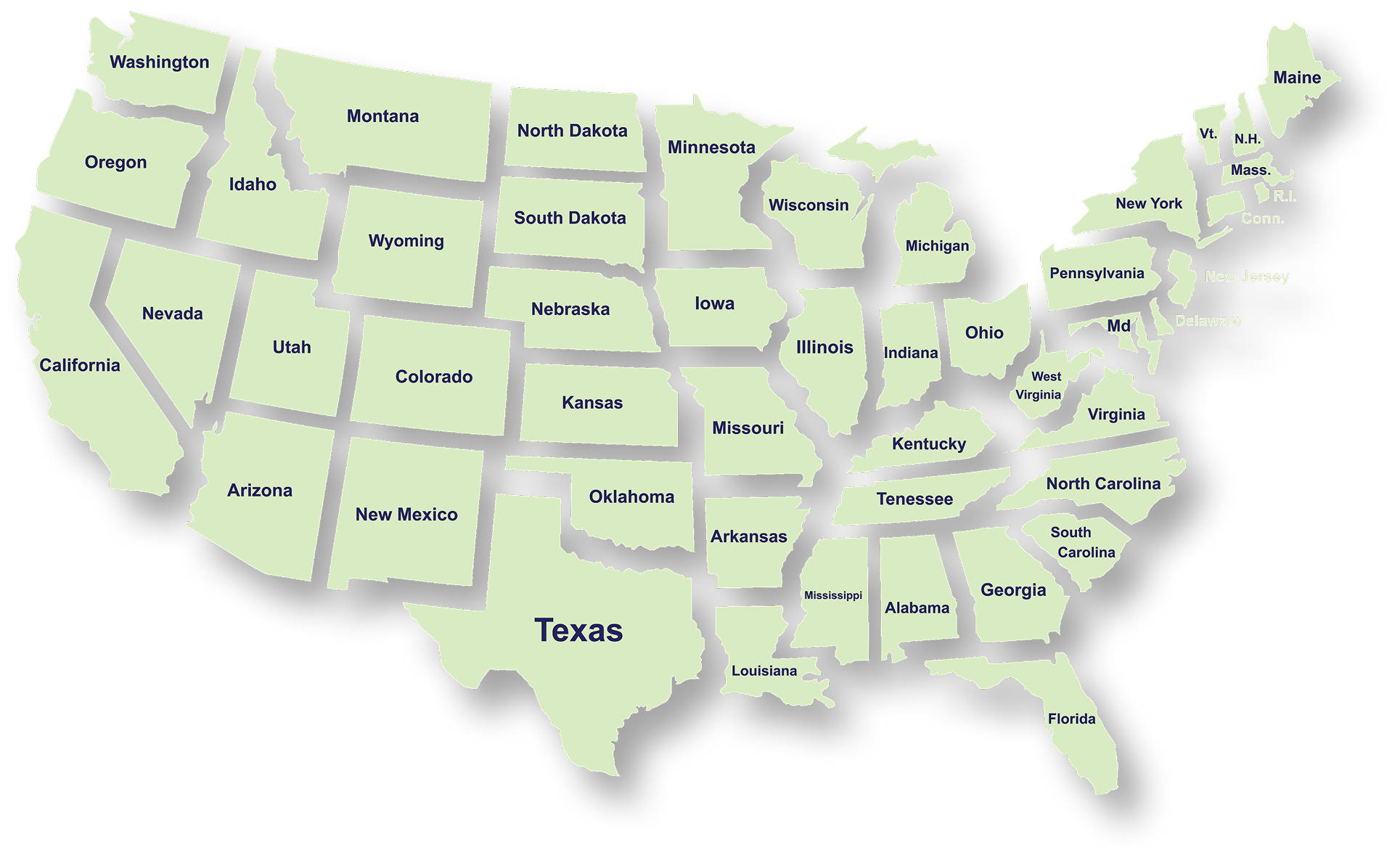
Serving Businesses & Individuals Across USA

We handle accounting, tax filing, and planning with defined timelines and accurate reporting for businesses and individuals across all states.

Frequently Asked Questions

What services does NR CPAs & Business Advisors provide?
What is tax planning and why is it important for businesses?
How can a Virtual CFO help my business?
When should a business consider IRS tax resolution services?
What financial statements does a business typically need?
How can startup advisory services help new businesses?
What is strategic business planning?
What is a Virtual Family Office and who can benefit from it?