Learning Center for Tax and Financial Insights

Stay updated with clear, actionable articles on tax rules, deadlines, deductions, and financial decisions that impact individuals and businesses.

No items found.

Big Tax Changes for Divorce Decrees after 2018

Article Highlights: Pre-2019 Alimony Post-2018 Alimony Definition of Alimony Alimony and IRA Contributions State Treatment of Alimony Welcome to 2019 and a delayed provision of the tax reform, also known as the Tax Cuts and Jobs Act (TCJA). For divorce agreements entered into after December 31, 2018, or pre-existing agreements that are modified after that date to expressly provide that alimony received is not included in the recipient’s income, alimony will no longer be deductible by the payer and won’t be income to the recipient. This is in stark contrast to the treatment of alimony payments under decrees entered into and finalized before the end of 2018, for which alimony will continue to be deductible by the payer and income to the recipient. Having the alimony treated one way for one segment of the population and the exact opposite for another group of individuals seems unfair and may ultimately make its way into the court system. But in the meantime, parties to a divorce action need to be aware of the change and compensate for it in their divorce negotiations, for a decree entered into after 2018. This is not the first time Congress has tinkered with alimony. Way back in the mid-1980s, the definition of alimony was altered to prevent property settlements and child support from being deducted as alimony. Under the definition of alimony since then, payments: (1) Must be in cash, paid to the spouse, the ex-spouse, or a third party on behalf of a spouse or ex-spouse, and the payments must be made after the divorce decree. If made under a separation agreement, the payment must be made after execution of that agreement. (2) Must be required by a decree or instrument incident to divorce, a written separation agreement, or a support decree that does not designate payments as non-deductible by the payer or excludable by the payee. Voluntary payments to an ex-spouse do not count as alimony payments. (3) Cannot be designated as child support. Child support is not alimony. (4) Are valid alimony only if the taxpayers live apart after the decree. Spouses who share the same household can’t qualify for alimony deductions. This is true even if the spouses live separately within a dwelling unit.

Explore More
No items found.

Unforced Errors - The 8 Most Common IRS Tax Penalties and How to Avoid Them in 2019

You know the old line about the inevitability of death and taxes? It’s still true. What isn’t inevitable, however, is the need to pay penalties to the IRS. It happens, but it doesn’t have to, and the main reason that it does is because taxpayers don’t educate themselves about the rules. When you get hit with an IRS penalty, it adds on to a number that you already wish you didn’t have to pay. To ensure that you get through tax season without unnecessary costs and aggravation, here’s a list of the tax penalties that the IRS most frequently assesses against taxpayers. The 8 Most Common Tax Penalties Assessed Penalty for underpaying estimated tax payments Penalty for taking early withdrawals from tax-advantaged retirement accounts, including IRA accounts and 401(k) accounts Penalty for taking nonqualified withdrawals from 529 plans, health savings accounts (HSAs), and similar tax-favored accounts Penalty for failing to take required minimum distributions (RMDs) from tax-favored retirement accounts Penalty for making excess contributions to IRAs and other tax-favored accounts Penalty for failing to file, or for filing your required tax return after the designated due date Penalty for failing to pay your taxes on time Penalty for filing a substantially incorrect tax return or taking frivolous positions on a return Let’s take a deep dive into each. The more you know, the better you’ll understand how to avoid these mistakes. 1. Penalty for not making estimated tax payments Where does your income come from? If you’re a W-2 employee whose employer withholds your federal income tax on your behalf, then estimated tax payments are not something you need to worry about. On the other hand, if you get income from which withholding isn’t deducted, then you are legally obligated to submit estimated quarterly tax. Failure to do so is subject to penalty. Who has to submit quarterly estimated taxes? You do if you’re a part of the “gig” economy which makes part or all of your income from freelance jobs or independent contracting work, or if you’re a retiree who relies on or derives income from Social Security and your personal savings accounts or other accounts whose withdrawals are taxable (or subject to capital gains). Own a small business? If you’re subject to self-employment tax, then you’re supposed to submit it quarterly. Though this requirement is straightforward, most people start their income journey as W-2 employees: they may have no familiarity with estimated quarterly taxes, or if they do they may not be in the habit of paying it and have forgotten. Whatever the reason, the penalties for failure to make these payments can add up pretty quickly. The government has set up the quarterly payments so that the IRS Form 1040-ES is marked with four dates throughout the year — April 15th, June 15th, September 15th and January 15th (or the next business day if the 15th falls on weekend or legal holiday) of the year that the year’s tax filing is due. In doing so, they have it set up so that the majority of the taxes that are owed are paid throughout the year, though not on a weekly, biweekly or monthly basis the way that W-2 employees withholding is sent in. Failing to send the monies in for each quarter of 2018 is set to be penalized on an annualized basis of 4 to 5 percent. The best way to avoid the penalty is to pay your taxes on the dates that they’re due, calculating the payments accurately enough to represent either 90 (85% for 2018) percent of the actual amount you end up owing or 100% of the amount that was appropriate from the previous tax year. That 100% of the previous year’s amount is acceptable under what is known as safe-harbor, though for those whose income is more than $150,000, the percentage needed is 110% of the previous year’s income tax. Conversely, those who owe less than $1,000 in annual taxes do not get penalized at all. It is important to note that the penalty percentage has jumped to 6 percent as of the first quarter of 2019. 2. Penalty for taking early withdrawals from tax-advantaged retirement accounts, including IRA accounts and 401(k) accounts Having a retirement account is a smart thing to do, and it’s something that the government has encouraged by allowing for the creation of special tax-advantaged vehicles. These tax advantages represent a tremendous incentive and benefit, but they come with strings: until you are 59 ½, you are not permitted to take money out of those accounts prior to retirement without having to have to pay a hefty 10% penalty. As important as it is to know about the penalty so that you don’t take money out hastily and without a full understanding of the impact of doing so, but it’s also important to know when you can take the money out without being penalized. You’re permitted to take out up to $10,000 from and IRA for the purchase of a first home, as well as to pay any uncovered, unreimbursed medical bills that add up to more than ten percent of your adjusted gross income from any retirement plan. If you’ve been out of work and received unemployment compensation for a minimum of 12 weeks, you can take out up to $10,000 from and IRA to pay for your health insurance premiums. Distributions can also be taken from an IRA to pay for qualified higher education expenses, including fees, room and board and of course tuition, all without penalty. And if you’re leaving your job during the same year that you’re turning 55 or older, you can take money out of a 401(k) account from the job that you’re leaving without penalty. The fact that there is no penalty does not negate the income taxes that you would be required to pay on withdrawals from any retirement account.3. Penalty for taking nonqualified withdrawals from 529 plans, health savings accounts (HSAs), and similar tax-favored accounts Just as the government works hard to make sure that the retirement accounts they’ve allowed to be tax-advantaged are used as intended, they take a similar approach to other tax-advantaged accounts, penalizing improper use and withdrawals from 529 plans, health savings accounts, and similar vehicles. 529 plans – These plans provide the ability to set aside funds to pay for the cost of college, and were expanded under the recent tax reform act to also allow for funds to grow tax-free for eligible expenses for K-12 education too. Any money that is deposited into a 529 can be withdrawn without penalty as long as the money is going to pay for tuition, books and similar school-related expenses, but if the money is withdrawn for any other purpose, the withdrawn amount is subject to both income taxes on appreciation and a 10% penalty on the entire distribution. One important thing to note: if you have set up a 529 in one child’s name and wanted to use the monies for another child, that is not subject to penalty as long as you change the beneficiary. The same is true for Coverdell ESAs. Health Savings Accounts (HSAs) – These plans were created to assist with the payment of out-of-pocket healthcare expenses. Money deposited into those accounts can grow to be withdrawn tax free as long as they are used for eligible costs; however, if you’re under the age of 65 and you use any of those funds for nonmedical expenses, the withdrawn amount will be subject to a 20% penalty and will also need to be reported on your tax return as income. 4. Penalty for failing to take required minimum distributions (RMDs) from tax-favored retirement accounts If you are a person who has been dedicated to putting money into your 401(k), your IRA, or another retirement account, then the idea of taking money out before you feel like you need it will just feel wrong. Unfortunately, the government requires that you do so once you hit a certain age. The IRS’ rules say that once you are 70 ½ you have to take what is known as a required minimum distribution, a percentage that is based on a published table that factors in your life expectancy and how much your account holds. As much as you might want to let your money continue to grow, the government wants to limit the amount of tax-deferred growth that each taxpayer can realize and start claiming its portion of the money you’ve been keeping it from taxing: that’s the reason for the requirement. No matter how much you’d prefer not to touch your principal, the IRS takes an aggressive approach to make sure that you do so: the penalty for failure to take the amount out on the government timetable is more than significant – it’s 50% of the amount that you were supposed to take out, and if you don’t take out the right amount then you’re going to have to pay half of whatever you should have taken out but didn’t. The annual deadline is December 31st, though for the first year that you owe you have until April 1st to take the withdrawal. Not only do you have to make sure that you make your payment on time, but you have to calculate it correctly, and that can be somewhat complicated because the amount changes each year as your life expectancy and the value of your account shift. The good news is that the bank or investment company where you’re holding your money is generally equipped to assist with the calculation, and can even make things easier by arranging for automatic dispersals. Setting this up makes a lot of sense, as it eliminates the emotional twinge of writing a check and makes sure that it gets done so you can avoid that draconian penalty. However, the IRS does have the power to waive the penalty if you can show reasonable cause for failing to take the distribution and have a made a corrective distribution before applying for a penalty waiver.

Explore More
No items found.

Tax Season Is Here. Check Out These Tips To Get The Most Out Of Your Tax Appointment.

When you arrive at your appointment fully prepared, we’ll have more time to explore additional deductions and consider a tax plan for the future. This video goes over some of the big issues you need to think about before your tax appointment.

Explore More
No items found.

Did You Sell Stocks, Real Estate Or Other Assets This Year?

When preparing your tax return these transactions receive special treatment and may require some extra tax appointment preparation. These include the following covered in this video.

Explore More
No items found.

It is Tax Time, and Your Tax Forms Are Starting to Arrive

Your tax documents should have arrived or will soon. Here is what you need to watch for. Please note: If you don’t receive an income-reporting 1099 that you were expecting, you are still required to report on your tax return the income that you received from that payer or business.

Explore More
Personal Finance

Combatting Retirement Anxiety and the Fear of Running Out of Money

Retirement is the endgame for most people - it's literally why we work so hard our entire lives. But it's also no longer a situation that is as straightforward as it once was, particularly as far as financial planning is concerned. According to one recent study, nearly one out of every three people have nothing saved for retirement. More than half that have less than $10,000 set aside in a bank account for this specific purpose. Indeed, a recent survey of CPA financial planners confirms that this situation may be a lot more precarious than most people think. Your Money, Your Retirement and You According to the most recent AICPA PFP Trends Survey, running out of money for retirement is the top concern of 41% of CPA financial planners today. If people aren't worried about not having enough money to retire in the first place, they're worried about not having enough to maintain their current lifestyle — a fear that 29% of respondents shared. The third biggest concern — coming in far behind the other two — had to do with the rising cost of healthcare, which 11% of people said that they were worried about. The same study also revealed that once people retire, the biggest fear of 52% of retirees was a sharp decline in the value of their investments. The second biggest fear, coming in at 24%, was a serious illness like dementia. To put that into perspective, millions of people are diagnosed with dementia or other cognitive issues every year, and that trend is expected to increase sharply over the next decade. Despite this, people are STILL more worried about their financial situation than they are about anything related to their health and wellbeing. So at the very least, if you've come down with a severe case of retirement anxiety and are worried about your financial situation during your twilight years, know that you are not alone. Luckily, there are a few key steps you can take today to help ease some of this anxiety moving forward. The Fight Against Retirement Anxiety One of the biggest ways to combat retirement anxiety involves knowing what you can cut if needed. Take a look at your current spending patterns and decide which actions are related to "needs" and which are related to "wants." You can't necessarily cut the amount of money you're spending on healthcare, but you CAN get rid of that expensive cable package. Experts agree that running out of money is actually rare for older people who actively track and plan their spending, so keep this in mind moving forward. Likewise, you should also at least consider delaying your Social Security checks until you reach the age of 70. Depending on when you retire, this might mean that you go almost a decade without receiving these monthly checks (if the current average retirement age is any consideration). However, making this move means that you'll actually get a lot more money every month - something that may make all the difference if this is something you're truly concerned about. Finally, the most important thing that you can do involves the acknowledgment that these types of issues are incredibly common - worrying about having enough money to comfortably retire is not something that is exclusive to you. Everyone thinks about these things and they cause everyone stress every now and again. It's a natural part of getting older. Don't try to avoid it. But you also can't let retirement anxiety prevent you from taking the action today that will protect your financial situation tomorrow. Partner with a financial advisor to lay out your goals and work to come up with the right plan that meets your needs together. That in and of itself is one of the best ways to prevent these types of fears from becoming a reality in the first place.

Explore More
No results found.
Thank you! Your submission has been received!
Oops! Something went wrong while submitting the form.

Want tax & accounting tips & insights?Sign up for our newsletter.

Thank you! Your submission has been received!
Oops! Something went wrong while submitting the form.

Why Work With Us?

We combine deep tax expertise, financial strategy, and practical business insight to help you manage complexity, stay compliant, and make confident financial decisions.
A dollar sign, representing financial advice or discussion at NR CPAs & Business Advisors.

Experienced CPA and Enrolled Agent Leadership

Guidance led by licensed professionals with deep expertise in tax strategy, compliance, and complex financial matters.
White bar chart with an upward arrow on green circular background representing growth or progress at NR CPAs &. Business Advisors

Support for Growing Businesses and Startups

We understand the financial challenges of growth stage businesses and provide structured guidance to support expansion.
A white hand holding a dollar symbol and ascending bar chart on a green circular background representing financial growth or investment at NR CPAs & Business Advisors..

Strategic Financial Advisory

Our team helps you evaluate financial decisions with greater clarity, supported by practical insights and long term planning.

Fractional CFO Support

Access experienced financial leadership without the commitment and cost of hiring a full time Chief Financial Officer.

Proactive Tax Planning Approach

We focus on identifying tax opportunities throughout the year rather than reacting only during filing season.

Clear and Reliable Financial Reporting

Accurate financial statements and reporting that help you better understand performance and make informed decisions.
White IRS building icon with pillars and a dollar sign above on a green circular background.

Professional IRS Representation

Experienced support in resolving IRS notices, disputes, and compliance matters while protecting your financial interests.

Personalized Client Focus

Every client receives thoughtful attention and tailored financial solutions based on their specific needs and business goals.
Financial matters often involve important decisions. Working with experienced advisors can help you approach them with greater clarity and confidence in your choices.

Need Help With Your Tax or Financial Decisions?

Discuss your situation with our advisors to get clear guidance on tax planning, IRS matters, and the financial decisions ahead.
Business consulting at NR CPAs & Business Advisors.

Request Your Consultation

Fill out the form to discuss your tax concerns, financial questions, or advisory needs with our team. We will review your details and respond shortly.

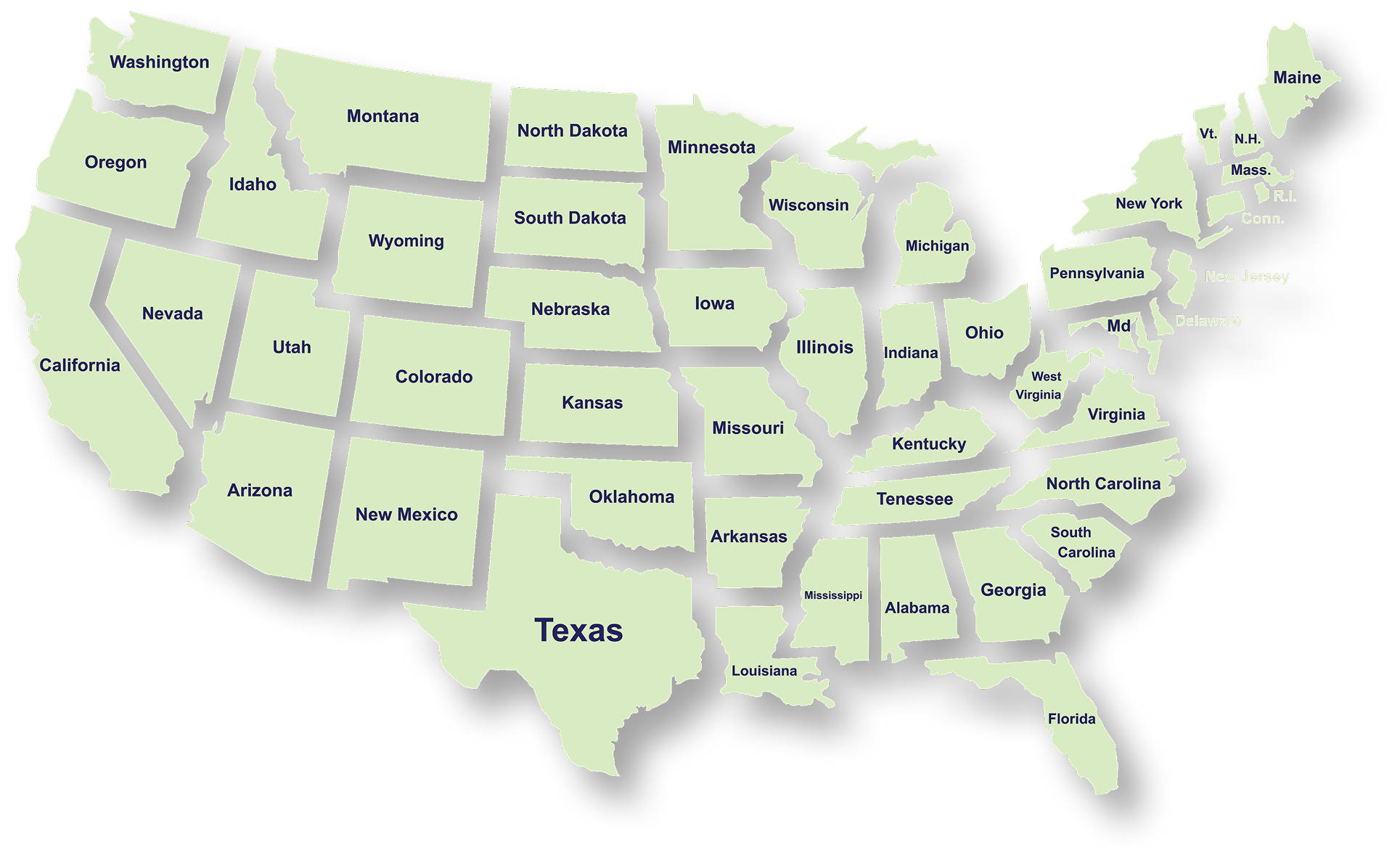
Serving Businesses & Individuals Across USA

We handle accounting, tax filing, and planning with defined timelines and accurate reporting for businesses and individuals across all states.

Frequently Asked Questions

What services does NR CPAs & Business Advisors provide?
What is tax planning and why is it important for businesses?
How can a Virtual CFO help my business?
When should a business consider IRS tax resolution services?
What financial statements does a business typically need?
How can startup advisory services help new businesses?
What is strategic business planning?
What is a Virtual Family Office and who can benefit from it?