Learning Center for Tax and Financial Insights

Stay updated with clear, actionable articles on tax rules, deadlines, deductions, and financial decisions that impact individuals and businesses.

No items found.

March 2019 Individual Due Dates

March 11 - Report Tips to Employer If you are an employee who works for tips and received more than $20 in tips during February, you are required to report them to your employer on IRS Form 4070 no later than March 11. Your employer is required to withhold FICA taxes and income tax withholding for these tips from your regular wages. If your regular wages are insufficient to cover the FICA and tax withholding, the employer will report the amount of the uncollected withholding in box 12 of your W-2 for the year. You will be required to pay the uncollected withholding when your return for the year is filed. March 15 - Time to Call For Your Tax Appointment It is only one month until the April due date for your individual income tax returns. If you have not made an appointment to have your taxes prepared, we encourage you to do so before it becomes too late.

Explore More
No items found.

March 2019 Business Due Dates

March 1 - Farmers and FishermenFile your 2018 income tax return (Form 1040) and pay any tax due. However, you have until April 15 (April 17 if you live in Maine or Massachusetts) to file if you paid your 2018 estimated tax by January 15, 2019.March 4 - Applicable Large Employer (ALE) - Form 1095-C If you’re an Applicable Large Employer, provide the 2018 Form 1095-C, Employer-Provided Health Insurance Offer and Coverage, to full-time employees. The normal due date for giving employees their copy of the 1095-C is January 31, 2019, but the IRS gave a blanket extension of 30 days to ALEs for 2019 filings. March 15 - Partnerships File a 2018 calendar year return (Form 1065). Provide each partner with a copy of Schedule K-1 (Form 1065), Partner’s Share of Income, Deductions, Credits, etc., or a substitute Schedule K-1. If you want an automatic 6-month extension of time to file the return and provide Schedules K-1 or substitute Schedules K-1 to the partners, file Form 7004. Then, file Form 1065 and provide the K-1s to the partners by September 16. March 15 - S-Corporations

Explore More
No items found.

It's Not Too Late to Make a 2018 Retirement-Plan Contribution

Article Highlights: Traditional IRAs Roth IRAs Spousal IRA Contributions Simplified Employee Pension Plans Solo 401(k) Plans Health Savings Accounts Saver’s Credit Children with Earned Income Have you been ignoring your future retirement needs? This tends to happen when people are young; because retirement is far in the future, they believe that they have plenty of time to save for it. Some people even ignore the issue until late in life, which causes them to scramble to fund their retirement. Others even ignore the issue altogether, assuming that they will qualify for Social Security and that the resulting income will take care of their retirement needs.Did you know that you can make retirement savings contributions after the close of the tax year and that these contributions may be deductible? With the April tax deadline in the near future, the window of opportunity is closing to maximize contributions to retirement and special-purpose plans for 2018. Many of these retirement contributions will also deliver tax deductions or tax credits for the 2018 tax year. Contribution Opportunities – Some 2018 retirement contributions are available after the close of the year. Traditional IRAs – For 2018, the maximum traditional IRA contribution is $5,500 (or $6,500 if the taxpayer is at least 50 years old on December 31, 2018). A 2018 traditional IRA contribution can be made until April 15, 2019. However, for taxpayers who have other retirement plans, some or all of their IRA contributions may not be deductible. To be eligible to contribute to IRAs (of any type), taxpayers—or spouses if married and filing jointly—must have earned income such as wages or self-employment income. Roth IRAs – A Roth IRA is a nondeductible retirement account, but its earnings are tax-free upon withdrawal—provided that the requirements for the holding period and age are met. Roth IRAs are a good option for many taxpayers who aren’t eligible for deductible contributions to a traditional IRA. For 2018, the contribution limits for a Roth IRA are the same as for a traditional IRA: $5,500 (or $6,500 if the taxpayer is at least 50 years old). A 2018 Roth IRA contribution can also be made until April 15, 2019. Caution: For those who have both traditional and Roth IRA contributions, the combined limit for 2018 is also $5,500 (or $6,500 if the taxpayer is at least 50 years old). Spousal IRA Contributions – A nonworking spouse can open and contribute to a traditional or Roth IRA based on the working spouse’s earned income. The spouses are subject to the same contribution limits, and their combined contributions cannot exceed the working spouse’s earned income. Spousal IRA contributions for 2018 must also be made by April 15, 2019. Simplified Employee Pension IRAs – Simplified Employee Pension IRAs are tax-deferred plans for sole proprietorships and small businesses. This is probably the easiest way to build retirement dollars, as it requires virtually no paperwork. The maximum contribution depends on a business’s net earnings. For 2018, the maximum contribution is the lesser of 25% of the employee’s compensation or $55,000. A 2018 contribution to such a plan can be made up to the return’s due date (including extensions). Thus, unlike a traditional or Roth IRA, a Simplified Employee Pension IRA can be established and funded for 2018 as late as October 15, 2019 (if an extension to file a 2018 Form 1040 has been granted). Solo 401(k) Plans – A growing number of self-employed individuals are forsaking the Simplified Employee Pension IRA for a newer type of retirement plan called a Solo 401(k) or Self-Employed 401(k). This plan is available to self-employed individuals who do not have employees, and it is notable mostly for its high contribution levels. For 2018, Solo 401(k) contributions can equal 25% of compensation, plus a salary deferral of up to $18,500. The total contributions, however, can’t exceed $55,000 or 100% of compensation. Note that an individual must have established the Solo 401(k) account by December 31, 2018, to make 2018 contributions. However, contributions to an established account can then be made up to the return’s due date (which can be extended to October 15, 2019, for most taxpayers). Taxpayers who did not establish a Solo 401(k) account by the end of 2018 can still open one now for 2019 contributions. Health Savings Accounts – Health savings accounts are only available for individuals who have high-deductible health plans. For 2018, this refers to plans with a deductible of at least $1,350 for individual coverage or $2,700 for family coverage. These accounts allow individuals to save money to pay for their medical expenses. Money that an individual does not spend on medical expenses stays in that person’s account and gains (tax-free) interest, just like in an IRA. Because unused amounts remain available for later years, health savings accounts can be used as additional retirement funds. The maximum contributions for 2018 are $3,450 for individual coverage and $6,900 for family coverage. The annual contribution limits are increased by $1,000 for individuals who are at least 55 years old. Contributions to a health savings account for 2018 can be made through April 15, 2019.

Explore More
No items found.

Could Your Sales Invoices Be Better? How QuickBooks Online Can Help.

Every interaction with your customers can enhance your image. Here’s how QuickBooks Online contributes to that. Getting paid by your customers—on time, and in full—can take some effort on your part. You set smart due dates and enforce them. Price your products and services so they’re both reasonable and profitable. Accept online payments. But are your invoices working for you here? QuickBooks Online provides sales form templates that you can usually use without modifying. But it also offers tools that support multiple kinds of customization. It helps you shape the content and appearance of your invoices and their accompanying messages to be consistent with your company’s brand. These may be cosmetic changes, but they can affect the way customers react to communications from you. You have few chances to make an impression, so anything you can do to enhance and personalize every interaction will have impact on their impression of you. Neat, well-designed sales forms convey professionalism and attention to details. Here’s a look at what you can do. Editing Fields Unless you use every single field in QuickBooks Online’s default sales form template, your invoices will look sloppier than they might otherwise. The site gives you control over much of the content that your customers will see. To make changes, click the gear icon in the upper right of the screen and select Account and Settings, then Sales. You’ll see Sales form content in the left column. Click on any of the fields to the right to open a more thorough list of options. QuickBooks Online lets you turn fields on and off in your sales forms and specify other preferences. Click on the status (On, Off) in the right column to change it. When you’re satisfied with your selections, click Save. Then close that window by clicking the X in the upper right corner. You have more options than these. Click the gear icon again, and then Your Company | Custom Form Styles. You’ll see that there is already a “master” form. You can either edit it or create a new one. We recommend leaving the master form alone so you always have a clean copy to consult if you get tangled up while you’re working. Click the down arrow in the New style box in the upper right and select Invoice. In the screen that opens, enter a descriptive name for your template in the field at the top and then click Content. A graphical representation of your invoice will appear in the right pane, grayed out. It’s divided into three sections: header, footer, and table (the middle of the invoice where you describe what you sold). Each displays a small pencil icon on the right side of the screen. Click the one in the middle to make that area more visible.

Explore More
No items found.

A Government Shutdown Isn't Going to Save You from an IRS Audit

Yes, it’s true that we’re just coming out of the longest government shutdown in the history of the United States. It will take many government agencies - including the Internal Revenue Service - a significant period of time to get back up to speed. But if you think that all this means that the chances of your getting audited are lower than ever, you’re going to want to think again. According to one recent study, the IRS audited about 0.6 percent of individual tax returns in 2016, which means that your chances of getting that unfortunate letter in the mail were about one in 160. When you expand the definition of a traditional audit to include all of the other types of notices that you may receive to re-examine your taxes or provide backup documentation, for example, that number jumps to about 6.2 percent— or roughly one in 16. So not only were your chances of getting audited always higher than you thought, but a government shutdown isn’t going to prevent this particular train from running on time. There are a few common IRS audit red flags in particular that you’ll want to know more about as April approaches once again. The Dreaded Math Errors A lot of people don’t realize just how much of the IRS’s own processes are automated. When you file your income tax return, that information gets entered into a computer, and a lot of the processing is done before a human ever looks at it — if one ever comes into contact with your return at all. Therefore, one of the major red flags that will certainly trigger an audit are math errors, because a computer doesn’t care whether the government was shut down or not. A math error is a math error, and if you make one (or multiple), it’ll send up a red flag within the IRS’s system, and an automated notice will likely be issued as a result. HOW You Make Your Money The people who work for the IRS aren’t amateurs; they know that certain types of industries feature more instances of unreported cash earnings than others. This is why another one of the major red flags that could see you on the receiving end of an IRS audit has to do with the industry you’re operating in to begin with. If you work in the restaurant industry where cash tips are common, for example, you are probably always going to garner more attention from IRS professionals than someone who may have a more rigid salary. Simply being a part of these types of industries automatically raises your odds of being audited, and no government shutdown is going to change that. Earned Income Tax Credit Audits In 2018, the IRS actually came right out and admitted that people who claim the Earned Income Tax Credit are twice as likely to be audited than those who don’t. A large part of this comes down to the fact that people sometimes take this credit who shouldn’t, and it costs the United States government about $10 billion per year. At this point, it’s important to note that taking this credit intentionally when you shouldn’t is fraud, and that is not a situation you want to find yourself in. If you can prove that you took the credit by accident, you don’t necessarily have anything to worry about. But you’ll likely still be audited, and you’re certainly going to have some explaining to do. Large Charitable Contributions Finally, one of the biggest red flags that the IRS always looks for when determining whom to audit ultimately comes down, not to charitable contributions as a concept, but to significantly large contributions under peculiar circumstances. When viewing charitable contributions, the IRS always looks at the amount you gave relative to the overall amount you made during a year. The IRS definitely knows, on average, how much people in certain income brackets are likely to donate. Sure, there are always special circumstances - but if you give two years’ worth of donations in a single year in an effort to maximize the deduction you can take, you’re almost always going to attract the type of attention you don’t necessarily want. Provided that you’ve got the documentation to back up your donations, you have absolutely nothing to worry about. But a lot of people try to game the system by saying that they gave X amount of dollars in one year when they really gave that money over the last few years, and that is something the IRS will try to put a stop to. An audit isn’t necessarily a bad thing, especially if you have the documentation to support every move you made and why it was the right one for you at the moment. But again, don’t assume that the government shutdown means that your chances of an IRS audit are practically zero. They never were, but they certainly aren’t now, which is why you’ll always want to make sure that you’ve crossed your T’s and dotted your I’s before you submit your tax return information this year.

Explore More
No items found.

Your Small Business Survival Guide for If (and When) the Economy Slows Down

According to one recent study conducted by the Small Business Administration, there are approximately 28.8 million small businesses in the United States that are collectively responsible for about 99.7 percent of all economic activity in this country. In many ways, they represent the “canary in the coal mine” for a nation. When small businesses are doing well, this is a sign that the economy is strong and that the future is a bright one. Unfortunately, the reverse is also true as NSBA revealed that the greatest challenge to both small business growth and survival is economic uncertainty. That idea in and of itself may be nothing new, but a number of recent studies and surveys have revealed that a slowdown in the economy is an issue that may be significantly more timely than many realize. A Recession and Your Business: A Primer According to the latest CNBC/SurveyMonkey survey, 53 percent of respondents say that they expect an economic recession sooner rather than later. In fact, many of them think that it could arrive as soon as 2020. This comes despite the fact that 52 percent of respondents described business conditions as “good” for the first quarter of 2019; 57 percent expect increased revenue; and 28 percent actually plan to increase their own full-time staff in the short term. One of the major factors that contributed to the devastation wreaked by the last recession was that it was so sudden. Things got very bad very quickly, and a lot of small business owners suffered as a result. But, if most people are in an agreement that another recession is on the way (and indeed, a lot of people seem to think we’re overdue), that knowledge itself becomes your most powerful asset. If you truly want to make sure that your small business is capable of surviving when the economy slows down, there are a few key things you’ll want to keep in mind. Always Be Prepared Experts agree that one of the best ways to make sure that your small business comes out of the next economic slowdown in one piece has to do with being as proactive and as prepared as possible. Your business might not need a working capital injection today, for example, but it may once the next recession begins. At that point, it might be difficult to gain access to that capital thanks to poor or uncertain economic conditions. To combat this, consider taking out a new line of credit to help make sure those funds are available if and when the time comes. Getting a credit line for $20,000 doesn’t mean that you have to borrow that money today or even in full. But the peace of mind that comes with knowing you do have access to these funds will go a long way toward making sure that you can stay afloat during those slow periods.

Explore More
No results found.
Thank you! Your submission has been received!
Oops! Something went wrong while submitting the form.

Want tax & accounting tips & insights?Sign up for our newsletter.

Thank you! Your submission has been received!
Oops! Something went wrong while submitting the form.

Why Work With Us?

We combine deep tax expertise, financial strategy, and practical business insight to help you manage complexity, stay compliant, and make confident financial decisions.
A dollar sign, representing financial advice or discussion at NR CPAs & Business Advisors.

Experienced CPA and Enrolled Agent Leadership

Guidance led by licensed professionals with deep expertise in tax strategy, compliance, and complex financial matters.
White bar chart with an upward arrow on green circular background representing growth or progress at NR CPAs &. Business Advisors

Support for Growing Businesses and Startups

We understand the financial challenges of growth stage businesses and provide structured guidance to support expansion.
A white hand holding a dollar symbol and ascending bar chart on a green circular background representing financial growth or investment at NR CPAs & Business Advisors..

Strategic Financial Advisory

Our team helps you evaluate financial decisions with greater clarity, supported by practical insights and long term planning.

Fractional CFO Support

Access experienced financial leadership without the commitment and cost of hiring a full time Chief Financial Officer.

Proactive Tax Planning Approach

We focus on identifying tax opportunities throughout the year rather than reacting only during filing season.

Clear and Reliable Financial Reporting

Accurate financial statements and reporting that help you better understand performance and make informed decisions.
White IRS building icon with pillars and a dollar sign above on a green circular background.

Professional IRS Representation

Experienced support in resolving IRS notices, disputes, and compliance matters while protecting your financial interests.

Personalized Client Focus

Every client receives thoughtful attention and tailored financial solutions based on their specific needs and business goals.
Financial matters often involve important decisions. Working with experienced advisors can help you approach them with greater clarity and confidence in your choices.

Need Help With Your Tax or Financial Decisions?

Discuss your situation with our advisors to get clear guidance on tax planning, IRS matters, and the financial decisions ahead.
Business consulting at NR CPAs & Business Advisors.

Request Your Consultation

Fill out the form to discuss your tax concerns, financial questions, or advisory needs with our team. We will review your details and respond shortly.

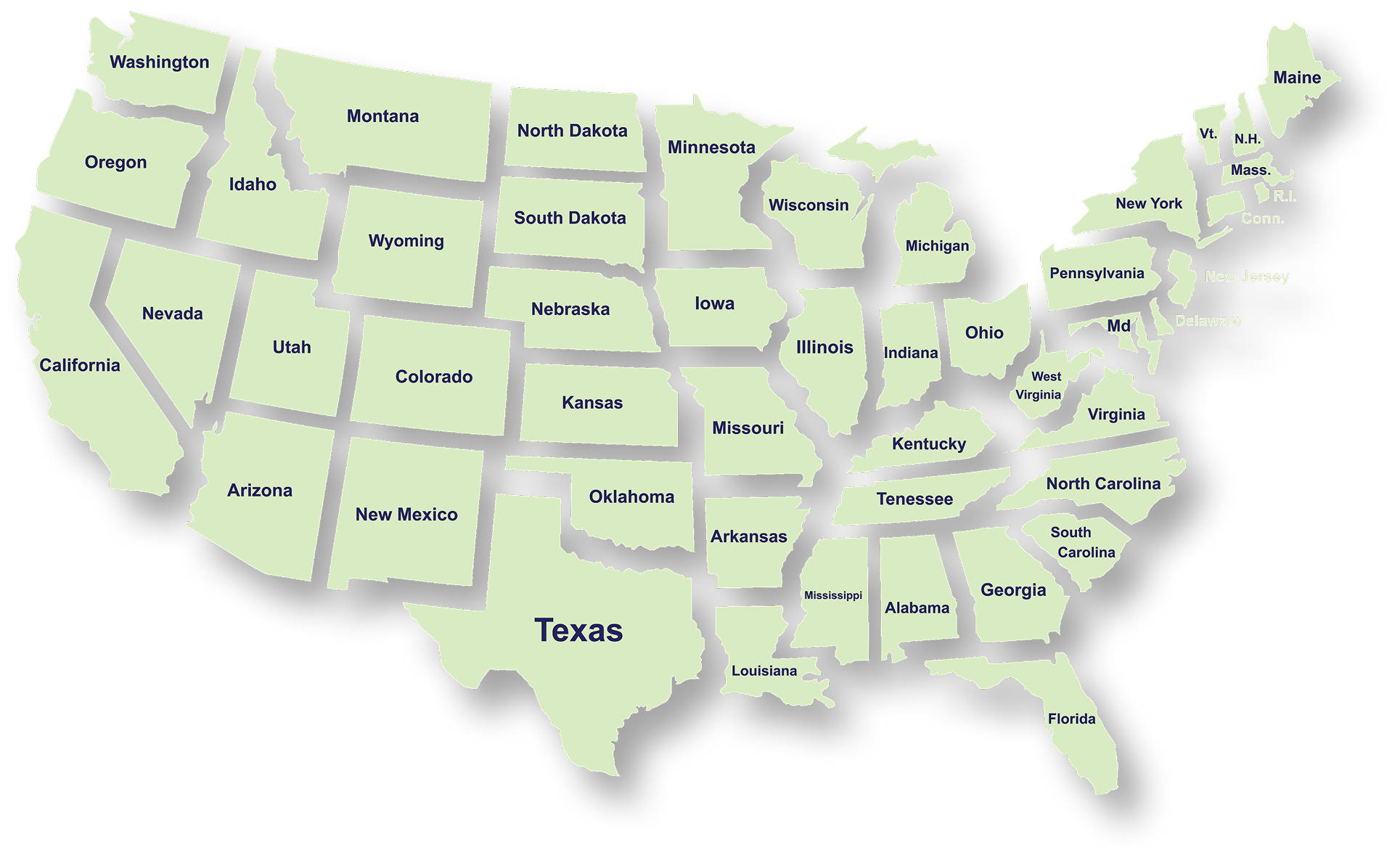
Serving Businesses & Individuals Across USA

We handle accounting, tax filing, and planning with defined timelines and accurate reporting for businesses and individuals across all states.

Frequently Asked Questions

What services does NR CPAs & Business Advisors provide?
What is tax planning and why is it important for businesses?
How can a Virtual CFO help my business?
When should a business consider IRS tax resolution services?
What financial statements does a business typically need?
How can startup advisory services help new businesses?
What is strategic business planning?
What is a Virtual Family Office and who can benefit from it?