Learning Center for Tax and Financial Insights

Stay updated with clear, actionable articles on tax rules, deadlines, deductions, and financial decisions that impact individuals and businesses.

No items found.

Important Information On How Tax Reform Effects Business Entertainment

If you entertain for your business, change is here. With the new tax law, your ability to deduct 50% of the cost of recreation, entertainment or amusement expenses disappeared. Watch the video to learn more.

Explore More
Personal Finance

Here's How to Use 2019 as a Chance to Save More Money Than Ever in the Long Run

A new year is nothing if not a new opportunity – and one that it would be an absolute shame not to take full advantage of. Every January, people make countless New Year’s resolutions. Some want to lose weight; others want to become more productive. One of the most common, however, involves boosting your savings – or lack thereof. The most critical thing to keep in mind is that saving more money, especially in the long run, is not impossible. It’s probably not even as difficult as you think it’s going to be. It only seems challenging because you’re not sure of the best way to do it. Finding that approach will be a unique process that works for you and you alone, but it always requires you to keep a few key things in mind. The Journey of a Thousand Miles Begins With a Single Step… If you truly want to use 2019 as an opportunity to start saving more money, the first thing you need to do is to gain some critical perspective. Saving doesn’t have to be restrictive, or even difficult. You don’t need to stop spending at all – you just need to make sure you’re spending in the smartest ways possible. Case in point: Most experts agree that the 50/30/20 budget breakdown is one of the most forward-thinking ways to save from a money management perspective. Devote 50 percent of your income and total earnings to absolute necessities, like food, your rent or mortgage, insurance and other things of that nature. Devote 30 percent to “wants” — like that nice dinner at your favorite restaurant or a trip to the cinema to see the latest Hollywood blockbuster. Put the remaining 20 percent directly into your savings account and forget that it even exists for the time being. Think About the Bigger Picture Another important way to save more effectively involves giving yourself a purpose that you’re working toward. Saving “aimlessly” is fine, but it often causes people to lose perspective sooner rather than later. You’re less likely to dip into your savings for basic “wants” if you’ve got a larger goal in mind, like saving for retirement. Sit down and come up with a written plan for how much you’d like to have saved by when, and then break the process down into a series of smaller, more manageable steps. If you have your long-term financial plan in place, it’s easier to track your progress – and you’re more likely to feel like you’re accomplishing something as well. Remove Those Obstacles There’s an old saying that reminds us that “you’ve got to spend money to make money.” In the case of saving more effectively, this is absolutely true – particularly when it comes to your debt. Oftentimes, people don’t realize how much those minimum monthly credit card payments are actually costing us in the long run by way of increased interest and other financial aspects. Therefore, to start saving the maximum amount of money that you can as soon as possible, you should make becoming debt-free a priority. Pay off whatever balances you can afford and consolidate the rest to a credit card with a lower interest rate. The amount of money you’re saving each month can then go directly into your savings, without actually affecting your current budget in any way. Everyone wants to be able to save more, but not everyone is sure where to begin. When you’re at the start of the process, it can seem like an insurmountable challenge – but it really isn’t. It simply requires the right approach, some savvy forward-thinking and the right perseverance to get the job done.

Explore More
No items found.

February 2019 Individual Due Dates

February 1 - Tax AppointmentIf you don’t already have an appointment scheduled with this office, you should call to make an appointment that is convenient for you. February 11 - Report Tips to Employer If you are an employee who works for tips and received more than $20 in tips during January, you are required to report them to your employer on IRS Form 4070 no later than February 11. Your employer is required to withhold FICA taxes and income tax withholding for these tips from your regular wages. If your regular wages are insufficient to cover the FICA and tax withholding, the employer will report the amount of the uncollected withholding in box 12 of your W-2 for the year. You will be required to pay the uncollected withholding when your return for the year is filed.

Explore More
No items found.

February 2019 Business Due Dates

February 11 - Non-Payroll Taxes File Form 945 to report income tax withheld for 2018 on all non-payroll items. This due date applies only if you deposited the tax for the year in full and on time.February 11 - Social Security, Medicare and Withheld Income Tax File Form 941 for the fourth quarter of 2018. This due date applies only if you deposited the tax for the quarter in full and on time.February 11 - Certain Small Employers File Form 944 to report Social Security and Medicare taxes and withheld income tax for 2018. This due date applies only if you deposited the tax for the year in full and on time.February 11 - Farm employers File Form 943 to report Social Security and Medicare taxes and withheld income tax for 2018. This due date applies only if you deposited the tax for the year timely, properly, and in full.February 11 - Federal Unemployment Tax File Form 940 for 2018. This due date applies only if you deposited the tax for the year in full and on time.February 15 - Social Security, Medicare and Withheld Income TaxIf the monthly deposit rule applies, deposit the tax for payments in January.February 15 - Non-Payroll WithholdingIf the monthly deposit rule applies, deposit the tax for payments in January.February 16 - Payroll Withholding Begin withholding for employees who claimed exemption for withholding in 2018 but have not provided a W-4 (or W-4(SP)) to continue the exemption for 2019.February 28 - Payers of Gambling WinningsFile Form 1096, Annual Summary and Transmittal of U.S. Information Returns, along with Copy A of all the Forms W-2G you issued for 2018. If you file Forms W-2G electronically, your due date for filing them with the IRS will be extended to April 1. The due date for giving the recipient these forms was January 31.February 28 - Informational Returns Filing DueFile government copies of information returns (Form 1099) and transmittal Forms 1096 for certain payments you made during 2018, other than the 1099-MISCs that were due January 31. There are different 1099 forms for different types of payments.

Explore More
No items found.

How Does QuickBooks Online Handle Mobile Expenses?

If you purchase several items and services away from the office, QuickBooks Online can help you record them while you’re out and about. QuickBooks Online’s mobile app, available at the Apple App Store and Google Play, can do many of the same tasks that it performs on your office desktop. You can, for example: Check account balances. Add and edit estimates, invoices, and sales receipts. Add and edit customers, vendors, products, and services. Record invoice payments. One of the most common uses of the app, though, is the recording of expenses. Rather than coming home from a trip with your briefcase stuffed full of receipts and notes about purchases you made, you can document them on the road using your mobile device. When you get back to the office and log on to QuickBooks Online, they’ll all be there. How It Works You can snap a photo of a receipt with your smartphone and attach it to an expense you record in QuickBooks Online’s mobile app. Open your QuickBooks Online mobile app and click the plus (+) sign at the bottom, then tap the Expense icon. The New Expense screen will open. If you have a paper receipt, lay it flat on a table in a well-lighted area. Click the camera icon and then the Take Photo link. If you took the picture outside of QuickBooks Online for some reason, you’d select the Choose Existing link. Your device’s camera will open, and you’ll see four squared corners on the edges of the screen. Hover your device over the receipt. You’ll need to position the camera so the receipt area that you want captured appears within the four corners. QuickBooks Online will provide advice along the way to help you do this. When you’re in the right place, you’ll see the phrase, Great! Snap the pic. Click the shutter icon below, and your device will snap the photo and display it. If you want to use it, click Use this photo (if you want to try again, click the X in the upper left of the screen). QuickBooks Online will open the New Expense

Explore More
No items found.

Several Ways to Defer the Tax on Gains

Article Highlights: Tax Deferred Exchanges Installment Sales Qualified Opportunity Funds When a sale of a business or investment property results in a gain, the seller is typically taxed on that gain during the year of the sale, even when the gain was generated over many years. However, the tax code provides opportunities to spread this gain over several years, to postpone it by deferring the gain into another property, or to simply defer it for a specified period of time. These arrangements can be accomplished by selling the property in an installment sale, by exchanging the property for another, or by investing in a qualified opportunity fund. As with all tax strategies, these options have unique requirements. The following is an overview of what tax law says about these strategies. Tax-Deferred Exchange – Many people refer to this arrangement as a “tax-free exchange,” but the gain is not actually tax-free; rather, it is deferred into another property. The gain will eventually be taxed when that property is sold (or will be deferred again in another exchange). These arrangements are also known as “1031 exchanges,” in reference to the tax code section that authorizes them: IRC Sec. 1031. In the past, these exchanges applied to all properties, but since 2017, they have only applied to business- or investment-related exchanges of real estate. One of the requirements is that the exchanges must involve like-kind properties. However, the tax regulations for real estate exchanges are very liberal, and virtually any property can be exchanged for any other, regardless of whether they are improved or unimproved. One exception to this rule is that U.S. property cannot be exchanged for foreign property. Exchange treatment is not optional; if an exchange meets the requirements of Sec. 1031, the gain must be deferred. Thus, taxpayers who do not wish to defer gains should avoid using an exchange. It is almost impossible to for an exchange to be simultaneous, so the tax code permits delayed exchanges. Although such exchanges have other requirements, they generally involve a replacement property (or properties) that is identified within 45 days and acquired within 180 days or the tax-return due date (including extensions) for the year when the original property was transferred—whichever is sooner. An exchange accommodator typically holds the proceeds from such exchanges until they can be completed. The tax code also permits reverse exchanges, in which an exchange accommodator holds the replacement property’s title until the exchange can be completed. The other exchange property must be identified within 45 days, and the transaction must be completed within 180 days of the sale of the original property. The amount of gain that is deferred using the exchange method depends on the properties’ fair-market values and mortgage amounts, as well as on whether an unlike property (boot) is involved in the exchange. The rule of thumb is that the exchange is more likely to be fully tax deferred when the properties have greater value and equity. Installment Sale – In an installment sale, the property’s seller provides a loan to the buyer. The seller then only pays income taxes only on the portion of the taxable gains that occur during the year of the sale; this includes the down payment and any other principal payments received in that year. The seller then collects interest on the loan at rates approaching those that banks charge. Each year, the seller pays tax on the interest and the taxable portion of the principal payments received in that year. For a sale to qualify as an installment sale, the seller must receive at least one payment after the year when the sale occurs. Installment sales are most frequently used for real estate; they cannot be used for the sale of publicly traded stock or securities. The installment sale provisions also do not apply when the sale results in a tax loss.

Explore More
No results found.
Thank you! Your submission has been received!
Oops! Something went wrong while submitting the form.

Want tax & accounting tips & insights?Sign up for our newsletter.

Thank you! Your submission has been received!
Oops! Something went wrong while submitting the form.

Why Work With Us?

We combine deep tax expertise, financial strategy, and practical business insight to help you manage complexity, stay compliant, and make confident financial decisions.
A dollar sign, representing financial advice or discussion at NR CPAs & Business Advisors.

Experienced CPA and Enrolled Agent Leadership

Guidance led by licensed professionals with deep expertise in tax strategy, compliance, and complex financial matters.
White bar chart with an upward arrow on green circular background representing growth or progress at NR CPAs &. Business Advisors

Support for Growing Businesses and Startups

We understand the financial challenges of growth stage businesses and provide structured guidance to support expansion.
A white hand holding a dollar symbol and ascending bar chart on a green circular background representing financial growth or investment at NR CPAs & Business Advisors..

Strategic Financial Advisory

Our team helps you evaluate financial decisions with greater clarity, supported by practical insights and long term planning.

Fractional CFO Support

Access experienced financial leadership without the commitment and cost of hiring a full time Chief Financial Officer.

Proactive Tax Planning Approach

We focus on identifying tax opportunities throughout the year rather than reacting only during filing season.

Clear and Reliable Financial Reporting

Accurate financial statements and reporting that help you better understand performance and make informed decisions.
White IRS building icon with pillars and a dollar sign above on a green circular background.

Professional IRS Representation

Experienced support in resolving IRS notices, disputes, and compliance matters while protecting your financial interests.

Personalized Client Focus

Every client receives thoughtful attention and tailored financial solutions based on their specific needs and business goals.
Financial matters often involve important decisions. Working with experienced advisors can help you approach them with greater clarity and confidence in your choices.

Need Help With Your Tax or Financial Decisions?

Discuss your situation with our advisors to get clear guidance on tax planning, IRS matters, and the financial decisions ahead.
Business consulting at NR CPAs & Business Advisors.

Request Your Consultation

Fill out the form to discuss your tax concerns, financial questions, or advisory needs with our team. We will review your details and respond shortly.

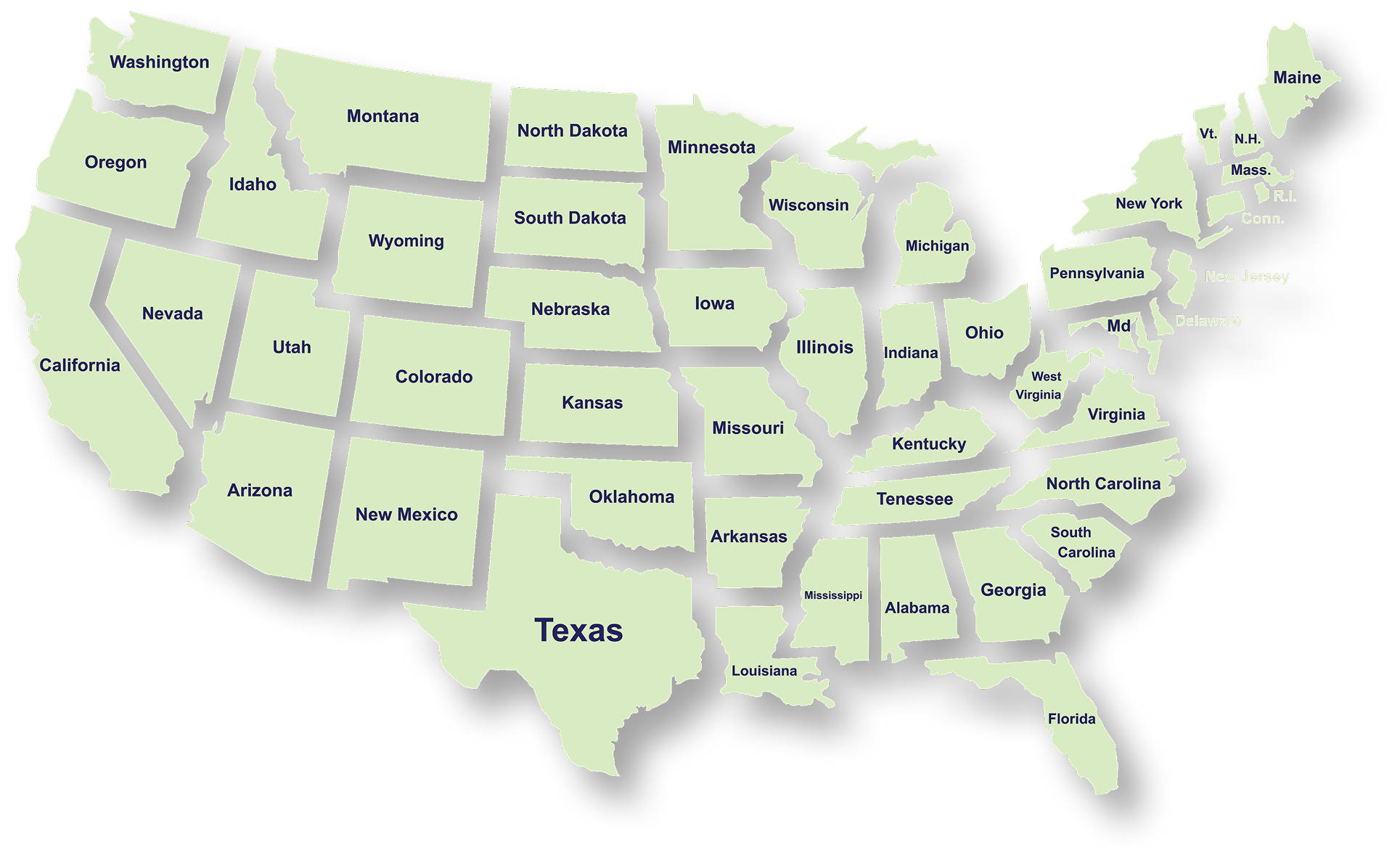
Serving Businesses & Individuals Across USA

We handle accounting, tax filing, and planning with defined timelines and accurate reporting for businesses and individuals across all states.

Frequently Asked Questions

What services does NR CPAs & Business Advisors provide?
What is tax planning and why is it important for businesses?
How can a Virtual CFO help my business?
When should a business consider IRS tax resolution services?
What financial statements does a business typically need?
How can startup advisory services help new businesses?
What is strategic business planning?
What is a Virtual Family Office and who can benefit from it?