Learning Center for Tax and Financial Insights

Stay updated with clear, actionable articles on tax rules, deadlines, deductions, and financial decisions that impact individuals and businesses.

No items found.

The 1099-MISC Filing Date Is Just Around the Corner - Are You Ready?

Article Highlights: Independent Contractors Non-employee Compensation 1099 Filing Requirement Due Dates Penalties Form W-9 and 1099 Worksheet If you engage the services of an individual (independent contractor) in your business, other than one who meets the definition of an employee, and you pay him or her $600 or more for the calendar year, then you are required to issue that person a Form 1099-MISC to avoid penalties and the prospect of losing the deduction for his or her labor and expenses in an audit. Payments to independent contractors are referred to as non-employee compensation (NEC). Because so many fraudulent tax returns were being filed right after e-filing opened up in January and before the old 1099-MISC due date at the end of February, the IRS had no way of verifying NEC. That opened the door for the IRS to be scammed out of millions of dollars in erroneous earned income tax credit (EITC). To plug that hole, the IRS moved the filing date for NEC 1099-MISCs to January 31 and no longer releases refunds for returns that include EITC until the NEC amounts can be verified. Thus, the due date for filing 2018 1099-MISC forms for NEC is now January 31, 2019. That is also the same due date for mailing the recipient his or her copy of the 1099-MISC. It is not uncommon to have a repairman out early in the year, pay him less than $600, use his services again later in the year, and have the total for the year be $600 or more. As a result, you may have overlooked getting the needed information from the individual to file the 1099s for the year. Therefore, it is good practice to always have individuals who are not incorporated complete and sign an IRS Form W-9 the first time you engage them and before you pay them. Having a properly completed and signed Form W-9 for all independent contractors and service providers will eliminate any oversights and protect you against IRS penalties and conflicts. If you have been negligent in the past about having the W-9s completed, it would be a good idea to establish a procedure for getting each non-corporate independent contractor and service provider to fill out a W-9 and return it to you going forward.

Explore More
No items found.

When To Claim a Disaster Loss

Article Highlights: Disaster Losses Elections Net Operating Loss AGI Limitations Possible Gain Tax reform eliminated the deduction for casualty losses but did retain a deduction for losses within a disaster area. With the wild fires in the west, hurricanes and flooding in the southeast and eastern seaboard we have had a number of presidentially declared disaster areas this year. If you were an unlucky victim and suffered a loss as a result of a disaster, you may be able to recoup a portion of that loss through a tax deduction. If the casualty occurred within a federally declared disaster area, you can elect to claim the loss in one of two years: the tax year in which the loss occurred or the immediately preceding year. By taking the deduction for a 2018 disaster area loss on the prior year (2017) return, you may be able to get a refund from the IRS before you even file your tax return for 2018, the loss year. You have until the unextended due date of the 2018 return to file an amended 2017 return to claim the disaster loss. Before making the decision to claim the loss in 2017, you should consider which year’s return would produce the greater tax benefit, as opposed to your desire for a quicker refund. If you elect to claim the loss on either your 2017 original or amended return, you can generally expect to receive the refund within a matter of weeks, which can help to pay some of your repair costs. If the casualty loss, net of insurance reimbursement, is extensive enough to offset all of the income on the return, and results in negative income, you may have what is referred to as a net operating loss (NOL). Because tax reform changed how NOLs are treated after 2017 your decision whether to claim the loss in the current year or the prior year will have significant tax ramifications.

Explore More
No items found.

If You Are a Recreational Gambler, Here Are Some Tax Issues You Need to Know

Article Highlights: Winnings W-2G Reporting Losses Social Security Income Health Care Insurance Premium Subsidies Medicare B and D Premiums Online Gambling Accounts Gambling takes many forms: casino games, horse racing, sports book betting, lotto tickets, scratchers, bingo, etc. For virtually everyone, gambling is a recreational activity and, as such, is done for fun. For most gamblers, their losses for the year will exceed their winnings, and since losses in excess of winnings are not deductible, most gamblers don’t bother to report either, which isn’t in line with the tax law’s filing requirements. If your winnings at one time hit certain levels, the government requires the gambling establishment to collect your Social Security number and report your winnings to Uncle Sam on a Form W-2G. Gambling establishments will issue a Form W-2G if you: Win $1,200 or more on a slot machine or from bingo. Win $1,500 or more on a keno jackpot. Win more than $5,000 in a poker tournament. Win $600 or more from all other games, but only if the payout is at least 300 times your wager. Reporting Winnings – Many individuals believe that they only have to report the winnings for which they receive a Form W2-G. Unfortunately, the IRS has a different viewpoint. Although you may be able to offset your reported gains with gambling losses, the IRS anticipates that you will also have had gambling winnings that were under the W2-G reporting threshold and will raise this issue during an audit. Gambling Losses – The good news is that you can deduct gambling losses if you itemize your deductions but only to the extent of your gambling income. In other words, you can’t have a net gambling loss on your tax return. Bad news: if you don’t itemize your deductions, you will have to pay taxes on the entire winnings, even if you have a net gambling loss, as is the case for most individuals. GAMBLING GOTCHA #1 – Since you can’t net your winnings and losses, the full amount of your winnings ends up in your adjusted gross income (AGI). The AGI is used to limit other tax benefits, as discussed later. So, the higher the AGI, the more the tax benefits may be limited.GAMBLING GOTCHA #2 – If you don’t itemize your deductions, you can’t deduct your losses. Thus, individuals taking the standard deduction will end up paying taxes on all of their winnings, even if they had a net loss. The recent tax reform brought us significantly higher standard deduction amounts and, for itemized deductions, limited the deduction for state and local taxes and eliminated the deduction for unreimbursed employee business expenses and investment expenses, among other changes. The anticipated result is that fewer taxpayers will be itemizing their deductions and more gamblers will be paying taxes on their winnings. Documenting Losses – The next logical question is: how are you going to document your gambling losses, if audited? Don’t rush down to the track and start collecting discarded tickets, since they generally aren’t acceptable documentation because of their ready availability. The IRS has published guidelines on acceptable documentation to verify losses. They indicate that an accurate diary or similar record that is regularly maintained by the taxpayer, supplemented by verifiable documentation, will usually be acceptable evidence to substantiate wagering winnings and losses. In general, this diary should contain at least the following information: (1) the date and type of each specific wager or wagering activity, (2) the name of the gambling establishment, (3) the address or location of the gambling establishment, (4) the names of other persons (if any) present with the taxpayer at the gambling establishment, and (5) the amounts won or lost. Save all available documentation, including items such as losing lottery and keno tickets, checks, and casino credit slips. You should also save any related documentation such as hotel bills, plane tickets, entry tickets, and other items that would document your presence at a gambling location. If you are a member of a slot club, the casino may be able to provide a record of your electronic play. You might also obtain affidavits from designated gambling officials at the gambling facility. With regard to specific wagering transactions, your winnings and losses might be further supported by: Keno – Copies of keno tickets you purchased and that were validated by the gambling establishment. Slot Machines – A record of all winnings by date and time for each machine that was played. Table Games – The number of the table at which you were playing as well as casino credit card data indicating whether credit was issued in the pit or at the cashier’s cage. Bingo – A record of the number of games played, the cost of the tickets purchased, and the amounts collected on winning tickets. Racing – A record of the races, entries, amounts of wagers, and amounts collected on winning tickets and lost on losing tickets. Supplemental records can include unredeemed tickets and payment records from the racetrack. Lotteries – A record of ticket purchase dates, winnings, and losses. Supplemental records can include unredeemed tickets, payment slips, and winning statements.

Explore More
No items found.

Attention S Corp Business Owners! Are You Paying Yourself a Reasonable Salary?

S Corporations have very specific requirements when it comes to taxation and compensation. This has led many of those responsible for payroll and bookkeeping at S corporations to make the mistake of failing to provide those shareholders with W-2 wages.

Explore More
No items found.

Some Electric Vehicle Credits Are Phasing Out!

Article Highlights: How the Credit Amount Is Determined Manufacturer Phaseouts Credit for Specific Vehicles Allocation between Business and Personal Use Non-refundable Limitations The IRS recently announced that the tax credit for purchasing the popular Tesla is being phased out and that the credit will drop to $3,750 after December 31, 2018, and will drop again to $1,875 after June 30, 2019. Then, the credit will no longer be available for a Tesla after December 31, 2019. But Tesla is not the only plug-in electric vehicle eligible for the credit, and a full list of vehicles qualifying for credit is available on the IRS’s website. The plug-in electric vehicle credit applies to new plug-in electric cars or light trucks (less than 14,000 pounds). The tax credit is actually made up of two parts: the basic amount of $2,500, which requires the electric vehicle to have a battery with at least 5 kilowatt-hours of capacity, and an additional $417 credit for each kilowatt-hour of battery capacity in excess of 5 kilowatt-hours. The total amount of the credit allowed for any qualified vehicle is limited to $7,500. However, the credit begins to be phased out for a particular manufacturer’s vehicles when at least 200,000 qualifying vehicles have been sold for use in the United States. That is what has happened with Tesla. If you are not an electrical engineer, it may seem a little complicated to figure out which vehicles qualify for the credit and for how much. You can usually rely on the information provided by the dealer. However, to be on the safe side, you can verify which vehicles are qualified and the credit amount available, based on the vehicle’s kilowatt-hours and the reduction in credit due to the credit phaseout, by visiting the

Explore More
No items found.

7 Ways Small Business Owners Can Save On Taxes

Everybody wants to lower the amount they pay in taxes, but it is an especially important goal for small business owners. Every penny in taxes avoided are a double victory: you avoid overpaying and add to your bottom line. Here are seven tips to use to spot potential savings.

Explore More
No results found.
Thank you! Your submission has been received!
Oops! Something went wrong while submitting the form.

Want tax & accounting tips & insights?Sign up for our newsletter.

Thank you! Your submission has been received!
Oops! Something went wrong while submitting the form.

Why Work With Us?

We combine deep tax expertise, financial strategy, and practical business insight to help you manage complexity, stay compliant, and make confident financial decisions.
A dollar sign, representing financial advice or discussion at NR CPAs & Business Advisors.

Experienced CPA and Enrolled Agent Leadership

Guidance led by licensed professionals with deep expertise in tax strategy, compliance, and complex financial matters.
White bar chart with an upward arrow on green circular background representing growth or progress at NR CPAs &. Business Advisors

Support for Growing Businesses and Startups

We understand the financial challenges of growth stage businesses and provide structured guidance to support expansion.
A white hand holding a dollar symbol and ascending bar chart on a green circular background representing financial growth or investment at NR CPAs & Business Advisors..

Strategic Financial Advisory

Our team helps you evaluate financial decisions with greater clarity, supported by practical insights and long term planning.

Fractional CFO Support

Access experienced financial leadership without the commitment and cost of hiring a full time Chief Financial Officer.

Proactive Tax Planning Approach

We focus on identifying tax opportunities throughout the year rather than reacting only during filing season.

Clear and Reliable Financial Reporting

Accurate financial statements and reporting that help you better understand performance and make informed decisions.
White IRS building icon with pillars and a dollar sign above on a green circular background.

Professional IRS Representation

Experienced support in resolving IRS notices, disputes, and compliance matters while protecting your financial interests.

Personalized Client Focus

Every client receives thoughtful attention and tailored financial solutions based on their specific needs and business goals.
Financial matters often involve important decisions. Working with experienced advisors can help you approach them with greater clarity and confidence in your choices.

Need Help With Your Tax or Financial Decisions?

Discuss your situation with our advisors to get clear guidance on tax planning, IRS matters, and the financial decisions ahead.
Business consulting at NR CPAs & Business Advisors.

Request Your Consultation

Fill out the form to discuss your tax concerns, financial questions, or advisory needs with our team. We will review your details and respond shortly.

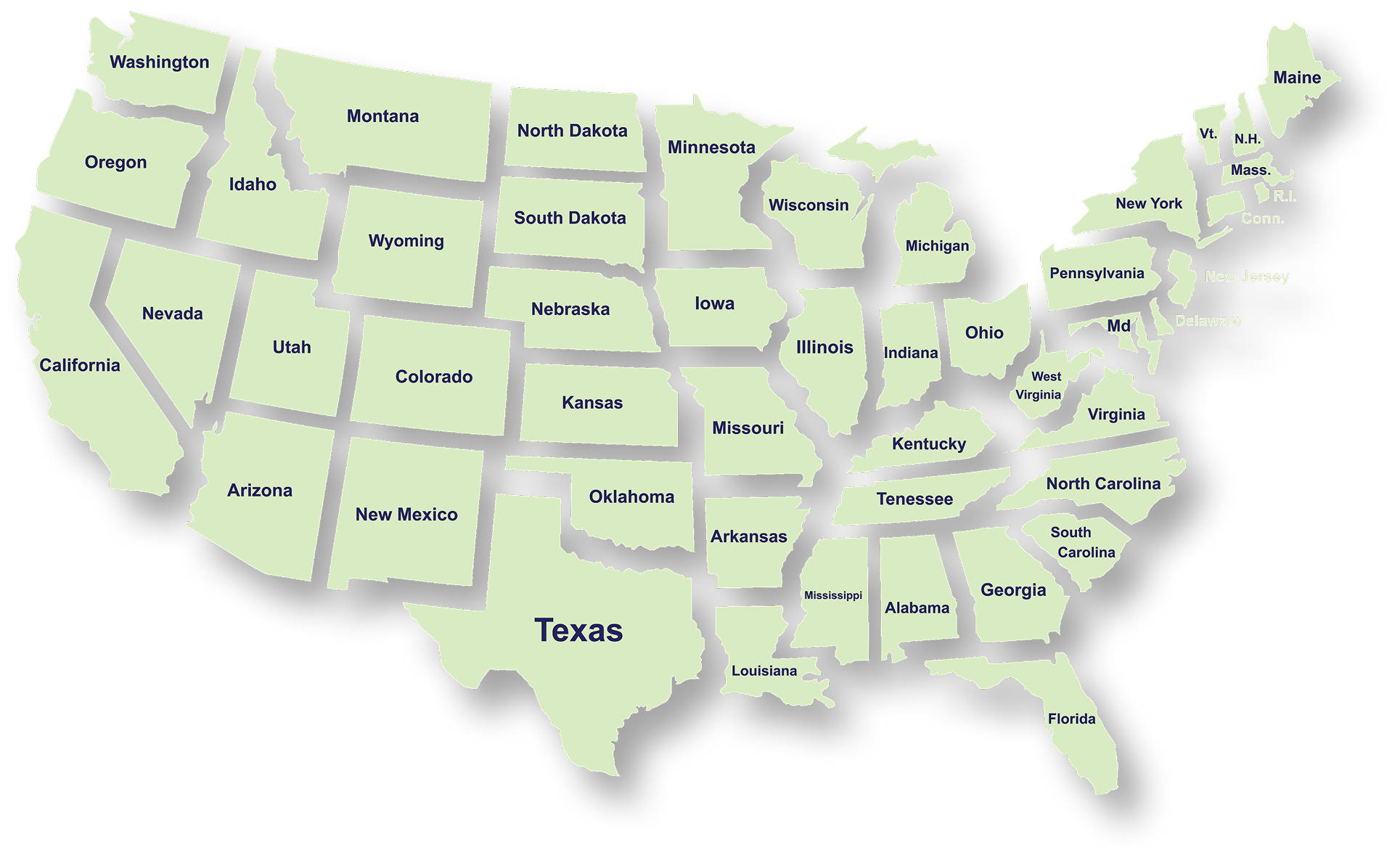
Serving Businesses & Individuals Across USA

We handle accounting, tax filing, and planning with defined timelines and accurate reporting for businesses and individuals across all states.

Frequently Asked Questions

What services does NR CPAs & Business Advisors provide?
What is tax planning and why is it important for businesses?
How can a Virtual CFO help my business?
When should a business consider IRS tax resolution services?
What financial statements does a business typically need?
How can startup advisory services help new businesses?
What is strategic business planning?
What is a Virtual Family Office and who can benefit from it?