Learning Center for Tax and Financial Insights

Stay updated with clear, actionable articles on tax rules, deadlines, deductions, and financial decisions that impact individuals and businesses.

No items found.

Video Quick Tips: Good IRA News for Retirees

Now as part of the SECURE Act that was included in the Appropriations Act of 2020, and effective for tax years beginning in 2020, individuals who otherwise qualify can make traditional IRA contributions at any age. .embed-container { position: relative; padding-bottom: 56.25%; height: 0; overflow: hidden; max-width: 100%; } .embed-container iframe, .embed-container object, .embed-container embed { position: absolute; top: 0; left: 0; width: 100%; height: 100%; }

Explore More
No items found.

Congress Green-Lights Some Alternative Vehicle Credits

Article Highlights: Hybrid Credit (Expired) Four-Wheeled Plug-In Electric Drive Vehicle Credit Qualified Fuel Cell Motor Vehicle Credit Two-Wheeled Plug-In Electric Vehicle (Motorcycle) Credit Alternative Fuel Vehicle Refueling Property Credit Refund Opportunity On December 20, 2019, President Trump signed into law the Appropriations Act of 2020, which includes a number of tax law changes, including extending certain tax provisions that expired after 2017 or were about to expire, a number of retirement and IRA plan modifications, and other changes that will impact a large portion of U.S. taxpayers as a whole. This article is one of a series of articles dealing with those changes and how they may affect you. To encourage U.S. taxpayers to move away from gasoline-powered motor vehicles, over the years, Congress has provided various tax credits for purchasing electric or alternative fuel vehicles. These credits generally come with an expiration date or a sales limitation. For example, from 2006 through 2010, a credit was available to taxpayers who were purchasing a hybrid vehicle – this was when hybrids such as the Toyota Prius were beginning to take off in the U.S. auto market. Since then, the tax credit that has drawn the most attention is the 4-Wheeled Plug-In Electric Drive Vehicle Credit, created by Congress in 2009. Four-Wheeled Plug-In Electric Drive Vehicle Credit – This nonrefundable credit is worth up to $7,500 for the purchase of new electric vehicles and has been a stimulus for car companies to manufacture “green” vehicles and an incentive for consumers to purchase such vehicles. Although there is no specific date in the future when this credit will expire, the number of vehicles each manufacturer can sell that can qualify for the credit is limited. That limit is enforced by phasing out the credit by manufacturer once the manufacturer sells its 200,000th electric vehicle. As a result, Tesla vehicles purchased after 2019 won’t qualify for a credit, and qualifying vehicles made by Cadillac and Chevrolet and purchased in the first quarter of 2020 are eligible for just a partial credit, or for no credit if bought after March 31, 2020. The following table shows the current credit phaseouts: VEHICLES BEGINNING PHASEOUT IN 2019 Date Acquired >>> MANUFACTURER Before 2019 Jan.–Mar. 2019 Apr.–June 2019 July–Sept. 2019 Oct.–Dec. 2019 Jan.–Mar. 2020 After Mar. 2020 Tesla* $7,500 $3,750 $3,750 $1,875 $1,875 $0 $0 Chevrolet* $7,500 $7,500 $3,750 $3,750 $1,875 $1,875 $0 Cadillac* $7,500 $7,500 $3,750 $3,750 $1,875 $1,875 $0 *All qualifying models As Congress developed the tax provisions included in the Appropriations Act of 2020, passed late in 2019, there was some hope that the 200,000th-vehicle limit would be increased so that future sales of vehicles from the manufacturers already affected by the phaseout would be eligible for the credit. This didn’t happen. However, Congress did extend through 2020, the following lesser known credits that had originally expired at the end of 2017:

Explore More
No items found.

What Does a Tax Deduction Save You?

Article Highlights: Non-business deductions AMT Tax bracket Above-the-line deductions Business deductions Taxpayers frequently ask what benefit is derived from a tax deduction. Unfortunately, there is no straightforward answer. The reason the benefit cannot be determined simply is because some deductions are above-the-line, others must be itemized, some must exceed a threshold amount before being deductible, and certain ones are not deductible for alternative minimum tax purposes, while business deductions can offset both income and self-employment tax. In other words, there are many factors to consider, and the tax benefits differ for each individual, depending on his or her particular situation. For most non-business deductions, the savings are based upon your tax bracket. For example, if you are in the 24% tax bracket, a $1,000 deduction would save you $240 in taxes. However, if taxable income is close to transitioning into the next-lower tax bracket, the benefit will be less. You also need to consider whether the particular deduction is allowed on your state return and what your state tax bracket is to determine the total tax savings. Some deductions, such as IRA and self-employed retirement plan contributions, alimony, student loan interest, etc., are adjustments to income or what we call above-the-line deductions. These deductions, to the extent permitted by law, provide a dollar deduction for every dollar claimed. Deductions that fall into the itemized category must exceed the standard deduction for your filing status before any benefit is derived. In addition, the medical deductions are reduced by 10% of your AGI (income). Under the rules of the 2017 tax reform, the state and local taxes deduction is limited to $10,000, no deduction is allowed for home equity interest, and deductions such as employee business expenses and investment expenses aren’t deductible at all in years 2018 through 2025. Taxpayers subject to the alternative minimum tax are not able to deduct any taxes.

Explore More
No items found.

Video Tip: Big Tax News if Your Child has Income

Tax law changes allow either kiddie tax computation to be used in 2018 and 2019, allowing the method that provides the lowest tax to be used. This opens up the possible opportunity to amend the 2018 return for a refund. A child’s return can be tricky to prepare. Watch the video for more details. Please call this office for your child’s tax-preparation needs. .embed-container { position: relative; padding-bottom: 56.25%; height: 0; overflow: hidden; max-width: 100%; } .embed-container iframe, .embed-container object, .embed-container embed { position: absolute; top: 0; left: 0; width: 100%; height: 100%; }

Explore More
No items found.

New Tax Rules for Retirees

Article Highlights: IRA Age Limits Repealed Required Minimum Distribution Age Increased Qualified Charitable Contributions Impacted IRA Beneficiary Options Limited If you are at or approaching the age of 70, you need to be aware of some changes that Congress made to the tax laws, effective starting in 2020. These changes will have direct impacts on you and the decisions you make related to your retirement accounts. Not only will they affect your federal taxes, but depending upon your state’s income tax laws, they may impact your state tax status as well. Required Minimum Distribution (RMD) Age Changed from 70½ to 72 In the past, people with traditional IRAs and qualified retirement plans like 401(K)s could begin taking distributions once they reached age 59½ without penalty, but once they reached the age of 70½, they became subject to the RMD rule, which required them to begin taking distributions from the accounts. On December 19, 2019, Congress changed the law, effective beginning in 2020, by increasing the RMD’s required starting age from 70½ to 72. This change doesn’t help those who turned 70½ in 2019 and were required to begin distributions in 2019 but could delay the first distribution until April 1, 2020, by using the first-year delayed RMD provision. Note that any distribution to these accounts will be taxable unless the original contributions were nondeductible. Congress Moved to Eliminate the Maximum Age for Traditional IRA Contributions In previous years, taxpayers’ ability to make contributions to traditional IRA accounts ended when they reached the age of 70½. Effective beginning in 2020, that cutoff has been eliminated, meaning you can continue making contributions if you have employment income. The contribution limit is either $6,000 ($7,000 if you are 50 or older) or your income from working, whichever is less. Although higher-income taxpayers can make contributions, the tax deductibility of the contributions will phase-out when incomes reach certain levels. However, a traditional IRA may not be the best option, and you should contact this office before making a contribution. In addition, if you are also making qualified charitable distributions (QCDs), the IRA contribution can have a detrimental impact on the QCDs. A QCD is a direct transfer from an IRA to a qualified charity and is discussed further in this material. Qualified Charitable Distributions The change will have a direct impact on those who make QCDs. These direct transfers from an IRA to a charity have long allowed retirees to transfer up to $100,000 directly from their IRA to a qualified charity without being subject to taxes. At first glance, this may not appear to provide a tax benefit. But in addition to counting toward your RMD (if an RMD is required), by excluding the distribution from taxation, you will lower your adjusted gross income (AGI), which will help with other tax breaks (or penalties) that are pegged at AGI levels, such as for medical expenses, passive losses, and taxable Social Security income. In addition, non-itemizers essentially receive the benefit of a charitable contribution to offset the IRA distribution. However, because the age restriction for making traditional IRA contributions has been repealed, starting in 2020, you can make an IRA contribution and also make a QCD. For that reason, Congress included a provision requiring a taxpayer who qualifies to make a QCD to reduce the non-taxable QCD portion by any traditional IRA contribution that is deducted and made after reaching age 70½, even if the QCD and IRA contribution are not in the same year.

Explore More
No items found.

Caring for Someone at Home? Here are the Tax Issues.

Article Highlights: Home Care Workers Employee Payroll W-2 1099-NEC Medical Deduction Equipment and Supplies Nursing Services Home Modifications Because people are living longer now than ever before, many individuals are serving as care providers for loved ones (such as parents or spouses) who cannot live independently. It can be tough enough caring for a disabled or elderly person at home, but you also have to be aware of the tax implications, which can be both beneficial and detrimental. This article explores the various tax issues related to caring for an individual at home. Home Care Workers – Quite often, caring for an elderly or disabled loved one at home requires obtaining assistance so you can work, sleep, or simply have a break from providing the needed care. This is especially true when caring for someone with Alzheimer’s who has to be watched closely so they don’t wander off or someone on hospice care who needs around-the-clock care. However, if you hire someone to help you provide care in your home, neither the federal nor state tax authorities are very helpful. In fact, they make it difficult and require home workers to be treated as employees. When the worker is your employee, your liability includes both withholding and paying payroll taxes as well as issuing a W-2 after the close of the year. One alternative is to contract with an agency to use their employees to provide the needed care and handle all the payroll obligations, but it will be quite a bit more expensive. Sure, you are thinking it is a lot easier to pay your household worker in cash so as to avoid federal and state payroll taxes and all the paperwork and hassle that goes with them. Plus, your domestic worker will likely be fully cooperative with a cash deal because he or she can also avoid paying taxes on the income you give them under the table. However, if the IRS or your state employment department finds out about these payments, the result could be very unpleasant and costly for you. Not everyone who performs services in or around your home is classified as an employee. For instance, a plumber or electrician who makes repairs in your home will generally be a licensed contractor; the government does not classify contractors as employees. On the other hand, the IRS has conclusively ruled that nannies, housekeepers, senior caregivers, and various other domestic workers are employees of the people for whom they work. It makes no difference if you have a written contract with the employee; similarly, the number of hours worked and the amount paid do not matter. You are probably thinking, “Wait a minute – everyone I know with household help pays in cash, and none of them has paid payroll taxes or issued a W-2 for a household employee.” However, just because they’ve chosen to violate the law doesn’t mean you should. Also, keep in mind that if a worker gets injured on your property or you dismiss the worker under less-than-amicable circumstances, it’s a pretty sure bet that your household employee will be the first one to throw you under the bus by reporting you to the state labor board or by filing for unemployment compensation. Some individuals try to circumvent the payroll issue by treating a household employee as an independent contractor and incorrectly issue the household employee a Form 1099-NEC (or Form 1099-MISC prior to 2020). Medical Expense Deduction – On the bright side, home care can be a medical deduction, to the extent that the expenses exceed 7½ percent of your adjusted gross income (AGI) for 2020 (increases to 10% after 2020) and you itemize deductions rather than claiming the standard deduction. Deductible expenses include: Disabled Dependent Care Expenses – Some disabled dependent care expenses may qualify as medical expenses or work-related expenses for the purposes of taking a credit for child and dependent care. The expenses can be applied either way as long as the same expenses are not used to claim both a credit and a medical expense deduction. Equipment and Supplies – Although there is a prohibition against deducting the cost of over-the-counter medications, that prohibition does not apply to such items as crutches, bandages, diapers, medical beds, and diagnostic devices (e.g., blood sugar kits used by diabetics). The costs of such equipment and supplies are deductible if they otherwise meet the general requirement of being used for the diagnosis, cure, mitigation, treatment, or prevention of disease.

Explore More
No results found.
Thank you! Your submission has been received!
Oops! Something went wrong while submitting the form.

Want tax & accounting tips & insights?Sign up for our newsletter.

Thank you! Your submission has been received!
Oops! Something went wrong while submitting the form.

Why Work With Us?

We combine deep tax expertise, financial strategy, and practical business insight to help you manage complexity, stay compliant, and make confident financial decisions.
A dollar sign, representing financial advice or discussion at NR CPAs & Business Advisors.

Experienced CPA and Enrolled Agent Leadership

Guidance led by licensed professionals with deep expertise in tax strategy, compliance, and complex financial matters.
White bar chart with an upward arrow on green circular background representing growth or progress at NR CPAs &. Business Advisors

Support for Growing Businesses and Startups

We understand the financial challenges of growth stage businesses and provide structured guidance to support expansion.
A white hand holding a dollar symbol and ascending bar chart on a green circular background representing financial growth or investment at NR CPAs & Business Advisors..

Strategic Financial Advisory

Our team helps you evaluate financial decisions with greater clarity, supported by practical insights and long term planning.

Fractional CFO Support

Access experienced financial leadership without the commitment and cost of hiring a full time Chief Financial Officer.

Proactive Tax Planning Approach

We focus on identifying tax opportunities throughout the year rather than reacting only during filing season.

Clear and Reliable Financial Reporting

Accurate financial statements and reporting that help you better understand performance and make informed decisions.
White IRS building icon with pillars and a dollar sign above on a green circular background.

Professional IRS Representation

Experienced support in resolving IRS notices, disputes, and compliance matters while protecting your financial interests.

Personalized Client Focus

Every client receives thoughtful attention and tailored financial solutions based on their specific needs and business goals.
Financial matters often involve important decisions. Working with experienced advisors can help you approach them with greater clarity and confidence in your choices.

Need Help With Your Tax or Financial Decisions?

Discuss your situation with our advisors to get clear guidance on tax planning, IRS matters, and the financial decisions ahead.
Business consulting at NR CPAs & Business Advisors.

Request Your Consultation

Fill out the form to discuss your tax concerns, financial questions, or advisory needs with our team. We will review your details and respond shortly.

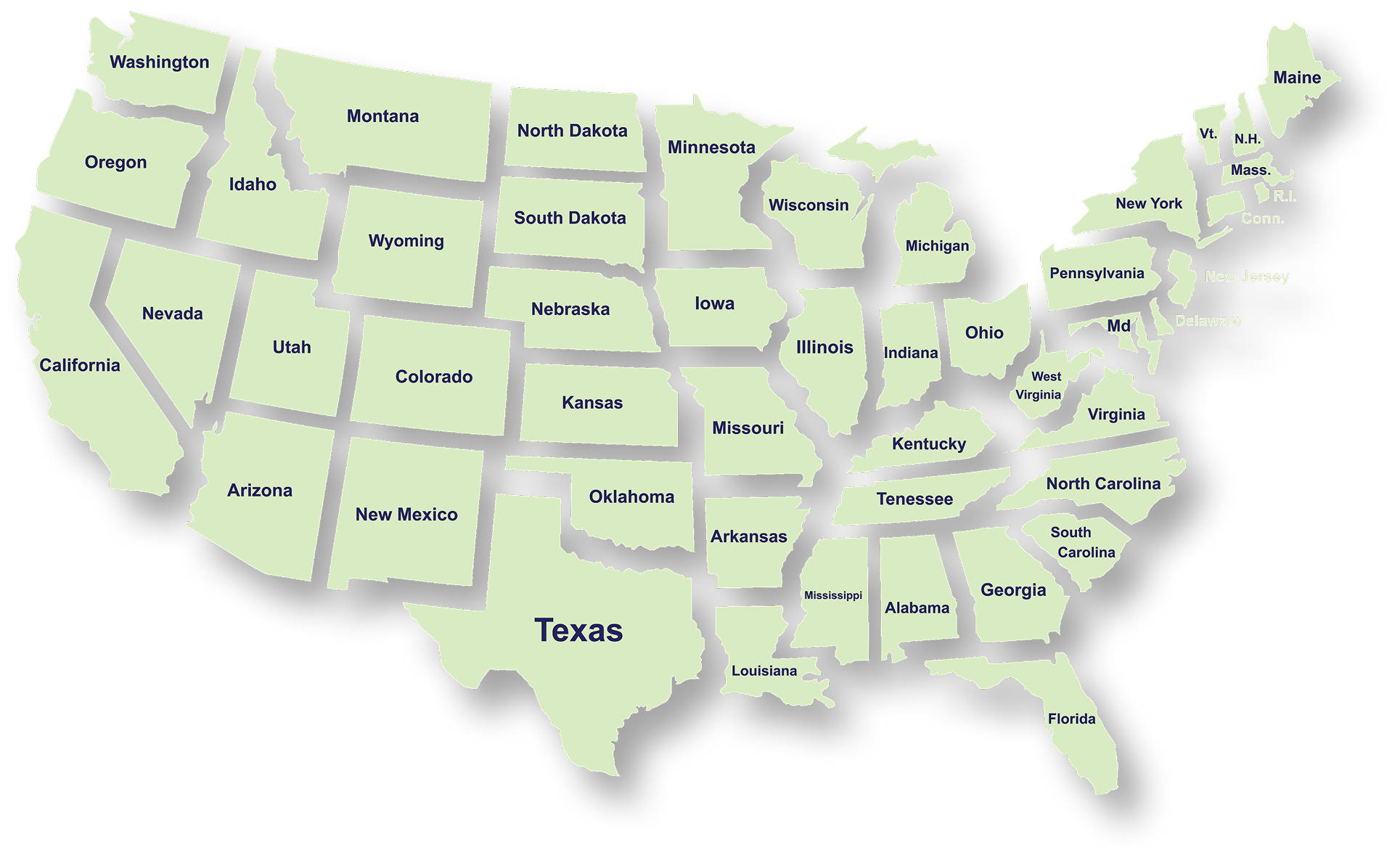
Serving Businesses & Individuals Across USA

We handle accounting, tax filing, and planning with defined timelines and accurate reporting for businesses and individuals across all states.

Frequently Asked Questions

What services does NR CPAs & Business Advisors provide?
What is tax planning and why is it important for businesses?
How can a Virtual CFO help my business?
When should a business consider IRS tax resolution services?
What financial statements does a business typically need?
How can startup advisory services help new businesses?
What is strategic business planning?
What is a Virtual Family Office and who can benefit from it?