Learning Center for Tax and Financial Insights

Stay updated with clear, actionable articles on tax rules, deadlines, deductions, and financial decisions that impact individuals and businesses.

No items found.

What Makes a Great CEO? Personality, Perseverance and Perspective

If you ever wanted proof that quality company leadership is critical to an organization's success, look no further than the old saying of "people don't quit their jobs. They quit their leaders." To that end, being an efficient CEO involves a lot more than just "having a vision" or "barking orders." It's not about commanding anyone to follow your lead - it's about showing, beyond a shadow of a doubt, that your lead is worth following in the first place. People won't work hard, put in long hours and dedicate themselves to your dream because you told them to - they have to want it for themselves, too. This simple idea generates a massive ripple effect that impacts an organization in nearly every area and in every way that you can imagine. In fact, recent research conducted by TINYpulse even revealed that strong management quality and transparency leads to 30% better employee retention across the board. But at the same time, all of this demands the question - what makes a great CEO in the first place? If the chasm between a good CEO and a great CEO is truly as deep as it appears, what qualities do you need to work on to guarantee that you end up in the latter category and not the former? The answer to that particular question requires you to keep a few key things in mind. The Three "Ps" of a Great CEO If you had to make a list of all the core qualities that set great CEOs apart from the rest of their contemporaries, personality, perseverance and perspective would undoubtedly be right at the top. Let's assume for a moment that as an entrepreneur in the first place, you have a clear vision for your business - a course that you're setting out on where success is the proverbial pot of gold at the end of the rainbow. The three "Ps" will absolutely impact your ability to get from one end of that journey to the other. In terms of personality, this quality is essential because you need to get buy-in from your employees and other key stakeholders or your business is finished before it's even truly had a chance to start. Essentially, you have a vision that you believe in wholeheartedly - your personality will get other people to believe in it, too. According to the Harvard Business Review, this means being able to balance keen insight into your stakeholders' priorities with an absolutely unrelenting focus on delivering business results day in and day out. Essentially, you need to be able to deeply understand who needs to be onboard, what those people's needs and motivations truly are AND what you can do to get them on board by aligning those motivations around the ultimate goal of value creation. Madeline Bell, CEO of Children's Hospital of Philadelphia, says that when it comes time to make any big business decision she first begins by making a list of all the key people who NEED to be on board to guarantee success. She says that she identifies "the detractors and their concerns, and then I think about how I can take the energy that they might put into resistance and channel it into something positive. I make it clear to people that they’re important to the process and they’ll be part of a win." Without the right focused personality by your side, this will be an uphill battle on the best of days. On the subject of perseverance, one of the major factors that goes into creating a great CEO involves both the ability to embrace appropriate risks and a desire to act and capitalize on opportunities when they present themselves. To put it simply, this means that the CEO is usually less cautious and more likely to snap into action than other senior executives simply because they must be - that's literally part of their job. But at the same time, this doesn't mean that a great CEO somehow manages to hit a home run each and every time they step up to the plate. Far from it. Being willing to take risks means being willing to fail, which itself means accepting responsibility and finding valuable learning opportunities inside every strike out scenario. Risk for the sake of it is not what goes into making the type of CEO that people feel compelled to follow. Instead, it's being willing to take a big risk and still fail, yet, at the same time, finding a way to come out stronger on the other side. But out of the three Ps, perhaps the most important one is also the final one: perspective. Being a great CEO and a great entrepreneur are two very, very different things and should always be treated as such. As a great entrepreneur, you have a vision and a clear path for success and you're going to start that business you've always dreamed of come hell or high water. You're going to lay every brick on the road to success yourself if you have to because you simply can't help yourself. In a lot of ways, it's the reason why you get up in the morning - you CAN do it all yourself because you MUST do it all yourself so you WILL do it all yourself if you have to. The first step towards becoming a great CEO involves the realization that this is no longer the case. This, in turn, is where perspective will come in handy - it's the realization that you can no longer do it all yourself because your company has grown into something far larger than you could have ever hoped for. This means that you'll need to do more than just get comfortable with the idea of delegating responsibility. It means coming to terms with the idea that you are no longer the single master of your own destiny - you're simply one of many voices that are trying to accomplish the same thing, albeit one of the most important ones. This means that to be a great CEO, you need the courage to not only hire the right people but also do whatever you can to help them succeed. This means going out of your way to NOT surround yourself with sycophants and "yes" men and women. It means hiring people who will challenge you. Who will argue with you. Who will tell you to your face that you're making a huge mistake and then back that statement up with a laundry list of reasons why. The simple fact that you're willing to open yourself up to this type of situation means that you've taken one of the biggest steps forward in terms of becoming the CEO you always hoped you could be. There's a reason why, according to research conducted by Glassdoor, CEOs who are also their company's founder often generate better results than externally hired or internally promoted CEOs - nobody would choose to fight (and potentially lose) these battles if they had even a remotely viable alternative option. But for you, there isn't another option at all. You just can't help yourself. Because you don't want to be a good CEO - you want to be a great one. Rest assured, this is a very exciting position to be in - both for you professionally and for the company that you've already worked so hard to build.

Explore More
No items found.

QuickBooks Tip: Get Paid Faster Using QuickBooks

Are your customers slow about paying their invoices? QuickBooks can help accelerate your receivables. Your company’s cash flow depends largely on how quickly your customers pay the invoices you’ve sent. And if you’re like most small businesses, those checks tend to dribble in close to—and after—the due date. If you operate on a slim margin, this often means that you’re late at paying your own bills. It’s essential, then, that you do what you can to get incoming revenue moving as quickly as possible. QuickBooks offers numerous ways to help you accomplish that critical goal. Simplify the Payment Process The single most effective step you can take to speed up customer remittances is to allow payment by credit card or electronic check. If you’re currently only accepting paper checks, you already know what problems that option can create, like mailing time, trips to the bank, and insufficient funds. To establish this capability, you’ll have to sign up for a merchant account that will connect your bank to the financial institutions used by your customers. There are fees associated with this, and the initial setup will be unfamiliar to you. We can help with this. Once you sign up for a merchant account, you’ll be able to accept payments from customers by credit card and bank transfer. Having a merchant account will accelerate your receivables and improve your company’s cash flow, but it has other benefits, too. For example: Your customers will appreciate the convenience, and may even be more likely to make a purchase. In 2018, customers and prospects expect to be able to pay for items and services electronically. Not allowing this affects their perception of you as a forward-thinking, progressive business. You’ll save time, which translates to money. Instead of chasing payments, you can be working on ways to meet your goals and help your company grow. Always Know Where You Stand If you’re conscientious about keeping your records and transactions updated, you’ll always have access to the most current data about your company’s financial status. You’ll be able to answer questions from customers and vendors quickly and accurately, and your daily accounting tasks will be much easier to accomplish. There’s another benefit, though: reports. One of the five best things about QuickBooks is its ability to create dozens of reports using pre-formatted templates. You only have to choose the one you want to see, and the software will display it using your company’s data. You also have the option to customize these reports extensively, so they contain the exact cross section of data that you want to see.

Explore More
No items found.

Can't Pay Your Taxes by the April Due Date?

Article Highlights: What to Do If You Can’t Pay Loans Credit Card Payments IRS Installment Agreements Retirement Funds If you aren’t one of those lucky Americans who gets a tax refund from the IRS you might be wondering about your options for paying off your tax liability by the April due date. The IRS encourages taxpayers to pay the full amount of their tax liability on time, and it imposes significant penalties and interest on late payments. Thus, if you are unable to pay the taxes that you owe, it is generally in your best interest to make other arrangements to obtain the full funds to pay your taxes so that you are not subjected to the government’s penalties and interest. Here are a few options to consider. Family Loan – Obtaining a loan from a relative or friend may be the best bet because this type of loan is generally the least costly in terms of interest. Credit Card – Another option is to pay by credit card by using one of the service providers that works with the IRS. However, as the IRS will not pay the credit card discount fee, you will have to pay that fee. You will also have to pay the credit card interest on the payment. Caution: Depending on the amount owed, it may be less expensive just to pay the IRS penalties and interest rate on the unpaid balance rather than the normally higher credit card interest rates. Installment Agreement – If you owe the IRS $50,000 or less, you may qualify for a streamlined installment agreement that allows you to make monthly payments for up to six years. You will still be subject to the late payment penalty, but it will be reduced by half. In addition, interest will also be charged at the current rate, and you will have to pay a user fee to set up the payment plan. By signing this agreement, you agree to keep all future years’ tax obligations current. If you do not make payments on time or if you have an outstanding past-due amount in a future year, you will be in default of the agreement, and the IRS will then have the option of taking enforcement actions to collect the entire amount that you owe. If you seek an installment agreements exceeding $50,000, the IRS will need to validate your financial condition and your need for an installment agreement through the information you provide in the Collection Information Statement (in which you list your financial statements). You may also pay down your balance to $50,000 or less so as to take advantage of the streamlined option. Tap a Retirement Account – This is possibly the worst option for obtaining funds to pay your taxes because it jeopardizes your retirement and because the distributions are generally taxable at the highest bracket, which adds more taxes to the existing problem. In addition, if you are under age 59½, such a withdrawal is also subject to a 10% early-withdrawal penalty that compounds the problem even further.

Explore More
No items found.

Tax Reform Limits Exchanges to Defer Taxes

Article Highlights: Deferring Tax with Like-Kind Exchanges Changes Made by Tax Reform Impact on Trade-ins Note: This is one of a series of articles explaining how the various tax changes made by the GOP’s Tax Cuts & Jobs Act (referred to as the “Act” in the article), passed late in December 2017, might affect you and your family in 2018 and future years, and offering strategies you might employ to reduce your tax liability under the new tax laws. Whenever you sell business or investment property and have a gain, you generally have to pay tax on the gain at the time of sale. In the past, the tax code provided an exception and allowed you to postpone paying tax on the gain if you reinvested the proceeds into similar property as part of a qualifying like-kind exchange. These types of exchanges are commonly called Sec. 1031 exchanges (referring to the tax code section that allows them). These rules have applied to real estate, cars, farm animals and other business and investment items that are like-kind property. However, under the Act, and beginning in 2018, Sec. 1031 exchanges will only be allowed for exchanges of real property that is not held primarily for sale. It is important to note that real property located in the U.S. and real property located outside of the U.S. are not like-kind property for the purposes of these rules. Thus, exchanges of personal property and intangible property will no longer qualify for tax-deferred treatment.

Explore More
No items found.

Cryptocurrencies and Taxes

Article Highlights: Virtual Currency Valuation Transactions Character of the Gain or Loss Foreign Currency Transactions Foreign Bank and Financial Account (FBAR) Reporting Payment for Goods & Services Acquiring Virtual Currency Virtual Currency Mining Employee Payments Independent Contractor Payments As our world has become more and more “digital,” it was only a matter of time before cryptocurrencies were developed. One of the first of these virtual currencies was Bitcoin, and the Bitcoin network came online in 2009. Since then, additional cryptocurrencies have been developed. Cryptocurrencies are generally utilized for transactions by tech-savvy individuals and have a comparable value in real currency or take the place of real currency. These virtual currencies can be purchased with or exchanged into U.S. dollars, euros, and other real or virtual currencies. Valuation – The value of a virtual currency is based upon market value, i.e., what a willing buyer will pay a willing seller – much like trading in stocks. On February 15, 2018, when this article was written and according to Oanda (an online currency converter), a Bitcoin, one of the more popular virtual currencies, was worth $9,025, and one was worth $995 one year earlier. It took several years for the IRS to come up with guidance on how to deal to transactions involving virtual currencies. It finally issued Notice 2014-21 determining that virtual currency is treated as property and that the general tax principles applicable to property transactions apply to transactions using virtual currency. This can best be illustrated by example. Example A: Taxpayer buys Bitcoins (BTC) to use when making online purchases without the need for a credit card. He buys one BTC for $2,425 and later uses it to buy goods (BTC was trading at $2,500 at the time he made his purchase). He has a $75 ($2,500 − $2,425) reportable capital gain. This is the same result that would have occurred if he had sold the BTC at the time of the purchase and used U.S. dollars to purchase the goods. This example points to the complicated record-keeping requirement to track BTC’s basis. Since this transaction was personal in nature, no loss would be allowed if the value of BTC had been less than $2,425 at the time when the goods were purchased. Example B: Taxpayer buys Bitcoin (BTC) as an investment. The same rules apply as for stock transactions. Gains are taxable in the year realized, and any resulting loss, when combined with the other capital transactions for the year, are limited to $3,000 ($1,500 if a married taxpayer filing separate). Character of the Gain or Loss – The character of the gain or loss generally depends on whether the virtual currency is a capital asset in the hands of the taxpayer. A taxpayer generally realizes capital gain or loss on the sale or exchange of virtual currency that is held as a capital asset. For example, stocks, bonds, and other investment property are generally capital assets. A taxpayer generally realizes ordinary gain or loss on the sale or exchange of virtual currency that he or she does not hold as a capital asset. Inventory and other property held mainly for sale to customers in a trade or business are examples of property that is not a capital asset. Foreign Currency Transactions – Under currently applicable law, virtual currency is not treated as currency that could generate foreign currency gain or loss for U.S. federal tax purposes. Foreign Bank and Financial Account (FBAR) Reporting – The IRS has stated a few years ago that virtual currency transactions need not be reported for purposes of Foreign Bank and Financial Account (FBAR) reporting. But the IRS cautioned that its position could change in the future. However, the IRS has not issued any announcements regarding a change in its position on FBAR filings for years through 2017.

Explore More
No items found.

Is Bunching Right for You?

Article Highlights: Standard Deductions Itemized Deductions Bunching Strategy Medical Expenses Taxes Charitable Contributions Note: The is one of a series of articles explaining how the various tax changes in the GOP’s Tax Cuts & Jobs Act (referred to as “the Act” in this article), which passed in late December of 2017, could affect you and your family, both in 2018 and future years. This series offers strategies that you can employ to reduce your tax liability under the new law. The Act increased the standard deduction and placed new limitations on itemized deductions. Beginning with 2018 tax returns, the standard deductions will be: $12,000 for single individuals and married people filing separately, $18,000 for heads of household, and $24,000 for married taxpayers filing jointly. If your deductions exceed the standard deduction amount for your filing status, you are allowed to itemize the following deductions: Medical expenses, to the extent they exceed 7.5% of your adjusted gross income (AGI); Taxes paid during the year (for state or local income or sales tax and for real property or personal property taxes), limited to $10,000; Home mortgage interest; Investment interest; Charitable contributions; Gambling losses, to the extent of your gambling winnings; and Certain infrequently encountered tier-1 miscellaneous deductions. Are your itemized deductions typically roughly equal to the new standard deduction amount? If so, think about using a tax strategy known as bunching. In this technique, you take the standard deduction in one year and then itemize in the next. This is accomplished by planning the payment of your deductible expenses so as to maximize them in the years when you itemize deductions. Commonly bunched deductible expenses include medical expenses, taxes, and charitable contributions. To clearly illustrate how bunching works, here are a few examples of deductible payments that generally provide enough flexibility: Medical Expenses – Say that you contract with a dentist for your child’s braces. This dentist offers you the option of an up-front lump-sum payment or a payment plan. If you make the lump-sum payment, the entire cost will be credited in the year you paid it, thereby dramatically increasing your medical expenses for that year. If you do not have the cash available for the up-front payment, then you can pay by credit card, which is treated as a lump-sum payment for tax purposes. If you do so, you must realize that the interest on that payment is not deductible; you need to determine whether incurring the interest is worth the increased tax deduction. Another important issue related to medical deductions is that only the amount of medical expenses that exceeds 7.5% of your AGI is actually deductible. In addition, this 7.5% floor will increase to 10% after 2018. There is thus no tax benefit to bunching medical deductions if the total will be less than 7.5% of your AGI (or 10% beginning in 2019). If you have abnormally high income in the current year, you may wish to put off medical expense payments until the following year (e.g., if 10% of the following year’s income will be less than 7.5% of this year’s income). Taxes – Property taxes are generally billed annually at midyear; most locales allow for these tax bills to be paid in semiannual or quarterly installments. Thus, you have the option of paying them all at once or paying them in installments. This provides the opportunity to bunch the tax payments by paying only one semiannual installment (or 2 quarterly installments) in one year and pushing off the other semiannual (or 2 quarterly) installments until the next year. Doing so allows you to deduct 1½ years of taxes in one year and half a year of taxes in the other. However, if you are thinking of making late property tax payments as a means of bunching, you should be cautious. Late payment penalties are likely to wipe out any potential tax savings. If you reside in a state that has a state income tax, any such tax that is paid or withheld during the year is deductible on federal taxes. For instance, if you are making quarterly estimated state tax payments, the fourth quarter estimated payment is generally due in January of the subsequent year. This gives you the opportunity to either make that payment before December 31 (thus enabling you to deduct the payment on the current year’s return) or pay it in January before the due date (thus enabling you to use it as a deduction in the subsequent year). Here is a word of caution about itemized tax deductions: Under the Act, a maximum of $10,000 is allowed under itemized tax deductions, so there is no benefit gained by prepaying taxes when your tax total is already $10,000 or more. In addition, taxes are not deductible at all under the alternative minimum tax, so individuals under that tax generally derive no benefits from itemized deductions. Charitable Contributions – Charitable contributions are a nice fit for bunching because they are entirely at the taxpayer’s discretion. For example, if you normally tithe to your church, you can make your normal contributions during the year but then prepay the entire subsequent year’s tithe in a lump sum in December of the current year. If you do this for all contributions that you generally make to qualified organizations, you can double up on your contributions in one year and have no charitable deductions in the next year. Normally, charities are very active in their solicitations during the holiday season, which gives you the opportunity to make forward-looking contributions at the end of the current year or to simply wait a short time and make them after the end of the year. Charitable deductions do have a limit, but for most types of contributions, it is high: 60% of AGI, beginning in 2018.

Explore More
No results found.
Thank you! Your submission has been received!
Oops! Something went wrong while submitting the form.

Want tax & accounting tips & insights?Sign up for our newsletter.

Thank you! Your submission has been received!
Oops! Something went wrong while submitting the form.

Why Work With Us?

We combine deep tax expertise, financial strategy, and practical business insight to help you manage complexity, stay compliant, and make confident financial decisions.
A dollar sign, representing financial advice or discussion at NR CPAs & Business Advisors.

Experienced CPA and Enrolled Agent Leadership

Guidance led by licensed professionals with deep expertise in tax strategy, compliance, and complex financial matters.
White bar chart with an upward arrow on green circular background representing growth or progress at NR CPAs &. Business Advisors

Support for Growing Businesses and Startups

We understand the financial challenges of growth stage businesses and provide structured guidance to support expansion.
A white hand holding a dollar symbol and ascending bar chart on a green circular background representing financial growth or investment at NR CPAs & Business Advisors..

Strategic Financial Advisory

Our team helps you evaluate financial decisions with greater clarity, supported by practical insights and long term planning.

Fractional CFO Support

Access experienced financial leadership without the commitment and cost of hiring a full time Chief Financial Officer.

Proactive Tax Planning Approach

We focus on identifying tax opportunities throughout the year rather than reacting only during filing season.

Clear and Reliable Financial Reporting

Accurate financial statements and reporting that help you better understand performance and make informed decisions.
White IRS building icon with pillars and a dollar sign above on a green circular background.

Professional IRS Representation

Experienced support in resolving IRS notices, disputes, and compliance matters while protecting your financial interests.

Personalized Client Focus

Every client receives thoughtful attention and tailored financial solutions based on their specific needs and business goals.
Financial matters often involve important decisions. Working with experienced advisors can help you approach them with greater clarity and confidence in your choices.

Need Help With Your Tax or Financial Decisions?

Discuss your situation with our advisors to get clear guidance on tax planning, IRS matters, and the financial decisions ahead.
Business consulting at NR CPAs & Business Advisors.

Request Your Consultation

Fill out the form to discuss your tax concerns, financial questions, or advisory needs with our team. We will review your details and respond shortly.

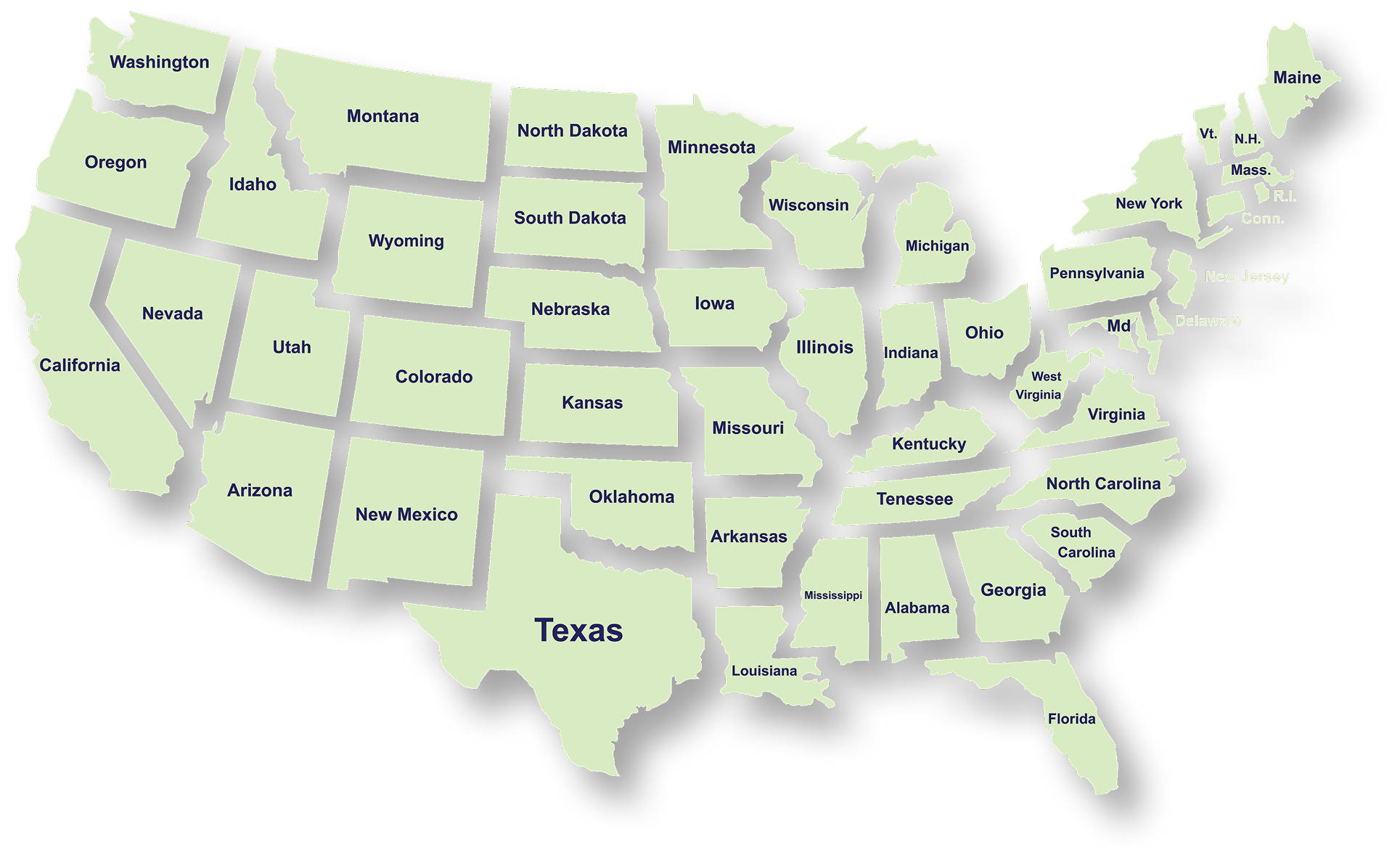
Serving Businesses & Individuals Across USA

We handle accounting, tax filing, and planning with defined timelines and accurate reporting for businesses and individuals across all states.

Frequently Asked Questions

What services does NR CPAs & Business Advisors provide?
What is tax planning and why is it important for businesses?
How can a Virtual CFO help my business?
When should a business consider IRS tax resolution services?
What financial statements does a business typically need?
How can startup advisory services help new businesses?
What is strategic business planning?
What is a Virtual Family Office and who can benefit from it?