Learning Center for Tax and Financial Insights

Stay updated with clear, actionable articles on tax rules, deadlines, deductions, and financial decisions that impact individuals and businesses.

No items found.

Personal Casualty Losses Axed by the New Tax Law

Article Highlights: Casualty Losses Deduction Suspension Disaster Related Casualty Losses Insurance Coverage Note: This is one of a series of articles explaining how the various tax changes in the GOP’s Tax Cuts & Jobs Act (referred to as “the Act” in this article), which passed in late December of 2017, could affect you and your family, both in 2018 and future years. This series offers strategies that you can employ to reduce your tax liability under the new law. A casualty loss occurs when there is property damage from a sudden, unanticipated event, not from gradual, progressive damage. Examples of events qualifying as a casualty include: acts of nature like hurricanes, tornadoes, floods, storms, and volcanic eruptions; shipwrecks; sonic booms; vandalism; fires; car accidents; theft; and terrorist attacks. For tax years 2018 through 2025, the Act has suspended the itemized deduction for personal casualty and theft losses. Prior to this change in law, personal casualty or theft losses were only deductible to the extent they exceeded $100 per casualty or theft event. In addition, the aggregate net casualty and theft losses for the year were deductible by those who itemized their deductions but only to the extent that the loss exceeded 10% of an individual's adjusted gross income (AGI).

Explore More
No items found.

Employee Business Expenses & Tax Reform

Article Highlights: Miscellaneous Itemized Deductions Subject to the 2% AGI Floor Employee Business Expenses Employee Reimbursement Plan (Accountable Plan) Note: This is one of a series of articles explaining how the various tax changes in the GOP’s Tax Cuts & Jobs Act (referred to as “the Act” in this article), which passed in late December of 2017, could affect you and your family, both in 2018 and future years. This series offers strategies that you can employ to reduce your tax liability under the new law. If you are an employee (i.e., a W-2 wage earner) with substantial work-related business expenses, the Act was not kind to you. It suspended (and effectively repealed), for 2018 through 2025, all miscellaneous itemized deductions, which were previously only subject to a floor of 2% of adjusted gross income (AGI). Employee business expenses are included in that category of miscellaneous itemized deductions. This change affects those who are compensated as employees and who have work-related expenses—including salespeople with travel and entertainment expenses, long-haul truck drivers with away-from-home expenses, mechanics with tool expenses, and any other employees with large but unreimbursed business expenses. These employees, beginning in 2018, will no longer be able to count such expenses as itemized deductions.

Explore More
No items found.

Tax Reform Cracks Down on IRA Recharacterizations

Article Highlights: Tax Trap Traditional IRA Roth IRA Traditional to Roth Conversions Undoing a Conversion Note: This is one of a series of articles explaining how the various tax changes in the GOP’s Tax Cuts & Jobs Act (referred to as “the Act” in this article), which passed in late December of 2017, could affect you and your family, both in 2018 and future years. This series offers strategies that you can employ to reduce your tax liability under the new law. If you have been or are anticipating converting your traditional IRA to a Roth IRA, you should be aware of a tax trap that Congress built into the Act. Background: There are two types of IRA accounts: Traditional IRA – Is a retirement plan that generally provides a taxpayer with a tax deduction when a contribution is made to the account. Then when distributions are taken from the account they are fully taxable, including earnings. Roth IRA - Is also a retirement plan, but unlike the traditional IRA, a Roth IRA does not provide a tax deduction for the contribution. Thus, once a taxpayer reaches retirement age, all of the distributions are totally tax-free. The big benefit here is that all the Roth account earnings over the years end up being tax-free as opposed to those from the traditional IRA, which are taxable. For that reason, many taxpayers take advantage of a provision in the law that allows them to convert a traditional IRA to a Roth IRA. However, for the year that a traditional IRA is converted to a Roth IRA, the converted amounts are taxable. Therefore, most IRA owners carefully plan the amount and timing of the conversions to be done in a year when they are in lower-than-normal tax brackets.

Explore More
No items found.

Have Business Income? If So, You Score Big With The New Tax Reform

Article Highlights: Sec 199A Deduction Qualified Business Income Threshold Specified Service Businesses Limitations Wage Limit Aggregating Amounts Note: This is one of a series of articles explaining how the various tax changes in the GOP’s Tax Cuts & Jobs Act (referred to as “the Act” in this article), which passed in late December of 2017, could affect you and your family, both in 2018 and future years. This series offers strategies that you can employ to reduce your tax liability under the new law. As part of the Act, Congress changed the tax-rate structure for C-corporations to a flat rate of 21% instead of the former graduated rates that topped out at 35%. Needing a way to equalize the rate reduction for all taxpayers with business income, Congress came up with a new deduction for businesses that are not organized as C-corporations. As a result, the Act has provided a new and substantial tax benefit for most non-C- corporation business owners in the form of a deduction that is equal to 20% of their qualified business income (QBI). This deduction is most commonly known as a pass-through income deduction because it applies to income from pass-through business entities such as partnerships and S-corporations. This category also includes income from sole proprietorships, rentals, and farms; Real Estate Investment Trust (REIT) dividends; pass-through income from publicly traded partnerships; and cooperative dividends. The shorthand term for this deduction is the Sec 199A deduction, as 199A is the Internal Revenue Code section number for this provision. Let’s look at how this deduction works. QBI – QBI is defined as the net amount of income, gains, deductions, and losses with respect to trades or businesses that are conducted within the United States. QBI does not include: Limitation thresholds Wage limit Capital gains or losses, Interest income, Dividends or payments in lieu of dividends, Annuity income not received in connection with a trade or business, Gain or loss from foreign currency transactions, Trade or business of being an employee, Reasonable compensation from an S-corporation, or Guaranteed payments from a partnership. The pass-through deduction is not a business deduction, as it is deducted after a taxpayer’s adjusted gross income. It can be claimed regardless of whether the taxpayer claims the standard deduction or itemizes deductions. Since it is not a business deduction, it does not affect the computation of self-employment tax. Where QBI is less than zero, it is treated as a loss from a qualified business on the next year’s taxes. Complicated Computation - Congress ignored simplification for this deduction, which is quite complicated and which includes limitations at the entity level and for the combined deductions from all entities; furthermore, it is subject to a limitation based on taxable income. Threshold – When determining the 20% of QBI deduction for each entity, the deductible amount may be reduced, phased-out or phased-in based on that year’s taxable income (without regard to the deduction itself). The thresholds for each limitation are $157,500 for individuals and $315,000 for joint filers. The maximum of any phase-out or phase-in is $50,000 more than the threshold for individuals and $100,000 more for joint filers, so the maximums are $207,500 for individuals and $415,000 for joint filers. Specified Service Business – Special rules apply to specified service businesses, which are generally businesses that rely on the skill and reputation of the owners or employees. These include businesses focusing on health, law, accounting, actuarial science, performing arts, consulting, athletics, financial services, brokerage services, and so on. This category specifi-cally does not include engineering or architecture businesses and trades or businesses whose services consist of investment-type activities. For specified service businesses, if the taxable income is equal to or below the threshold, the entity’s deductible amount is the full 20% of QBI. When the taxable income is above the threshold, the deduction is pro rata phased out between the threshold and the cap. Thus, a specified service business entity has no deduc-tion when the taxable income exceeds $207,500 for individuals or $415,000 for joint filers.

Explore More
No items found.

Tax Deductions for Realtors

Auto Travel: Your auto expense is based on the number of qualified business miles you drive. Expenses for travel between business locations or daily transportation expenses between your residence and temporary work locations are deductible; include them as business miles. Expenses for your trips between home and work each day, or between home and one or more regular places of work, are COMMUTING expenses and are NOT deductible. Document business miles in a record book as follows: (1) give the date and business purpose of each trip; (2) note the place to which you traveled; (3) record the number of business miles; and (4) record your car’s odometer reading at both the beginning and end of the tax year. Keep receipts for all car operating expenses – gas, oil, repairs, insurance, etc. – and of any reimbursement you received for your expenses. Out-of-Town Travel: Expenses incurred when traveling away from “home” overnight on job-related and continuing education trips that were not reimbursed or reimbursable by your employer are deductible. Your “home” is generally considered to be the entire city or general area where your principal place of employment is located. Out-of-town expenses include transportation, meals, lodging, tips and miscellaneous items like laundry, valet, etc. Document away-from-home expenses by noting the date, destination and business purpose of your trip. Record business miles if you drove to the out-of-town location. In addition, keep a detailed record of your expenses – lodging, public transportation, meals, etc. Always list meals and lodging separately in your records. Receipts must be retained for each lodging expense. However, if any other business expense is less than $75, a receipt is not necessary if you record all of the information timely in a diary. You must keep track of the full amount of meal and entertainment expenses even though only a portion of the amount may be deductible. Professional Fees & Dues: Dues paid to professional societies related to your profession are deductible. These could include professional organizations, business leagues, trade associations, chambers of commerce, boards of trade and civic organizations. However, dues paid for memberships in clubs organized for business, pleasure, recreation or other social purpose are not deductible. These could include country clubs, golf and athletic clubs, airline clubs, hotel clubs and luncheon clubs.

Explore More
No items found.

Tax Reform Adds New Perks to ABLE Accounts

Article Highlights: ABLE Account Tax-Deferred Accumulation Contribution Limits Tax Reform Changes Beneficiary Contributions Saver’s Credit Sec. 529 Plan Rollovers Note: This is one of a series of articles explaining how the various tax changes in the GOP’s Tax Cuts & Jobs Act (referred to as “the Act” in this article), which was passed in late December 2017, could affect you and your family, in both 2018 and future years. This series offers strategies that you can employ to reduce your tax liability under the new law. Achieving a Better Life Experience (ABLE) accounts provide the means for individuals and families to contribute and save to support individuals who are blind or became severely disabled before turning age 26, in maintaining their health, independence, and quality of life. Although contributions to an ABLE account aren't tax-deductible, they do provide a significant benefit by allowing amounts in the account to grow on a tax-deferred basis. Distributions are tax-free up to the amount of the disabled individual’s qualified disability expenses, which generally include housing, transportation, education, and medical necessities. Only one account can be established for each beneficiary. Prior to the passage of the Act, the maximum annual contribution to an ABLE account by all persons was equal to the annual gift tax exemption, which for 2018 is $15,000. With the passage of the Act, in addition to the $15,000 allowance for all persons, the beneficiary can also make a contribution equal to the lesser of the prior year’s poverty level for a one-person household or the beneficiary’s taxable compensation for the year. For 2017, the poverty level for a one-person household was $12,060, which means for 2018, the beneficiary can contribute an additional amount equal to the smaller of the beneficiary’s taxable compensation or $12,060.

Explore More
No results found.
Thank you! Your submission has been received!
Oops! Something went wrong while submitting the form.

Want tax & accounting tips & insights?Sign up for our newsletter.

Thank you! Your submission has been received!
Oops! Something went wrong while submitting the form.

Why Work With Us?

We combine deep tax expertise, financial strategy, and practical business insight to help you manage complexity, stay compliant, and make confident financial decisions.
A dollar sign, representing financial advice or discussion at NR CPAs & Business Advisors.

Experienced CPA and Enrolled Agent Leadership

Guidance led by licensed professionals with deep expertise in tax strategy, compliance, and complex financial matters.
White bar chart with an upward arrow on green circular background representing growth or progress at NR CPAs &. Business Advisors

Support for Growing Businesses and Startups

We understand the financial challenges of growth stage businesses and provide structured guidance to support expansion.
A white hand holding a dollar symbol and ascending bar chart on a green circular background representing financial growth or investment at NR CPAs & Business Advisors..

Strategic Financial Advisory

Our team helps you evaluate financial decisions with greater clarity, supported by practical insights and long term planning.

Fractional CFO Support

Access experienced financial leadership without the commitment and cost of hiring a full time Chief Financial Officer.

Proactive Tax Planning Approach

We focus on identifying tax opportunities throughout the year rather than reacting only during filing season.

Clear and Reliable Financial Reporting

Accurate financial statements and reporting that help you better understand performance and make informed decisions.
White IRS building icon with pillars and a dollar sign above on a green circular background.

Professional IRS Representation

Experienced support in resolving IRS notices, disputes, and compliance matters while protecting your financial interests.

Personalized Client Focus

Every client receives thoughtful attention and tailored financial solutions based on their specific needs and business goals.
Financial matters often involve important decisions. Working with experienced advisors can help you approach them with greater clarity and confidence in your choices.

Need Help With Your Tax or Financial Decisions?

Discuss your situation with our advisors to get clear guidance on tax planning, IRS matters, and the financial decisions ahead.
Business consulting at NR CPAs & Business Advisors.

Request Your Consultation

Fill out the form to discuss your tax concerns, financial questions, or advisory needs with our team. We will review your details and respond shortly.

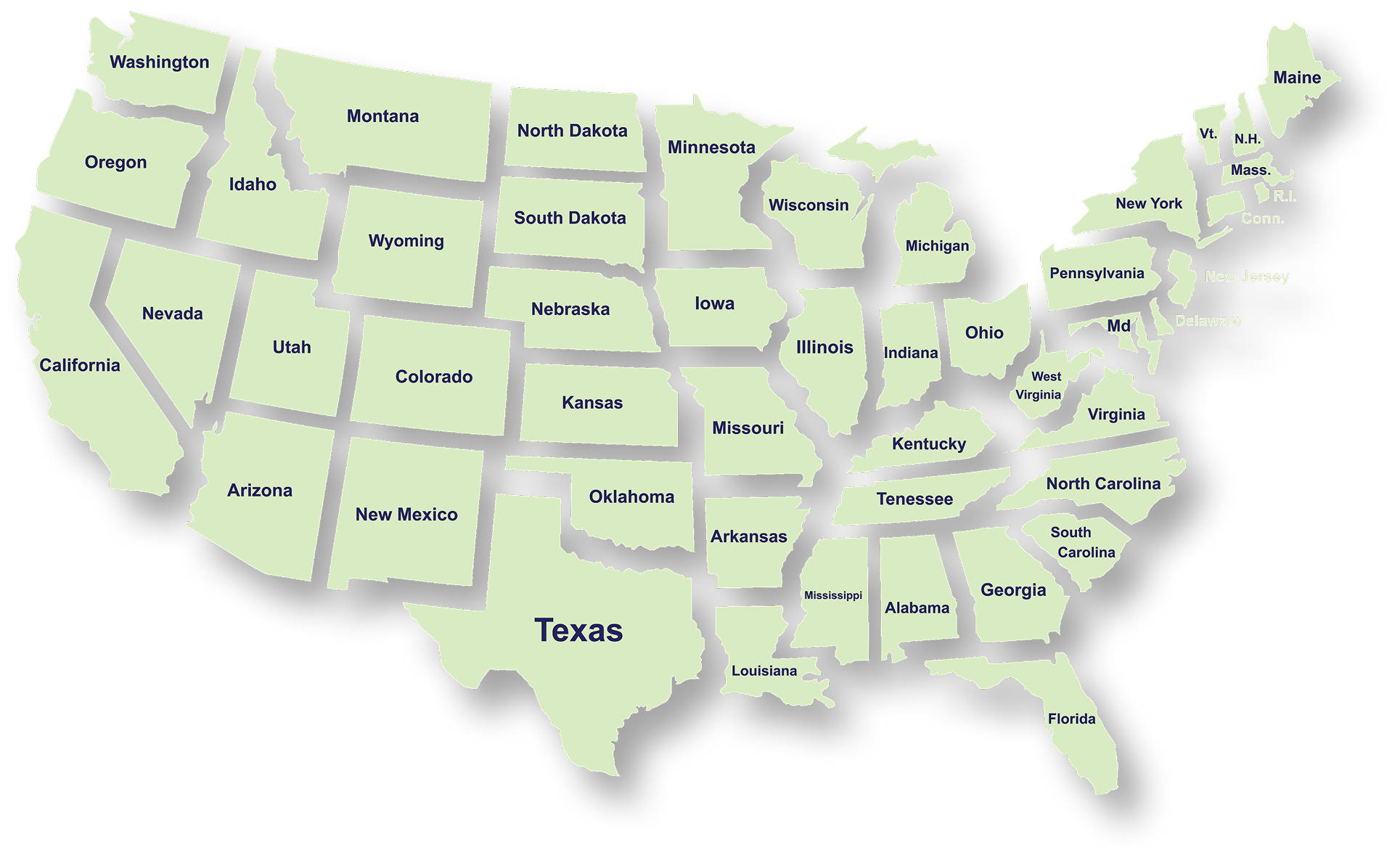
Serving Businesses & Individuals Across USA

We handle accounting, tax filing, and planning with defined timelines and accurate reporting for businesses and individuals across all states.

Frequently Asked Questions

What services does NR CPAs & Business Advisors provide?
What is tax planning and why is it important for businesses?
How can a Virtual CFO help my business?
When should a business consider IRS tax resolution services?
What financial statements does a business typically need?
How can startup advisory services help new businesses?
What is strategic business planning?
What is a Virtual Family Office and who can benefit from it?