Learning Center for Tax and Financial Insights

Stay updated with clear, actionable articles on tax rules, deadlines, deductions, and financial decisions that impact individuals and businesses.

No items found.

Tax Deductions for Medical Professionals

Supplies & Expenses: Generally, to be deductible, items must be ordinary and necessary to your medical profession and not reimbursable by your employer. Record separately items having a useful life of more than one year. Normally, the cost of such assets are recovered differently on your tax return than are other recurring, everyday business expenses such as business cards or medical supplies. Other Expenses: Expenses of looking for new employment in your present line of work are deductible – you do not have to actually obtain a new job in order to deduct the expenses. Out-oftown job-seeking expenses are deductible only if the primary purpose of the trip is job seeking, not pursuing personal activities. Communication Expenses: The basic local telephone service costs of the first telephone line provided in your residence are not deductible. However, toll calls from that line are deductible if the calls are business-related. The costs (basic fee and toll calls) of a second line in your home are also deductible if the line is used exclusively for business. When communication equipment, such as a cell phone, is used part for business and part personally the cost of the equipment must be allocated to deductible business use and non-deductible personal use. Keep your bills for cellular phone use and mark all business calls. Uniforms & Upkeep Expenses: If you are required to wear a uniform in your medical profession, the cost and upkeep may be deductible if they aren’t provided to you without charge by your employer. IRS rules specify that work clothing cost and the cost of its maintenance are deductible if: (1) the uniforms are required by your employer (if you’re an employee); and (2) the clothes are not adaptable to ordinary street wear. Normally, the employer’s emblem attached to the clothing indicates it is not for street wear. The cost of protective clothing (e.g., safety shoes or goggles) is also deductible. Continuing Education: Educational expenses are deductible under either of two conditions: (1) your employer requires the education in order for you to keep your job or rate of pay; or (2) the education maintains or improves your skills as a medical professional. Costs of courses that are taken to meet the minimum requirements of a job, or that qualify you for a new trade or business, are NOT deductible. Auto Travel: Your auto expenses are based on the number of qualified business miles you drive. Expenses for travel between work locations or daily transportation expenses between your residence and temporary work sites are deductible; include them as business miles. Expenses for your trips between home and work each day, or between home and one or more regular places of work, are COMMUTING expenses and are NOT deductible.

Explore More
No items found.

Do You Have Accumulated Deferred Foreign Income? Time to Pay Up!

Article Highlights: Foreign Corporations Deferred Dividends Previous Law Deferred Income Now Taxable Reduced Tax Rates Payment Plan Election Note: This is one of a series of articles explaining how the various tax changes in the GOP’s Tax Cuts & Jobs Act (referred to as “the Act” in this article), which passed in late December of 2017, could affect you and your family, both in 2018 and future years. This series offers strategies that you can employ to reduce your tax liability under the new law.With the passage of the Act, taxpayers who are shareholders in a controlled foreign corporation (CFC) with deferred income are required to pay U.S. taxes on that income. Previously, U.S. shareholders of foreign corporations were only subject to taxes on income from those corporations if the dividends were distributed to the shareholders. Thus, if dividends were not distributed, the shareholder received no taxable income from the corporation. One exception to that rule applied to U.S. persons who owned 10% or more of a CFC. They were required to include their share of the CFC’s investment, insurance and services income in their income subject to U.S. tax.

Explore More
No items found.

Quickbooks Tip: Using Time Tracking in QuickBooks

Previously, we learned about getting QuickBooks ready for time-tracking by activating it in Preferences. We also created a record for a service item. Now we’ll actually use that record in the two ways you’ll be using it in QuickBooks: to pay employees for their hourly work and to bill customers for services. Recording Employee Hours There are two ways to enter hours for your employees who provide services to customers and are paid by the hour. The first is to create a work ticket for a single activity. Click Enter Time on the home page, and then Time/Enter Single Activity to open this window: Single-activity work tickets for employee hours are especially useful if you need to set a timer. First, check the date to make sure it displays the day when the work was actually done, not recorded. Click the arrow in the field next to Name and select the employee’s name from the drop-down list that opens, then do the same in the Customer:Job field below. The Service Item field needs to display the name of the service performed by the employee. If you want to time a period of activity, use the Start, Stop, and Pause buttons under Duration. You can also replace the 0:00 that appears by default with the number of hours and minutes that were worked. In the middle column, you’ll select the correct Payroll Item from the drop-down list. You can add a new employee if necessary without completing his or her entire record, but be sure to go back and complete it before your next payroll. Hidden behind the drop-down menu is a field titled WC Code, which stands for Workers’ Compensation Code. It will only appear if you’re using QuickBooks Enhanced Payroll and have that feature turned on. Tip: If these two fields do not appear, you’ve selected an employee who isn’t timesheet-based. In the upper right hand corner, you’ll see a field labeled Billable. Be sure you click in the box to create a checkmark if you’ll be invoicing a customer for the work done. Save the activity record when you’ve completed it. Using Timesheets You can enter employees’ hours directly on a timesheet instead of creating a single activity record.

Explore More
No items found.

First-Year Start-Up Tax Issues

If creating a start-up business were an easy thing to do, then a lot more people would be doing it. For those who make the decision to fulfill their dreams and go for it, success relies on being fully prepared. Some of the most common stressors encountered by entrepreneurs involve tax liabilities, whether business is booming or they’re struggling to keep their head above water. The best way to avoid these pitfalls is to learn about them ahead of time. Here’s what every entrepreneur needs to know. Give Careful Consideration to the Type of Business Organization You Choose The entity that you choose for your start-up will have a big impact on how your taxes are handled, so make sure you’ve done your research to find the option that works best for your specific situation. Factors like the state where you’re doing business and the type of business you’re operating will be a consideration, and so will your ownership profile. Businesses that don’t plan on adding partners or shareholders in the future or that anticipate changing owners in the near future are probably limited to establishing as a C corporation or an S corporation, with the former offering more flexibility on ownership shifts, as well as the possibility of international investors. Though there’s no law to prevent you from shifting to another type of entity in the future, doing so can be disruptive, so it makes sense to take your time and choose the option that fits best and makes the most sense based on your current ownership plans. Choosing an Accounting Method Unless you’re an accountant or have experience and significant knowledge of accounting, it’s a good idea to sit down with a professional to determine whether you’re going to use a cash accounting method, an accrual method, or a hybrid of the two. If you don’t have a background in bookkeeping and taxes, it may seem like an academic question, but it plays a big part in determining your tax liability. A lot of the determination will also depend on the type of business you run. An experienced accountant will be able to walk you through the decision that makes the most sense and that will be easiest to implement in compliance with IRS regulations. Putting Internal Controls in Place As a start-up, there are certain internal controls you need to put in place to ensure that your business is running smoothly and according to your stated objectives and goals. You also want to be sure that you’re set up to provide comprehensive information for external investors. Company policies need to be written and communicated with an eye to regulations. A CPA will be invaluable in helping you get these controls in place. Paying Attention to Compliance Every entrepreneur likes to do things their own way, but there are some issues where compliance is key. Failure to follow the rules and regulations could lead to stiff penalties and fines, or even to your business either temporarily or permanently being shut down. In addition to paying taxes on your business’s income, you also need to find out whether your locale requires a business license and what the rules are if you’re selling either a digital or physical product over state lines. Sales tax will need to be paid, workers’ compensation insurance will need to be purchased and a policy put in place if you have even a single employee, and if you’ve organized yourself as a Delaware corporation, then you’ll need to have an annual franchise tax report prepared, filed and paid, whether you generate income or not. Creating a Way to Track Performance and Stay on Budget One of the biggest mistakes new business owners make is failing to create a budget and stick to it. Failure to do so can easily lead to a shortfall in available funds, including those you need to pay your tax liability. Take the time to make a reasonable budget and establish what your start-up’s key performance indicators (KPIs) are for both cutting expenses and generating income. With those issues addressed, you give yourself a solid way to measure how you’re doing, and you’re likely to find both short-term and long-term tax planning easier too. Starting a new business is a dream come true for many, but your focus has to go beyond your own area of expertise and interest. By working with a tax professional, you can be sure that you’ve addressed the tax-related problems that have tripped up many start-up organizations.

Explore More
No items found.

Surprise! Extender Bill Passed: Do You Benefit?

Article Highlights: Mortgage Insurance Premiums Above-the-Line Education Expenses Exclusion of Home Cancellation of Debt Income Credit for Nonbusiness Energy Property Credit for New Qualified Fuel Cell Motor Vehicles Credit for Alternative Fuel Vehicle Refueling Property Credit for 2-Wheeled Plug-In Electric Vehicles Credit for Energy-Efficient New Homes Race Horses as 3-Year Property Energy Efficient Commercial Buildings Deduction Congress passed the Budget Bill early in the night, and the President signed it on Friday, February 9th. To the surprise of many, the bill included a number of extenders that retroactively apply to 2017 returns. Were you lucky enough to benefit? Needless to say, these last-minute changes may create a problem for taxpayers who have already filed their returns and will need to file amended returns to take advantage of these extenders. The retroactive changes will cause the IRS some headaches as well. Since the 2017 forms do not accommodate some of the extended provisions, the IRS will have redesign and issue updated forms or provide workaround procedures. Listed below are the extenders that apply to individuals and small businesses. Please review them to determine if any of them may apply to you. If you have already filed, please give this office a call and let us know, so that an amended return can be prepared to take advantage of any of these changes. In some cases, it may be necessary to wait for IRS guidance if the current 2017 forms do not accommodate the extended provisions. If you have not filed yet and any of the provisions apply to you, be sure to bring them to our attention. Mortgage Insurance Premiums – For years 2007 through 2016, premiums paid on mortgage insurance contracts, in connection with acquisition debt, issued after 2006 were deductible as home mortgage interest. The deductibility of these premiums has been retroactively extended through 2017. The deductible amount of the premiums phases out ratably by 10% for each $1,000 by which the taxpayer’s AGI exceeds $100,000 (10% for each $500 by which a married separate taxpayer’s AGI exceeds $50,000). If your AGI is over $109,000 ($54,500 for married separate), the deduction is totally phased out. If you itemize your deductions and have deducted the insurance premiums in the past, you generally will be able to deduct them on your 2017 return. Please note that the 2017 Schedule A does not have an entry for mortgage insurance premiums; we will have to wait for IRS guidance on how to report it on the tax return. Above-the-Line Education Expenses – For years 2001 through 2016, taxpayers had the option to take a deduction, without itemizing, for higher-education tuition and related expenses. The deduction has been retroactively extended for 2017. The deduction is capped at $4,000 for an individual whose adjusted gross income (AGI) does not exceed $65,000 ($130,000 for joint filers) or $2,000 for an individual whose AGI does not exceed $80,000 ($160,000 for joint filers). Individuals who were unable to claim an education credit generally take this deduction. This deduction is claimed on Form 1040, but the current form does not provide an entry for this deduction, so we will have to wait for IRS guidance on how to handle this deduction. Exclusion of Home Cancellation of Debt Income – When a lender takes a home back and the home’s fair market is less than the balance on the loan, the taxpayers will generally have cancellation of debt (COD) income. For years 2007 and through 2016 taxpayers were able to exclude up to $2 million ($1 million for married taxpayers filing separate) of the COD income. This exclusion is limited to debt that was used purchase or substantially improves a taxpayer’s primary residence and has been extended through 2017. Credit For Nonbusiness Energy Property – The provision to make existing homes more energy efficient has been extended through 2017. The provision allows a credit of 10% of the amount paid or incurred by the taxpayer for qualified energy-efficient improvements such as qualifying exterior doors, windows and skylights, metal and asphalt roofs, qualifying heating and AC systems and certain insulation materials or systems, all of which must meet energy-savings requirements certified by the manufacturer. This is a lifetime credit, meaning the $500 maximum credit is reduced by credit taken in any prior year, going back as far as 2006.

Explore More
No items found.

Business Owners Beware - New Tax Law Severely Limits Entertainment Deductions

Article Highlights: Business Entertainment Expenses Business Meals Directly Related To Test Associated With Test Employee Meals Note: This is one of a series of articles explaining how the various tax changes in the GOP’s Tax Cuts & Jobs Act (referred to as “the Act” in this article), which passed in late December of 2017, could affect you and your family, both in 2018 and future years. This series offers strategies that you can employ to reduce your tax liability under the new law. If you are a business owner who is accustomed to treating clients to sporting events, golf getaways, concerts and the like, we have some bad news for you. The GOP’s tax-reform bill that President Trump signed on December 22nd of last year eliminated the business-related deduction for entertainment, amusement or recreation expenses, effective beginning in 2018. This doesn’t mean you can’t still entertain your clients; it just means you can no longer deduct 50% of the cost of that entertainment as a business expense, making it more costly for you to entertain clients. But all is not lost! The Act does retain a deduction for business meals that are directly related to or associated with the active conduct of your business. The term “directly related” means that actual business discussions were conducted during the meal and you anticipated a specific business benefit from the meal. The term “associated with” is more liberal and includes meals either preceding or following a bona fide business discussion. In either case, the business deduction continues to be 50% of the actual expense. Also remember that business meals must be documented, including the amount, business purpose, date, time, place and names of the guests as well as their business relationship with you.

Explore More
No results found.
Thank you! Your submission has been received!
Oops! Something went wrong while submitting the form.

Want tax & accounting tips & insights?Sign up for our newsletter.

Thank you! Your submission has been received!
Oops! Something went wrong while submitting the form.

Why Work With Us?

We combine deep tax expertise, financial strategy, and practical business insight to help you manage complexity, stay compliant, and make confident financial decisions.
A dollar sign, representing financial advice or discussion at NR CPAs & Business Advisors.

Experienced CPA and Enrolled Agent Leadership

Guidance led by licensed professionals with deep expertise in tax strategy, compliance, and complex financial matters.
White bar chart with an upward arrow on green circular background representing growth or progress at NR CPAs &. Business Advisors

Support for Growing Businesses and Startups

We understand the financial challenges of growth stage businesses and provide structured guidance to support expansion.
A white hand holding a dollar symbol and ascending bar chart on a green circular background representing financial growth or investment at NR CPAs & Business Advisors..

Strategic Financial Advisory

Our team helps you evaluate financial decisions with greater clarity, supported by practical insights and long term planning.

Fractional CFO Support

Access experienced financial leadership without the commitment and cost of hiring a full time Chief Financial Officer.

Proactive Tax Planning Approach

We focus on identifying tax opportunities throughout the year rather than reacting only during filing season.

Clear and Reliable Financial Reporting

Accurate financial statements and reporting that help you better understand performance and make informed decisions.
White IRS building icon with pillars and a dollar sign above on a green circular background.

Professional IRS Representation

Experienced support in resolving IRS notices, disputes, and compliance matters while protecting your financial interests.

Personalized Client Focus

Every client receives thoughtful attention and tailored financial solutions based on their specific needs and business goals.
Financial matters often involve important decisions. Working with experienced advisors can help you approach them with greater clarity and confidence in your choices.

Need Help With Your Tax or Financial Decisions?

Discuss your situation with our advisors to get clear guidance on tax planning, IRS matters, and the financial decisions ahead.
Business consulting at NR CPAs & Business Advisors.

Request Your Consultation

Fill out the form to discuss your tax concerns, financial questions, or advisory needs with our team. We will review your details and respond shortly.

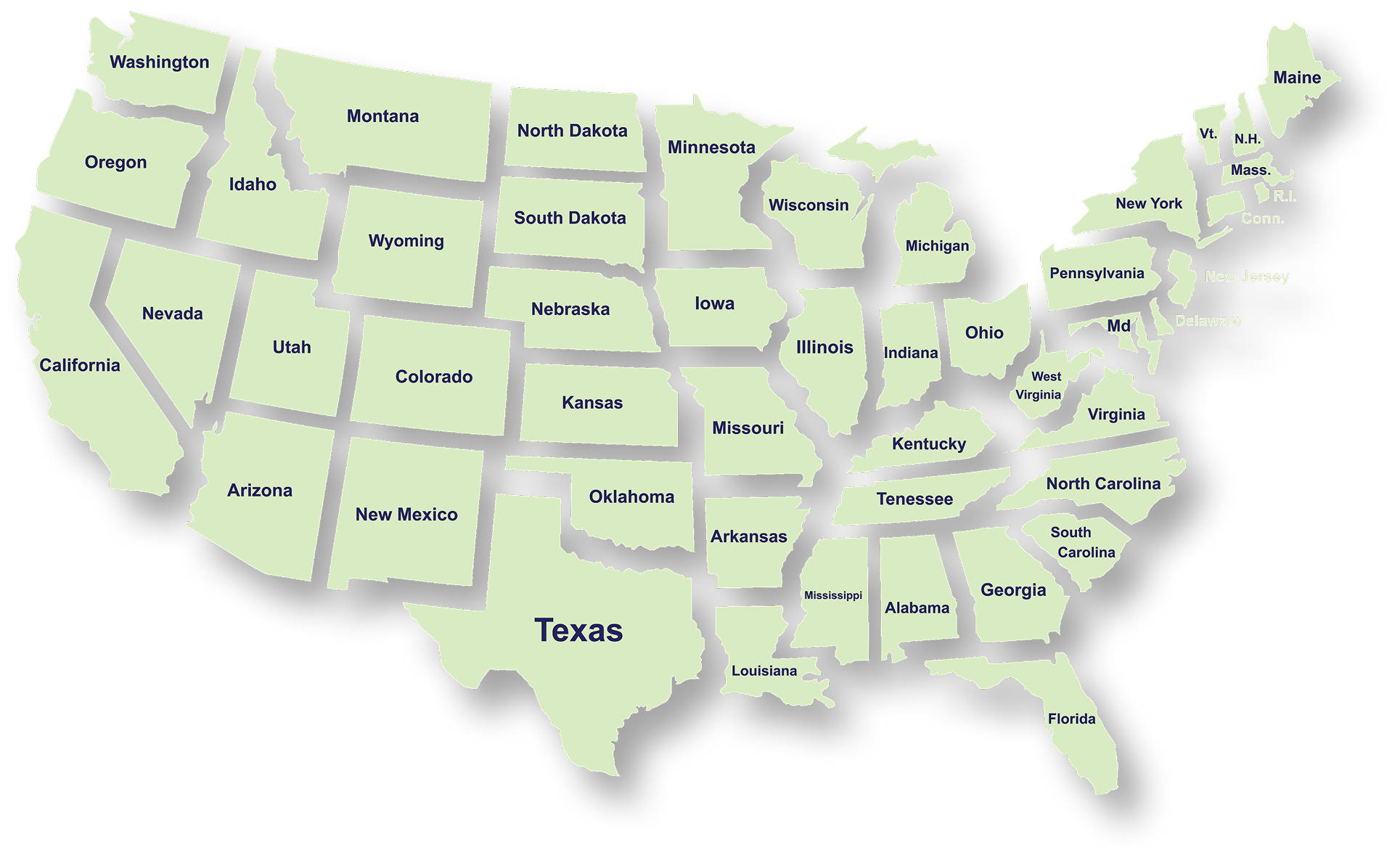
Serving Businesses & Individuals Across USA

We handle accounting, tax filing, and planning with defined timelines and accurate reporting for businesses and individuals across all states.

Frequently Asked Questions

What services does NR CPAs & Business Advisors provide?
What is tax planning and why is it important for businesses?
How can a Virtual CFO help my business?
When should a business consider IRS tax resolution services?
What financial statements does a business typically need?
How can startup advisory services help new businesses?
What is strategic business planning?
What is a Virtual Family Office and who can benefit from it?