Learning Center for Tax and Financial Insights

Stay updated with clear, actionable articles on tax rules, deadlines, deductions, and financial decisions that impact individuals and businesses.

Videos & Info Graphics

Video: Tax Extenders and Tax Return Amendment Opportunities

At the end of 2019, Congress passed a series of tax extenders and retroactive tax provisions. Watch this video if it makes sense to amend your return. .embed-container { position: relative; padding-bottom: 56.25%; height: 0; overflow: hidden; max-width: 100%; } .embed-container iframe, .embed-container object, .embed-container embed { position: absolute; top: 0; left: 0; width: 100%; height: 100%; }

Explore More
Videos & Info Graphics

Video Tips On What To Do If You Receive An IRS Deficiency Notice

Nobody likes getting mail from the IRS - especially when it's something you weren't expecting. Watch the video to learn more to do next if you received an IRS deficiency notice. .embed-container { position: relative; padding-bottom: 56.25%; height: 0; overflow: hidden; max-width: 100%; } .embed-container iframe, .embed-container object, .embed-container embed { position: absolute; top: 0; left: 0; width: 100%; height: 100%; }

Explore More
No items found.

Childbirth and Adoption Penalty Exception Added

Article Highlights: When a Distribution Is Subject to a Penalty Amount of the Penalty Birth and Adoption Penalty Exception Medical Expenses Penalty Exception Unemployed – Medical Insurance Exception On December 20, 2019, President Trump signed into law the Appropriations Act of 2020, which included a number of tax law changes, including retroactively extending certain tax provisions that expired after 2017 or were about to expire, a number of retirement and IRA plan modifications, and other changes that will impact a large portion of U.S. taxpayers as a whole. This article is one of a series of articles dealing with those changes and how they may affect you. If you are looking for cash for a specific purpose, your retirement savings may be a tempting source. However, if you are under age 59½ and plan to withdraw money from a traditional IRA or qualified retirement account, then you will likely pay both income tax and a 10% early-distribution tax (also referred to as a penalty) on any previously untaxed money that you take out. Withdrawals you make from a SIMPLE IRA before age 59½ and during the two-year rollover-restriction period after establishing the SIMPLE IRA may be subject to a 25% additional early-distribution tax, instead of the normal 10%. The two-year period is measured from the first day when contributions are deposited. These penalties are just what you’d pay on your federal return; your state may also charge an early-withdrawal penalty in addition to the regular state income tax. Thus, before making any withdrawals from an IRA or other retirement plan, including a 401(k) plan, a 403(b) tax-sheltered annuity plan, or a self-employed retirement plan, carefully consider the resulting decrease in retirement savings and increases in taxes and penalties. Birth and Adoption Exception – The tax law provides for several exceptions to the early-withdrawal penalty, and Congress has added another one as part of the Appropriations Act of 2020 (SECURE Act). The new exception provides for penalty-free plan withdrawals for births or adoptions, for distributions taken from IRAs, qualified employer plans (such as 401(k)s) and government retirement plans after Dec. 31, 2019. However, the maximum aggregate amount of a qualified birth or adoption distribution by any individual with respect to any birth or adoption is $5,000, applied individually (so each spouse may separately receive $5,000 of qualified birth or adoption distributions). A qualified birth or adoption distribution is one made during the one-year period beginning on the date when a child of the individual is born or when the legal adoption of an eligible adoptee by the individual is finalized. An eligible adoptee means any individual (other than a child of the taxpayer’s spouse) who has not attained age 18 or is physically or mentally incapable of self-support. In addition, such qualified birth or adoption distributions may be recontributed to an individual’s applicable eligible retirement plan, subject to certain requirements. But remember that if the withdrawn funds are not recontributed to the plan, the distribution will be taxable.

Explore More
No items found.

March 2020 Individual Due Dates

March 10 - Report Tips to Employer If you are an employee who works for tips and received more than $20 in tips during February, you are required to report them to your employer on IRS Form 4070 no later than March 10. Your employer is required to withhold FICA taxes and income tax withholding for these tips from your regular wages. If your regular wages are insufficient to cover the FICA and tax withholding, the employer will report the amount of the uncollected withholding in box 12 of your W-2 for the year. You will be required to pay the uncollected withholding when your return for the year is filed. March 16 - Time to Call for Your Tax Appointment It is only one month until the April due date for your individual income tax returns. If you have not made an appointment to have your taxes prepared, we encourage you to do so before it becomes too late.

Explore More
No items found.

March 2020 Business Due Dates

March 2 - Farmers and Fishermen File your 2019 income tax return (Form 1040 or 1040-SR) and pay any tax due. However, you have until April 15 to file if you paid your 2019 estimated tax by January 15, 2020. March 2 - Large Food and Beverage Establishment Employers File Form 8027, Employer’s Annual Information Return of Tip Income and Allocated Tips. Use Form 8027-T, Transmittal of Employer’s Annual Information Return of Tip Income and Allocated Tips, to summarize and transmit Forms 8027 if you have more than one establishment. If you file Forms 8027 electronically, your due date for filing them with the IRS will be extended to March 31. March 2 - Applicable Large Employers (ALE) & Self-Insuring Employers Provide employees with annual information statement of health insurance coverage, Form 1095-C, Employer-Provided Health Insurance Offer and Coverage. This date reflects an automatic 30-day extension from the statutory due date of January 31 provided by the IRS (Notice 2019-63). This extended due date also applies to insurers who are required to provide Form 1095-B, Health Coverage, to individuals. The government’s copies of these forms were due February 28 (or March 31 if filed electronically). March 16 - Partnerships File a 2019 calendar year return (Form 1065). Provide each partner with a copy of Schedule K-1 (Form 1065), Partner’s Share of Income, Deductions, Credits, etc., or a substitute Schedule K-1. If you want an automatic 6-month extension of time to file the return and provide Schedules K-1 or substitute Schedules K-1 to the partners, file Form 7004. Then, file Form 1065 and provide the K-1s to the partners by September 15. March 16 - S-Corporations File a 2019 calendar year income tax return (Form 1120-S) and pay any tax due. Provide each shareholder with a copy of Schedule K-1 (Form 1120-S), Shareholder’s Share of Income, Deductions, Credits, etc., or a substitute Schedule K-1 (Form 1120-S). To request an automatic 6-month extension of time to file the return, file Form 7004 and pay the tax estimated to be owed. Then file the return; pay any tax, interest, and penalties due; and provide each shareholder with a copy of their Schedule K-1 (Form 1120-S) by September 15.

Explore More
Personal Finance

The Best Approach to Paying off Your Debt Quickly? It’s Unique to You

If you asked 10 different people how they were able to get out from under their debts as quickly as possible, you’d probably get 10 different answers. This is because there truly is no one-size-fits-all approach to proper financial management. Every person’s situation is different, and the best method to pay down student loans might not work for credit cards, mortgages or any other type of debt you might be dealing with. But the good news is that it is entirely possible to free yourself from the burden (not to mention the stress) associated with your outstanding financial obligations. All it requires is for you to keep a few very important things in mind. The Avalanche Method vs. the Snowball Method When it comes to paying down your debt, there are two main options available for you to choose from, depending on your needs. These are the Avalanche Method and the Snowball Method ‒ two techniques that are similar in many ways but that also have a few unique qualities that are certainly worth a closer look. The Snowball Method involves paying off your debts starting with the smallest balance, regardless of any interest rates that may be in play. So, if you have four credit cards with balances of $1,000, $2,500, $3,000 and $5,000, you would begin with the smallest balance and work your way forward in ascending order. The benefit here is that you begin to clear away little debts relatively quickly, which can feel empowering for many people. That progress can generate its own momentum, and it can certainly help create the motivation needed to finally tackle your debt-related issues once and for all. The Avalanche Method, on the other hand, will see you pay your debts from the highest interest rate to the lowest, regardless of the actual balance associated with those accounts. The benefit here is that you ultimately pay less interest if you focus your attention on your debts in this order, and you can use those savings to pay off your debts far faster than you may have otherwise been able to. In addition to helping to quickly clear up debt, both techniques will have an almost instant positive impact on your credit score, along with other factors like your peace-of-mind. But again ‒ not every technique will work equally well for all people. Depending on your income level and other financial obligations, the Avalanche Method in particular may not necessarily be feasible. But that’s perfectly okay, because you’ll quickly find another technique that is. Only once you take a careful look at your unique debt situation will you be able to determine which option is the most appropriate for you. Getting Rid of Debt, One Payment at a Time With regards to credit card debt in particular, one of the most important techniques you can use involves paying more than the minimum payment on each account whenever you have the opportunity to do so. Not only will this help you save an enormous amount of money on interest, but it will also dramatically speed up the payoff process at the exact same time. This works for student loans or even personal loans, too, but just make sure that your loan doesn’t charge any pre-payment penalties before you choose to pursue this method. Likewise, don’t be afraid to contact credit card companies or loan providers to ask for lower interest rates to help make the process of paying off that debt even easier. A lot of people don’t realize that negotiating interest rates isn’t just common; it’s actually quite effective, particularly if you have a clear history of always paying your bills on time. Finally, you may want to consider using balance transfers if you’re dealing with a lot of credit card debt in particular. If you have a solid credit history, you may be able to open a balance transfer credit card with a far lower interest rate than what you are currently paying. Not only does this allow you to again pay less money in interest over time, but it can also help support your efforts regarding techniques like the Avalanche Method, too. Yes, you’ll likely have to pay a balance transfer fee to begin the process, but it’s ultimately a small price to pay to create the type of relief you’ve sought for so long. Questions about paying down your debt or any part of this article? Contact our office today.

Explore More
No results found.
Thank you! Your submission has been received!
Oops! Something went wrong while submitting the form.

Want tax & accounting tips & insights?Sign up for our newsletter.

Thank you! Your submission has been received!
Oops! Something went wrong while submitting the form.

Why Work With Us?

We combine deep tax expertise, financial strategy, and practical business insight to help you manage complexity, stay compliant, and make confident financial decisions.
A dollar sign, representing financial advice or discussion at NR CPAs & Business Advisors.

Experienced CPA and Enrolled Agent Leadership

Guidance led by licensed professionals with deep expertise in tax strategy, compliance, and complex financial matters.
White bar chart with an upward arrow on green circular background representing growth or progress at NR CPAs &. Business Advisors

Support for Growing Businesses and Startups

We understand the financial challenges of growth stage businesses and provide structured guidance to support expansion.
A white hand holding a dollar symbol and ascending bar chart on a green circular background representing financial growth or investment at NR CPAs & Business Advisors..

Strategic Financial Advisory

Our team helps you evaluate financial decisions with greater clarity, supported by practical insights and long term planning.

Fractional CFO Support

Access experienced financial leadership without the commitment and cost of hiring a full time Chief Financial Officer.

Proactive Tax Planning Approach

We focus on identifying tax opportunities throughout the year rather than reacting only during filing season.

Clear and Reliable Financial Reporting

Accurate financial statements and reporting that help you better understand performance and make informed decisions.
White IRS building icon with pillars and a dollar sign above on a green circular background.

Professional IRS Representation

Experienced support in resolving IRS notices, disputes, and compliance matters while protecting your financial interests.

Personalized Client Focus

Every client receives thoughtful attention and tailored financial solutions based on their specific needs and business goals.
Financial matters often involve important decisions. Working with experienced advisors can help you approach them with greater clarity and confidence in your choices.

Need Help With Your Tax or Financial Decisions?

Discuss your situation with our advisors to get clear guidance on tax planning, IRS matters, and the financial decisions ahead.
Business consulting at NR CPAs & Business Advisors.

Request Your Consultation

Fill out the form to discuss your tax concerns, financial questions, or advisory needs with our team. We will review your details and respond shortly.

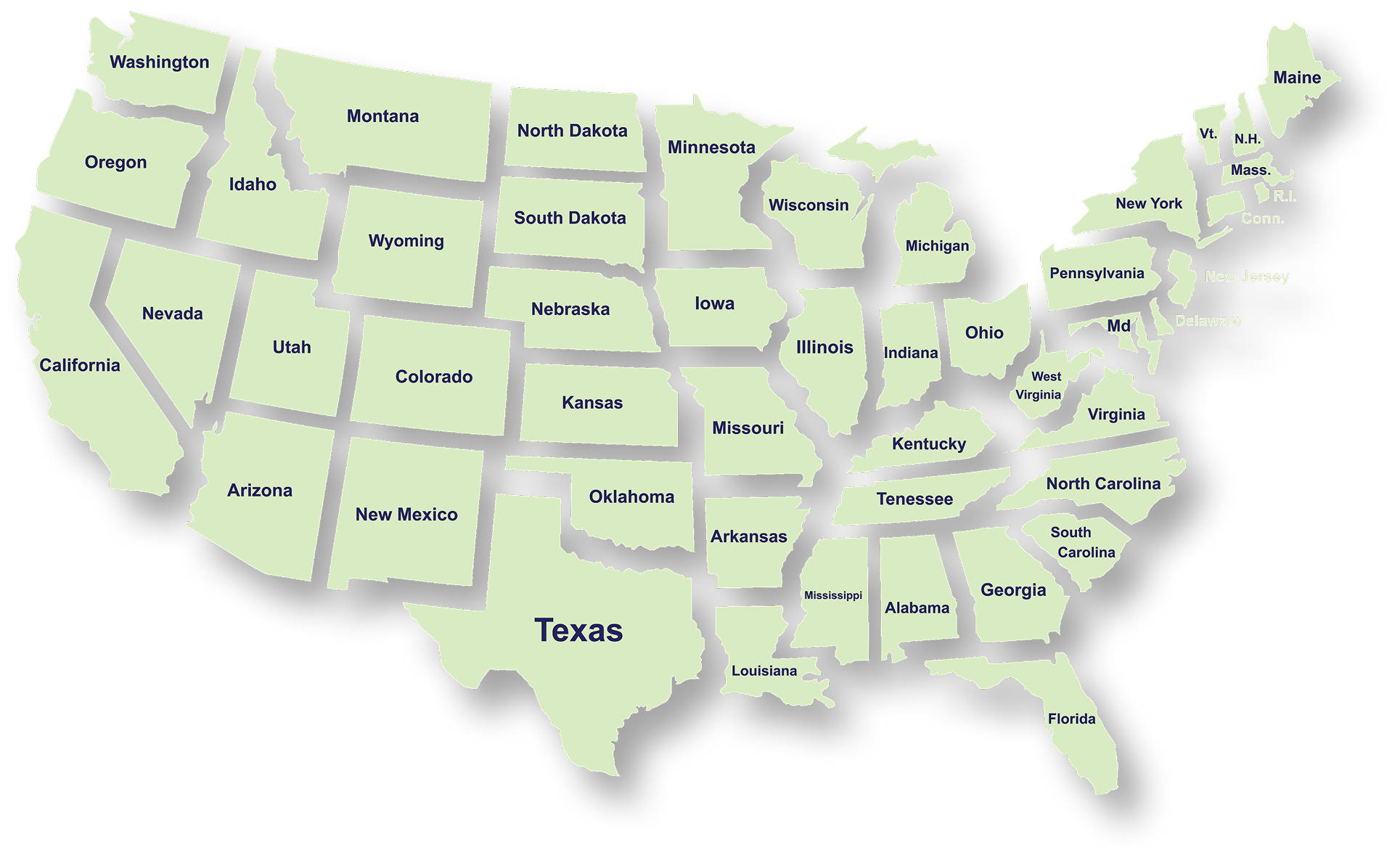
Serving Businesses & Individuals Across USA

We handle accounting, tax filing, and planning with defined timelines and accurate reporting for businesses and individuals across all states.

Frequently Asked Questions

What services does NR CPAs & Business Advisors provide?
What is tax planning and why is it important for businesses?
How can a Virtual CFO help my business?
When should a business consider IRS tax resolution services?
What financial statements does a business typically need?
How can startup advisory services help new businesses?
What is strategic business planning?
What is a Virtual Family Office and who can benefit from it?