Learning Center for Tax and Financial Insights

Stay updated with clear, actionable articles on tax rules, deadlines, deductions, and financial decisions that impact individuals and businesses.

No items found.

Employer's Pension Startup Credit Substantially Increased

Article Highlights: Eligible Plans Eligible Expenses Qualification Rules Credit Amount On December 20, 2019, President Trump signed into law the Appropriations Act of 2020, which included a number of tax law changes, including retroactively extending certain tax provisions that expired after 2017 or were about to expire, a number of retirement and IRA plan modifications, and other changes that will impact a large portion of U.S. taxpayers as a whole. This article is one of a series of articles dealing with those changes and how they may affect you. If you are considering establishing a qualified pension plan for your business, you may be entitled to the Credit for Small Employer Pension Startup Costs. Eligible small employers that adopt a new plan, such as a 401(k), a SIMPLE plan, or a simplified employee pension plan (SEP), may claim a nonrefundable credit. The first credit year is the tax year that includes the date when the plan becomes effective or, electively, the preceding tax year. Examples of qualifying expenses include the costs related to changing the employer’s payroll system, consulting fees, and set-up fees for investment vehicles. There are some qualification rules, the most predominant being: The business did not employ, in the preceding year, more than 100 employees with compensation of at least $5,000. The plan must cover at least one non–highly compensated employee. The plan must be a new plan; during the three prior years, the employer must not have had a qualified employer plan for which contributions were made or in which benefits accrued for substantially the same employees who are in the plan for which the credit is being claimed. If the credit is for the cost of a payroll-deduction IRA plan, the plan must be made available to all employees who have worked with the employer for at least three months.

Explore More
No items found.

Will Independent Contractors Become Extinct?

Article Highlights: New California Legislation Employee or Independent Contractor Dynamex ABC Test Impact on Employers Impact on Workers Safe Harbor The California legislature recently passed landmark labor legislation that essentially makes it very difficult, if not impossible, for a worker to be classified as an independent contractor (self-employed). Governor Newsom was quick to sign it into law, and it generally became effective on January 1, 2020. Many believe this legislation will suppress entrepreneurship and innovation. Although this issue currently pertains to California, other smaller states are sure to follow, and this will ultimately become an issue for employers nationwide. Background: The distinction between employee and independent contractor is governed by both federal law and state law. It has always been a complicated issue at both the federal and state levels, and the state and federal guidelines often differ. However, because of the significant payroll tax revenues involved, the states are generally the most aggressive in classifying workers as employees. In the California case, the legislation was prompted by a labor case that was ultimately settled by the California Supreme Court. In that case, Dynamex Operations West, a trucking company, was treating its drivers as employees. It started classifying them as independent contractors to reduce costs, which caught the eye of the California Employment Development Department and ultimately reached the California Supreme Court. The court determined the drivers were employees and not independent contractors. However, in making that decision, the California Supreme Court adopted the so-called “ABC test” used by some other states to make their determination. As a result of this decision, the California Legislature passed legislation (AB-5) codifying, with some exceptions, the ABC test for determining whether a worker is an independent contractor. The ABC Test: Several states, including Massachusetts and New Jersey, have also adopted this so-called ABC test. The test is a broad means of determining a worker’s status as either an employee or a contractor by considering three factors. If a worker passes all three, then he or she is an independent contractor: (A) That the worker is free from the hirer’s control and direction, in connection with the performance of the work, both under the contract for the performance of such work and in fact; (B) That the worker performs work outside the usual course of the hiring entity’s business; and

Explore More
No items found.

Congress Allowing Higher Medical Deductions for 2019 and 2020

Article Highlight: Appropriations Act of 2020 Medical AGI Limitations Sometimes Overlooked Deductions Deductible Health Insurance Above-the-Line Health Insurance Deduction for Self-Employed On December 20, 2019, President Trump signed into law the Appropriations Act of 2020, which included a number of tax law changes, including extending certain tax provisions that expired after 2017 or were about to expire, a number of retirement and IRA plan modifications, and other changes that will impact a large portion of U.S. taxpayers as a whole. This article is one of a series of articles dealing with those changes and how they may affect you. Medical expenses are deductible as an itemized deduction but only to the extent they exceed a percentage of a taxpayer’s adjusted gross income (AGI). For a long time, the percentage was 7.5%, which was then raised for under-age-65 taxpayers to 10% for 2013 through 2016 and then lowered back to 7.5% for all taxpayers for years 2017 and 2018. It was scheduled to go back up to 10% starting with tax year 2019. However, with the passage of the Appropriations Act of 2020, Congress reduced that percentage back to 7.5% for tax years 2019 and 2020, allowing more taxpayers to qualify for the medical deduction. However, keep in mind that the total of the itemized deductions must exceed the standard deduction before the itemized deductions will provide a tax break. So even if your medical deductions exceed the 7.5% floor, this doesn’t necessarily mean you will have a tax benefit from them. To help you maximize your medical deductions, the following are some medical expenses other than those for doctors, dentists, hospitals, and prescriptions that are sometimes overlooked: Adult Diapers Acupuncture Birth Control Chiropractor Visits Drug-Addiction Treatment Fertility Enhancement Therapy Gender Identity Disorder Treatments Guide Dog Expenses Health Insurance Premiums* – Including the premiums you pay for coverage for yourself, your dependents, and your spouse, if applicable, for the following types of plans: o Health Care and Hospitalization Insurance o Long-Term Care Insurance (but limited based upon age) o Medicare B o Medicare C (aka Medicare Advantage Plans) o Medicare D o Dental Insurance o Vision Insurance o Premiums Paid through a Government Marketplace, Net of the Premium Tax Credit *However, premiums paid on your or your family’s behalf by your employer aren’t deductible because their cost is not included in your wage income. If you pay premiums for coverage under your employer’s insurance plan through a “cafeteria” plan, those premiums aren’t deductible either because they are paid with pre-tax dollars. Home Modifications for Disabled Individuals Lactation Expenses Learning Disability Special Education Nursing Home Costs Nursing Services (which need not be performed by a nurse) Pregnancy Tests Smoking-Cessation Programs

Explore More
No items found.

Do I Have to File a Tax Return?

Article Highlights: When You Are Required to File Self-Employed Taxpayers Filing Thresholds Benefits of Filing Even When Not Required to File Refundable Tax Credits This is a question many taxpayers ask during this time of year, and the question is far more complicated than people believe. To fully understand, we need to consider that there are times when individuals are REQUIRED to file a tax return, and then there are times when it is to the individuals’ BENEFIT to file a return even if they are not required to file. When individuals are required to file: Generally, individuals are required to file a return if their income exceeds their filing threshold, as shown in the table below. The filing thresholds generally are the same amount as the standard deduction for individual(s). Taxpayers are required to file if they have net self-employment income in excess of $400, since they are required to file self-employment taxes (the equivalent to payroll taxes for an employee) when their net self-employment income exceeds $400. Taxpayers are also required to file when they are required to repay a credit or benefit. For example, taxpayers who underestimated their income when signing up for health insurance through a government Marketplace and received a higher advance premium tax credit (APTC) than they were entitled to, are required to repay part of it. Therefore, all individuals who received an APTC must file a return to reconcile the advance payments with the actual credit amount, even if their income is less than the filing threshold amount and even if they don’t need to repay any of the advance credit. Filing is also required when a taxpayer owes a penalty, even though the taxpayer’s income is below the filing threshold. This can occur, for example, when a taxpayer has an IRA 6% early withdrawal penalty or the 50% penalty for not taking a required IRA distribution. 2019 – Filing Thresholds Filing Status Age Threshold Single Under Age 65 Age 65 or Older $12,200$13,850 Married Filing Jointly Both Spouses Under 65 One Spouse 65 or Older Both Spouses 65 or Older $24,400$25,700 $27,000 Married Filing Separate Any Age $5 Head of Household Under 6565 or Older $18,350 $20,000 Qualifying Widow(er) with Dependent Child Under 6565 or Older $24,400$25,700

Explore More
No items found.

Don't Be Duped by Clever Scammers

Article Highlights: Scammers disguise e-mails to look legitimate. Legitimate businesses and the IRS never request sensitive personal and financial information by e-mail. Don’t become a victim. Stop - Think - Delete Be alert for phony letters and phone calls You may think we harp on you a lot about protecting yourself against identity theft and tax scams. You are right… but we do it because having your identity stolen becomes an absolute financial nightmare, sometimes taking years to straighten out. Identity thieves are clever and relentless, and they are always coming up with new schemes to trick you. And all you have to do is slip up just once to compromise your identity, and your nightmare will begin. What they try to do is trick you into divulging personal information such as your bank account numbers, passwords, credit card numbers, or Social Security number. One of the most popular methods these unscrupulous people use is requesting your personal information by e-mail. They are pretty good at making their e-mails look as if they came from a legitimate source such as the IRS, your credit card company, or your bank. You need to be very careful when responding to e-mails asking you to update things such as your account information, personal identification number (PIN), or password. First and foremost, you should be aware that no legitimate company would make such a request by e-mail. If one does, the e-mail should be deleted and ignored, just like spam e-mails. We have seen bogus e-mails that looked like they were from the IRS, well-known banks, credit card companies, and other pseudo-legitimate enterprises. The intent is to trick you and have you click through to a website that also appears legitimate, where they have you enter your secure information. Here are some examples: E-mails that appear to be from the IRS indicating you have a refund coming and claiming that additional information is needed to process the refund. The IRS never initiates communication via e-mail! If you receive this type of e-mail, right away, you should know that it is bogus. If you are concerned, please free to call this office. E-mails from a bank indicating that it is holding a wire transfer and needs your bank routing information and account number. Don’t respond; if in doubt, call your bank. E-mails saying you have a foreign inheritance and that the sender needs your bank info to wire the funds. The funds that will get wired are yours going the other way. Remember: if it seems too good to be true, it generally is.

Explore More
No items found.

5 Things You Need to Know About Sales Taxes in QuickBooks Online

To stay afloat during tough times, financial experts recommend that you keep three to six months’ expenses in a savings account. But, if you are in the majority, you likely only have less than $1,000 in your savings account at any given time. Thankfully, 2020 is here to give you a chance to start anew and get your savings in check. All you have to do is follow the tips below to start building a healthy savings fund and boost the health of your finances. Build a Budget and Stick to It To halt excessive spending and channel your money into all the right areas, you need to build a budget and stick to it. Before you can do that, however, you need to see just where all your money is going. You can either use an app that connects to your accounts, like Mint, or simply write down all your spending for a month. With that information in hand, you can see where you can cut back your spending and divert the funds into savings instead. You can work your budget on paper or use a software program, such as You Need a Budget, to make every dollar count. As you build your budget, try to follow the 50/30/20 rule. By following this rule, you will assign 50% of your take-home income to necessities, 30% on what you want, and 20% for paying down debt and saving. You can tighten up these figures as you wish by pulling out of the “want” category for savings and debt repayment. To nix the urge to spend, consider taking a picture or screenshot of the item you want and waiting at least 24 hours. Or think about the hours it took to earn the money you will spend on that want. Before you know it, the urge to spend that money may dissipate, leaving more in your bank account at the end of the month. Switch to a High-Yield Savings Account The national interest rate for savings accounts has been steadily declining through the decades, landing at just 0.9% at this time. This does not even keep up with the inflation rate of 1.9%, putting you at a loss by the end of each year. To overcome this issue, you can switch to a high-yield savings account. With interest rates of 1.9% or higher, high-yield accounts keep your money growing at a decent rate. And since many are online, you cannot just head down to your bank for a withdrawal, helping keep your money in savings where it belongs. Go with Automatic Savings Deductions Automation makes everything easier and putting money in your savings is no exception. So, set up your account to automatically pull money from checking and put it into savings every month. You will hit your goal without even thinking about it and can adjust upward year to year to maximize your savings. Gradually Bump Up Retirement Savings Your high-yield savings account is not the only one in need of love. Your retirement account also needs attention each year to realize its full potential. You can maximize your retirement savings pain-free by increasing your contributions by just 1%. Then, make it a tradition to celebrate the new year with this smart move to keep bolstering your savings for the future. Additional Fun Ways to Save Big Once you have your retirement contributions and automatic deposits ticking away, you can continue to increase your savings in fun ways. Here are a few to try throughout the new year.

Explore More
No results found.
Thank you! Your submission has been received!
Oops! Something went wrong while submitting the form.

Want tax & accounting tips & insights?Sign up for our newsletter.

Thank you! Your submission has been received!
Oops! Something went wrong while submitting the form.

Why Work With Us?

We combine deep tax expertise, financial strategy, and practical business insight to help you manage complexity, stay compliant, and make confident financial decisions.
A dollar sign, representing financial advice or discussion at NR CPAs & Business Advisors.

Experienced CPA and Enrolled Agent Leadership

Guidance led by licensed professionals with deep expertise in tax strategy, compliance, and complex financial matters.
White bar chart with an upward arrow on green circular background representing growth or progress at NR CPAs &. Business Advisors

Support for Growing Businesses and Startups

We understand the financial challenges of growth stage businesses and provide structured guidance to support expansion.
A white hand holding a dollar symbol and ascending bar chart on a green circular background representing financial growth or investment at NR CPAs & Business Advisors..

Strategic Financial Advisory

Our team helps you evaluate financial decisions with greater clarity, supported by practical insights and long term planning.

Fractional CFO Support

Access experienced financial leadership without the commitment and cost of hiring a full time Chief Financial Officer.

Proactive Tax Planning Approach

We focus on identifying tax opportunities throughout the year rather than reacting only during filing season.

Clear and Reliable Financial Reporting

Accurate financial statements and reporting that help you better understand performance and make informed decisions.
White IRS building icon with pillars and a dollar sign above on a green circular background.

Professional IRS Representation

Experienced support in resolving IRS notices, disputes, and compliance matters while protecting your financial interests.

Personalized Client Focus

Every client receives thoughtful attention and tailored financial solutions based on their specific needs and business goals.
Financial matters often involve important decisions. Working with experienced advisors can help you approach them with greater clarity and confidence in your choices.

Need Help With Your Tax or Financial Decisions?

Discuss your situation with our advisors to get clear guidance on tax planning, IRS matters, and the financial decisions ahead.
Business consulting at NR CPAs & Business Advisors.

Request Your Consultation

Fill out the form to discuss your tax concerns, financial questions, or advisory needs with our team. We will review your details and respond shortly.

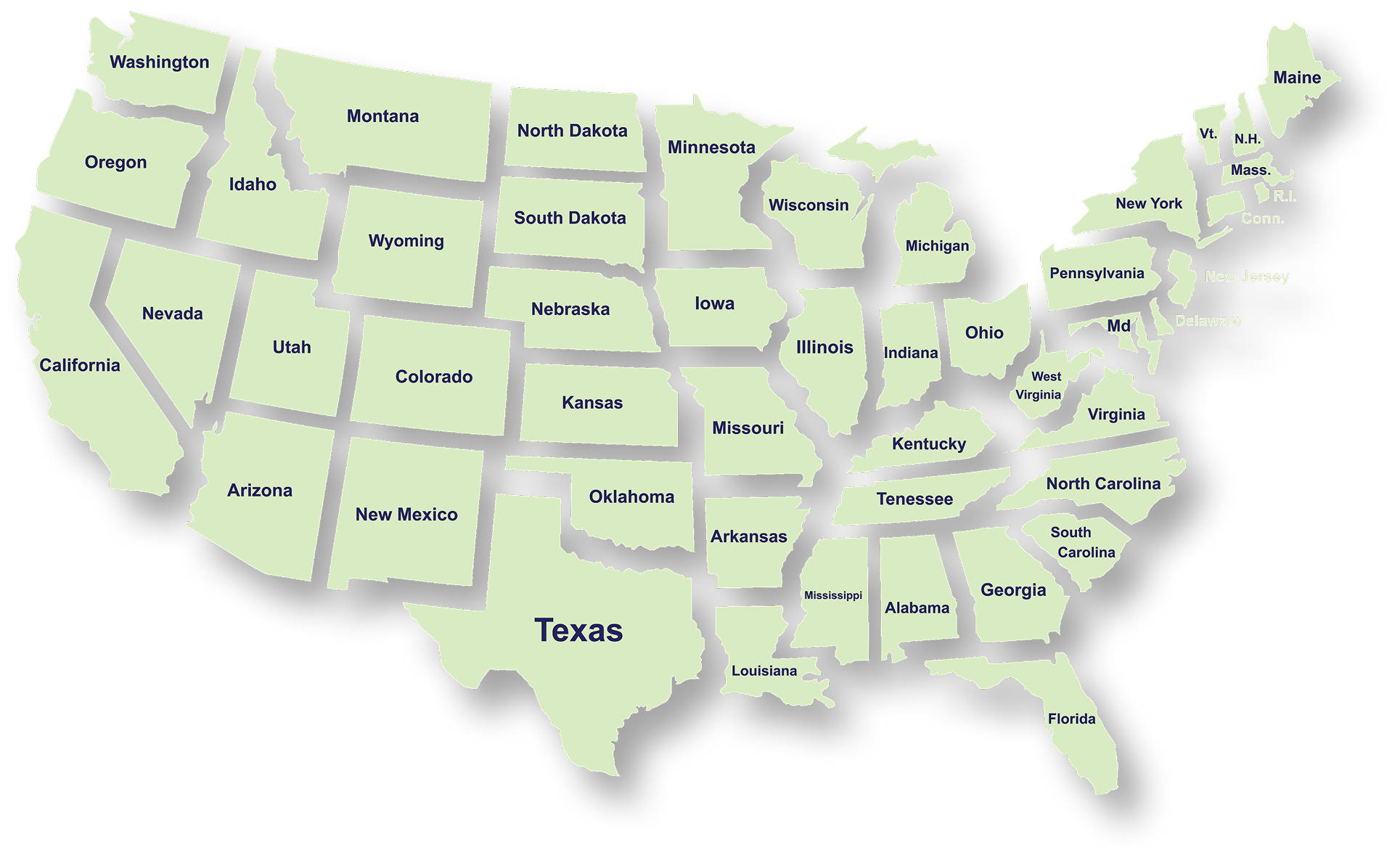
Serving Businesses & Individuals Across USA

We handle accounting, tax filing, and planning with defined timelines and accurate reporting for businesses and individuals across all states.

Frequently Asked Questions

What services does NR CPAs & Business Advisors provide?
What is tax planning and why is it important for businesses?
How can a Virtual CFO help my business?
When should a business consider IRS tax resolution services?
What financial statements does a business typically need?
How can startup advisory services help new businesses?
What is strategic business planning?
What is a Virtual Family Office and who can benefit from it?