Learning Center for Tax and Financial Insights

Stay updated with clear, actionable articles on tax rules, deadlines, deductions, and financial decisions that impact individuals and businesses.

No items found.

9 Best Ways to Start a Business Budget to Spur and Guide Growth

Building a business is a process that requires careful attention to many individual points, all with the goal of increasing customers, improving products, and building profit. There are many elements that contribute to the ability of a company to grow. One key area to focus on is the budget. From the foundation of the business, a well-planned budget can create a financially sound business with clear directions. To achieve that, consider these nine key ways to create an effective budget that spurs and guides the growth of your company. #1: Know what you are spending first It is impossible to create a budget without knowing where your money is going. To that end, business owners need to pay careful attention to every expense the company has. This should include expenses related to running the business such as marketing, employee costs, and property costs. Create a system where every dollar spent for the company is carefully tracked. While this type of oversight may seem intense, it gives you a foundation from which to build. #2: Analyze each expense carefully Now that you know where your money is going, the next step is to know if you are overpaying in any area. For example, you may be able to reduce your overhead on employee labor by improving your scheduling methods. You may be able to reduce your inventory purchases to be more in line with what you need right now to improve your working capital. Look at each item to determine if it is worthwhile or if there is a less-expensive solution. #3: Build an expense-based budget With this information in hand, it becomes possible to then build a budget. A variety of software programs, as well as the help of an accountant, can help you to do this. The goal here is to ensure that the amount you allocate to each expense matches what you are currently paying or your revised amount. In short, it is accurate. When changes occur over the month, you can spot them easily and take action to rectify your budget. #4: Hire a tax professional for timely reports You cannot know how well your business is doing or how it can grow without having access to in-depth information. Clear, accurate reports delivered to you can show your current profit and loss. They can help you understand sales patterns. They can also break down information based on the specific types of profit margins various items bring in and which do not pay for themselves. A tax professional is more than just a pro to file your end-of-the-year taxes. #5: Create a cash flow projection Now that you have a professional on hand, you can use this team to help you build a realistic, accurate cash flow projection for the next month. You can extend that to include cash flow goals for the next six months and then for the year. By having this present, you can see where your growth is occurring as well as any limitations within the process. #6: Create a savings plan It sounds like a personal money management step, but one of the most costly components of growing a business is expanding assets, building space, marketing, or other large investments. Your business has working capital, but do you have a growth account? This is an account that you are saving in to allow your business to make large purchases down the road. It can also help a company to manage costs in financial emergencies or situations where they need a significant amount of cash on hand. By having these funds, you do not have to tap into costly credit and loans to grow. #7: Tackle debt with a lot of effort Debt is one of the most taxing of components in managing a business. Debt is expensive. Every dollar you spend on interest payments is money not going toward helping your business to grow. Work with your tax professional to understand your company’s current debt, cash flow needs, and allowances that could be used to pay down debt faster. Create an aggressive plan to reduce your company’s debt so that you can free up more capital for short-term and long-term investments. #8: Begin moving profits toward growth goals Companies that have their financials in line are likely to begin to see profit more readily. With that comes the ability to grow. Some companies may wish to be aggressive here. Instead of borrowing for another location or launching a new product based on costly debt, begin to move a percentage of all profits toward the business’s growth plan and investments. It’s important for companies to recognize growth as a cost of doing business. For example, if a company has a 25 percent margin for profit on every sale, recognize that to just 20%. Tuck the remaining 5% into an investment for future growth. In other words, see investing in future growth as an expense for your company now. This way, you begin to readily put money aside. #9: Develop a growth plan What is your goal? How does your company foresee growing revenue, providing more services, or otherwise scaling? Work with an accounting firm to create a solid plan of action. This should include outlining all goals for the company (for a year, five years, and so on). Then, create financial expectations for the next six months and year. Your growth plan should also include all costs of growth – as well as any expected investments necessary to build that long-term picture. By focusing on each one of these areas, with the help of accounting professionals, it is possible to build a solid growth plan that addresses every need the company has. You cannot simply say you want to increase customers by 100%. You need a plan based on your financials to get you there.

Explore More
No items found.

Medical Deductions & The New Tax Law

Article Highlights: Medical Deductions Retained by the Tax Reform Law Adjusted Gross Income Floor Dropped to 7.5% The Standard Deduction Bunching Medical Deductions Unusual Medical Deductions Medical Dependents Divorced Parents Note: The is one of a series of articles explaining how the various tax changes in the GOP’s Tax Cuts & Jobs Act (referred to as “the Act” in this article), which passed in late December of 2017, could affect you and your family, both in 2018 and future years. This series offers strategies that you can employ to reduce your tax liability under the new law. The Act’s final version retained the itemized deduction for medical expenses even though the original House version would have done away with this deduction altogether. The medical deduction was not just retained; its adjusted gross income (AGI) floor was lowered from 10% to 7.5% for 2017 and 2018 (after which it returns to 10%). The AGI floor is meant to eliminate deductions for minor medical costs by only allowing those that are in excess of the given percentage of your AGI. Example: You have wages of $100,000 for 2018 and no other income, losses, or adjustments, so your AGI for the year is $100,000. In this case, for the year, the first $7,500 (7.5% of $100,000) of your otherwise deductible medical expenses is not deductible. Thus, if you have $8,000 of medical expenses, only $500 ($8,000 – $7,500) is deductible. If you have the same amount of income and medical expenses in 2019, none of your medical costs will be deductible because of the 10% floor; 10% of a $100,000 AGI is $10,000, which is greater than the $8,000 of medical expenses. Of course, there’s always a chance that Congress will extend the reduced 7.5% floor beyond 2018, but you shouldn’t count on it. Here is where it gets a little complicated. Because medical deductions are itemized, to get any benefit from them, your itemized deductions must exceed the new standard deduction, which is $24,000 for a married couple filing jointly (or for a surviving spouse with a dependent child), $18,000 for a head of household, and $12,000 for anyone else. Retaining the medical deduction is a necessary for the families of disabled individuals and for senior citizens who require extraordinary care. Without this deduction, those groups could have been saddled with enormous medical costs without any tax relief. However, this deduction is not just for disabled individuals, senior citizens, and their families. Regarding medical bills, you never know what will happen in the future. Bunching Deductions – One strategy that works well for itemized deductions is to bunch deductions. That means paying as much of your medical expenses as possible in a single year so that the total will exceed the AGI floor and so that your overall itemized deductions will exceed the standard deduction.

Explore More
No items found.

New Tax Law Cracks Down on Home Mortgage Interest

Article Highlights: Acquisition Debt Interest Equity Debt Interest Consumer Interest New Tax Law Changes Note: The is one of a series of articles explaining how the various tax changes made by the GOP’s Tax Cuts & Jobs Act (referred to as the “Act” in the article), passed late in December 2017, might affect you and your family in 2018 and future years, and offering strategies you might employ to reduce your tax liability under the new tax laws. For years, taxpayers have been able to deduct home mortgage interest on their primary and second homes as an itemized deduction, subject to certain limitations. The interest deduction was limited to the interest on up to $1 million of acquisition debt and $100,000 of equity debt. Acquisition debt is debt incurred to purchase, construct or substantially improve a taxpayer’s principal or second home. So when you purchased your home, that original loan was acquisition debt, and if you later borrowed additional money that you used to add a room, pool, etc., that loan was also acquisition debt. However, if the total of all of your acquisition loans exceeded the $1 million limit, then the interest on the excess debt over $1 million was not deductible as acquisition debt interest. Consumer debt interest, such as interest on auto loans and credit card debt, is not deductible as an itemized deduction. However, years ago, Congress allowed homeowners to deduct the interest on up to $100,000 of equity debt. This allowed homeowners to use the equity in their homes for any purpose and deduct the interest on the equity debt as an itemized deduction.

Explore More
No items found.

Will Your 2018 Withholding Be Right?

Article Highlights: Tax Cuts & Jobs Act Wage Withholding Tables W-4 Be Cautious with Adjusted Withholding Note: The is one of a series of articles explaining how the various tax changes made by the GOP’s Tax Cuts & Jobs Act (referred to as the “Act” in the article), passed late in December 2017, might effect you and your family in 2018 and future years, and offering strategies you might employ to reduce your tax liability under the new tax laws.One of the first trouble spots of the new tax reform is the W-2 withholding for 2018. Passage of the new law in late December hasn’t given the IRS much time to develop new withholding tables. This can be a big issue, as the recent Tax Cuts & Jobs Act (TCJA) substantially altered the tax rates and standard deductions, did away with exemption deductions, and increased the child tax credits—all elements of how the withholding allowances and tables have been structured in the past. On January 11, the IRS released modified withholding tables for employers to use for determining employee withholding. Supposedly the new withholding tables have been crafted to use the information employers already have from employees’ prior Form W-4s on file to adjust their employees’ withholding, taking into account the tax cuts for individuals included in the TCJA. The IRS is also working on revising the Form W-4 to reflect additional modifications in the new law, such as changes in available itemized deductions, increases in the child tax credit, the new dependent credit and repeal of the dependent exemptions deduction.

Explore More
No items found.

2018 Standard Mileage Rates Announced

Article Highlights: Standard Mileage Rates for 2018 Business, Charitable and Medical Rates Important Considerations for 2018 Switching Between the Actual Expense and Standard Mileage Rate Methods Employer Reimbursements Employee Deductions Suspended Special Allowances for SUVs As it does every year, the Internal Revenue Service recently announced the inflation- adjusted 2018 optional standard mileage rates used to calculate the deductible costs of operating an automobile for business, charitable or medical purposes. Beginning on Jan. 1, 2018, the standard mileage rates for the use of a car (or a van, pickup or panel truck) are: 54.5 cents per mile for business miles driven (including a 25-cent-per-mile allocation for depreciation). This is up from 53.5 cents in 2017; 18 cents per mile driven for medical purposes. This is up from 17 cents in 2017; and 14 cents per mile driven in service of charitable organizations. The business standard mileage rate is based on an annual study of the fixed and variable costs of operating an automobile. The rate for medical purposes is based on the variable costs as determined by the same study. The rate for using an automobile while performing services for a charitable organization is statutorily set (it can only be changed by Congressional action) and has been 14 cents per mile for over 15 years. Important Consideration: The 2018 rates are based on 2017 fuel costs. Based on the potential for substantially higher gas prices in 2018, it may be appropriate to consider switching to the actual expense method for 2018, or at least keeping track of the actual expenses, including fuel costs, repairs, maintenance, etc., so that the option is available for 2018. Taxpayers always have the option of calculating the actual costs of using their vehicle for business rather than using the standard mileage rates. In addition to the potential for higher fuel prices, the extension and expansion of the bonus depreciation as well as increased depreciation limitations for passenger autos in the Tax Cuts and Jobs Act may make using the actual expense method worthwhile during the first year a vehicle is placed in business service. However, the standard mileage rates cannot be used if you have used the actual method (using Sec. 179, bonus depreciation and/or MACRS depreciation) in previous years. This rule is applied on a vehicle-by-vehicle basis. In addition, the business standard mileage rate cannot be used for any vehicle used for hire or for more than four vehicles simultaneously.

Explore More
No items found.

How Small Businesses Write Off Equipment Purchases

Article Highlights: Depreciation Materials & Supplies De Minimis Safe Harbor Expensing Routine Maintenance Unlimited Expensing Bonus Depreciation Sec 179 Expensing Mixing Methods From time to time, an owner of a small business will purchase equipment, office furnishings, vehicles, computer systems and other items for use in the business. How to deduct the cost for tax purposes is not always an easy decision because there are a number of options available, and the decision will depend upon whether a big deduction is needed for the acquisition year or more benefit can be obtained by deducting the expense over a number of years using depreciation. The following are the write-off options currently available. Depreciation – Depreciation is the normal accounting way of writing off business capital purchases by spreading the deduction of the cost over several years. The IRS regulations specify the number of years for the write-off based on established asset categories, and generally for small business purchases the categories include 3-, 5- or 7-year write-offs. The 5-year category includes autos, small trucks, computers, copiers, and certain technological and research equipment, while the 7-year category includes office fixtures, furniture and equipment. Material & Supply Expensing – IRS regulations allow certain materials and supplies that cost $200 or less, or that have a useful life of less than one year, to be expensed (deducted fully in one year) rather than depreciated. De Minimis Safe Harbor Expensing – IRS regulations also allow small businesses to expense up to $2,500 of equipment purchases. The limit applies per item or per invoice, providing a substantial leeway in expensing purchases. The $2,500 limit is increased to $5,000 for businesses that have an applicable financial statement, generally large businesses. Routine Maintenance – IRS regulations allow a deduction for expenditures used to keep a unit of property in operating condition where a business expects to perform the maintenance twice during the class life of the property. Class life is different than depreciable life. Depreciable Item Class Life Depreciable Life Office Furnishings 10 7 Information Systems 6 5 Computers 6 5 Autos & Taxis 3 5 Light Trucks 4 5 Heavy Trucks 6 5 Unlimited Expensing – The Tax Cuts and Jobs Act passed in December 2017 ncludes a provision allowing 100% unlimited expensing of tangible business assets (except structures) acquired after September 27, 2017 and through 2022. Applies when a taxpayer first uses the asset (can be new or used property). Bonus Depreciation – The tax code provides for a first-year bonus depreciation that allows a business to deduct 50% of the cost of most new tangible property if it is placed in service during 2017. The remaining cost is deducted over the asset’s depreciable life. The 50% rate applies for new property placed in service prior to September 28, 2017 and, by election, to new or used property acquired and first put into use by the taxpayer after September 27, 2017 and before December 31, 2017. Sec 179 Expensing – Another option provided by the tax code is an expensing provision for small businesses that allows a certain amount of the cost of tangible equipment purchases to be expensed in the year the property is first placed into business service. This tax provision is commonly referred to as Sec. 179 expensing, named after the tax code section that sanctions it. The expensing is limited to an annual inflation adjusted amount, which is $510,000 for 2017 and $1 million for 2018. To ensure that this provision is limited to small businesses, whenever a business has purchases of property eligible for Sec 179 treatment that exceed the year’s investment limit ($2,030,000 for 2017 and $2.5 million for 2018), the annual expensing allowance is reduced by one dollar for each dollar the investment limit is exceeded. An undesirable consequence of using Sec. 179 expensing occurs when the item is disposed of before the end of its normal depreciable life. In that case, the difference between normal depreciation and the Sec. 179 deduction is recaptured and added to income in the year of disposition. Mixing Methods – A mixture of Sec. 179 expensing, bonus depreciation and regular depreciation can be used on a specific item, allowing just about any amount of write-off for the year for that asset.

Explore More
No results found.
Thank you! Your submission has been received!
Oops! Something went wrong while submitting the form.

Want tax & accounting tips & insights?Sign up for our newsletter.

Thank you! Your submission has been received!
Oops! Something went wrong while submitting the form.

Why Work With Us?

We combine deep tax expertise, financial strategy, and practical business insight to help you manage complexity, stay compliant, and make confident financial decisions.
A dollar sign, representing financial advice or discussion at NR CPAs & Business Advisors.

Experienced CPA and Enrolled Agent Leadership

Guidance led by licensed professionals with deep expertise in tax strategy, compliance, and complex financial matters.
White bar chart with an upward arrow on green circular background representing growth or progress at NR CPAs &. Business Advisors

Support for Growing Businesses and Startups

We understand the financial challenges of growth stage businesses and provide structured guidance to support expansion.
A white hand holding a dollar symbol and ascending bar chart on a green circular background representing financial growth or investment at NR CPAs & Business Advisors..

Strategic Financial Advisory

Our team helps you evaluate financial decisions with greater clarity, supported by practical insights and long term planning.

Fractional CFO Support

Access experienced financial leadership without the commitment and cost of hiring a full time Chief Financial Officer.

Proactive Tax Planning Approach

We focus on identifying tax opportunities throughout the year rather than reacting only during filing season.

Clear and Reliable Financial Reporting

Accurate financial statements and reporting that help you better understand performance and make informed decisions.
White IRS building icon with pillars and a dollar sign above on a green circular background.

Professional IRS Representation

Experienced support in resolving IRS notices, disputes, and compliance matters while protecting your financial interests.

Personalized Client Focus

Every client receives thoughtful attention and tailored financial solutions based on their specific needs and business goals.
Financial matters often involve important decisions. Working with experienced advisors can help you approach them with greater clarity and confidence in your choices.

Need Help With Your Tax or Financial Decisions?

Discuss your situation with our advisors to get clear guidance on tax planning, IRS matters, and the financial decisions ahead.
Business consulting at NR CPAs & Business Advisors.

Request Your Consultation

Fill out the form to discuss your tax concerns, financial questions, or advisory needs with our team. We will review your details and respond shortly.

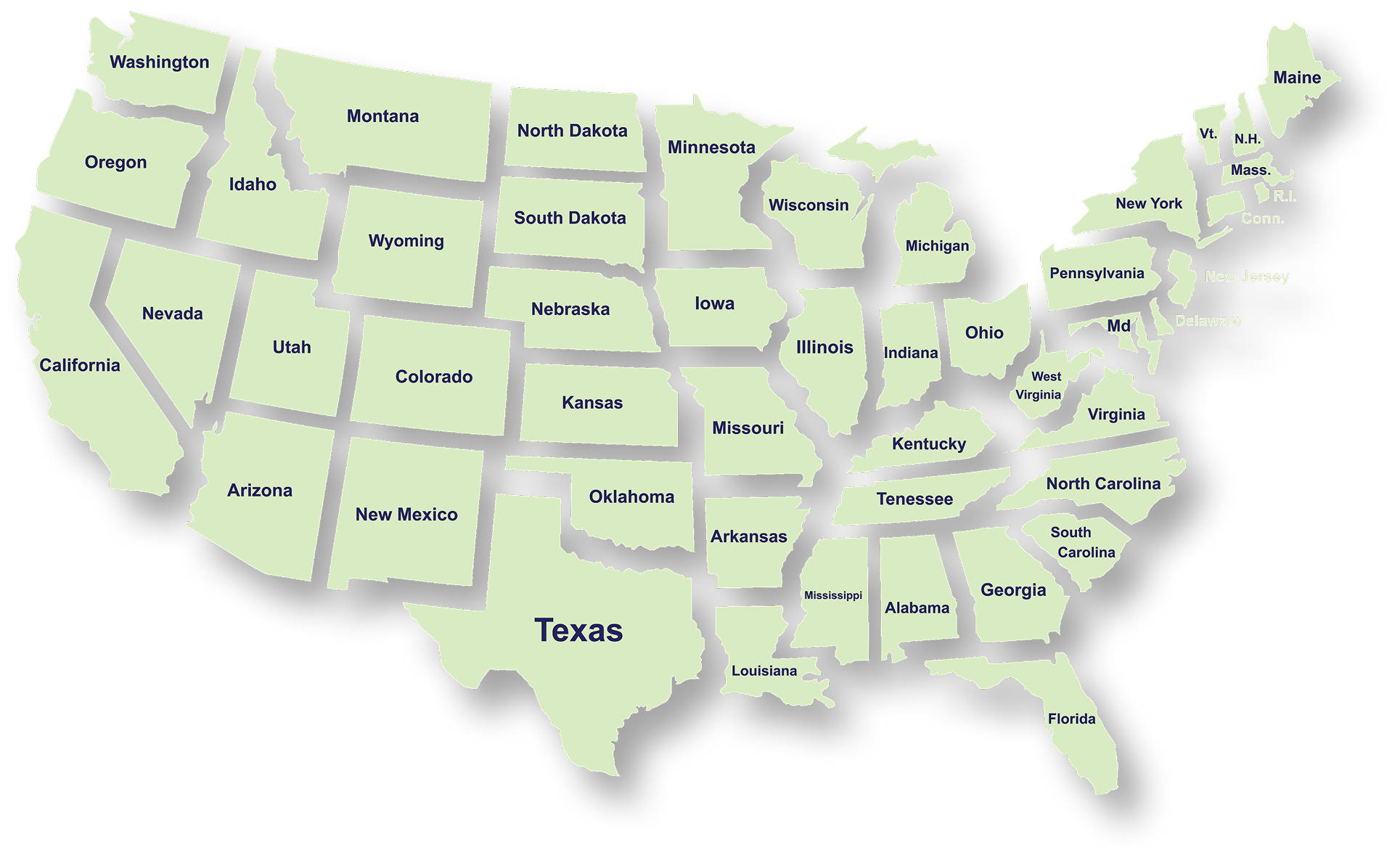
Serving Businesses & Individuals Across USA

We handle accounting, tax filing, and planning with defined timelines and accurate reporting for businesses and individuals across all states.

Frequently Asked Questions

What services does NR CPAs & Business Advisors provide?
What is tax planning and why is it important for businesses?
How can a Virtual CFO help my business?
When should a business consider IRS tax resolution services?
What financial statements does a business typically need?
How can startup advisory services help new businesses?
What is strategic business planning?
What is a Virtual Family Office and who can benefit from it?