Learning Center for Tax and Financial Insights

Stay updated with clear, actionable articles on tax rules, deadlines, deductions, and financial decisions that impact individuals and businesses.

No items found.

Who Owes You? 5 QuickBooks Online Reports That Can Tell You Fast

Quick: How many of your invoices are unpaid? Have any of your customers gone over 30 days past due? Did you bill all of the time and expenses for that project you just completed for a customer? If you’re doing your accounting manually, there’s simply no way to get that information quickly. Depending on your bookkeeping system, you may not be able to get it at all. QuickBooks Online has more than one solution for this problem. You see the first one every time you log in. The Dashboard contains a graphic in the upper left corner that tells you how many invoices are overdue and unpaid. Click on the colored bar labeled OVERDUE, and you’ll see a list of invoices with the unpaid ones right at the top. You can tell at a glance how much of your money is tied up in unpaid invoices. While this is important information for you to have as you start your workday, it doesn’t tell the whole story. To get that, you’ll need to access some of QuickBooks Online’s reports – five of them in particular. Click Reports in the left vertical pane, and then scroll down to the heading labeled Who owes you. These reports are listed in two columns. Each has the outline of a star next to it. Click on the star, and the report will be added to the Favorites list at the top of the page. Click on the three vertical dots next to it, and you’ll be able to Customize the report. And as you hover over the title, you’ll see a small, circled question mark. Click on this to get a brief description of the report. There are several reports in this list that can provide insight into where your outstanding revenue is. We recommend you run five of them at least once a week – more frequently if your business sells large quantities of products and/or services. The suggested are: Accounts receivable aging detail This report provides a list of invoices that are overdue, along with aging information. There are several columns in the report, but you’ll want to pay special attention to the last one:

Explore More
No items found.

What Is the Statute of Limitations on Unpaid Taxes?

If you have unpaid taxes that you haven't yet been making payments toward, it might make you fearful that the IRS will come a-knocking one day to collect on what you owe. Tax debt can quickly snowball from interest, penalties, late fees, and the amount of the taxes due. However, a lot of the scaremongering surrounding the IRS is largely sensationalized in media and daily conversation. Agents won't come bursting through your door just because you have tax debt. Instead, they must follow due process in accordance with the Internal Revenue Service Restructuring and Reform Act of 1998 (RRA). This means that you will always receive written notice concerning your balance due as well as collection actions and any requests for payment plans or settling your account. However, if you haven't received further notification concerning what you owe, you may be able to ride out the little-known statute of limitations on tax debt collections, which is 10 years. What the 10-Year Statute of Limitations Entails Your tax debt can actually be canceled in 10 years if the IRS makes no efforts to collect on your account - and if you also don't contact the IRS. However, it's not as simple as just waiting a decade without ever paying the taxes you owe. There are conditions that must be satisfied. The first is that this 10-year time frame doesn't begin when you filed that tax return with a balance due or when you realized you owed taxes you couldn't pay. The official statute of limitations date begins once you receive written notice from the IRS concerning what you owe. You may receive a notice of deficiency with an actual tax bill or a substitute tax return if you didn't file by the due date. So, if you filed your tax return on June 15, 2019, and got a notice in the mail dated September 1, your statutory period would begin September 1, not June 15. This date is called the CSED (Collection Statute Expiration Date), and if you make it to September 1, 2029, without further collection actions, then you can actually get your entire tax bill from this period canceled. (Note: Future tax bills, such as next year's taxes you also can't afford to pay on the due date, do not count toward this.) However, the IRS will not notify you of this. While the date of assessment is also generally when that notice is received, the IRS has argued over when the assessment date actually was. Some situations can also delay the CSED by halting the clock on the 10-year time frame, such as:

Explore More
No items found.

Tax Issues Related to Hobbies

Article Highlights: Hobby Losses Not-for-Profit Rules Determining Factors Trade or Business Presumption Hobby Tax Reporting Self-Employment Tax Generally, when individuals have a hobby, they have it because they enjoy it and are not involved in their hobby with the goal of making money. In fact, most hobbies never make money or don’t even create any income, for that matter. Tax law generally does not allow deductions for personal expenses except those allowed as itemized deductions on the 1040 Schedule A, and this also applies to hobby expenses. Some hobbyists try to get a tax deduction for their hobby expenses by treating their hobby as a trade or a business. By disguising hobbies as a trade or business, and if the hobby expenses exceed the hobby income, they think they can report the difference between hobby income and expenses as a deductible business loss. Not in this case! To curtail hobbies being treated as businesses, the tax code includes rules that do not permit losses for not-for-profit activities such as hobbies. The not-for-profit rules are often referred to as the hobby loss rules. The distinction between a hobby and a trade or business sometimes becomes blurred, and the determination depends upon a series of factors, with no single factor being decisive. All of these factors have to be considered when making the determination: Is the activity carried out in a businesslike manner? How much time and effort does the taxpayer spend on the activity? Does the taxpayer depend on the activity as a source of income? Are losses from the activity the result of sources beyond the taxpayer’s control? Has the taxpayer changed business methods in attempts to improve profitability? What is the taxpayer’s expertise in the field? What success has the taxpayer had in similar operations? What is the possibility of profit? Is profit from asset appreciation possible? Because making a determination using these factors is so subjective, the IRS regulations provide that the taxpayer has a presumption of profit motive if an activity shows a profit for any three or more years during a period of five consecutive years. However, if the activity involves breeding, training, showing or racing horses, then the period is two out of seven consecutive years.

Explore More
No items found.

How Business Owners Can Improve Cash Flow By Thinking Profit First

Entrepreneurs don't necessarily need to be numbers people in order to succeed: You need drive, passion, the ability and will to follow things through, and the hustler's spirit that enables you to constantly try that new thing or relentlessly chase that next big opportunity. But whether you're a serial entrepreneur or simply looking to grow your small business to a sustainable level then reassess your goals, it's crucial to have an understanding of your venture's financial results. While SMBs don't require the same horsepower in their accounting department as large companies and quickly-growing startups, it's still integral for entrepreneurs of all calibers to have an iron grip on their financial controls, processes, and results to prevent roadblocks. Your business financials aren't solely about how much revenue the company has brought in stacked up against your expenses, or how many strategic maneuvers can be deployed to minimize your business tax burden. Understanding your key ratios, terminology, and the stories behind your numbers—and having the right accountants and advisors who can help you interpret them—will take you from simple compliance to long-term stabilization and growing your business. Where Is Your Money Coming From? And moreover, where is it going? It can seem like operations are running smoothly because cash is regularly deposited, the bills are paid, and imminent tax filings don't feel like a shakedown where you have to scramble to get the funds together. But while your bottom line might look good on your next attempt to raise capital, you could find yourself in hot water if it turns out that only one revenue stream and/or client constitutes most of your revenue. If that client goes out of business or otherwise decides to stop or reduce their payments, it could be significantly harder to pay back the loan you took out or demonstrate to your investor that you're worth going past seed stage. Demonstrating that you can make a profit is important for raising capital, but raising capital isn't a be-all and end-all. The time that you spend trying to qualify for loans, grants, and outside investment might be better spent getting more clients, users, views, income-producing property, or other important revenue drivers first. This could prove to be even more important than trying to keep your burn rate (cash outflow) under control: Constrained cash flow is usually why most companies fold within the first two to three years of operation, and often gets overlooked by busy entrepreneurs focusing primarily on raising funds or posting an impressive profit. Financial Transparency — More Than Just Compliance In your quest for capital, your focus is likely to be directed toward the numbers investors are going to pay attention to: margins, profit generated relative to the capital you already invested, and how many users you have. But in being transparent about your finances, you're not just being compliant with the law — you're also giving a more accurate picture of where your business currently is and where you expect it to go. Early stage companies are more likely to get investment less so from promising financials and more from showing promise with the actual product and business model, so you don't need to worry about getting the best-looking numbers to show. Banks, on the other hand, have stricter requirements for loan repayment and will be more stringent concerning financial compliance. They will want to see a proven track record and put more emphasis on your profit than growth potential, especially if you're not a very capital-intensive business with significant collateral such as vehicles or real estate to secure the loan. Improve Cash Flow Management by Putting Profit First Regardless of whether you go for the more dynamic risk-taking with investor funding or the predictable repayment process with a business loan, all external capital sources will want to see proof of proper cash management even more than having stellar revenue numbers. The ability to adequately control your cash inflows and outflows is what will help your company weather any storm. One train of thought to help drive profits, is to look at concepts like Mike Michalowicz's "Profit First" model that changes the Revenue - Expenses = Profit expression into Sales - Profit = Expenses. While this is not an official figure to report on financial statements, it's an excellent cash flow management mindset that helps business owners prioritize their personal and business savings so that operating expenses, expansion, taxes, and personal income are always being paid. By "paying yourself" first, it ensures that your financial results are based on having enough cash on hand before you pay any expenses. Any small business accountant is required to furnish a cash flow statement to most investors and some banks, but you shouldn't wait until you have one at the end of the month, quarter, or year. Go over your cash flow every week. In addition to expenses that could be cut or revenues that could be added or bolstered, you might have bottlenecks in your cash collection processes that could be eliminated and you hadn't even realized it.

Explore More
No items found.

Disaster-Related Tax Losses May Be Less Than Expected

Article Highlights: Limitation to Losses within Disaster Areas Cost versus Market Value Home Tax Losses Home Tax Gains Replacement Properties Home Gain Exclusion The late-2017 tax-reform package changed the rules for personal casualty losses, which now are only deductible if they occur in a federally declared disaster area. As a result, if a home is destroyed in a forest fire or other disaster within a declared disaster zone, the homeowner can claim a casualty loss on that year’s tax return. However, if a home is destroyed as a result of a normal accident – or is destroyed in a natural disaster but lies outside of a disaster zone – the homeowner cannot claim a casualty loss. These rules may not be fair, but there is nothing that can be done about them (other than calling congressional representatives to indicate your displeasure). Currently, the rules are only in effect for the years 2018 through 2025. Because of these rules, you should also make sure that your home insurance coverage is adequate. Even those who have deductible losses quickly find out that they cannot claim as much in tax losses as they expected. This is because the losses are not based on the cost of replacing the home; instead, they are based on the original cost of the home (plus any improvements prior to the date of the casualty). For those who have owned their homes for a long time before a casualty, the tax benefits of the resulting loss are greatly diminished. This all stems from the fact that a casualty loss on a home is valued at the lesser of the home’s cost or its current market value (minus any insurance reimbursements). Because real estate generally appreciates in value, most casualty losses are based on the original cost of the home rather than on its current value or its replacement cost. Example #1: Joe and Susan purchased their home many years ago for $125,000, but its current market value is $400,000. Their home is then destroyed as a result of a federally declared disaster. They did not have insurance. Thus, their casualty loss is only $125,000 (the original cost), as that is less than the current market value. Thus, even though they suffered a $400,000 financial loss, the tax loss is only $125,000. (Even worse, the actual deductible loss is even less, as reductions of $100 per casualty and 10% of adjusted gross income must first be applied.)

Explore More
No items found.

Earned Income Tax Credit: Used, Abused and Altered

Article Highlights: Purpose of the Earned Income Tax Credit Qualifications Earned Income Qualified Child Credit Phaseout Computing the Credit Investment Income Limit Combat Pay Election Fraud Safeguards Any discussion of the earned income tax credit (EITC) needs to begin with a discussion of why Congress created it in the first place. It has a twofold purpose: first, as an incentive for people to work and get off public assistance, and second, to provide financial assistance for low-income taxpayers and their families based upon their income from working, which the tax code refers to as “earned income.” When originally created back in 1979, it even allowed taxpayers to obtain the credit in advance through their employer’s payroll payments, based on projecting the credit they would be entitled to on their tax return for the year. This was referred to as advanced EITC. However, because of the many problems associated with the advanced payment credit, it was repealed for years after 2010. The EITC is a refundable credit, meaning if any unused credit remains after offsetting all of a taxpayer’s tax liability, that remainder is refunded to the taxpayer. This refundable feature has made the EITC a giant target for fraud, which is discussed later in this article. In addition to the other requirements discussed below, the EITC is not allowed to married couples filing separately, nor can the taxpayer claiming the credit be a dependent of another taxpayer. In addition, the taxpayer must have been a U.S. citizen or resident alien all year and have a Social Security Number (SSN). Any children used to qualify the taxpayer for the credit are also required to have a SSN. Furthermore, because this credit is meant for lower-income individuals, if a taxpayer is working overseas and is able to exclude foreign earned income, he or she is barred from claiming the EITC. Taxable Earned Income – As previously mentioned, the EITC is based, in part, on the amount of a taxpayer’s (or in the case of a married couple, both a filer’s and a spouse’s) taxable earned income. For example, taxable earned income includes: Wages, salaries, and tips; Union strike benefits; Long-term disability benefits prior to minimum retirement age; and Earnings from self-employment. Taxable earned income does not include any form of earned income that is excluded from income, such as a clergyperson’s housing allowance, excluded military combat pay (but see the election for combat pay later), tax-deferred retirement contributions, or excludable dependent care benefits. Qualified Children – The EITC is also based upon the number of the taxpayer’s qualified children who lived with the taxpayer in the United States for more than half of the year for which the credit is being claimed. Generally, for EITC purposes, a qualified child must be younger than the taxpayer and be under the age of 19 or a full-time student under the age of 24 who had the same principal place of abode as the taxpayer for more than half of the tax year and is not married and filing a joint return (exceptions may apply). For the EITC, “child” is defined as the taxpayer’s: Son, daughter, adopted child, stepchild, eligible foster child, or a descendant of any of them (for example, a grandchild); or Brother, sister, half-brother, half-sister, stepbrother, stepsister, or a descendant of any of them (for example, a niece or nephew). Exceptions to the residency requirement include temporary absences from the home, such as for school, vacations, illness, and military service. Computing the Credit and Phaseout – The amount of the EITC increases as the earned income increases until it reaches the maximum credit amount, and then it phases out as the taxpayer’s modified adjusted gross income (MAGI) increases above the phaseout threshold. The following table illustrates how the credit is determined and the maximum amount of the credit for 2019. Number of Qualifying Children Credit Percentage Earned Income Maximum Credit None 7.65 $6,920 $529 One 34.00 $10,370 $3,526 Two 40.00 $14,570 $5,828 Three or more 45.00 $14,570 $6,55 If a taxpayer has no qualifying children, the taxpayer must be age 25 or older but under the age of 65 before the end of the year. This is to prevent children and retired individuals from claiming the credit. As can be seen from the table above, the credit for a taxpayer who doesn’t have a qualifying child is significantly less than for someone with one or more children. Example #1: Ted and Jane have two qualifying children, and their only income is Ted’s wages (earned income) of $31,738. From the table above, based on two children, we determine their EITC before the phase-out as being the lesser of $12,695 (40% of $31,738) or $5,828 (the maximum for taxpayers with two qualifying children). Thus, in this case, the EITC before phaseout is $5,828. Phaseout – The tax law limits the EITC to lower-income taxpayers by phasing out (reducing) the credit as a taxpayer’s MAGI increases above a threshold, with the credit fully phased out when the MAGI reaches the complete phaseout amount shown in the table below. Number of Qualifying Children Phaseout Percentage Phaseout Threshold Complete Phaseout None 7.65 Joint Filers: $14,450Others: $8,650 $21,370$15,570 One 15.98 Joint Filers: $24,820Others: $19,030 $46,884$41,094 Two 21.06 Joint Filers: $24,820Others: $19,030 $52,493$46,703 Three or more 21.06 JointFilers:$24,820Others: $19,030 $55,952$50,162

Explore More
No results found.
Thank you! Your submission has been received!
Oops! Something went wrong while submitting the form.

Want tax & accounting tips & insights?Sign up for our newsletter.

Thank you! Your submission has been received!
Oops! Something went wrong while submitting the form.

Why Work With Us?

We combine deep tax expertise, financial strategy, and practical business insight to help you manage complexity, stay compliant, and make confident financial decisions.
A dollar sign, representing financial advice or discussion at NR CPAs & Business Advisors.

Experienced CPA and Enrolled Agent Leadership

Guidance led by licensed professionals with deep expertise in tax strategy, compliance, and complex financial matters.
White bar chart with an upward arrow on green circular background representing growth or progress at NR CPAs &. Business Advisors

Support for Growing Businesses and Startups

We understand the financial challenges of growth stage businesses and provide structured guidance to support expansion.
A white hand holding a dollar symbol and ascending bar chart on a green circular background representing financial growth or investment at NR CPAs & Business Advisors..

Strategic Financial Advisory

Our team helps you evaluate financial decisions with greater clarity, supported by practical insights and long term planning.

Fractional CFO Support

Access experienced financial leadership without the commitment and cost of hiring a full time Chief Financial Officer.

Proactive Tax Planning Approach

We focus on identifying tax opportunities throughout the year rather than reacting only during filing season.

Clear and Reliable Financial Reporting

Accurate financial statements and reporting that help you better understand performance and make informed decisions.
White IRS building icon with pillars and a dollar sign above on a green circular background.

Professional IRS Representation

Experienced support in resolving IRS notices, disputes, and compliance matters while protecting your financial interests.

Personalized Client Focus

Every client receives thoughtful attention and tailored financial solutions based on their specific needs and business goals.
Financial matters often involve important decisions. Working with experienced advisors can help you approach them with greater clarity and confidence in your choices.

Need Help With Your Tax or Financial Decisions?

Discuss your situation with our advisors to get clear guidance on tax planning, IRS matters, and the financial decisions ahead.
Business consulting at NR CPAs & Business Advisors.

Request Your Consultation

Fill out the form to discuss your tax concerns, financial questions, or advisory needs with our team. We will review your details and respond shortly.

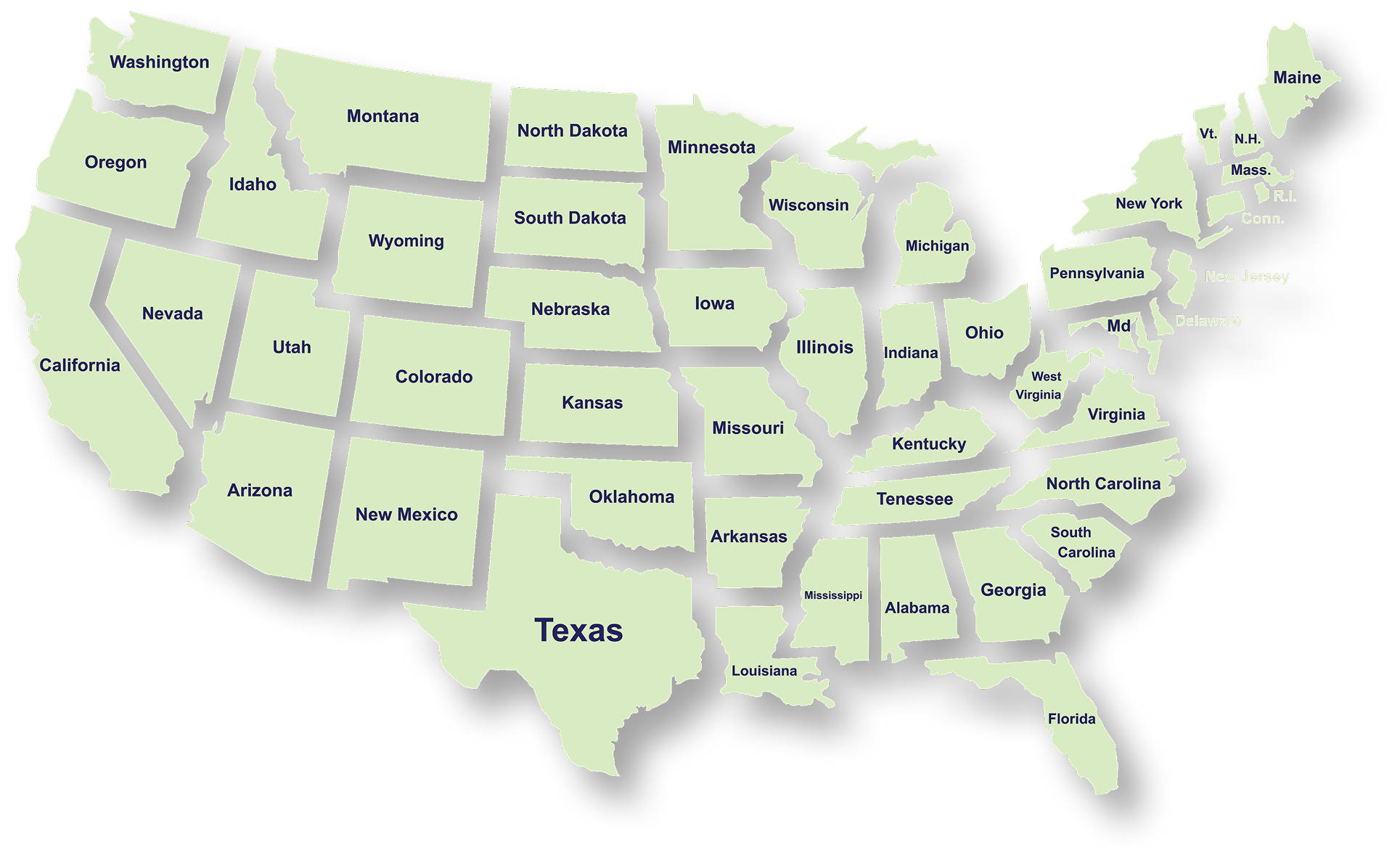
Serving Businesses & Individuals Across USA

We handle accounting, tax filing, and planning with defined timelines and accurate reporting for businesses and individuals across all states.

Frequently Asked Questions

What services does NR CPAs & Business Advisors provide?
What is tax planning and why is it important for businesses?
How can a Virtual CFO help my business?
When should a business consider IRS tax resolution services?
What financial statements does a business typically need?
How can startup advisory services help new businesses?
What is strategic business planning?
What is a Virtual Family Office and who can benefit from it?