Learning Center for Tax and Financial Insights

Stay updated with clear, actionable articles on tax rules, deadlines, deductions, and financial decisions that impact individuals and businesses.

No items found.

Video Tips: Love & Taxes: Essential Tax Planning Tips Before You Say 'I Do'

You think planning a wedding ceremony is complicated? Wait till you see the possible tax issues involved. If you are getting married this year, there is a long list of things you need to be aware of and plan for before tying the knot that can have a significant impact on your taxes. Plus, there are several tax-related actions you'll need to take right after the wedding.

Explore More
No items found.

Keep More of Your Money: Top 12 Tax Strategies for the High-Net-Worth

High-net-worth individuals face unique challenges in managing their wealth, particularly when minimizing tax liabilities. Our firm offers expert guidance that will help you keep more of your money year after year. Whether you own rental properties around the country, stock options at multiple startups, or deal with inheritance taxes, we will help you preserve your legacy for future generations while helping you live the lifestyle you desire now.Below are twelve essential tax strategies designed to preserve and enhance your wealth.1. Maximize Retirement Account ContributionsDiversify your retirement savings by maximizing contributions to various accounts, including 401(k)s, IRAs, and defined benefit plans. Use higher contribution limits and potential tax deductions to optimize your retirement funds and reduce your tax liabilities.2. Invest in Tax-Efficient FundsChoose investments such as index funds, ETFs, and tax-managed funds that minimize taxable events, thereby reducing your tax liability and improving net returns. These investments are structured to be more tax-efficient, enhancing your overall financial growth. Our team is here to help you make the right choices for your situation.3. Utilize Charitable GivingEnhance your charitable impact and enjoy tax benefits through direct donations, donor-advised funds, charitable trusts, or by establishing a private foundation. Strategic charitable giving can reduce your taxable income while supporting causes you care about.4. Explore Estate Planning and GiftingUse advanced estate planning tools like trusts, family limited partnerships, and strategic gifting to reduce your taxable estate and pass on wealth to your heirs tax-efficiently. Proper estate planning ensures that your wealth is transferred according to your wishes with minimal tax implications.5. Take Advantage of Tax-Loss HarvestingRegularly schedule time with your financial advisor to review your portfolio for tax-loss harvesting opportunities to offset capital gains. This strategy involves selling investments at a loss to reduce taxable gains. If done well, this technique can align with your overall investment goals.6. Invest in Real EstateReal estate investments can have significant tax advantages, including deductions and depreciation. Consider opportunities in real estate syndications, private funds, or opportunity zones for diversified exposure and potential tax benefits.

Explore More
No items found.

June 17, 2024, Filing Extension: Essential Relief for Individuals and Businesses in Disaster Areas

Article Highlights:Disaster Filing ReliefQualifying Disaster AreasTypes of Returns That QualifyApplying for Additional Extension TimePayment Deadline ReminderRelief for Other Disaster AreasConsidering recent natural disasters, the IRS extended the normal April 15 deadline for filing certain tax returns for some affected taxpayers until June 17, 2024. This extension aims to provide relief to individuals and businesses grappling with the aftermath of these events. Below, we outline the qualifying disaster areas, the types of returns that qualify for this extension, and how to apply for additional extension time through October 15, 2024. Additionally, we remind taxpayers that while the filing deadline may be extended, any payments are still due by June 17, 2024.Qualifying Disaster Areas - The IRS has identified several regions of the country as qualifying disaster areas for this extended deadline. Taxpayers residing or operating businesses in the following areas and counties are eligible: California: San DiegoConnecticut: New London County and the Tribal Nations of Mashantucket Pequot and MoheganMichigan: Eaton, Ingham, Ionia, Kent, Livingston, Macomb, Monroe, Oakland, and WayneMaine: Androscoggin, Franklin, Kennebec, Oxford, Penobscot, Piscataquis, and Somerset.Tennessee: Cheatham, Davidson, Dickson, Gibson, Montgomery, Robertson, Stewart, Sumner, and Weakley.Washington: Spokane and Whitman.

Explore More
No items found.

Video Tips: Taxes & Summer Jobs for Your Children

With summer just around the corner, it's the perfect time to explore employment opportunities for your teenage children. In 2024, the standard deduction for a single individual has increased to $14,600, allowing your child to earn up to this amount from their summer job without paying any federal income tax on their earnings.

Explore More
No items found.

Unlock Hidden Savings: A Guide to Maximizing Tax Deductions for Small Business Owners

Article Highlights:Maximize ExpensesNew BusinessesLegal and Professional FeesSpousal Joint VenturesSelf-Employed Health InsuranceSelf-Employed (SE) Tax DeductionInsuranceHome Office Qualified Business Income DeductionAdvertising Expenses Website CostsFinancingVehicle Expenses Meal DeductionsEntertainmentDeducting the Cost of Business Supplies and EquipmentPension PlansPension Start-Up CreditEmployee PayrollHiring Your ChildrenResearch CreditAccounting and Bookkeeping FeesEffects of TCJA Sunsetting After 2025As a small business owner, one of your primary goals should be to maximize your business deductions to minimize your tax liability. Effective tax planning can significantly impact your bottom line, allowing you to reinvest more into your business. This comprehensive guide will cover various strategies and deductions available to small business owners, including those related to new businesses, legal and professional fees, spousal joint ventures, self-employed health insurance, home offices, business equipment, advertising expenses, website costs, financing, vehicle expenses, entertainment, depreciation, material and supply expensing, de minimis safe harbor expensing, routine maintenance, bonus depreciation, Section 179 expensing, business meals, the qualified business income deduction, and the effects of the Tax Cuts and Jobs Act (TCJA) sunsetting after 2025.New Businesses - Starting a new business involves various costs, many of which can be deducted to reduce your taxable income. Normally, the costs of starting a business must be amortized (deducted ratably) over 15 years. However, you can elect to deduct up to $5,000 of start-up expenses and $5,000 of organizational expenses in the first year. Qualified start-up costs include:Surveys/analyses of potential markets, labor supply, products, transportation facilities, etc. Wages paid to employees, and their instructors, while they are being trained.Advertisements related to opening the business. Fees and salaries paid to consultants or others for professional services; andTravel and related costs to secure prospective customers, distributors and suppliers.Each of the $5,000 amounts is reduced by the amount by which the total start-up expenses or organizational expenses exceeds $50,000. Expenses not deductible in the first year of the business must be amortized over 15 years.Legal and Professional Fees - Legal and professional fees incurred in setting up your business fall under the organizational expense first year deduction of $5,000 and the balance would be amortized over 15 years. After your business is operational, these fees can be expensed as they are incurred. This includes costs for legal advice, accounting services, and consulting fees, which are essential for maintaining compliance and optimizing business operations.Spousal Joint Ventures - For married couples running an unincorporated business together, it's common but incorrect to report all income as one spouse's sole proprietorship. Instead, you should consider a spousal joint venture, allowing both spouses to report income and expenses on separate Schedule C forms. This approach enables both spouses to accumulate Social Security benefits and contribute to retirement accounts.In addition, to claim a childcare credit, both spouses on a joint return must have earned income (or imputed income if one of the spouses is a full-time student or is disabled), so unless the non-Schedule C spouse has another source of earned income, the couple would not be allowed a childcare credit. There are two ways to remedy this situation, either: (1) by establishing a partnership or (2) a joint venture (each spouse files a Schedule C with their share of the income, deductions, and credits).Self-Employed (SE) Health Insurance – Rather than deducting health insurance as an itemized deduction medical expense subject to the 7.5% of AGI reduction, self-employed individuals can deduct 100% of health insurance premiums for themselves, their spouses, and dependents above the line, reducing your adjusted gross income (AGI) and potentially qualifying you for other tax benefits. However, this deduction is limited to the net income of the business. The deduction for SE health insurance is allowed even if the self-employed individual uses the standard deduction rather than itemizing deductions on Schedule A.Self-Employment Tax Deduction – Sole proprietors with more than a minimal amount of profit from their business are required to pay self-employment tax (their contribution to the Social Security and Medicare programs, like the payroll taxes of employees). There is a deduction element to this tax. As a self-employed individual you may deduct 50% of your SE tax liability for the tax year. Like the self-employed health insurance deduction, the SE tax deduction is claimed as an above-the-line-deduction in computing adjusted gross income (AGI). You do not need to itemize deductions to claim the deduction.Insurance - A range of insurance premiums are deductible for sole proprietors, if they are deemed necessary and ordinary for your business operations. This includes health insurance, liability insurance, property insurance, and auto insurance for vehicles used in your business.Home Office - Small business owners may qualify for a home-office deduction, which will help them save money on their taxes and benefit their bottom line. Taxpayers can generally take this deduction if they use a portion of their home exclusively for their business and on a regular basis. Plus, this deduction is available to both homeowners and renters. There are two methods to determine the amount of a home-office deduction:Actual-Expense Method – The actual-expense method prorates home expenses based on the portion of the home that qualifies as a home office, which is generally based on square footage. Aside from prorated expenses, 100% of directly related costs, such as painting and repair expenses specific to the office, can be deducted. Unlike the simplified method, the business-use percentage for the calculation is not limited to 300 square feet.Simplified Method – The simplified method allows for a deduction equal to $5 per square foot of the home used for business, up to a maximum of 300 square feet, resulting in a maximum simplified deduction of $1,500.A taxpayer may elect to take the simplified method or the actual-expense method (also referred to as the regular method) on an annual basis. Thus, a taxpayer may freely switch between the two methods each year. In addition, when using the simplified method, the taxpayer need not account for the home office depreciation when computing the gain when and if the home is sold.Additional office expenses such as utilities, insurance, office maintenance, etc., are not allowed when the simplified method is used. Prorated rent or home interest and taxes are not either, although 100% of home interest and taxes are deductible as non-business expenses if the taxpayer itemizes deductions.Qualified Business Income Deduction - The TCJA introduced the Qualified Business Income (QBI) deduction, allowing eligible pass-through entities to deduct up to 20% of their qualified business income. This deduction is subject to various limitations and phase-outs based on income levels and business types. Proper planning is essential to maximize this valuable deduction.Advertising Expenses - Once the business is operating, all forms of advertising are generally currently deductible expenses, including promotional materials such as business cards, digital or print advertisements, and other forms of advertising. However, any advertising expense incurred before a business begins functioning would be treated as a start-up expense. Trade shows are a form of advertising, and if a business purchases their own custom trade show booth, that booth can generally be totally or mostly expensed in the year purchased using bonus depreciation or Sec 179 expensing.Website Costs - Website development and maintenance costs are deductible as business expenses. Initial development costs can be amortized over three years, while ongoing maintenance and updates can be expensed in the year incurred. A well-maintained website is crucial for attracting and retaining customers in the digital age.Financing - Interest on business loans is deductible, reducing your taxable income. This includes interest on loans for purchasing equipment, real estate, or other business needs. Properly managing your business financing can optimize cash flow and support growth initiatives.But be careful not to mix personal and business interest expenses. Banks are usually reluctant to lend money on a startup business. However, an equity loan on your home will generally achieve a lower interest rate anyway, and the interest can be traced to and deductible as business interest.Vehicle Expenses - If you use your car for business purposes you can deduct its business use by using either the standard mileage method, which allows a per mile amount, or the actual expense method. However, both methods require that you track your business and total mileage for the year. If using the standard mileage method, you need to know the number of business miles driven, and if using the actual method, you will need to prorate the actual operating expenses including fuel, insurance, repairs, and depreciation by the percentage of business miles to total miles. You can also deduct tolls and parking fees with either method.Record Keeping - Both the standard mileage and the actual expense methods offer unique advantages and requirements, but one common thread is the necessity of meticulous record keeping. To claim the standard mileage rate, you must be able to substantiate the business use of your vehicle. This means keeping a detailed log of each trip, including the date, destination, purpose, and miles driven.Business vs. Personal Use - If you use your vehicle for both business and personal purposes, you must allocate expenses based on the percentage of business use. Accurate records of both business and personal mileage are essential to calculate this percentage correctly.In the event of an IRS audit, your mileage log serves as evidence to support your deduction claims. Without proper records, you risk having your deductions disallowed, which could result in additional taxes, penalties, and interest.Meal Deductions - Meal expenses are deductible under certain conditions. These expenses must be ordinary and necessary for carrying on a trade or business, and not lavish or extravagant under the circumstances. However, the percentage of a qualified business meal that is deductible has varied in recent years.Prior to 2021 - Businesses were only allowed to deduct 50% of the cost of a qualified meal.2021 and 2022 - In response to the COVID-19 pandemic, the Consolidated Appropriations Act, 2021, introduced a temporary provision allowing a 100% deduction for business meals provided by restaurants. The aim was to support the struggling restaurant industry by encouraging businesses to spend more on qualified meals.After 2022, the allowable deduction has reverted to 50% of the cost of a qualified meal.

Explore More
No items found.

Get Those Kids a Job: The Tax Advantages of Securing Summer Jobs for Your Children

Article HighlightsStandard DeductionIRA OptionsSelf-Employed ParentEmploying Your ChildTax BenefitsChildren who are dependents of their parents are subject to what is commonly referred to as the kiddie tax. This generally applies to children under the age of 19 and full-time students over the age of 18 and under the age of 24.The kiddie tax originated many years ago as a means to close a tax loophole where parents would put their investments under their child’s name and social security number so that their investment income would be taxed at lower tax rates. Enter the kiddie tax, under which unearned income (investment income) more than a minimum amount is taxed at the parent’s highest marginal tax rate.Tax-Free Income - On the bright side, a child’s earned income (income from working) is taxed at single rates, and the standard deduction for singles is $14,600 for 2024. This means that your child can make $14,600 from working and pay no income tax (but will be subject to Social Security and Medicare payroll taxes), and if the child is willing to contribute to a traditional IRA, for which the 2024 contribution cap is $7,000, the child can make $21,600 from working—federal income tax free.Even if your child is reluctant to give up any of their hard-earned money from their summer or regular employment, if you, a grandparent, or others have the financial resources, the amount of an IRA contribution could be gifted to the child, giving your child a great start toward their retirement savings and hopefully a continuing incentive to save for their retirement.Employing Your Child – If you are self-employed (an unincorporated business), a reasonable salary paid to your child reduces your self-employment (SE) income and your income tax by shifting income to the child.For 2024, when a child under the age of 19 or a student under the age of 24 is claimed as a dependent of the parents, the child is generally subject to the kiddie tax rules if their investment income is upward of $2,600. Under these rules, the child’s investment income is taxed at the same rate as the parent’s top marginal rate using a lower $1,300 standard deduction. However, earned income (income from working) is taxed at the child’s marginal rate, and the earned income is reduced by the lesser of the earned income plus $400 or the regular standard deduction for the year, which is $14,600. If a child has no other income, the child could be paid $14,600 and incur no income tax. If the child is paid more, the next $11,600 he or she earns is taxed at 10%.Example: You are in the 22% tax bracket and own an unincorporated business. You hire your child (who has no investment income) and pay the child $16,500 for the year. You reduce your income by $16,500, which saves you $3,630 of income tax (22% of $16,500), and your child has a taxable income of $1,900 ($16,500 less the $14,600 standard deduction) on which the tax is $190 (10% of $1,900). The net income tax saved by the family is $3,440 ($3,630 - $190).

Explore More
No results found.
Thank you! Your submission has been received!
Oops! Something went wrong while submitting the form.

Want tax & accounting tips & insights?Sign up for our newsletter.

Thank you! Your submission has been received!
Oops! Something went wrong while submitting the form.

Why Work With Us?

We combine deep tax expertise, financial strategy, and practical business insight to help you manage complexity, stay compliant, and make confident financial decisions.
A dollar sign, representing financial advice or discussion at NR CPAs & Business Advisors.

Experienced CPA and Enrolled Agent Leadership

Guidance led by licensed professionals with deep expertise in tax strategy, compliance, and complex financial matters.
White bar chart with an upward arrow on green circular background representing growth or progress at NR CPAs &. Business Advisors

Support for Growing Businesses and Startups

We understand the financial challenges of growth stage businesses and provide structured guidance to support expansion.
A white hand holding a dollar symbol and ascending bar chart on a green circular background representing financial growth or investment at NR CPAs & Business Advisors..

Strategic Financial Advisory

Our team helps you evaluate financial decisions with greater clarity, supported by practical insights and long term planning.

Fractional CFO Support

Access experienced financial leadership without the commitment and cost of hiring a full time Chief Financial Officer.

Proactive Tax Planning Approach

We focus on identifying tax opportunities throughout the year rather than reacting only during filing season.

Clear and Reliable Financial Reporting

Accurate financial statements and reporting that help you better understand performance and make informed decisions.
White IRS building icon with pillars and a dollar sign above on a green circular background.

Professional IRS Representation

Experienced support in resolving IRS notices, disputes, and compliance matters while protecting your financial interests.

Personalized Client Focus

Every client receives thoughtful attention and tailored financial solutions based on their specific needs and business goals.
Financial matters often involve important decisions. Working with experienced advisors can help you approach them with greater clarity and confidence in your choices.

Need Help With Your Tax or Financial Decisions?

Discuss your situation with our advisors to get clear guidance on tax planning, IRS matters, and the financial decisions ahead.
Business consulting at NR CPAs & Business Advisors.

Request Your Consultation

Fill out the form to discuss your tax concerns, financial questions, or advisory needs with our team. We will review your details and respond shortly.

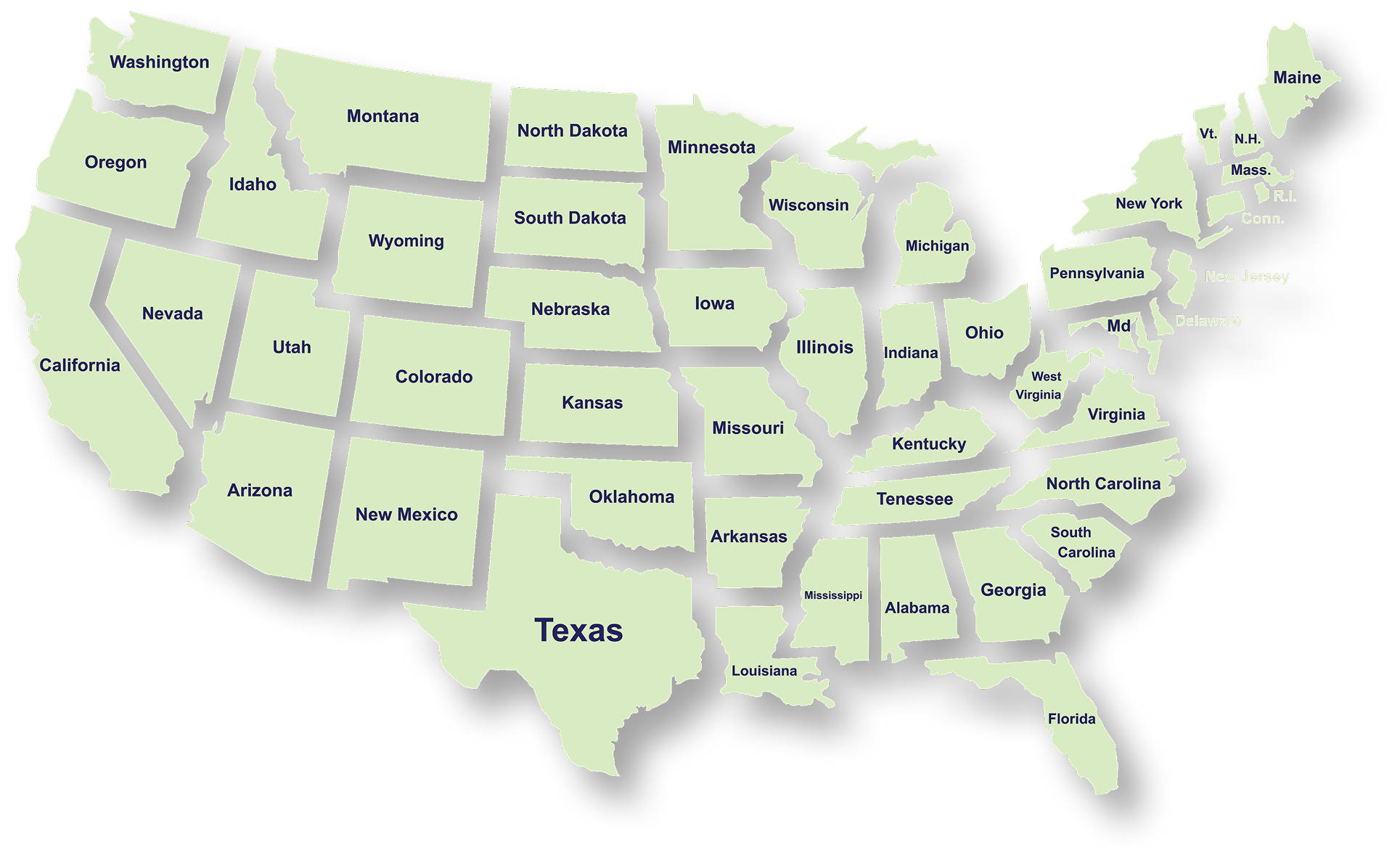
Serving Businesses & Individuals Across USA

We handle accounting, tax filing, and planning with defined timelines and accurate reporting for businesses and individuals across all states.

Frequently Asked Questions

What services does NR CPAs & Business Advisors provide?
What is tax planning and why is it important for businesses?
How can a Virtual CFO help my business?
When should a business consider IRS tax resolution services?
What financial statements does a business typically need?
How can startup advisory services help new businesses?
What is strategic business planning?
What is a Virtual Family Office and who can benefit from it?