Learning Center for Tax and Financial Insights

Stay updated with clear, actionable articles on tax rules, deadlines, deductions, and financial decisions that impact individuals and businesses.

No items found.

Weather the Storm: How Small Businesses Can Thrive in a Tough Economy Flow

The current American economy is characterized by inflation, rising credit card debt, and the looming threat of a recession. As a result, small to medium-sized business owners face many challenges. A recent report indicating a GDP growth of 1.6% in the first quarter of 2024 – well below the expected 2.5% – alongside predictions of a recession by mid-2024, indicates the urgency business owners face to safeguard their finances. This article showcases comprehensive strategies business owners like you can use to navigate challenging economic headwinds, ensuring operations remain stable and cash flow positive.Understanding the Economic ContextThe economic indicators are clear: with credit card delinquency rates rising and retail sales experiencing a downturn, businesses of all kinds are dealing with financial difficulties. Challenges like these often starkly highlight the fact that cast flow management is key in tough economic times. If you’ve been tightening your company’s purse strings, read on.Critical Strategies for Cash Flow Management1. Enhanced Cash Flow MonitoringEstablishing an effective cash flow monitoring system is the first step in safeguarding your business against economic fluctuations. This involves keeping a close eye on cash inflows and outflows, ensuring you always clearly understand your financial position. Accurate cash flow projections can help you anticipate future financial needs and adjust your strategies accordingly.2. Operational EfficiencyOperational efficiency is more important than ever in times of economic uncertainty. Reevaluating your business operations to identify areas for improvement can lead to significant cost savings, helping you and your core employees thrive in what could have otherwise been difficult times. This might involve outsourcing non-core activities, reducing part-time staff during slower periods, and renegotiating vendor contracts to secure better terms. Such measures can reduce operational costs without compromising the quality of your products or services.3. Leveraging TechnologyTechnology can be a powerful tool in streamlining business processes and improving efficiency. Modern accounting software, for example, can simplify the task of budgeting and cash flow forecasting, providing a comprehensive view of your financial health. Additionally, artificial intelligence (AI) platforms can help you save hours a day and potentially allow you to reduce staffing needs. Embracing technological advancements can help your business succeed, especially if your competitors are slow to adapt.

Explore More
No items found.

Smarter Headcount Management with AI

In the face of slowing economic times and rising labor costs, small and medium-sized businesses (SMBs) must find innovative ways to maintain profitability across all industries. One way to increase productivity and streamline day-to-day operations is to use artificial intelligence (AI) engines like ChatGPT.Although AI platforms can seem daunting to new users, with a little practice, you can become a power user in no time at all. This article explores how AI can help your business achieve more with fewer employees, reducing overhead without sacrificing quality or capacity.Integrating AI to Boost EfficiencyAutomated Customer ServiceImplement AI-powered chatbots and virtual assistants to handle routine customer inquiries, bookings, and support issues. This will allow your customer service team to focus on more complex and high-value interactions, reducing the need for a large staff.Efficient HR ProcessesUse AI to automate repetitive HR tasks such as resume screening, initial candidate assessments, and interview scheduling. This streamlines the hiring process and reduces the administrative burden on your HR team, freeing them to focus on strategic activities like employee engagement and retention.Enhanced Data AnalysisAI tools can analyze large datasets much faster and more accurately than humans. Marketing, finance, and operations employees can leverage AI for insights on trends, forecasting, and decision-making support, reducing the need for large teams to manage and interpret data.Robotic Process Automation (RPA)RPA can automate routine, rule-based tasks across various departments such as accounting, procurement, and IT. This speeds up processes, reduces errors, and allows employees to concentrate on more strategic tasks.Content Creation and ManagementAI can assist in generating reports, drafting marketing content, and even writing code for software development. This significantly reduces the time and number of people required for these tasks, enabling a leaner team to focus on creative and strategic input.

Explore More
No items found.

Navigating the Complex World of Your Child's Tax Return

Article Highlights:Why Kiddie TaxUnearned IncomeExceptionsUnderstanding Kiddie Tax RulesStrategies for Children with Earned IncomeParental Election to Include Child’s Unearned IncomeStrategies to Avoid the Kiddie TaxIn an effort to prevent high-income parents from exploiting tax benefits by shifting their investment income to their children, who typically fall into lower tax brackets, the U.S. Congress introduced the "Kiddie Tax" in 1986. While not officially termed as such in the tax code, the Kiddie Tax effectively applies higher tax rates to the unearned income of certain children. This article delves into the intricacies of the Kiddie Tax, including who it affects, the rules governing it, and strategies for managing its impact.The Kiddie Tax applies to the unearned income of children under the age of 19, or under 24 for full-time students, provided they are not self-supporting. Unearned income includes, but is not limited to, dividends, interest, and capital gains. It's important to note that if a child is married or neither parent is alive at the end of the tax year, the Kiddie Tax rules do not apply, and the child's income is taxed at their own rate.Exceptions to the Rule - There are specific exceptions to the Kiddie Tax that can exempt a child's income from being taxed at the parent's rate. For instance, if a child's unearned income is less than a certain threshold, which for 2024 is $1,300, it is not subject to the Kiddie Tax. Additionally, earned income, which is income from employment, is taxed at the child's rate and benefits from the standard deduction, significantly reducing the tax liability for working children.Understanding Kiddie Tax Rules - For 2024, the first $1,300 of a child's unearned income is tax-free, and the next $1,300 is taxed at the child's rate. However, any unearned income over $2,600 is taxed at the higher of the child's tax rate or the parents' rate, which can be as high as 37%. These thresholds are annually adjusted for inflation.Strategies for Children with Earned Income - Children with earned income (income from working) have the opportunity to leverage the standard deduction to offset their taxable income. For 2024, the standard deduction for a single individual is $14,600, allowing a child to earn up to this amount tax-free. Furthermore, children can contribute to a traditional IRA, up to the lesser of their earned income or $7,000 for 2024, potentially increasing their tax-free earnings to $21,600. Children may be reluctant to contribute their hard-earned income to an IRA, in which case the parents or grandparents may consider gifting the child the IRA contribution to encourage savings for retirement. Also, if an IRA contribution is made, consider a Roth IRA which provides tax free income at retirement. The downside of a Roth is that the contribution isn’t tax deductible, so a child’s tax-free earnings would be limited to the standard deduction amount. Even so, the tax the child would pay on the nondeductible contribution would likely only be at the 10% or 12% rate, which is probably lower than what the child’s tax rate will be when they retire.

Explore More
No items found.

June 2024 Business Due Dates

June 17 - Employer’s Monthly Deposit DueIf you are an employer and the monthly deposit rules apply, June 17 is the due date for you to make your deposit of Social Security, Medicare, and withheld income tax for May 2024. This is also the due date for the nonpayroll withholding deposit for May 2024 if the monthly deposit rule applies. June 17 - CorporationsDeposit the second installment of estimated income tax for 2024 for calendar year corporations.Weekends & Holidays:If a due date falls on a Saturday, Sunday or legal holiday, the due date is automatically extended until the next business day that is not itself a legal holiday.

Explore More
No items found.

June 2024 Individual Due Dates

June 10 - Report Tips to EmployerIf you are an employee who works for tips and received more than $20 in tips during May, you are required to report them to your employer on IRS Form 4070 no later than June 10. Your employer is required to withhold FICA taxes and income tax withholding for these tips from your regular wages. If your regular wages are insufficient to cover the FICA and tax withholding, the employer will report the amount of the uncollected withholding in box 8 of your W-2 for the year. You will be required to pay the uncollected withholding when your return for the year is filed.June 17 - Estimated Tax Payment DueIt’s time to make your second quarter estimated tax installment payment for the 2024 tax year. Our tax system is a “pay-as-you-earn” system. To facilitate that concept, the government has provided several means of assisting taxpayers in meeting the “pay-as-you-earn” requirement. These include: Payroll withholding for employees;Pension withholding for retirees; andEstimated tax payments for self-employed individuals and those with other sources of income not covered by withholding. When a taxpayer fails to prepay a safe harbor (minimum) amount, they can be subject to the underpayment penalty. This penalty is equal to the federal short-term rate plus 3 percentage points, and the penalty is computed on a quarter-by-quarter basis.Federal tax law does provide ways to avoid the underpayment penalty. If the underpayment is less than $1,000 (the “de minimis amount”), no penalty is assessed. In addition, the law provides "safe harbor" prepayments. There are two safe harbors:The first safe harbor is based on the tax owed in the current year. If your payments equal or exceed 90% of what is owed in the current year, you can escape a penalty.The second safe harbor is based on the tax owed in the immediately preceding tax year. This safe harbor is generally 100% of the prior year’s tax liability. However, for taxpayers whose AGI exceeds $150,000 ($75,000 for married taxpayers filing separately), the prior year’s safe harbor is 110%.Example: Suppose your tax for the year is $10,000 and your prepayments total $5,600. The result is that you owe an additional $4,400 on your tax return. To find out if you owe a penalty, see if you meet the first safe harbor exception. Since 90% of $10,000 is $9,000, your prepayments fell short of the mark. You can't avoid the penalty under this exception.However, in the above example, the safe harbor may still apply. Assume your prior year’s tax was $5,000. Since you prepaid $5,600, which is greater than 110% of the prior year’s tax (110% = $5,500), you qualify for this safe harbor and can escape the penalty.This example underscores the importance of making sure your prepayments are adequate, especially if you have a large increase in income. This is common when there is a large gain from the sale of stocks, sale of property, when large bonuses are paid, when a taxpayer retires, etc. Timely payment of each required estimated tax installment is also a requirement to meet the safe harbor exception to the penalty. If you have questions regarding your safe harbor estimates, please call this office as soon as possible.CAUTION: Some state de minimis amounts and safe harbor estimate rules and the date estimates are due are different than those for the Federal estimates. Please call this office for particular state safe harbor rules.June 17 - Taxpayers Living Abroad

Explore More
No items found.

Think Twice Before Tossing: The Critical Timing for Disposing of Your Tax Records Safely

Article Highlights:Why We Keep Recordso Audit Defenseo Amending Returnso Claiming Refundso Tax BasisDuration for Keeping Tax Recordso Federal Statute of Limitations on Tax Refundso Tax Return Omissionso Indefinite Retentiono Financially DisabledThe Big Problem!o Stock Acquisition Datao Stock and Mutual Fund Statementso Tangible Property Purchase and Improvement RecordsThe 10-Year Statute of Limitations on CollectionsNow that your taxes are complete and filed for last year, you are probably wondering what old tax records can be discarded. If you are like most taxpayers, you have records from years ago that you are afraid to throw away. To determine how to proceed, it is helpful to understand why the records needed to be kept in the first place. Generally, we keep “tax” records for several reasons: Audit Defense: In the event of an IRS audit, taxpayers are required to present documentation supporting the claims made on their tax returns. Without proper records, defending against audit adjustments becomes significantly challenging.Amending Returns: If taxpayers need to amend a return due to discovered errors or overlooked deductions, having detailed records makes the process smoother and ensures that all adjustments are accurate.Claiming Refunds: For claiming refunds, especially those related to overpaid taxes, detailed records are necessary to substantiate the claim.Tax Basis: When capital assets, such as stock, business assets, rentals and other investments are disposed of it is necessary to determine for tax purposes if there was a gain or loss from the transaction. The tax basis is what the asset cost plus or minus adjustments such as the cost of improvements which increase the tax basis, depreciation (reduces basis), casualty losses, or tax credits which decrease the tax basis. Duration for Keeping Tax Records - The general rule of thumb is to keep tax records until the statute of limitations for the tax return in question expires. The statute of limitations is the period during which the taxpayer can amend their tax return to claim a credit or refund, or the IRS can assess additional tax. Federal Statute of Limitations on Tax Refunds: The statute of limitations on tax refunds is a set of rules defined by the Internal Revenue Code that determines the time frame within which a taxpayer can claim a credit or refund for overpaid taxes. This statute serves two main purposes:It specifies how long an individual has to file a claim for a refund or an amended return after the original return was filed or the tax was paid.It sets limits on the amount of refund or credit that can be claimed, based on certain conditions.Some states have longer statutes, typically 4 years, so they have more time to piggyback on any federal audits and adjustments.Example: Sue filed her 2023 tax return before the due date of April 15, 2024. She will be able to safely dispose of most of her records after April 15, 2027. On the other hand, Don files his 2023 return on June 2, 2024. He needs to keep his records at least until June 2, 2027. In both cases, the taxpayers should keep their records a year or two longer if their states have a statute of limitations longer than three years. Note: If a due date falls on a Saturday, Sunday or holiday, the due date becomes the next business day.Tax Return Omissions: In certain situations, such as when a taxpayer does not report income that they should report, and it is more than 25% of the gross income shown on the return, the IRS suggests keeping records for six years.Of course, the statute doesn’t begin running until a return has been filed. There is no limit on the assessment period where a taxpayer files a false or fraudulent return to evade tax.Indefinite Retention: For records related to property, the IRS recommends keeping them for as long as the property is owned and for at least three years after filing the return reporting the sale or other disposition of the property. This is crucial for calculating depreciation, amortization, or gains or losses on the property.

Explore More
No results found.
Thank you! Your submission has been received!
Oops! Something went wrong while submitting the form.

Want tax & accounting tips & insights?Sign up for our newsletter.

Thank you! Your submission has been received!
Oops! Something went wrong while submitting the form.

Why Work With Us?

We combine deep tax expertise, financial strategy, and practical business insight to help you manage complexity, stay compliant, and make confident financial decisions.
A dollar sign, representing financial advice or discussion at NR CPAs & Business Advisors.

Experienced CPA and Enrolled Agent Leadership

Guidance led by licensed professionals with deep expertise in tax strategy, compliance, and complex financial matters.
White bar chart with an upward arrow on green circular background representing growth or progress at NR CPAs &. Business Advisors

Support for Growing Businesses and Startups

We understand the financial challenges of growth stage businesses and provide structured guidance to support expansion.
A white hand holding a dollar symbol and ascending bar chart on a green circular background representing financial growth or investment at NR CPAs & Business Advisors..

Strategic Financial Advisory

Our team helps you evaluate financial decisions with greater clarity, supported by practical insights and long term planning.

Fractional CFO Support

Access experienced financial leadership without the commitment and cost of hiring a full time Chief Financial Officer.

Proactive Tax Planning Approach

We focus on identifying tax opportunities throughout the year rather than reacting only during filing season.

Clear and Reliable Financial Reporting

Accurate financial statements and reporting that help you better understand performance and make informed decisions.
White IRS building icon with pillars and a dollar sign above on a green circular background.

Professional IRS Representation

Experienced support in resolving IRS notices, disputes, and compliance matters while protecting your financial interests.

Personalized Client Focus

Every client receives thoughtful attention and tailored financial solutions based on their specific needs and business goals.
Financial matters often involve important decisions. Working with experienced advisors can help you approach them with greater clarity and confidence in your choices.

Need Help With Your Tax or Financial Decisions?

Discuss your situation with our advisors to get clear guidance on tax planning, IRS matters, and the financial decisions ahead.
Business consulting at NR CPAs & Business Advisors.

Request Your Consultation

Fill out the form to discuss your tax concerns, financial questions, or advisory needs with our team. We will review your details and respond shortly.

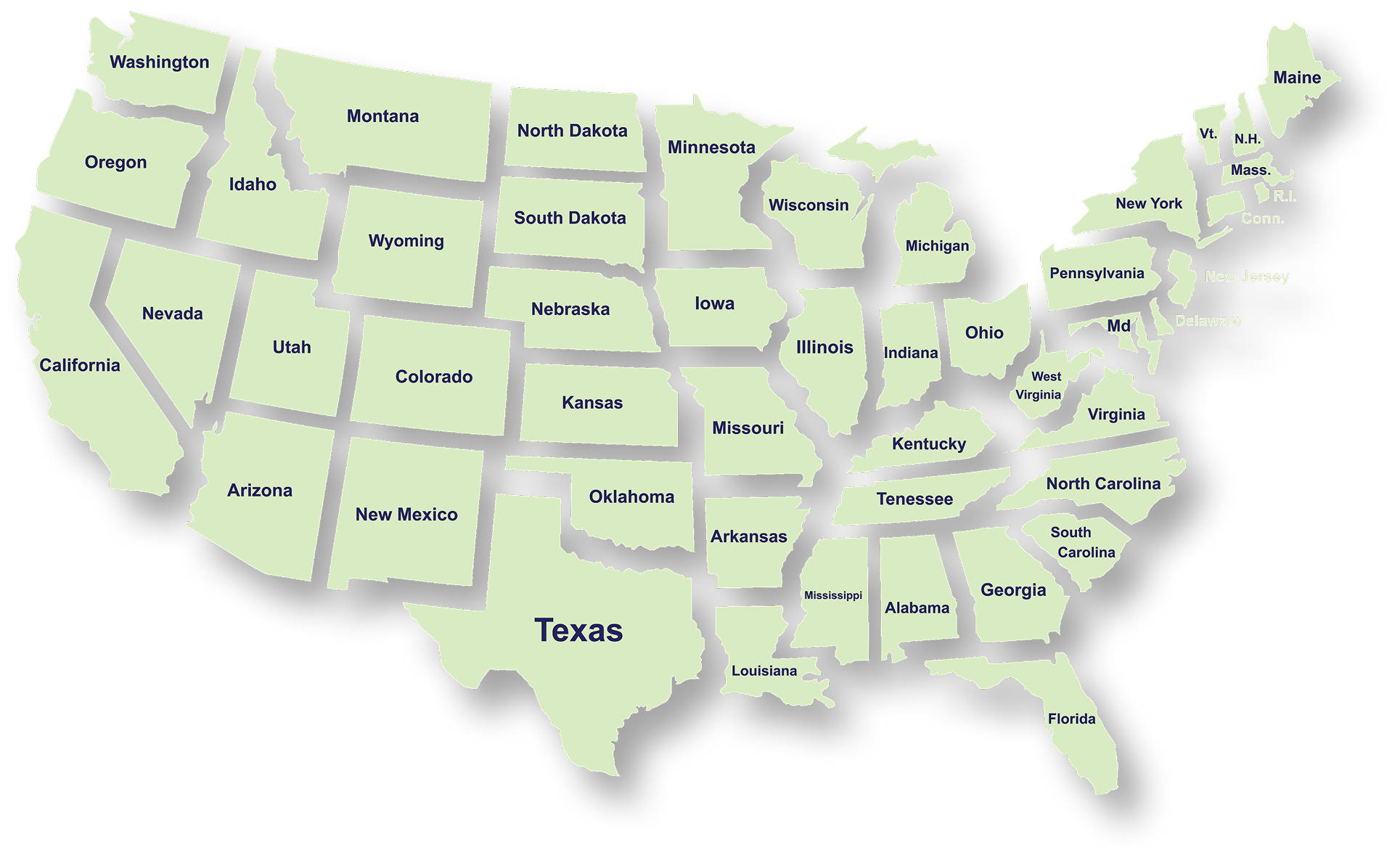
Serving Businesses & Individuals Across USA

We handle accounting, tax filing, and planning with defined timelines and accurate reporting for businesses and individuals across all states.

Frequently Asked Questions

What services does NR CPAs & Business Advisors provide?
What is tax planning and why is it important for businesses?
How can a Virtual CFO help my business?
When should a business consider IRS tax resolution services?
What financial statements does a business typically need?
How can startup advisory services help new businesses?
What is strategic business planning?
What is a Virtual Family Office and who can benefit from it?