Learning Center for Tax and Financial Insights

Stay updated with clear, actionable articles on tax rules, deadlines, deductions, and financial decisions that impact individuals and businesses.

No items found.

Freshen Your Finances: QuickBooks Spring Cleaning Tips

As the season changes and springtime approaches, it’s not just your home that could use a good cleaning. Your financial records, especially in QuickBooks, could benefit from a little spring cleaning too. With tax season in full swing and the start of a new fiscal year for many businesses, now is the perfect time to tidy up your QuickBooks account. Here are some QuickBooks spring cleaning tips to help you freshen your finances:Review and reconcile accounts: Start by reviewing your accounts and reconciling them to ensure that your records match your bank and credit card statements. Look for any discrepancies or errors that need to be corrected.Clean up your chart of accounts: Take some time to review your chart of accounts and clean up any accounts that are no longer needed or relevant. This can help streamline your financial reporting and make it easier to track your income and expenses.Archive old transactions: Consider archiving old transactions to keep your QuickBooks file size manageable. This can help improve performance and make it easier to navigate your data.Update vendor and customer information: Review and update vendor and customer information to ensure that it is accurate and current. This can help prevent any communication or payment issues in the future.Reclassify transactions: Go through your transactions and reclassify any that may have been categorized incorrectly. This way, your financial reports will be accurate and reliable when you need them to make business decisions.Set up reminders and notifications: Take advantage of QuickBooks’ reminder and notification features to stay on top of important deadlines and tasks. This can help prevent any last-minute scrambling and ensure that you stay organized throughout the year.Back up your data: Don’t forget to back up your QuickBooks data regularly to protect against data loss or corruption. Consider using cloud storage like Apple’s iCloud or Google Drive – or an external hard drive – for added security.Evaluate and optimize workflows: Take some time to evaluate your current workflows and identify any areas that could be optimized or improved. This can help streamline your processes and make your accounting tasks more efficient.Attend training or seek professional help: If you’re feeling overwhelmed or unsure about how to clean up your QuickBooks account, consider attending a training session or seeking help from a professional. QuickBooks offers a variety of resources and support options to help you get the most out of your small business accounting software.Plan for the future: Finally, use this opportunity to plan for the future and set financial goals for the coming months. Whether it’s saving for a major purchase or preparing for tax season next year, having a clear plan in place can help set you up for success.

Explore More
No items found.

April 2024 Individual Due Dates

April 10 - Report Tips to EmployerIf you are an employee who works for tips and received more than $20 in tips during March, you are required to report them to your employer on IRS Form 4070 no later than April 10. Your employer is required to withhold FICA taxes and income tax withholding for these tips from your regular wages. If your regular wages are insufficient to cover the FICA and tax withholding, the employer will report the amount of the uncollected withholding in box 8 of your W-2 for the year. You will be required to pay the uncollected withholding when your return for the year is filed.April 15 - Taxpayers with Foreign Financial InterestsA U.S. citizen or resident, or a person doing business in the United States, who has a financial interest in or signature or other authority over any foreign financial accounts (bank, securities or other types of financial accounts), in a foreign country, is required to file Form FinCEN 114. The form must be filed electronically; paper forms are not allowed. The form must be filed with the Treasury Department (not the IRS) no later than April 15, 2024, for 2023. An extension of time to file of up to 6 months is automatically allowed. This filing requirement applies only if the aggregate value of these financial accounts exceeds $10,000 at any time during 2023. Contact our office for additional information and assistance filing the form. April 15 - Individual Tax Returns Due File a 2023 income tax return (Form 1040 or 1040-SR) and pay any tax due. If you want an automatic six-month extension of time to file the return, please call this office. The due date is April 17 if you live in Maine or Massachusetts.Caution: The extension gives you until October 15, 2024, to file your 2023 1040 or 1040-SR return without being liable for the late filing penalty. However, it does not avoid the late payment penalty; thus, if you owe money, the late payment penalty can be severe, so you are encouraged to file as soon as possible to minimize that penalty. Also, you will owe interest, figured from the original due date until the tax is paid. If you have a refund, there is no penalty; however, you are giving the government a free loan, since they will only pay interest starting 45 days after the return is filed. Please call this office to discuss your individual situation if you are unable to file by the April 15 due date.April 15- Household Employer Return Due If you paid cash wages of $2,600 or more in 2023 to a household employee, you must file Schedule H. If you are required to file a federal income tax return (Form 1040 or 1040-SR), file Schedule H with the return and report any household employment taxes. Report any federal unemployment (FUTA) tax on Schedule H if you paid total cash wages of $1,000 or more in any calendar quarter of 2022 or 2023 to household employees. Also, report any income tax that was withheld for your household employees. For more information, please call this office.April 15 - Estimated Tax Payment Due (Individuals)It’s time to make your first quarter estimated tax installment payment for the 2023 tax year. Our tax system is a “pay-as-you-earn” system. To facilitate that concept, the government has provided several means of assisting taxpayers in meeting the “pay-as-you-earn” requirement. These include:Payroll withholding for employees;Pension withholding for retirees; andEstimated tax payments for self-employed individuals and those with other sources of income not covered by withholding.

Explore More
No items found.

April 2024 Business Due Dates

April 1 - Electronic Filing of Forms 1098, 1099 and W-2GIf you file Forms 1098, 1099 (other than 1099-NEC), or W-2G electronically with the IRS, this is the final due date. This due date applies only if you file electronically (not paper forms). Otherwise, January 31 or February 28 was the due date, depending on the form filed. The due date for giving the recipient these forms was January 31.April 1 - Applicable Large Employers (ALE) – Form 1095-CIf filing electronically, file Form 1095-C, Employer-Provided Health Insurance Offer and Coverage, with the IRS. If filing on paper the due date was February 29, 2024.April 1 - Large Food and Beverage Establishment EmployersIf you file Forms 8027 for 2023 electronically with the IRS, this is the final due date. This due date applies only if you file electronically. Otherwise, February 29, 2024 was the due dateApril 15 - Household Employer Return DueIf you paid cash wages of $2,600 or more in 2023 to a household employee, you must file Schedule H. If you are required to file a federal income tax return (Form 1040 or 1040-SR), file Schedule H with the return and report any household employment taxes. Report any federal unemployment (FUTA) tax on Schedule H if you paid total cash wages of $1,000 or more in any calendar quarter of 2022 or 2023 to household employees. Also, report any income tax that was withheld for your household employees. For more information, please call this office.April 15 - C-CorporationsFile a 2023 calendar year income tax return (Form 1120) and pay any tax due. If you need an automatic 6-month extension of time to file the return, file Form 7004, Application for Automatic Extension of Time to File Certain Business Income Tax, Information and Other Returns, and deposit what you estimate you owe. Filing this extension protects you from late filing penalties but not late payment penalties, so it is important that you estimate your liability and deposit it using the instructions on Form 7004.April 15 - Social Security, Medicare and Withheld Income TaxIf the monthly deposit rule applies, deposit the tax for payments in March.

Explore More
No items found.

5 Essential Personal Finance Tips Every Millennial Should Know

As Millennials continue to navigate their financial journeys, understanding key tax and personal finance topics is crucial for achieving long-term prosperity. In this article, we'll explore some of the most important issues facing Millennials today, providing valuable insights and strategies to help them make informed decisions about their finances.1. The Importance of Time Value of Money:Understanding the concept of the time value of money is fundamental for Millennials looking to build wealth over time. Time value of money emphasizes the principle that money available today is worth more than the same amount in the future due to its potential earning capacity. This concept underscores the importance of starting to save and invest early, as it allows for greater growth and accumulation of wealth over time.Let's break down an example of investing $10,000 each year over a period of 30 years at an annual growth rate of 7%. This scenario demonstrates the concept of the time value of money and the power of compounding interest.Here's how the investment would grow over time:1. Year 1: - Investment: $10,000 - Growth rate: 7% - Ending balance: $10,700 (Initial investment + growth)2. Year 2: - Investment: $10,000 - Growth rate: 7% - Ending balance: $21,449 ($10,700 from the previous year + $10,000 investment + growth)3. Year 3: - Investment: $10,000 - Growth rate: 7% - Ending balance: $32,449 ($21,449 from the previous year + $10,000 investment + growth)And so on...After 30 years, here's what the investment would look like:- Ending Balance: Approximately $1,020,688This illustrates the significant impact of consistent investing over time, taking advantage of compounding returns. Even though you've invested a total of $300,000 over 30 years ($10,000 each year for 30 years), the power of compounding has grown your investment substantially, resulting in a much larger ending balance. This example underscores the importance of starting early, being consistent with contributions, and allowing time for investments to grow.2. Tax-Deferred Savings:Tax-deferred savings vehicles, such as retirement accounts like 401(k)s and IRAs, offer Millennials an opportunity to save for the future while reducing their current tax liability. By contributing pre-tax dollars to these accounts, Millennials can benefit from tax-deferred growth, allowing their investments to compound over time. Maximizing contributions to these accounts is essential for building a solid financial foundation and preparing for retirement.Let's compare the three popular tax-deferred retirement savings options: Roth IRA, Traditional IRA, and 401(k). Each option has its own advantages and considerations, so it's essential to understand how they differ:1. Roth IRA: - Contributions are made with after-tax dollars. - Earnings grow tax-free. - Qualified withdrawals, including earnings, are tax-free in retirement. - No required minimum distributions (RMDs) during the original account holder's lifetime. - Contributions can be withdrawn penalty-free at any time, but earnings withdrawn before age 59½ may be subject to taxes and penalties. - Ideal for individuals who expect to be in a higher tax bracket during retirement or want tax-free withdrawals in retirement.2. Traditional IRA: - Contributions may be tax deductible, depending on income level and participation in an employer-sponsored retirement plan. - Earnings grow tax-deferred. - Withdrawals in retirement are subject to income tax. - Required minimum distributions (RMDs) must begin by age73 for years 2023 through 2032(up from 72 in 2021 and 2022). - Early withdrawals before age 59½ may incur taxes and penalties. - Suitable for individuals seeking immediate tax deductions or anticipating lower tax rates in retirement.3. 401(k): - Offered by employers, allowing employees to contribute a portion of their pre-tax salary. - Earnings grow tax-deferred. - Contributions reduce taxable income in the current year. - Withdrawals in retirement are subject to income tax. - Required minimum distributions (RMDs) must begin by age73 for years 2023 through 2032(up from 72 in 2021 and 2022 - Early withdrawals before age 59½ may incur taxes and penalties, with exceptions such as hardship withdrawals or certain early retirement scenarios. - Employer may offer matching contributions, which can provide additional retirement savings.Considerations:- Tax Situation: Evaluate your current and anticipated future tax situation to determine whether you prefer tax-free withdrawals (Roth), tax-deferred growth with taxable withdrawals (Traditional IRA, 401(k)), or a combination of both.- Employer Match: If your employer offers a matching contribution in a 401(k), consider contributing enough to receive the full match as it's essentially free money.- Income and Eligibility: Income limits may affect your ability to contribute to a Roth IRA or deduct contributions to a Traditional IRA.- Investment Options: Assess the investment options and fees associated with each account to ensure they align with your financial goals.Understanding these differences can help you make informed decisions about which retirement savings options best suit your needs and financial objectives.

Explore More
No items found.

Tax Benefits Available to Disabled Taxpayers

Article Highlights:Increased Standard DeductionTax-Exempt IncomeImpairment-Related Work ExpensesFinancially DisabledEarned Income Tax CreditChild or Dependent Care CreditSpecial Medical DeductionsQualified Medicaid Waiver PaymentsABLE AccountsDisabled individuals, as well as parents of disabled children, may qualify for several tax credits and other tax benefits. If you or someone listed on your federal tax return is disabled, you may be eligible for one or more of the following tax benefits:Increased Standard Deduction – Since a change in the law more than 35 years ago, taxpayers (or spouses when filing a joint return) who are legally blind have been eligible for a standard deduction add-on. Thus, for 2024, if you are filing jointly with your blind spouse, you can add an additional $1,550 to your standard deduction of $29,200; if both you and your spouse are blind, the add-on doubles to $3,100. For other filing statuses, the additional amount is $1,950. While being age 65 or older isn’t a disability, it should be noted that there is also an “elderly” add-on to the standard deduction of $1,550 or $1,950, depending on filing status. These add-ons apply only to the taxpayer and spouse, not to dependents.Exclusions from Gross Income – Certain disability-related payments, Veterans Administration disability benefits, and Supplemental Security Income are excluded from gross income (i.e., they are not taxable). Amounts received for Social Security disability are treated the same as regular Social Security benefits, which means that up to 85% of the benefits could be taxable, depending on the amount of the recipient’s (and spouse’s, if filing jointly) other income.Impairment-Related Work Expenses – Individuals with a physical or mental disability may deduct impairment-related expenses paid to allow them to work.Employees – Although the 2017 tax reform eliminated most miscellaneous itemized deductions through 2025, it retained a deduction for employees who have a physical or mental disability that limits their employment. As a result, they can still deduct the expenses necessary for them to work even when not itemizing deductions.Self-employed – For those who are self-employed, impairment-related expenses are deductible on Schedule C or F.Impairment-related work expenses are ordinary, necessary business expenses for attendant care services at the individual’s place of work as well as other expenses in the workplace that are necessary for the individual to be able to work. An example is when a blind taxpayer pays someone to read to them work-related documents.Financially Disabled – Under normal circumstances, one must file a claim for a tax refund within 3 years of the unextended due date of the tax return. For example, for a 2021 tax return, the due date was April 18, 2022, which is when the 3-year clock started running. Thus, the IRS will not issue refunds for an amended 2021 or a late-filed original 2021 return submitted to the IRS after April 15, 2025. However, if a taxpayer is “financially disabled,” the period for claiming a refund is suspended for the period during which the individual is financially disabled.What does financially disabled mean? An individual is financially disabled if they are unable to manage their financial affairs because of a medically determinable physical or mental impairment that can be expected to result in death or that has lasted or can be expected to last for a continuous period of not less than 12 months.For a joint income tax return, only one spouse must be financially disabled for the time period to be suspended. However, financial disability does not apply during any period when the individual’s spouse or any other person is authorized to act on the individual’s behalf in financial matters.Earned Income Tax Credit (EITC) – The EITC is available to taxpayers who are disabled and to the parents of a child with a disability, even when the child’s age would normally prevent the child from being a qualifying child. To be eligible for the credit, the taxpayer must receive earned income, which generally means wages or self-employment income. However, if an individual has retired on disability, taxable benefits received under their employer’s disability retirement plan are considered earned income until the individual reaches a minimum retirement age. If the disability benefits received are nontaxable, as would be the case if the disabled individual paid the premiums for the disability insurance policy from which the benefits come, then the benefits are not considered earned income. The EITC is a tax credit that not only reduces a taxpayer’s tax liability but may also result in a refund. Many working individuals with a disability who have no qualifying children may qualify for the EITC.

Explore More
No items found.

Video Tips: Don't Forget to Make 2024 Estimated Tax Payments

Unlike employees, who have taxes withheld from their wages, self-employed individuals must prepay their taxes by making periodic estimated tax payments. However, self-employed people are not the only ones who are subject to the estimated tax requirements; these rules also apply to anyone who has income that is not subject to withholding and even to those whose taxes are not sufficiently withheld.

Explore More
No results found.
Thank you! Your submission has been received!
Oops! Something went wrong while submitting the form.

Want tax & accounting tips & insights?Sign up for our newsletter.

Thank you! Your submission has been received!
Oops! Something went wrong while submitting the form.

Why Work With Us?

We combine deep tax expertise, financial strategy, and practical business insight to help you manage complexity, stay compliant, and make confident financial decisions.
A dollar sign, representing financial advice or discussion at NR CPAs & Business Advisors.

Experienced CPA and Enrolled Agent Leadership

Guidance led by licensed professionals with deep expertise in tax strategy, compliance, and complex financial matters.
White bar chart with an upward arrow on green circular background representing growth or progress at NR CPAs &. Business Advisors

Support for Growing Businesses and Startups

We understand the financial challenges of growth stage businesses and provide structured guidance to support expansion.
A white hand holding a dollar symbol and ascending bar chart on a green circular background representing financial growth or investment at NR CPAs & Business Advisors..

Strategic Financial Advisory

Our team helps you evaluate financial decisions with greater clarity, supported by practical insights and long term planning.

Fractional CFO Support

Access experienced financial leadership without the commitment and cost of hiring a full time Chief Financial Officer.

Proactive Tax Planning Approach

We focus on identifying tax opportunities throughout the year rather than reacting only during filing season.

Clear and Reliable Financial Reporting

Accurate financial statements and reporting that help you better understand performance and make informed decisions.
White IRS building icon with pillars and a dollar sign above on a green circular background.

Professional IRS Representation

Experienced support in resolving IRS notices, disputes, and compliance matters while protecting your financial interests.

Personalized Client Focus

Every client receives thoughtful attention and tailored financial solutions based on their specific needs and business goals.
Financial matters often involve important decisions. Working with experienced advisors can help you approach them with greater clarity and confidence in your choices.

Need Help With Your Tax or Financial Decisions?

Discuss your situation with our advisors to get clear guidance on tax planning, IRS matters, and the financial decisions ahead.
Business consulting at NR CPAs & Business Advisors.

Request Your Consultation

Fill out the form to discuss your tax concerns, financial questions, or advisory needs with our team. We will review your details and respond shortly.

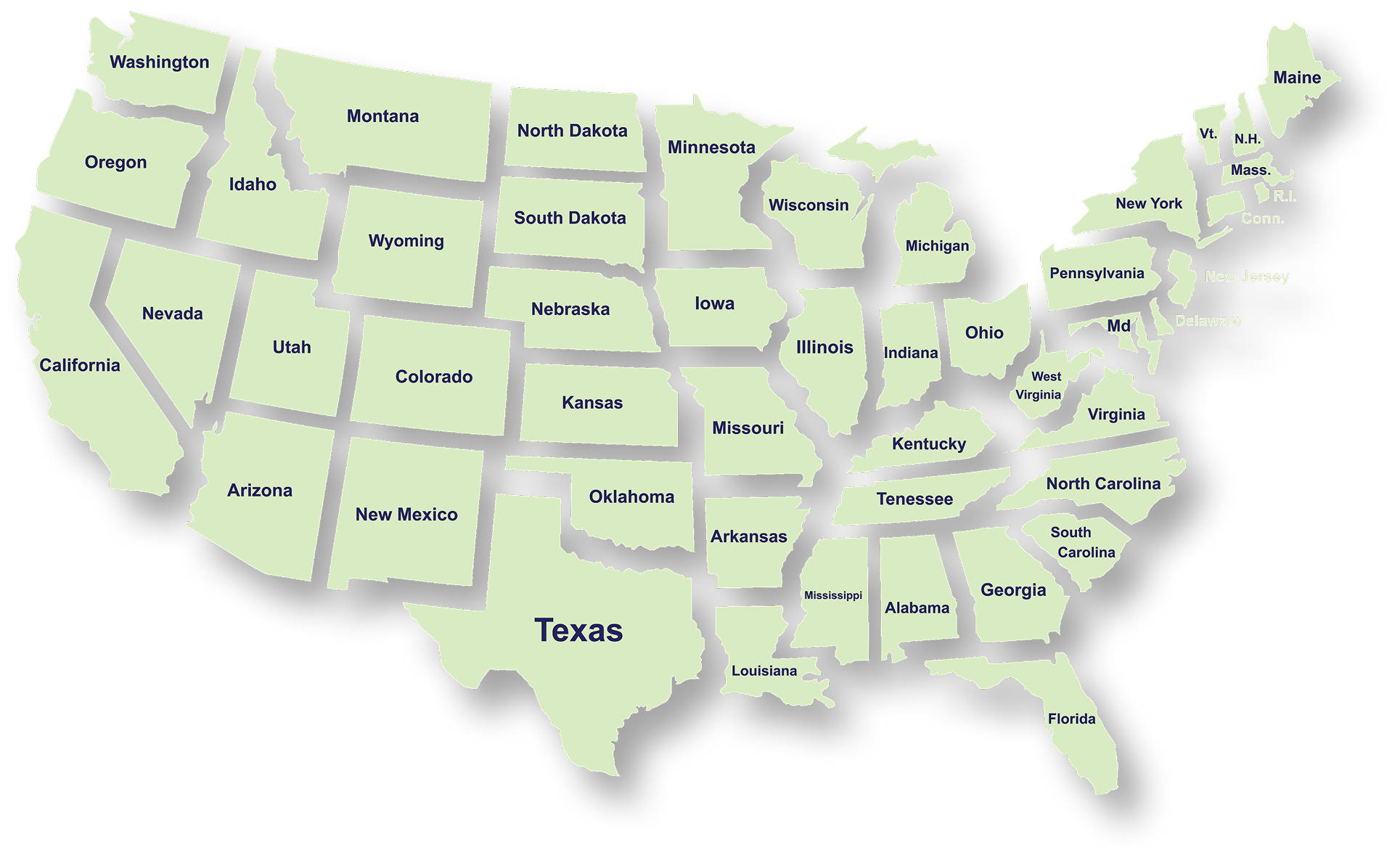
Serving Businesses & Individuals Across USA

We handle accounting, tax filing, and planning with defined timelines and accurate reporting for businesses and individuals across all states.

Frequently Asked Questions

What services does NR CPAs & Business Advisors provide?
What is tax planning and why is it important for businesses?
How can a Virtual CFO help my business?
When should a business consider IRS tax resolution services?
What financial statements does a business typically need?
How can startup advisory services help new businesses?
What is strategic business planning?
What is a Virtual Family Office and who can benefit from it?