Learning Center for Tax and Financial Insights

Stay updated with clear, actionable articles on tax rules, deadlines, deductions, and financial decisions that impact individuals and businesses.

No items found.

What You Need to Know About Third-Party Tax Authorizations

Article Highlights:Power of AttorneyTax Information AuthorizationThird Party DesigneeOral DisclosureIn the complex world of financial and legal matters, there are times when you may need to authorize a third party to represent you when dealing with the IRS. A third-party representation can be a valuable tool. But how do you navigate the different types of authorizations?You can grant a third party authorization to help you with federal tax matters. The third party can be a family member or friend, a tax professional, attorney or business associate, depending on the authorization. There are different types of third-party authorizations:Power of Attorney – When dealing with the IRS, a specific form, Form 2848 – Power of Attorney and Declaration of Representative is used to authorize an individual to represent you before the IRS. This form allows the individual you authorize to receive confidential tax information and act on your behalf in IRS matters.Your representative must be an individual eligible to practice before the IRS. This includes:Attorneys, certified public accountants (CPAs) and enrolled agents. Enrolled retirement plan agents and enrolled actuaries with respect to Internal Revenue Code sections described in Circular 230.Unenrolled return preparers, family members, employees and students under special and limited circumstances.A Power of Attorney stays in effect until you revoke the authorization, or your representative withdraws from it. When you revoke a Power of Attorney, your representative will no longer receive your confidential tax information or be able to represent you before the IRS for the matters and periods listed in the authorization.There are 2 ways to revoke a Power of Attorney authorization:Authorize Power of Attorney for a new representative for the same tax matters and periods/years. A new authorization will automatically revoke the prior authorization.Send a revocation to the IRS. Follow Revocation Instructions, Form 2848, Power of Attorney and Declaration of Representative.Tax Information Authorization –Form 8821 - Tax Information Authorization is another IRS form that authorizes any individual, corporation, firm, organization, or partnership you designate to inspect and/or receive your confidential tax information in any office of the IRS for the type of tax and the years or periods you list on Form 8821.The form allows you to:Appoint a designee to review and/or receive your confidential information verbally or in writing for the tax matters and years/periods you specify.Disclose your tax information for a purpose other than resolving a tax matter. For example: Income verification required by a lender or a background check.

Explore More
No items found.

Great News for Employers Who Received Questionable Employee Retention Credits

Article Highlights:Combating Dubious Employee Retention Credit (ERC) ClaimsNew Voluntary Disclosure ProgramEmployer BenefitsApplying for the New Voluntary Disclosure ProgramWhen the 80% is DueInstallment Payment PlanOther Ongoing ERC InitiativesClaim Withdrawal Still AvailableThe IRS has introduced a New Voluntary Disclosure Program that allows employers who received questionable Employee Retention Credits (ERC) to pay them back at a discounted rate. This is a different program from the one IRS created earlier for those who haven’t received payment from the IRS and want to withdraw their ERC claim, which is discussed later in this article.As part of an ongoing initiative aimed at combating dubious Employee Retention Credit claims, the IRS has announced it is launching a new program to help businesses that want to pay back the money they received after filing ERC claims in error.NEW VOLUNTARY DISCLOSURE PROGRAMThis new program is part of a larger effort by the IRS to stop aggressive marketing around the ERC that misled some employers into filing claims.Interested employers must apply to the ERC Voluntary Disclosure Program by March 22, 2024. Those that the IRS accepts into the program will benefit from the following:They need only repay 80% of the credit they received.If the IRS paid interest on the employer’s ERC refund claim, the employer would not need to repay that interest.Who Can Apply - A variety of ERC recipients can apply. Any employer who already received the ERC for a tax period but isn’t entitled to it can apply if the following are also true:The employer is not under criminal investigation and has not been notified that they are under criminal investigation.The employer is not under an IRS employment tax examination for the tax period for which they’re applying to the Voluntary Disclosure Program.The employer has not received an IRS notice and demand for repayment of part or all the ERC.The IRS has not received information from a third party that the taxpayer is not in compliance or has not acquired information directly related to the noncompliance from an enforcement action.How To Apply - To apply, an employer must first file Form 15434, Application for Employee Retention Credit Voluntary Disclosure Program, available on IRS.gov. This form must be submitted using the IRS Document Upload Tool. Employers will be expected to repay their full ERC, minus the 20% reduction allowed through the Voluntary Disclosure Program.Employers who are unable to repay the required 80% of the credit may be considered for an installment agreement on a case-by-case basis, pending submission and review of a Form 433-B, Collection Information Statement for Businesses, available on IRS.gov, and all required supporting documentation.The IRS will not charge program participants interest or penalties on any credits they repay. However, if the employer is unable to repay the required 80% of the credit at the time of signing their closing agreement, then the employer will be required to pay penalties and interest in connection with entering into an installment agreement.Why isn’t the IRS requiring payment of 100% of the ERC the employer received? The IRS selected an 80% repayment because many of the ERC promoters charged a percentage fee that they collected at the time of payment or in advance of the payment, and the recipients never received the full amount.After an Application is Approved - If the IRS approves the employer’s application, they will mail the employer a closing agreement, which the employer must sign and return to the IRS within 10 days of the date the IRS mailed it. The employer must then repay 80% of the ERC they received, either online or by phone, using the Electronic Federal Tax Payment System (EFTPS). EFTPS is the Treasury Department system that most businesses already use to pay various federal tax obligations.Employers Who Outsource Their Payroll Must Apply Through the Third Party - Many employers outsource their payroll obligations to a third party who reports, collects, and pays employment taxes on the employer’s behalf using the third party’s Employer Identification Number. In this situation, the third-party, not the employer, must file Form 15434. See the form and its instructions for details.

Explore More
No items found.

QuickBooks Tips For a Fresh Start In 2024

As the bustle of December fades, January is a transitional month for many small business owners. This time of year generally calls for wrapping up any remaining loose ends from the previous year while diving headfirst into the new one. Readying your QuickBooks software for the upcoming year is one way to make sure you are in full control of your business finances as 2024 begins. Taking proactive steps now will pave the way for you to reach your financial goals when January 1 rolls around.1. Run Four Critical ReportsAs the dust settles from the holiday rush, take a moment to run four essential reports in QuickBooks. This will ensure your financial records are up-to-date and you don’t have any unwanted New Year’s surprises:A/R Aging Detail: Identify customers in arrears, understanding who owes you and when payments are due.Open Invoices: Isolate unpaid transactions, focusing specifically on outstanding invoices.A/P Aging Detail: Ensure you're current on outstanding payments to other entities.Unpaid Bill Details: Highlight bills with unpaid balances, streamlining your payable management.2. Create Statements For Past-Due CustomersSending statements to past-due customers using QuickBooks is a discreet collection method. While you decide on the level of follow-up, statements provide a clear breakdown of financial activities, fostering communication with those who haven’t yet paid their bills. If statements yield no response within ten days, however, consider more direct communication.

Explore More
No items found.

Rolling the Dice: Unraveling Proposed Sports Betting Tax Cuts & Legislation

In a surprising move, an Ohio state senator, Senator Niraj Antani (Miamisburg), recently introduced Senate Bill 190 aimed at slashing the state tax rate on sports betting operators in half, potentially reducing tax revenues by tens of millions annually. Currently, a significant portion of this revenue is earmarked for K-12 education. Per Cleveland.com, the bill proposes a reduction in the gross receipts tax on sportsbooks from the current 20% to 10%. When Ohio's sports betting program kicked off on January 1st of this year, casinos were subject to a 10% tax on gross receipts. However, the rate was later doubled to 20% in the state budget that was passed during the summer – this was, again, primarily directed to support both public and private K-12 education.Sen. Antani's proposal comes as a response to concerns raised by Ohio Governor Mike DeWine, who advocated for the increased tax rate due to what he perceived as operators crossing ethical lines in their advertising strategies. Incidents involving regulatory fines against major operators like DraftKings and Barstool Sportsbook prompted the Governor's push for a higher tax rate. The impact of such legislative changes has been evident, with Ohioans having placed bets totaling $5.2 billion on sports, resulting in $4.5 billion in winnings, translating to a net loss of $700 million. The financial implications of Senate Bill 190 remain uncertain, with the Legislative Service Commission yet to provide a revenue estimate. However, Ohio has already collected nearly $102 million in tax revenue from sportsbooks between January and October 2023. It’s worth noting that this excludes potentially lucrative months like November and December, during which the NFL, college football, the NBA, and college basketball are all in season.In an interview shared in Cleveland.com’s article, Sen. Antani criticized the legislature for increasing the sports betting tax within the state budget, emphasizing the need for a more measured approach to an emerging market like sports betting. He argued that while the increased tax may seem to target sportsbooks, its repercussions trickle down to bettors through less favorable odds and stingier promotional offers. The urgency, according to Antani, lies in reverting the tax rate to 10%, with a willingness to consider an even lower rate.The national landscape for sports betting taxes has evolved since 2018, with 30 states and the District of Columbia legalizing and imposing taxes on sports betting. As more states contemplate legalization, lessons from jurisdictions with established legal frameworks become crucial, especially in terms of tax base design. New York, for instance, hit online sports betting outlets with a hefty 51% tax rate on gross gaming revenue, serving as a prime example of the varying approaches across states.Most states adopt ad valorem (value-based) taxes on gross gaming revenue, theoretically aligning with the negative externalities associated with gambling. However, few states allocate significant revenue to address problem gambling, instead diverting the majority to general funds or unrelated programs. The challenge arises in the design of gross receipts taxes, which ostensibly target sports betting operators' gross receipts or gross gaming revenue (GGR). The complexity lies in the fact that GGR doesn't precisely indicate actual gross revenue, often including promotional bets offered by operators.Promotional bets, such as "free" or "risk-free" bets, constitute a significant portion of GGR, capturing transactions that don't involve monetary exchanges. Ohio's move to reduce the tax rate reflects a broader challenge faced by many states. A Tax Foundation study found that only a handful, including Arizona, Colorado, Connecticut, Michigan, Pennsylvania, and Virginia, allow operators to exclude specific expenses from adjusted gaming revenue. Excluding the genuine cost of promotional plays from the tax base ensures a more accurate representation of money inflows minus outflows.

Explore More
No items found.

January 2024 Business Due Dates

January 1 - Beneficial Ownership Reporting Starts -The new Beneficial Ownership Information Reporting Rule requires certain entities (most corporations, limited liability companies, partnerships) to electronically file “beneficial ownership” information reports to the U.S. Treasury’s Financial Crimes Enforcement Network (FinCEN) starting on January 1, 2024. Businesses created or registered to do business before Jan. 1, 2024 have until Jan. 1, 2025 to file their initial reports. Companies created or registered on or after Jan. 1, 2024, will have 30 days to file after their creation. Please contact this office if you need information about or assistance in complying with the reporting requirements. Substantial penalties apply for non-compliance.January 16 - Employer’s Monthly Deposit Due -If you are an employer and the monthly deposit rules apply, January 16 is the due date for you to make your deposit of Social Security, Medicare, and withheld income tax for December 2023. This is also the due date for the nonpayroll withholding deposit for December 2023 if the monthly deposit rule applies. Employment tax deposits must be made electronically (no paper coupons), except employers with a deposit liability under $2,500 for a return period may remit payments quarterly or annually with the return.January 16 - Farmers and Fishermen -Pay your estimated tax for 2023 using Form 1040-ES. You have until April 15 (April 17 if you live in Maine or Massachusetts) to file your 2023 income tax return (Form 1040 or Form 1040-SR). If you don't pay your estimated tax by January 16, you must file your 2023 return and pay any tax due by March 1, 2024, to avoid an estimated tax penalty.January 31 - 1099-NECs Due to Service Providers & the IRS -If you are a business or rental property owner and paid $600 or more to individuals (other than employees) as nonemployee compensation during 2023, you are required to provide Form 1099-NEC to those workers by January 31. “Nonemployee compensation” can mean payments for services performed for your business or rental by an individual who is not your employee, commissions, professional fees and materials, prizes and awards for services provided, fish purchases for cash, and payments for an oil and gas working interest. To avoid a penalty, copies of the 1099-NECs also need to be sent to the IRS by January 31, 2024. The 1099-NECs must be submitted on optically scannable (OCR) forms. This firm prepares 1099s in OCR format for submission to the IRS with the 1096 submittal form. This service provides both recipient and file copies for your records. A business or individual who is required to file 10 or more information returns (i.e., 1099s and W-2s among others) must file those forms electronically. Please call this office for preparation assistance. January 31 - Form 1098 and Other 1099s Due to Recipients - Form 1098 (Mortgage Interest Statement) and Forms 1099, including 1099-NEC (see above) are due to recipients by January 31. The IRS’ copy, other than for 1099-NECs, is not due until February 28, 2024, or April 1, 2024, if electronically filed. These 1099s may be reporting the following types of income:Dividends and other corporate distributionsInterestRentRoyaltiesPayments of Indian gaming profits to tribal membersProfit-sharing distributionsRetirement plan distributionsOriginal issue discountPrizes and awardsMedical and health care paymentsDebt cancellation (treated as payment to debtor)Cash payments over $10,000 (Form 8300)January 31 - Employers - W-2s Due to All Employees & the Government-EMPLOYEE’S COPY: All employers need to give copies of the W-2 form for 2023 to their employees. If an employee agreed to receive their W-2 form electronically, post it on a website and notify the employee of the posting. GOVERNMENT’S COPY: W-2 Copy A and Transmittal Form W-3, whether filed electronically or by paper, are due January 31 to the Social Security Administration.January 31 - File Form 941 and Deposit Any Undeposited Tax-File Form 941 for the fourth quarter of 2023. Deposit any undeposited Social Security, Medicare, and withheld income tax. (If your tax liability is less than $2,500, you can pay it in full with a timely filed return.) If you deposited the tax for the quarter in full and on time, you have until February 12 to file the return. January 31 - File Form 943 -All farm employers should file Form 943 to report Social Security, Medicare taxes and withheld income tax for 2023. Deposit any undeposited tax. (If your tax liability is less than $2,500, you can pay it in full with a timely filed return.) If you deposited the tax for the year in full and on time, you have until February 12 to file the return.January 31 - W-2G Due from Payers of Gambling Winnings -If you paid either reportable gambling winnings or withheld income tax from gambling winnings, give the winners their copies of the W-2G form for 2023.January 31 - Individuals Who Must Make Estimated Tax Payments -Individuals Who Must Make Estimated Tax Payments. If you didn't pay your last installment of estimated tax by January 17, you may choose (but aren't required) to file your income tax return (Form 1040 or Form 1040-SR) for 2022 by January 31. Filing your return and paying any tax due by January 31 prevents any penalty for late payment of the last installment. If you can't file and pay your tax by January 31, file and pay your tax by April 18.January 31 - File Form 940 - Federal Unemployment Tax -File Form 940 2023. If your undeposited tax is $500 or less, you can either pay it with your return or deposit it. If it is more than $500, you must deposit it. However, if you deposited the tax for the year in full and on time, you have until February 12 to file the return.January 31 - File Form 945 -File Form 945 to report income tax withheld for 2023 on all nonpayroll items, including backup withholding and withholding on pensions, annuities, IRAs, gambling winnings, and payments of Indian gaming profits to tribal members. Deposit or pay any undeposited tax. (If your tax liability is less than $2,500, you can pay it in full with a timely filed return.) If you deposited the tax for the year timely, properly, and in full, you have until February 12 to file the return.

Explore More
No items found.

January 2024 Individual Due Dates

January 2 - Time to Call For Your Tax Appointment -January is the beginning of tax season. If you have not made an appointment to have your taxes prepared, we encourage you to do so before the calendar becomes too crowded.January 10 - Report Tips to Employer -If you are an employee who works for tips and received more than $20 in tips during December, you are required to report them to your employer on IRS Form 4070 no later than January 10.January 16 - Individual Estimated Tax Payment Due -It’s time to make your fourth quarter estimated tax installment payment for the 2023 tax year.January 31 - Individuals Who Must Make Estimated Tax PaymentsIf you didn't pay your last installment of estimated tax by January 16, you may choose (but aren't required) to file your income tax return (Form 1040 or Form 1040-SR) for 2023 by January 31. Filing your return and paying any tax due by January 31 prevents any penalty for late payment of the last installment. If you can't file and pay your tax by January 31, file and pay your tax by April 15 (April 17 if you live in Maine or Massachusetts).

Explore More
No results found.
Thank you! Your submission has been received!
Oops! Something went wrong while submitting the form.

Want tax & accounting tips & insights?Sign up for our newsletter.

Thank you! Your submission has been received!
Oops! Something went wrong while submitting the form.

Why Work With Us?

We combine deep tax expertise, financial strategy, and practical business insight to help you manage complexity, stay compliant, and make confident financial decisions.
A dollar sign, representing financial advice or discussion at NR CPAs & Business Advisors.

Experienced CPA and Enrolled Agent Leadership

Guidance led by licensed professionals with deep expertise in tax strategy, compliance, and complex financial matters.
White bar chart with an upward arrow on green circular background representing growth or progress at NR CPAs &. Business Advisors

Support for Growing Businesses and Startups

We understand the financial challenges of growth stage businesses and provide structured guidance to support expansion.
A white hand holding a dollar symbol and ascending bar chart on a green circular background representing financial growth or investment at NR CPAs & Business Advisors..

Strategic Financial Advisory

Our team helps you evaluate financial decisions with greater clarity, supported by practical insights and long term planning.

Fractional CFO Support

Access experienced financial leadership without the commitment and cost of hiring a full time Chief Financial Officer.

Proactive Tax Planning Approach

We focus on identifying tax opportunities throughout the year rather than reacting only during filing season.

Clear and Reliable Financial Reporting

Accurate financial statements and reporting that help you better understand performance and make informed decisions.
White IRS building icon with pillars and a dollar sign above on a green circular background.

Professional IRS Representation

Experienced support in resolving IRS notices, disputes, and compliance matters while protecting your financial interests.

Personalized Client Focus

Every client receives thoughtful attention and tailored financial solutions based on their specific needs and business goals.
Financial matters often involve important decisions. Working with experienced advisors can help you approach them with greater clarity and confidence in your choices.

Need Help With Your Tax or Financial Decisions?

Discuss your situation with our advisors to get clear guidance on tax planning, IRS matters, and the financial decisions ahead.
Business consulting at NR CPAs & Business Advisors.

Request Your Consultation

Fill out the form to discuss your tax concerns, financial questions, or advisory needs with our team. We will review your details and respond shortly.

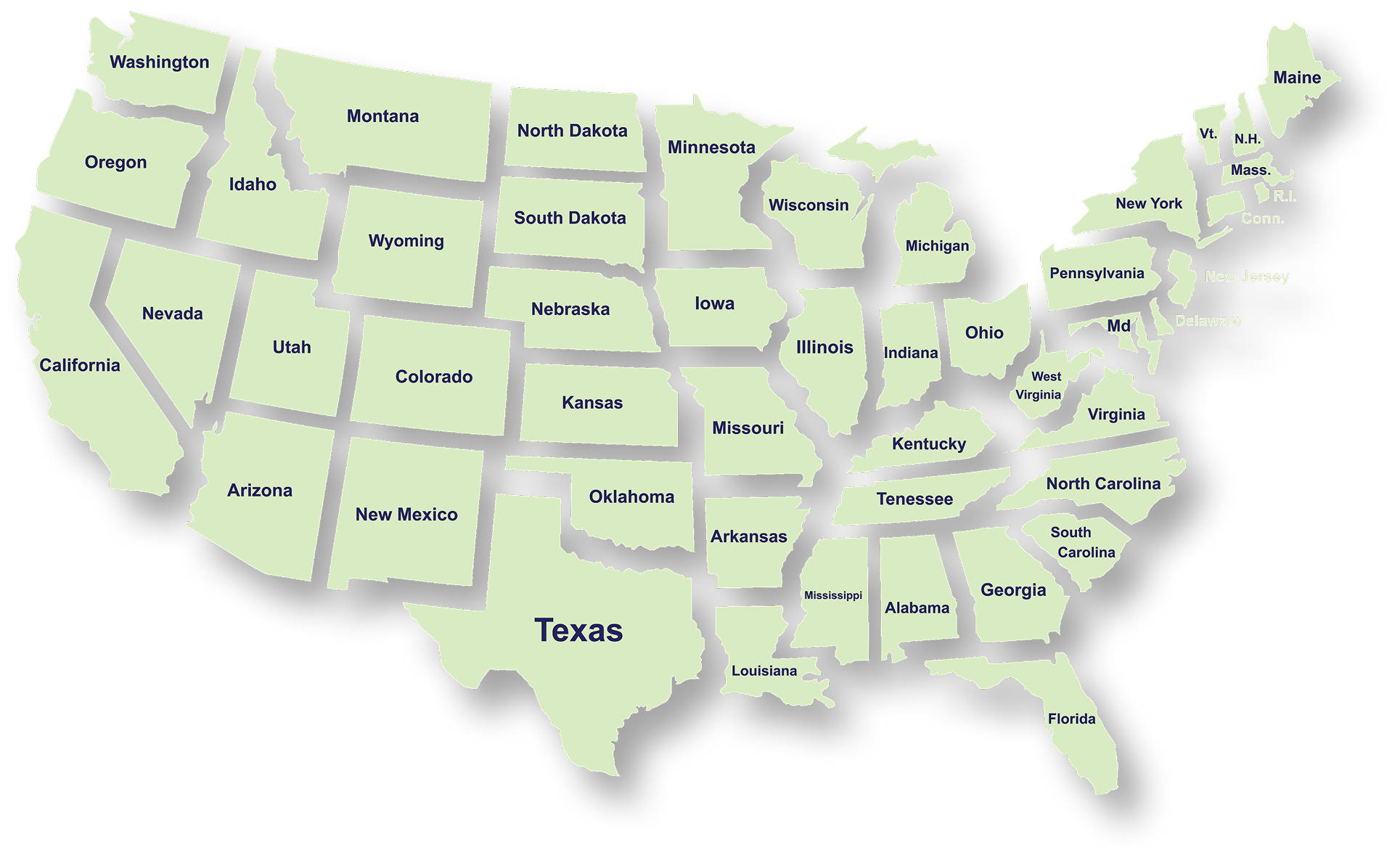
Serving Businesses & Individuals Across USA

We handle accounting, tax filing, and planning with defined timelines and accurate reporting for businesses and individuals across all states.

Frequently Asked Questions

What services does NR CPAs & Business Advisors provide?
What is tax planning and why is it important for businesses?
How can a Virtual CFO help my business?
When should a business consider IRS tax resolution services?
What financial statements does a business typically need?
How can startup advisory services help new businesses?
What is strategic business planning?
What is a Virtual Family Office and who can benefit from it?